"If you look at enough stones, you can see the truly special one. It takes years and years of working with gems—I often say it's a kind of visual memory."
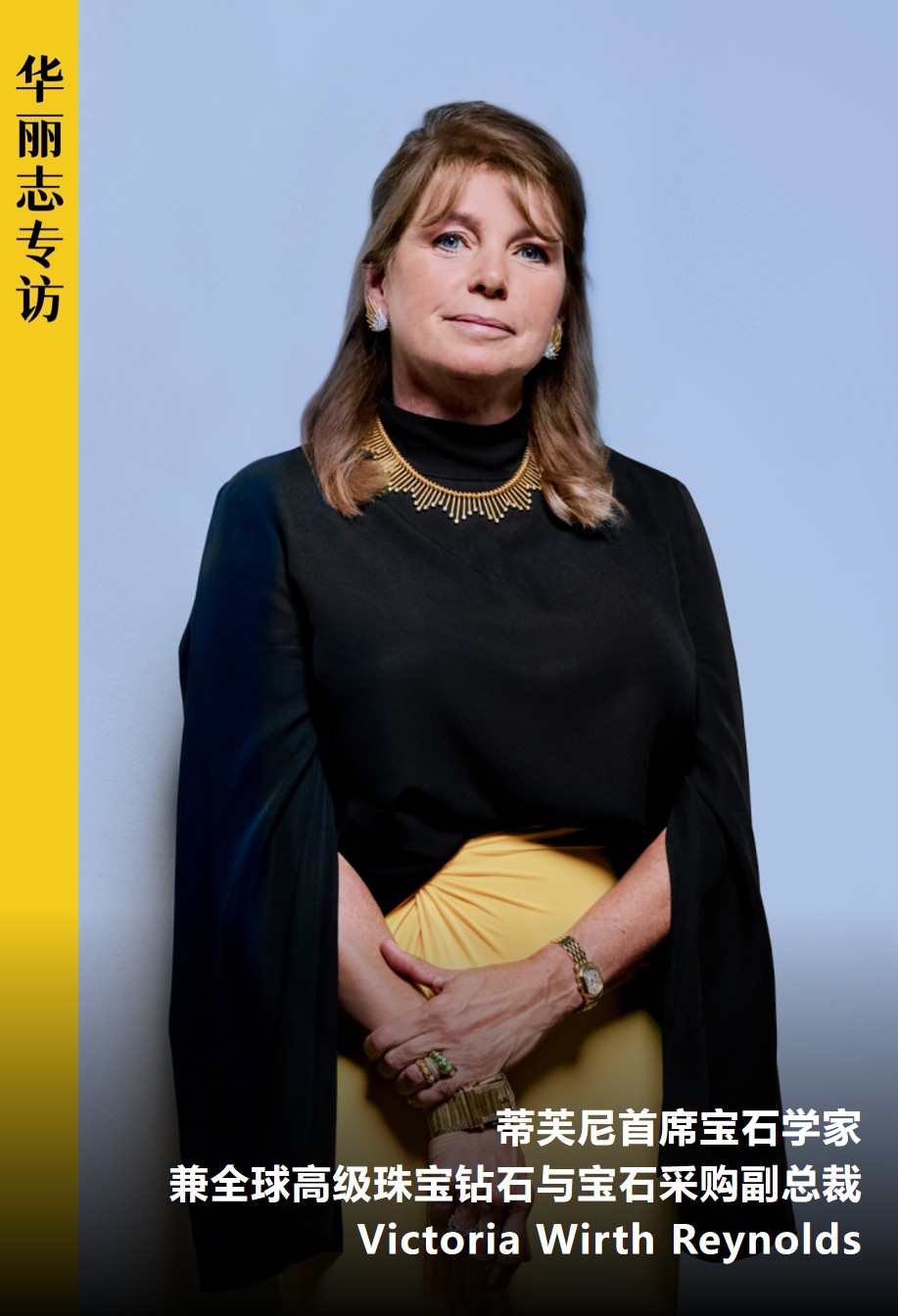
When Tiffany & Co. Chief Gemologist and Vice President of Global High Jewelry Diamond and Gemstone Acquisition Victoria Wirth Reynolds said this to LuxeCO, her tone was exceptionally humble, but behind the seemingly plain phrase "look at enough" lies the hidden brilliance of an industry titan who has spent decades working with precious gems from around the world, as well as Tiffany's unfathomable gemstone heritage.
As early as the mid-19th century, Tiffany earned the reputation of "King of Diamonds" and was considered the "ultimate destination" for America's top tycoons buying jewelry during the Gilded Age. In 1878, Tiffany founder Charles Lewis Tiffany acquired a rare 287.42-carat fancy intense yellow diamond from the Kimberley diamond mine in South Africa, permanently cementing Tiffany's authority in the global high jewelry world. And in 1879, when Dr. George Frederick Kunz became Tiffany's first chief gemologist, it launched a treasure-hunting journey that has lasted more than a century. He not only greatly enriched Tiffany's own gemstone collection but also pioneered the discovery and promotion of kunzite, morganite, tanzanite and other colorful new gems, enriching the materials and design language of high jewelry.

For over 100 years, the "Chief Gemologist" has always been a pivotal figure at Tiffany. As the first female chief gemologist in the brand's history, Victoria Wirth Reynolds (nicknamed Vicky) has led a series of important gemstone acquisitions with solid professional expertise and a deep understanding of Tiffany's DNA—from the last batch of rare pink diamonds from Australia's Argyle mine, to the largest fancy vivid yellow diamond rough ever discovered in Canada, to one of the world's last remaining batches of rare natural wild pearls... She has made significant contributions to accelerating the growth of Tiffany's high jewelry business.
Recently, she took time out of her busy schedule for an exclusive interview with LuxeCO, detailing Tiffany's deep gemstone DNA and selection system, as well as legendary designer Jean Schlumberger's unique use of gemstones. She also shared details of a gemologist's work, especially close interaction with high jewelry designers, and looked ahead to the future of the gemstone and high jewelry industry.
How deep are Tiffany's gemstone roots after more than 100 years?
In 1879, under the leadership of Dr. Kunz, Tiffany's first chief gemologist, the 287.42-carat yellow diamond rough from the Kimberley mine was boldly cut down by 55.3% of its weight to create an 82-facet cushion-cut diamond—24 more facets than the 58-facet cut common in the industry at the time—all to give the diamond the most brilliant sparkle. In Vicky's words, this legendary yellow diamond, named The Tiffany Diamond, is Tiffany's eternal "not for sale" piece and the gemologist's "North Star"; every gem she purchases is measured against it as a reference point.
Vicky told us: "More facets allow light to linger longer inside the stone, so the color is better presented. Today this cutting method is common for yellow and fancy color diamonds, but at the time it was revolutionary."


The Tiffany Diamond
This "revolutionary spirit"—the courage to redefine contemporary diamond aesthetics—is deeply engraved in Tiffany's DNA, allowing an American brand to stand out in the high jewelry world dominated by European brands.
To help us better understand Tiffany's deep gemstone roots, Vicky specifically recounted the legendary story of Dr. Kunz:
In 1876, just 20 years old, Kunz came to the Tiffany store to sell an uncut tourmaline. At the time, tourmaline had never been used in jewelry. Mr. Charles Lewis Tiffany took the risk of buying it, and after cutting and setting it into jewelry, it became a great success. Three years later, he made an exception and invited this self-taught "gem prodigy" to join Tiffany, entrusting him with the important role of "Chief Gemologist."
Dr. Kunz did not disappoint. Like an explorer, he traveled across the United States and around the world, searching for rare minerals along riverbanks, mountains and hills. In an era when gemology had not yet become an independent discipline, he personally collected a large number of first-hand specimens and published a series of seminal works.
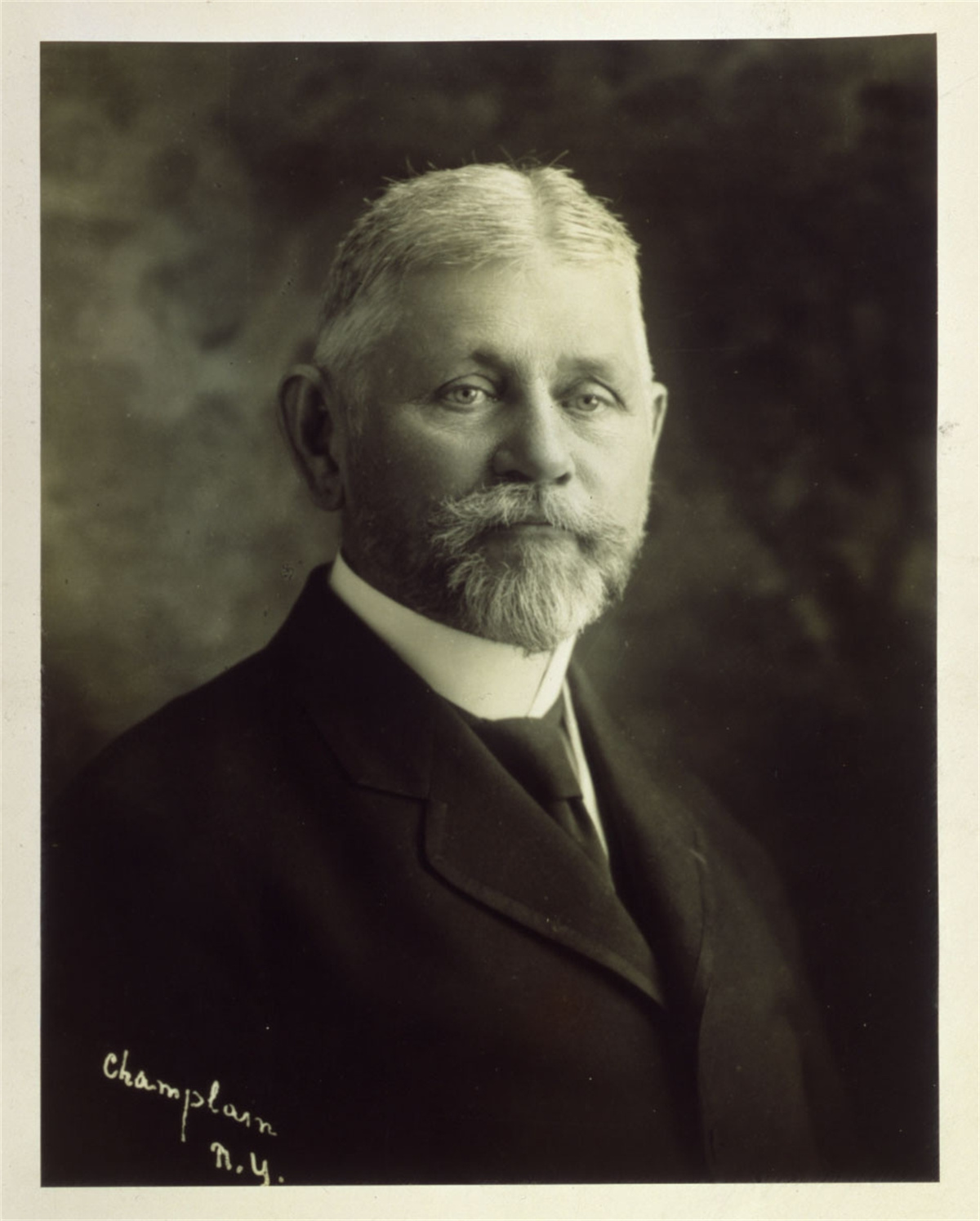
Dr. George Frederick Kunz
In addition to field searches, Dr. Kunz's office often received requests for mineral identification from around the world, through which Tiffany came into contact with many newly discovered gem varieties and was the first to introduce them to the high jewelry market:
Among them, kunzite was named after Dr. Kunz by the New York Academy of Sciences. The gem was initially widely believed to be tourmaline, but Dr. Kunz identified it as a new variety of spodumene, different from the known yellow and green spodumene, and consistent with spodumene's property of changing color when viewed from different angles.

In 2025, Tiffany announced the acquisition of an extraordinary kunzite rough weighing over 7,500 carats, meticulously crafted into 10 custom-cut gems and set in limited-edition Bird on a Rock brooches
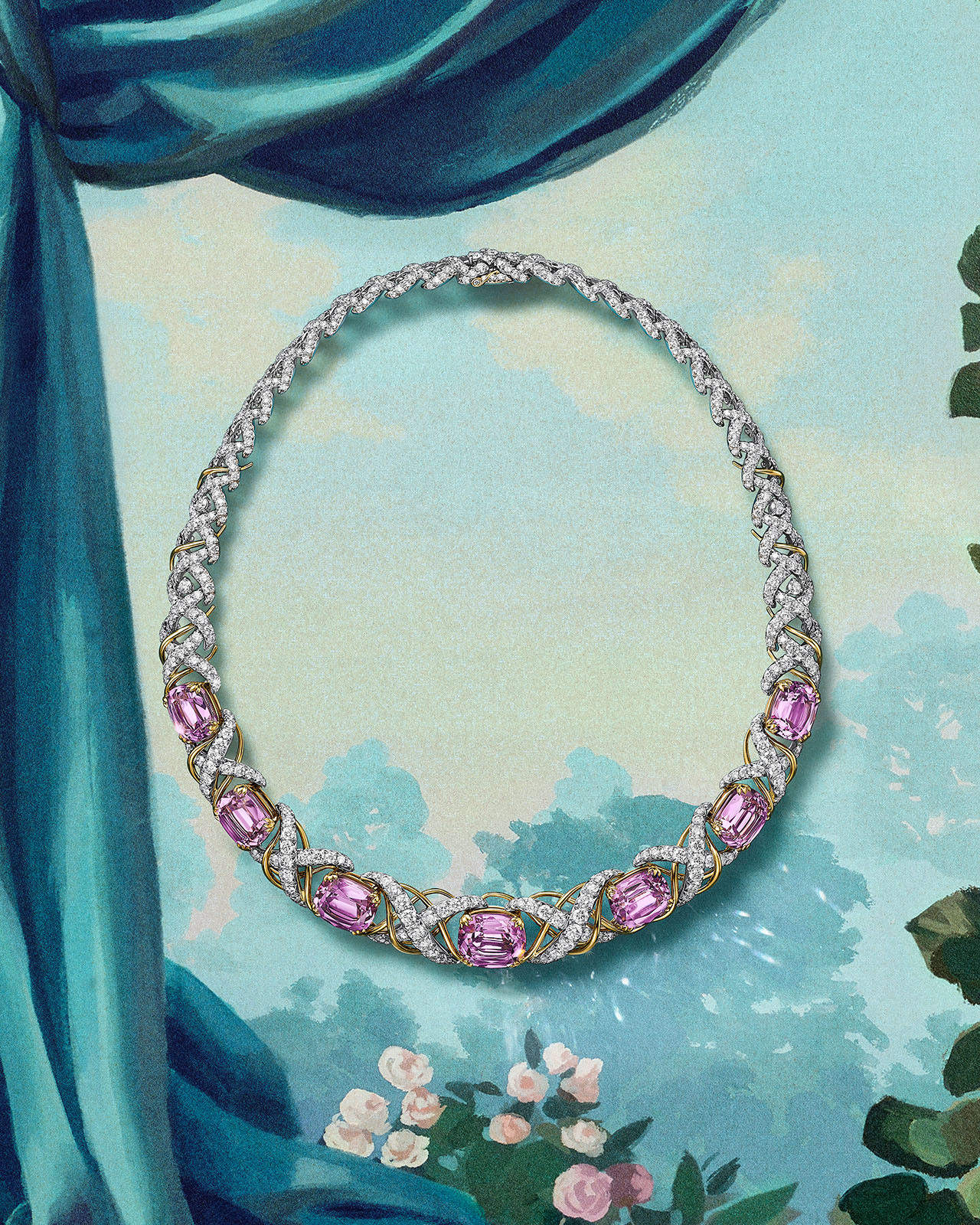
Tiffany 2026 Blue Book high jewelry collection Hidden Garden, Jasmine theme necklace, set with seven cushion-cut kunzites totaling over 70 carats
He also named the deep pink beryl discovered in Madagascar "morganite" in honor of the famous banker and one of Tiffany's most loyal clients, John Pierpont Morgan Sr.

Tiffany's iconic Bird on a Rock perched on a pink morganite weighing over 39 carats
Today, about 3,000 gems collected by Kunz and J.P. Morgan can be seen at the American Museum of Natural History. Vicky explained that it was Kunz who advised J.P. Morgan: "Please don't make these a private collection; they should be donated to a museum so everyone can appreciate them."
Dr. Kunz's successors passed down this pioneering spirit from generation to generation, bringing more "new" gems into the public eye—tsavorite from Kenya and tanzanite from Tanzania were both named by Tiffany, while peridot, tourmaline, and paraiba tourmaline with its Tiffany-blue tones all became sought-after "stars" of the high jewelry world thanks to Tiffany's strong promotion.
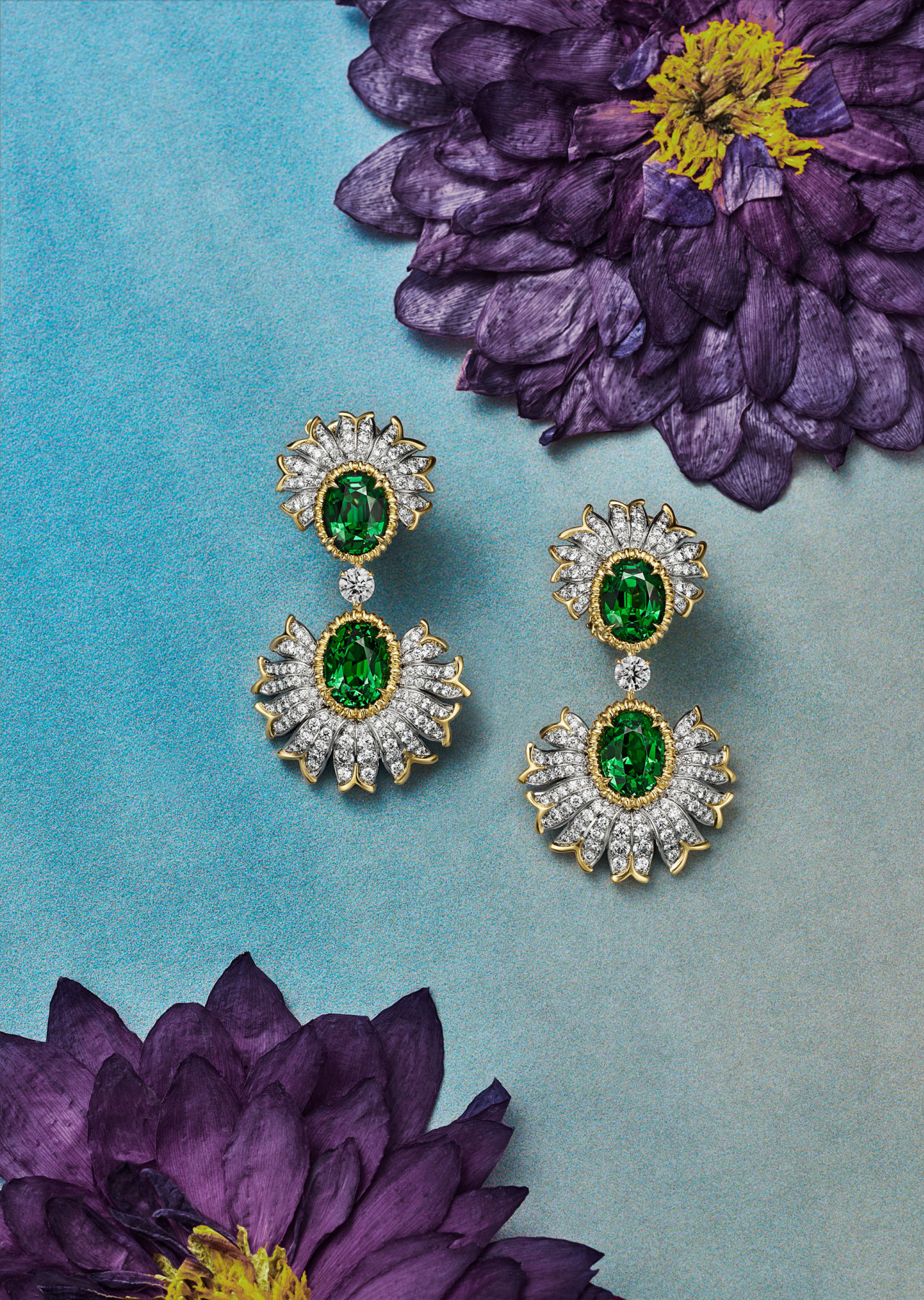
Tiffany 2026 Blue Book high jewelry collection Hidden Garden, Dahlia theme earrings, set with four oval tsavorites totaling 10.63 carats
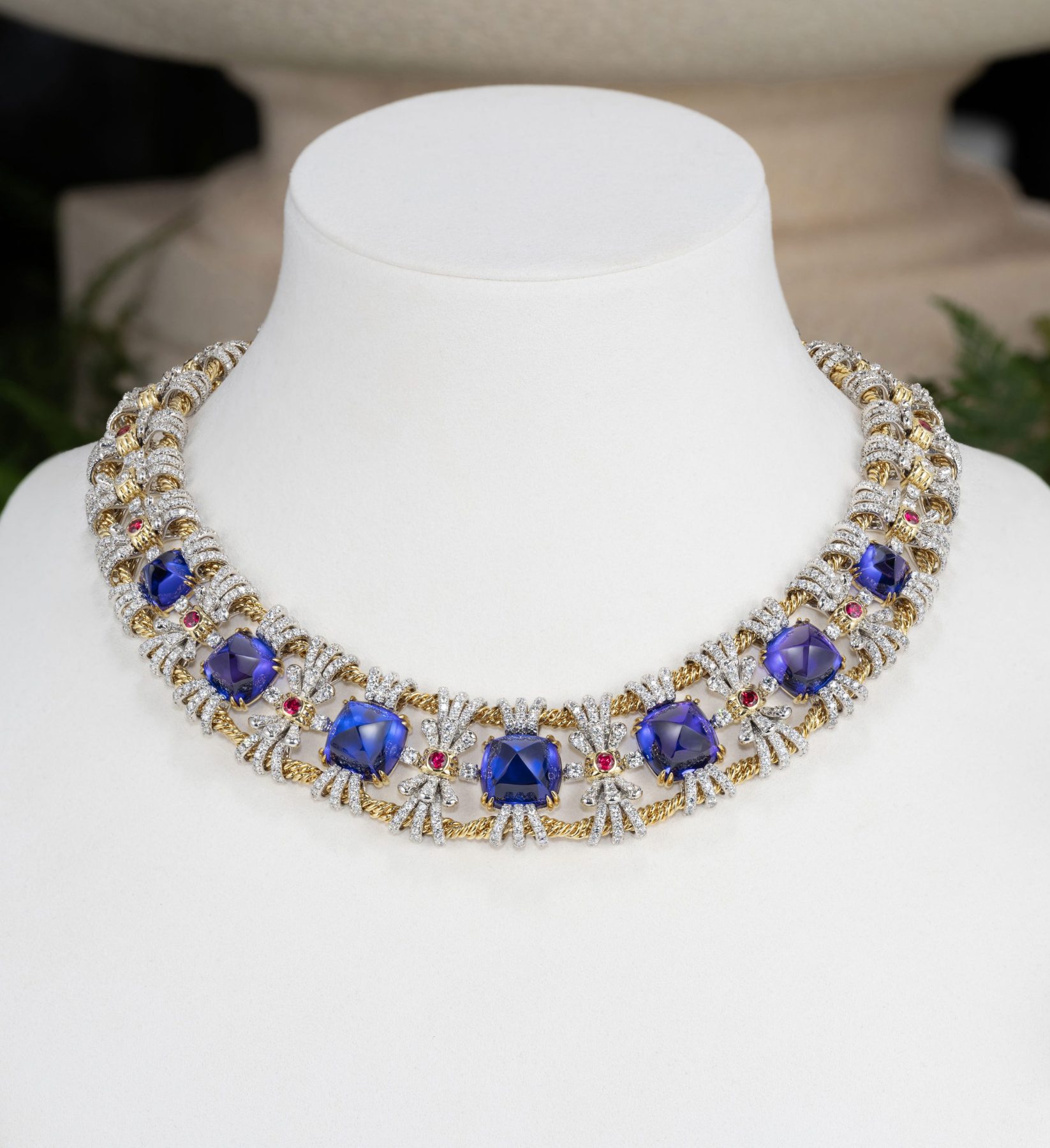
Tiffany 2026 Blue Book high jewelry collection Hidden Garden, Raffia theme necklace, with a sugarloaf-cut tanzanite
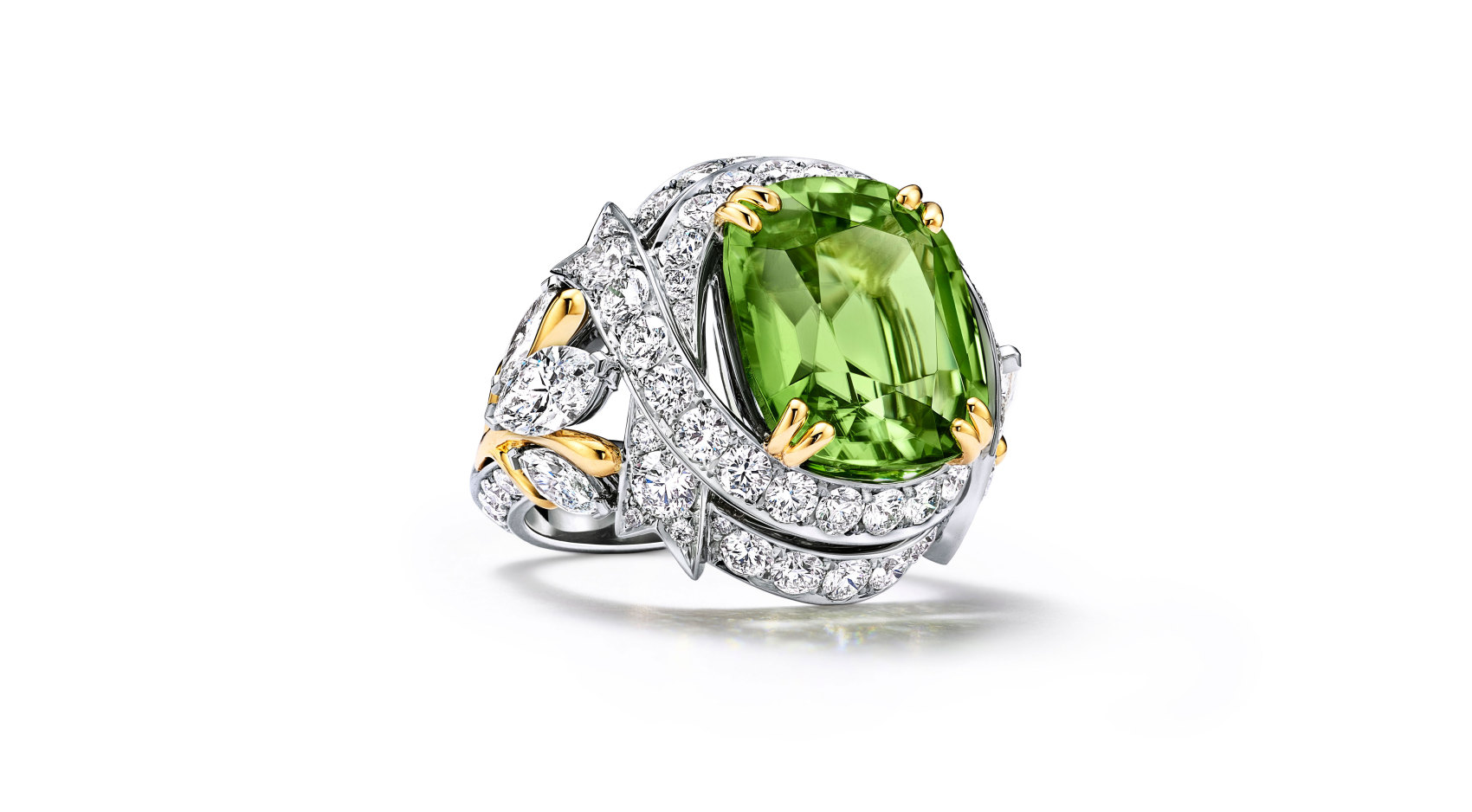
Tiffany 2026 Blue Book high jewelry collection Hidden Garden, Petals theme ring, featuring a cushion-cut peridot with rich blue-green hue and outstanding saturation
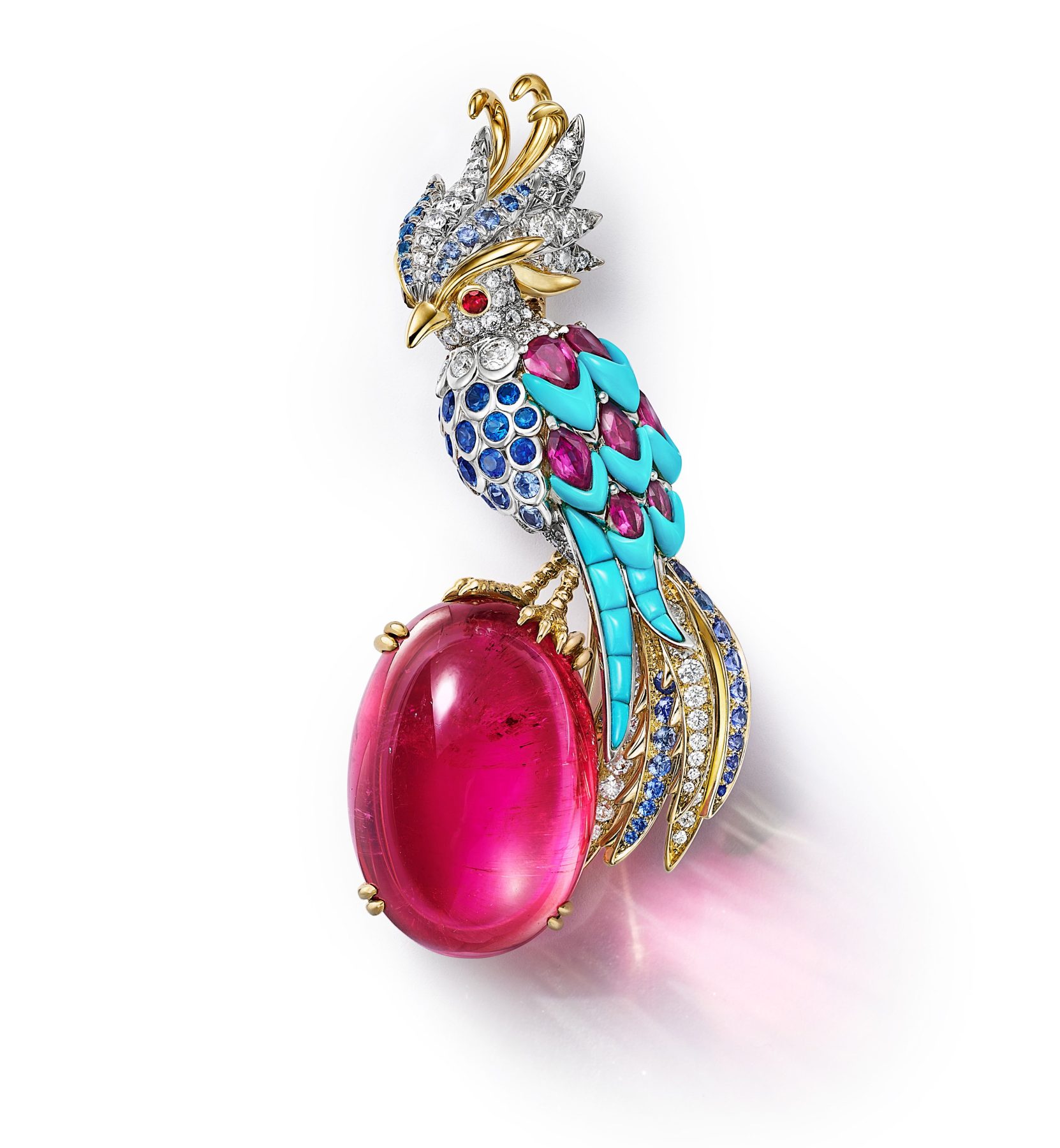
Tiffany 2026 Blue Book high jewelry collection Hidden Garden, Paradise Bird theme rubellite brooch
What kind of gem can become a "Tiffany gem"?
Since Dr. Kunz's time, one of a gemologist's most important tasks has been to measure and judge the value of gems.
Having examined countless precious gems, Vicky professionally introduced the three major criteria for evaluating gems: beauty, rarity, scarcity.
She emphasized: "Beauty always comes first; it is the color and magic of a gem."
Then there is "rarity," referring to the rarity of gem quality, for which the industry has mature grading standards.
The other criterion is less familiar to the general public: "scarcity," referring to the scarcity of the mining source. Vicky explained: "Colored gems are gifts from Mother Nature; the earth will not produce them indefinitely. Like Picasso or Matisse, any great deceased painter's work increases in value." Vicky cited Kashmir sapphires, which were mined only between 1890 and 1898; afterward, due to a complete change in geological conditions, the mine passages closed and they could never be mined again, making them extremely scarce.
So what kind of gem can join Tiffany's family?
First, strict screening by gemologists: "Whether it's a yellow diamond, white diamond, or padparadscha, it must be as exceptional as The Tiffany Diamond."
This judgment draws on professional standards as well as long-accumulated experience and intuition: "If you look at enough stones, you can see the truly special one. It takes years and years of working with gems—I often say it's a kind of visual memory."
At the same time, a gem must pass through the skilled hands of cutters and jewelry designers before it can ultimately become part of Tiffany. Vicky emphasized: "Discovering beauty and applying it through teamwork is what we enjoy most, because everyone can contribute to the collection."
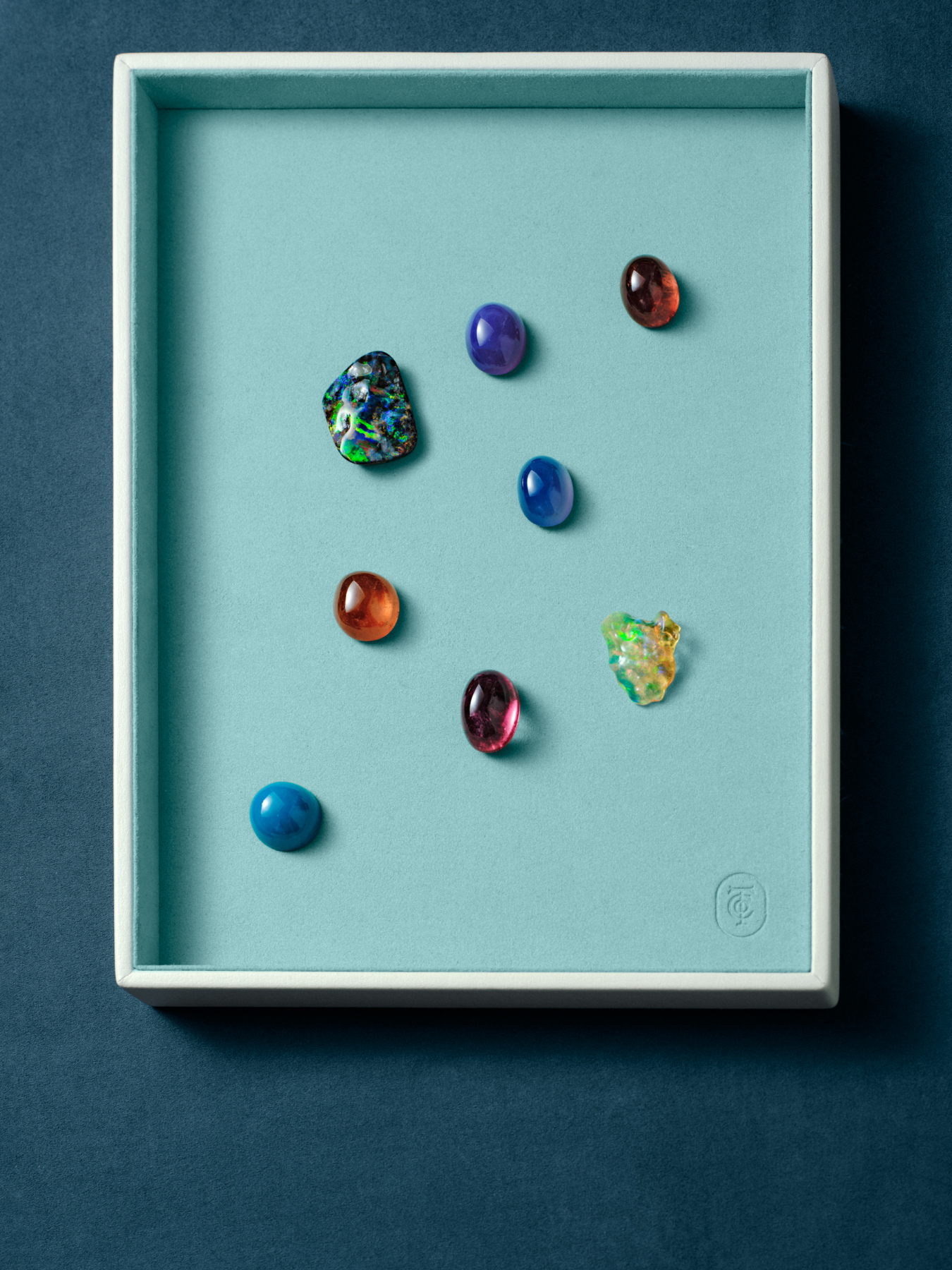
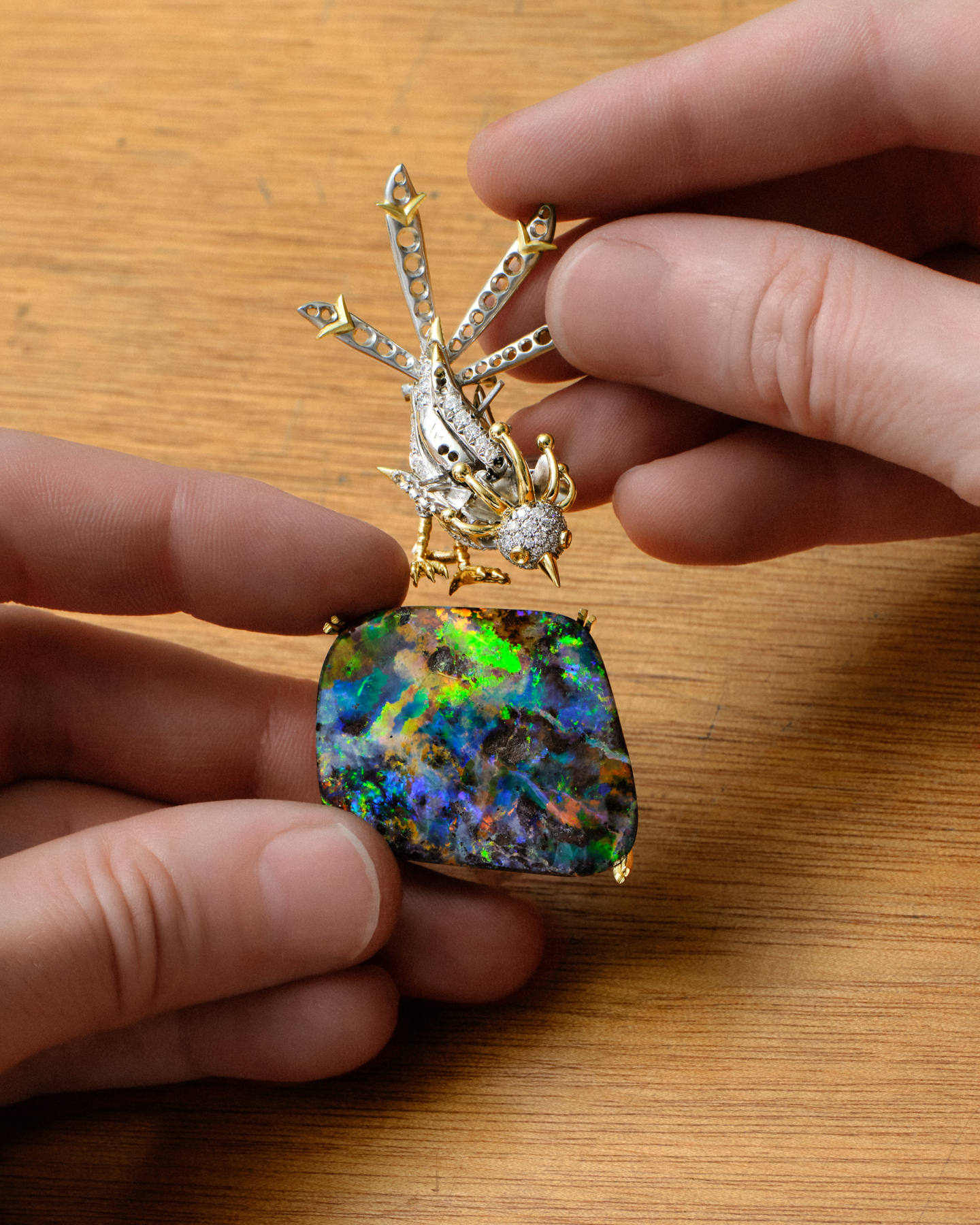
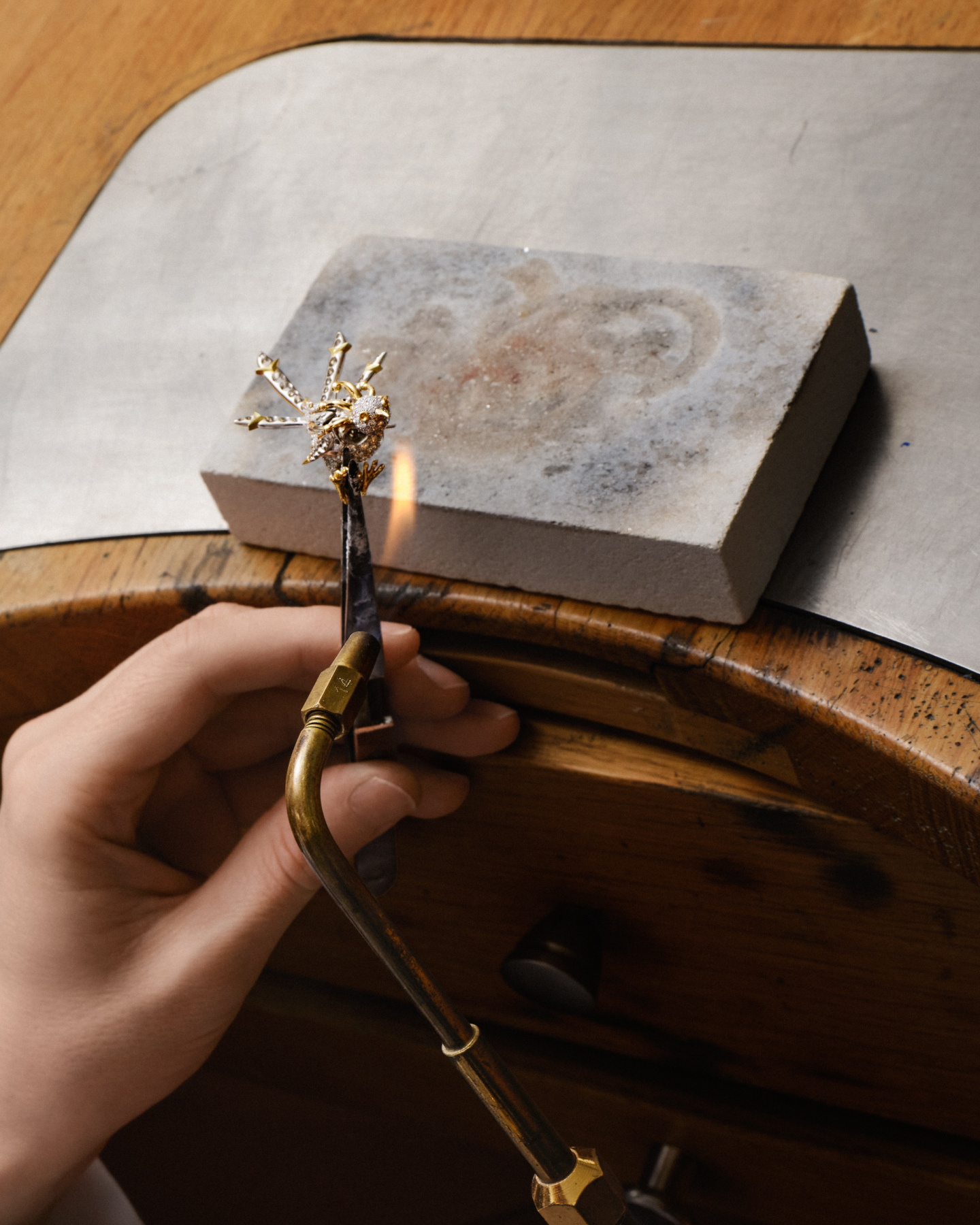
Craftsmanship process of the Paradise Bird theme brooch
She focused on Tiffany's legendary designer Jean Schlumberger, whose work vividly embodies Tiffany's unconventional and creative use of gemstones.
This is inseparable from Schlumberger's background: he came from a French textile family and early on designed clothing accessories for Italian haute couture master Elsa Schiaparelli, often picking up small porcelain and fabrics from Paris flea markets and deconstructing them for re-creation.
"He used any artistic element he deemed essential to achieve his creative intent, freely and without needing expensive materials. So when he came to Tiffany (in 1956), he brought a very different design freedom and imagination."
He broke away from the rigid symmetry of jewelry design at the time, capturing the timeless beauty of nature with a sculptural approach. Colored gems became his pigments, boldly mixed with gold and platinum, and flowers, plants and birds were transformed into wearable three-dimensional works of art.

Jasmine necklace, by Jean Schlumberger,Tiffany spent nearly a decade selecting rare colored gems and refining craftsmanship; the final museum-quality one-of-a-kind piece is set with 16 high-quality colored sapphires
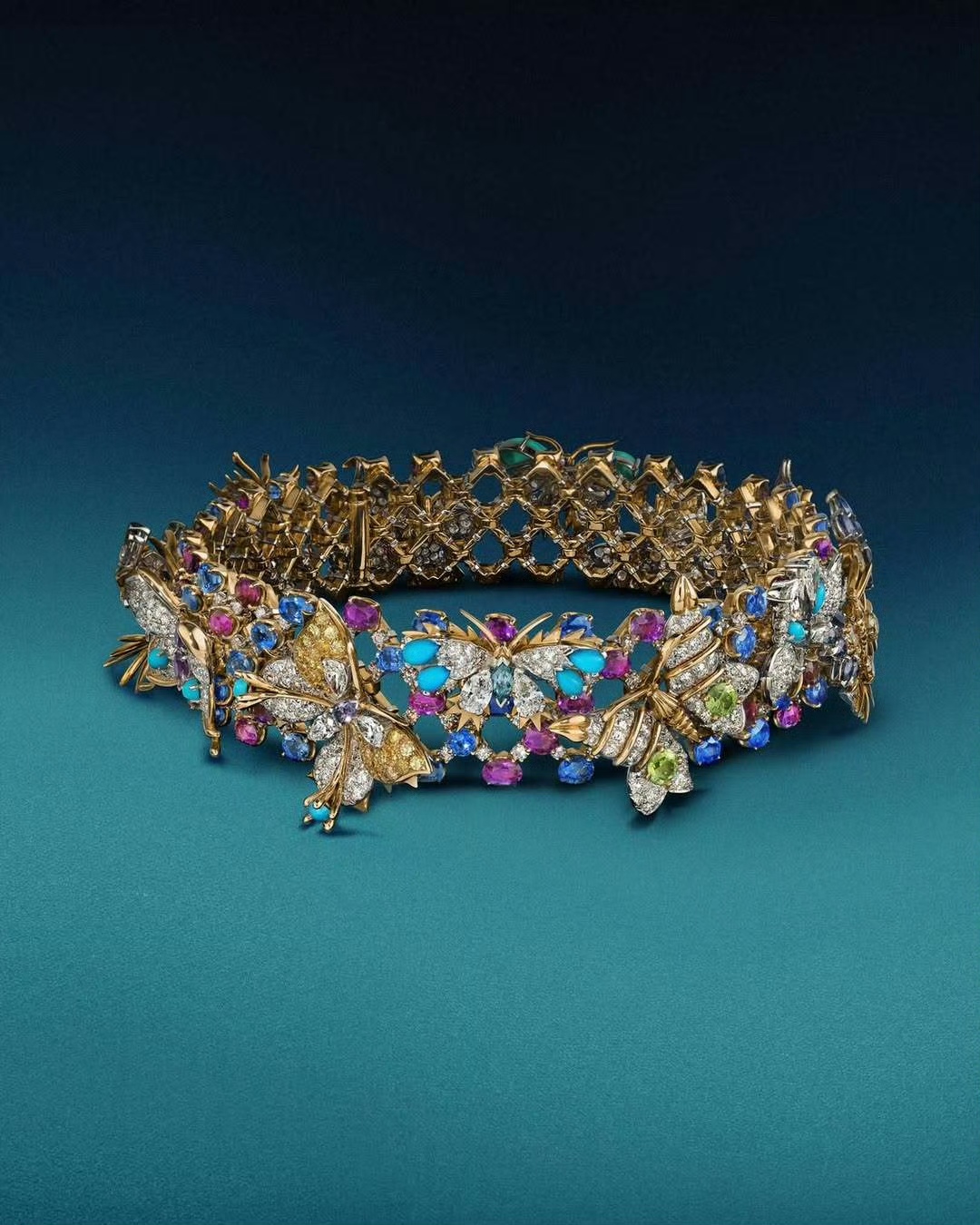
Butterfly necklace, by Jean Schlumberger, set with diamonds, yellow diamonds, amethysts, sapphires, green
turquoise and peridot in gold and platinum

Cornflower brooch, by Jean Schlumberger, set with sapphires and diamonds in gold and platinum
"He completely changed the way we use gems and diamonds; I think he redefined high jewelry. He would not let social preconceptions dictate what is precious; he was guided solely by the beauty of the gem."
More than half a century later, Vicky works closely with Tiffany Senior Vice President and Chief Artistic Officer Nathalie Verdeille, still starting every creation with the gemstone. Vicky told us: "Gems are the inspiration for design stories. We carefully select gems and hand them to Nathalie and the design studio, so that design creation revolves around the gems and deeply resonates with each stone's natural characteristics."
In Nathalie's work, we see even more masterful use of colored gems, with natural hues fully expressing a passionate and expressive natural spirit, as if freezing the glorious moment of all things in bloom; Schlumberger's classic Bird on a Rock design has also been revitalized—kunzite, aquamarine, opal, chalcedony, spessartine garnet, natural wild pearls and more are ingeniously set within.

Tiffany 2026 Blue Book high jewelry collection Hidden Garden, Paradise Bird theme brooch, set with a Mexican fire opal weighing over 25.14 carats, with wings layered in pointillist style using emeralds, turquoise and tsavorites
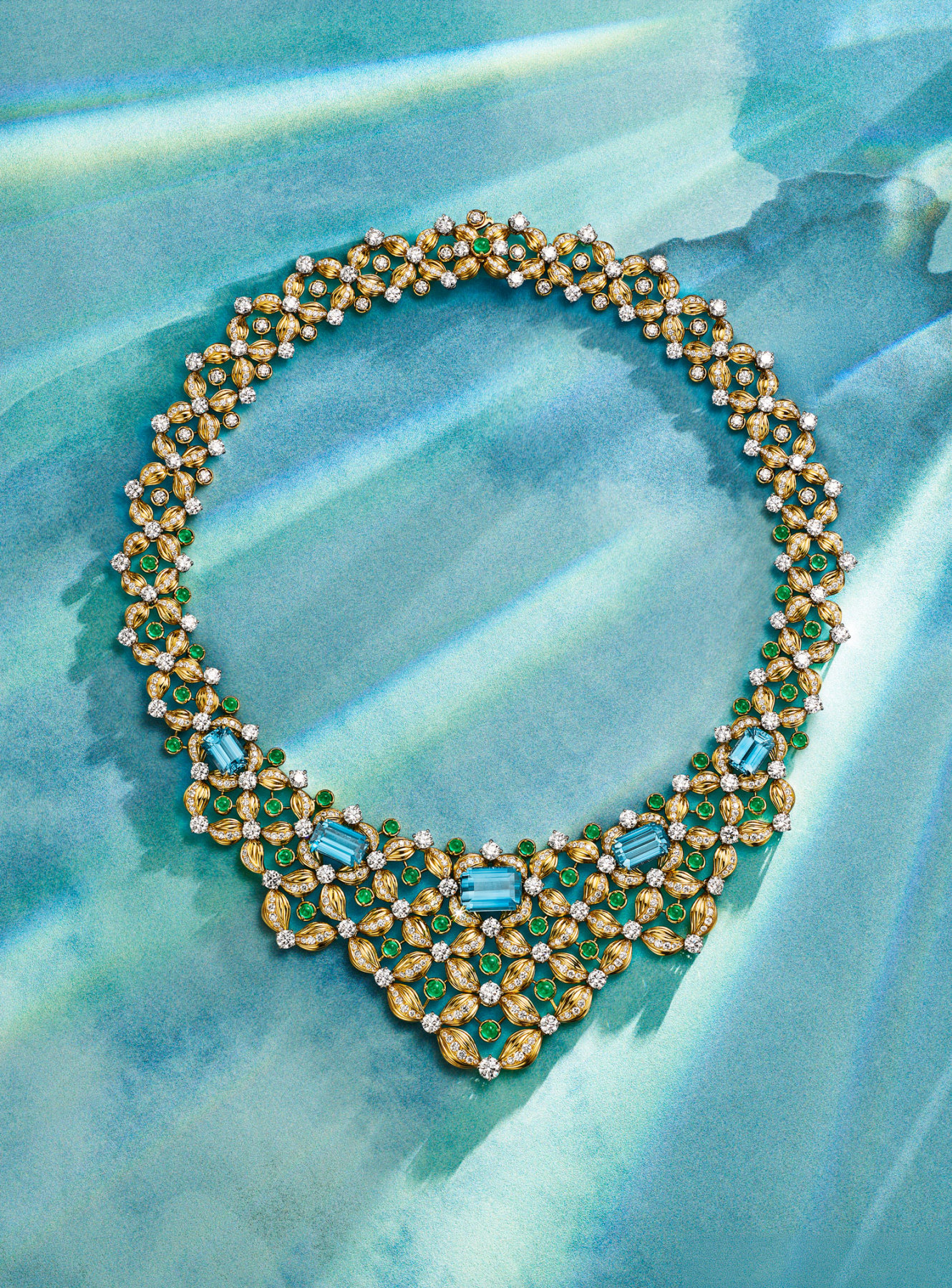
Tiffany 2026 Blue Book high jewelry collection Hidden Garden, Daisy theme necklace, with an emerald-cut blue zircon and a richly colored cabochon emerald creating a striking color contrast
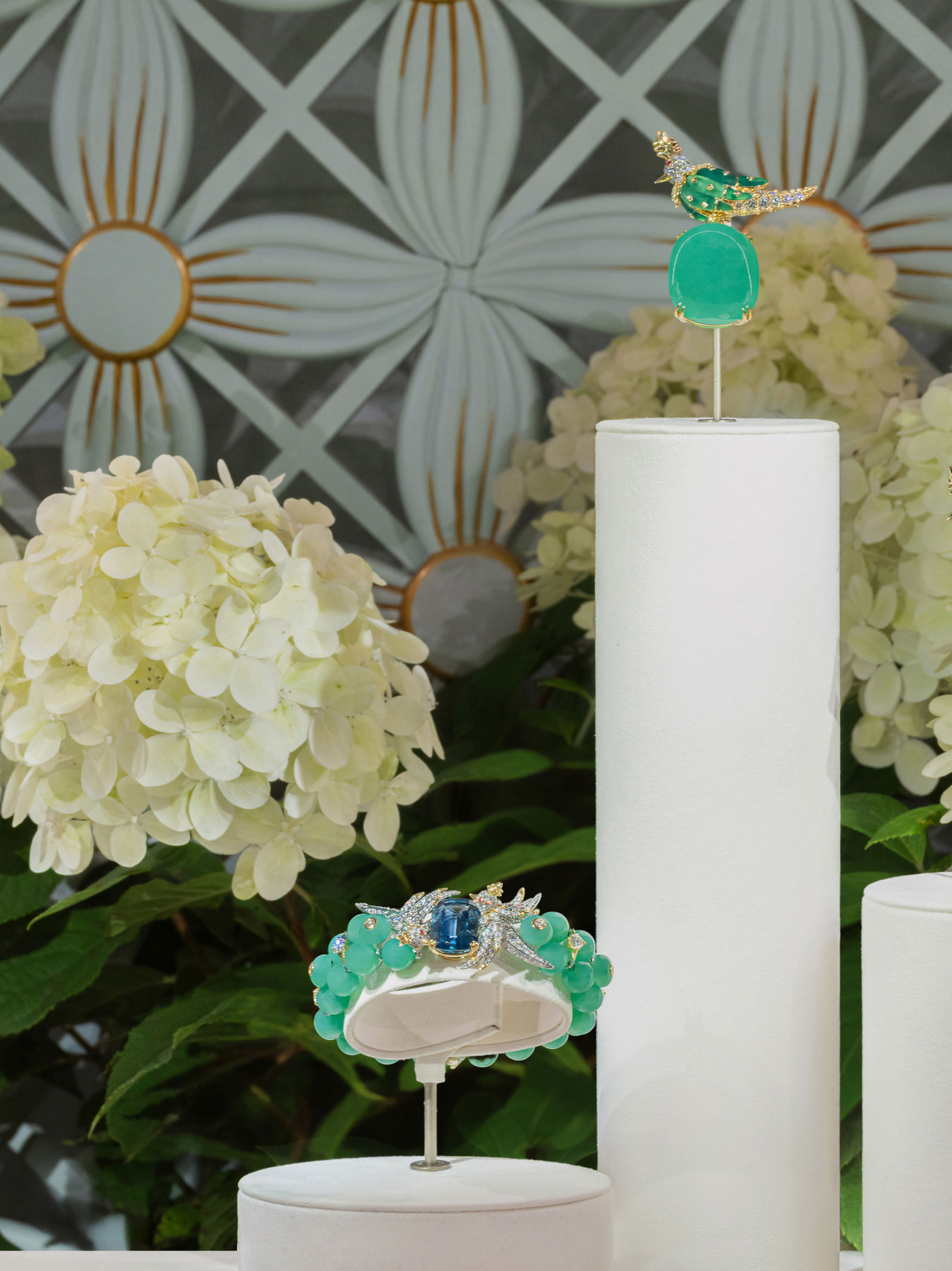
Tiffany Rainbow Bird on a Rock brooch, with the brand's iconic bird perched on a chrysoprase center stone; Tiffany 2026 Blue Book high jewelry collection Hidden GardenBird on a Rock theme bracelet, with the bird encircling a cushion-cut Santa Maria aquamarine from Brazil, and custom-cut chrysoprase beads creating a verdant landscape
How to become an exceptional gemologist?
Vicky proudly stated: "Our brand has always had the role of chief gemologist throughout its history; this is our unique tradition."
As the first female chief gemologist in Tiffany's history, Vicky may carry a heavier burden than all her predecessors, because today's Tiffany—both in overall business scale and in the proportion of high jewelry—is unprecedented in its nearly 200-year history.
In recent years, Vicky has led several major diamond and colored gemstone acquisitions. She shared two particularly memorable journeys:
In 2021, after the closure of Australia's Argyle Diamond Mine, the world's most famous source of rare pink diamonds, Tiffany obtained the right of first refusal for the last batch of 45 Argyle pink diamonds. Vicky flew to Antwerp: "We walked into the room and saw 45 Argyle diamonds in a box. It was a treasure beyond treasures; even gemologists don't often get such an opportunity."
Vicky selected the 35 finest, naming them "Tiffany Argyle PinkTM Diamonds." It was the first time the Argyle mine allowed a jewelry brand to name its diamonds.
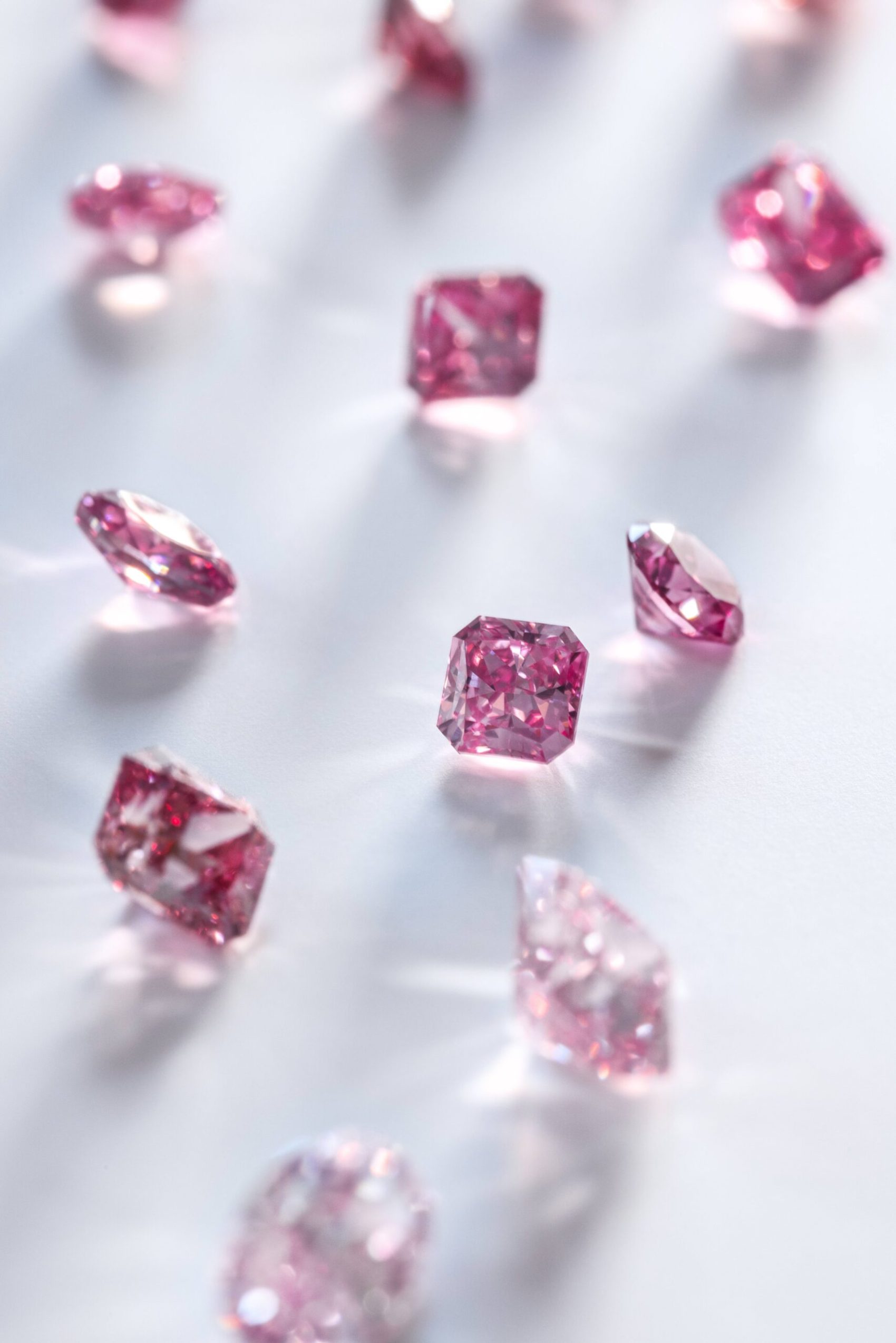
Tiffany Argyle Pink Diamonds
Another was three years ago, when Tiffany bought the largest fancy vivid yellow diamond rough ever discovered in Canada, weighing over 71 carats. She discussed cutting options with partners; usually adding facets enhances color, but this rough was already exceptional, so they decided not to over-facet it.
"Too many facets can make it look artificial. The rough had extremely high saturation and a rich orange-yellow color. Its shape was like two pyramids stacked together; holding it in your hand was like holding the sun."
"Those two moments made me very proud and also filled me with awe. Because you know it's a once-in-a-lifetime experience."

Tiffany acquired the largest yellow diamond rough ever discovered in Canada, weighing over 71 carats, cut into fancy vivid yellow diamonds weighing over 15 carats and 20 carats respectively
In addition, under Vicky's leadership, Tiffany purchased a top-quality emerald from Colombia's Muzo mine; bid on a kunzite weighing over 7,500 carats in Bangkok; and this year acquired a batch of the finest natural seawater pearls from global natural wild pearl authority Hussein Al Fardan, becoming the first jeweler to purchase from his private collection...
Vicky tirelessly travels the world in search of the finest gems, still filled with boundless passion and curiosity:
"Any natural gem you see comes from deep within the earth and can be traced back millions or even billions of years—that number is incredible."
"Through gems, you can forever freeze those fleeting colors as beautiful as sunrise and sunset. When you own a padparadscha, you forever preserve that beautiful pink-orange; when you own a paraiba tourmaline, you freeze that brilliant electric blue..."

Tiffany 2026 Blue Book high jewelry collection Hidden Garden, Butterfly theme piece, set with unenhanced padparadscha sapphires, Montana sapphires and white diamonds

Tiffany 2026 Blue Book high jewelry collection Hidden Garden, Hanging Garden theme piece, featuring pear-cut blue chalcedony totaling over 85 carats, paired with Mozambican rubies

Tiffany Bird on a Rock "Love Birds" collection, set with an oval cabochon moonstone weighing over 45 carats and an oval paraiba tourmaline weighing over 21 carats
This deep love for gems and spirit of exploration, in Vicky's view, is the most important quality for a gemologist. "Only then can you keep learning, stay open to new ideas, and inspire creativity and teamwork."
It is also this belief that has kept Vicky at Tiffany for nearly 40 years, starting from an entry-level position, steadily honing her expertise and gaining experience in different departments, until she became the jewelry giant's gem "scout."
What unknown spaces remain to be explored in the gem world?
Vicky has observed that the new generation of consumers wears high jewelry with a freer attitude, unbound by tradition. Today Tiffany's use of gems also resonates with this trend.
"Many customers used to wear high jewelry only on important occasions; now they say: 'This is a beautiful piece of jewelry, and I just want to wear it. Whether I'm playing tennis, gardening, attending my daughter's graduation, or watching my son's soccer game, I want to wear it.'"
"Now an engagement ring doesn't have to be a diamond; it can be any beautiful colored gem. The younger generation allows themselves to define what is traditional and what is new, which opens up a whole new market, and we are very excited about it."
Vicky also pointed out some industry conventions worth re-examining. In her view, the value of some so-called "semi-precious" stones is underestimated.
"Although turquoise is not traditionally considered a heritage gem, its vivid blue tone pairs extremely well with diamonds and rubies, creating a very unique color combination; gray moonstone has a light, dreamy texture; high-quality opal can be as expensive as sapphire or emerald."
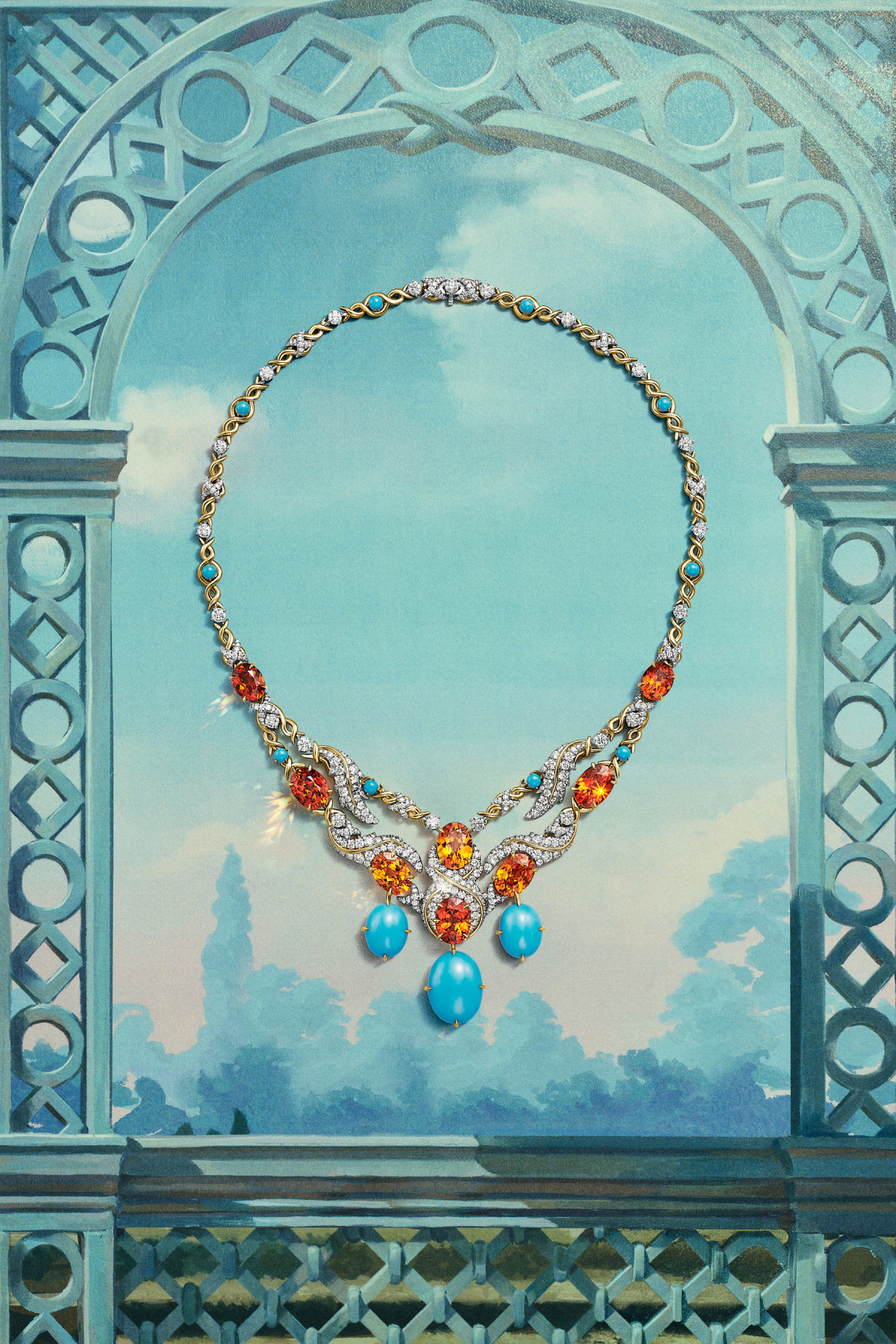
Tiffany 2026 Blue Book high jewelry collection Hidden Garden, Hanging Fruit theme piece, with orange spessartine garnet and cabochon turquoise complementing each other

Tiffany Bird on a Rock Japan limited edition "Winter" theme brooch, featuring a white opal over 40 carats
"There are still many very beautiful stones in the world that may not yet be noticed. But to me, beauty is not defined by price; it is determined by the gem itself before your eyes. That is how Tiffany has always viewed gems."
In the high jewelry industry, which is already quite mature, Vicky hopes Tiffany's spirit of gem exploration will continue to lead the industry forward. She envisions: "We don't know if new gems will still be discovered, but I assure you, if a profoundly important new gem appears, it will be Tiffany that names it and brings it to market, because that is deeply embedded in our brand DNA."
| Image source: Provided by Tiffany & Co.
| Editor: LuxeCO