As more and more brands bet on rapid new-product drops, extreme youth appeal and homogenized hit items, BOSS has instead brought "tailoring" back to the fore this autumn/winter.
"Competition isn't a bad thing; competition drives development," Ms. Judith Sun, Managing Director of HUGO BOSS Group Greater China, said in an exclusive interview with Luxe.Co in Chengdu. "And we need to achieve unique brand value—that is the most important thing for winning in competition."

This statement almost sums up BOSS's core proposition today. The German classic brand, which has been in China for more than 30 years and has a history of over a century, is at a challenging juncture: on one hand, it is fully extending toward becoming a (24/7) premium lifestyle brand; on the other, it is holding fast to "tailoring," the core brand DNA.
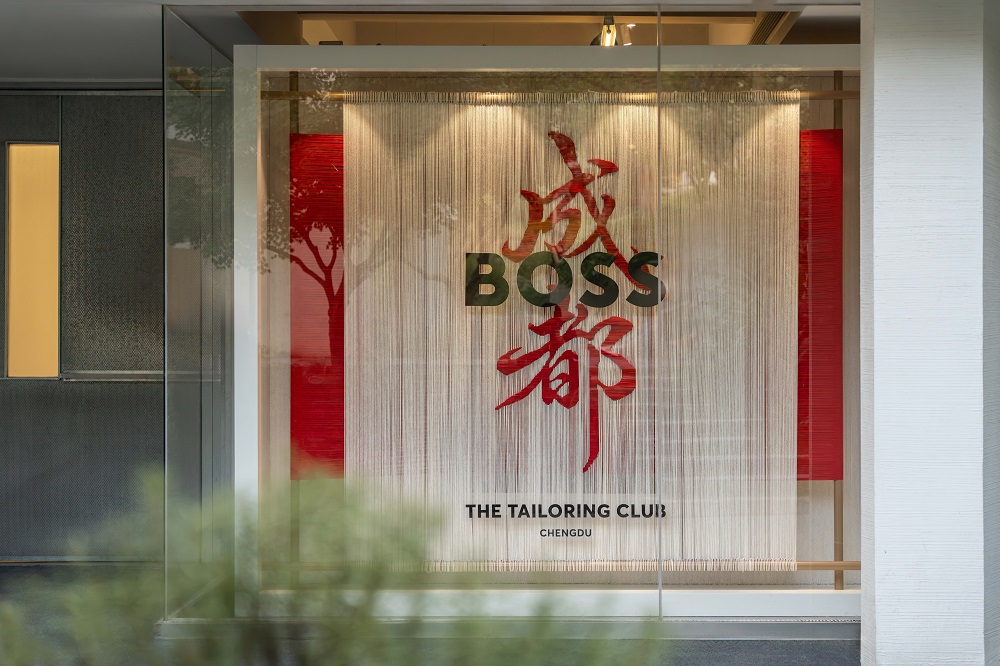
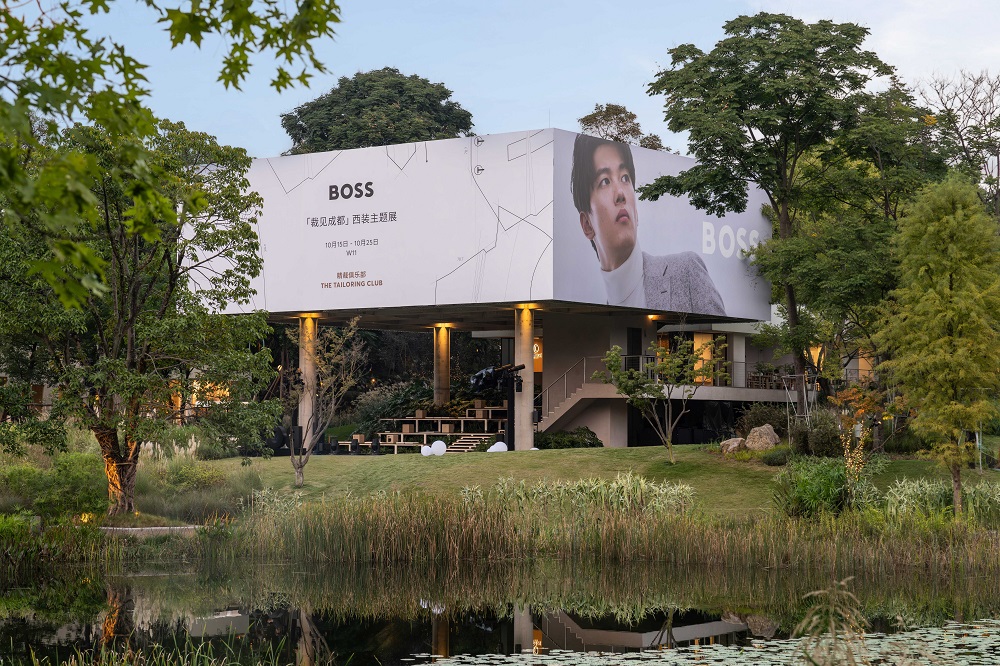
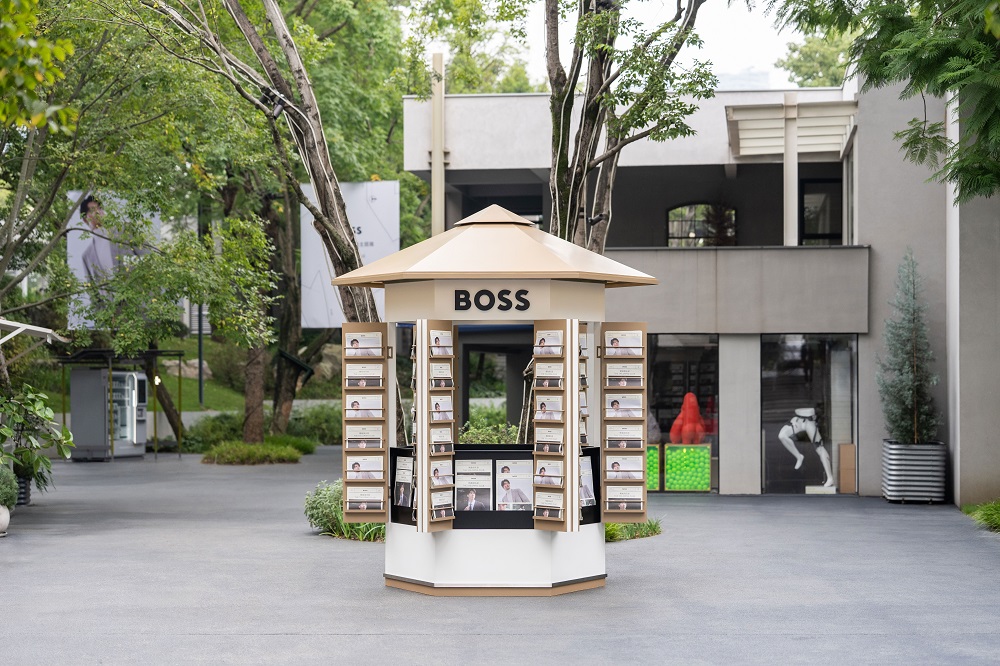
Recently, BOSS held the "Tailoring Chengdu" suit-themed exhibition and pop-up space at Chengdu Luhu CPI. This also marks the first practice in China of the brand's new cultural and style exchange platform, "The Tailoring Club."
Why re-emphasize tailoring during a period of strategic transformation? And what differentiation can tailoring bring to the brand? Sun's answer is: "People may be very clear about BOSS's awareness, but they may not necessarily be clear about what BOSS stands for."
Moving consumers from "knowing BOSS" to "understanding BOSS" is the real goal this event aims to achieve.

From tailoring to (24/7) premium lifestyle: responding to contemporary consumer needs with a product portfolio
After the new management team came on board in 2022, BOSS has continued to advance its transformation from a business formalwear brand to a (24/7) premium lifestyle brand. Sun summarizes it this way: whether for business, social, casual or sports occasions, the brand hopes to offer choices that are appropriate, comfortable and functional.
Currently, the BOSS brand offers classic formalwear, performance suits, casualwear, denim, athleisure and accessories to meet consumers' style needs. According to Ms. Sun, the Performance commute collection's high-performance suits combine technical fabrics with innovative details; the Premium collection uses selected high-end fabrics and is also the brand's most premium line; the classic formalwear collection centers on suit tailoring and extends into high fashion, accounting for a considerable share of the China market—about half of the brand's business; the athleisure collection focuses on tennis, golf and urban outdoor apparel.
These product lines are not isolated from one another; rather, they are built on tailoring and cover a richer range of life scenarios. Since joining HUGO BOSS Group Greater China in 2021, she has continued to observe changes in the consumer profile and habits: BOSS consumers are becoming younger, and changes in customers' ages, professional backgrounds and across generations are fairly evident—it is difficult to sum them up with a single profession or a single dressing habit.
"These are consumers with more diverse wearing occasions and higher demands for comfort and functionality," Sun said. At the same time, they have not given up on style. Traditional suits still have clear occasions, while lightweight unstructured blazers, business casual and functional clothing are closer to daily life. She sums up modern business-travel dressing needs as: "easy to travel with, easy to care for, and at the same time stylish and sharp-looking."
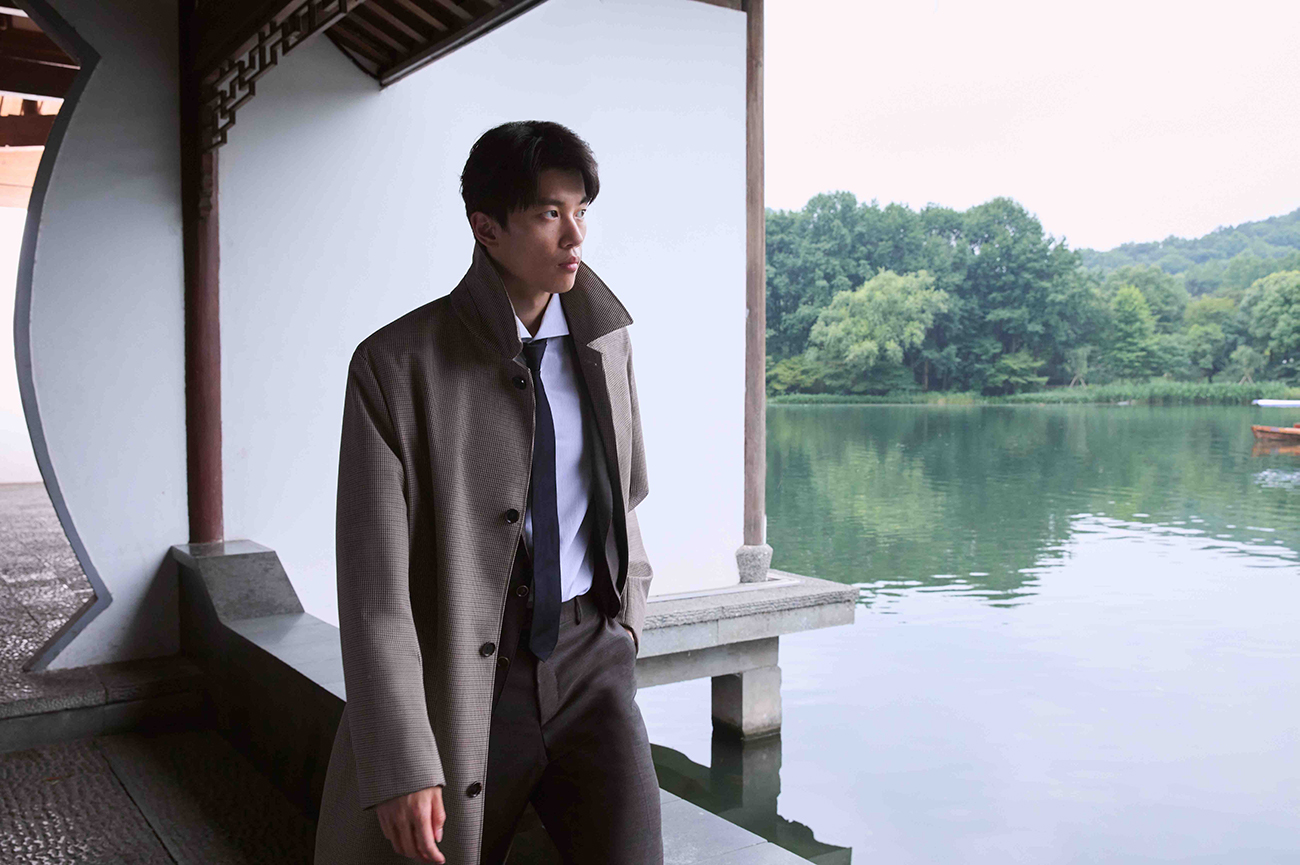
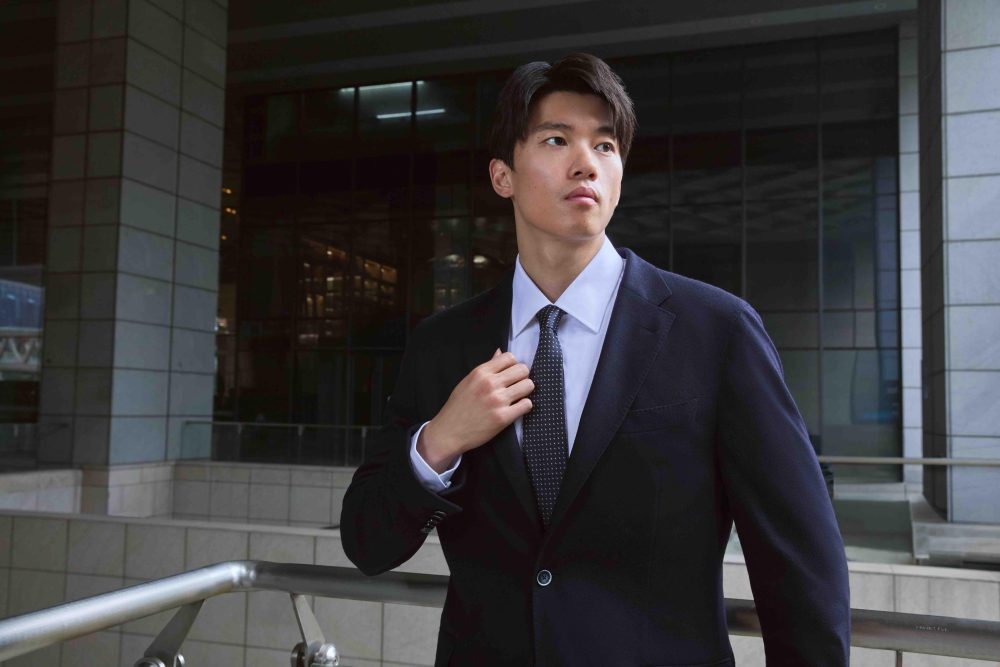
HUGO BOSS Group has responded to consumer changes through product portfolio optimization. In its 2026 first-half results announcement, the group said product complexity for the Fall/Winter 2026 collection has been reduced by a mid-single-digit percentage, and it plans to reduce product complexity by 20% by 2028. For the brand, expanding lifestyle scenarios does not mean continuously adding categories; the key is to further clarify which products best represent the brand and are sufficient to cover consumers' needs across business, social, casual and sports dimensions. Then, through different channels and communication methods, consumers can find the products that suit them.
Therefore, "A New Chapter in Tailoring" showcases not only suits themselves, but also attempts to explain how tailoring affects wear, styling and personal expression. Tailoring is both the starting point of BOSS—accumulating deep brand awareness assets over its long-term development—and the solid foundation on which it leverages its competitive advantage as it enters the casual and sports lifestyle sectors.
The value of a pop-up event: from brand awareness to refined operations
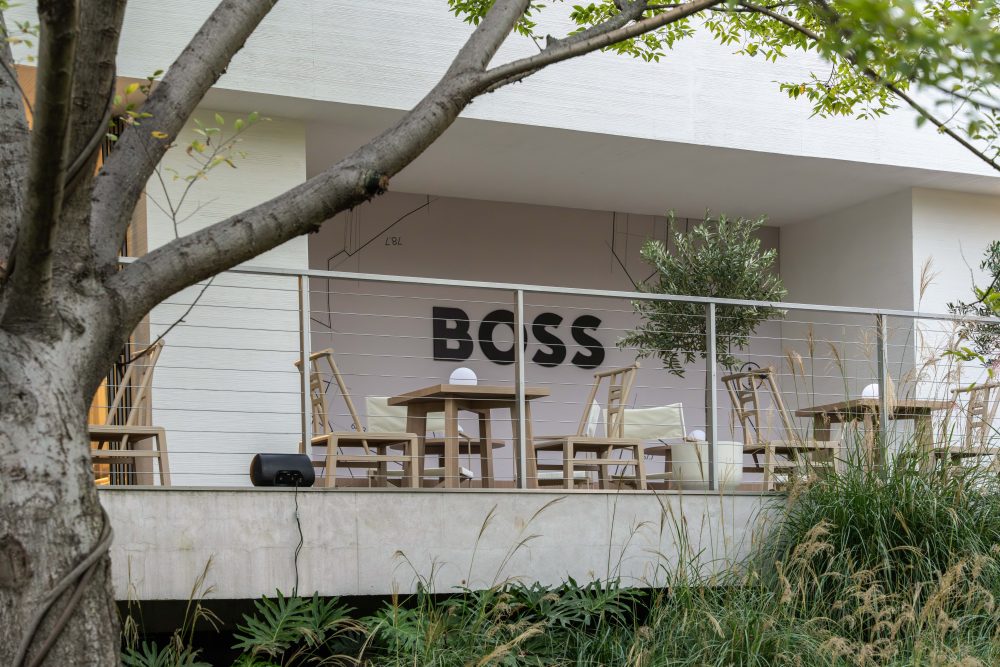
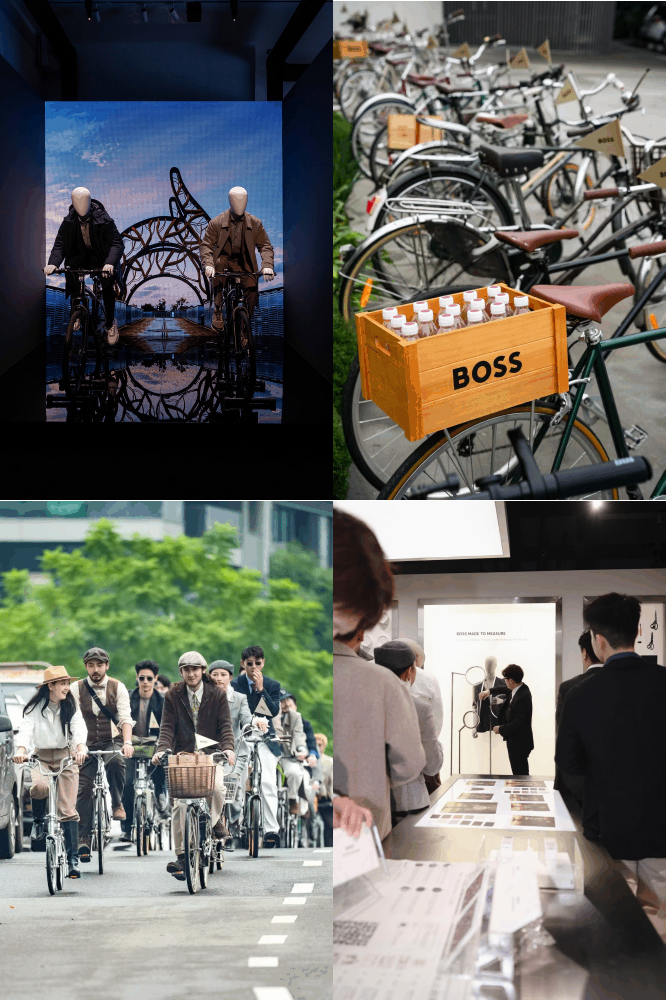
From October 15 to 25, the BOSS "Tailoring Chengdu" suit-themed exhibition opened to the public at Luhu CPI, a non-standard commercial complex in Chengdu. Unlike traditional stores that mainly display merchandise, the event attempts to place tailoring craftsmanship, brand history and everyday life scenarios in the same space, so consumers can understand how suits extend from a formal dressing product to richer wearing needs.
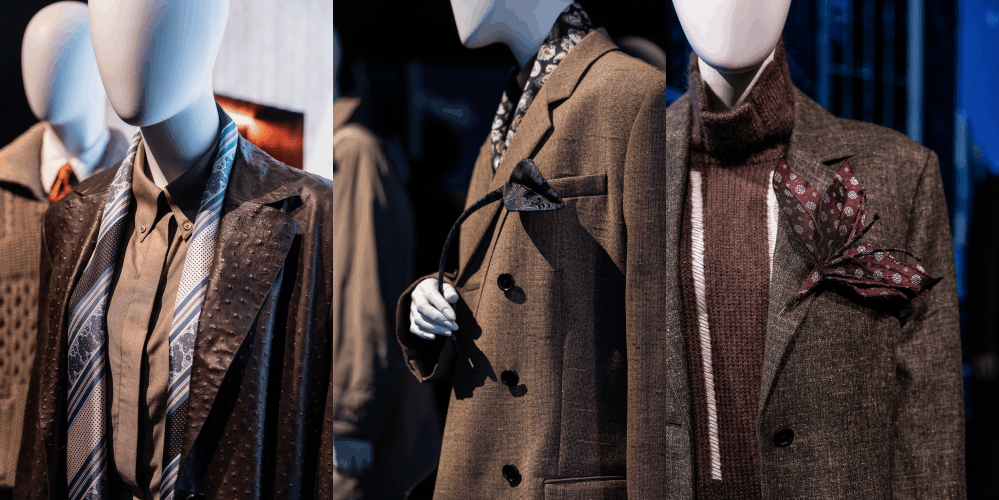
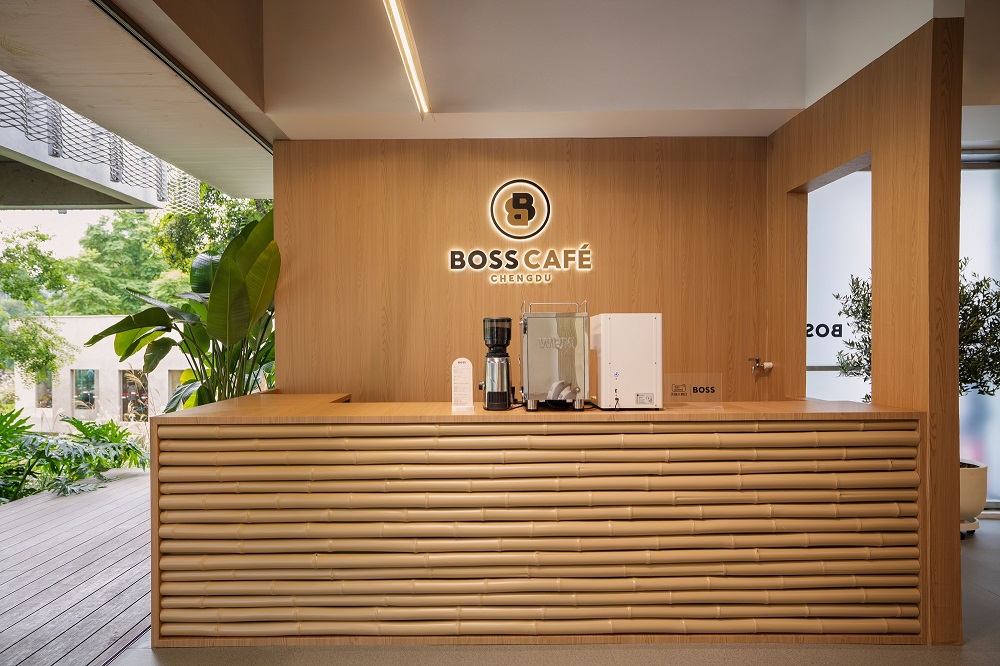
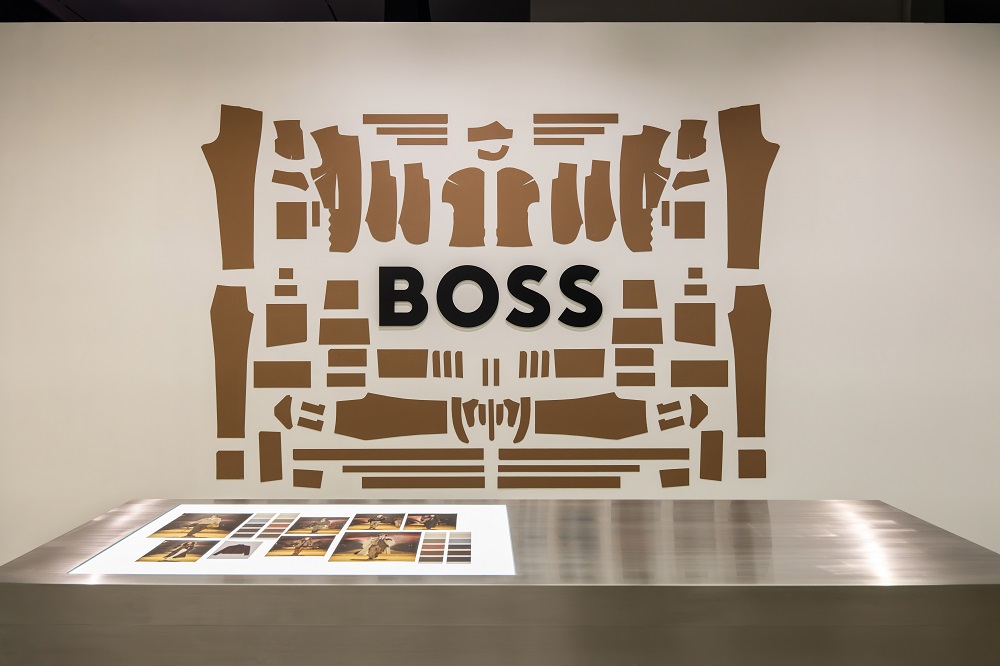
The first floor is inspired by residential-style settings, displaying selected men's and women's tailored pieces from the BOSS Fall/Winter 2026 collection, and features a Chengdu-exclusive BOSS Café, "Bosi Tea House"; the second floor presents the process of suits from design to production through the brand's classic visual archives, digital craftsmanship displays and displays of different life scenarios. The exhibition's focus is not only on showing ready-to-wear, but more on explaining the relationship between tailoring, craftsmanship and actual wear.
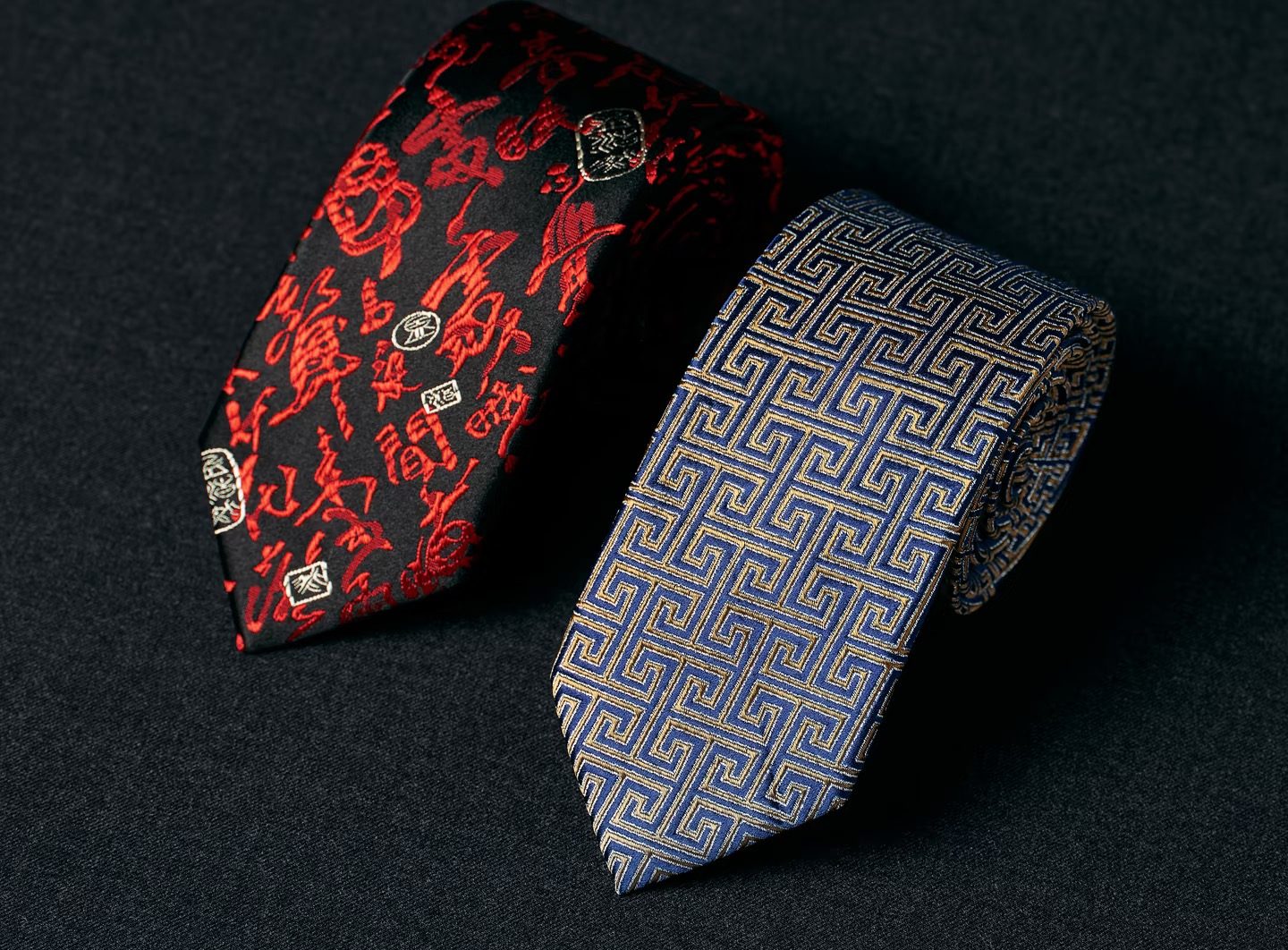
Known as the "Mother of Brocade," Shu brocade represents the highest level of silk weaving craftsmanship and is the most fitting local cultural carrier for luxury fashion brands in Chengdu. BOSS collaborated with the Chengdu Shu Brocade and Embroidery Museum, selecting two classic patterns—Huiwen brocade and Chunxiao brocade—to interpret the brand's iconic ties. The tailoring craftsmanship of a suit enters into dialogue with the exquisite weaving craftsmanship of Shu brocade, and the brand also uses Chengdu's local intangible cultural heritage resources to translate the craftsmanship theme into more concrete product expression.

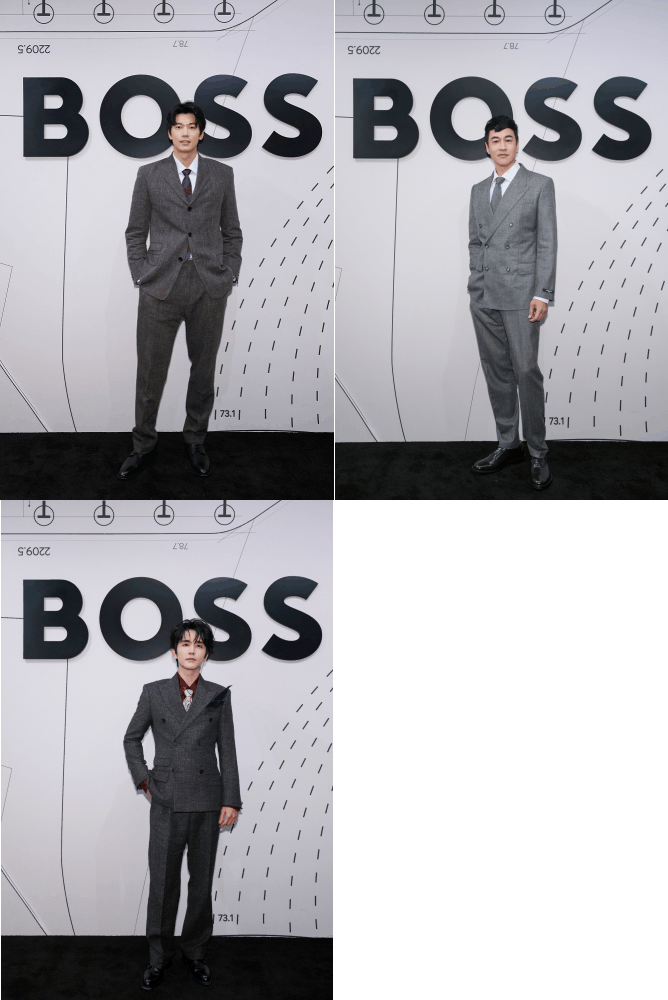
The event also unfolded around a series of themes including music, cycling and gentleman's style culture, and linked with different businesses at Luhu CPI, organically integrating various experiences into Chengdu's relaxed, comfortable and nature-close atmosphere. On the opening day, swimming world champion and brand ambassador Wang Shun, actor and singer Zhang Xincheng, and actor Peter Ho wore sharp suits from the BOSS Fall/Winter 2026 collection and, in the pleasant autumn weather, crossed the Luhu water system by boat to arrive at the exhibition space.
Sun believes that the consumption style of Chengdu and the Southwest market leans toward lifestyle and leisure, while the eastern coastal market represented by Shanghai has relatively prominent business needs. As one of the first international luxury brands to enter the Chinese market, BOSS well understands China's vast regional diversity, and on the basis of insights into regional characteristics, it carries out differentiated deep cultivation, using local events that truly understand consumer personalities to reach people's hearts.
She specifically mentioned Chengdu's park-style urban development and strong cycling culture. In the exhibition, in front of a representative rainbow bridge on Chengdu's urban greenway, BOSS displayed Performance commute collection suits in a cycling setting. "Wearing a suit while cycling breaks the conventional impression that suits are restrictive and formal," Sun said. Over the past weekend, BOSS held a fun gentleman's style cycling event with local Chengdu communities.
For a commercial event, increasing brand awareness and achieving retail linkage are equally important and mutually reinforcing goals.
Sun introduced that during the event, the pop-up space offered on-site sales and was linked with three BOSS stores: Chengdu SKP, Chengdu MixC and the newly opened Chengdu IFS. The three stores set up installations related to the suit-themed exhibition and presented tailored suits, casual sportswear and accessories from the BOSS Fall/Winter 2026 collection. The themed exhibition also designed a QR-code and check-in route: consumers can go from the pop-up space to the stores to continue the experience, or obtain event information at the stores, completing interactions across different scenarios.

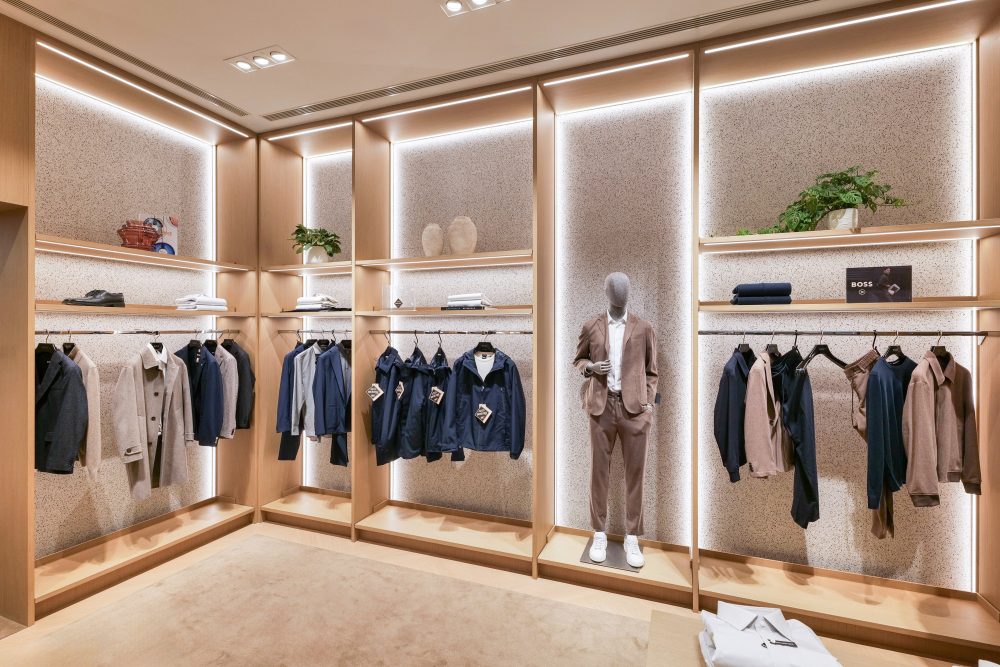
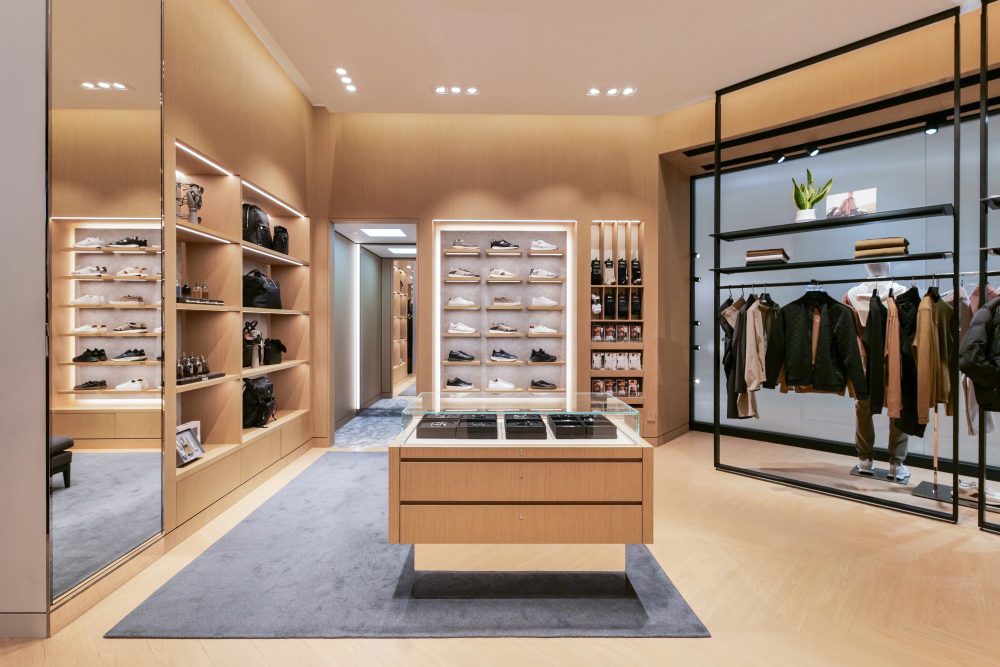
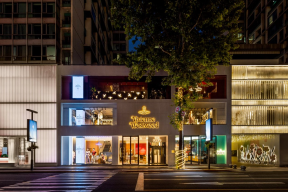
BOSS Chengdu IFS store
This arrangement allows the pop-up space and permanent stores to take on different tasks. The former attracts attention through themed content, while the latter continues to handle try-ons, styling and sales. Chengdu IFS covers the core Chunxi Road commercial area, SKP connects with high-end consumers in the south of the city, and the area where MixC is located gathers more young consumers and new lifestyle businesses. Sun said that multi-point linkage is also an attempt by the brand to reach people of different ages, professions and lifestyles.
Adjustments around the product portfolio, retail network and marketing efficiency ultimately need to be implemented in consumer relationships and business results. This is also an important focus of HUGO BOSS Group's "CLAIM 5 TOUCHDOWN" strategy in the Chinese market.
Sun introduced that the China market focuses on restructuring, streamlining and strengthening, with specific measures including: focusing on the brand's core modern suit tailoring and premium lifestyle sectors; streamlining the product portfolio, inventory, store formats and digital operations; and enhancing customer experience across retail, e-commerce and communications.
From tennis to sports lifestyle: what kind of brand image does BOSS hope to build?
If changes in the product portfolio reflect shifts in consumers' dressing needs, then sports marketing such as tennis is an important way for BOSS to extend its brand positioning into the lifestyle sector.
BOSS's tennis heritage can be traced back to the 1980s, when it sponsored the Davis Cup for 15 consecutive years. Since 2022, BOSS has entered a long-term partnership with Italian player Matteo Berrettini and become the title sponsor of the Stuttgart ATP 250 event BOSS OPEN; it later signed American player Taylor Fritz, continuing to extend the brand's connection with tennis from on-court to off-court.
Notably, BOSS will become the official apparel brand of the Australian Open starting in 2027, covering apparel for event staff, referees and ball kids, and plans to further extend the partnership through on-site experiences, co-branded merchandise and off-court collections. In the China market, the BOSS X AO co-branded capsule collection already landed in selected boutiques and e-commerce channels at the end of September 2026.
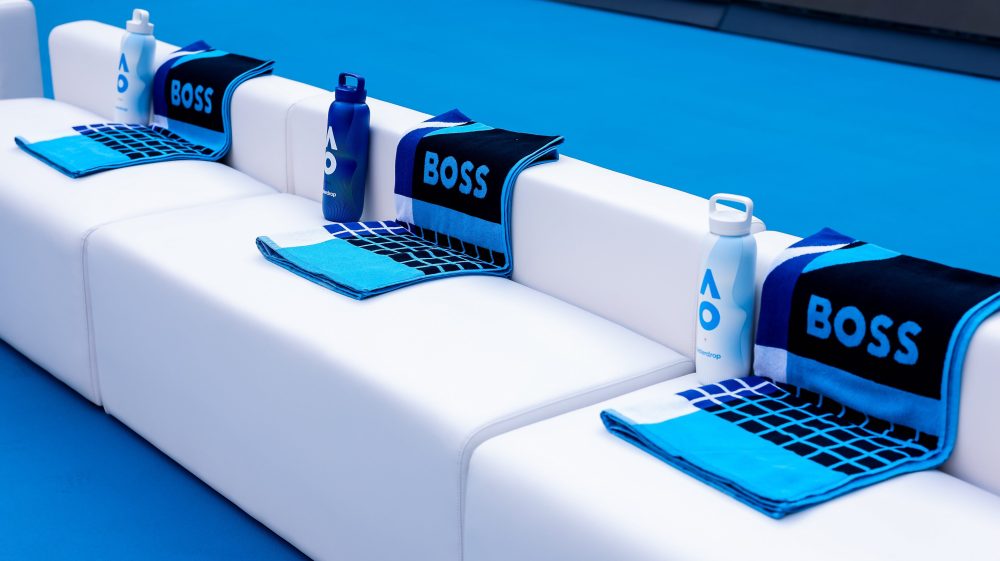
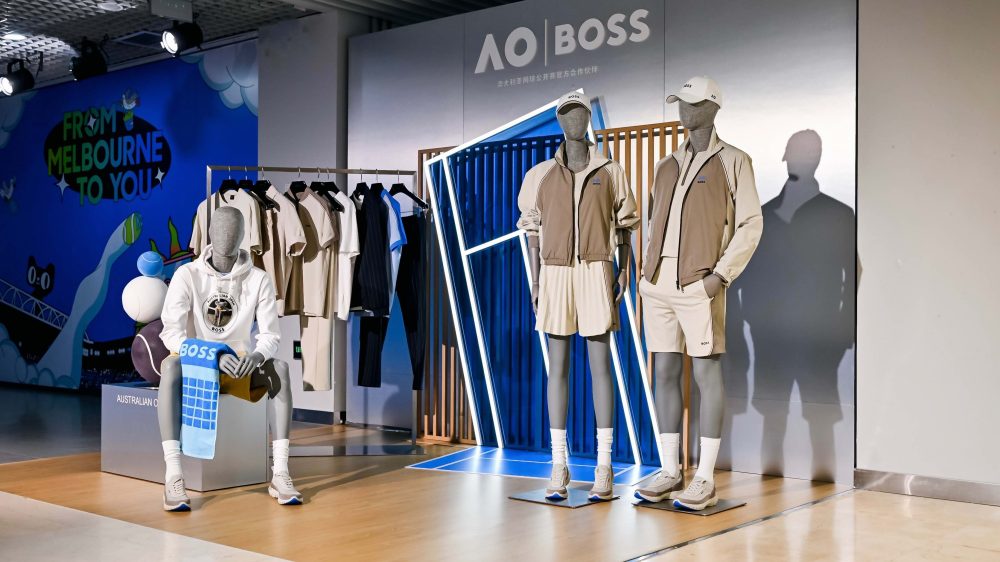
At the mass level, in October 2026, the Australian Open "One Point Slam" landed in China for the first time, and BOSS became the official sponsor of the China regional competition, with qualifying stops in Hangzhou, Beijing, Shanghai, Shenzhen and Chengdu; the China regional champion will go to Melbourne. Sun specifically emphasized the spirit of the Australian Open as the "Happy Slam": "Inviting fans to participate together and lowering the barrier to entry."
This approach echoes observations from Luxe.Co's Sports & Outdoor Brand Vitality Ranking: Events are a direct window for brands to observe and reach real sports and outdoor communities. As the participant base expands, brand competition will gradually shift from seeking event exposure to identifying more segmented consumer circles and conducting more targeted operations.
Through products, the brand connects tennis with its (24/7) premium lifestyle positioning. Sun introduced that BOSS currently incorporates tennis-related products into its athleisure collection, while offering different choices for on-court and off-court. On-court products correspond to sports functionality, while off-court products emphasize everyday wear and fashion expression. Tennis not only provides the brand with a marketing scenario, but also creates a more concrete context of use for athleisure, functional apparel and everyday styling.
Speaking about her understanding of tennis, Sun said: "Tennis represents a premium sports lifestyle, behind which is the pursuit of personal development, healthy leisure, socializing and quality of life. This is consistent with BOSS's 'Be Your Own BOSS' and positive, upward-looking values."
The next stage of growth opportunities in the China market: letting consumers walk with BOSS
In an increasingly fierce and polarized competitive environment, BOSS's long-accumulated heritage, craftsmanship, quality and style awareness remain the solid foundation of this century-old brand in the China market.
Looking ahead to the next five years, Sun told Luxe.Co that BOSS's development in the China market will continue to revolve around two cores: "modern tailoring" and "premium lifestyle." She specifically emphasized that future growth opportunities should not be understood merely as sports apparel in a narrow sense, but as business, social, sports and casual categories inspired by sports style. Beyond apparel, footwear and accessories will also be important growth directions.
For BOSS, the challenge in the next stage is how to make the brand core clearer while expanding the boundaries of lifestyle. What BOSS is answering is not only which scenarios it can further expand into, but also why consumers should choose BOSS. By re-emphasizing tailoring, it translates its existing advantages into product value that contemporary consumers can understand, experience and be willing to choose. Ultimately, it lets consumers understand what BOSS stands for, resonate with it, and walk with the brand along the way.
丨Image source: BOSS
丨Editor: Xiaoyue