
French high jewelry maison Boucheron recently unveiled its first flagship store in China at Shanghai Xintiandi. This marks the brand's third flagship store worldwide, following 26 Place Vendôme in Paris and Ginza in Tokyo, signaling a new phase in its global strategy.
Luxe.CO conducted an in-depth interview on site with Hélène Poulit-Duquesne, Global CEO of Boucheron. "I remain hopeful about the Chinese luxury market and believe 2026 will bring a rebound," she said.
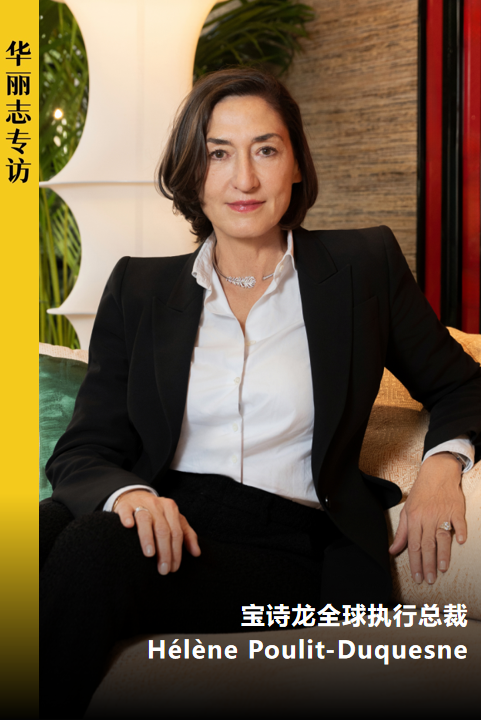
After Hélène Poulit-Duquesne took office in 2015, she positioned Asia—and China in particular—as a strategic priority market for the brand. Since entering the Chinese market in 2018, Boucheron's boutique count in mainland China has grown to 17.
In this interview, Hélène Poulit-Duquesne shares the deeper considerations behind the Shanghai Xintiandi flagship, and offers her thoughts and observations on brand development and the jewelry markets in China and globally:
- "Compared with mall boutiques, a street-facing flagship can present the brand narrative more fully"
- "People's desire for high-value products will never disappear"
- "The foundation of innovation is staying true to the brand DNA"
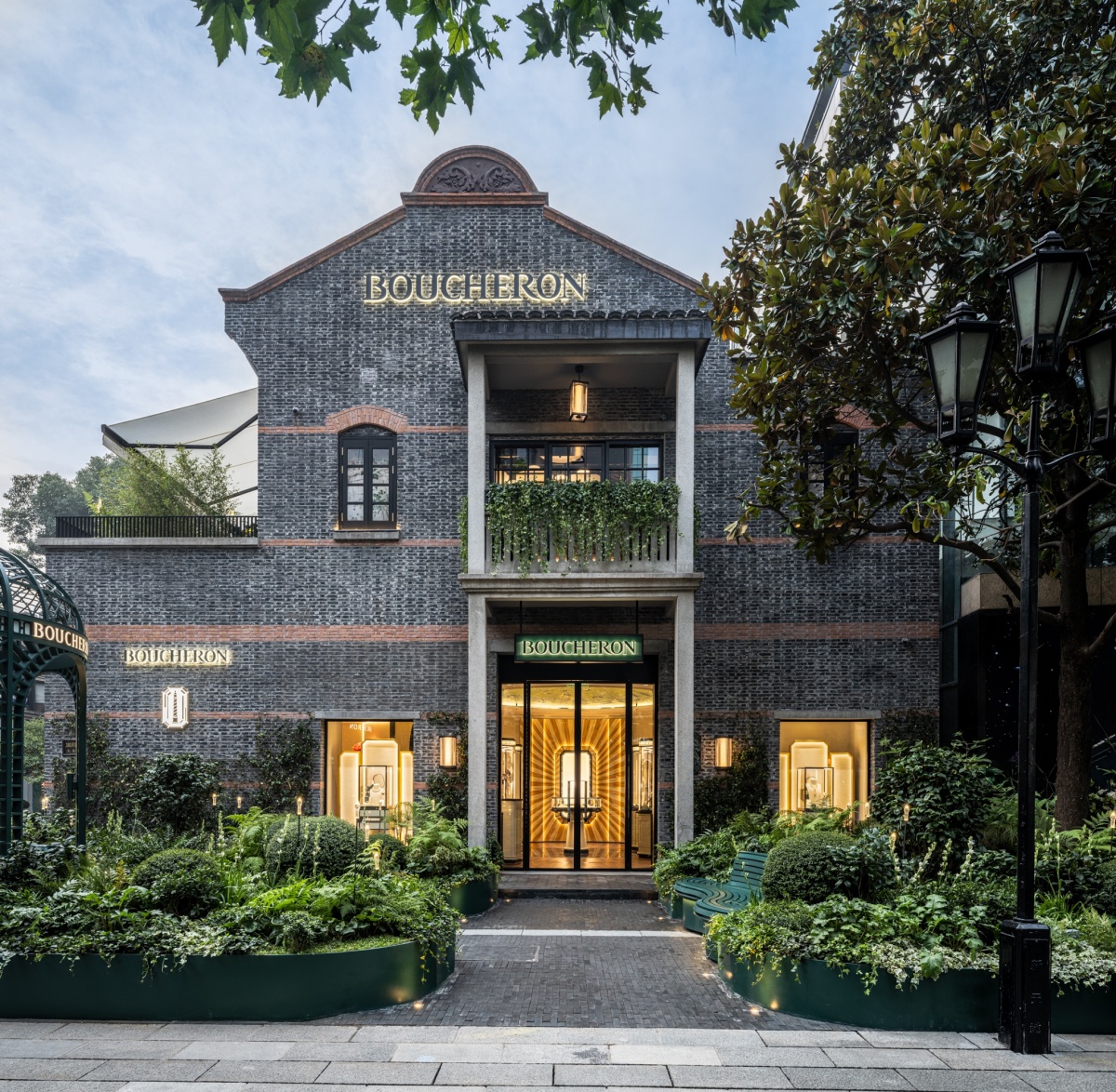
Above: The flagship is located in a street-facing shikumen building in Xintiandi, covering 278 square meters. The building blends traditional Chinese and Western styles; while preserving the integrity of the original structure, Boucheron has subtly incorporated Art Deco elements such as symmetrical aesthetics, metal ornamentation and emerald-cut motifs.
"Compared with mall boutiques, a street-facing flagship can present the brand narrative more fully"
Luxe.CO: Why did you choose Shanghai Xintiandi for the world's third flagship? Compared with mall boutiques, what unique experiences does a street-facing flagship offer?
Hélène Poulit-Duquesne: We had always wanted to open a true flagship in China, especially in Shanghai—a boutique with generous space, standing directly on the street. Using a historic building as the vessel allows us to pay tribute to a long heritage while breathing new life into it.
About three years ago, I visited Xintiandi and was very drawn to this place. I especially love the shikumen architecture, which blends traditional Chinese and Western styles. This architectural style originated in the 19th century, and its historical timeline runs parallel to and intersects with Boucheron's opening of its first flagship at 26 Place Vendôme in Paris. Xintiandi is also in a lively city center, with a neighborhood full of energy and youth, and it is a popular spot for people to gather and shop.
A street-facing flagship is completely different from a mall boutique. In a mall, even if a brand has a large two- or three-story store, it is hard to have a narrative space like a street-facing flagship. Here, we have ample space to present Boucheron's complete story.

Above: The Chinese-style courtyard at Boucheron's Shanghai Xintiandi flagship is accented by a classical moon gate—Hélène Poulit-Duquesne's personal favorite spot.
Luxe.CO: In terms of urban culture and store location, what considerations do the Shanghai Xintiandi flagship and the Paris Place Vendôme flagship share?
Hélène Poulit-Duquesne: The core commonality between the two stores is this: we chose to move into historic buildings, preserve part of their original appearance, and tell Boucheron's story fully within them. At the same time, creating the warmth of a home is at the heart of our retail philosophy. We want VIP clients to gather and relax here, and we are committed to making them feel at home.
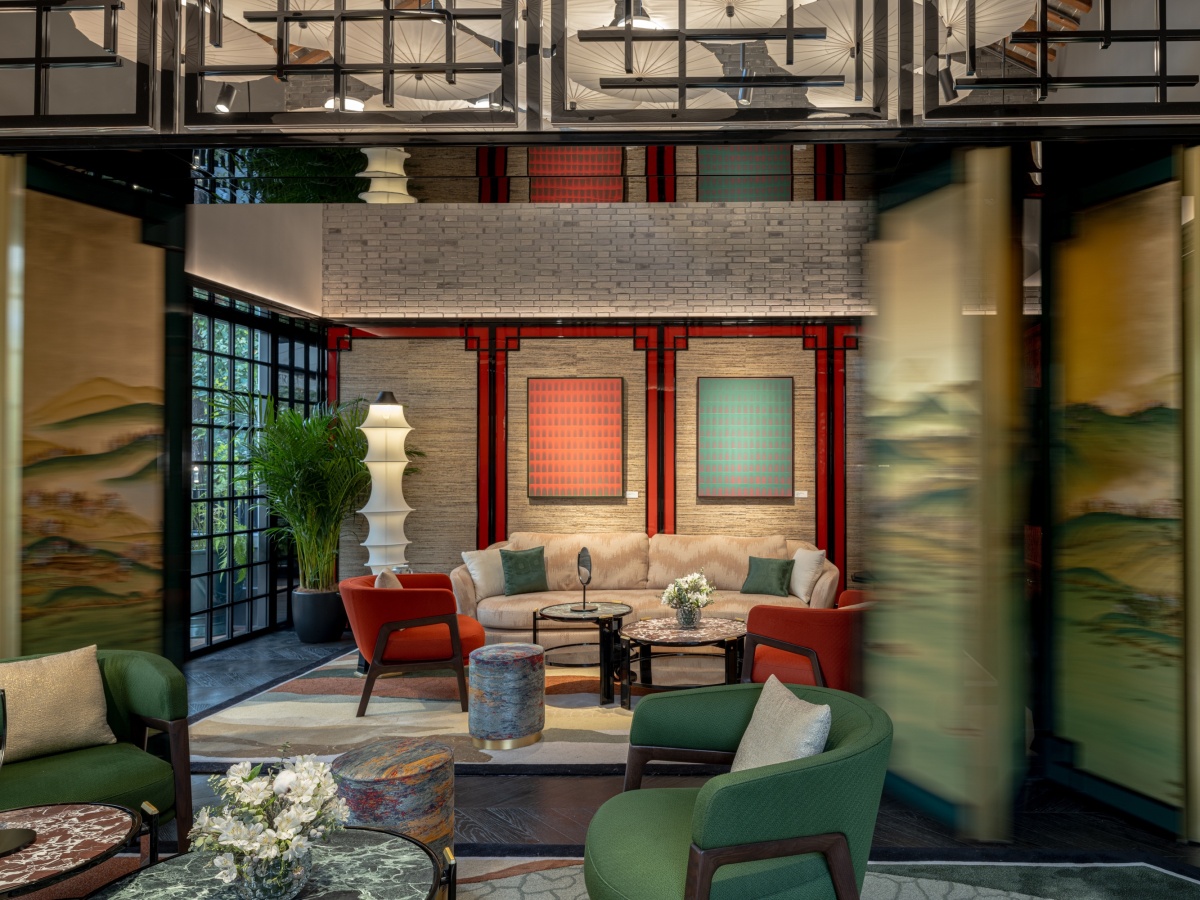
Above: The VIP salon at Boucheron's Shanghai Xintiandi flagship
Luxe.CO: The Shanghai Xintiandi flagship incorporates many Chinese cultural elements, and we also see many artists' works in the store. What thinking went into integrating local culture?
Hélène Poulit-Duquesne: From the very beginning, the design concept of this flagship was to pay tribute to Chinese culture. All our designs are done by our in-house team, with Art Deco as the design framework—a style that inherently has deep connections with Chinese architecture. In fact, our retail space design philosophy has long incorporated a wealth of Chinese elements through Art Deco, such as the "Chinese cabinet" seen in the Shanghai Xintiandi flagship, which also appears in boutiques in Paris, Geneva, London and elsewhere.
At the Shanghai Xintiandi flagship, we further combined Chinese culture with another important Boucheron element—nature. So in addition to a French-style garden, we also created a Chinese-style garden.

Above: A sculptural display case made entirely of jade-green bamboo, created by artist Lin Jiayu for Boucheron's Shanghai Xintiandi flagship
We also invited artists from China and France to participate in the creation. For example, French artist Claire Nicolet, who once lived next to the Forbidden City in Beijing for four months. This August she came to Shanghai and spent a month hand-painting the dome of the main salon at the Xintiandi flagship.

Above: The dome hand-painted by artist Claire Nicolet for the main salon of Boucheron's Shanghai Xintiandi flagship
"People's desire for high-value products will never disappear"
Luxe.CO: Looking back at Boucheron's development in China, what do you consider the brand's most important decision? Where will the focus be in the coming years?
Hélène Poulit-Duquesne: Our most critical decision has been to focus clearly: continuing to build the Quatre collection into a deeply recognized icon. As a jewelry maison, having a strong icon is essential.
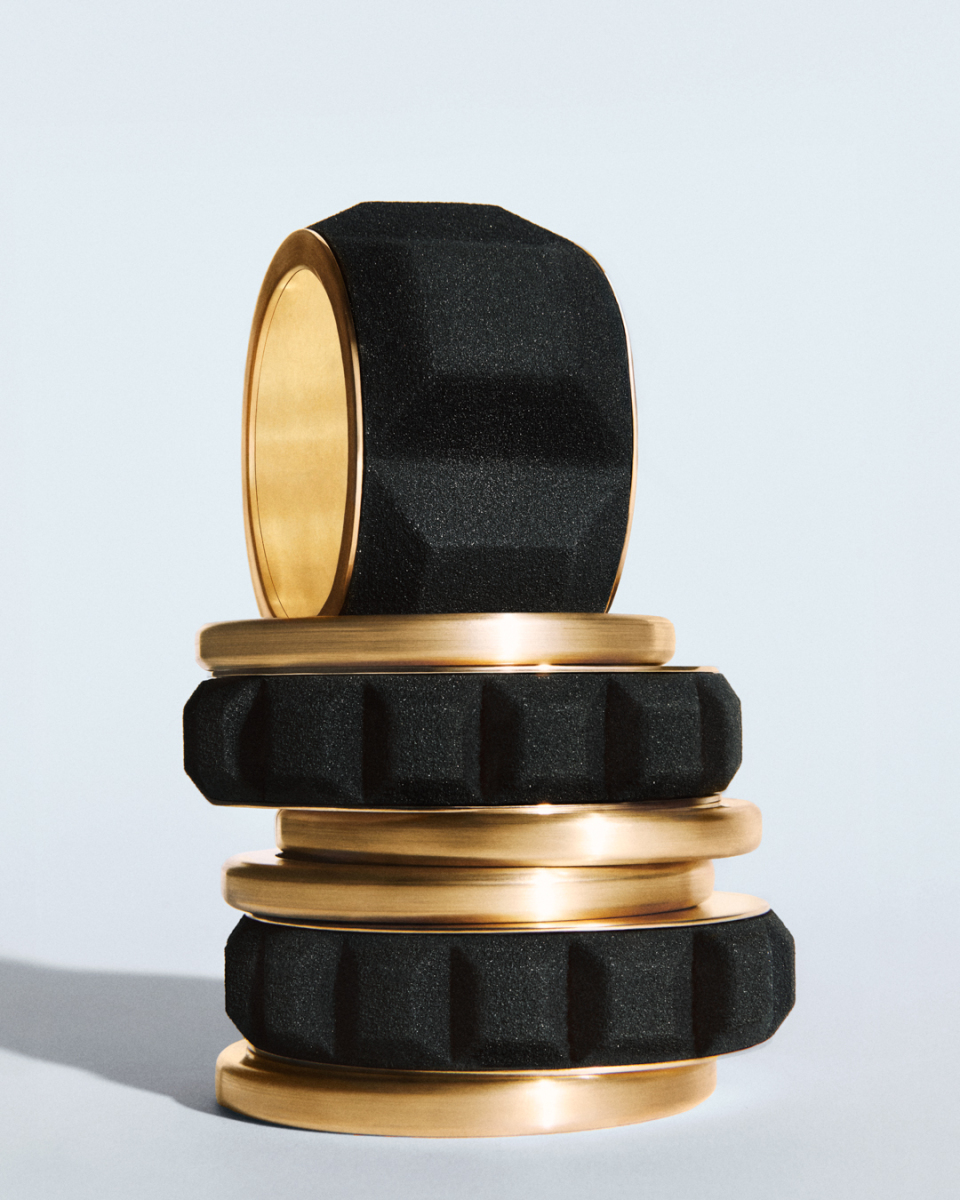
Above: The Quatre Sand concept piece launched by Boucheron in September this year, reinterpreting the classic Quatre collection with 3D-printed sand particles
At the same time, we always put VIP and VIC client relationships at the core. By creating one-of-a-kind experiences for them, we help them gain a deeper understanding of our high jewelry, and through their word of mouth, this matters for both the brand's business and its image. For example, we once customized a trip to Morocco for a client, and we have also invited clients on a private, exclusive itinerary at Château Latour. We can meet all their needs.
Looking ahead, we have two priorities: first, upgrading store scale and locations; second, continuing to communicate to the Chinese market Boucheron's deep history and top-tier craftsmanship.

Above: A central display case created by artist Olga Thune-Larsen using straw marquetry for the main salon of the Shanghai Xintiandi flagship
Luxe.CO: More and more luxury brands are opening "large stores" and "two-story boutiques" in China. In this fierce competition over store experience, what is the core that Boucheron insists on?
Hélène Poulit-Duquesne: A Boucheron boutique is more like a "home" than a retail space—this is the essence that distinguishes us from other brands' flagships.
Since the Xintiandi flagship opened, I have looked at the store's sales reports every day, and noticed one woman who comes in every day to buy a piece, saying she has never felt so wonderful in any other boutique. This is exactly the experience we want to create: when people feel at ease in a space, they are more willing to become part of the "brand family."
From a business perspective, I don't fully understand the necessity of super-large stores, because half the space can often generate the same revenue. But from a brand image perspective, a large store can demonstrate the brand's strength and increase its visibility. For Boucheron, in any given market, we will only establish one or two truly flagship-level boutiques.
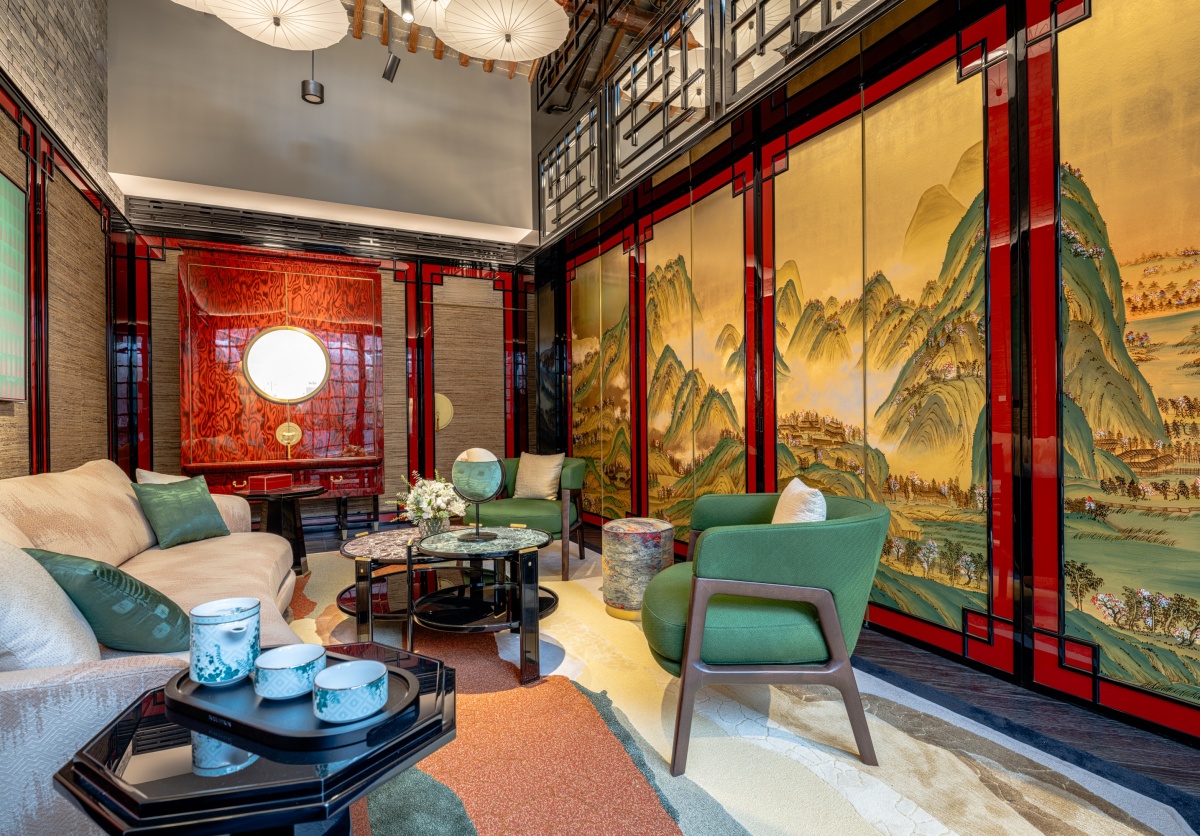
Above: The VIP salon at Boucheron's Shanghai Xintiandi flagship
Luxe.CO: Facing the current challenging Chinese luxury market environment, how does Boucheron respond?
Hélène Poulit-Duquesne: I remain hopeful about the Chinese luxury market and believe 2026 will bring a strong rebound. Even if the growth rate may not be as fast as before, it is by no means a disastrous situation, and I completely disagree with rhetoric such as "the luxury industry is coming to an end."
Of course, I believe the luxury industry is also going through a phase of self-restructuring; we need to re-examine ourselves, but people's desire for high-quality, high-value products will not disappear.
As for Boucheron, we are in an expansion phase, continuously opening up new markets. To be honest, we haven't encountered too many difficulties; momentum is currently good. And the jewelry industry itself is highly resilient.
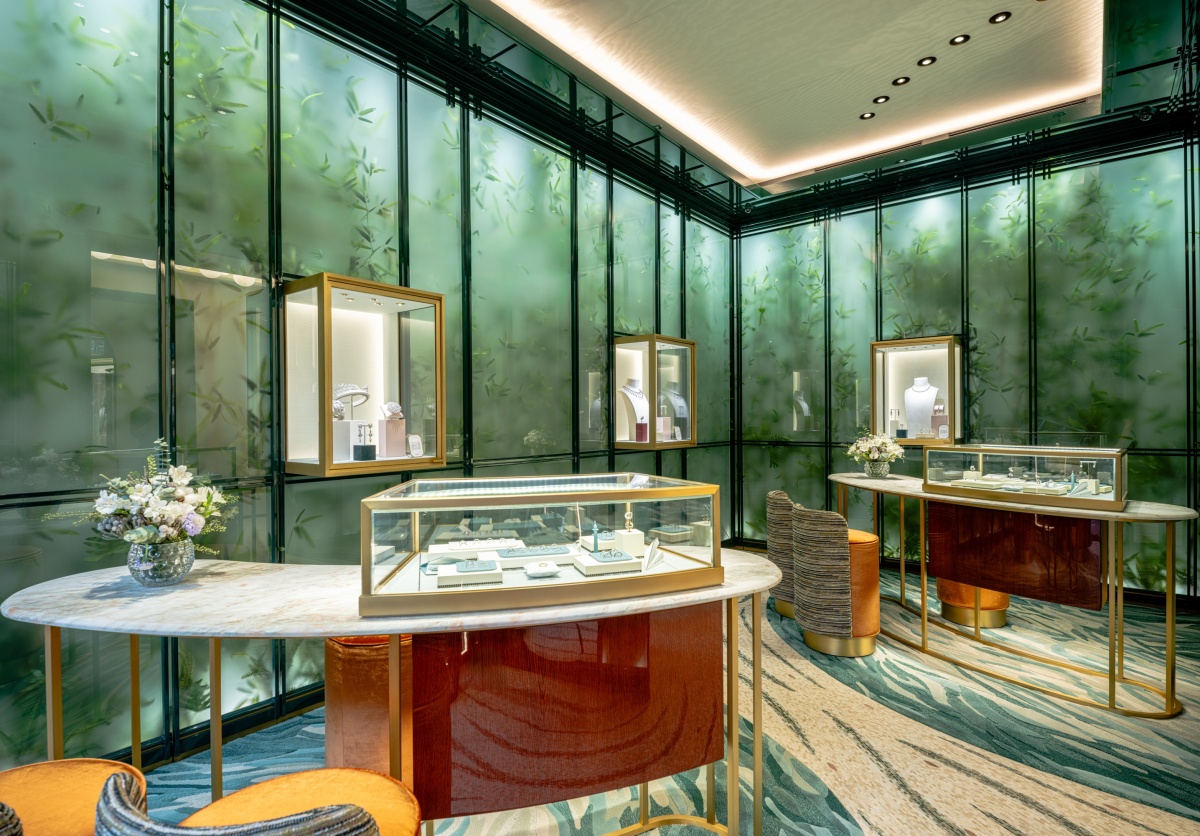
Above: The bridal salon at Boucheron's Shanghai Xintiandi flagship
"The foundation of innovation is staying true to the brand DNA"
Luxe.CO: In recent years, what important changes have you observed in China's high jewelry market and consumers? How does Boucheron respond to and lead these trends?
Hélène Poulit-Duquesne: Today, high jewelry that combines investment and emotional value has become an important part of the asset portfolios of affluent Chinese consumers. The new generation of consumers is very forward-thinking and knowledgeable, with a deep understanding of craftsmanship. They appreciate the emotional stories behind pieces as much as the value of the pieces themselves.
Trends are created. In 2020, we were the first to have male models showcase the brand's high jewelry. On film festival red carpets, we also had male artists wear the maison's high jewelry—which initially surprised the media and later prompted widespread industry following. Boucheron has always been happy to innovate.

Above: A maison heritage piece on display at Boucheron's Shanghai Xintiandi flagship: a gold powder compact from 1925
To connect with these changing markets and consumers, we tell the brand story through two paths: one focused on brand craftsmanship, and the other on maison heritage. When I first took office, I decided to allocate an annual budget to buy back vintage Boucheron pieces from auctions and the secondary market, and we have now accumulated a certain number. These pieces are displayed in our boutiques and at the brand's high jewelry exhibitions, becoming part of the maison's story.

Above: A maison heritage piece on display at Boucheron's Shanghai Xintiandi flagship: a rose-shaped brooch created in the 1960s
Luxe.CO: For the luxury jewelry industry, is "innovation" a difficult task? How do you strike a balance between creative design and classic heritage?
Hélène Poulit-Duquesne: For Boucheron, "innovation" is not difficult, because the brand's founder, Frédéric Boucheron, was himself a highly innovative person. But we always believe that the foundation of innovation is staying true to the brand's heritage and DNA.
In 2020, we made a key decision: to split the annual high jewelry collection into two releases, in January and July. For the Histoire de Style high jewelry collection released in January, I ask Creative Director Claire Choisne to respect the brand's history and give a contemporary perspective to classic pieces from the brand's archives.
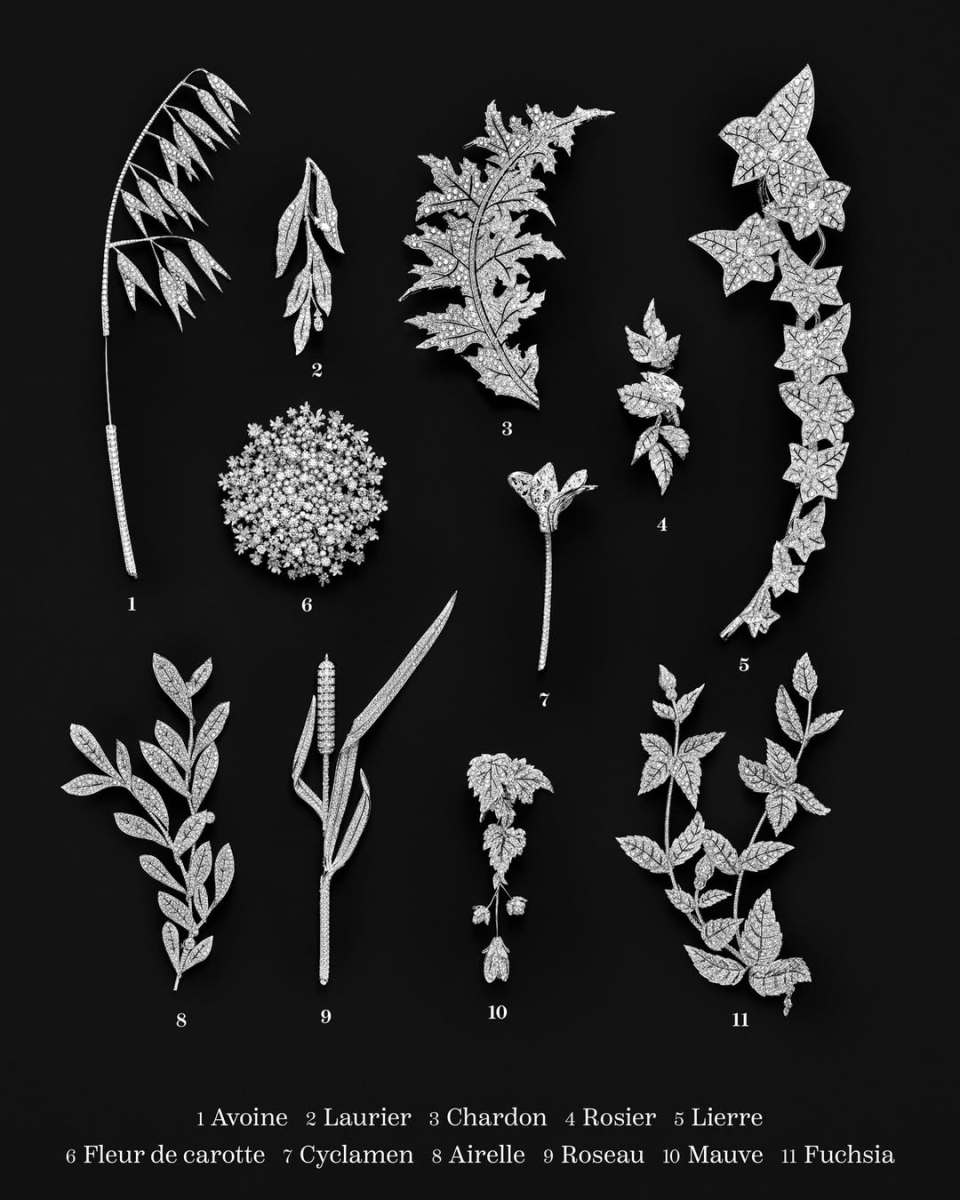
Above: Histoire de Style, Untamed Nature high jewelry collection, released by Boucheron in January 2025
For the Carte Blanche high jewelry collection released in July, I give Claire complete creative freedom; together we try to push the boundaries of innovation, with the sole goal of building the brand image and telling our story.
After this strategy had been in place for two years, one day the Chief Commercial Officer told me that we had successfully sold pieces from the Carte Blanche high jewelry collection, while the Chief Communications Officer told me at the same time that our Histoire de Style high jewelry collection had also gained tremendous media attention. Judging from the final results, the differentiated positioning of the two collections has allowed us to achieve an ideal balance between heritage and design innovation.
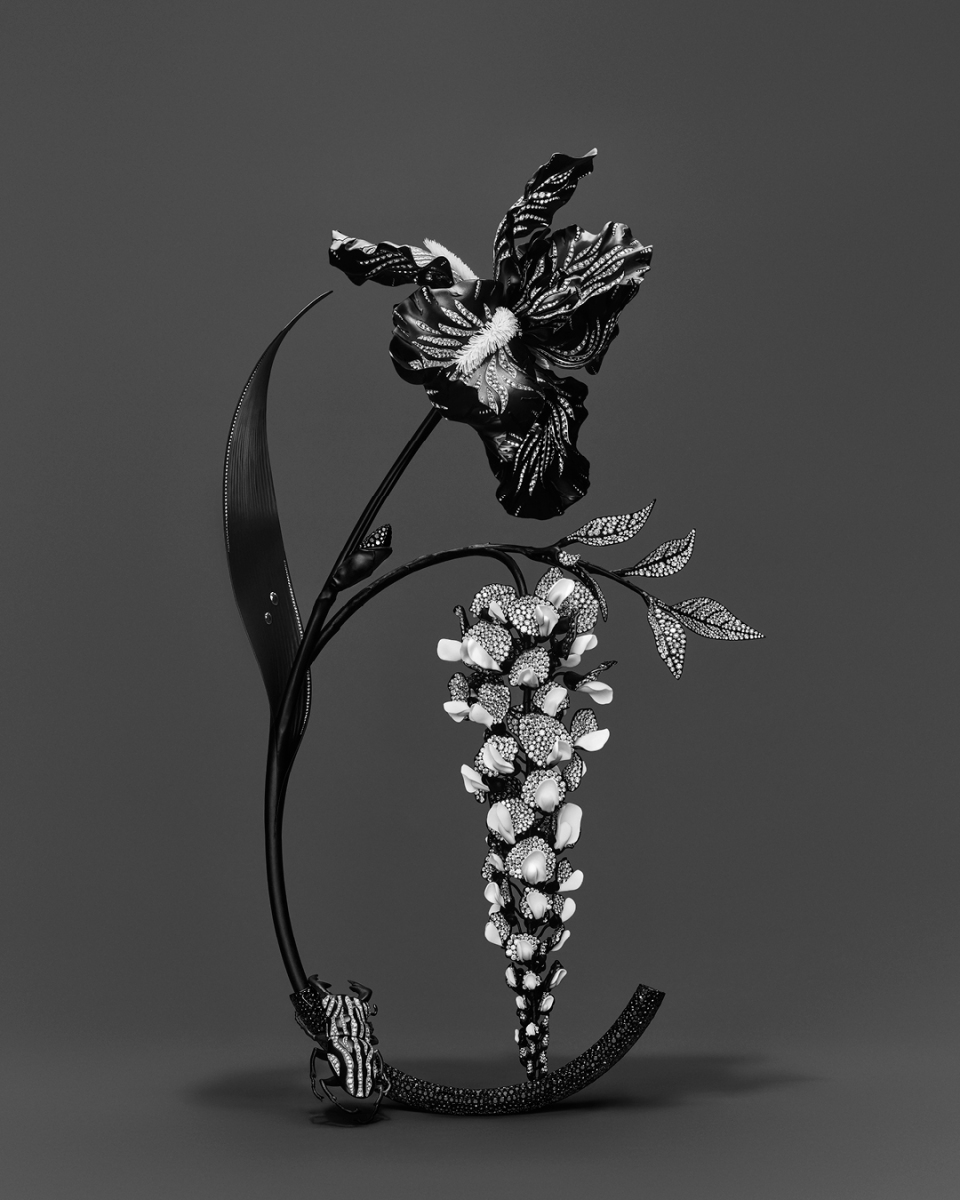
Above: Carte Blanche, Impermanence high jewelry collection, released by Boucheron in July 2025
| Image credit: Courtesy of Boucheron
| Editor: Zhu Ruoyu


