
Today's perfume industry has undergone earth-shaking changes compared with more than 100 years ago. Looking back at the development of modern perfumery from the mid-19th century to the present, synthetic materials replacing natural ingredients and large-scale industrial production replacing private bespoke orders are both "megatrends" that are difficult to reverse.
But at a time when consumers are increasingly sophisticated and discerning, as financial capital pours in and conglomerates密集 position themselves, the niche high-end fragrance sector is welcoming a historic development opportunity. Some ultra-luxury perfumes that adhere to natural ingredients and bespoke craftsmanship are also gradually moving from niche circles into the public eye.
Henry Jacques is one of them. Recently at Shanghai Plaza 66, this French haute parfumerie brand, known for its rare and expensive perfume essences, opened its first limited-time fragrance space in mainland China.

Henry Jacques limited-time fragrance space at Shanghai Plaza 66, open from August 30, 2026 to January 14, 2027
Recently, Luxe.CO spoke with Anne-Lise Cremona, second-generation member of the founding family and CEO of the brand. As a descendant of the family, she strives to preserve the traditions of classical perfumery and French fragrance craftsmanship; as the brand's operator, she has been thinking about how to remain innovative while respecting tradition, so that more people can discover and love this brand.

In 1975, brand founder Henry Jacques Cremona and his wife Yvette Cremona joined forces with master perfumer Joseph Sassi, hailed as the "last great nose" of traditional French perfumery, to establish a perfume laboratory in Grasse, starting out in private bespoke fragrances.
For nearly half a century, they have always insisted on using top-quality natural essences from around the world, even building their own plantations, and continuing to create using "preserved ancestral methods of French haute parfumerie"...
In 2010, Anne-Lise Cremona took over as CEO of the brand. In this interview, she shared with Luxe.CO her journey of transforming this family brand, including:
She led the selection of 50 fragrances from more than 3,000 original creations in the family's fragrance archive to bring to contemporary fragrance lovers; in 2014, she made Henry Jacques the first brand to open a Salon de Parfums at Harrods in London.
Henry Jacques' perfumes are undoubtedly expensive.
Examples include Les Exceptions, aimed at collectors, and the true Le Sur-Mesure haute couture service. The latter does not publish prices; some previously public reports have disclosed bespoke prices of hundreds of thousands of euros. The process takes at least four months, and once completed, the fragrance belongs to only one client and enters the Henry Jacques brand archive.

Behind the high prices, the brand still follows a creative approach with long cycles, limited production scale, and raw materials constrained by natural conditions. For example, in addition to its in-house laboratory and artisan workshop, the brand has in recent years also taken control of industrial ecosystems such as rose cultivation, leather production, and crystal manufacturing.
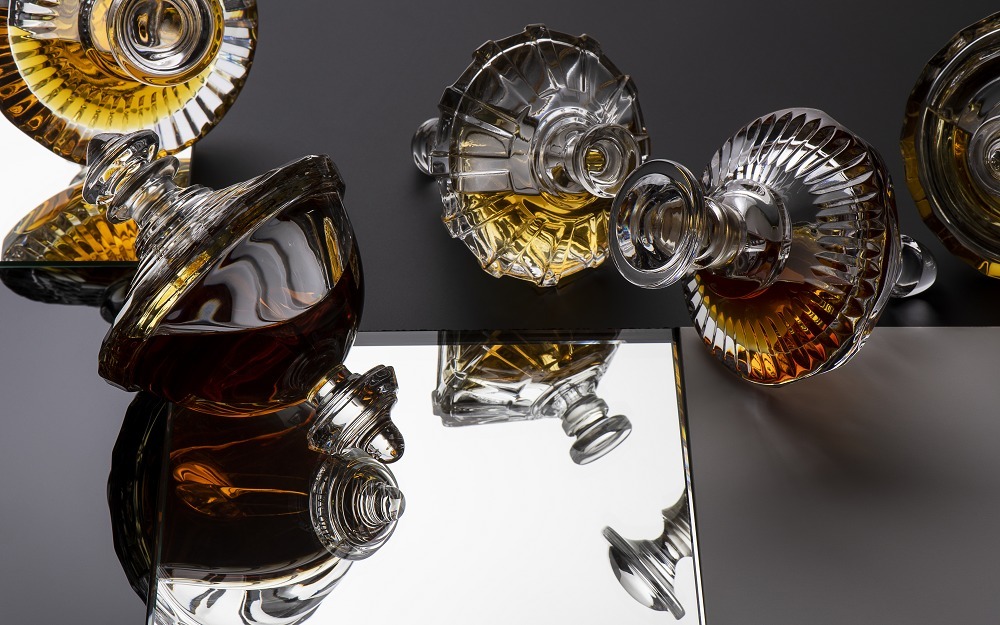
On its own land in southern France, the brand spent about five years cultivating the growing environment for "May rose," using horses rather than tractors for cultivation and ladybugs instead of pesticides. The crystal perfume bottles are hand-blown by top European crystal workshops, and a single piece in the Les Toupies collection took four years to design and complete.
Covering the entire perfume supply chain from raw materials to packaging may no longer be what contemporary business advocates; for Henry Jacques, however, it is the only remaining way to safeguard classical perfume creation.
But for the long-term survival of the Henry Jacques brand, this is also where Anne-Lise Cremona's most difficult question begins—how exactly can a fine fragrance atelier that originally served only a small number of private clients survive and develop in the local business environment?
"Rejecting the traditional perfume business model, we are closer to haute joaillerie and haute couture"
Anne-Lise Cremona was exposed to perfume from an early age. During her studies, she began working with her father, but she did not stay directly in the family business; she left the South of France for Paris, later joined a large international group, and subsequently lived in London. Around 2010, she returned to France and took over the family business.
This life trajectory also gave her a "dual perspective": on one side, the traditional fragrance craftsmanship accumulated by the family over decades; on the other, an understanding of brands, channels, and business models from a large international corporate background.
Luxe.CO: You have always advocated "returning to the classical perfume era." Why is it necessary today to re-examine classical perfume?
Anne-Lise Cremona: As a child, I saw my mother use a very precious Bulgarian rose essence. It was kept in a small wooden box and looked like a piece of jewelry.
In the past, perfume was not simply "a spray." It was a gesture, a ritual, and a moment for oneself.
So we have reintroduced this approach in Les Classiques. Today people are used to 100ml perfume sprays, but Les Essences (perfume oils) are highly concentrated essences; only one drop is needed at a time, applied to the skin with a crystal glass wand, and a bottle can be treasured and used for a long time. This is also the best sensory way to express the intimacy of fragrance and all its subtle variations.

Luxe.CO: How do you view the scaled development of perfume brands?
Anne-Lise Cremona: Scale itself is not the goal.
If you truly want to maintain craftsmanship and high quality, you must accept certain limitations. Our raw materials themselves are a limitation. For example, if I want to use a particular quality of rose, I cannot even satisfy the market of one city, let alone all markets.
I have loved "handmade" since childhood. When working with my father, his choices and practices directly taught me by example. He would firmly say "no" to many commercial choices, and this gave me the courage to refuse many things. Especially as a woman, this is not always easy in the modern business world; you have to shout loudly to be heard.
Perfume cannot be produced in enormous quantities, so you must choose what kind of brand you want to be. For me, rather than building a meaningless vast empire, I would rather build a company that truly makes me happy.

Luxe.CO: You once worked at a large corporation and later returned to the family business. How do these two completely different working environments influence how you run Henry Jacques today?
Anne-Lise Cremona: For me, the most important question when returning to the family business at that time was not "what do I want to do," but "what must I do."
I was very clear that we needed to keep Henry Jacques alive, but not by sacrificing what it originally was.
In the 1990s, the perfume industry became increasingly reliant on mass production and global distribution; brands could sell millions of bottles around the world. But my father always believed that Henry Jacques was closer to a haute couture atelier than to a perfume company in the traditional sense. He was unwilling to change in order to follow trends, because that would go against his understanding of beauty.
So when I took over again, I needed to find another business model.
I saw that wine, jewelry, and watches could all have very niche, very high-end markets, but perfume seemed to have only one mainstream commercial path—mass production, mass distribution, and marketing.
I wanted to prove that what truly requires courage is rejecting this model and instead building a business model closer to that of a high jewelry or haute couture brand, which is also the way we feel more comfortable and more identified with.

From "a bottle of perfume" to "Art of Living"
What Anne-Lise Cremona calls "anti-traditional perfume commerce" does not mean rejecting today's consumers. On the contrary, the brand's products and product formats have been changing in recent years, but these changes do not start from chasing trends.
This reinterpretation of tradition also constitutes Henry Jacques' understanding of the modern Art of Living.
For example, the family fragrance archive contains about 3,000 creations, from which Anne-Lise Cremona later selected 50 representative works to form today's core collection, Les Classiques.
These 50 fragrances represent the brand's experience during its haute couture period. The brand hopes to bring these historical works back into the present, rather than simply sealing them away in the archive.

For example, for innovative development aimed at contemporary users, Les Solides solid perfume balm took more than four years to develop, placing replaceable solid fragrance capsules into a portable object. Its production process introduced technical thinking from the Swiss watchmaking industry, with long-term adjustments made to the structure, opening and closing, sound, and usage gesture.
Ultimately, the solid fragrance is combined with the beauty of precision mechanics in the Clic-Clac mechanism, turning fragrance from a fixed bottle into a personal object that can be carried, replaced, and collected.

Clic-Clac solid perfume mechanism
Entering China, but not blindly catering to the market
Shanghai is part of Henry Jacques' recent expansion in Asia, and judging from the way it has landed here, the brand is still trying to maintain its own rhythm.
At present, the brand has boutiques and brand-exclusive spaces in Paris, London, Hong Kong, Tokyo, Singapore, Kuala Lumpur, Dubai, Abu Dhabi, Doha, and Beverly Hills, among other places, and plans to further expand in Europe, the Americas, and Asia.
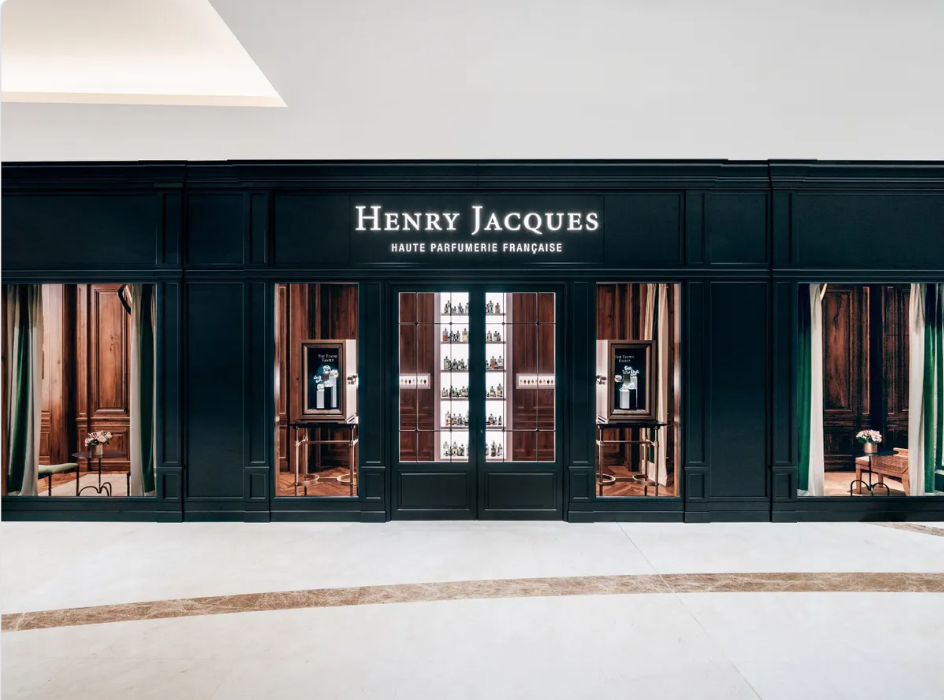
Henry Jacques boutique at ELEMENTS, Hong Kong
Anne-Lise Cremona recalled that when Henry Jacques first entered Harrods in the UK, buyers were once not optimistic about this product format featuring applied perfume oils.
But ten years later, the brand's performance proved itself. She said: "We doubled the size of our Harrods boutique. I still remember that when we opened the first boutique, executives from several fragrance and beauty brands made special trips to see the Henry Jacques boutique for themselves. It was like a cabinet of curiosities, and clients truly understood the brand."
In 2021, Henry Jacques opened its first boutique in China at ELEMENTS in Hong Kong. Since then, in mainland China, niche fragrance enthusiasts have continued to pay attention to this brand that emphasizes classical perfume traditions, leaving room to imagine the brand's further entry into the mainland market in the future.
This time at Shanghai Plaza 66, the brand's limited-time space is presented based on its flagship store on Avenue Montaigne in Paris, allowing Chinese consumers to experience the brand's main product collections at once; at the same time, L'Île de HJ is the first Shanghai-exclusive fragrance, sold only in this space.
Regarding the Chinese market, Anne-Lise Cremona did not offer a more aggressive expansion plan, but emphasized the brand's own expertise and craftsmanship.

Luxe.CO: How do you understand Chinese consumers?
Anne-Lise Cremona: I have always believed that Chinese clients can resonate with Henry Jacques. In fact, Chinese clients are the main buyers of the Les Essences collection (perfume oils), which took us by surprise.
China has a very profound history and culture, as well as a sensitivity to craftsmanship, materials, beauty, and detail. I don't pay much attention to the noise in the market, nor do I change my judgment just because someone tells me the market is bad.
I care more about whether consumers are growing tired of inconsistent messages.
If a brand says it is an artisan brand or a luxury brand, yet has tens of thousands of stores and produces millions of products, that is contradictory in itself.
Luxe.CO: You seem to dislike the word "trend." Today the fragrance market is increasingly influenced by social media and trends. What is your view?
Anne-Lise Cremona: I don't like trends, because there is no so-called correct answer in perfume.
Younger generations in particular are more willing than before to try different scents, and they have less rigid gender boundaries.
The most important thing about perfume is emotion and the senses. A real rose and a laundry detergent labeled "rose" do not give you the same feeling, which is why we place great importance on natural ingredients.
What a brand should really do is influence and educate, but it must be sincere.

For Henry Jacques, this may be the true meaning of what the brand officially calls "Haute Parfumerie Vivante": not preserving the past unchanged, but allowing tradition to continue entering today's life without sacrificing its spiritual core.
Competition in the fragrance market may be fiercer than ever, but if you have enough confidence and composure, you can still choose not to chase trends, and still choose a road less traveled that truly belongs to you.
But it must remain alive.
丨Image source: Henry Jacques
丨Editor: Elisa


