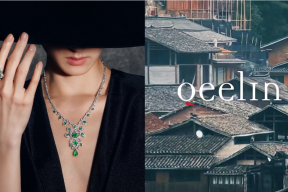
Chinese New Year not only carries China's millennia-old traditional culture but is also a concentrated expression of the deep emotions of Chinese consumers. In such an emotional context, we look forward even more to brand narratives that are sincere, resonate, and demonstrate Chinese cultural confidence.
Beyond simply using conventional symbols like bright red tones and zodiac horse imagery, Chinese New Year marketing is undoubtedly an annual big test for brands and an important topic worthy of study and attention: in the face of China's vast cultural treasure trove, how should brands dig deep and find their own unique narrative?
Luxe.CO has tracked luxury brands' New Year marketing cases for years. Among the many brands, we have found that Qeelin, the fine jewelry brand under Kering Group, has grown into an excellent case worth referencing.
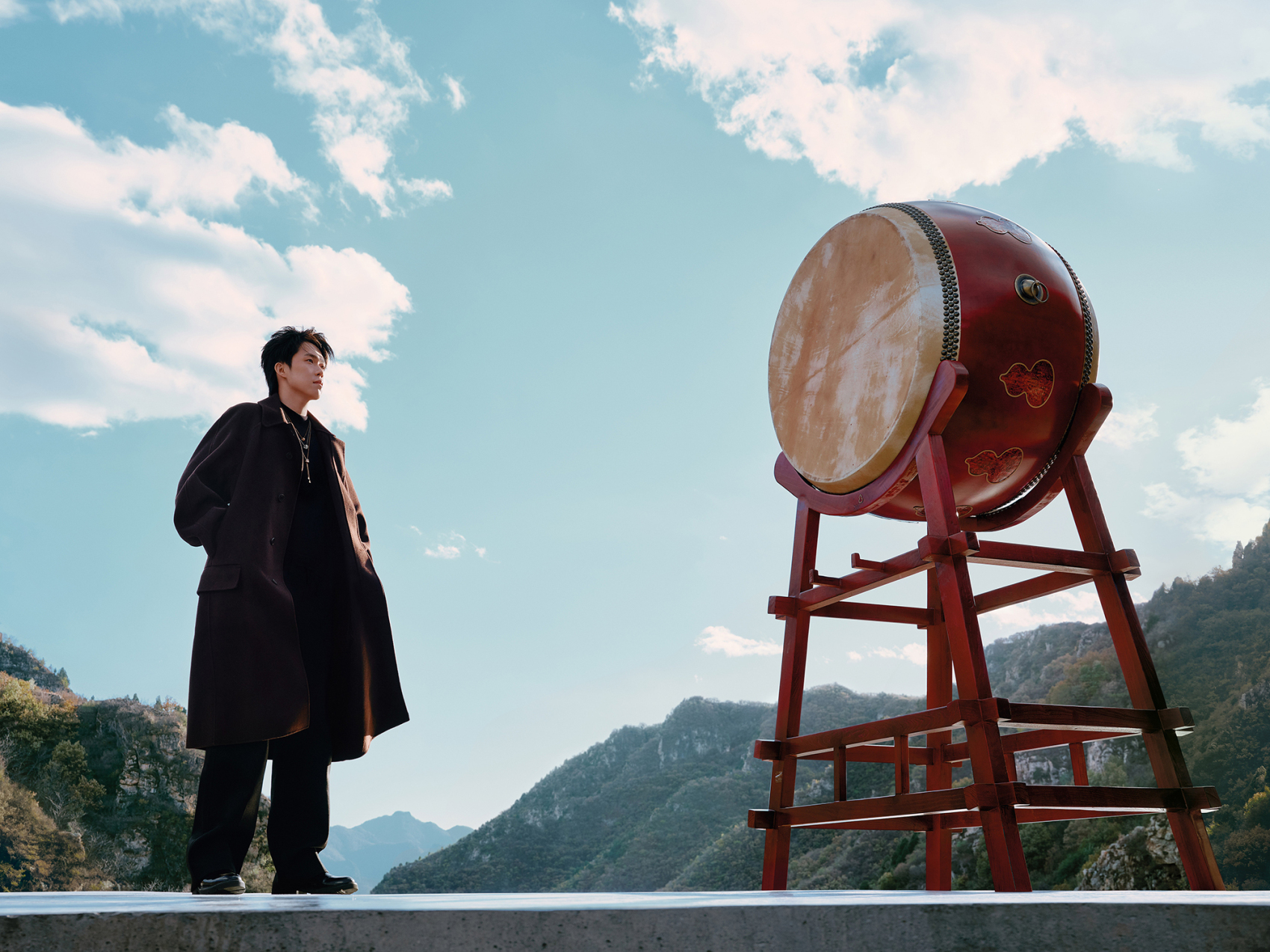
From the golden dragon parade in Yangshuo, Guangxi, to the Dong ethnic grand song in Qiandongnan, Guizhou, and now returning to the Central Plains this year—interpreting the Jinnan Weifeng Luogu of Linfen, Shanxi—Qeelin has gradually formed a set of Chinese New Year strategies, presenting China's rich cultural heritage and long-standing festival culture through a three-dimensional matrix against different local backgrounds, earning resonance and praise from many users.
In this article, we dissect Qeelin's New Year marketing from different dimensions and extract four key elements that successful brand New Year marketing should possess:
- Rooted in local meaning: taking Shanxi's Jinnan Weifeng Luogu as an example
- Resonating with festive emotions through impactful visuals and sound
- Becoming a facilitator of cultural heritage, creating content that young people love
- Consistency in brand humanistic expression requires persistent deep cultivation
I. Rooted in local meaning: taking Shanxi's Jinnan Weifeng Luogu as an example
Chinese New Year customs are diverse and colorful depending on the region.
Whenever we mention these place names that represent our hometowns, a spontaneous sense of authentic local identity and warmth always emerges in our hearts. This is the natural and deep psychological connection between Chinese people and their native land and hometown, and an important source of individual identity, community identity, and homesickness.
Therefore, when planning around Chinese New Year, brands must first find a place that can be rooted in a physical sense, and then dig deep and learn about the local cultural heritage.
This year, Qeelin has set its sights on one of the representative regions of Central Plains culture—Shanxi. This place has become one of the most favored and watched destinations in the national cultural tourism boom. In recent years, many cities and landmarks in Shanxi have continued to attract young people to "archaeologize" this "province of cultural relics."
As one of the important birthplaces of Chinese civilization, Shanxi's historical and cultural accumulation is astonishingly profound, and its preservation of historical authenticity is also very high. The Jinnan Weifeng Luogu is also a pearl in its cultural preservation chain.
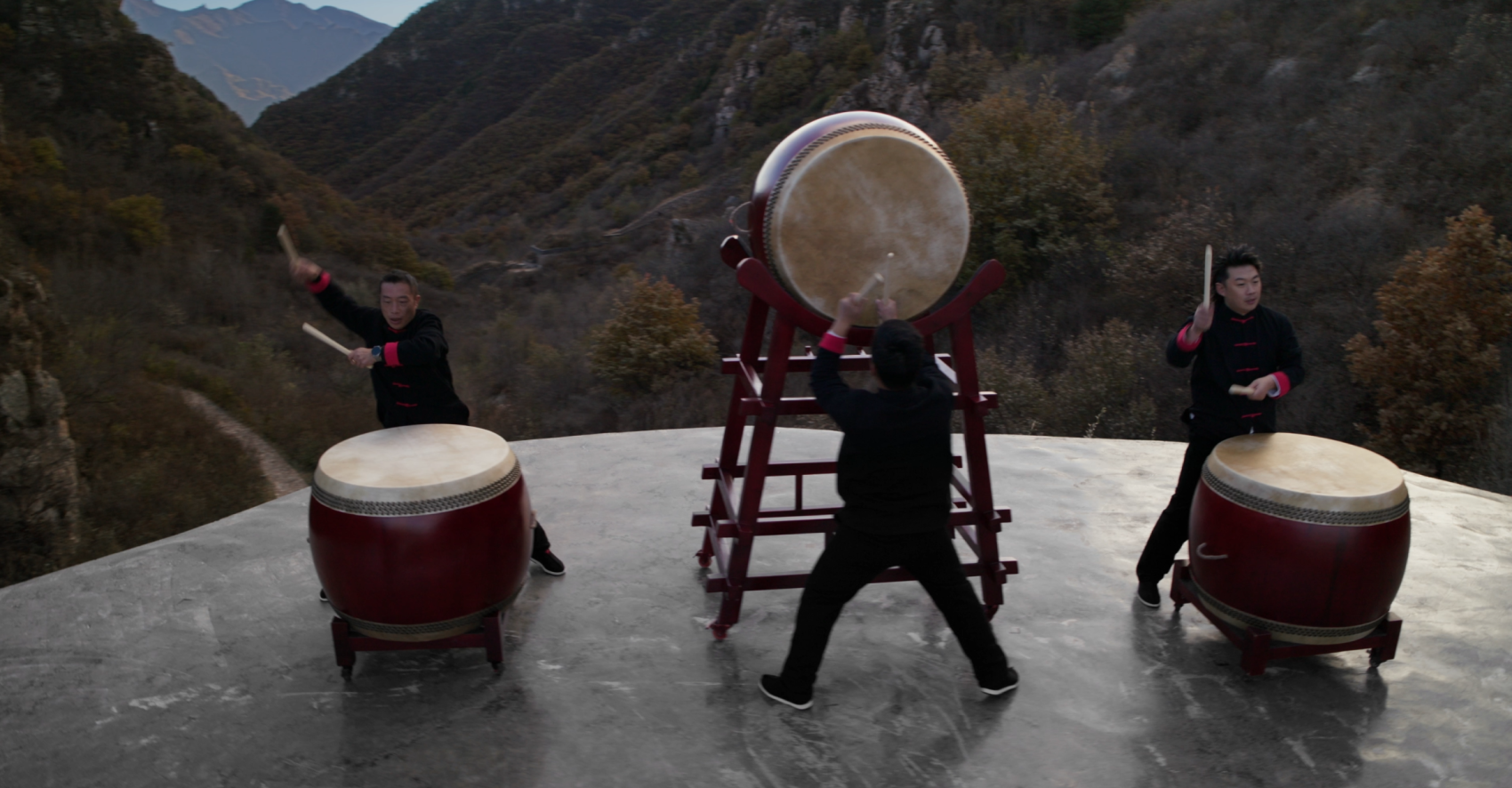
In Linfen, Shanxi, anciently known as "Yaodu," there is a legend: over 4,000 years ago, when Emperor Yao's two daughters, Ehuang and Nüying, returned to their village to visit relatives, both processions had to line up in two rows and beat gongs and drums to show their majesty. The Classic of Mountains and Seas also records that "the Yellow Emperor made drums to resemble thunder," and that the Yellow Emperor captured the divine beast Kui, used its tough hide to make a giant drum, and used its bones as drumsticks; the drum sound was like thunder, shaking people's hearts.
Jinnan Weifeng Luogu integrates distinct Central Plains regional characteristics with music, dance, and skill, and is known as the "Number One Drum Under Heaven," listed in the first batch of national intangible cultural heritage.
This folk art form has a history almost as long as Chinese civilization. For thousands of years, the sound of drums has accompanied farmers praying for favorable weather and inspired soldiers to advance bravely. Today, after the busy farming season, men and women, old and young in the Jinnan region still "beat gongs and drums" to welcome the Spring Festival, continuing this ancient custom.
Actually, this is not the first time Qeelin has developed its Spring Festival narrative by deeply cultivating local culture.
Previously, Qeelin had already taken root in Yangshuo, Guangxi, and Qiandongnan, Guizhou, bringing the local distinctive "Golden Dragon Parade" folk activity and the intangible cultural heritage "Dong Ethnic Grand Song" to the public. Every step Qeelin takes on Chinese soil is inseparable from deep engagement with local culture and genuine observation of people's lives, which is why Qeelin's Spring Festival plans always have substance and emotional resonance.
II. Resonating with festive emotions through impactful visuals and sound
To celebrate the upcoming Year of the Horse, Qeelin has just released its brand New Year short film titled: "One Drumbeat, Full Spirit."
In the short film, the camera begins with majestic mountains and rivers, with immense aspiration ready to burst forth; the rolling mountains silently tell of China's unique momentum and the weight of civilization. A drumstick strikes, and the drumbeat goes from slow to urgent, transforming into a rich qi of heaven and earth.
Qeelin specially invited Zhang Yong, inheritor of the Jinnan Weifeng Luogu, and brand global ambassador Wang Chuqin to "pass the drum" together. Speaking about the inheritance of Jinnan Weifeng Luogu, Zhang Yong said: "Keep the qi within the drum. Good things are nurtured by time and effort, generation after generation, breath after breath, preserved."

In the context of Chinese civilization, the drum is not only one of the oldest percussion instruments; drum culture has been passed down and has become a symbol of spirit and strength, carrying the collective memory of Chinese culture and always inspiring people.
In the resounding drumbeats, there is the "drum rhyme" polished and accumulated by Zhang Yong, inheritor of Jinnan Weifeng Luogu; the "one breath" of athlete Wang Chuqin striving on the field; and the "spirit" of Chinese people's confidence and upward striving. It carries a ceaseless drumbeat, a resilience passed down from generation to generation.

Every Spring Festival, this traditional festival that embodies cultural pride and identity, Qeelin always strives to discover distinctive folk festival activities and tries to use impactful visuals and sound to create a grand and shocking ritual.
For example, in the previous Year of the Dragon Spring Festival, nearly a hundred boatmen on the Yulong River in Yangshuo, Guilin, poled bamboo rafts connected end to end, forming a thousand-meter "long dragon" like a dragon soaring in the sky, which made more Chinese people remember this moment and regard it as a tourist destination;
Last year, thousands of Dong men and women, old and young, sang the Dong Ethnic Grand Song in the fields, letting more people understand the story of this ethnic group's ancestors who went through hardships to find a home.
Each reenactment of a glorious moment of local folk culture naturally generates strong emotional appeal, which also constitutes a particularly moving aspect of Qeelin's Spring Festival narrative and becomes an indelible moment in users' minds that resonates because of Qeelin.
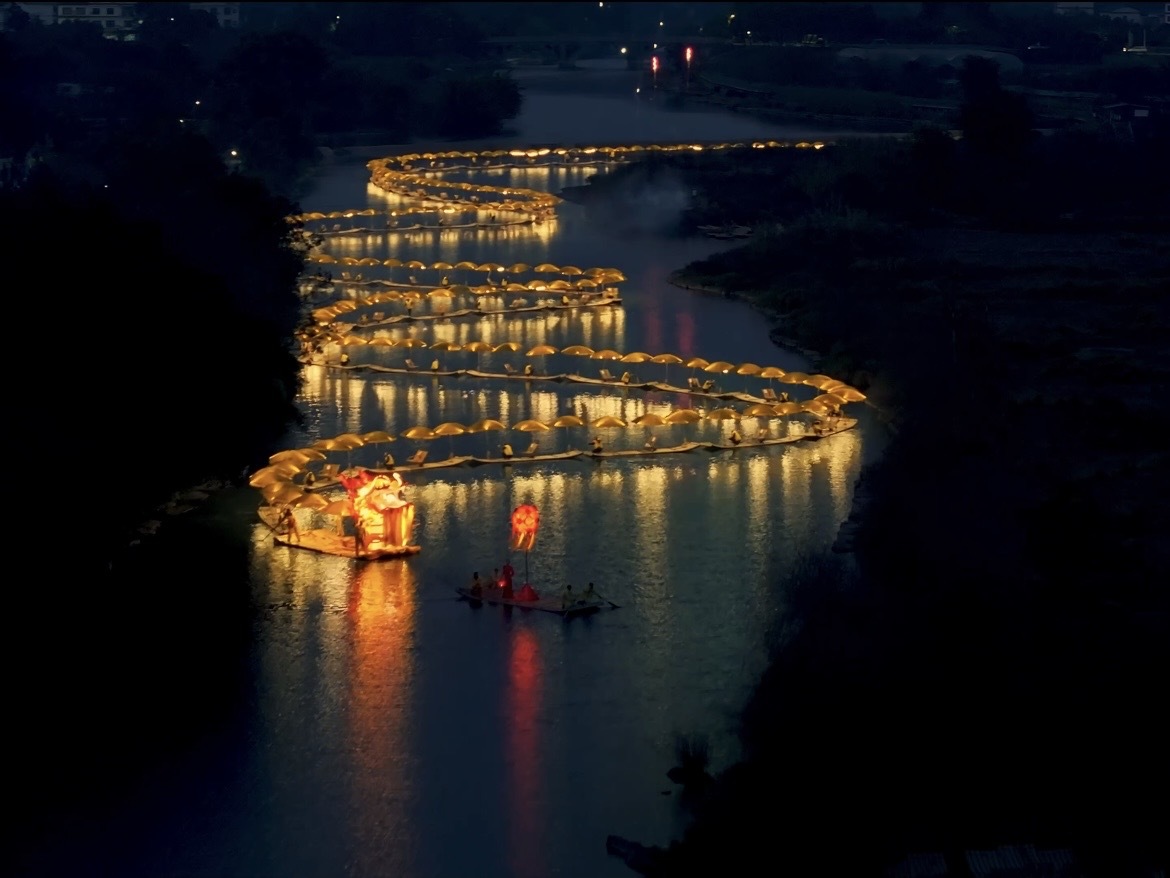
Qeelin 2024 "Golden Dragon Parade" Spring Festival short film
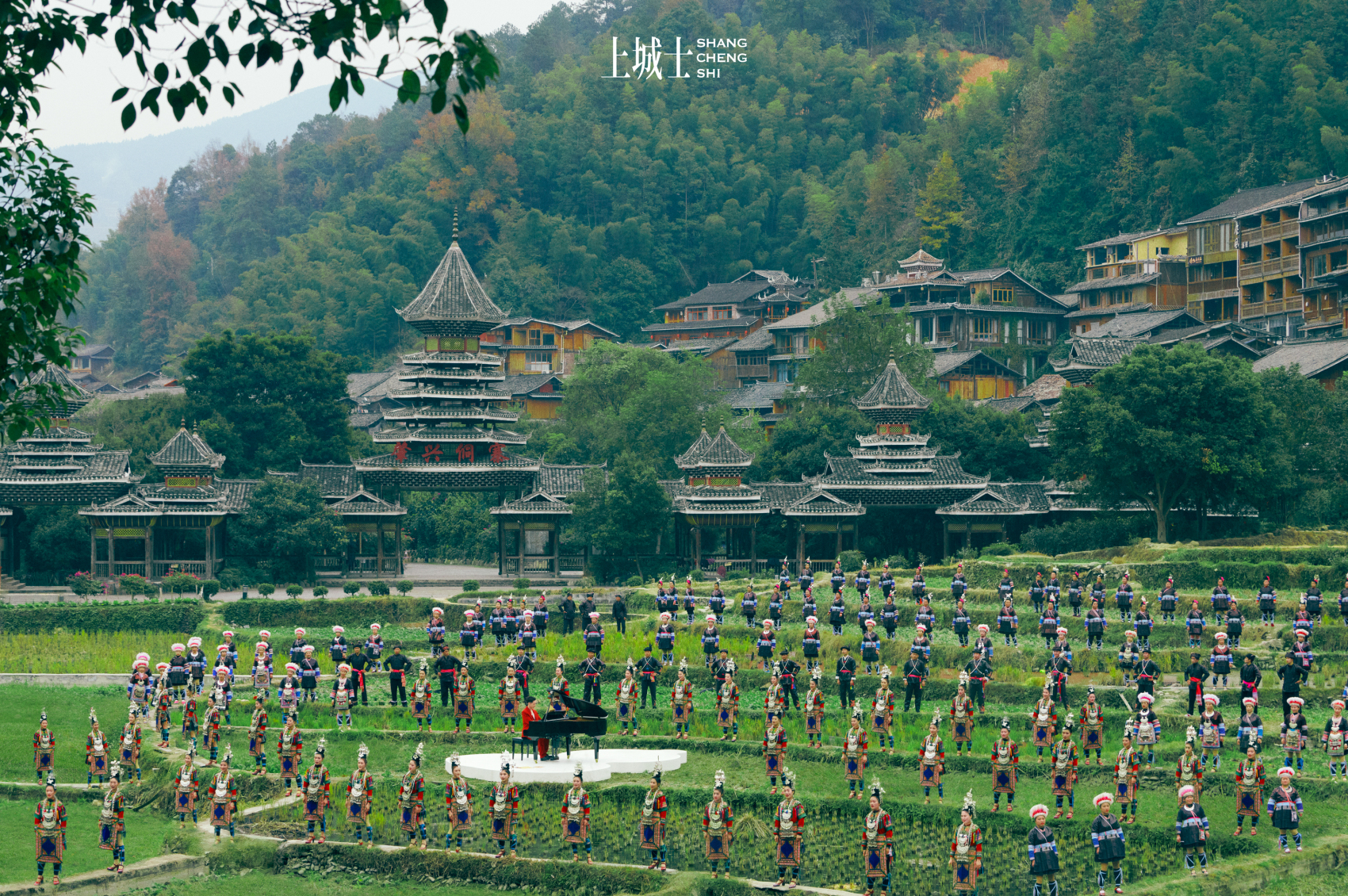
Qeelin 2025 Spring Festival short film, harmonizing with the "Dong Ethnic Grand Song"
III. Becoming a facilitator of cultural heritage, how to make young people love watching?
In this collaboration, Wang Chuqin visited the drum-making workshop of Zhang Yong, national representative inheritor of Jinnan Weifeng Luogu, personally experienced making drum skins and setting drum tones, and engraved the gourd symbol representing fortune and prosperity on the drum body.

Zhang Yong once said in an interview with Xinhua News Agency that the inheritance of Jinnan Weifeng Luogu to the next generation faces pressure. In order to better retain young people and make them pay attention to this traditional culture, he visits villages to organize and rescue traditional tunes on the verge of being lost, and tries new forms of communication such as livestreaming. The personal account of the intangible cultural heritage inheritor once again reflects the difficulty of revitalizing Chinese traditional culture.
Under the wave of Chinese cultural revival, young people are especially happy to see traditional culture return in high-quality forms. The participation of Wang Chuqin, a main player of the new generation of the Chinese national table tennis team, has attracted more attention to this presentation of Jinnan Weifeng Luogu.

Qeelin signed Wang Chuqin to join the brand family in May last year. Luxe.CO noted that with the launch of this Spring Festival campaign, Wang Chuqin has officially been promoted to Qeelin's global brand ambassador. Reaching the highest-level endorsement cooperation with this post-2000s world champion also highlights Qeelin's emphasis on the younger generation.
In exploring Chinese traditional culture, Qeelin cleverly invites stars and celebrities loved by contemporary young people to "speak from their own experience," entering the circles of contemporary youth and promoting broader dissemination of traditional culture among young people.
IV. Consistency in brand humanistic expression requires persistent deep cultivation
For brands, whoever can break away from simple red themes and zodiac imagery, and whoever can dig deep into China's profound culture, will be the first to gain resonance from Chinese users.
What is even rarer is that only those who can persist continuously can form a "moat" for brand humanistic narrative.
Qeelin's attention to Chinese culture has always been rooted in its brand DNA. In 1997, brand founder Dennis Chan traveled to Dunhuang and was deeply shocked by the Mogao Caves murals. He felt a strong sense of cultural mission: "Why don't we have an international luxury brand that showcases China's glorious history?"
So he founded the brand named after the qilin, a auspicious beast in Chinese mythology with horns on its head and cloven hooves. This has driven a series of unique Eastern aesthetic designs, incorporating familiar imagery such as the gourd, ruyi, flying apsaras, and lotus into modern jewelry.
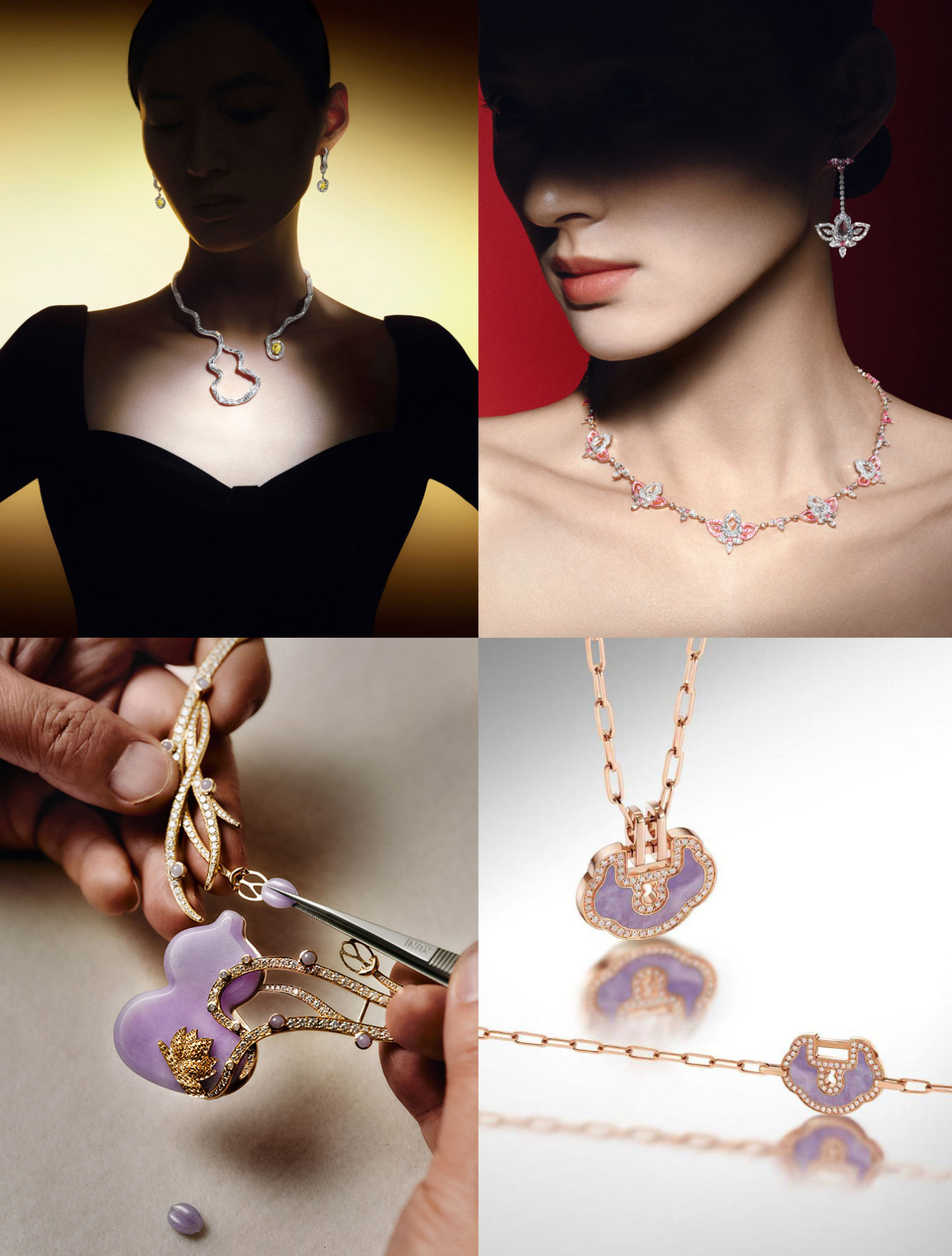
Qeelin is positioned at the intersection of Eastern and Western cultures. Since its founding in 2004, the brand's vision has been to "bring Chinese culture and symbols to the world." Drawing inspiration from the auspicious symbolism of the "gourd" (hulu) homophonous with "fortune and prosperity" (fulu) and the number "8," it has created the elegant and harmonious Wulu collection, which has shaped a highly recognizable contemporary Eastern image on the global stage.

Qeelin Wulu Shanshui High Jewelry Collection
Now, through year after year of Spring Festival planning, Qeelin is incorporating an increasingly rich array of Eastern totems into its brand narrative, making the Eastern story it represents more diverse, three-dimensional, and captivating.
Qeelin CEO Christophe Artaux introduced that Qeelin's entire team is basically from China, and he and the team also live in China.
It is this true rooting in this land that constitutes Qeelin's strong cultural perception, enabling it to continuously perceive and understand the deep veins of Chinese beauty, to more naturally and sincerely draw on the abundant cultural resources of the Chinese land, and to internalize them into an endless stream of creative inspiration.
At the Spring Festival, a communication node that brands must compete for, Qeelin has built a coherent Chinese humanistic narrative with an unhurried rhythm and steady flow, even extending the moment of national celebration into an important stage for enriching the brand's own narrative.
This will surely become a key step for Qeelin and the Chinese market to move forward together into the future.
| Image source: Provided by Qeelin, Qeelin official Weibo
| Editor: Elisa