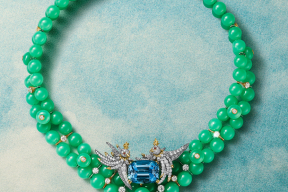
Before the birth of Qeelin, there was no iconic brand in the global high jewelry landscape that was rooted in Chinese aesthetics while possessing an international vision.
Many wonder how it achieved this? The answer can be found by following in the footsteps of Dennis Chan, the brand's founder and creative director, who has spent decades consistently pushing the creative frontier.
At the end of 2024, Mr. Dennis Chan traveled to Zhaoxing Dong Village in Guizhou for field research, a journey fully documented in a short documentary film.
In the early morning, the Dong village is shrouded in mist, the drum tower stands quietly at the heart of the village, the Dong Grand Song flows naturally through the streets and alleys, the silversmith shops emit crisp hammering sounds, local women embroider by the water, indigo-dyed cloth sways gently in the wind on wooden racks, and in the evening villagers gather around bonfires to sing and dance. These simple everyday scenes sketch the original appearance of a cultural heritage that is still alive and thriving.
This was not a spontaneous cultural visit. In 1997, Dennis Chan walked into the Mogao Caves in Dunhuang, where the Eastern charm of the murals deeply impressed him and inspired his original intention to create a high jewelry brand representing China. In 2004, Qeelin was officially founded, and the brand's first jewelry collection Wulu, launched the same year, transformed the auspicious meaning of the gourd (hulu) in Dunhuang murals into a modern, minimalist form.
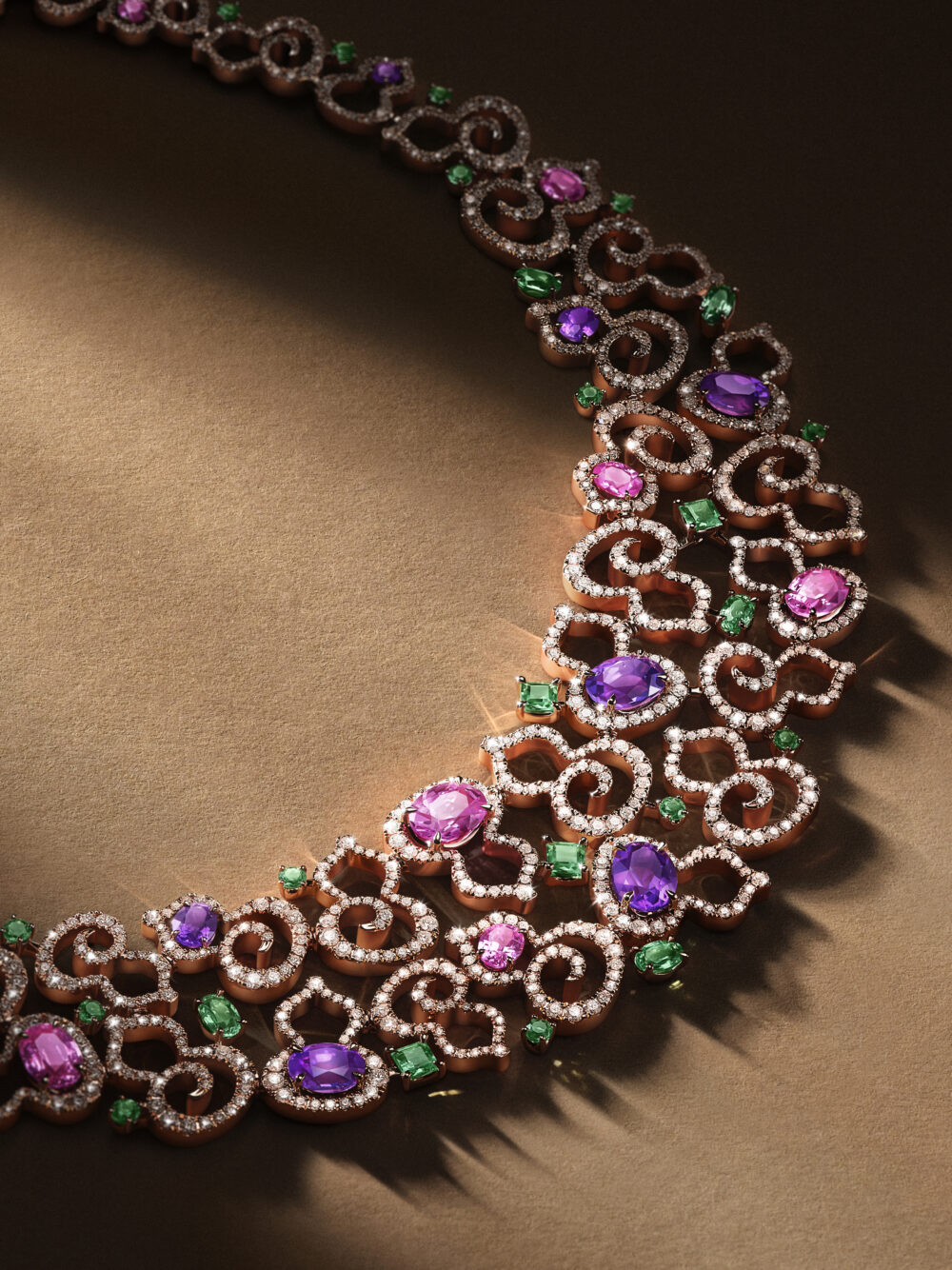
Wulu Wulu High Jewelry Collection
For nearly three decades, he and his local team, with respect and gratitude, have continued to draw creative nourishment from China's rich aesthetic soil, naturally integrating motifs such as the gourd, ruyi, panda, goldfish, and lion dance into contemporary jewelry design and the brand's multidimensional expression, gradually forming a systematic and steadfast creative philosophy — giving Chinese tradition a contemporary rebirth, not merely seeking inspiration from tradition, but allowing traditional culture to take root and grow in contemporary life.
As Dennis Chan says at the end of the short film, "We must pass it on." For cultural heritage, the true mission is never just static "protection," but dynamic "transmission." Using the Dong village as a practical example, Qeelin attempts to answer an industry question: Can a high jewelry brand become one of the most competent communicators of cultural heritage in the contemporary era? And how should a brand rooted in Eastern culture give back to this aesthetic fertile ground?
With Respect and Gratitude, Qeelin's "Preservation" and "Transmission" of Cultural Heritage
——Preservation: Keeping the Living Ecosystem on Which Culture Depends
In Chinese philosophy, gratitude stems from observing nature. Only by seeing how heaven and earth selflessly nourish all things and how all things cycle and give back can one understand the heavenly law of "giving-receiving-returning."
Dennis Chan grew up in Hong Kong and lived and worked overseas for many years; he is an artist and designer with a distinct interdisciplinary background. Beyond jewelry, he has delved into sculpture, photography, and industrial design, with works exhibited at institutions such as the Louvre and the Museum of Modern Art in New York. This diverse perspective gives him a more pragmatic understanding of culture and creation: "Balancing tradition and innovation is not easy—it's like walking among the clouds. The key is finding the balance between tradition and modernity, and its roots always come from the nourishment of five thousand years of Chinese culture."
Zhaoxing Dong Village was first built in the Southern Song Dynasty and is one of the largest Dong villages in China. Its most precious asset is not isolated old buildings, but a complete living cultural system that is still functioning: silver jewelry, embroidery, and indigo dyeing remain daily skills of the locals; the Dong Grand Song, as "history without words," is still passed down orally at festivals and gatherings; the drum tower and flower bridge remain the core spaces of public life in the village. This "living heritage" constitutes the micro-ecosystem on which Dong culture depends for its survival.
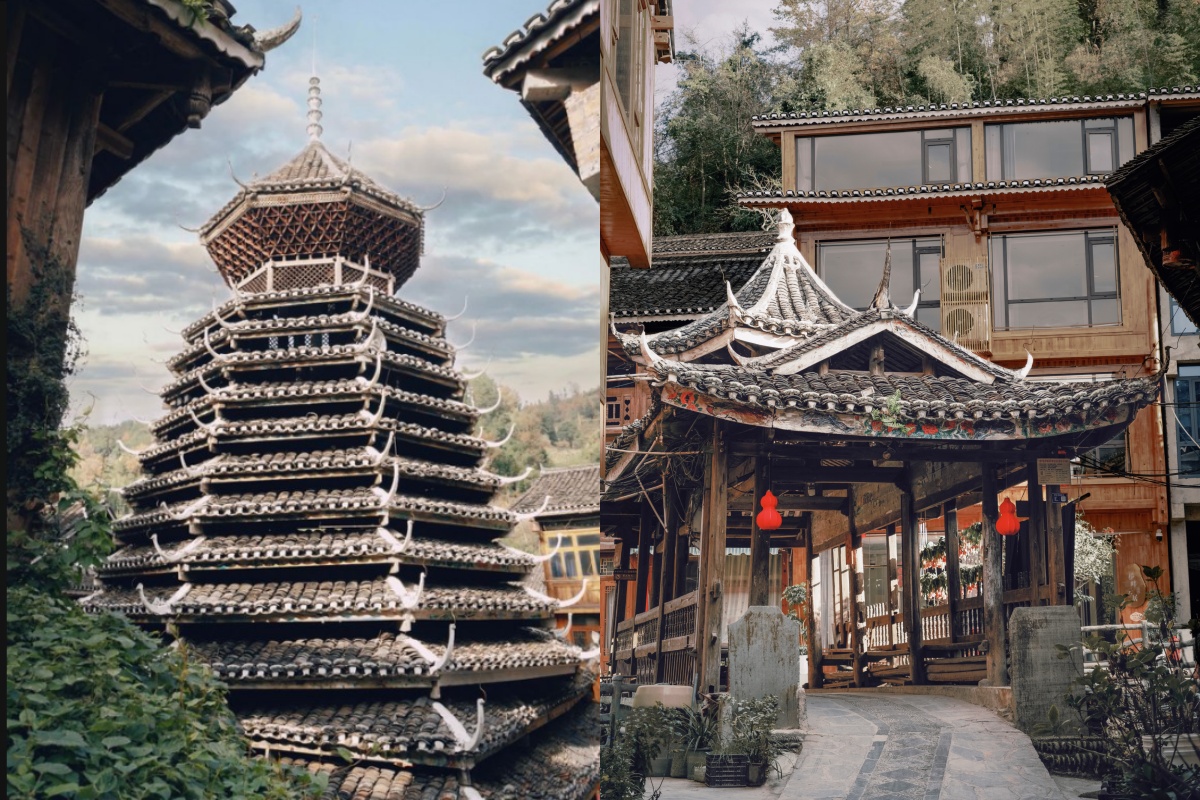
Left: The drum tower, a spiritual landmark of the Dong village, inherits the pre-Qin stilt-house architectural tradition and is built with nail-free mortise-and-tenon wooden construction. It is both a living fossil of architectural craftsmanship and the center for village deliberations, festivals, and gatherings;Right: The flower bridge spans streams and connects villages, serving functions of transportation, rest, and social interaction, embodying the simple philosophy of the Dong people that "where there is water, there must be a bridge; where there is a bridge, there must be a pavilion."
At the end of 2025, the restoration project for the Litun Drum Tower and Flower Bridge in Zhaoxing, funded by Qeelin, was officially launched. This aesthetic soil in the heart of southeastern Guizhou inspired Dennis Chan's field research; with respect and gratitude, he and his team wanted to do something for it, and Qeelin's funding for the restoration of the Litun Drum Tower and Flower Bridge naturally followed.
This is essentially about preserving and expanding this cultural ecosystem. The restoration is not meant to seal it away, but to ensure that the old buildings can still serve as places for villagers to gather, sing, and communicate in the new era. Only when the next generation is willing to enter the drum tower and cross the flower bridge will cultural memory not be broken.
With this philosophy, Qeelin's deep cultivation of China's aesthetic soil and symbols extends far beyond the Dong village. In 2024, the brand reached a cooperation with the China Dunhuang Grottoes Conservation Research Foundation and the Dunhuang Academy to provide long-term support for the "Study of Sui and Tang Accessories in Dunhuang Grottoes" project; previously, it also drew creative inspiration from the "Golden Dragon Parade" folk custom on the Yulong River in Yangshuo, Guilin, and the Jinnan Weifeng Luogu drum performance in Linfen, Shanxi...
——Transmission: Using the Language of High Jewelry to Bring Chinese Culture to the World
Preserving cultural roots is ultimately about making this Eastern civilization visible to the world.
Qeelin's parent company, Kering, has long been committed to supporting global cultural endeavors, and its official website precisely defines the brand: "Qeelin is neither Chinese nor English, but a cross-cultural universal language, interpreting the brand's dual mission of being rooted in China while facing the world."
In 2013, Qeelin became the first Chinese brand acquired by Kering in its history. As China's first high jewelry brand, Qeelin opened its first boutique in 2019 at Place Vendôme in Paris, the world's most prestigious jewelry landmark, and in 2024, a new flagship store opened in Ginza, Tokyo.
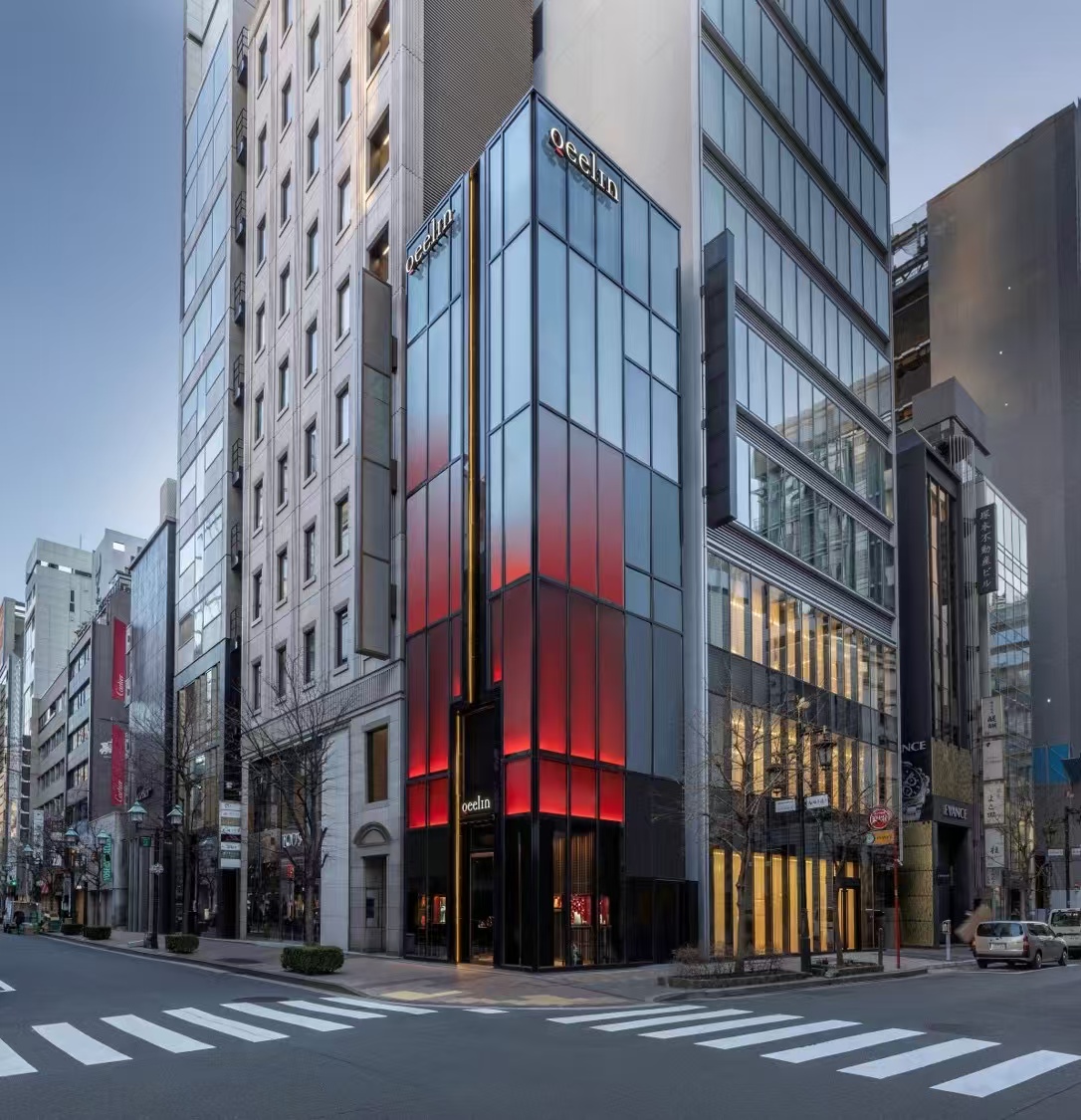
Qeelin Ginza Flagship Store, Tokyo
In April 2026, Kering's first-quarter earnings release disclosed for the first time the performance of the newly established "Kering Jewelry" division, explicitly mentioning that "Qeelin achieved strong growth driven by the Asian market." It is also the only luxury brand under Kering to be listed in the Top 10 of the "Luxury Brand China Vitality Ranking 2025" by LuxeCO Intelligence. As a high jewelry brand representing China in the global luxury sector, the Eastern aesthetics, humanistic heritage, and spiritual essence embodied by Qeelin are resonating deeply with a broader global context.
This in-depth field research in the Dong village allowed Qeelin's cultural expression to break away from symbolic surface interpretation and take root in a real humanistic scene, ultimately crystallizing in the Qeelin 2026 High Jewelry Collection.
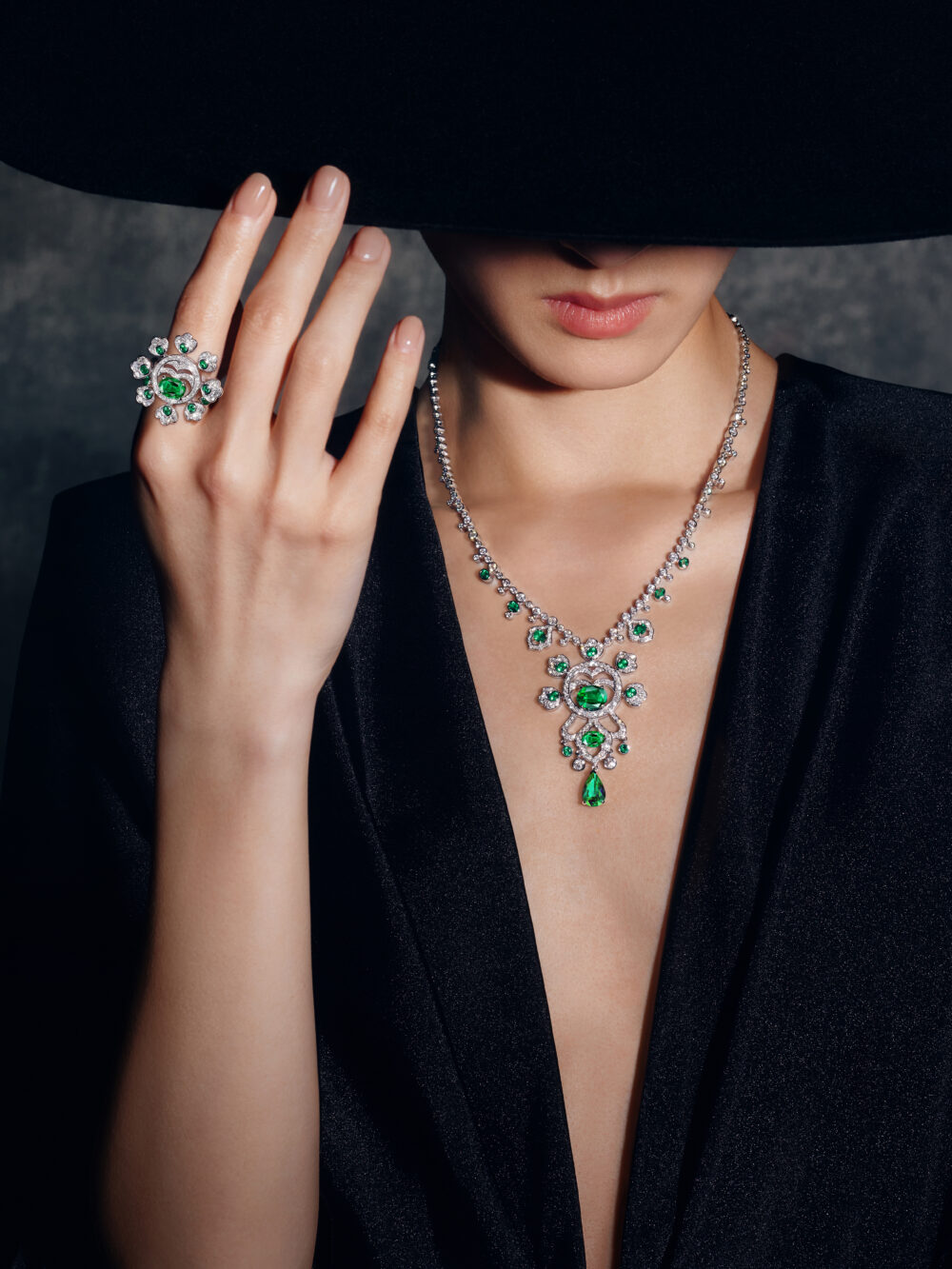
Spider Flower High Jewelry Collection
High Jewelry: A Competent Communicator of Cultural Heritage
"Qeelin is the first jewelry brand to present profound Chinese heritage to high-end boutique enthusiasts worldwide, and that is crucial." This is Dennis Chan's most straightforward definition of the brand.
Qeelin's "Ling Dong Qi Jing" high jewelry private exhibition at Ziyunxuan in Beijing brought this cultural narrative full circle. It was the brand's most diverse, largest-scale, and most valuable high jewelry presentation to date. From brand origins to creative expression to brand narrative, the exhibition presented audiences with a highly three-dimensional, consistent Eastern aesthetic brand.
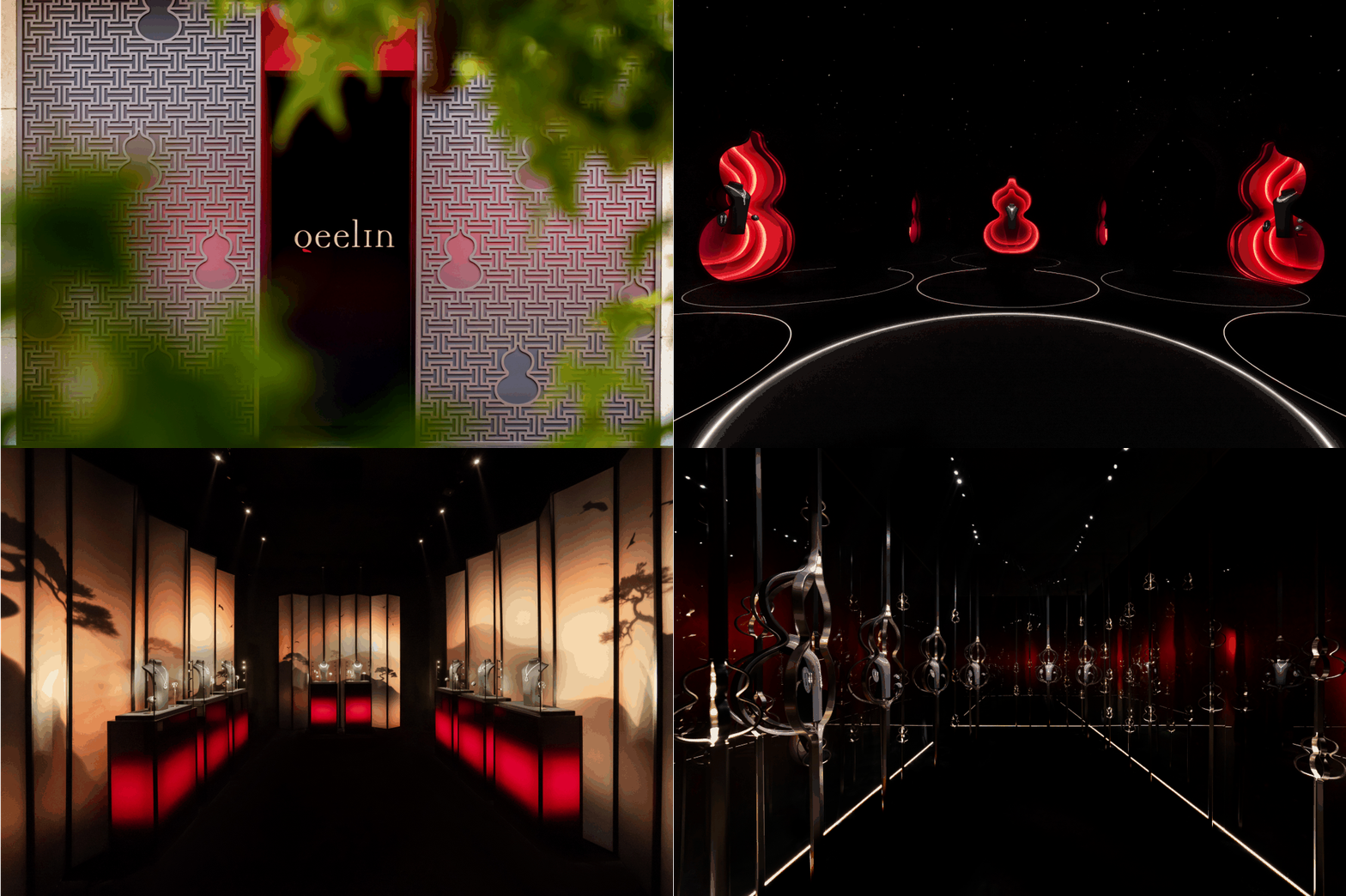
Qeelin "Ling Dong Qi Jing" High Jewelry Private Exhibition
In the Chinese and global high jewelry industry, Qeelin pioneered the contemporary jewelry narrative of the gourd motif and is the foremost high jewelry brand deeply integrating Chinese cultural totems with modern aesthetic logic. As brand CEO Christophe Artaux said, "We do not simply take Eastern elements like the gourd and use them as they are; we are always willing to bring different interpretations to these motifs through artistic creation."
With the confidence of an Eastern aesthetic brand that is "self-sufficient," Qeelin continues to dig inward, and its inner stability and richness resonate with an increasing number of high-net-worth clients.
——Reconstructing Jewelry Motifs with Eastern Philosophy
Chinese and Western aesthetics have diverged since ancient times: Western art emphasizes realism, pursuing precise reproduction of form, light and shadow, and structure, with a monumental solemnity and eternity; Chinese art advocates freehand expression, valuing spirit and resonance, conveying the vitality of life through artistic conception. As painter Wu Guanzhong said, "Western art is an art of 'looking,' Chinese art is an art of 'thinking.'" Qeelin's jewelry narrative this time is deeply rooted in the Eastern artistic tradition that values implication, spirit, and imagination.
The spider totem is a common cultural symbol in global mythology—Uttu in Sumerian mythology, Arachne in Roman mythology, and Spider Woman in Native American beliefs all endow this small creature with spiritual meaning. The Spider Flower high jewelry collection chose the spider as its creative core, which is rare in jewelry design, and it also carries the unique cultural code of the Dong people.
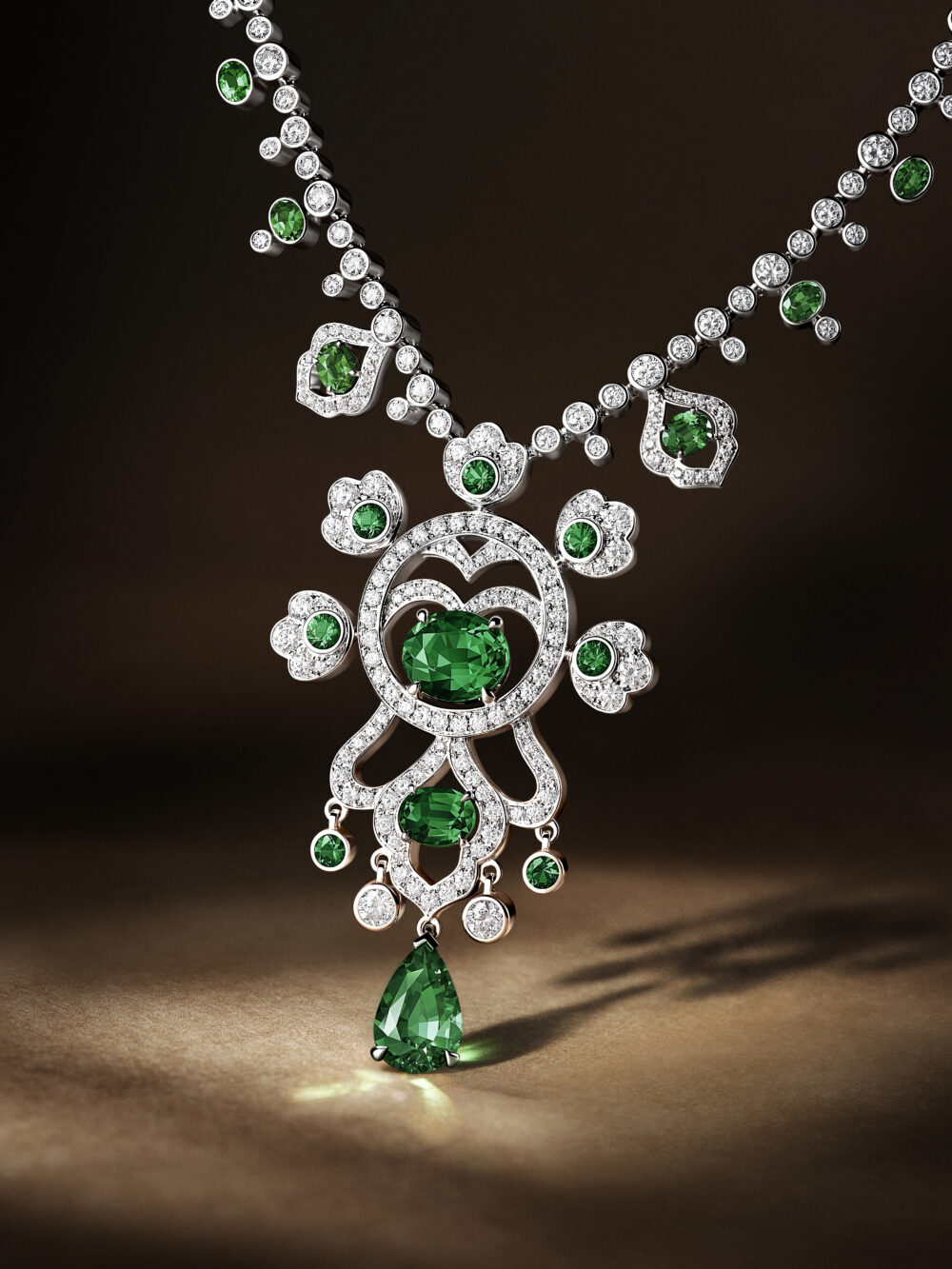
The spider is the embodiment of the goddess Satianba in Dong beliefs; legend has it that she taught the people weaving, and the spider web symbolizes the Dong people's imagination of cosmic order. Qeelin uses deconstruction and recreation, with pavé diamonds simulating the shimmering texture of spider webs and precisely reproducing the intricate geometric texture of Dong brocade, transforming ethnic belief into wearable jewelry art.
The Dong Chi high jewelry collection attempts to translate the more abstract "qi" in Dong philosophy into wearable jewelry forms, with the "8" motif echoing the classic Wulu silhouette and continuous water-wave swirl patterns outlining tangible symbols of Eastern spirit.
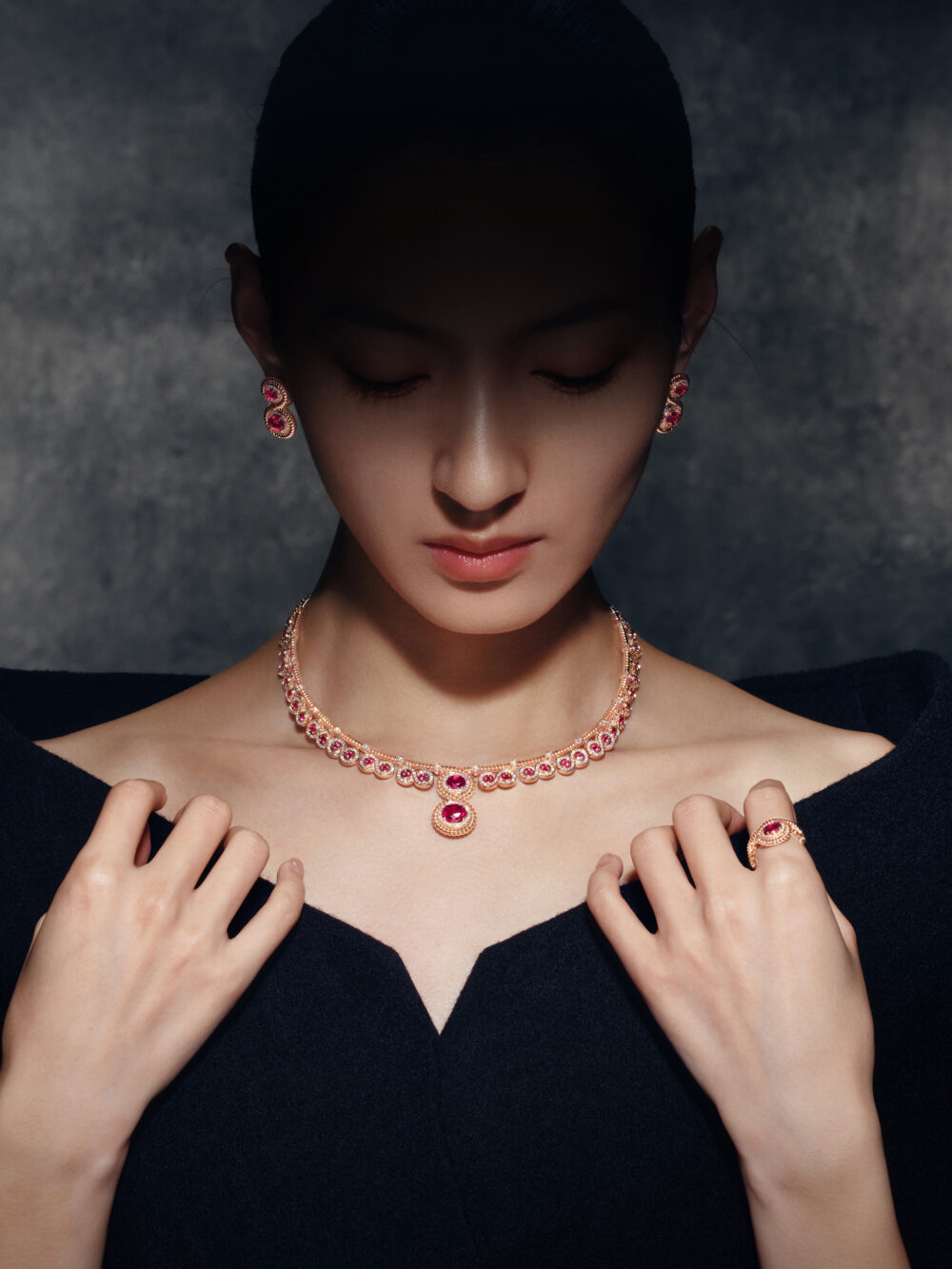
In the Dong worldview, qi is the life force of the universe, the pulse of heaven and earth, the rhythm of mountains and rivers breathing, and the endless connection of all things in cycle. The design uses flowing "8" motifs to echo the classic Wulu silhouette, symbolizing the balance of heaven and earth and the rising of auspicious qi; the continuous water-wave swirl patterns carry the Dong people's primal worship of water, turning abstract philosophy into tangible jewelry lines.
——Western Craftsmanship Carrying the Eastern Core
In the West, jewelry is often regarded as "wearable micro-architecture." Contemporary Chinese high jewelry brands are using the rigorous architectural language of the West to wrap Eastern freehand cultural symbols.
Dennis Chan once admitted, "As Chinese cultural confidence continues to grow, clients especially favor our combination of Chinese design with international craftsmanship, while incorporating modern playfulness and versatility." The integration of Dong cultural elements into high jewelry is by no means superficial "ethnic-style decoration," but rather through deconstruction and recreation, creating a contemporary and international Eastern expression.
In the Wulu Shan Shui high jewelry collection, the iconic thirteen-tiered eaves of the Dong drum tower are transformed into a highly ordered geometric silhouette, and the emerald pendant at the base leaps dynamically with the wearer's movements, precisely capturing the festive atmosphere of Dong celebrations. This deconstructive translation of traditional architecture gives ethnic culture a sleek, international texture in the contemporary jewelry context.
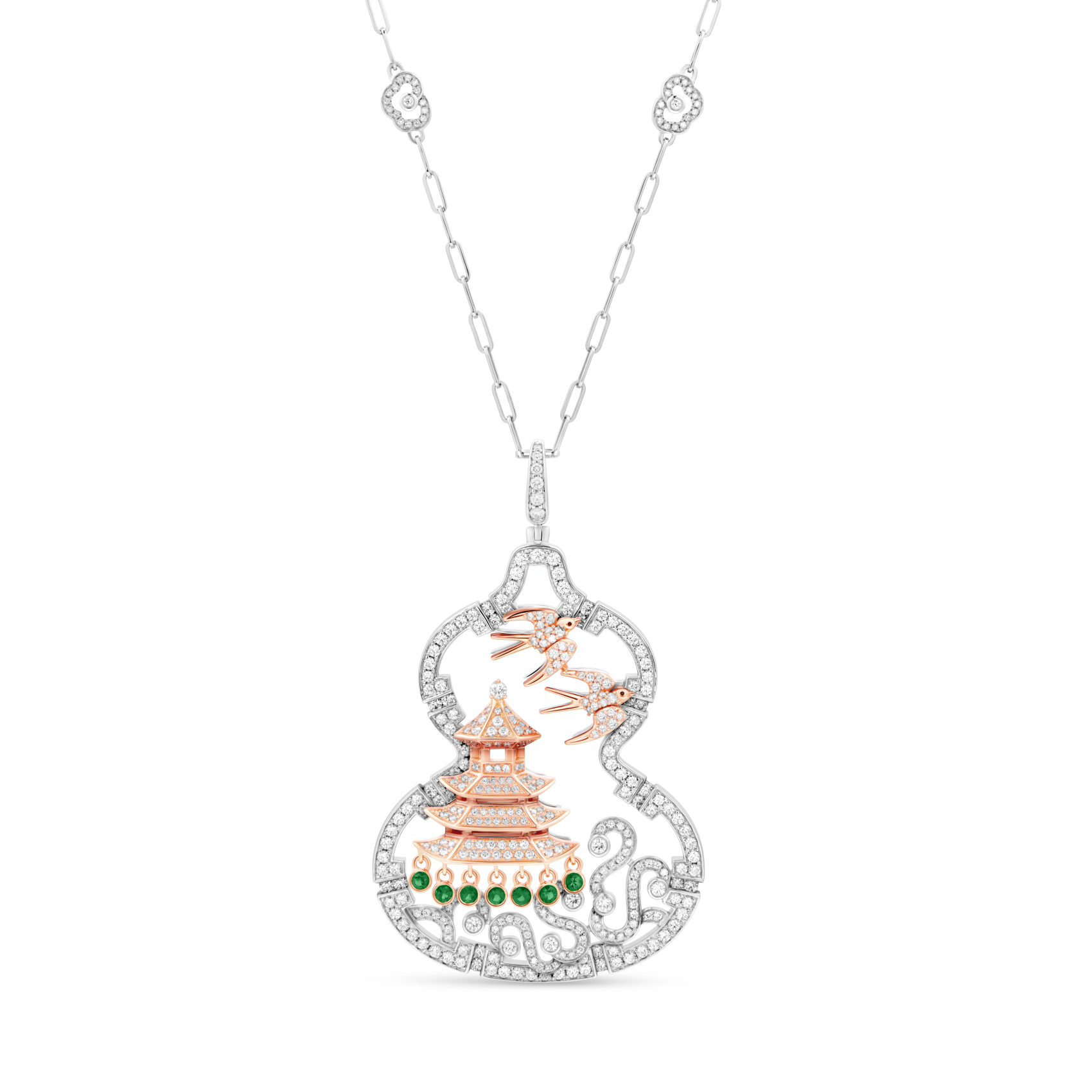
Wulu Shan Shui High Jewelry Collection
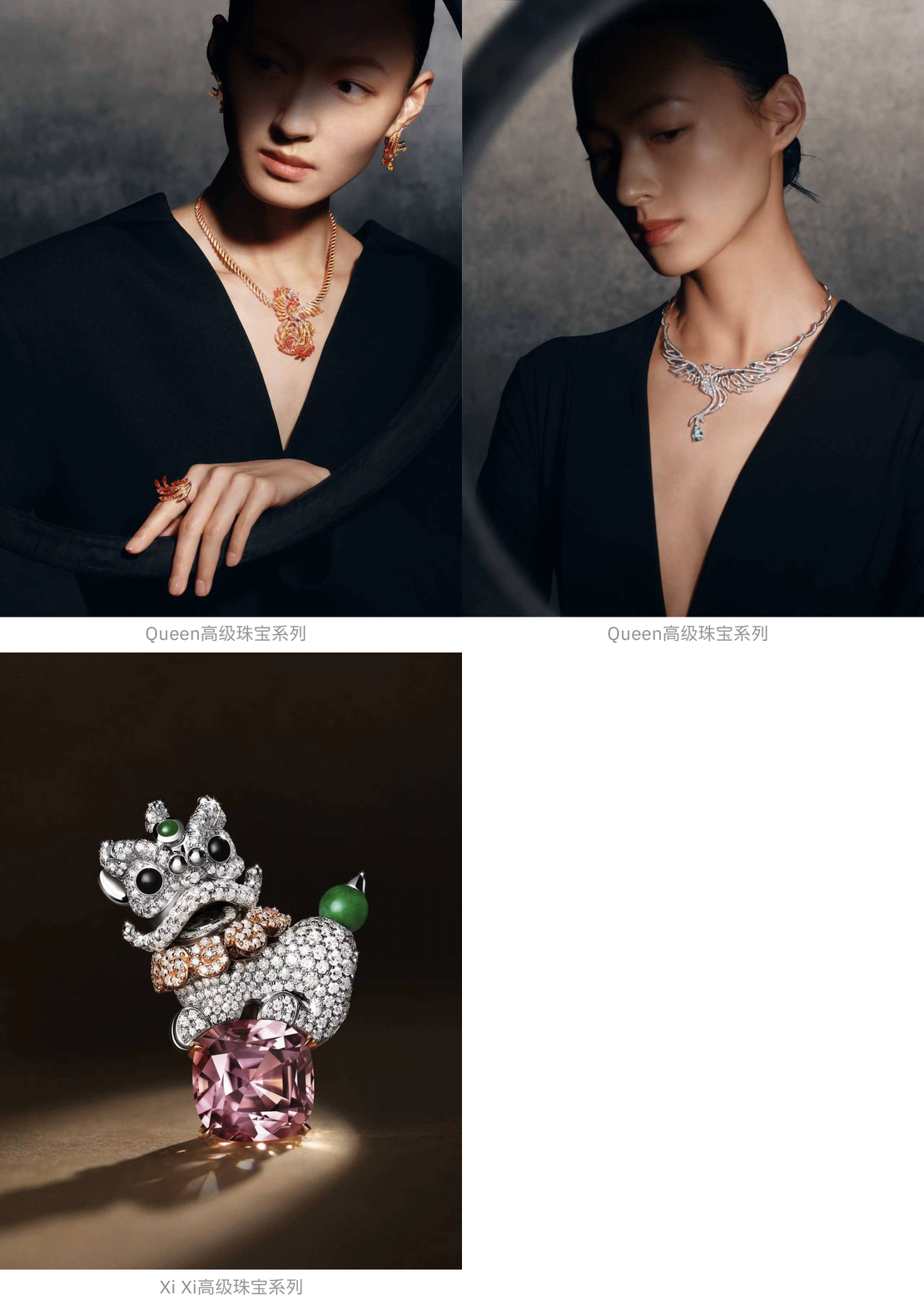
This structural experiment in "dynamic beauty" goes further in the Queen high jewelry collection and the Xi Xi high jewelry collection. Relying on precise hand-articulation techniques, the phoenix's wings sway lightly with the wearer's movements, and the little lion's jaw and tail tremble agilely with each step; the mechanical logic of bionics gives life to metal and stone, echoing the core theme of this high jewelry exhibition, "Ling Dong Qi Jing."
Whether it is the diamond "bell clapper" in the Ling Dong high jewelry collection that tinkles with each step, or the diamond ribbons in the Wulu Fairy high jewelry collection that are as light as clouds, dancing like Dong goddesses, all confirm that when structural logic is pragmatic and precise enough, it can perfectly adapt to the Eastern aesthetic pursuit of "dynamic rhythm," making jewelry truly flowing art.
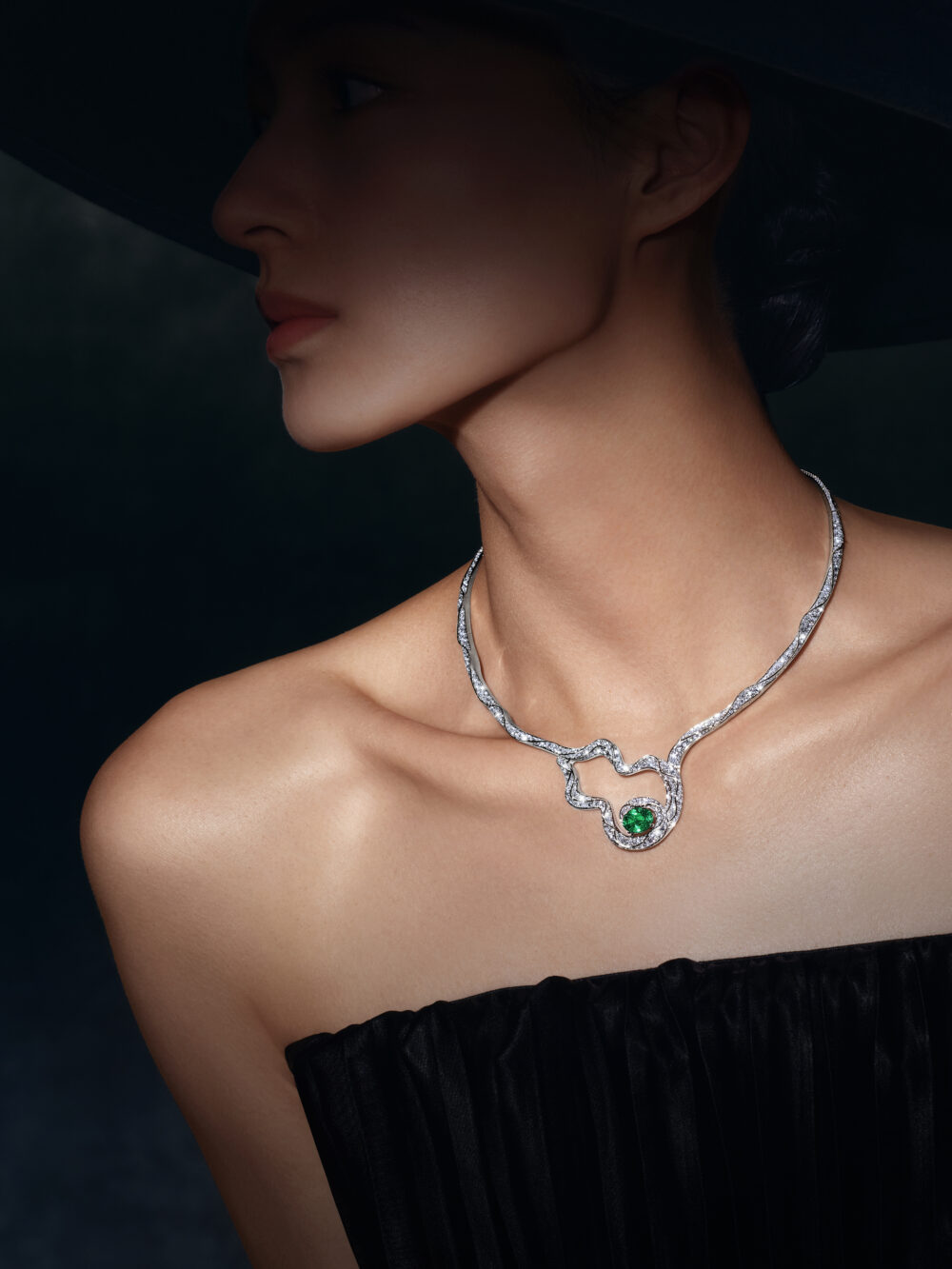
Wulu Fairy High Jewelry Collection
——Rare Gemstones Bestowing Heirloom Value
The series of rare gemstones presented as the finale of the exhibition, with their collectible heirloom attributes, provide tangible support for the cultural connotations the brand explores.
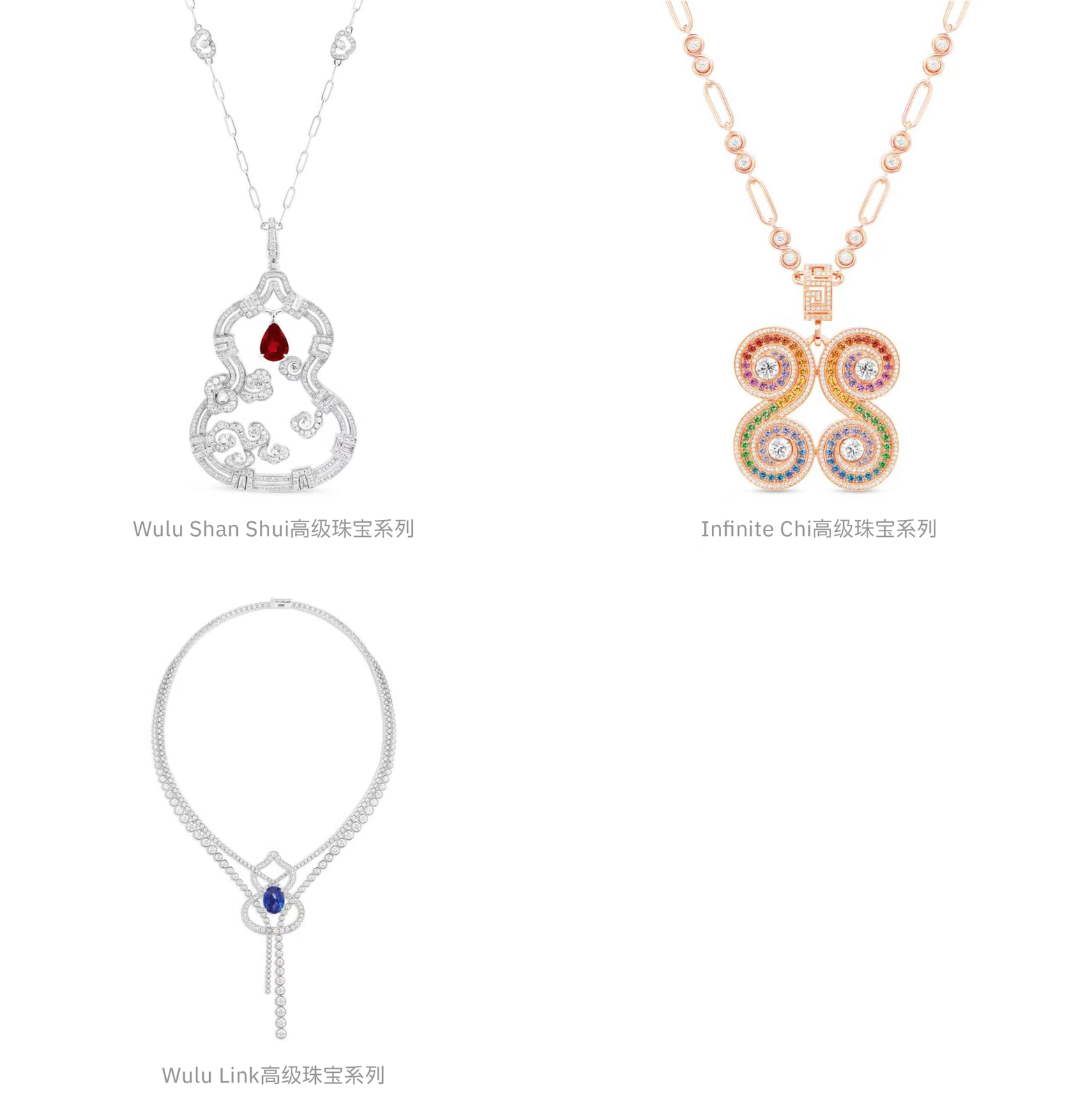
The centerpiece of the Wulu Shan Shui high jewelry collection is a 2.14-carat Mozambican pear-shaped ruby, like a rising sun among the mountains and waters of the Dong village, capturing the most moving natural imagery.
The Infinite Chi high jewelry collection accomplishes a precise creation of the spectrum: rainbow-gradient colored sapphires, green garnets, and London blue topazes are interwoven, with each gemstone's hue, brightness, and saturation rigorously screened and matched, interpreting the swirling interweaving of "qi" and "hui" patterns into a highly modern "infinite loop" beauty.
The Wulu Link high jewelry collection necklace is set with a 14.08-carat Sri Lankan oval sapphire, and the Wulu Treasure high jewelry collection ring features a 2.91-carat Burmese "pigeon's blood" ruby as its center stone... These rare treasures in Qeelin's creations are no longer isolated assets, but the core of cultural narrative, endowing intangible cultural heritage with physical value worthy of passing down through generations.
Conclusion
The Chinese land nurtures a deep and rich aesthetic soil, and countless aesthetic motifs and cultural symbols unique to the East are yet to be fully explored. Only with respect and gratitude can one fully gather its beauty.
As Dennis Chan says: "The core philosophy of the brand has never changed—giving Chinese tradition a contemporary rebirth."
Following its 2024 support for the "Study of Sui and Tang Accessories in Dunhuang Grottoes," Qeelin has gradually built a long-term and stable cultural preservation path: shifting from one-way inspiration from Chinese civilization to actively engaging in the research, protection, and revitalization of cultural heritage.
When high jewelry steps out of the glass display case and becomes a vehicle for transmitting Chinese culture to the world, cultural preservation completes the leap from "static preservation" to "dynamic growth."
Qeelin's 22-year journey has proven that high jewelry is precisely one of the most competent communicators capable of lighting the glimmer of cultural heritage into a global aesthetic consensus.
丨Image source: Qeelin
丨Editor: Elisa