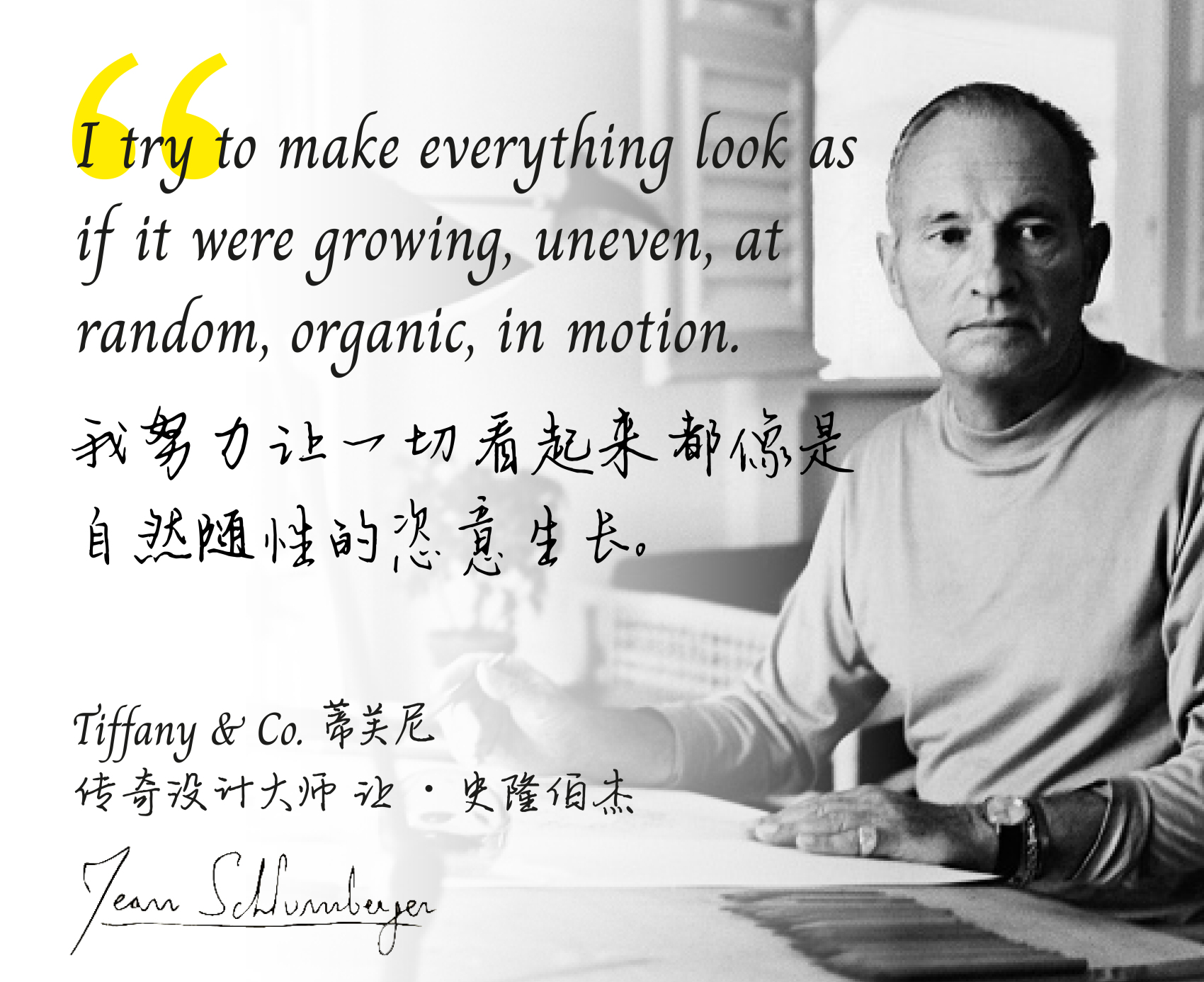
Tiffany & Co. legendary design master Jean Schlumberger's rather dreamlike confession vividly articulated his extraordinary jewelry design philosophy.
This giant of 20th-century high jewelry not only left behind widely known masterpieces such as the "Ribbon Rosette Necklace" and "Bird on a Rock," but also reconstructed the meaning of high jewelry through a purely naturalist perspective—igniting our innate perception of nature and reactivating our connection to the vitality of life.
Today, Tiffany Senior Vice President and Chief Artistic Officer Nathalie Verdeille has taken Schlumberger's world to an entirely new level. In the just-released Tiffany 2026 Blue Book high jewelry collection Hidden Garden, we see:
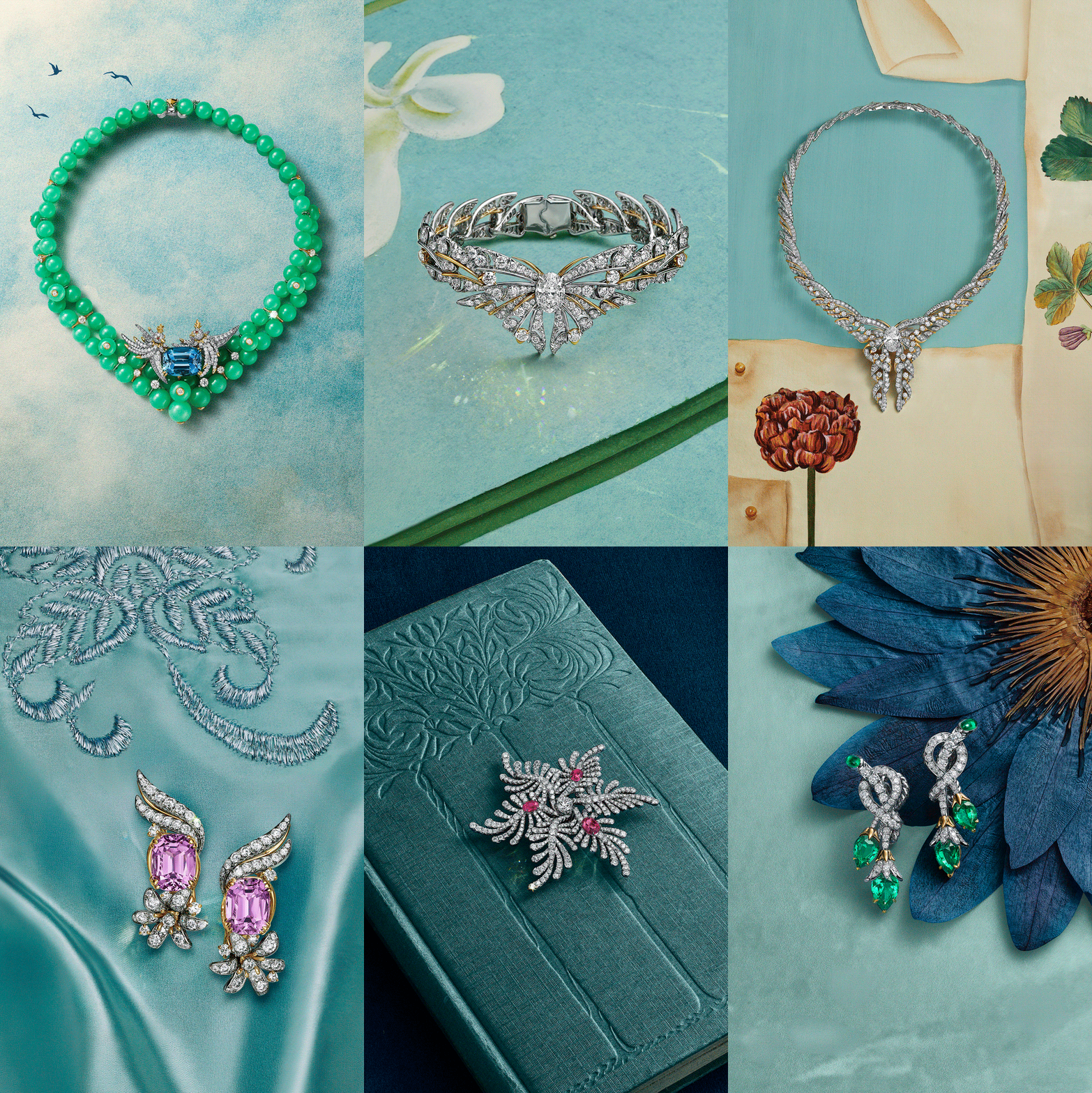
A pair of dancing "Bird on a Rock" creations alight on an aquamarine of over 22 carats, with chrysoprase arranged around the birds to create a verdant landscape that further sets off the main stone's saturated blue tone; in the "Bird of Paradise" series, fantastical birds perch on colorful gemstones—from Mexican fire opal and Brazilian red tourmaline to Ethiopian blue chalcedony and Madagascar mandarin garnet—as various colored gemstones collide with pointillist-like feathers in a play of color.
Butterfly, bee and floral-themed pieces bring Schlumberger's garden back to life. Pavé white diamonds leave a breathing rhythm in their scattered arrangement, restoring the lightness and agility of butterfly wings; the bees' dancing postures echo the geometric structure of the honeycomb; gold becomes vines, sapphires accent the flower stamens, and diamonds are laid out into corollas and leaves, with natural textures and rhythms hidden in the details.
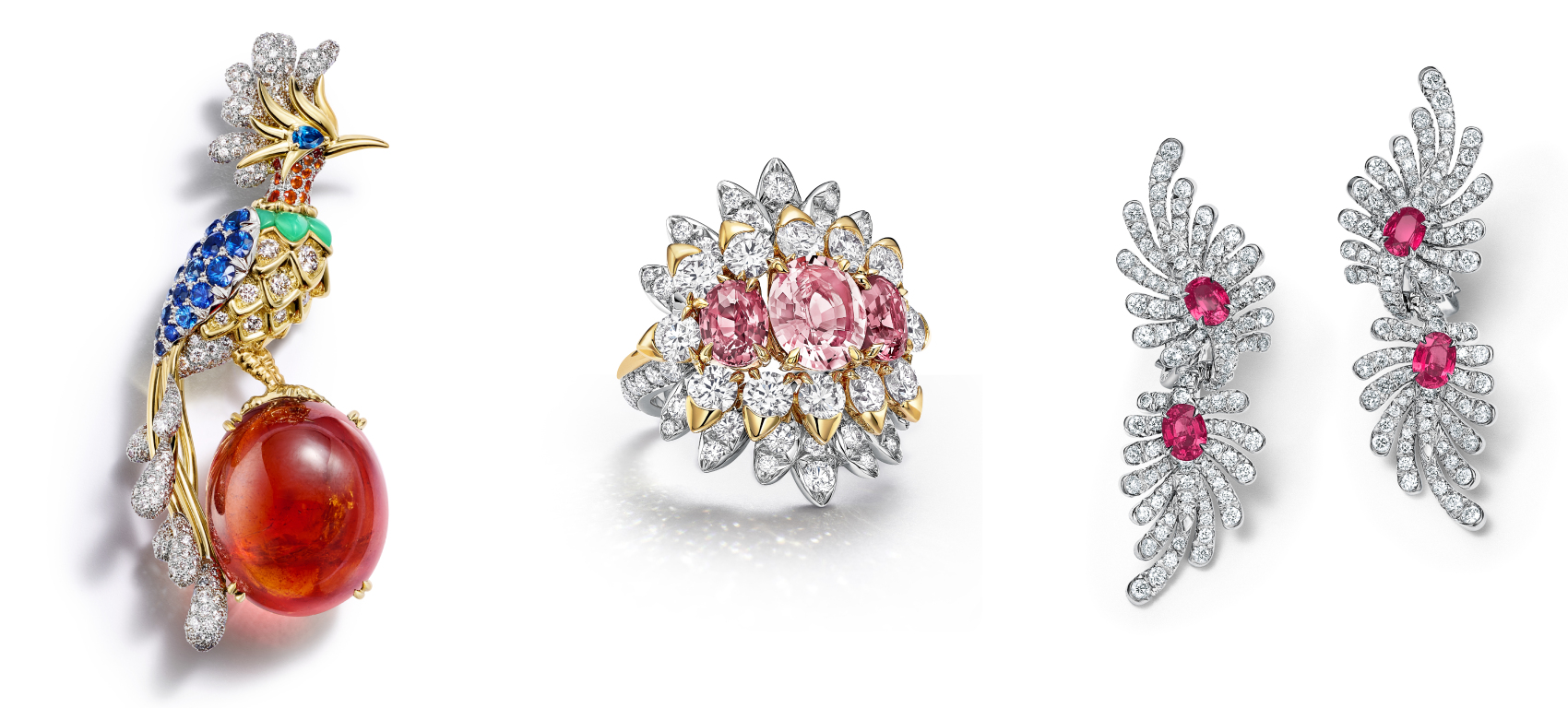
From the Tiffany 2026 Blue Book high jewelry collection Hidden Garden
The entire collection employs a large number of unenhanced large gemstones, such as Mozambican rubies, Zambian emeralds, padparadscha sapphires and Montana sapphires, preserving the natural color of the gems to the greatest extent and adding a rustic vitality to this nature-themed high jewelry collection.
Tiffany's high jewelry language today displays a vigorous tension rooted in nature, and behind it is an important inspirational figure in the brand's archive—Schlumberger.
More than ten vintage archival works created by him are currently on display in the "Birds and Flowers: Tiffany Vintage Collection" limited-time exhibition at the Tiffany Beijing Sanlitun Taikoo Li flagship store.Taking this opportunity, Luxe.CO held an exclusive conversation with Christopher Young, Vice President and Creative Director of Tiffany Heritage and Global Creative Visual Merchandising, asking him to open the doors of the Tiffany archive and interpret for us the creative allure of Schlumberger.
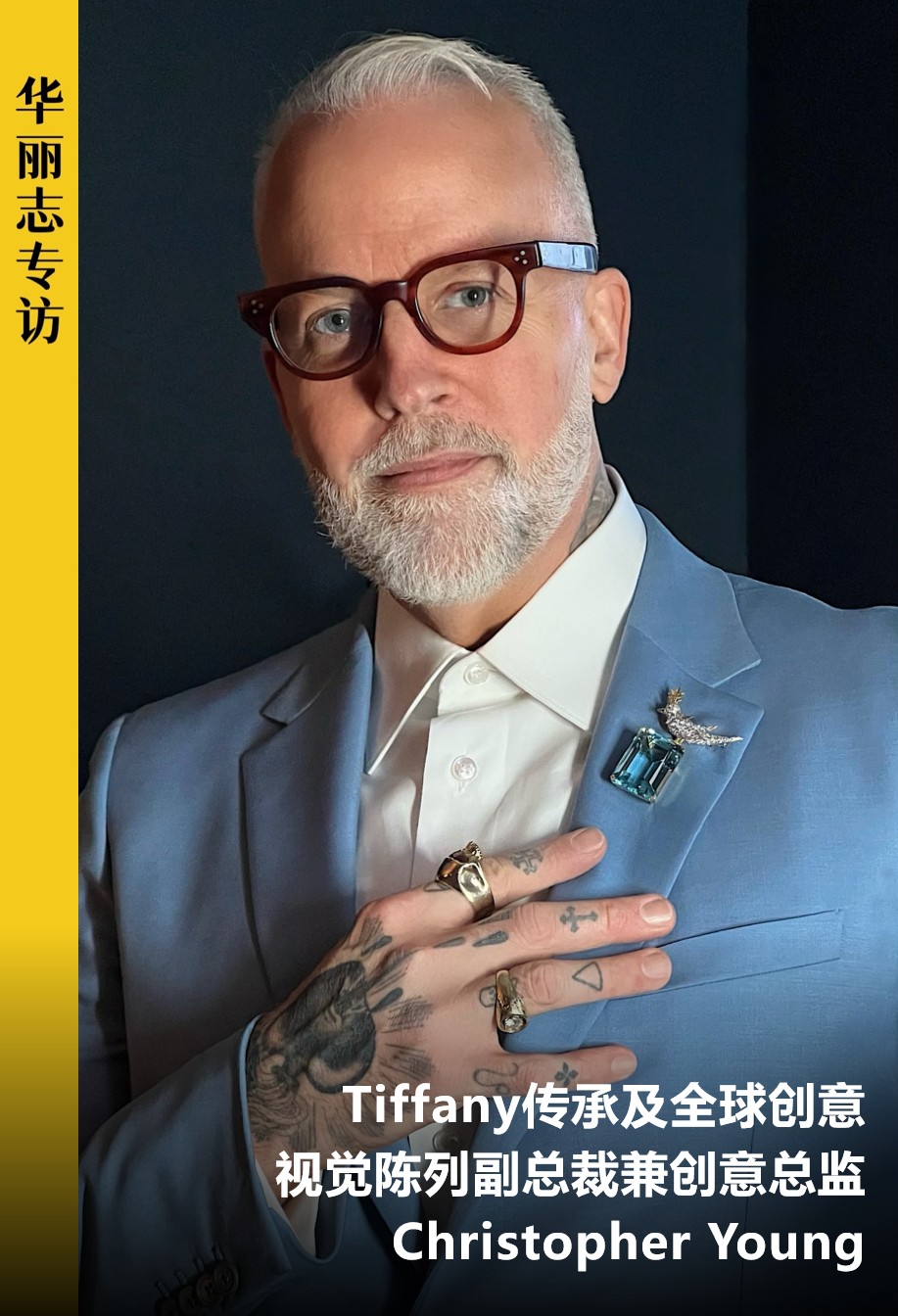
Christopher recalled for us the first time he saw a Schlumberger work, many years before he joined Tiffany:
"As a professional illustrator, I was immediately drawn to the innovation of his forms and compositions. I still remember cutting an image of his 'Plumes' necklace out of a magazine and pinning it above my drafting table in the studio as a source of creative inspiration. It has stayed with me because it is so completely conceived: technically brilliant, poetic, full of joy, and with a sense of fantasy that excited me very much."
"He arranged pear-shaped, marquise-shaped and oval rubies like drops of blood on the bird's wings, which fascinated me. I had never seen a design like that!"
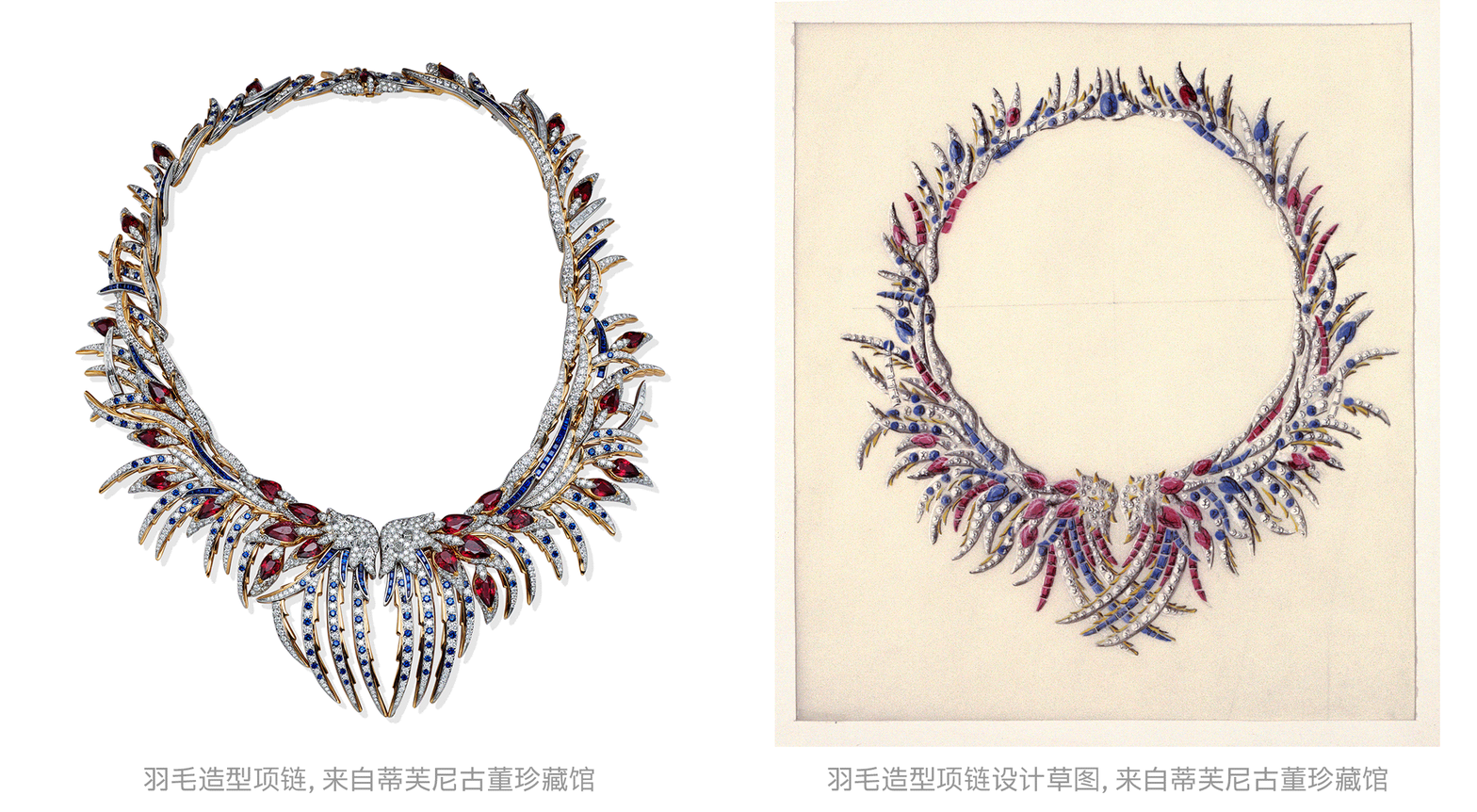
Christopher summarized: "Jean Schlumberger is of great significance to Tiffany because he historically changed the style of high jewelry at an important cultural moment."
Jean Schlumberger: He Historically Changed the Style of High Jewelry
— A pioneering style blending surrealism and naturalism, giving static jewelry a sense of life
Schlumberger's works always seem to have the magic of "a thousand faces"—everyone can see a different story in them.
In the "Birds and Flowers: Tiffany Vintage Collection" limited-time exhibition at the Tiffany Sanlitun Taikoo Li flagship store, a "Wing Brooch" created in 1951 at first glance seems like wings from myth and dreams, yet viewed from another angle, it resembles an elephant flapping its ears, with two sapphires of different cuts becoming deep-set eyes. Another brooch shaped like a bird spreading its wings is actually inspired by a marine creature, the sea slug (also known as the sea hare), with two movable pearls at the top simulating the sea slug's flexible antennae.
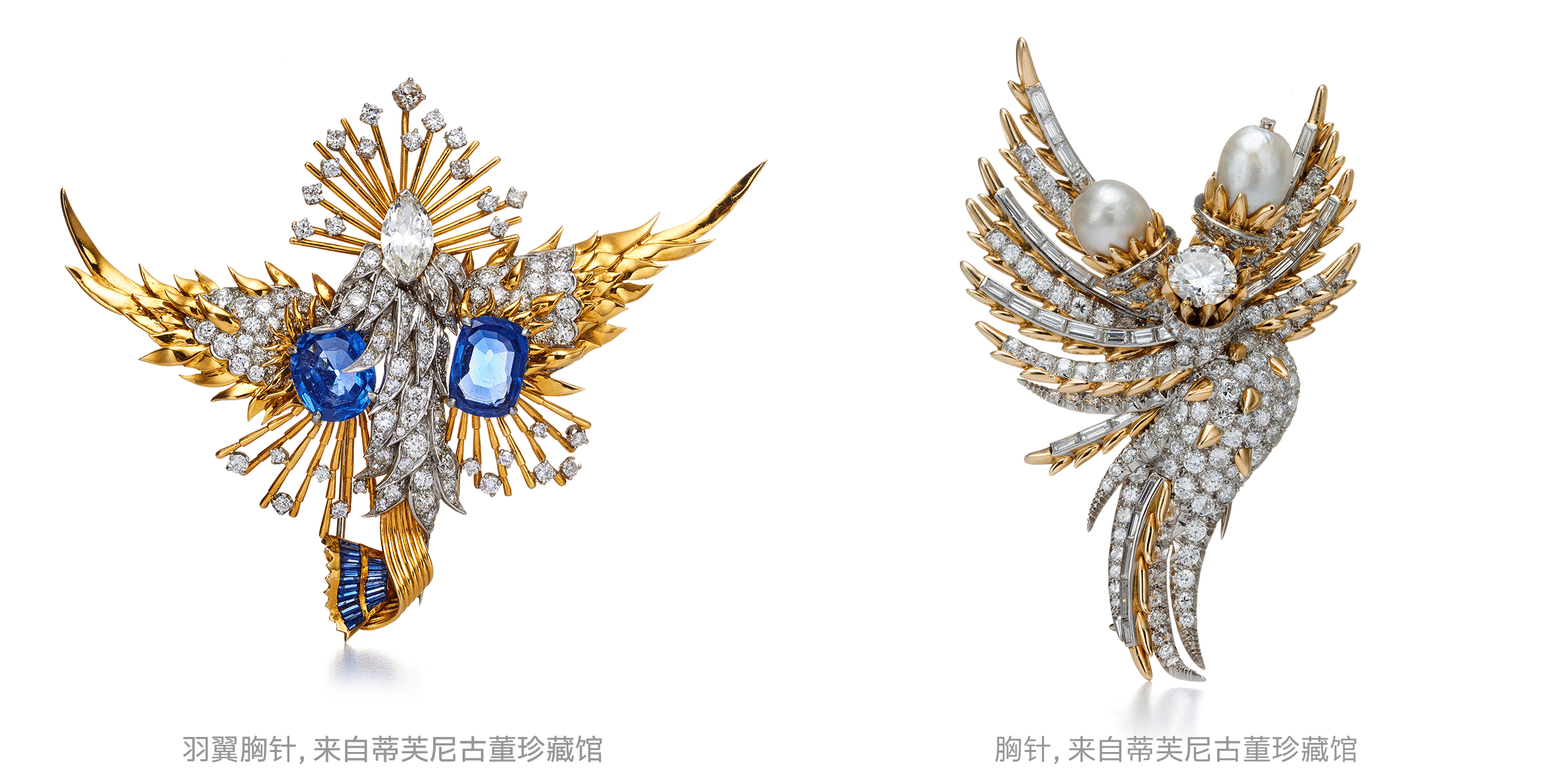
Christopher told us that when he first saw Schlumberger's works, he was deeply attracted by the exquisite balance within the asymmetrical structures and the surrealist dreaminess, describing them as "full of intelligence, refinement and extraordinary vitality."
Schlumberger's highly original imagination may stem from his undisciplined background. He was one of the rare designers who received no formal jewelry design training and did not start with precious jewelry, but instead possessed a pioneering boldness and experimental spirit.
In 1907, Schlumberger was born into a prominent textile family in France. His family hoped he would study finance in Berlin, but he ran off to Paris to pursue art. Cut off financially by his family, he could only scavenge old chandeliers, glass bead necklaces and antique bracelets from flea markets, disassembling the materials to create.
His early vividly shaped buttons and brooches—animals, shells, cherubs, fruits—caught the eye of haute couture master Elsa Schiaparelli, and Schlumberger began collaborating with her, designing buttons and costume jewelry.
He spent several months each year living on tropical islands in the Caribbean and often traveled to Central America and Southeast Asia. Natural landscapes, marine life, exotic flowers and fruits, and the cosmos all became sources of inspiration. And he did not simply imitate nature, but sought to reconstruct its structures.
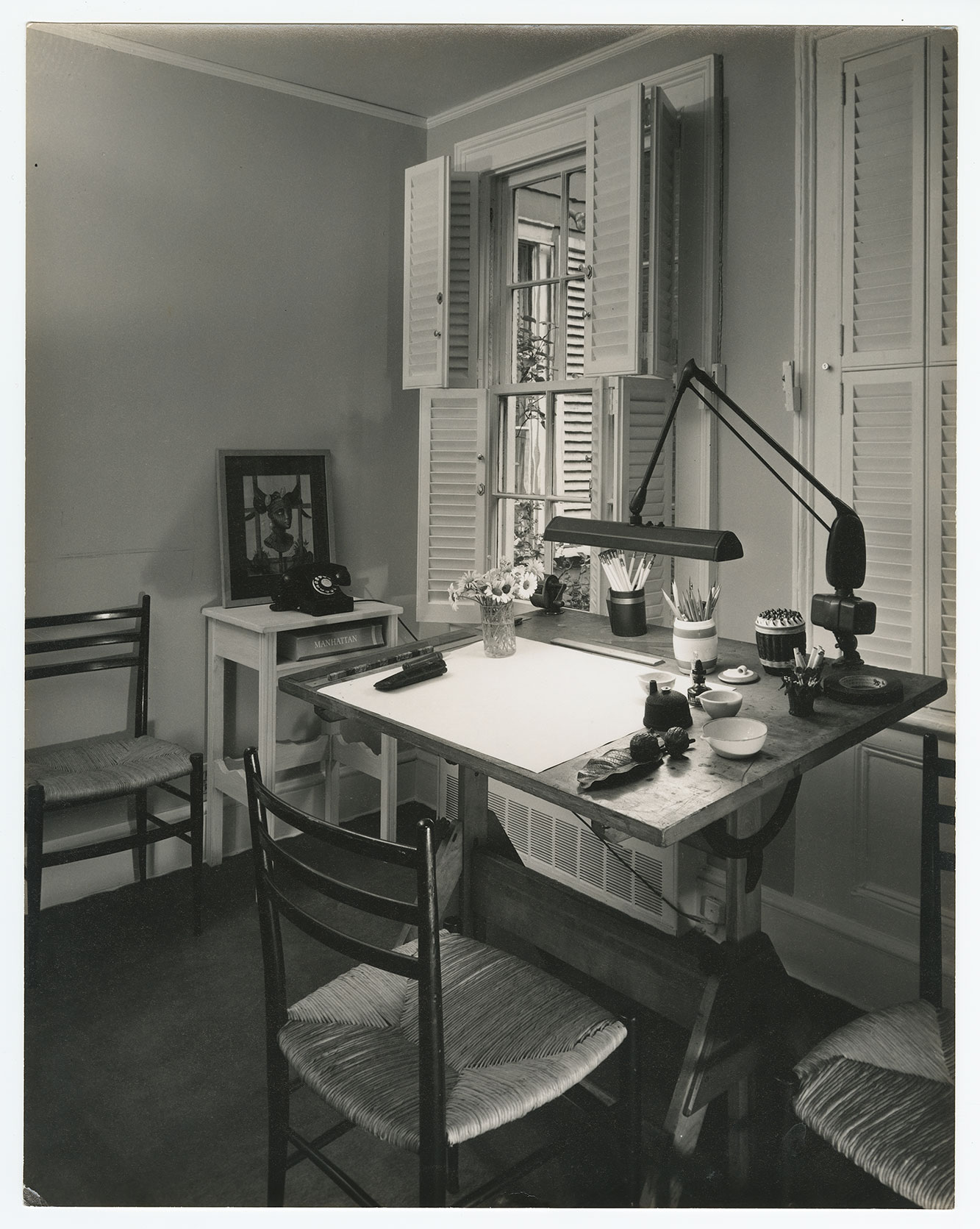
One of Schlumberger's residences on a tropical island
In mid-20th-century France, the geometric symmetry of Art Deco aesthetics dominated, yet Schlumberger went against the grain, forming a sharp contrast with the symmetry, regularity and static aesthetics of traditional jewelry.
He deeply understood nature's laws of growth—pure and untouched by human intervention. The "Fruit and Leaf Brooch" uses a freely reversible leaf structure to simulate a plant's maturation from flower to fruit; on another "Brooch," seven independent leaves can each rotate 180 degrees, like a dance of nature's cycles, touching viewers' deep genetic memory of life's order; the "Soursop Brooch" distills the unique characteristics of the soursop in a spiky heart shape, with pink sapphires like translucent flesh, as if all living things continue to grow within the gemstones.
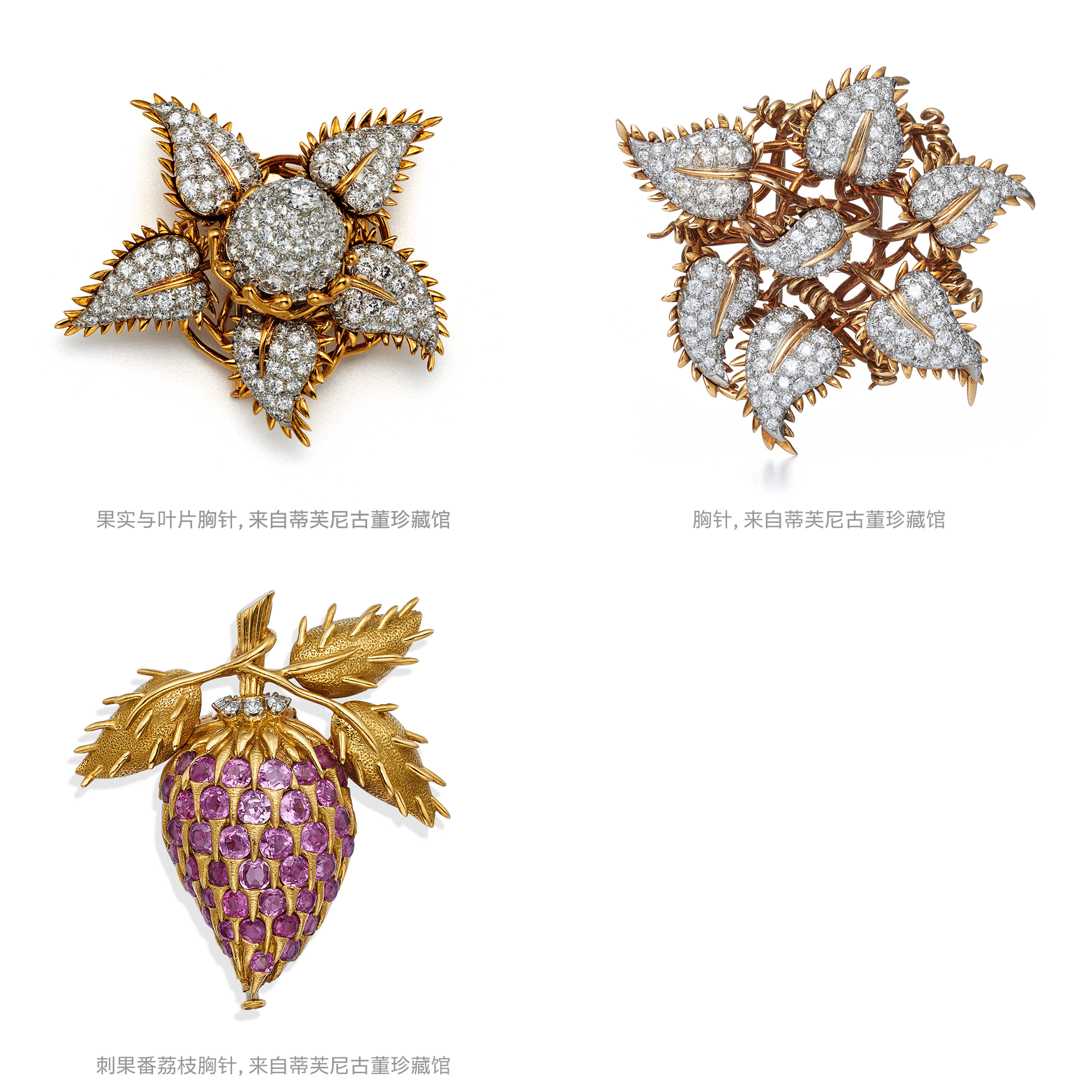
This genius designer, who grew freely in nature and defied convention, creatively gave static jewelry the rhythm of life.
— Injecting Tiffany with a fresh vitality distinct from traditional European jewelers
Schlumberger survived the baptism of World War II gunfire and, after a fortunate escape, made his way to New York to continue his beloved design career. In 1956, at the invitation of then-Tiffany chairman Walter Hoving, he joined the company as vice president and became the first designer in Tiffany's history permitted to sign his works—hailed as a pioneer of "Artist Jewelry."
By then this designer had already made his mark with a distinctive personal style. "His style helped define a new postwar idea and imagination of luxury: more expressive, imaginative, colorful and more modern," Christopher analyzed.
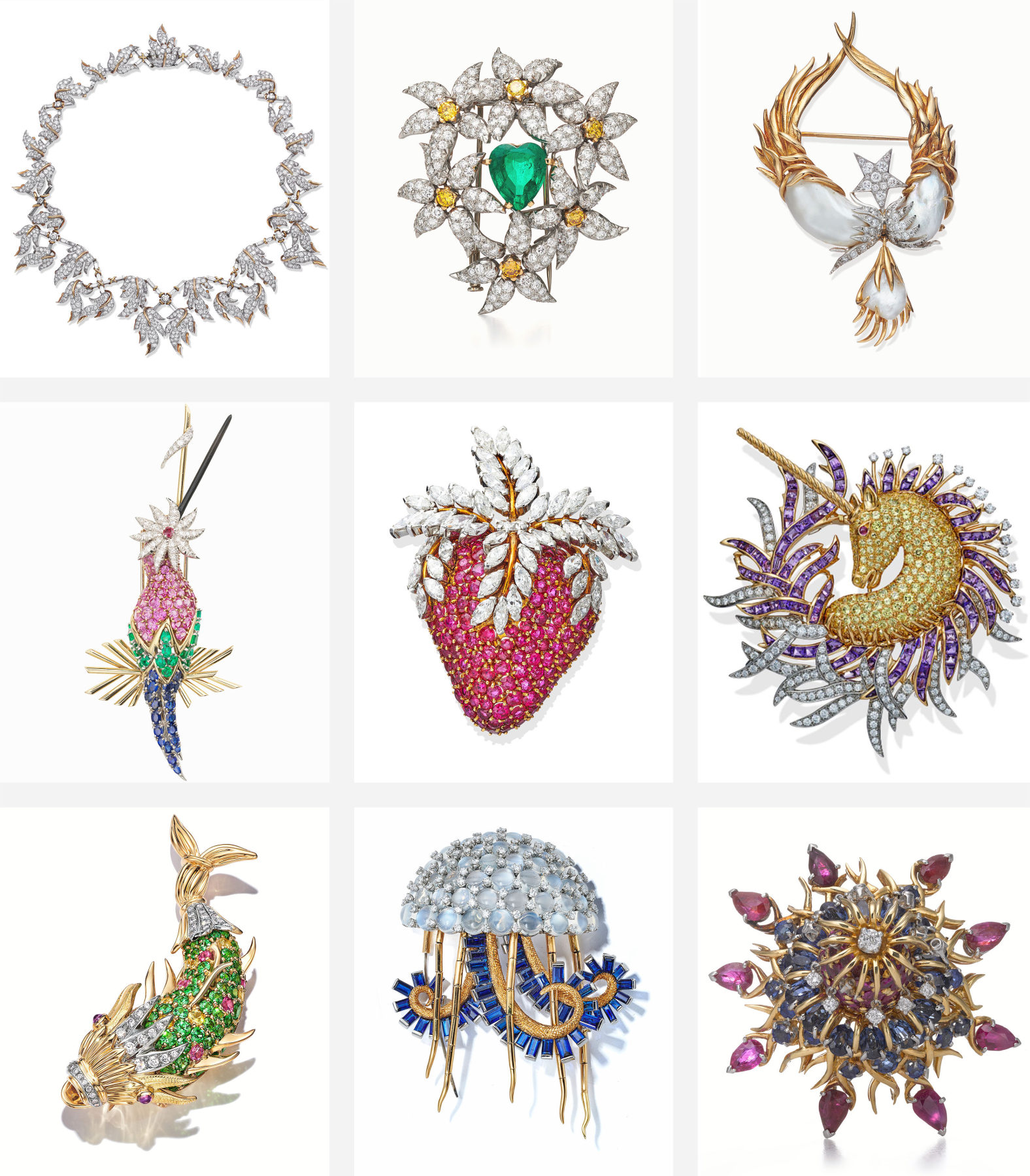
Schlumberger distilled all living things and extraordinary imagination into jewelry art; flora and fauna, the ocean, the cosmos, textiles and mythology together formed his five major creative themes.
At the time Tiffany already enjoyed the reputation of America's "Diamonds King," and Schlumberger's arrival greatly strengthened the brand's strength in colored gemstone high jewelry.
"He injected Tiffany with a fresh creative vitality that was vibrant yet still elegant. It was not at all serious—unlike those traditional European jewelers."
Schlumberger never chose gems first and then designed; instead, he drew sketches first, and then his partners would find materials to realize the ideas. Tiffany's century-plus global gemstone sourcing capability provided him with "all the paint choices in the world."
For a designer this was an almost extravagant creative freedom: top-tier, rare gemstone reserves became his palette, precious metals such as gold became his canvas and medium, and the world's finest craftsmen and gemologists were his brushes.
This approach of painting with colored gemstones was perfectly embodied in the "Hedge and Flower Row Necklace" created in 1960. Twenty-two yellow sapphires are arranged in a surrounding pattern, interspersed with thirteen turquoises, bright and rhythmic in color; gold becomes the earth, branches and sunlight, while the brilliant colored gemstones appear like the manifestation of seasons and life.
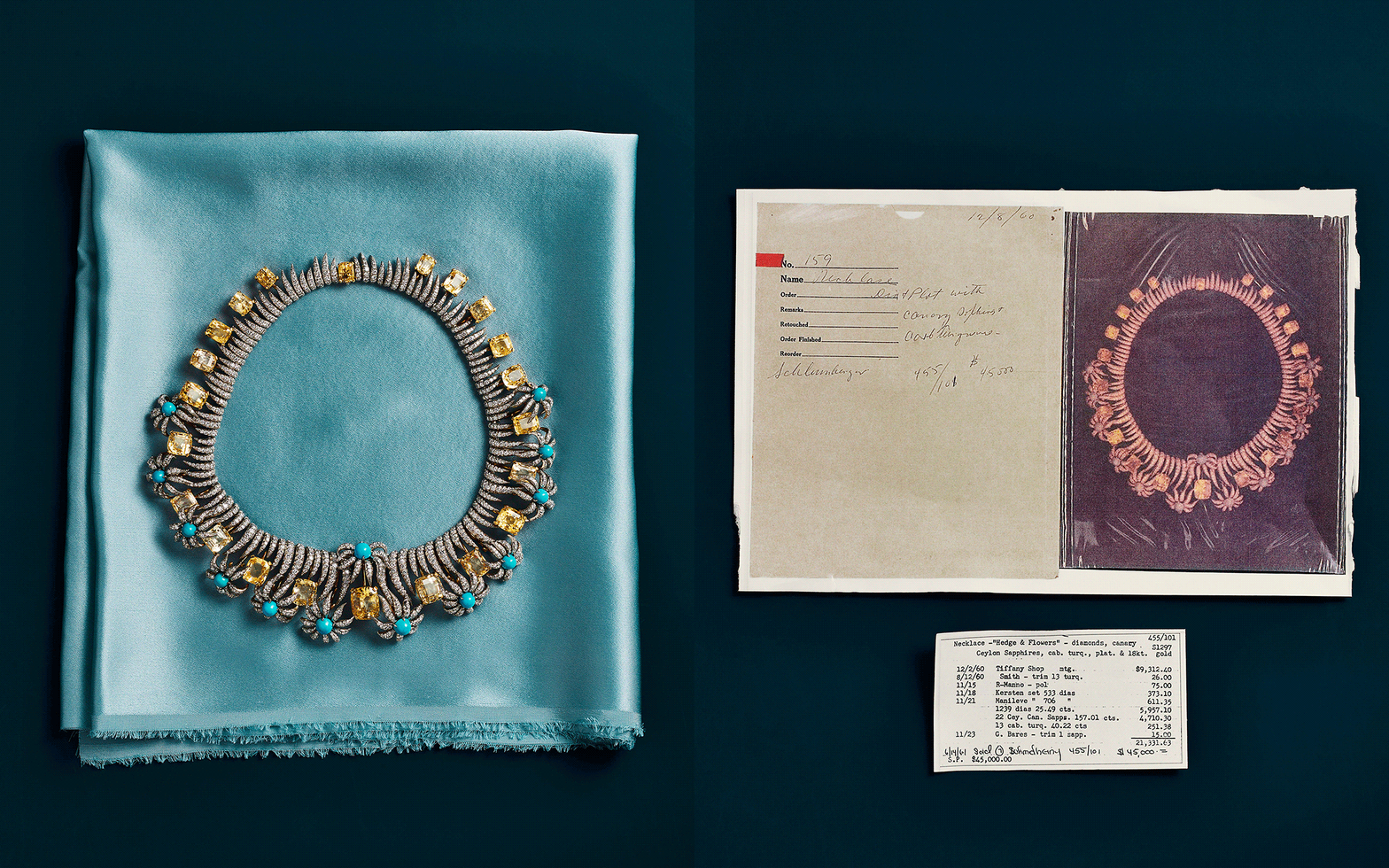
Hedge and Flower Row Necklace, from the Tiffany Archive
In close collaboration with Tiffany, Schlumberger used precious materials and a sincere perspective to create a series of works with passionate colors, bold forms and a rich tropical marine atmosphere, erecting enduring monuments in the history of high jewelry.
— Each of Schlumberger's jewelry works is a portrait an artist dedicated to a woman
Schlumberger once said: "Some women want to look expensive, but I would rather they look precious."
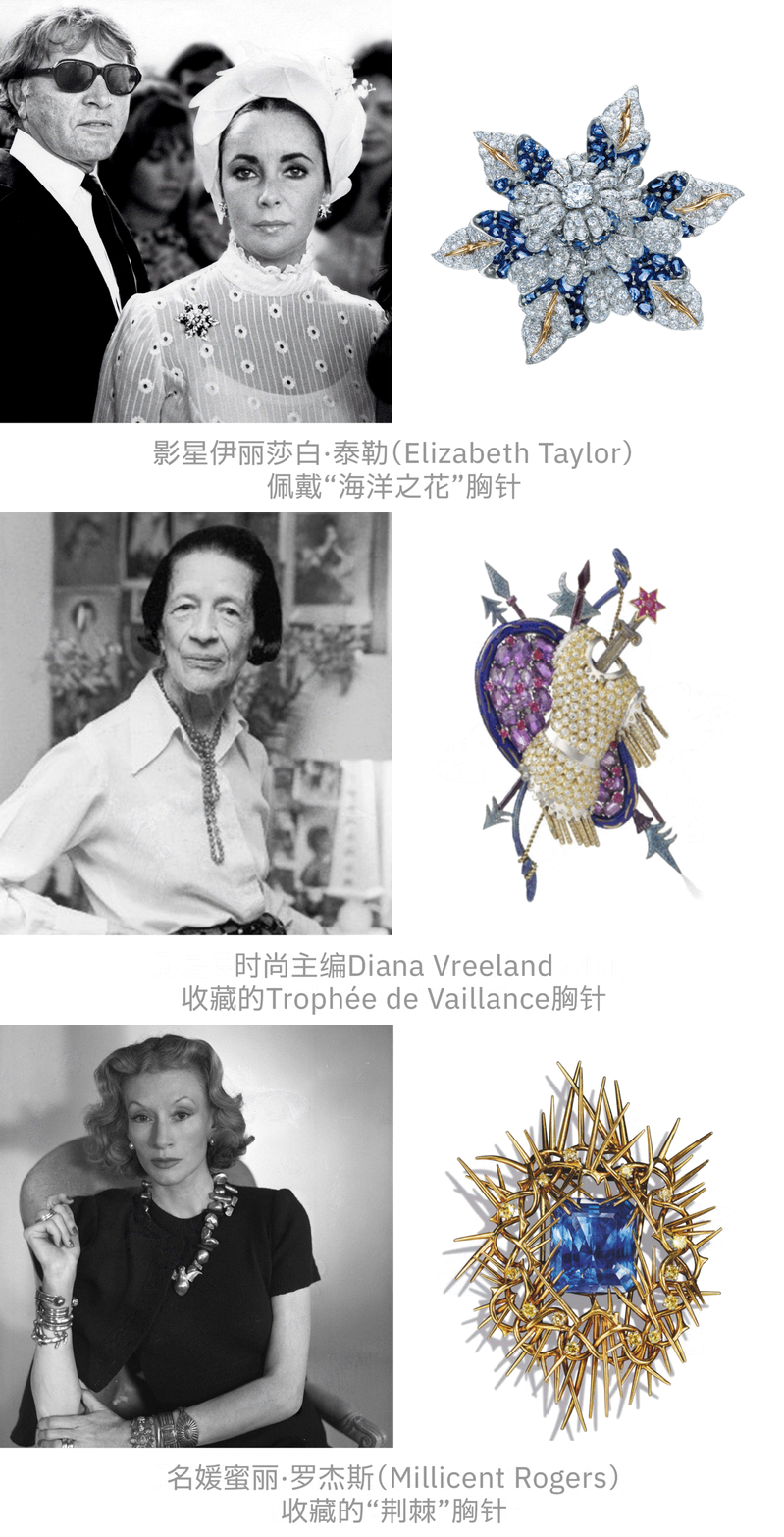
His dynamic, individualistic jewelry attracted many famous women of his era, such as film star Elizabeth Taylor, former U.S. First Lady Jacqueline Kennedy, authoritative fashion editor Diana Vreeland, and heiress Millicent Rogers.
Gardener and collector Rachel Lambert "Bunny" Mellon was one of Schlumberger's most important collectors and also his most important muse; the two bonded over their shared love of nature. At the exhibition, Christopher specially created a lush green garden space to pay tribute to their deep friendship.
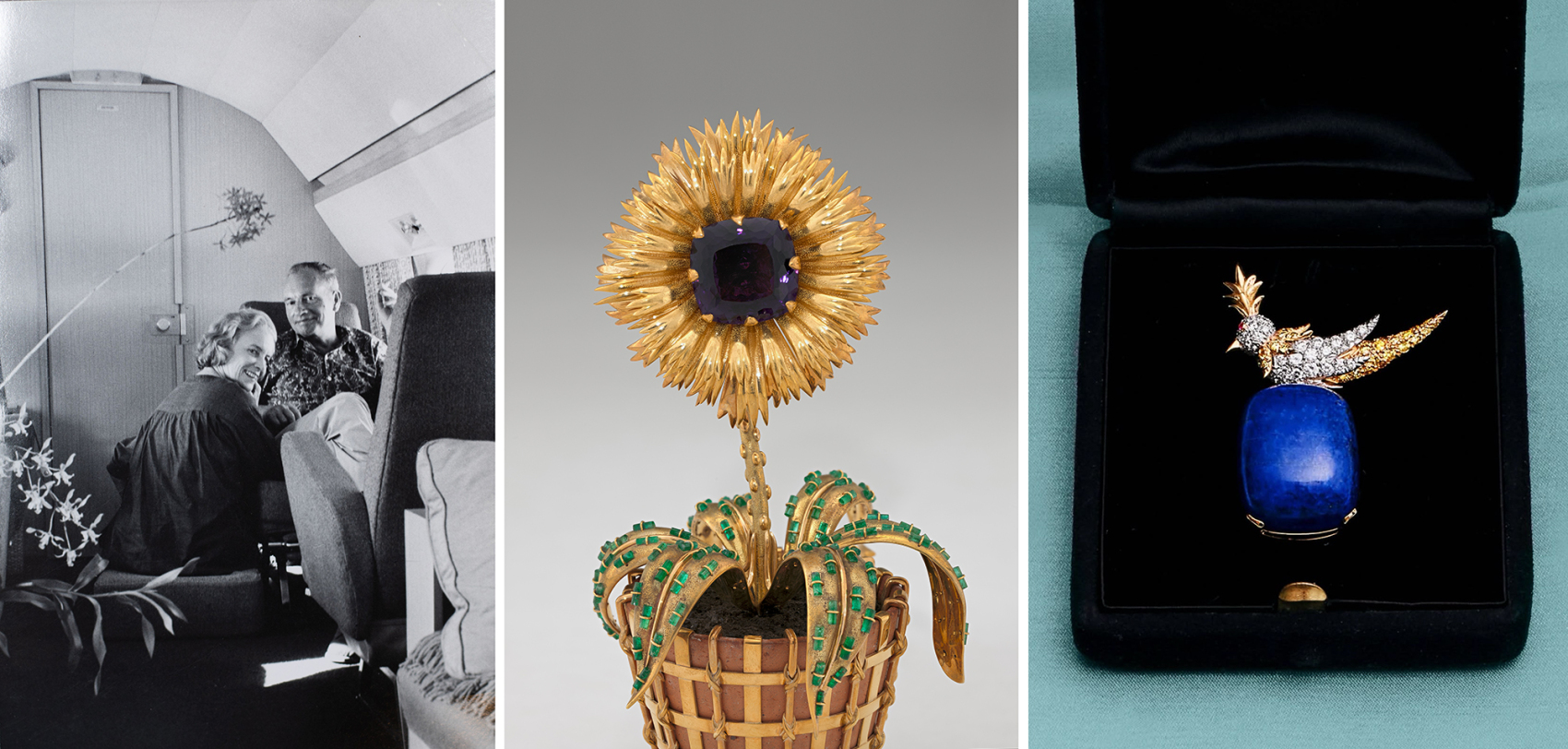
Schlumberger once drew inspiration from a yellow cockatoo encountered on his travels to create the classic "Bird on a Rock"; Bunny Mellon was one of the first owners of the "Bird on a Rock" brooch. The "flowerpot jeweled object" he custom-made for her vividly recreated the texture of a flowerpot and soil.
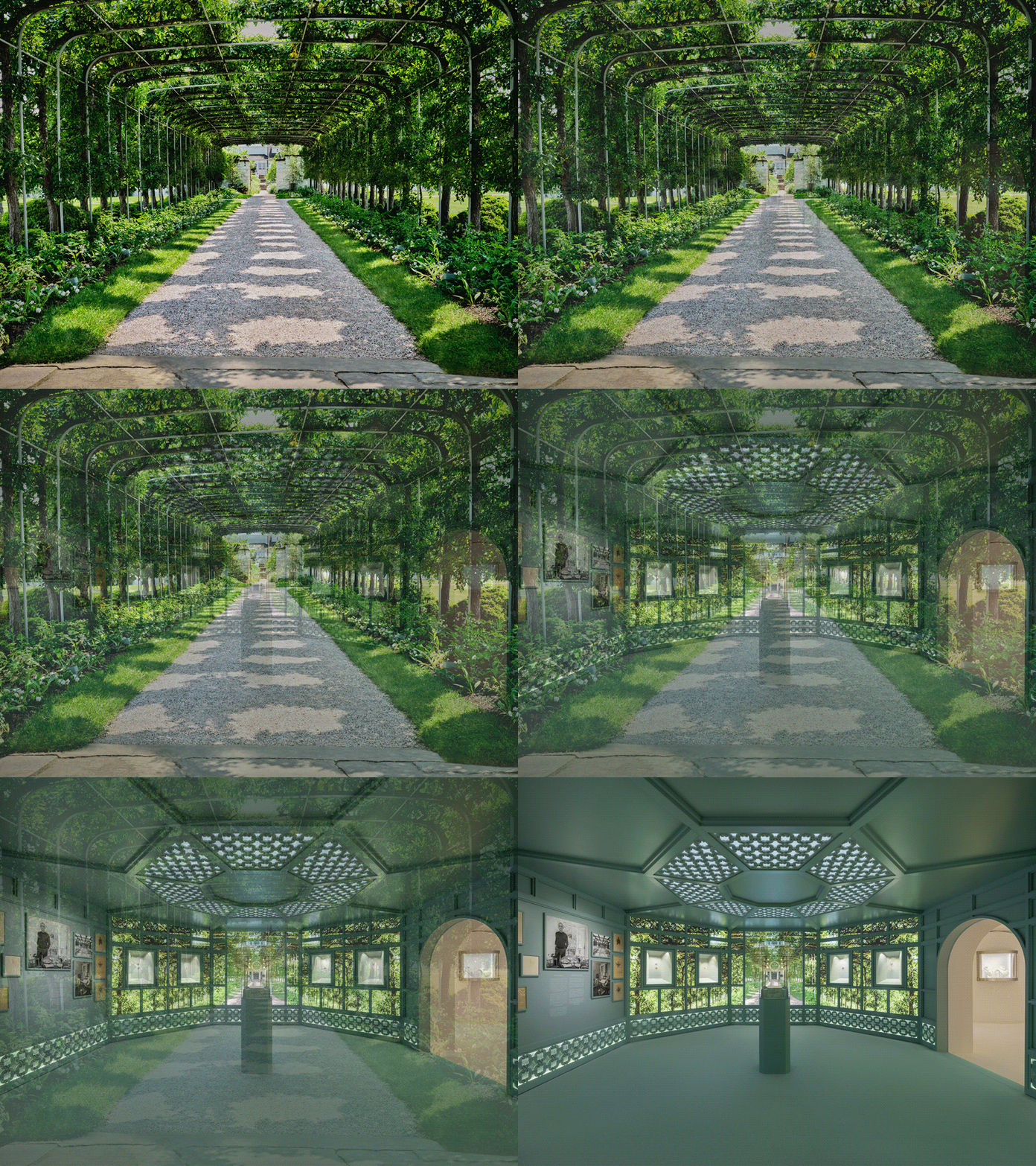
At the "Birds and Flowers: Tiffany Vintage Collection" limited-time exhibition at the Tiffany Sanlitun Taikoo Li flagship store, Bunny Mellon's Oak Spring Garden was recreated.
Christopher also gave an example of a female client who impressed him deeply: Baroness Fiona Campbell Walter Thyssen-Bornemisza, a top model of British aristocratic background, who commissioned Schlumberger to make that "Plumes" necklace. Pink sapphires paired with diamonds and sapphires not only demonstrated Schlumberger's fearless elegance but also complemented the beauty, boldness and unique temperament of this celebrity client.
"In many cases, the collector's story deepens people's understanding of the jewel; it is no longer seen merely as a beautiful object, but as an expression of personality and personal conviction," Christopher interpreted. "It reminds us that Jean Schlumberger's jewelry was never just about the design itself; every piece is a portrait, an artist's portrait, depicting the characteristics of each client."
Schlumberger left the Tiffany Archive with the most detailed dedicated collection of high jewelry. Beyond that, this treasure house of jewelry art spanning nearly two centuries holds many more astonishing historical treasures, still continuously supplying today's creators with an inexhaustible wellspring of creative inspiration.
The Tiffany Archive: A Living Treasure House
— "What is archived is not only jewelry, but also human emotion"
As a young man, Christopher designed windows for Tiffany as an illustrator, and officially joined the brand in 2011, gaining deep access to the Tiffany Archive. Today, he is also responsible for the brand's global creative visual merchandising, effectively the "gatekeeper" of Tiffany aesthetics.
He introduced us to some "magical" items in the Tiffany Archive, from the cash ledger used on Tiffany's first day of business in 1837 to a Tiffany pocket watch given by Titanic survivors to the captain of the rescue ship.
"The meaning an object carries goes far beyond material value. When such an object returns to the Tiffany Archive, what is archived is not only the gemstones, craftsmanship or design history. What returns as well is human emotion. This makes archival work profoundly meaningful," Christopher said.
Tiffany's story is also presented through the "entire ecosystem" that brought these jewels into being, including design sketches, manufacturing records, photographs, advertisements, letters and "many traces that reflect its creativity." "These materials allow us to piece together its story step by step. The process is deeply satisfying. We start with an image or an article, and from there a broader world gradually emerges."
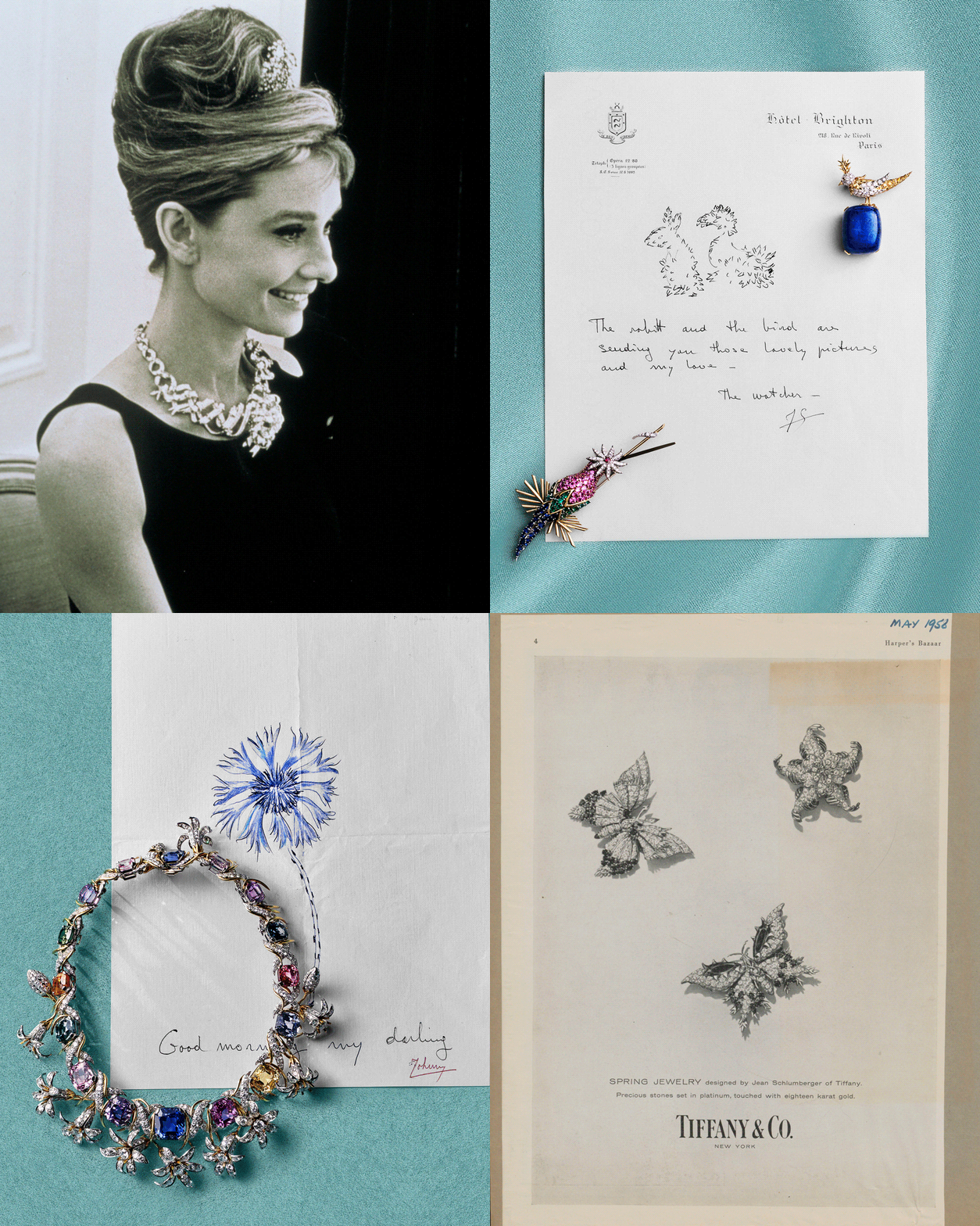
Christopher emphasized that the archive also reflects Tiffany's long-standing distinctive creativity: "combining purity of design with technical boldness, combining the authority of diamonds with artistic imagination, combining refinement with a sense of wonder."
— Tiffany's Heritage: An Evolving Continuum of Ideas
Inventiveness, joy, creativity—Christopher used these three keywords to summarize the relationship between Tiffany and its legendary designers, which together form the key driving force of the brand's creativity.
More than half a century ago, Tiffany embraced Schlumberger—this "non-academically trained" genius—with foresight, granting him top-tier gemstone resources and unlimited creative freedom, and further introducing him to a group of global clients eager to appreciate the highest level of original work. This encounter produced the pinnacle of Schlumberger's design.
Today, these precious archival assets continue to radiate vitality in the hands of Tiffany's new generation of creatives. Under the leadership of Tiffany Senior Vice President and Chief Artistic Officer Nathalie Verdeille, "Bird on a Rock" has evolved from an initial brooch into a complete collection spanning necklaces, rings and even watches, becoming a window through which Tiffany showcases to the world its rare gemstone capability and design innovation.
As Christopher said: "Tiffany's heritage is not frozen in the past; it is an evolving continuum of ideas, always able to be reinterpreted in new and unexpected ways."
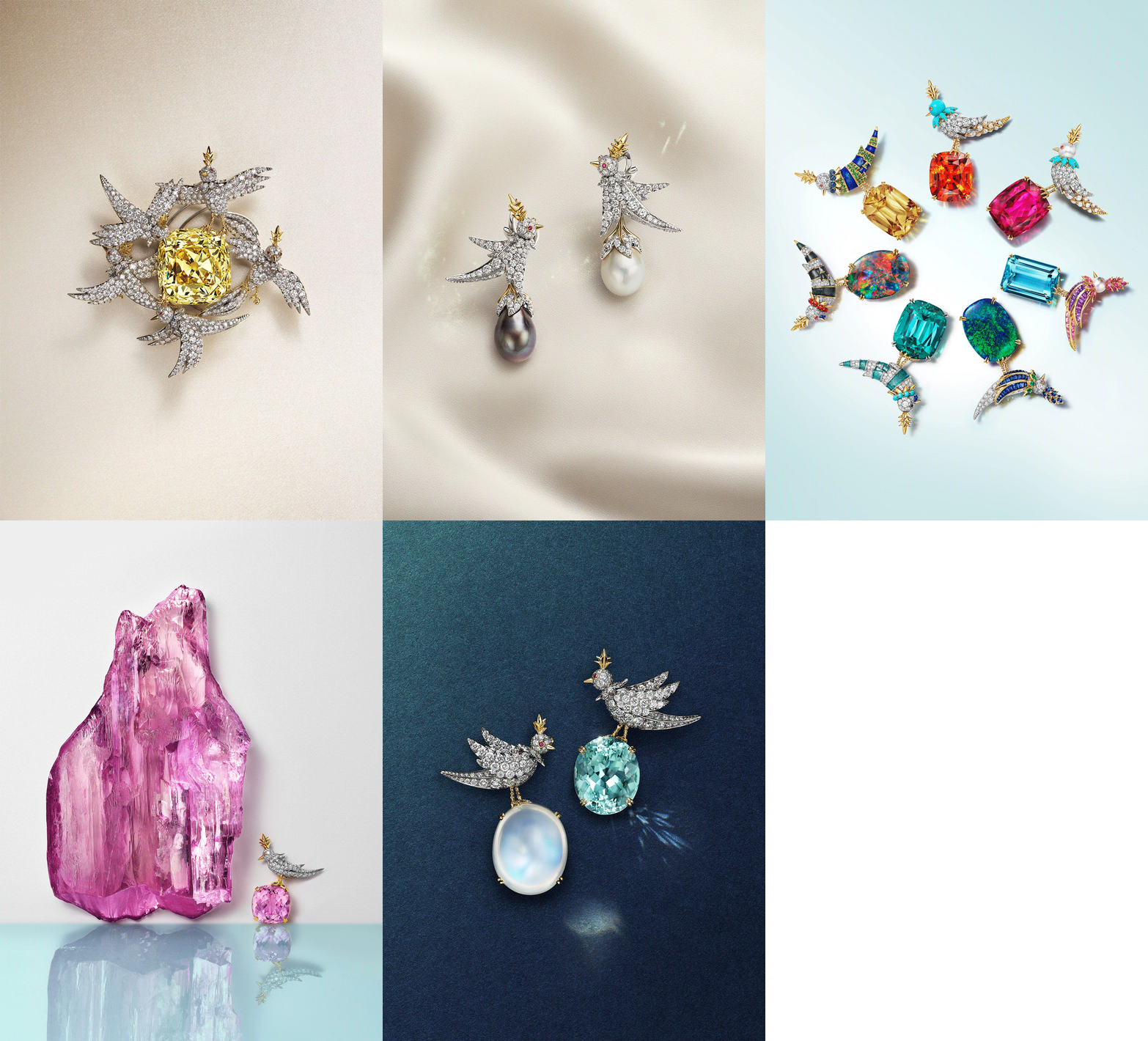
In 2023, Nathalie Verdeille designed the Bird on a Rock 2.0 version on the legendary yellow diamond, with five birds showing different postures of stepping, pecking and caressing on the legendary yellow diamond, giving "Bird on a Rock" a new narrative. In recent years, from "Pearl Bird on a Rock," "Rainbow Bird on a Rock" and the Love Birds collection to limited-edition works crafted from an extraordinary kunzite rough stone weighing over 7,500 carats, this classic design has continuously broken through material boundaries.
Christopher, who also manages the Tiffany Archive and creative visual work, is especially able to understand the relationship in which history and the contemporary "nourish each other." In his view: "History provides substance and credibility for creative work, while contemporary creative expression ensures that the heritage remains alive, relevant and always moving forward."
In March this year, 27 vintage jewels and objects from Tiffany shone in the film "Frankenstein," which won three Academy Awards, and Christopher was also the leader of this collaboration. He said: "The deeper I delve into these archives, the more I understand why Tiffany's influence has endured and remained ever new."
"During my time at Tiffany, I have been fortunate to enjoy great creative freedom, though of course this is premised on long-term trust and accumulated experience. Within the necessary constraints, we can seek novel narrative contexts, evoke emotional resonance and create unexpected visual poetry."
He emphasized: "I firmly believe in the importance of dreams. Surprise, joy and wonder are indispensable elements of the Tiffany experience."
| Image source: Provided by Tiffany
| Editor: Elisa