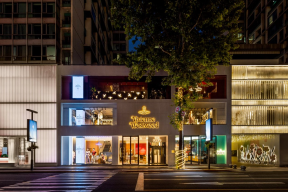
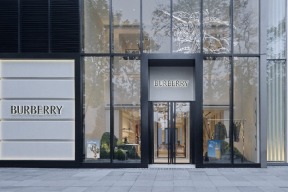
In summer 2026, the swimwear collection jointly launched by British luxury brand Burberry and independent swimwear brand Hunza G became a focal point of the global fashion industry. Notably, this collaboration is not a simple brand licensing deal, but Burberry's first in-depth co-creation with a pure-play swimwear brand in the vertical sector.
Previously, Burberry's forays into swimwear mostly appeared as sporadic pieces within fashion collaborations, such as bikinis or swim trunks launched in partnerships with Vivienne Westwood or Gosha Rubchinskiy.
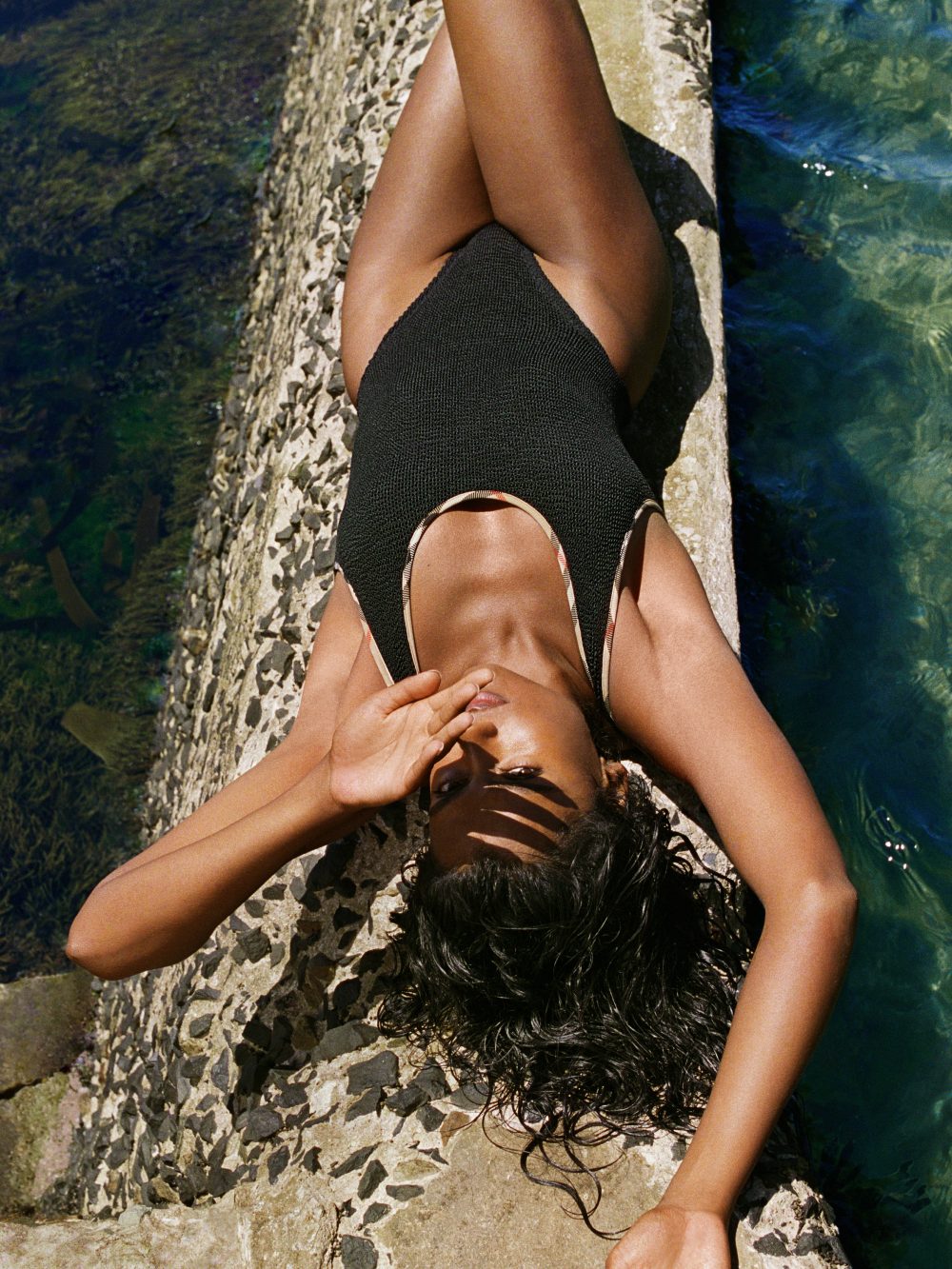
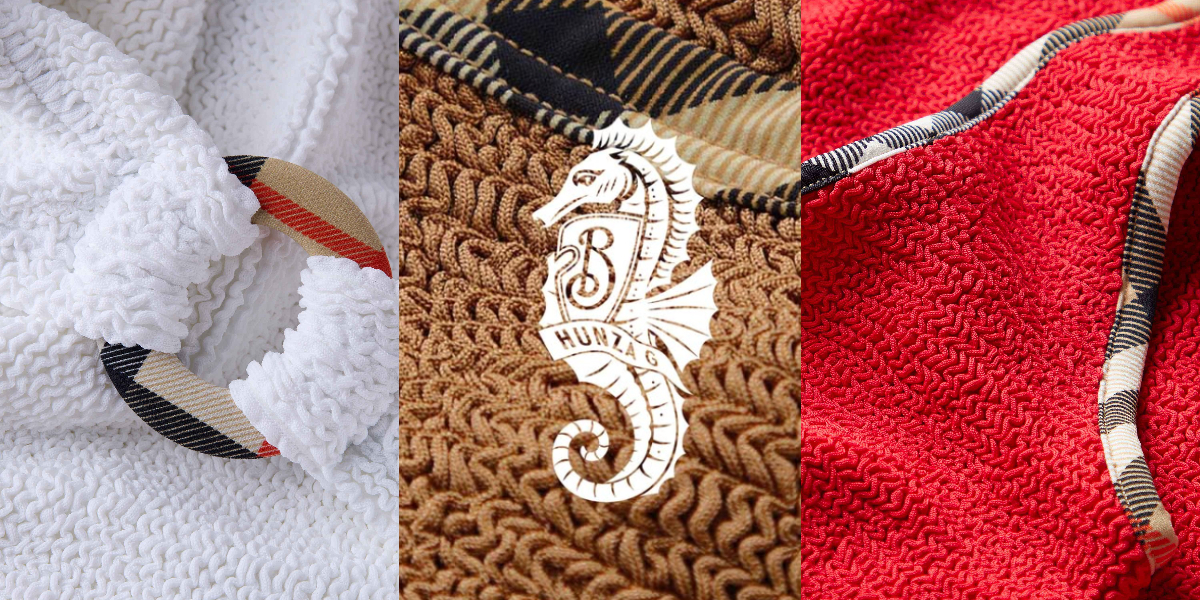
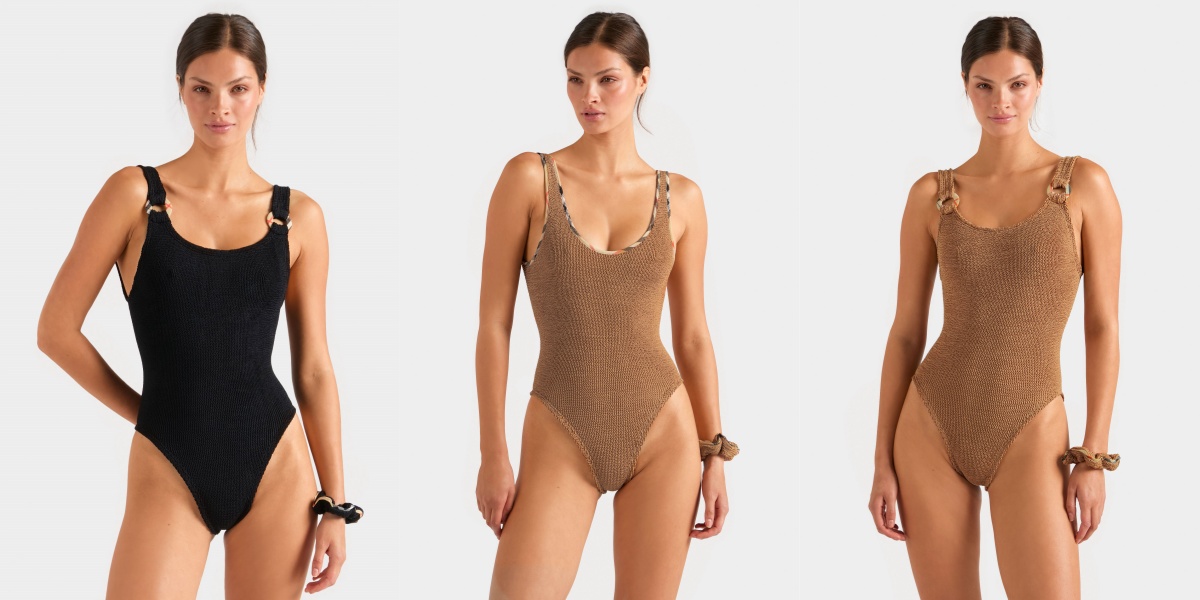
This time, Chief Creative Officer Daniel Lee integrated Burberry's iconic check as trim into Hunza G's signature The Original Crinkle™ fabric (hereafter TOC fabric). The reliance on patented technology in the vertical sector strongly confirms the unique advantage Hunza G has established in the swimwear lane.
In overseas markets, Hunza G has grown into a swimwear brand with high recognition and has long maintained stable market heat. It is worth noting that more than half of the brand's sales come from repeat customers. Celebrities at home and abroad such as Rosie Huntington-Whiteley, Hailey Bieber, Kendall Jenner, Dua Lipa, Karena Ng, Charlene Choi, and Zhong Chuxi have publicly worn or shared the brand's products, and recommended Hunza G to netizens who love swimming and other water sports, believing that it "does not cling or become transparent when wet and is highly inclusive." As a result, Hunza G has been dubbed by social media as "the swimwear brand that half of Hollywood wears." Overall, its competitive advantage mainly comes from two aspects:
First, a breakthrough in fabric technology. TOC crinkle fabric completely overturns the sizing logic of traditional swimwear, truly achieving "One Size" fit;
Second, a reconstruction of product positioning. In consumers' minds, Hunza G is not just a functional item for swimming, but also a fashion piece with a simple, classic design that can freely adapt to multiple scenarios such as seaside vacations and urban daily life. Driven by the "Swimwear as Outerwear" trend, this product positioning appears particularly apt. This design approach—durable and timeless—also leaves room for the brand to extend from swimwear into ready-to-wear categories.
So how exactly did Hunza G grow from a vintage fashion symbol into an industry benchmark that aligns with contemporary women's aesthetics? Luxe.CO will sort through the brand's development trajectory in this article, introducing Chinese consumers to this brand that has reshaped the rules of the swimwear industry.
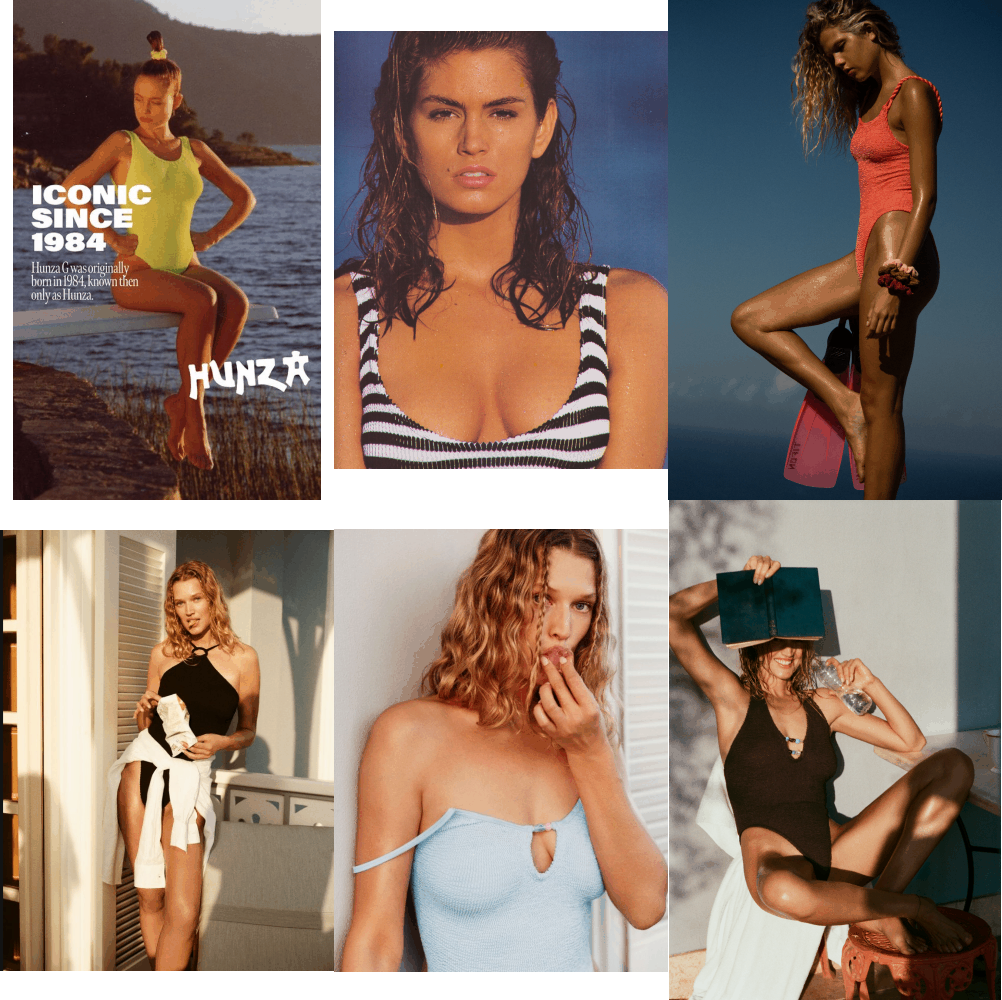
A Swimwear Brand Driven by Fabric Innovation
TOC fabric is regarded by the industry as a special material with a craftsmanship threshold, and it is also Hunza G's core competitive moat. This fabric is not ordinary stretch fabric on the market, but a seamless ultra-high-stretch tubular knit fabric woven on professional circular knitting machines. In the production process, the equipment is equipped with thousands of needles precisely calibrated by hand, and a single garment requires over 9 million stitches. The high-density knitting process gives the fabric both strong stretchability and stable resilience.
Thanks to this high-elasticity feature, although the swimwear is one-size, it can accommodate different body shapes from US sizes 2 to 12, and adapt to body changes during different stages such as pregnancy and postpartum. Every woman deserves to feel her most confident self, no matter what body stage she is in.
Unlike traditional swimwear that relies on fabric tightening and structural shaping to modify the body, Hunza G focuses on a "second skin" texture that fits the body, replacing deliberate body correction with following the body's lines. Through fabric elasticity, pattern structure, and color coordination, it creates a natural, relaxed yet confident dressing aesthetic.
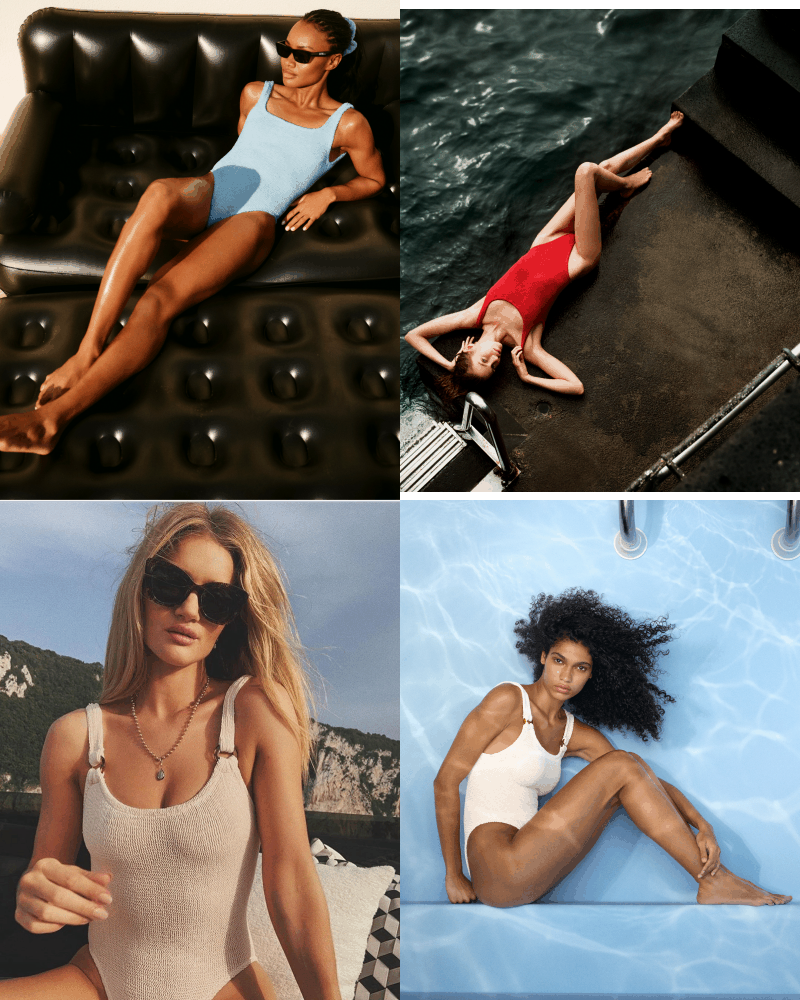
In Hunza G's classic designs, the "Square Neck" and the Domino, which became popular thanks to Rosie Huntington-Whiteley, have become popular choices in the global market for their simple, stylish design and comfortable wearing experience.
Market Recognition Driven by Word of Mouth
The "effortless chic" advocated by Hunza G and its respect for body inclusivity have earned it high organic awareness among celebrities and public figures. The brand's breakout relies more on accumulated user word of mouth than large-scale commercial marketing campaigns. Supermodel Rosie Huntington-Whiteley once shared outfits on social platforms, which once caused a surge in official website traffic and server crashes; Hailey Bieber, Kendall Jenner, Dua Lipa, and other global top stars are also loyal fans of the brand.
This overseas influence gradually penetrated the domestic market. Through social platform dissemination, Hunza G, priced between 1,500 and 2,500 yuan, began to enter the shopping lists of middle-class Chinese women. Artists such as Karena Ng, Zhong Chuxi, Zhou Yutong, and Charlene Choi spontaneously wore the brand, allowing it to accumulate a certain scale of vertical discussion before formally entering the Chinese market.
Take Karena Ng as an example. Since 2021, she has worn Hunza G swimwear multiple times and spontaneously shared related outfits on platforms such as Xiaohongshu, including the Hunza G x Burberry collaboration, and was invited to attend the dinner party for the collaboration in Paris.
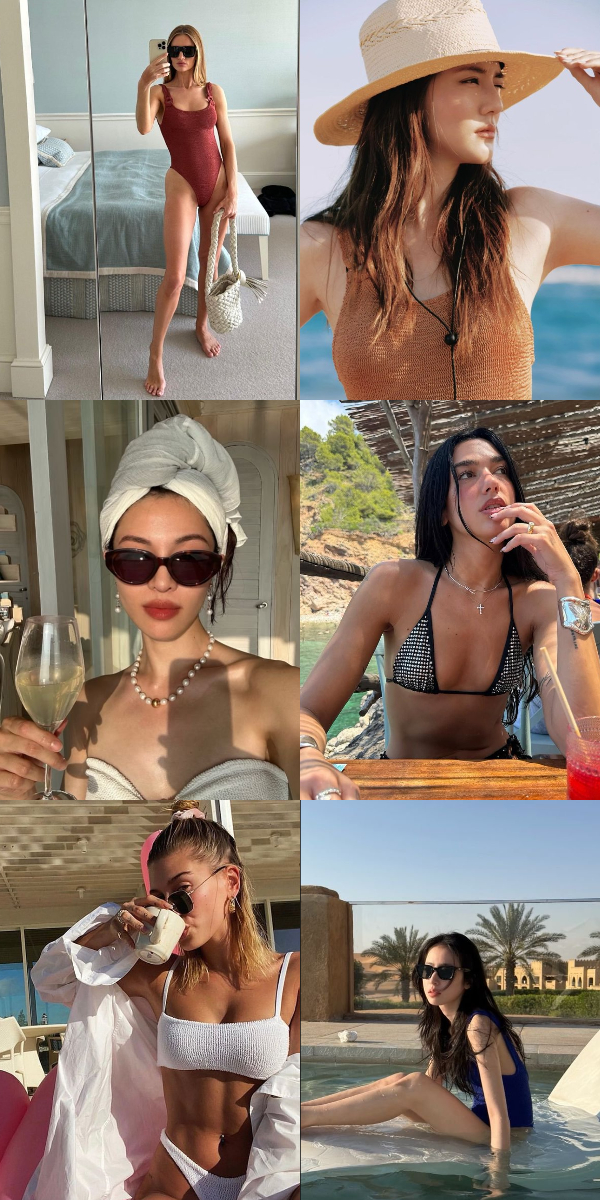
Celebrity images from the internet
On social platforms such as Xiaohongshu, some users have given more specific evaluations based on actual wearing experience. One user shared: "It has both a beach vibe and can be paired for daily outings. Add a shirt or shorts and you can easily switch scenarios." Other comments directly point to the brand's presence in the "swimwear as outerwear" topic—"Have you been flooded by swimwear-as-outerwear? Hunza G's classic crinkle fabric stands out." For consumers who value fabric texture, the brand's signature seersucker material has also become a memorable point. One user wrote: "The distinctive seersucker material—I personally don't like slippery swimwear fabrics. This is my first time buying a one-piece this year; I can usually wear it as a top, with a large open back, paired with high-waisted shorts it's super beautiful."
For contemporary women who value wearing experience, this design—which does not rely on heavy padding or rigid shaping structures but naturally follows the body's curves through fabric—precisely echoes the current pursuit of "relaxedness" and "reconciliation with the body." The brand uses bold colors to suit diverse skin tones, insists on classic and timeless silhouettes, and continuously conveys affirmation of sizes and body shapes. This product-driven communication approach has brought high user loyalty in the highly competitive swimwear market.
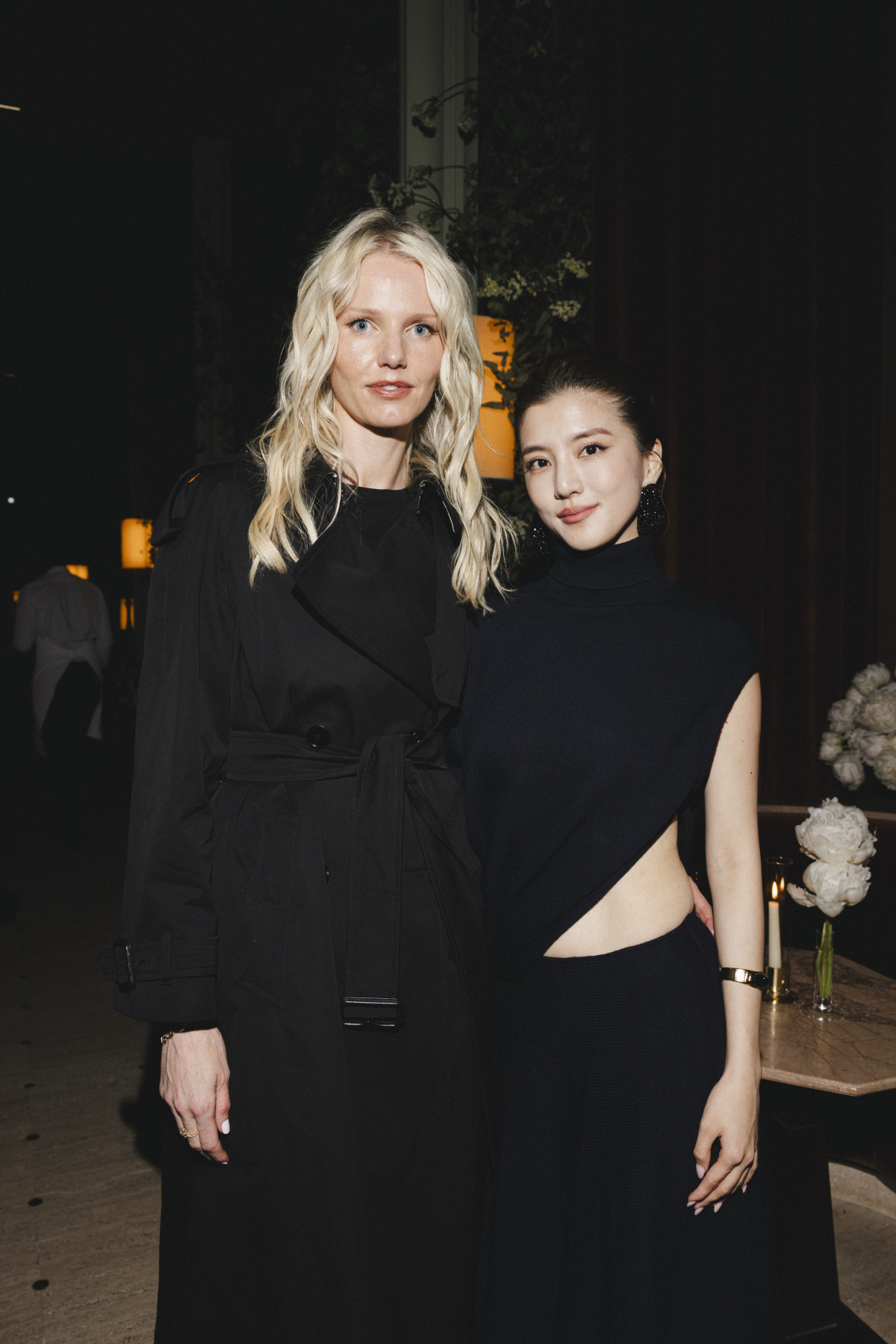
Hunza G Creative Director Georgiana Huddart with Karena Ng. Ahead of this year's 618 shopping festival, Hunza G collaborated with Karena Ng for an influencer livestream on Xiaohongshu. During the livestream, the sell-through rate of Hunza G's classic swimwear "Square Neck" and Domino reached 87-100%.
Female Power and Brand Revival
Looking back at its development, the restart and growth of Hunza G is a typical case of combining vintage aesthetic heritage with modern commercial operations.
The brand was founded by Peter Meadows in 1984 and rose to fame in the 1990s thanks to Julia Roberts' iconic look in Pretty Woman.
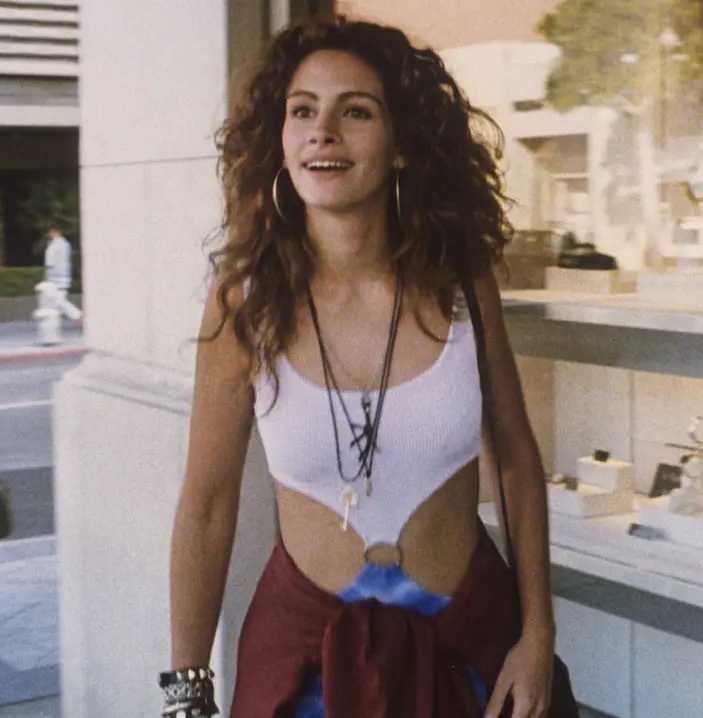
Current Creative Director Georgiana Huddart has deep ties to the brand. Her mother was the first assistant to legendary fashion editor Grace Coddington. She grew up watching her mother wear the pink crinkle swimsuit and witnessed how this piece accompanied her through different stages of life.
At 19, Georgiana Huddart偶然 discovered a whole rack of vintage Hunza products in a vintage store in Berlin, which planted an important seed for this loyal fan to restart the brand in 2015.
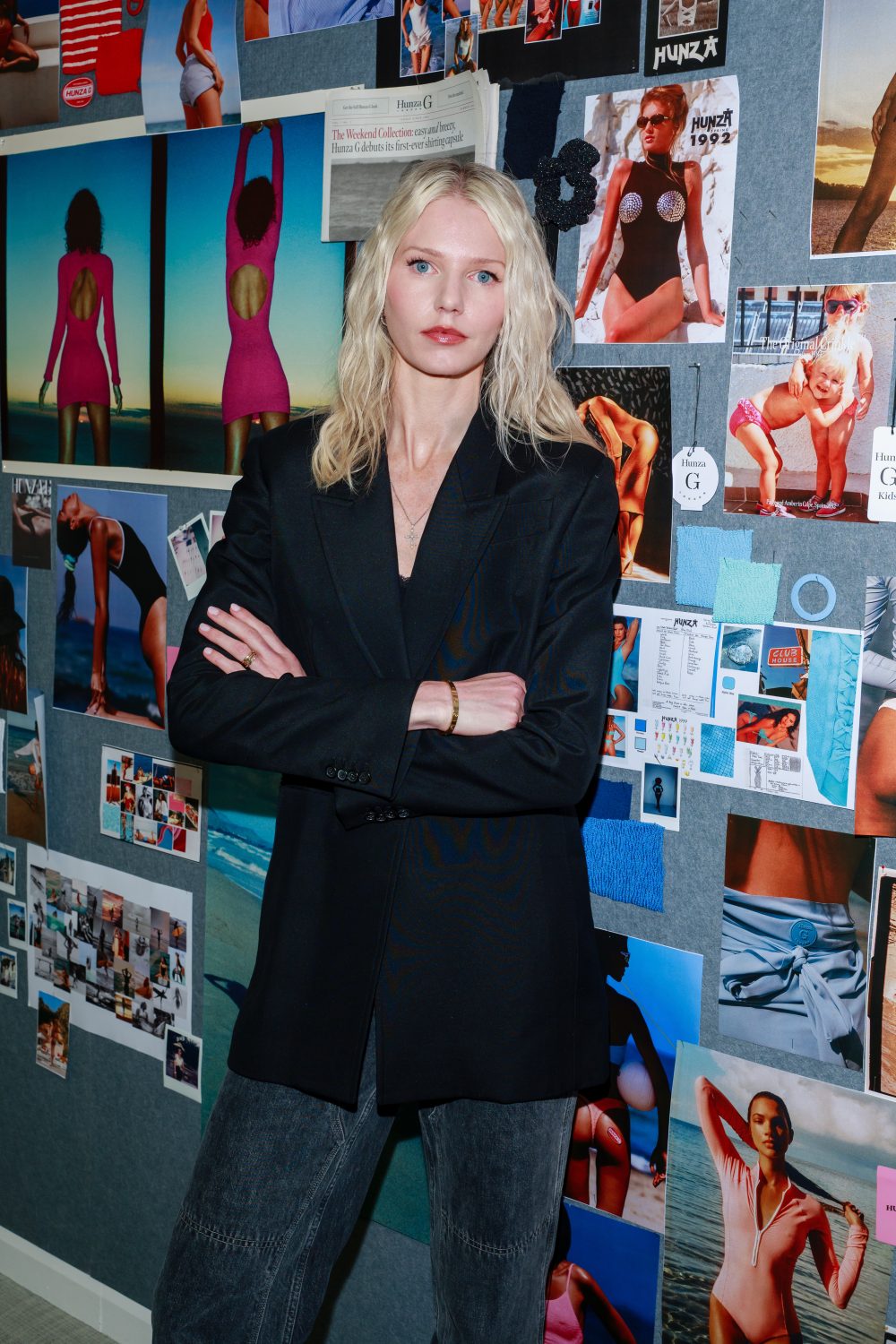
Georgiana Huddart's career spans multiple facets of the fashion industry. She has worked as a model, interned at British Vogue, and even washed dishes in a bar and worked as a cleaner at Wimbledon to make a living. These real work experiences have given her a distinctly pragmatic style when running the brand. In the early days of the business, Hunza G operated entirely on self-raised funds. Georgiana Huddart once mentioned in an interview that in an era when the creative director role often carries a socialite aura, she believes that returning to the office to polish products with the team is the key to the brand's long-term footing.
Today, as the soul of the brand, Georgiana Huddart is fully responsible for design direction, modernization, and the continuation of the brand spirit, transforming the vintage DNA of the 1980s into a contemporary brand that combines performance support with emotional resonance.
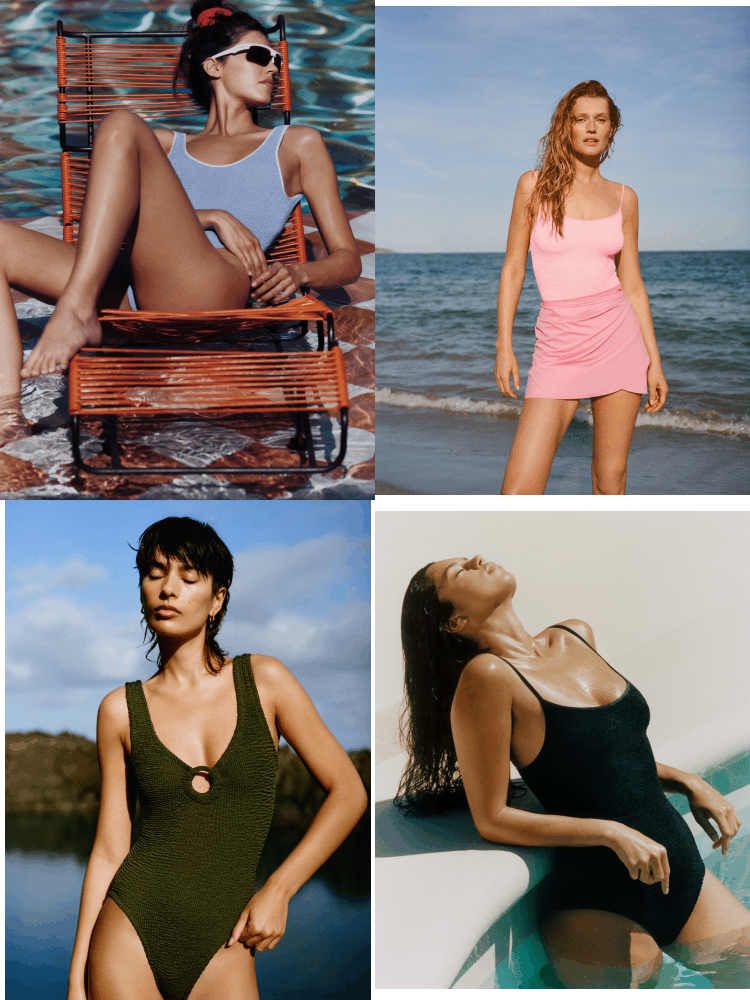
China Market Layout and Long-Term Growth Potential
Currently, Hunza G has accumulated high-quality customer groups in markets around the world as the foundation for brand business growth, and it is expected to double its global business scale in the coming years.
In terms of channel building, in addition to direct sales through the brand's official website, it also covers international high-end retail channels such as Net-a-Porter, Harrods, and Selfridges, and has established extensive cooperation with boutique buyers and department store channels in key markets.
The brand recently opened its second limited-time pop-up store in the core area of Marylebone, London. London's top spatial design team Studio Boum created a stylish summer space with an "underwater world" theme, immersively presenting a rich range of swimwear, accessories, ready-to-wear, and brand philosophy to consumers.
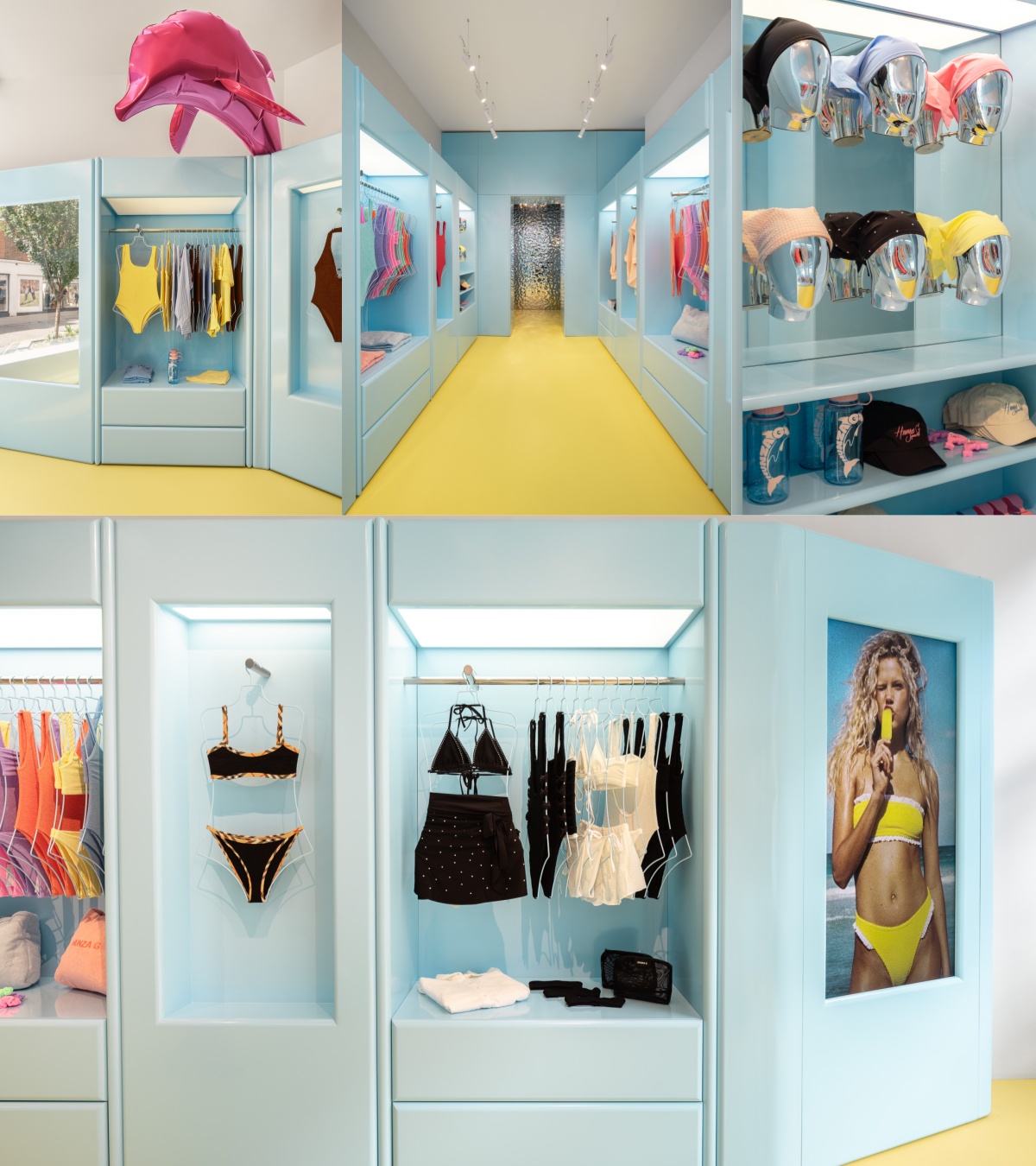
Against the backdrop of global expansion, Hunza G has recently begun to formally layout the Chinese market. Following its official Xiaohongshu store, the brand's official Tmall flagship store recently opened. In addition to launching classic styles and the latest 2025 summer swimwear and ready-to-wear collections, it also simultaneously introduced two classic styles from the Burberry collaboration, Faye and Domino.
The efficient advancement of this global retail network is largely due to the minimalist inventory management brought by its "one size" strategy. Since there is no need to stock multiple sizes for a single style, Hunza G's SKU (stock keeping unit) pressure is significantly lower than that of traditional peers, and asset turnover is lighter, enabling it to respond more quickly and flexibly to fluctuations and demand in emerging markets such as China.
In addition, the brand has not rested on a single fabric technology advantage. Based on direct-to-consumer (DTC) data accumulation and observation of contemporary women's lifestyles, Hunza G continues to develop innovative fabrics, such as launching UV-protective (UPF) functional fabrics and seersucker with quick-drying and wrinkle-resistant properties.
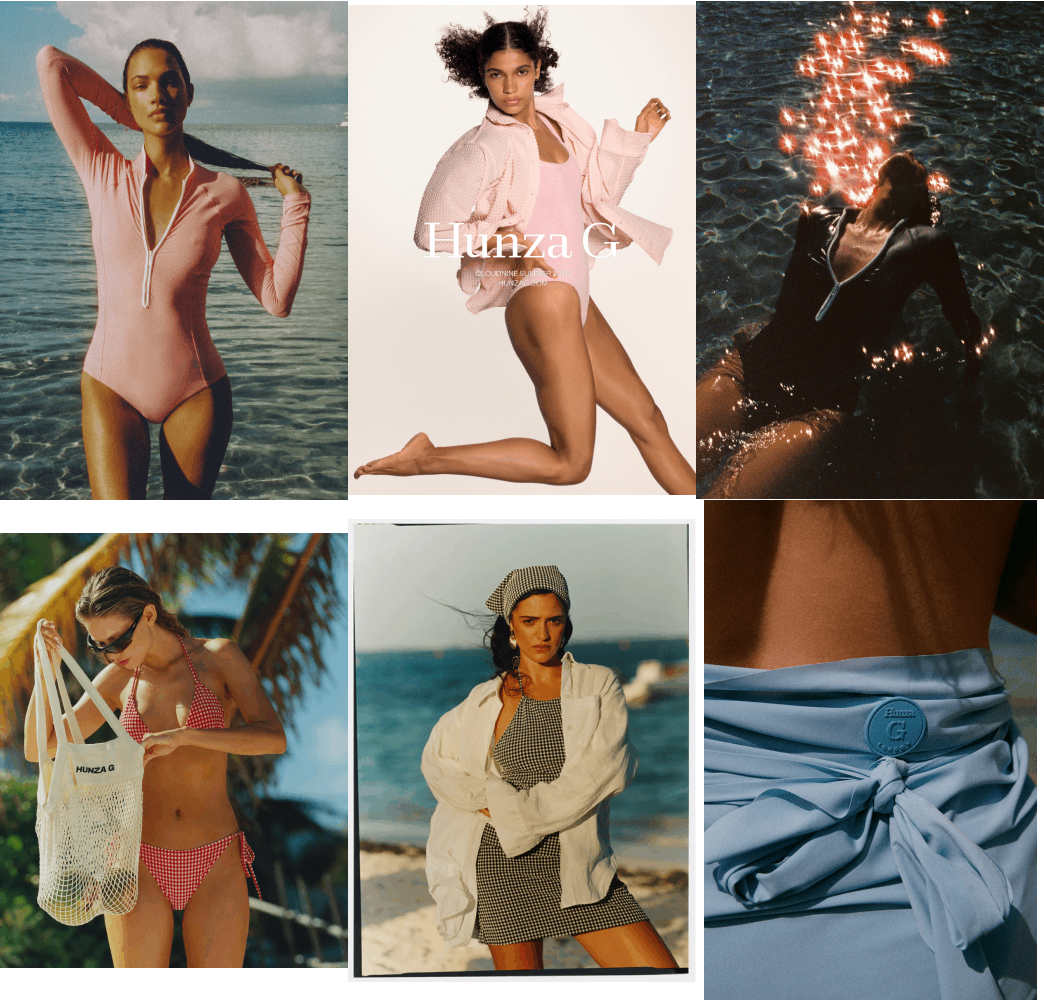
These technical attempts have helped the brand gradually break free from the limitations of "seasonal items" and "specific scenarios." Currently, the product line has extended into women's ready-to-wear (such as the representative Gingham check series), responding to the wearing needs of contemporary Chinese women in various scenarios such as vacations, commuting, and urban socializing through easy-going daily pieces.
From a broader perspective, Hunza G's globalization is stepping right at the intersection of several industry trend lines. Under the continuously heating "swimwear as outerwear" wave, popular culture represented by hit TV series The White Lotus is also driving the spread of resort fashion aesthetics. The niche swimwear and resort wear worn by characters in the show have triggered a large number of searches and follow-up purchases among viewers, reflecting consumers' yearning for a resort lifestyle. Under the combined effect of these trends, swimwear is transforming from a purely functional category into an independent component of women's wardrobes with styling value and style expression capabilities.
With the growth of domestic demand for vacation and leisure wear, as well as consumers' emphasis on "long-termist" wardrobes, niche brands like Hunza G that have professional heritage and present a contemporary aesthetic perspective are expected to reach a broader audience in the Chinese market. They provide new options for female consumers in segmented categories such as swimwear and light ready-to-wear, and also align with the current objective expectations for functional fabrics, classic and timeless design, size inclusivity, and long-term practical value.
| Image source: Hunza G, Pretty Woman stills
| Editor: Maier