Anyone who has been to Florence knows that the line outside the Uffizi Gallery never seems to end. Among the museum's vast art collection, the treasures people most long to see are two paintings by the Renaissance master Botticelli: one is The Birth of Venus, and the other is Primavera (Spring).
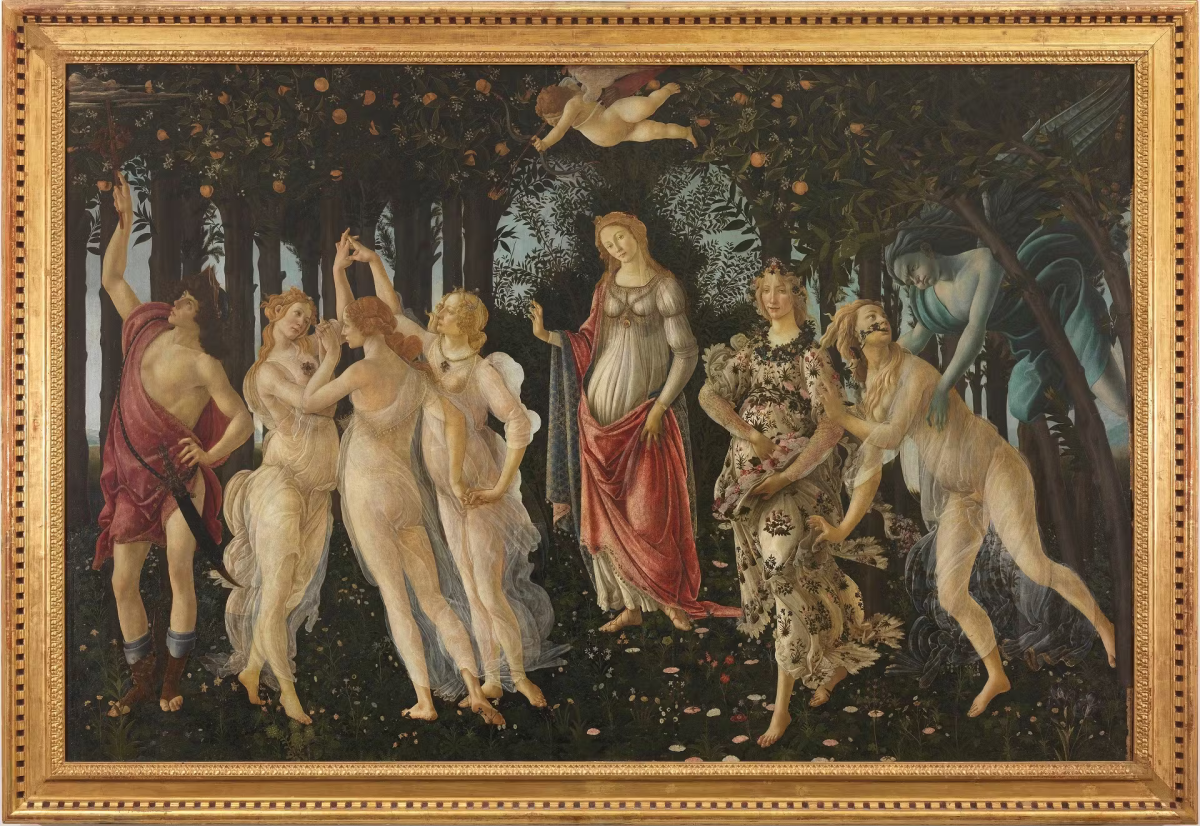
Above: Botticelli's painting Primavera
When Italian luxury brand GUCCI new artistic director Demna was preparing his first major show for the brand, he made a special trip deep into the Uffizi for inspiration, and ultimately decided to name this "fall/winter" collection "Primavera" (Spring). In fact, GUCCI and Botticelli share a long history: the brand's iconic Gucci Flora print was inspired by this very painting, and the Uffizi Gallery is only a few steps from GUCCI's cultural landmark space, Palazzo Gucci.
However, Demna's decision to name this fall/winter collection "Spring" is not only a tribute to the painting and to GUCCI's classics, but also carries the momentum of the brand opening a new chapter and heralds the arrival of a new era.
In February this year, the collection met the world for the first time at a show at Milan's Palazzo delle Scintille, conveying a new vocabulary of silhouettes and materials that is light, relaxed, comfortable and body-hugging. After the show, Luca de Meo, CEO of Kering, Gucci's parent company, remarked: "Some kind of courage is returning."
In GUCCI's newly released campaign: Chinese artist Xiao Zhan, Ningning, Korean film icon Lee Young-ae, BTS member Jin and 10 other celebrities are placed in settings steeped in classical Italian art, showcasing the "Primavera" fall/winter collection from different angles. It also shows us how Demna and GUCCI's understanding and interpretation of "beauty" transcends the boundaries of era and geography, sparking strong resonance across different cultural backgrounds.
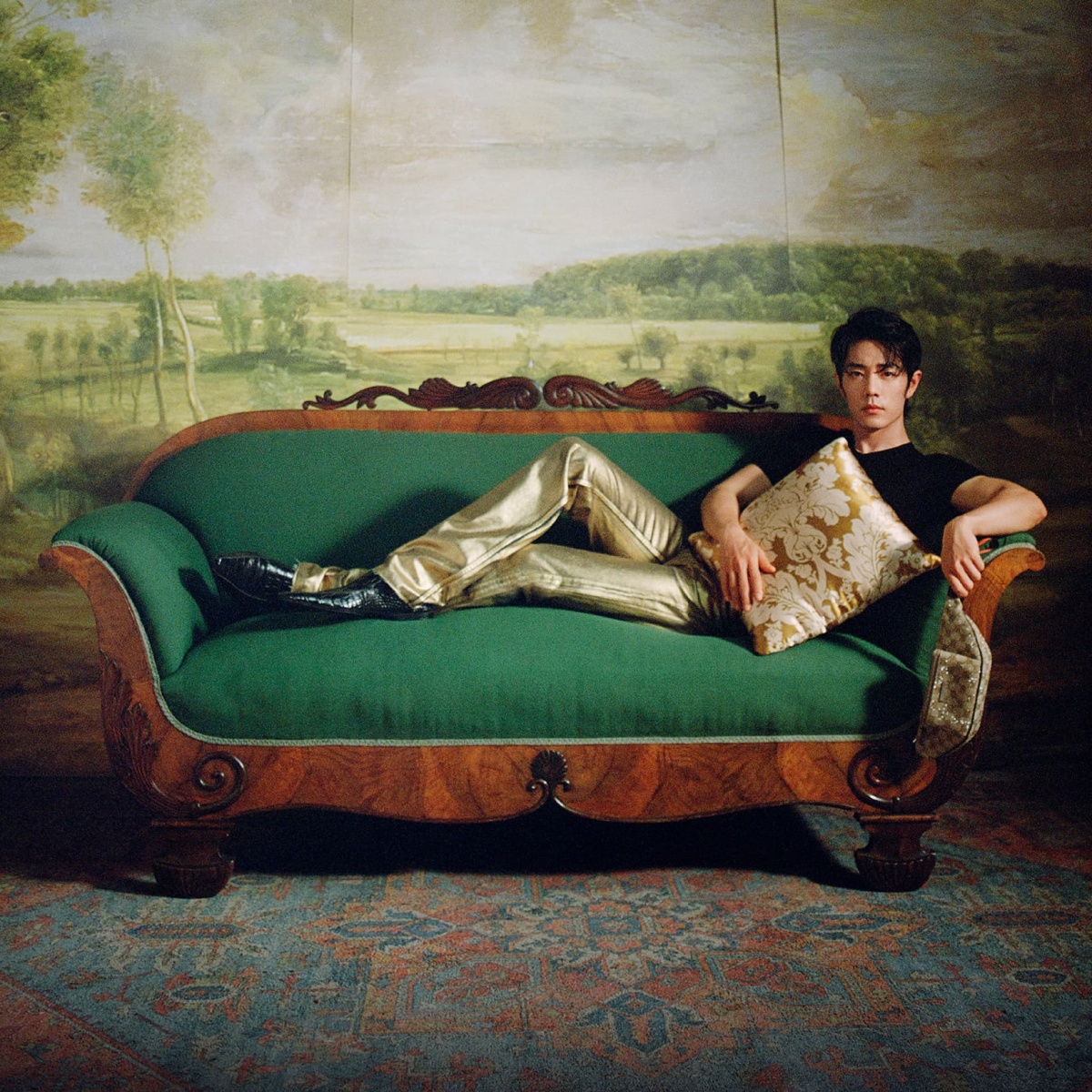
Above: Chinese artist Xiao Zhan in the GUCCI Primavera fall/winter campaign
GUCCI Should Be a Culture, an Adjective
Since officially taking office in July last year, Demna has been gradually refining his understanding and interpretation of "Gucciness": from inventing a cast of characters with distinct personalities in the La Famiglia collection, to excavating and recombining classic works from different periods of the brand in the Generation Gucci collection to form a narrative that spans generations.
In Demna's view, GUCCI should transcend the product itself and become a culture, an adjective, even a way of thinking and an attitude toward life.
This means that the "Gucciness" Demna wants to express is not a binary state of "either you like it or you don't," nor is it suited to a single group of wearers; on the contrary, it is an open feeling that can be interpreted by different people, and everyone can find elements in GUCCI that resonate with them.
The release of the Primavera campaign allows this "Gucciness" to emerge in a fuller, more three-dimensional way. The campaign brings together 10 representatives from music, film, fashion and sports, with diverse cultural backgrounds and a wide age range. Notably, five of the featured artists come from Asia, two of them from China.
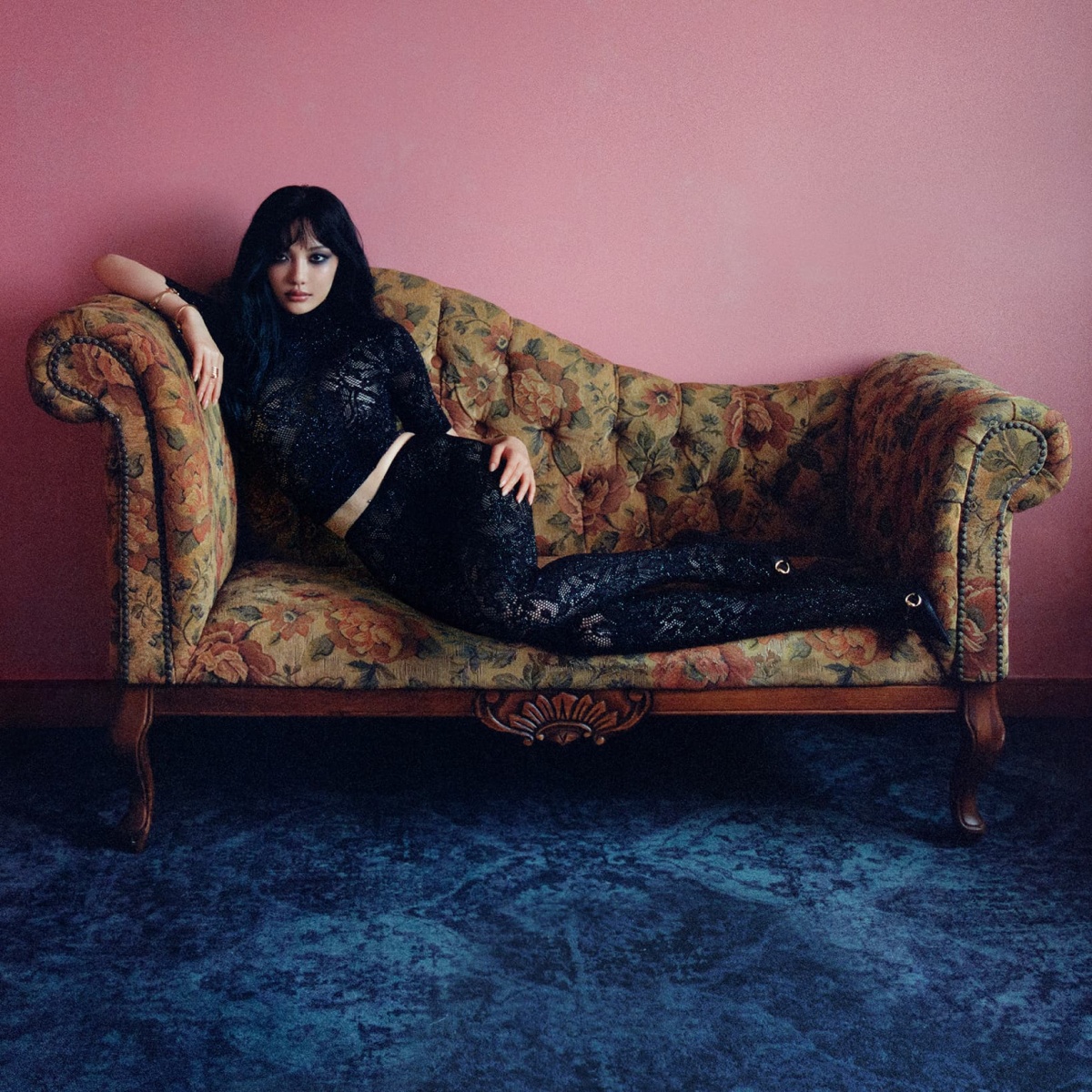
Above: Chinese artist Ningning in the GUCCI Primavera fall/winter campaign
Fall/winter is the season with the highest commercial weight for luxury brands—fall/winter products are generally more complex in design and craftsmanship than lighter spring/summer pieces, and their per-item value is higher; the密集 year-end holidays also make fall/winter a peak period for self-reward and gifting. Judging from the financial reports of several leading luxury groups, the fourth quarter (October-December) is the highest point of the year, with some brands' single-quarter revenue share approaching 30%.
For this reason, the advertising narrative of each fall/winter collection is not only a product presentation but also a concentrated statement of the brand's stance on its core markets and long-term value. At this critical moment, Demna's first fall/winter campaign for GUCCI not only transforms "Gucciness" into an open attitude that can be carried by different cultures through a cross-disciplinary group portrait; it also specifically incorporates Chinese faces—this is not a simple casting choice, but the brand's response to the group's strategy in the most critical commercial season.
At the 2026 shareholders' meeting held in May this year, Kering CEO Luca De Meo stated clearly: "China remains a key market for the luxury industry, but its growth now relies more on brand desirability and its relevance to local culture."
The cross-cultural group portrait in the Primavera fall/winter campaign is precisely a concrete practice of this judgment—it provides a new model for how the luxury industry can tell cultural stories well in a key commercial season, and also shows that GUCCI is elevating "Gucciness" from a fashion label into a global cultural language that can cut across regions and generations.
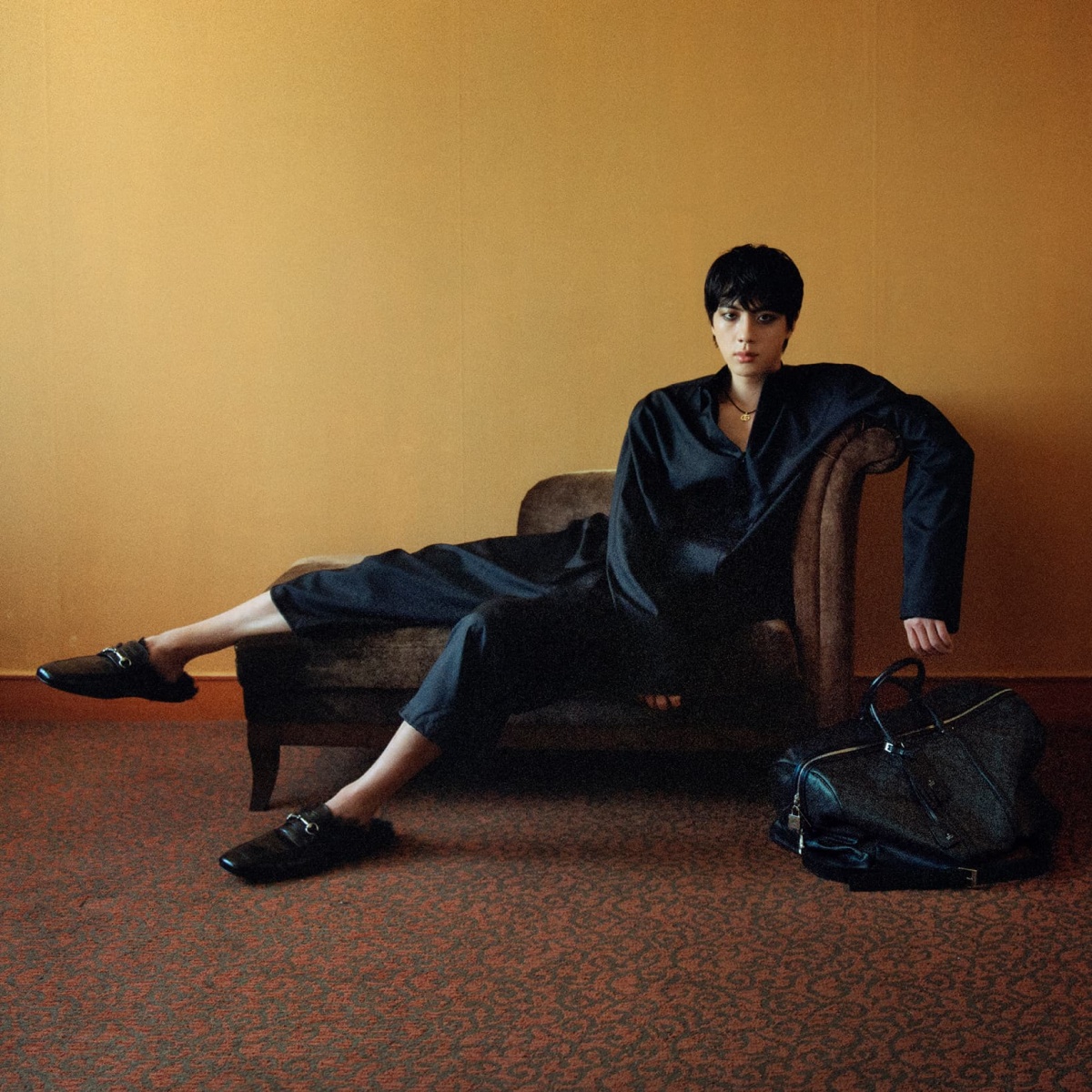
Above: BTS member Jin in the GUCCI Primavera fall/winter campaign
Letting "Gucciness," Deeply Rooted in Italian Culture, Radiate Outward
Through this latest campaign, Demna extends the boundaries of "Gucciness" outward, so that people from different cultural backgrounds can find resonance in it. What supports this outward expression is his sustained, in-depth excavation of the brand's roots over the past year.
In the La Famiglia and Generation Gucci collections, Demna distilled "Gucciness" from design elements of different eras by studying the GUCCI archives; by Primavera, he extended this research to Italian cultural roots and realized that "Gucciness" should inherently be part of Italian culture.
Before the Primavera show, Demna published a handwritten letter on social media, sharing the sources of his inspiration and his creative journey.
To trace the origins of the classic Gucci Flora print, he walked into the Uffizi Gallery, just one street away from GUCCI's cultural landmark space Palazzo Gucci, and stood for a long time before one of its treasures—Renaissance master Botticelli's painting Primavera. Another Botticelli masterpiece in the museum, The Birth of Venus, also deeply struck Demna with its artistic expression, human proportions and aesthetic tension.
(Note: In 1966, to give a special gift to Princess Grace Kelly of Monaco, Rodolfo Gucci, son of GUCCI's founder, commissioned longtime collaborator and illustrator Vittorio Accornero to create a floral scarf. Inspired by the flowers adorning the white dress of Flora, goddess of spring, in Botticelli's painting Primavera, Vittorio combined 27 species of Florentine flowers to design the Gucci Flora floral print scarf. Today, this print has become a GUCCI signature, widely used on clothing, accessories, beauty products and more.)
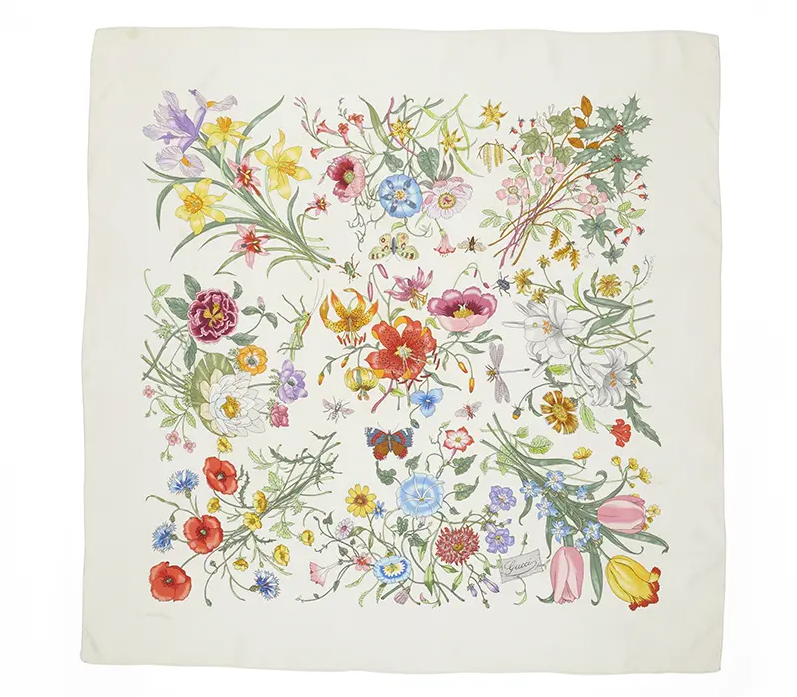
Above: The Gucci Flora floral print scarf created by GUCCI in 1966 for Princess Grace Kelly of Monaco
This journey of exploring the artistic heritage of the Renaissance left three deep impressions on Demna, who was born in Georgia: first, the place GUCCI occupies in Italian culture; second, how Renaissance works reshaped his understanding of proportion, physique and sensuality; and third, that fashion creation can start from an emotional rather than rational perspective.
This reflection on aesthetics and the core of creation is fully embodied in the Primavera collection: relaxed, fluid tailoring, extremely body-hugging silhouettes, fabrics that cascade like quicksilver, soft and supple precious leathers... In Demna's hands, GUCCI still retains the refined, exquisite and sensual side of its classic elements, but becomes softer, lighter and more pragmatic; it can convey a cool, aloof attitude and can also be worn on everyday streets.
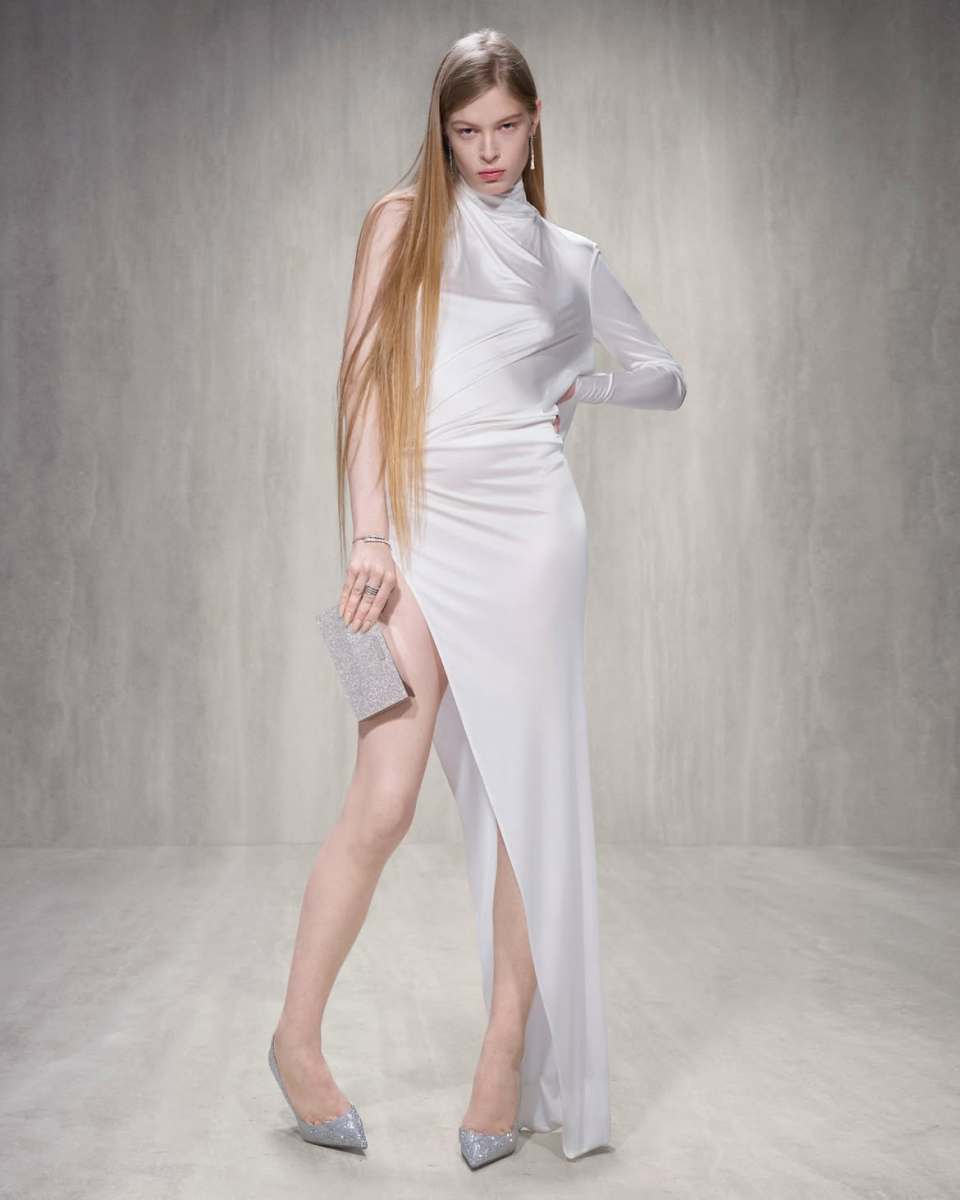
Above: Demna designed a smooth white gown inspired by The Birth of Venus.

Above: Botticelli's painting The Birth of Venus
In particular, in the design of the brand's four new bags—Horsebit Duomo, GG Marmont, Paparazzo and Borsetto—silhouettes, textures and materials are incorporated into a pragmatic new vocabulary: glossy leather is paired with a "soft grain" treatment, preserving the leather's texture while giving it a soft hand feel; in some styles, leather is replaced by lighter canvas, and the silhouettes are more delicate.
This change was keenly captured by Kering CEO Luca de Meo, a native Italian who remarked after the show: "I saw many highly recognizable brand signature elements; it feels like some kind of courage is returning."
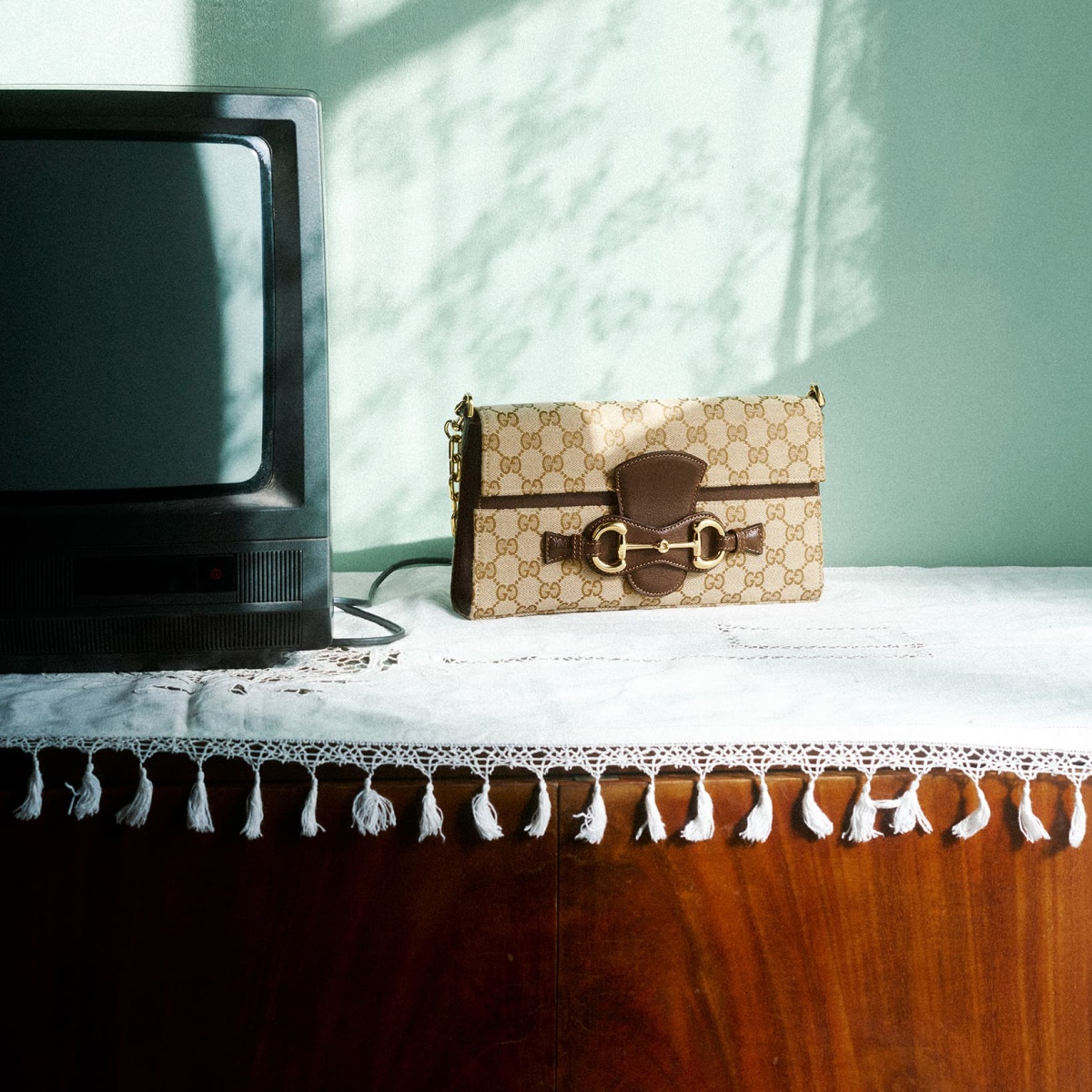
Above: Horsebit Duomo bag
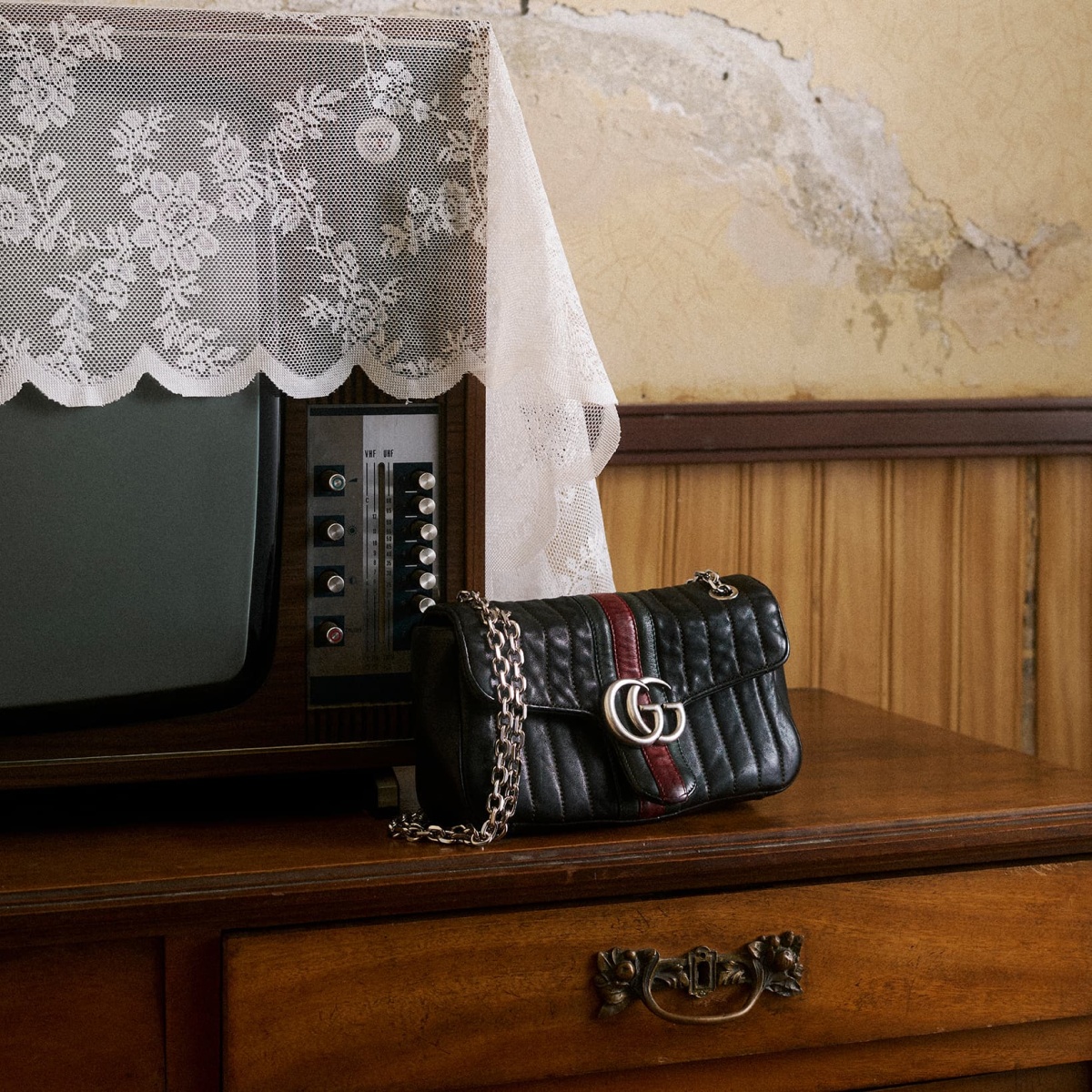
Above: Jetset GG Marmont bag
The influence of the Renaissance artistic heritage on Demna did not stop at the Primavera show but continued into GUCCI's subsequent brand narrative. During Milan Design Week at the end of April this year, Demna curated an exhibition titled Gucci Memoria, using the composition and symbolism of Renaissance painting as a framework and traditional Florentine tapestry craftsmanship to present 12 giant tapestries symbolizing the brand's history, one of which depicts Demna himself and his team making clothes.

In the newly released Primavera fall/winter campaign, the composition, poses and textures of the figures likewise reference the spirit of Renaissance portraiture, presented in a restrained, understated and subtle way; some scenes are also decorated with vintage patterned rugs, floral wallpaper or damask curtains.
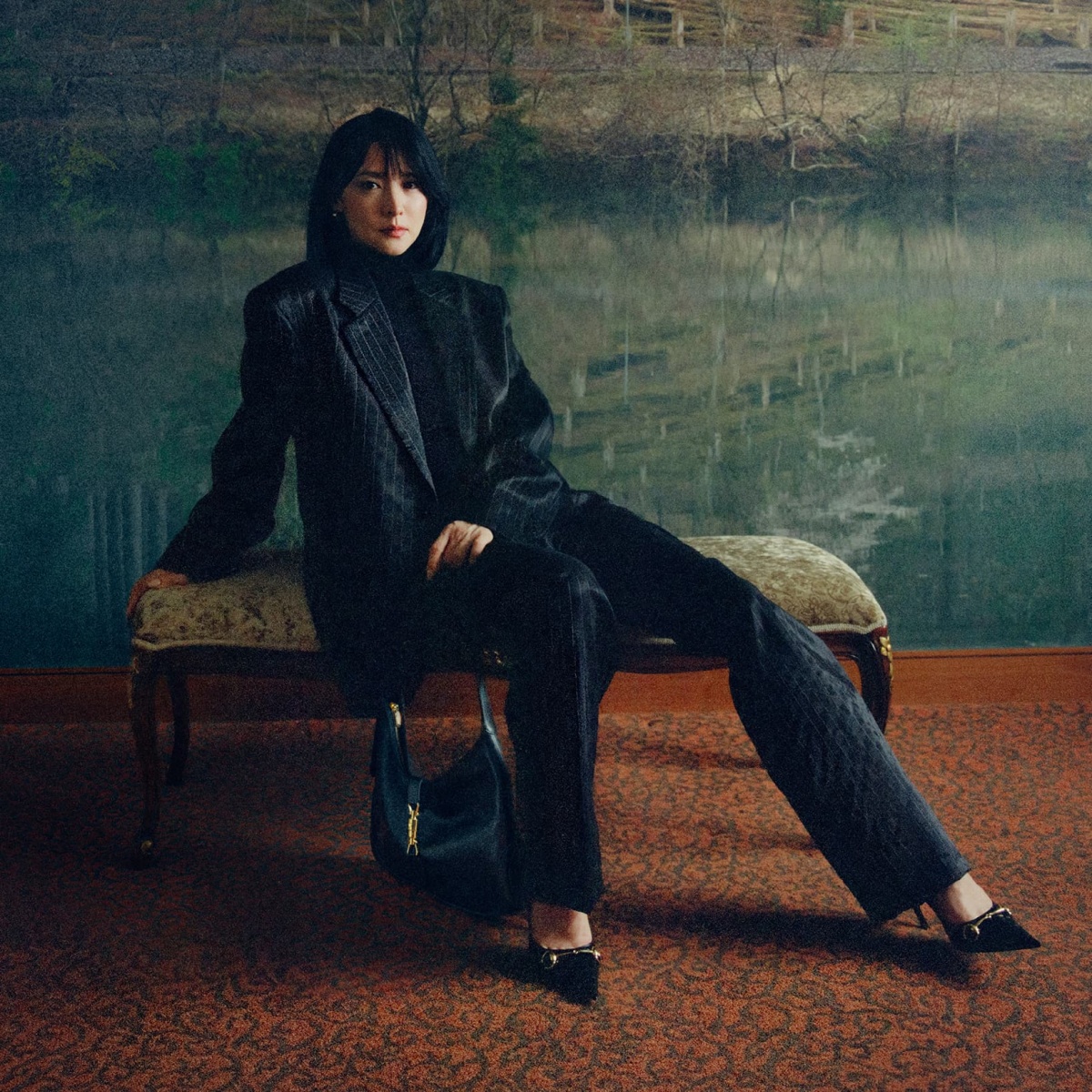
Above: Korean artist Lee Young-ae in the GUCCI Primavera fall/winter campaign
Leveraging Weibo to Show Chinese Audiences a More Down-to-Earth "Gucciness"
In the Primavera global campaign, GUCCI chose celebrities of different nationalities, professions and generations to interpret "Gucciness." In the Chinese market, the brand leverages Weibo's rich content ecosystem to offer multi-perspective, multi-dimensional interpretations of "Gucciness."
For example, @DUST中文版 features transgender supermodel Alex Consani on its cover, exploring how the fashion system's entrenched standards of "beauty" can be broken, echoing Demna's innovative idea of making rules fail.
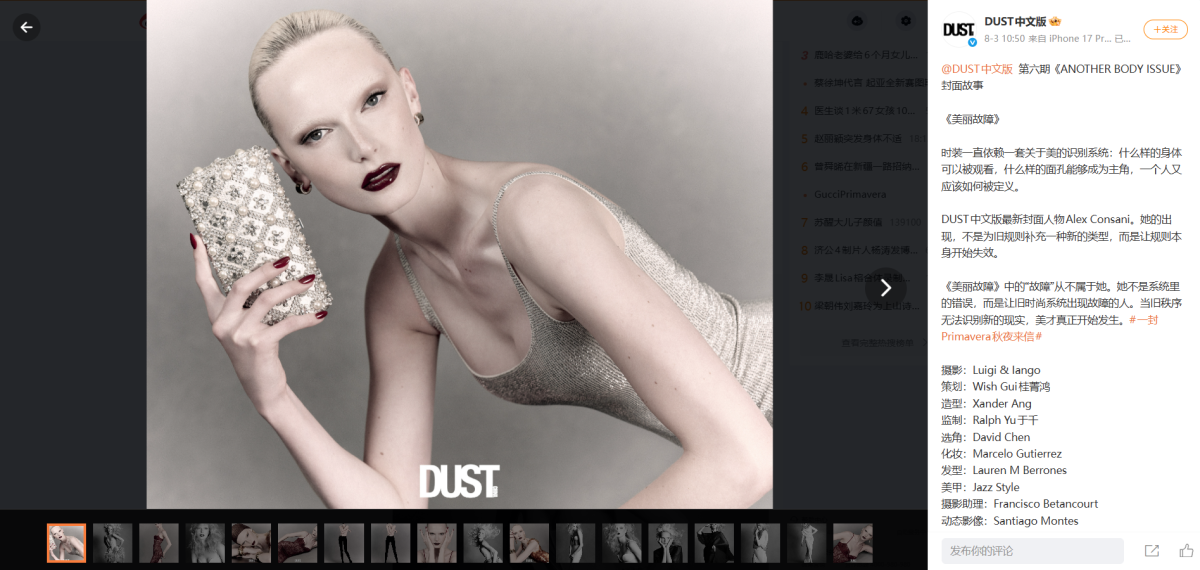
Image and text from DUST Chinese Edition
@上城士, meanwhile, approaches from the perspective of cultural roots, placing the Primavera collection within a broader civilizational landscape: in the shoot, model He Cong wears the Primavera collection in an ancient village in western Hunan; in one photo, a Gucci Flora floral print dress is juxtaposed with Tujia brocade, a national-level intangible cultural heritage, creating a visual dialogue between Italian Renaissance imagery and Chinese ethnic craftsmanship; the magazine also invited actress Wen Qi to shoot in Athens, Greece, together with local urban culture researcher Nikos Vatopoulos, weaving images and text to trace the cultural threads of the Acropolis.
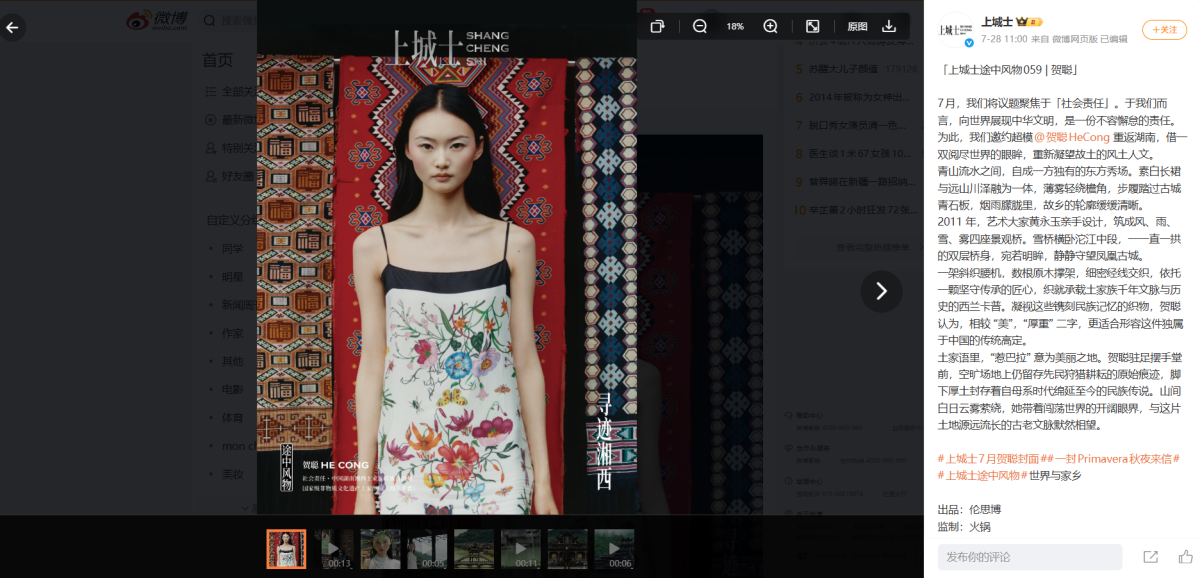
Image and text from 上城士
@嘉人, meanwhile, takes as its narrative angle actor Zhang Linghe's interview sharing of the synesthesia between photography and acting, much like how Demna distills design language from Botticelli's paintings.
As the fall/winter new arrivals launch, Weibo—a platform that aggregates diverse content ecosystems spanning fashion, humanities and art—is becoming a key arena for luxury brands to engage in deep dialogue with Chinese consumers. It is not limited to exposure in a single track; rather, through cross-circle content co-creation, it naturally integrates the artistic inspiration, cultural tracing and lifestyle behind the Primavera collection into local narratives, jointly adding rich footnotes to "Gucciness" in the Chinese context and helping the brand achieve an efficient transformation from cultural expression to market resonance in a key commercial season.
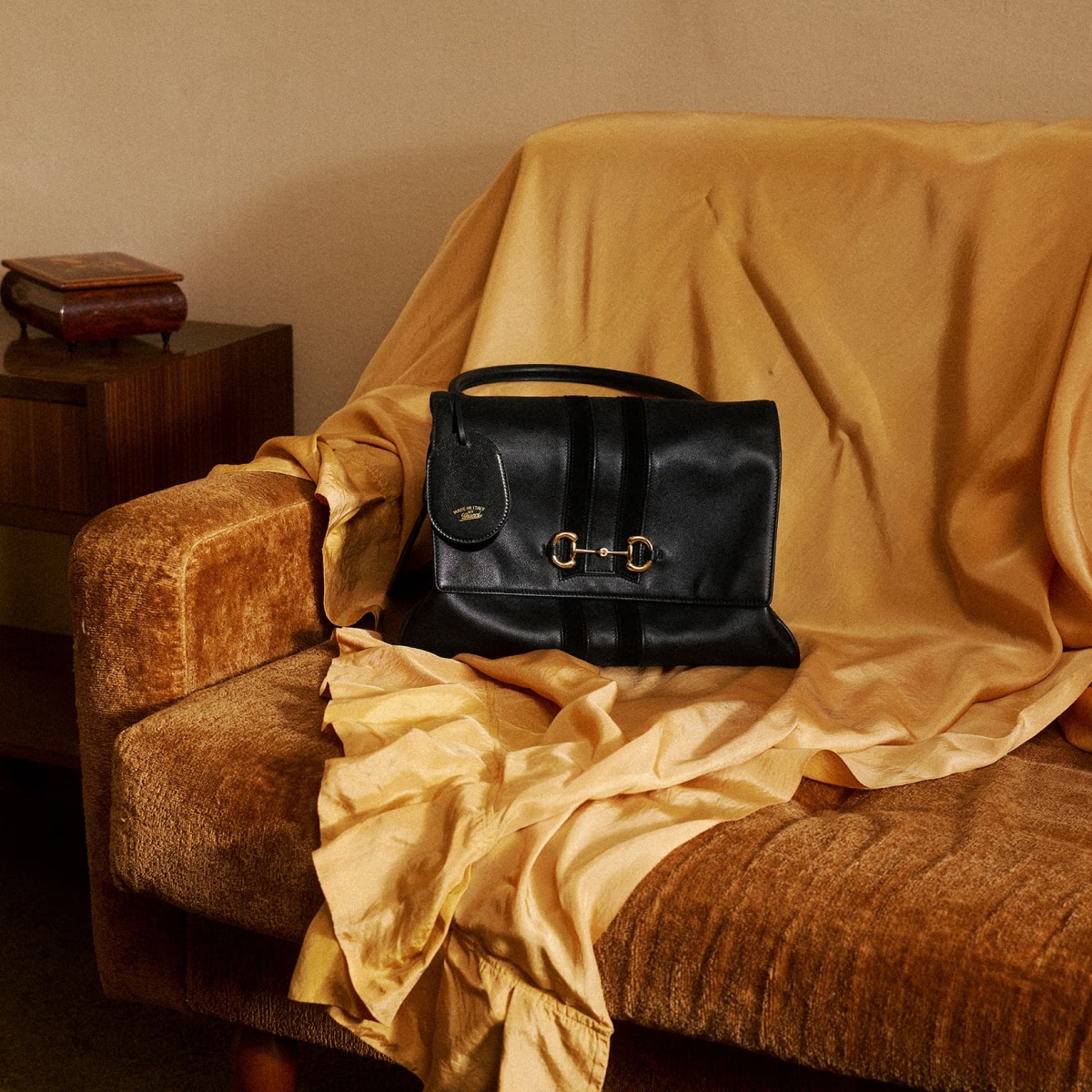
Above: Paparazzo bag
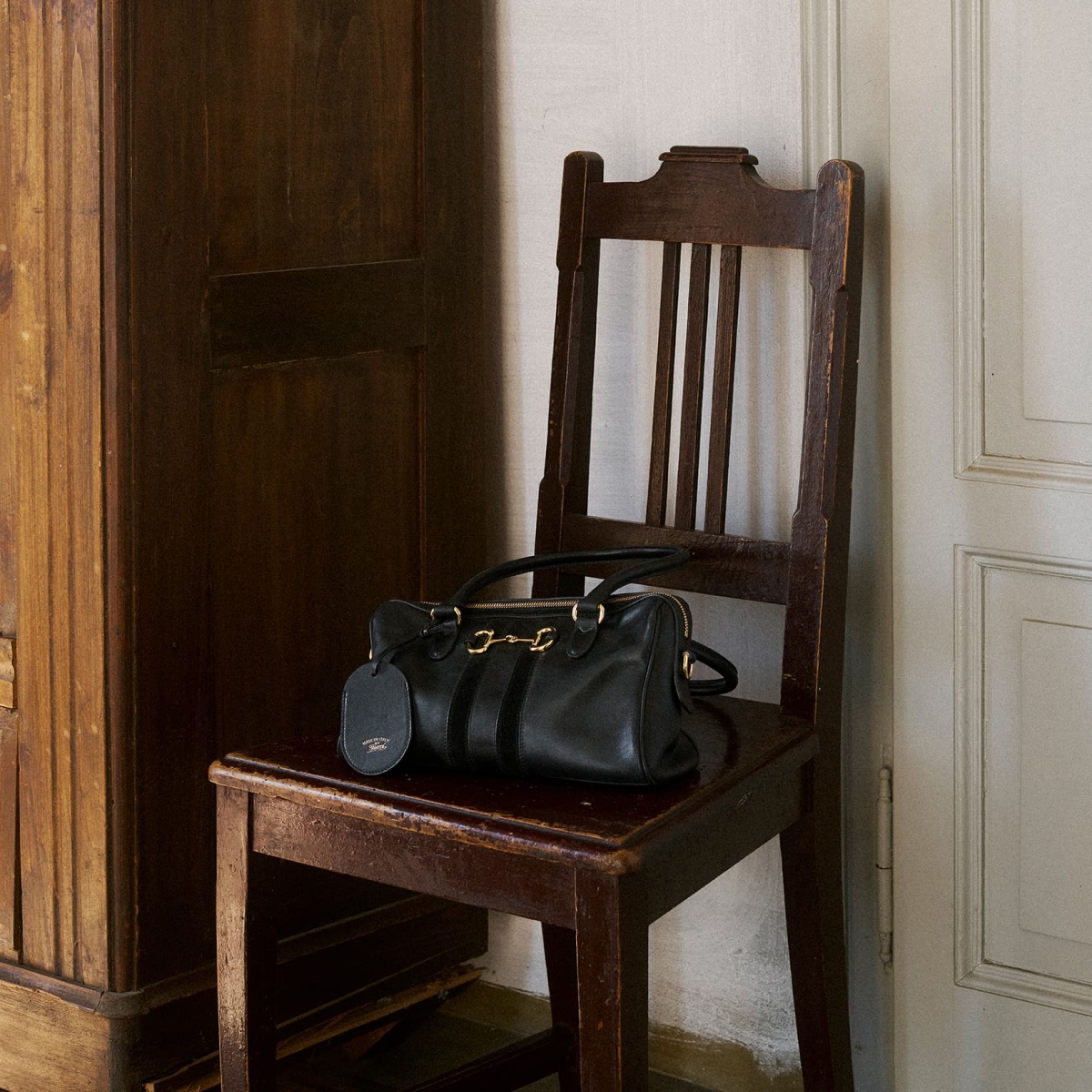
Above: Borsetto bag
Conclusion
From the paintings in the Uffizi Gallery to the runway at Milan's Palazzo delle Scintille, and then to a global group-portrait campaign, Demna names it "Spring," ostensibly as a tribute to Botticelli's painterly vision, but in reality using the momentum of the Renaissance to complete a cultural relay for GUCCI across time and space.
This relay does not stop at the campaign; through Chinese artists and Weibo's localized, diversified content co-creation, it extends into a broader cultural context, allowing the Primavera collection to both upgrade the brand narrative and achieve deep resonance with the Chinese market in the fall/winter commercial season.
And this "adjective" that can be interpreted by different people is exactly like Demna's feeling about GUCCI: "All the qualities used to describe a 'person' apply equally to GUCCI." This is the underlying essence of "Gucciness."
| Image source: Provided by GUCCI, Uffizi Gallery official website
| Editor: LuxeCO