
On November 6, a cruise ship sailed smoothly along the Huangpu River in the setting sun. Outside the portholes was the colorful Lujiazui city skyline; inside the cabin, Canada Goose Canada Goose's newly filmed public welfare documentary "Snow Leopard Patrol" was screening: in the vast canyons of the Yangtze River's source, local herder patrolmen carried equipment through the valleys, diligently tracking and recording the traces of wildlife such as snow leopards, blue sheep, and Tibetan wild donkeys.
This was one scene from Canada Goose's "North Meets South" immersive experience journey. Starting from the brand's new pop-up store at Shanghai Jing'an Kerry Centre, guests were led onto an experience route running through Shanghai's landmarks: from the Waibaidu Bridge, first built in 1856, walking along the Bund all the way to Shiliupu Wharf, boarding a cruise ship to sail the Huangpu River, with the journey finally arriving at the Sun Ke Villa designed by László Hudec, concluding with a garden party inspired by Shanghai-style culture. The Sanjiangyuan ecological conservation project presented in the documentary is the latest reflection of the brand's ongoing ecological and community practices in China, now in its fourth year since launching in 2023.
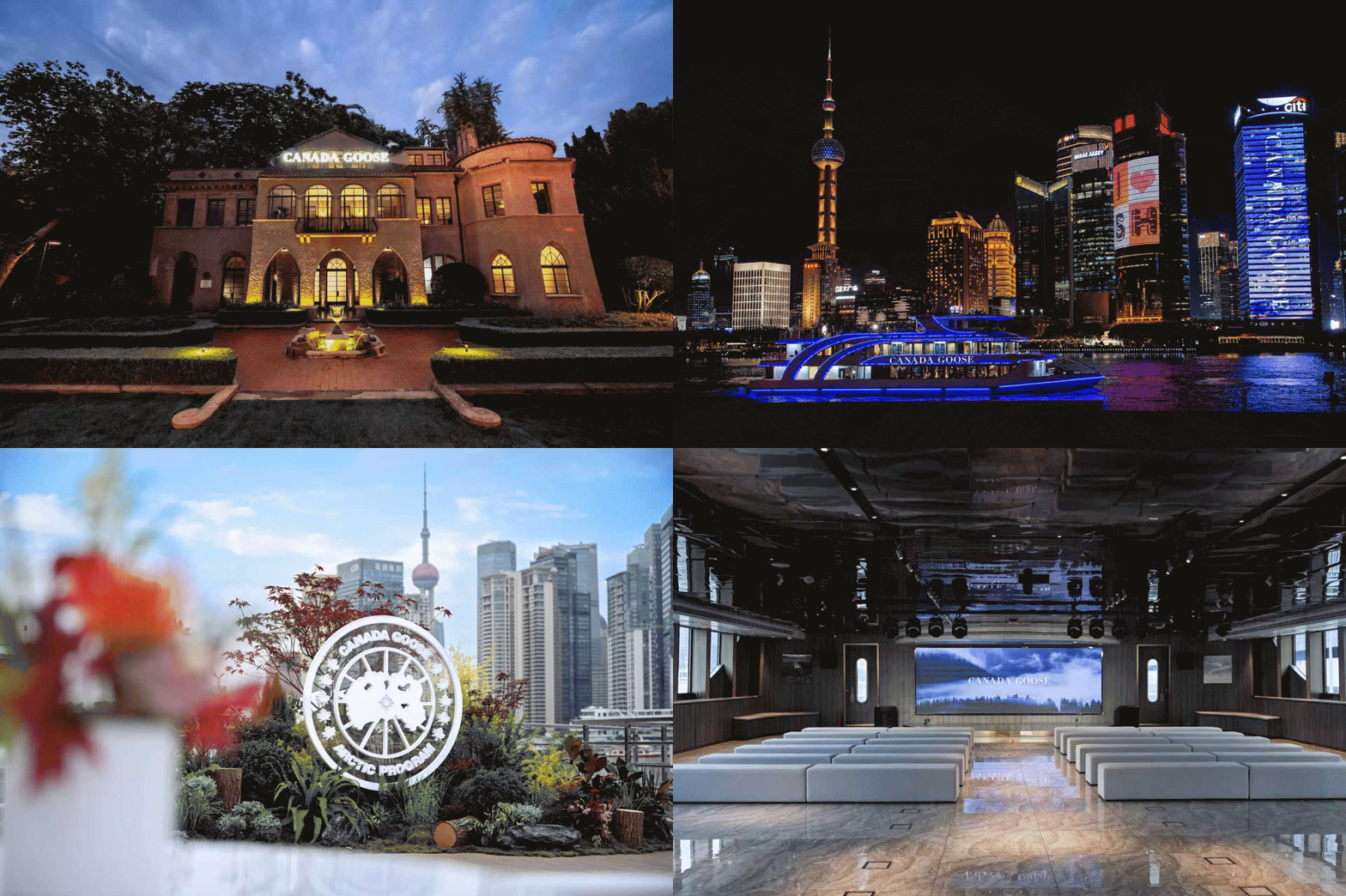
Canada Goose "North Meets South" immersive experience journey
Through this unconventional "city walk," Luxe.Co observed that a brand originating from the harsh climate of the North and built on professional outdoor protective apparel, while enriching its product lines and expanding its retail footprint, is also striving to bring consumers around the world into the brand's inner spiritual realm and establish more authentic, distinctive long-term connections with them.
The theme "North Meets South" highlights the two polar scenarios this event hopes to connect: one pole is the North, closely tied to Canada Goose's brand DNA; the other is the bustling international commercial and fashion center of Shanghai, located in the affluent Jiangnan region. What links these two poles together is precisely Canada Goose's inherent spirit of exploration.
As Daniel Binder, President of Asia Pacific and Chief Transformation Officer of Canada Goose, said at the opening ceremony of this event: "Shanghai is renowned worldwide for its profound historical heritage, vibrant contemporary energy, and open global vision. Canada Goose has always maintained a deep connection with nature. Therefore, today we have extended exploration into Shanghai's streets, rivers, and the deepest parts of the city."

From left to right: Liu Ziyu, Vice President of Marketing, Asia Pacific, Canada Goose; Daniel Binder, President of Asia Pacific and Chief Transformation Officer; Greg Hsu, Global Brand Ambassador, Canada Goose; Xie Lin, President of China; Zhang Fang, Vice President of Commercial, Kerry Properties
From Stores to Products: Bringing the Northern Story Deeper into the Brand's Evolution
Canada Goose, which officially entered the Chinese market in 2018, is steadily advancing the renewal and upgrade of its retail network. The Canada Goose Nanjing Deji Plaza boutique, expanded in September this year, is the brand's first store in China to present its new retail concept. The newly opened Shanghai Jing'an Kerry Centre pop-up store continues this concept, drawing inspiration from "boundless exploration" to organically integrate the spirit of exploration and Shanghai's urban character into the retail space.
From a commercial perspective, its new retail concept is not merely an update of store design language, but also reflects the brand's rethinking of the function of offline spaces: as online channels take on more and more of the functions of product information acquisition and transactions, the value of physical stores increasingly depends on whether they can provide product experiences and brand content that are difficult to replace online.
Stores are therefore no longer just terminals for product display and sales, but combine space, products, and content into a brand narrative that can be experienced.
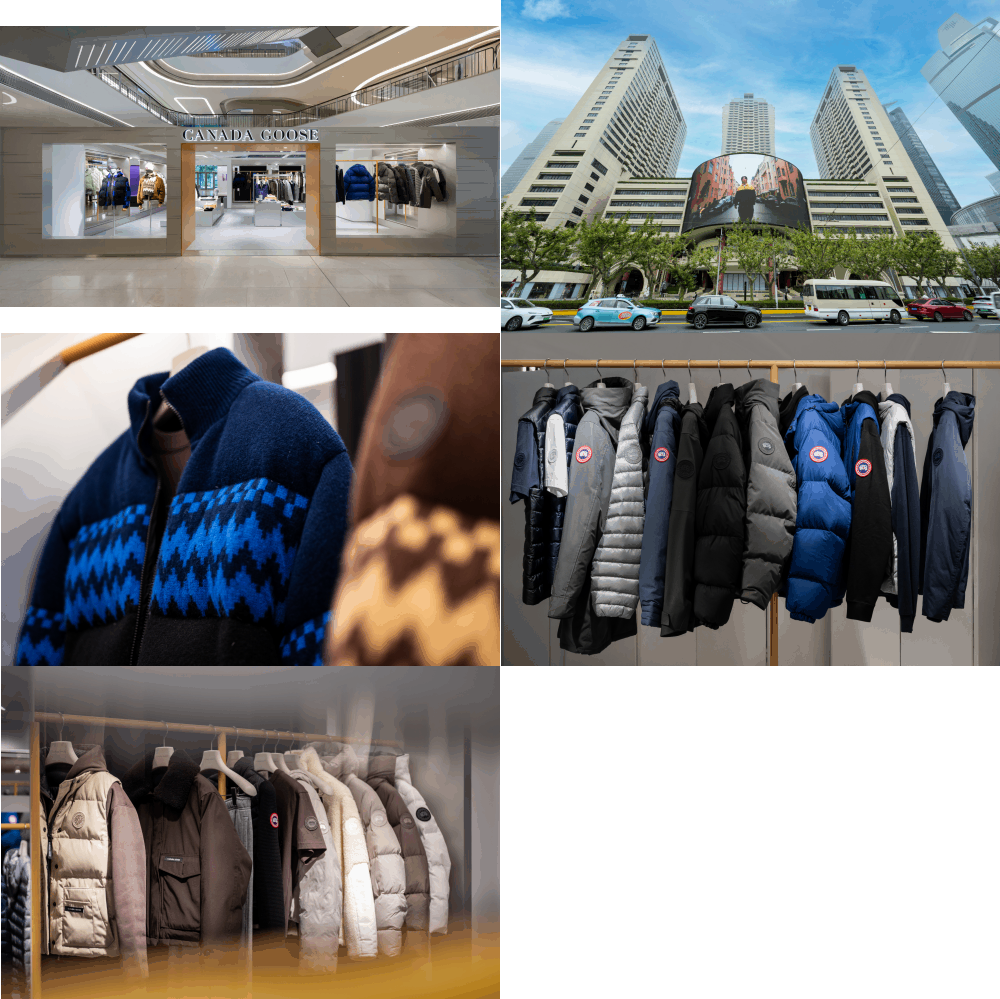
Canada Goose Shanghai Jing'an Kerry Centre pop-up store
The pop-up store simultaneously displays Canada Goose's Fall/Winter 2026 collection. This is the first Fall/Winter collection led by the brand's Creative Director Haider Ackermann, themed "Second Nature", as the Fall/Winter chapter under the new "Natural Intelligence" brand platform.
The collection presents the brand's largest new product lineup to date, covering categories including fleece, knitwear, lightweight down, transitional outerwear, footwear, and accessories. At the same time, the brand has launched the Fall/Winter Après collection, incorporating Fair Isle knits, plaid patterns, and Western-style details into the designs, and adopting colors such as Glacier Celadon, Glacier Forest, and Burnt Vermilion, offering a more relaxed and diverse expression for winter dressing.
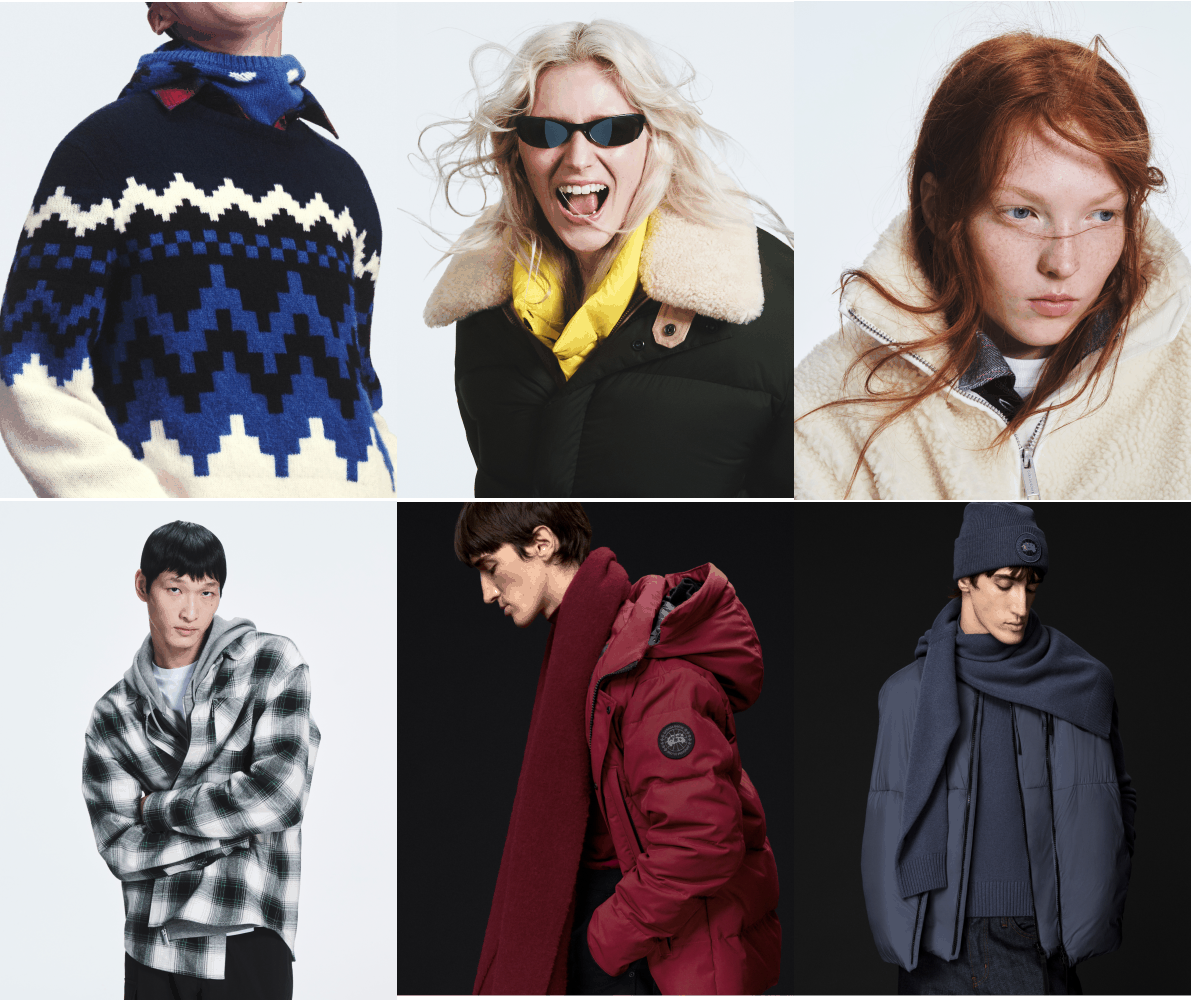
From design to categories, Canada Goose is attempting to broaden consumers' perception of the brand: products are no longer developed solely around protection needs in extreme cold environments, but cover more seasons, scenarios, and everyday ways of dressing.
This also echoes the brand's all-season development direction emphasized in recent years. Canada Goose's latest reported fiscal 2027 second-quarter results show that apparel, rainwear, and trench coat categories all achieved year-over-year double-digit growth, further increasing their share of the product mix. Group Chairman and CEO Dani Reiss explicitly stated in the earnings report that the company is steadily building Canada Goose into a more resilient and more diversified brand.
From Canada's North to China's Sanjiangyuan: The Brand's Deep Relationship with Nature
If this urban exploration in Shanghai translated the brand's deep-rooted natural philosophy into an experience that ordinary consumers can reach and participate in, then the Sanjiangyuan project directs attention beyond commercial scenarios. To understand why Canada Goose continues to invest in this land far from urban commercial centers, one needs to return to the brand's origins and its long-formed relationship with nature.
In 1957, Sam Tick founded Metro Sportswear Ltd. in Toronto, initially producing wool vests, raincoats, and snowsuits. In the 1970s, Sam Tick's son-in-law David Reiss joined the company, driving the development of down jacket production technology and founding the Snow Goose brand, which gradually evolved into today's Canada Goose.
The brand's early professional capabilities mainly came from real demands in harsh cold environments. In 1982, Canadian mountaineer Laurie Skreslet wore a parka custom-made by Metro Sportswear to summit Mount Everest, becoming the first Canadian to reach the summit. Another representative product, the Expedition Parka down parka, was cold-weather gear specially developed by the brand for scientists at McMurdo Station in Antarctica, later becoming standard equipment for scientific expedition personnel and known as "Big Red" for its striking red appearance.
These two experiences not only shaped the brand's early representative products, but also demonstrate that its professional accumulation came from understanding and repeatedly validating actual use environments. For Canada Goose, nature was initially the environment that product development had to confront, and also the foundation on which the brand's functional and craftsmanship capabilities were formed.
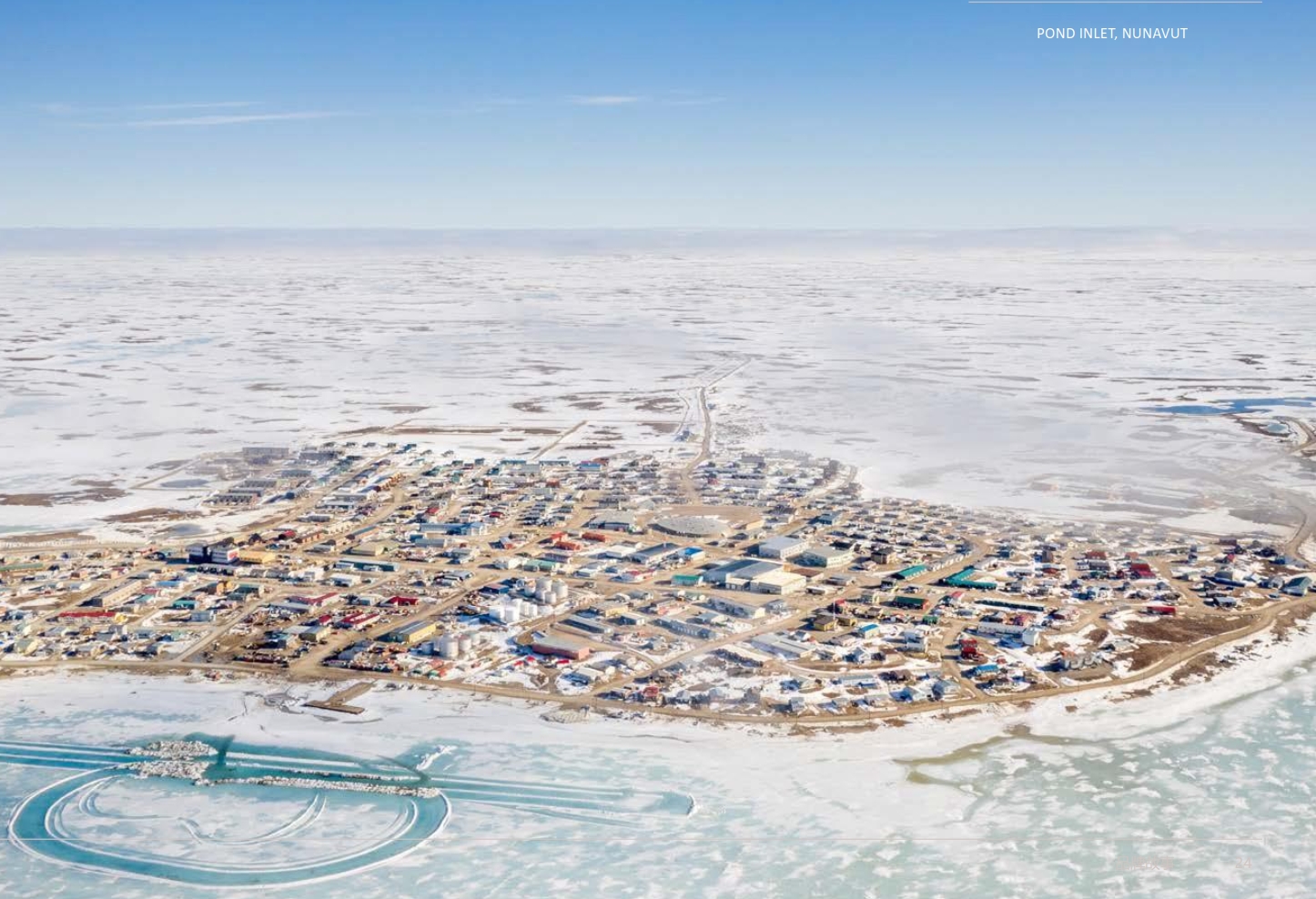
As the brand developed, its relationship with nature gradually extended beyond product-level protection needs to ecological conservation and community support.
Canada Goose's 2007 partnership with Polar Bears International (PBI) was the starting point of this thread; the brand has to date raised approximately CAD 8 million for the organization and continues to donate through the PBI collaboration collection. Subsequently, support for Inuit community resource center projects and the Project Atigi launched in 2019 extended the objects of protection from species to local communities and culture.
The "Natural Intelligence" platform launched in 2026 is Canada Goose's further articulation of this brand philosophy. The platform emphasizes that nature itself has a set of long-running laws, and that true understanding comes from sustained observation and real contact, not shortcuts. The corresponding "Natural Calendar" uses natural nodes such as solstices, celestial changes, and seasonal transitions as references to build brand content throughout the year.
The choice to hold this "North Meets South" event on the eve of the Start of Winter also responds to this philosophy through natural changes in the city, such as Shanghai's autumn leaves, tides, and sunlight.
It should be noted that the Sanjiangyuan project was launched in 2023, three years before the "Natural Intelligence" platform. It is not a temporary implementation project after the launch of the brand platform, but a long-term ecological conservation practice that Canada Goose had previously carried out in China. "Natural Intelligence" more provides a new expressive framework for its relationship with nature.
In June 2023, Canada Goose partnered with the Shanshui Conservation Center to launch a community participation and nature experience public welfare project in the Yangtze River source area of Sanjiangyuan National Park. This is the brand's first large-scale environmental and community participation project outside Canada.

Sanjiangyuan is the source of the Yangtze, Yellow, and Lancang rivers, known as the "Water Tower of China," and is of great significance for water conservation and biodiversity protection. The project is located in Zhiduo County, Yushu Tibetan Autonomous Prefecture, Qinghai Province, covering approximately 500 herder households.
The project adopts a multi-party cooperation mechanism: the Sanjiangyuan National Park Administration provides guidance, the Shanshui Conservation Center is responsible for project execution and professional support, and Canada Goose provides funding. Specific work revolves around biodiversity surveys, field surveys, community participation, and public advocacy, including establishing a long-term wildlife survey network, training local residents to participate in ecological surveys, and conducting nature experiences and environmental education.
As the project enters its fourth year, a set of milestone data presents the specific progress of local community participation: over the past year, 17 local patrolmen participated in deploying and maintaining 30 infrared cameras, recording 41 species and accumulating more than 3,400 independent wildlife image records. Monitoring work has also expanded from snow leopard-related surveys to ungulate surveys, with patrolman training and knowledge sharing continuing.
Behind this work, those undertaking daily patrol tasks are not external professional survey teams, but herders who have lived in the area for generations. They have long-accumulated knowledge of terrain, grasslands, and wildlife activity patterns; after receiving training, they combine traditional ecological knowledge with modern conservation technologies such as infrared cameras and field surveys, becoming important participants in the project's monitoring and conservation actions.
"Those most closely connected to a piece of land are often its most important guardians." This statement by Canada Goose President of Brand and Commercial Carrie Baker highlights the reason the project emphasizes community participation.
On November 2, Canada Goose released in Shanghai the public welfare documentary "Snow Leopard Patrol" produced around the Sanjiangyuan project. "Sa Ji" means "snow leopard traces" in Tibetan.
The film ventures deep into a remote canyon in the Yangtze River source area with complex terrain, documenting the local herder patrol team's field surveys, deployment and maintenance of infrared cameras, and also presenting the patrolmen's motivations for participating in ecological conservation, the practical difficulties they face, and their connection to the habitat. What the lens records is not only snow leopards, but also Tibetan wild donkeys, Tibetan foxes, bearded vultures, masked polecats, and other wildlife, allowing viewers to see a more complete ecological environment.
Rather than making the snow leopard the sole protagonist, the film focuses its lens on the people involved in ecological conservation and how this daily work continues. From camera equipment maintenance to field transect surveys, to data organization and knowledge sharing, the documentary presents not a one-time adventure, but a monitoring and patrol mechanism that requires long-term investment.
This also distinguishes the Sanjiangyuan project from typical public welfare activities centered on corporate donations: the local community is not simply a recipient of help, but a participant in conservation actions. The support provided by the brand and professional organizations ultimately needs to be transformed into knowledge, equipment, and practical capabilities that local residents can continue to use. Compared with one-off public welfare communications, this kind of long-term accumulation deserves more attention.
From Urban Consumers to Local Communities: The Two-Sided Connection of the Chinese Market
In the eight years since entering the Chinese market, Canada Goose has continued to expand its local retail network and consumer touchpoints. The weight of the Chinese market in the group's global business can also be seen from the latest earnings report.
In the fiscal 2027 second quarter ended September 27, 2026, Canada Goose's Greater China revenue grew 32.5% year-over-year to CAD 68.5 million, accounting for approximately 25% of the group's total revenue for the quarter.
For an international brand with a distinctive regional culture and professional functional DNA, how can it establish longer-term connections with local ecology, communities, and consumers while expanding its commercial footprint?
Observing the Shanghai Jing'an Kerry Centre pop-up store together with the Sanjiangyuan project reveals two different practices of Canada Goose in the Chinese market: the former connects urban consumers through space, products, and experiences, while the latter connects local residents through long-term ecological conservation and community cooperation. One focuses on commercial scenarios and consumer relationships, the other emphasizes ecological conservation and local participation; their operating methods and evaluation criteria are not the same.
Beyond offline activities, Canada Goose also expanded the online communication of this brand event through Weibo. Around multiple topics, the brand incorporated event experiences, product information, and celebrity updates into the same communication matrix, expanding content reach through trending topics. Among them, the participation of Global Brand Ambassador Greg Hsu brought more attention to the pop-up store opening and urban exploration activities, and also provided the brand content with a communication entry point aimed at mass consumers.
Notably, Weibo V Release provided a content aggregation vehicle for this communication. Compared with scattered posting of individual blog posts and short videos, the brand can present content from different dimensions—including the event site, the new retail concept space, the Fall/Winter 2026 collection, and "Snow Leopard Patrol"—in a centralized topic page, and combine on-site reporting and creator sharing to help users extend their attention from a single event to a further understanding of the brand's products and culture. For the brand, the value of online communication lies not only in amplifying the voice of a single event, but more in transforming scattered attention into sustained, coherent brand awareness.
From a single urban pop-up event to a four-year ecological conservation project, what Canada Goose is attempting in China is to give concrete expression to the spirit of exploration the brand represents across different scenarios through products, spaces, content, and local actions. The two ends of this expression—the pop-up space at Shanghai Jing'an Kerry Centre and the infrared cameras carried by herder patrolmen in the canyons of the Yangtze River source—appear far apart, but they share the same brand origin: how a company that makes protective apparel against extremely harsh environments understands the relationship between humans and nature, and how it conveys this understanding through products, stores, and events to consumers from different cultural backgrounds, forming genuine connections and resonance.
丨Image source: Canada Goose
丨Responsible editor: LUXECO


