As is well known, Hermès, which started as a harness maker, has always regarded the "horse" as its most core source of inspiration. Moreover, when we study Hermès' business performance and financial data, we can also sense an elegant rhythm akin to "equestrianism"—from a steady and composed "walk" to a well-paced "trot," with occasional leaps into the air, yet always going with the flow, galloping without rashness.
In the just-concluded third quarter of 2026, Hermès achieved sales of €4.1 billion, a year-on-year increase of 4% at constant exchange rates. Although the growth rate was lower than the first half (+6%), considering the more severe market environment and the higher comparison base from last year's third quarter growth of +9.6%, Hermès still delivered a very "steady" report card.
Beyond steadiness, the geographic distribution of Hermès' growth engines is also very "balanced":
In the first three quarters of this year, among Hermès' four main markets, three—Europe, the Americas, and Japan—achieved year-on-year growth of 6.4%, 13.1%, and 10.5%, respectively. Even the Asia-Pacific region, which faces severe challenges, still achieved year-on-year growth.

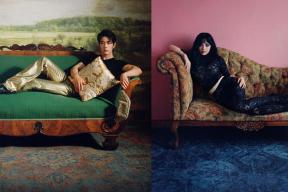
Above: Hermès Fall/Winter 2026 Collection
This "balance" is also reflected in the customer composition. Although tourist spending has always been crucial to the luxury industry, this quarter Hermès particularly emphasized the support from the loyalty of "local customers" in Japan and France. In mainland China, despite the impact of declining mall foot traffic, Hermès offset this through higher average transaction values, keeping Greater China's performance stable, driven by the brand's core clientele's contributions in categories such as jewelry and leather goods.
Notably, Hermès' traditional core category "leather goods" achieved around 10% growth for three consecutive quarters this year, even slightly accelerating in the third quarter compared to the first half, becoming a veritable "ballast" for the company's performance.
In addition, the emerging category "beauty and fragrance" rebounded significantly in the third quarter with 7.5% growth after a slight decline in the first half; other categories performed stably overall in the first three quarters of this year.
Exploring the drivers behind Hermès' leather goods growth, it is evident that the brand's long-term supply chain deployment over the past years is gradually releasing positive energy as scheduled.
Before 2010, all Hermès leather goods production was undertaken by 11 artisan workshops in France. As global demand for Hermès leather goods, led by China, surged, the supply-demand gap continued to widen.
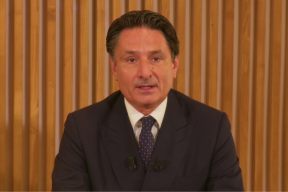
As Hermès CEO Axel Dumas said: "We do not deliberately create scarcity. It's just how our products are made—determined by the 'artisan model.'"
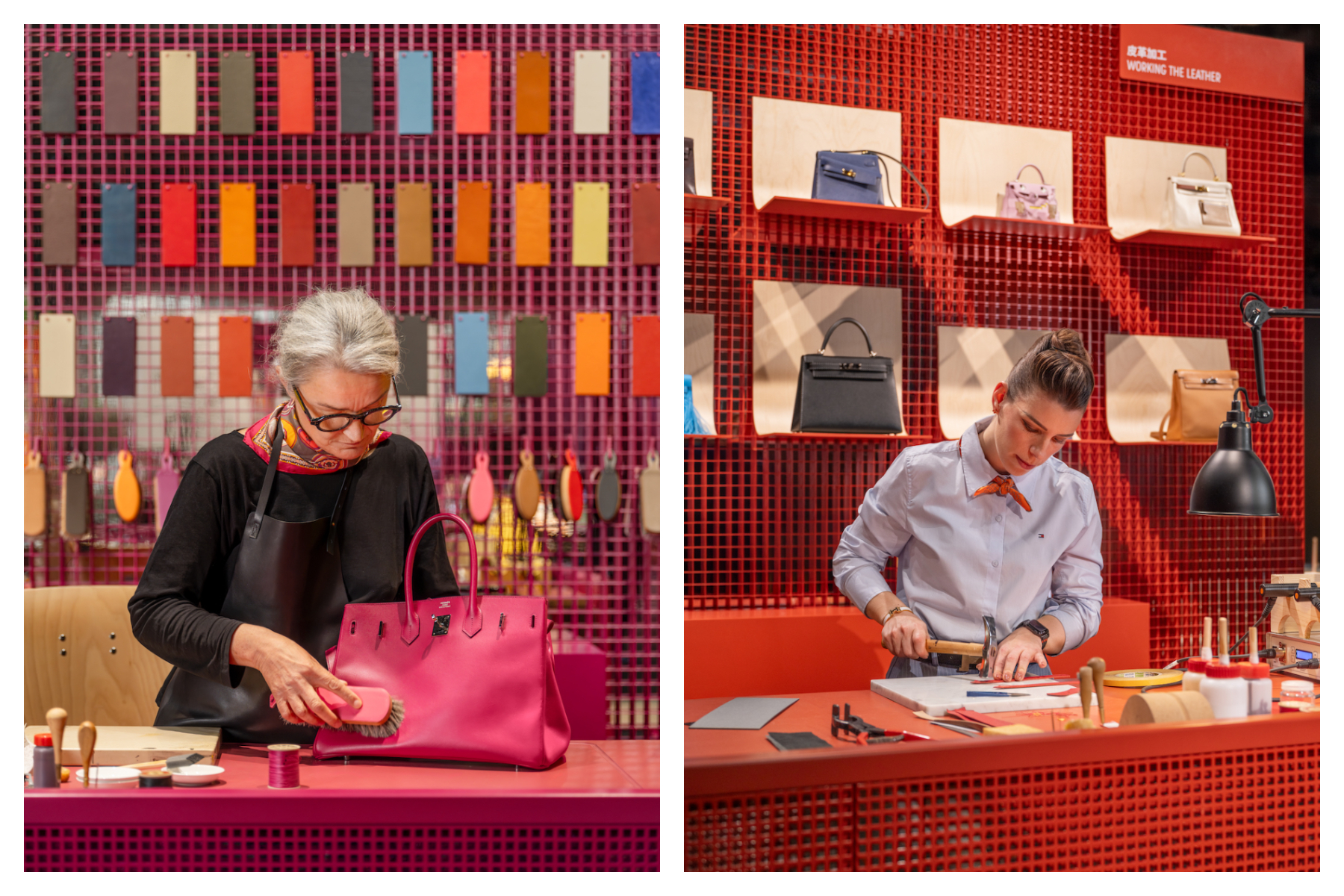
Above: "Hermès in the Making" exhibition, leather artisan demonstrating bag-making process
Since 2010, Hermès has built 14 new workshops across France at a rate of about one per year. The 25th workshop was inaugurated in Loupes, Gironde in April this year. The brand disclosed that three more leather goods workshops will open in the coming years: Charleville-Mézières in 2027, Colombelles in 2028, and Les Andelys by 2030.
The expansion speed of Hermès' leather goods capacity is constrained on one hand by the location and construction of workshops—Hermès has established and implemented a strict sustainable real estate guiding framework and is committed to building regional craft centers in several key French regions to drive local economic development.
On the other hand, it is constrained by the recruitment and training of artisans—all Hermès leather goods workshops are located in France, each with about 260 artisans responsible for making leather goods such as bags, belts, and wallets.
To continuously expand its artisan team, Hermès has opened craft schools in multiple locations in France. An apprentice must undergo 18 months of training to have a chance at a long-term position; and an excellent leather artisan typically needs five years to work fully independently.
As capacity bottlenecks ease, Hermès' leather goods line is further expanding, welcoming a batch of outstanding works that balance heritage and innovation, constantly updating consumers' preconceptions of Hermès.

Above: Hermès new bags Double Longe, Besace Attelée, Bride de Jour
In this year's third-quarter earnings report, the company specifically mentioned three new leather goods series: Double Longe, inspired by equestrian equipment storage bags, borrowing details from the equestrian world such as spring hooks and leather loops; Besace Attelée, inspired by the graceful curves of a saddle; and Bride de Jour, whose sleek shape evokes equestrian tack—the bridle.
It is not hard to see that after more than 180 years, the horse and equestrianism remain Hermès' strongest aesthetic DNA, continuously providing materials and nourishment for new creations.

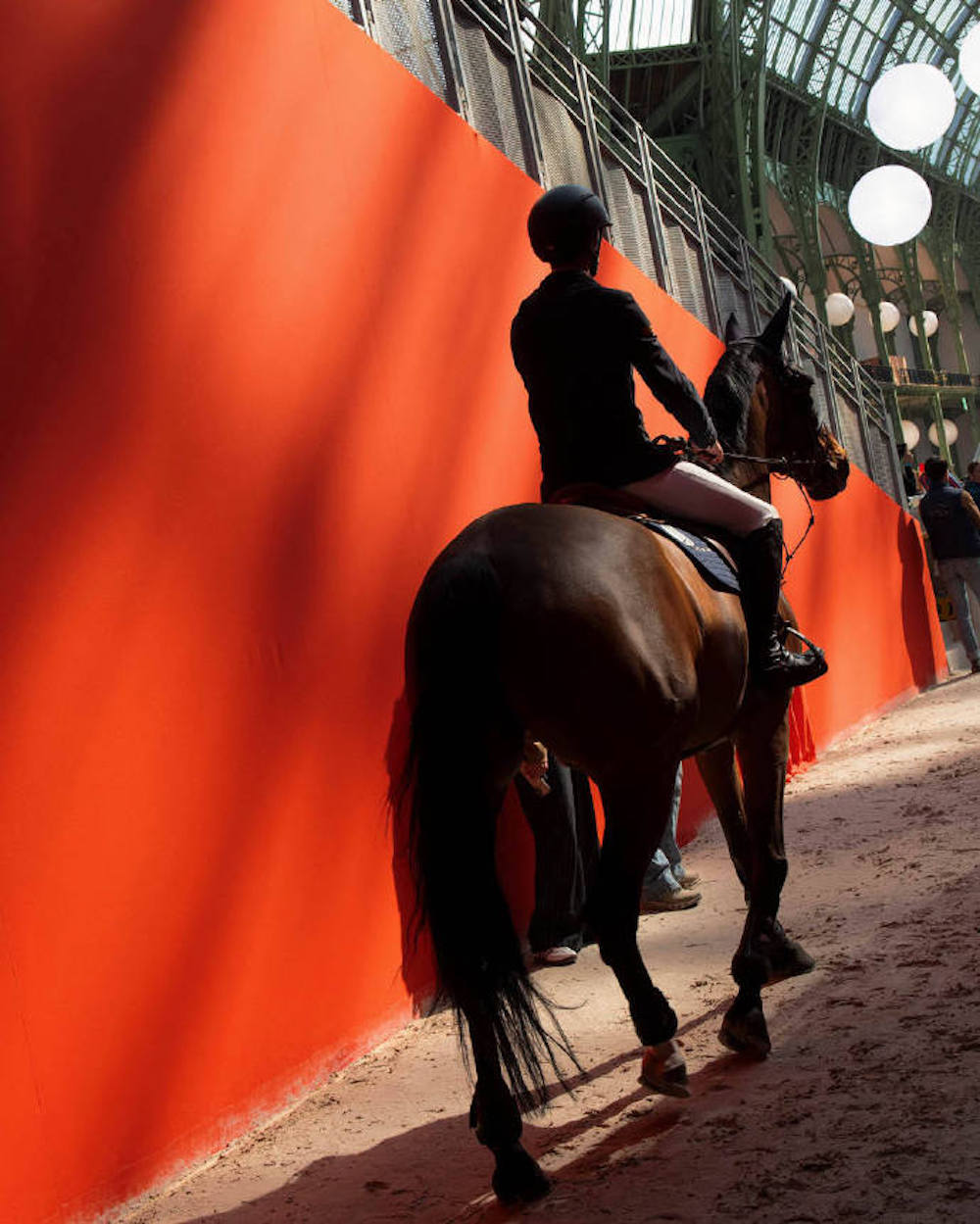
Since 2010, Hermès has held the top-level show jumping competition "Saut Hermès" at the Grand Palais in Paris every March
By closely centering on its brand DNA for orderly innovation and expansion, Hermès is able to continuously strengthen its unique brand image and identity while gradually expanding its business scale.
This consistent image and identity are the cornerstone that enables Hermès to weather multiple economic cycles and remain faithfully followed by high-end consumers, while also allowing the brand's managers to block out external distractions and, with strong steadfastness, adhere to their own pace in advancing the brand's global development.
For the Chinese market, which is currently experiencing its first luxury downturn cycle, this steadfastness is particularly noteworthy.
As Axel Dumas said: "In the Chinese market, in recent years, we have not canceled a single project. We continue to advance our plans according to the established policy."
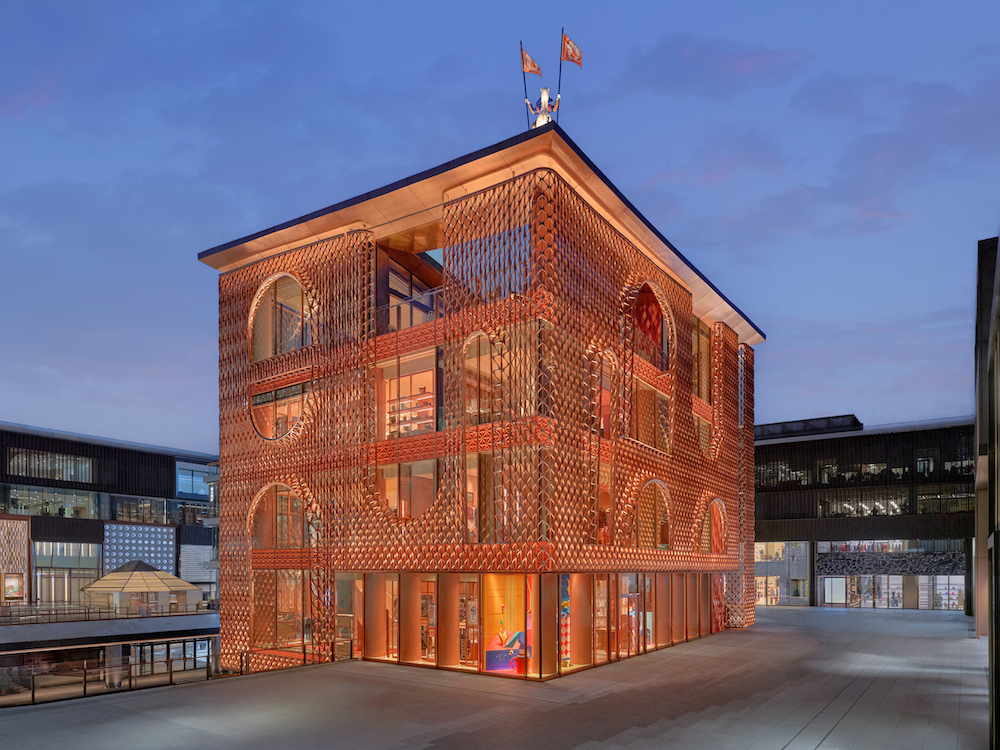
Above: Hermès Beijing Sanlitun store
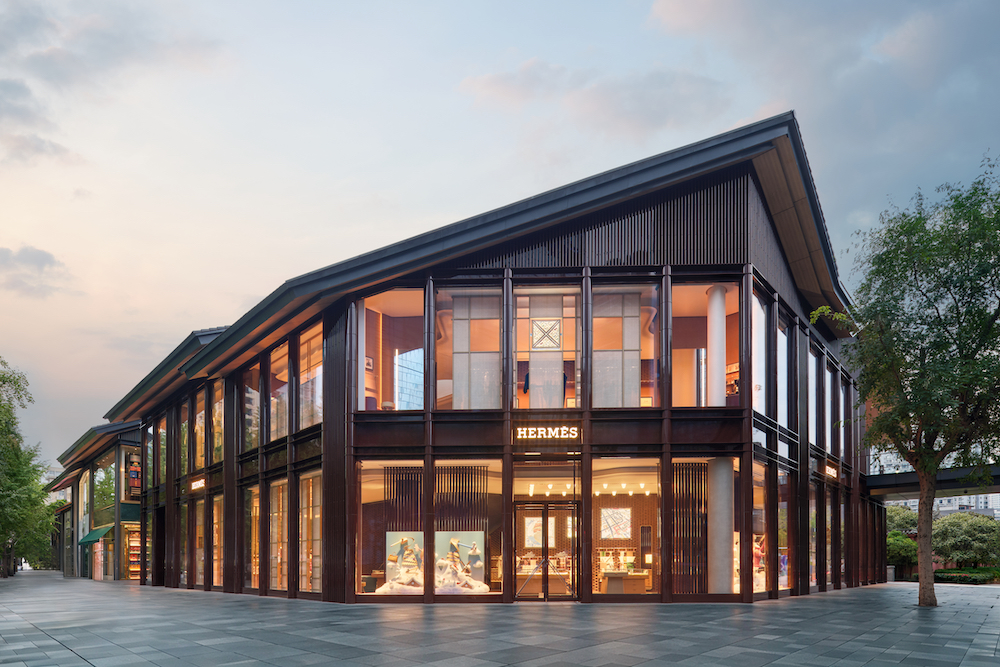
Above: Hermès Chengdu Taikoo Li store
Focusing on 2026, several major Hermès projects have been implemented one after another:
- On April 2, Hermès' fourth boutique in Beijing officially opened in Sanlitun, a five-story standalone building housing sixteen product categories;
- At the end of April, the Taipei SOGO Fuxing boutique and the Hong Kong Elements boutique reopened successively after renovation and expansion;
- In late May, the "Hermès in the Making" global touring exhibition opened to the public for free at the Shanghai Exhibition Center, where artisans from different disciplines demonstrated professional skills on site and explained craft tips and exclusive technical knowledge to visitors;
- On August 7, the 30-year-old Kaohsiung Hanshin Department Store boutique officially opened after renovation and expansion;
- On September 19, Hermès' ninth high jewelry chapter INTO THE HORSESCAPE was grandly presented in Shanghai;
- On September 23, the Chengdu Taikoo Li boutique officially opened after expansion and renovation, the brand's largest store in Southwest China;
- From late October to early November, Hermès presented the HERMÈSTORIES fantastical theater and exhibition in collaboration with Freespace at the West Kowloon Cultural District in Hong Kong.
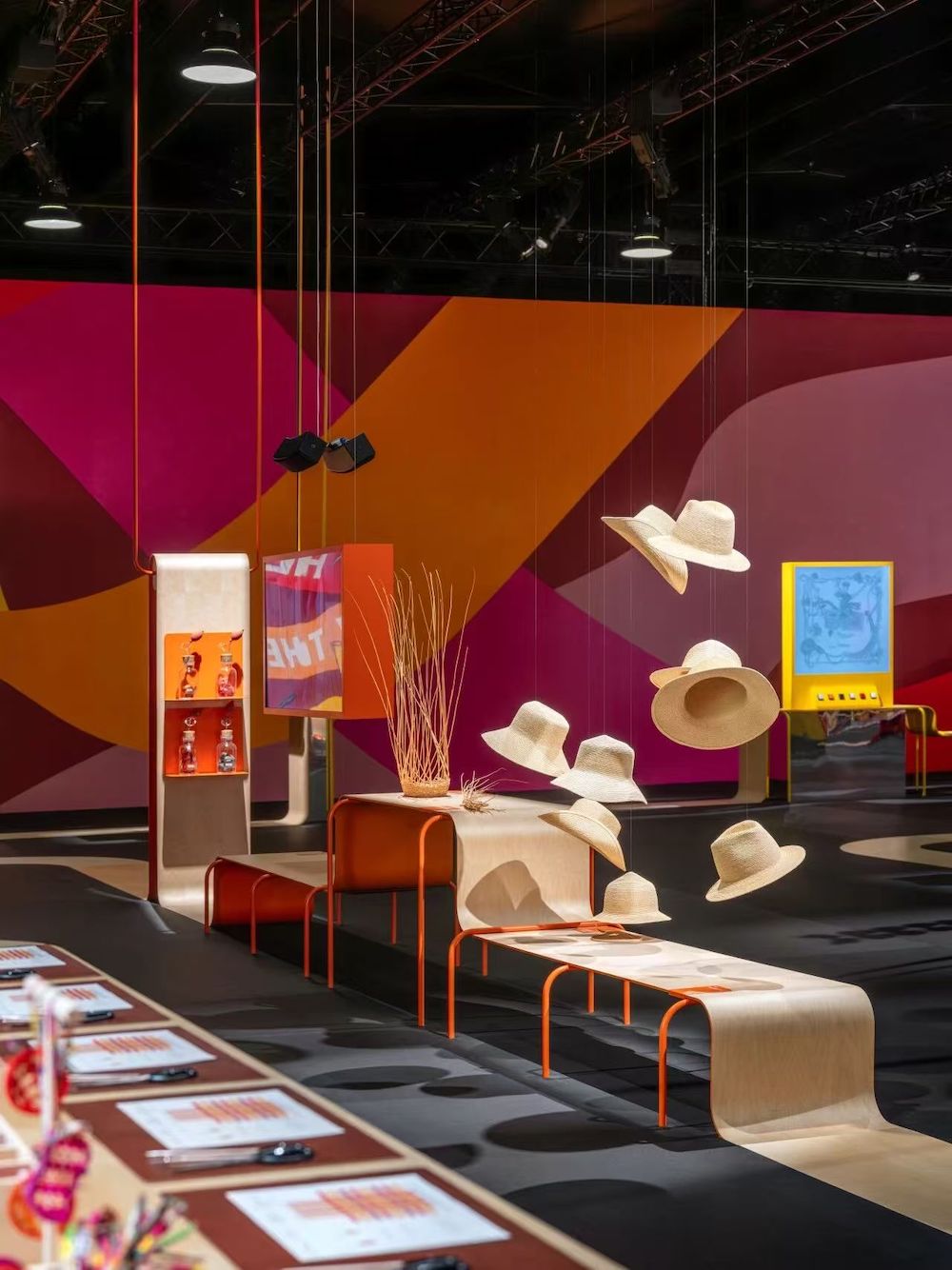
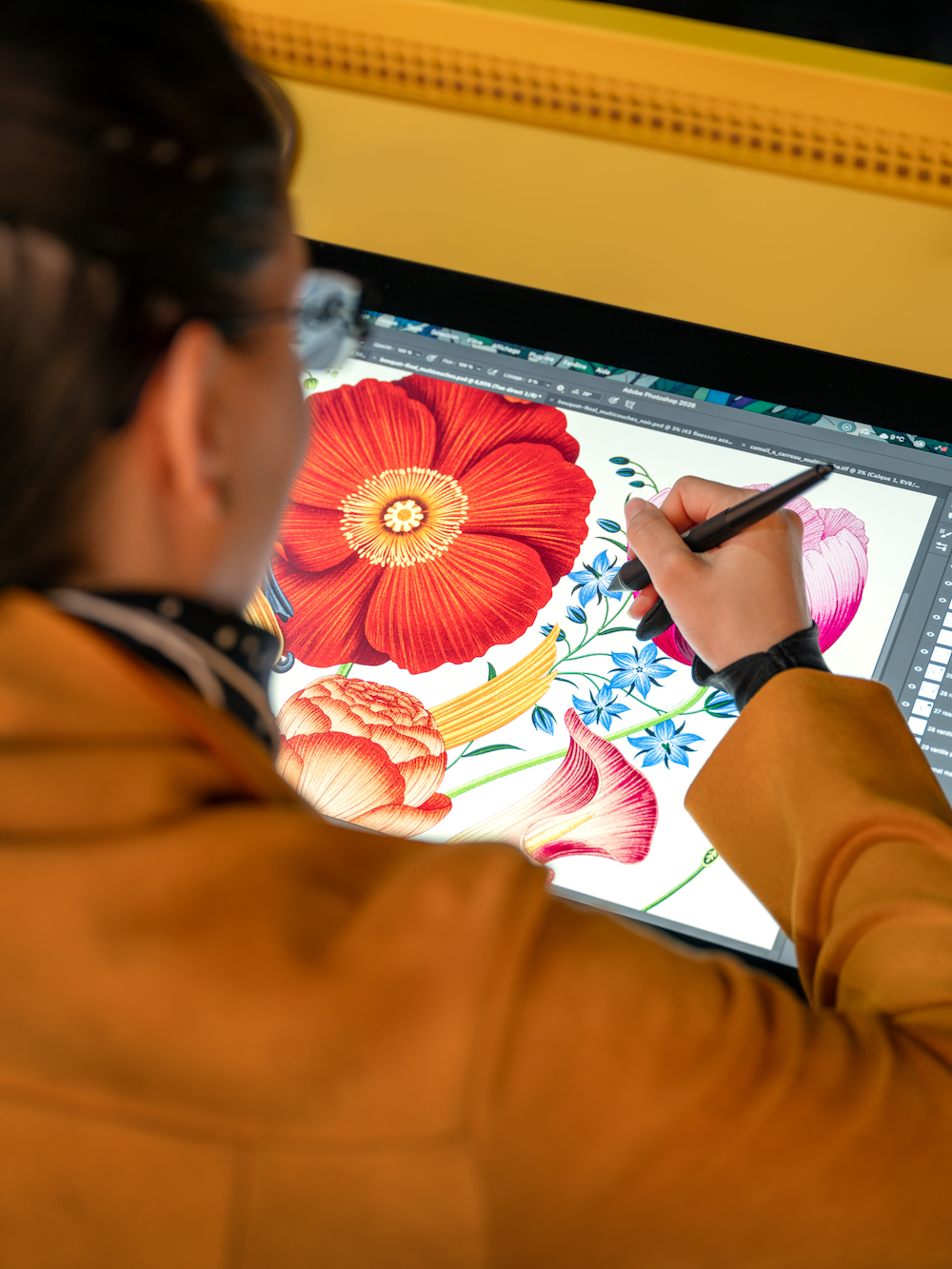
Above: "Hermès in the Making" exhibition
In addition, every winter, Hermès holds a festive lighting ceremony at the "Hermès Maison" in Shanghai, inviting brand guests to gather at the end of the year to celebrate the season.
Through these latest developments, we can clearly observe that Hermès' investment in the Chinese market has always revolved around "experience"—by renovating and expanding stores, providing better and more comprehensive products and services, upgrading customers' shopping experience; through fantastical theater, allowing more people to immerse themselves in the brand's creative and aesthetic world for a unique spiritual experience; through high jewelry and workshop tours, displaying the brand's exquisite craftsmanship and design details to audiences, enabling people to more vividly appreciate the brand's extraordinary creativity in close-up interactive experiences.
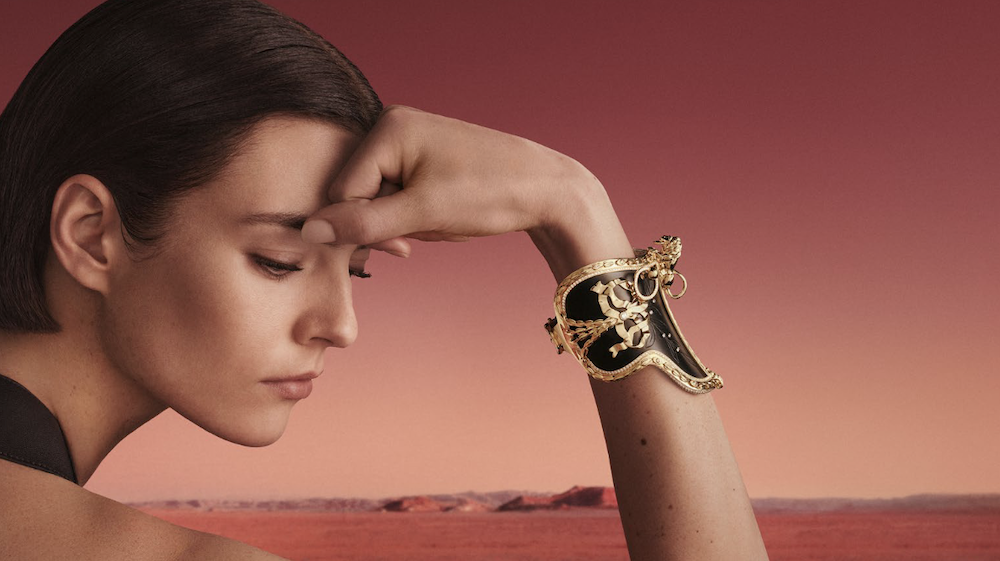
Above: Hermès high jewelry ninth chapter INTO THE HORSESCAPE
At a time when the luxury industry as a whole is in a historic trough, the "resilience" demonstrated by Hermès, which has successfully weathered many economic cycles, is increasingly prominent. This resilience is reflected both in steady financial data and in the substantial growth of brand value.
This enviable "resilience" comes not only from a prestigious reputation but also from the Hermès family and management team's centuries-long "fidelity to self" and down-to-earth approach. Each fluctuation in the macro environment not only fails to shake but actually strengthens Hermès' "steadfastness" and "patience," and this steadfastness and patience allow Hermès to look beyond current distractions to a deeper and farther future.
While more and more luxury brands are retrenching, Hermès is steadily advancing according to its established strategy, increasing investment in categories such as beauty, jewelry, ready-to-wear, and custom fashion, further enhancing Hermès' share and voice in the fashion field on both commercial development and brand building dimensions.
Last October, Hermès appointed Grace Wales Bonner as creative director of menswear. This spirited young designer will present her first men's ready-to-wear collection for Hermès next year. Meanwhile, after more than two years of preparation, Hermès' first custom collection will officially debut in January next year, led by Nadège Vanhée, who has served as the brand's women's creative director for 12 years. This will be another brisk "gallop" (equestrian term Gallop) on Hermès' path forward.
In early November this year, in Interbrand's latest 2026 Best Global Brands ranking, Hermès rose to first place in the luxury category for the first time, and jumped from 21st last year to 15th overall. According to Interbrand's assessment, Hermès' brand value grew by 11% over the past year.
At a time when the global luxury industry is in a historic trough, the surge in Hermès' brand value against the trend well validates the effectiveness of its long-term strategy. As Axel Dumas said: "We have a long-term vision, not stop-and-go."
It is precisely this "long-term" vision that has kept Hermès' performance on a steady growth trajectory—never blindly expanding in good times, nor hesitating in bad times; although it may switch between "walk" and "trot" due to changes in the macro environment, it has never stopped moving forward.
|Image source: Hermès
|Editor: LuxeCO