
From August 8 to 14, luxury travel booking website Virtuoso hosted the 2026 Virtuoso Travel Week in Las Vegas, USA. This industry event is known as the "Fashion Week of the luxury travel world." At the event, Virtuoso released its 2026 travel industry trends report "2026 Virtuoso Travel Week," based on its own database and consumer research, clearly presenting the latest trends and driving factors in the luxury travel industry today and interpreting market direction for the second half of 2026 and beyond.

Overall, in the first half of 2026 (data as of June 30), sales across the Virtuoso partner network grew nearly 21% year on year, rising again on top of a high base in 2025.
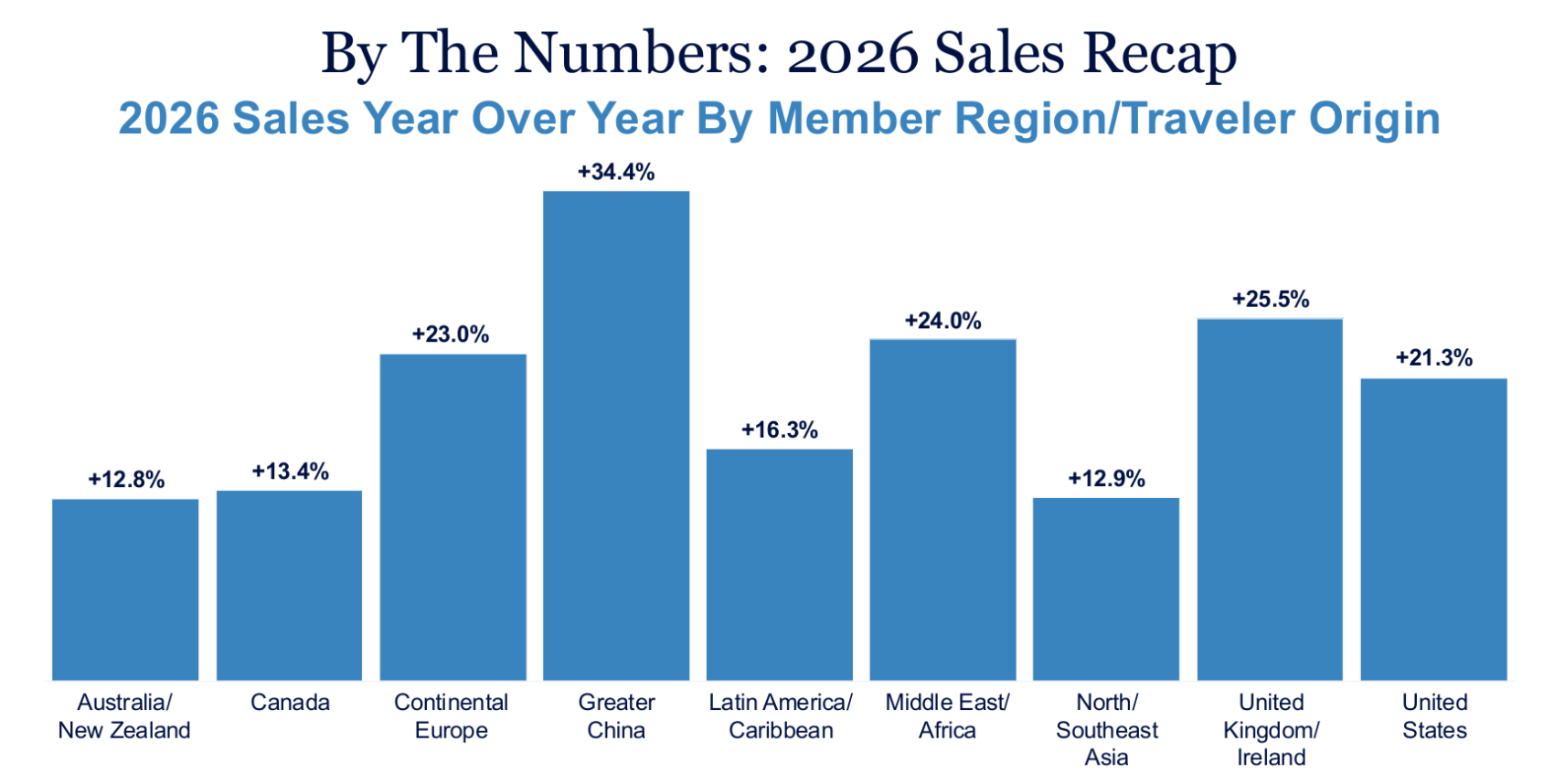
Growth was widespread across regions, with Greater China leading at 34.4%, while sales in the UK and Ireland grew 25.5% year on year, the Middle East and Africa grew 24%, continental Europe grew 23%, and the United States grew 21.3%.
By type of partner provider, hotel sales ranked first with growth of 24.5%, cruise sales grew 22.4% year on year, destination management companies grew 17.5%, and tour operators grew 11%.
The report notes that growth is concentrated in the high-end segment, with bookings at hotels priced at $1,500 per night and above up 37%, more than double the growth rate of lower-priced hotels.
Alongside higher transaction volumes, room rates have also risen. The average daily rate at international luxury hotels has now reached $1,653 per night, while the average rate at luxury hotels in the United States is $1,445 per night. By comparison, in 2019 the average rate was only $985 at international luxury hotels and $790 at US luxury hotels.

The report lists five major trends in global luxury travel for 2026:
1. Autumn shifts from off-season to peak season
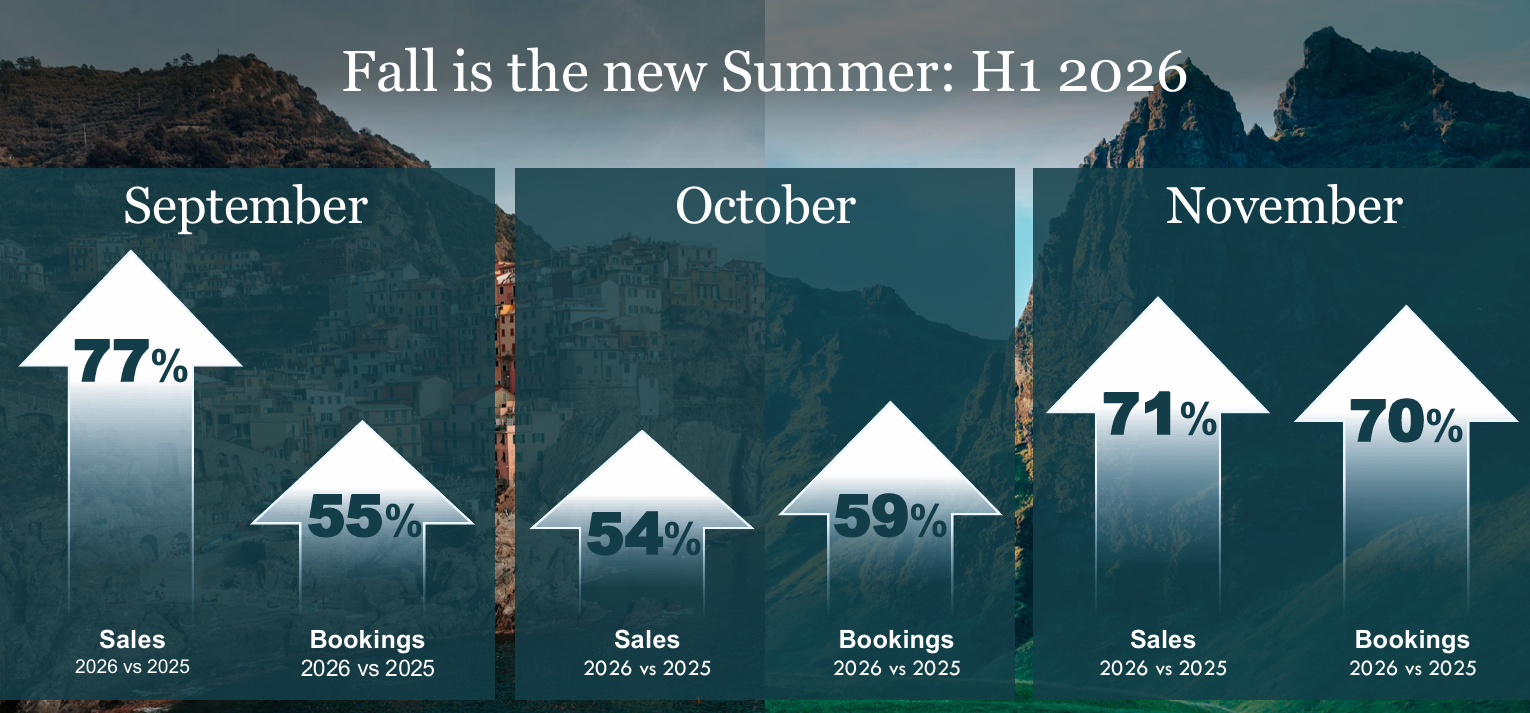
Bookings for autumn 2026 are up 59% year on year, with sales up 69%. September is the strongest performer, with sales surging 77% and bookings up 55%. October bookings are up 59%, while both bookings and sales for November rose by more than 70%.
The trend is most pronounced in Europe. As of the end of June, sales at Virtuoso partner hotels in Europe were up 39% year on year.
Moreover, travelers choosing autumn trips value the seasonal experience rather than simply seeking lower prices. This autumn, bookings to Europe are up 49%, while hotel rates have risen more than 7% and overall sales are up 64%. Destinations with the highest rate increases include the French Riviera (+179%), the Greek Islands (+130%) and Puglia, Italy (+78%).
2. The rise of "City-Maxxing"
Visiting just one city no longer satisfies luxury travelers, who are linking multiple destinations into longer, multi-city itineraries. Virtuoso has named this trend "City-Maxxing." About half of these itineraries cross national borders.
"France + Italy" is the most popular cross-border combination, followed by "France + UK" and "Italy + Switzerland." Two out of every five cross-border routes include Italy.
At the same time, the average length of stay for luxury travel continues to increase, driving branded residences and private villas into popularity. These itineraries also rely heavily on private aviation, and the demand group is getting younger. Millennials account for a share of private jet inquiries that is 6% higher than the global average.
3. Forward bookings rise sharply
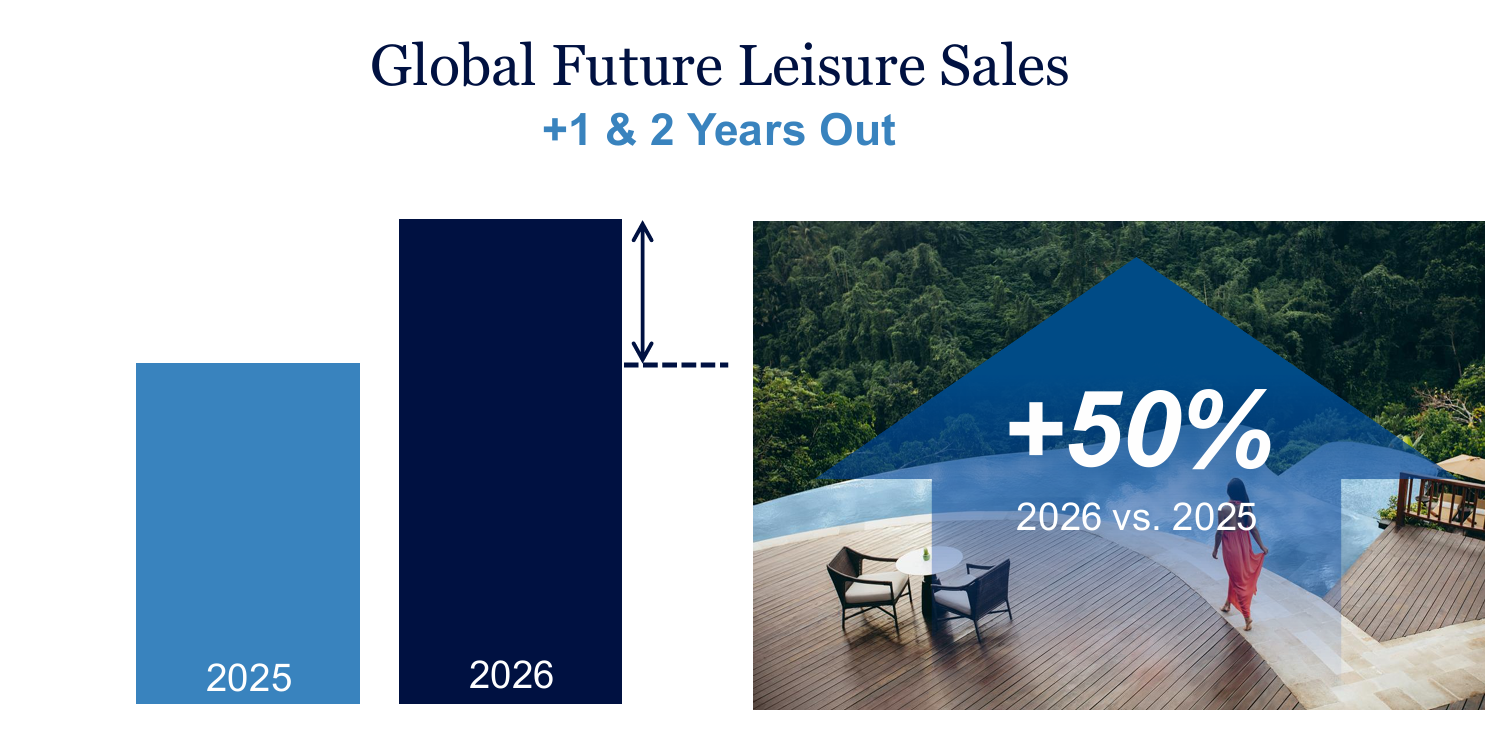
Global leisure travel sales for the next 1-2 years are up 50%. The trend becomes more pronounced at higher spending levels: bookings for orders of $50,000 and above are up 47%, cruise bookings at the same price level are up 49%, and bookings for orders of $100,000 and above are up 49%.
4. Longevity and wellness become new luxury themes
Wellness has evolved from a hotel amenity into a complete travel itinerary. Wellness-focused hotels significantly outperform the broader hotel market, with bookings up 28%, sales up 44% and average daily rates up 23%.
Among these, longevity tourism has emerged as a breakthrough niche, combining medical diagnostics with five-star hotel service.
The report also identifies three distinct types of wellness travelers:
- Performance optimizer: seeks data and quantifiable physical improvement results;
- Restoration seeker: yearns for quiet nature and digital disconnection;
- Meaning seeker: leans toward mindfulness meditation and retreats centered on important life milestones.
5. AI highlights the value of human advisors
Virtuoso travel advisors are rapidly adopting artificial intelligence. 74% of advisors already use AI in their business; 70% of partner providers also use AI, significantly above the 59% adoption rate across the industry reported by Phocuswright.
However, practitioners also find clear limitations in AI. Because AI-generated travel plans rely on similar sources of information, many itineraries end up looking alike and lacking specificity, exacerbating overcrowding at certain destinations.
The value of human expert advisors is therefore becoming more prominent. Three-quarters of clients consider an advisor's expert knowledge of accommodations and destinations a core advantage, and three-fifths value an advisor's ability to customize exclusive experiences.
79% of luxury travelers say they would consider hiring a travel advisor in the future. Half of advisors report that clients proactively avoid overly popular destinations. "Algorithmic recommendations" are giving way to "analog escapes," and time, privacy and digital disconnection have become the ultimate luxuries.
| Source: original report, official press release
| Image source: original report
| Editor: LuxeCO


