
Recently, Cushman & Wakefield released a research report: "Main Streets Across the World 2026" (Main Streets Across the World 2026).
The report surveyed nominal rents on 147 core retail streets worldwide. Measured in local currencies, over the past year, annual rents on these retail streets rose by an average of 3% year on year, but the pace of growth has slowed for a second consecutive year. Among them, 49% of the streets recorded rent increases, only 19% saw rents decline, and the remaining 32% held steady.
Upper 5th Avenue in New York (49th to 60th Streets) climbed two places this year, reclaiming its position as the world's most expensive retail street, with annual rents on this stretch rising 35% over the past year to $2,700 per square foot. This marks its return to the top spot for the first time since 2023.
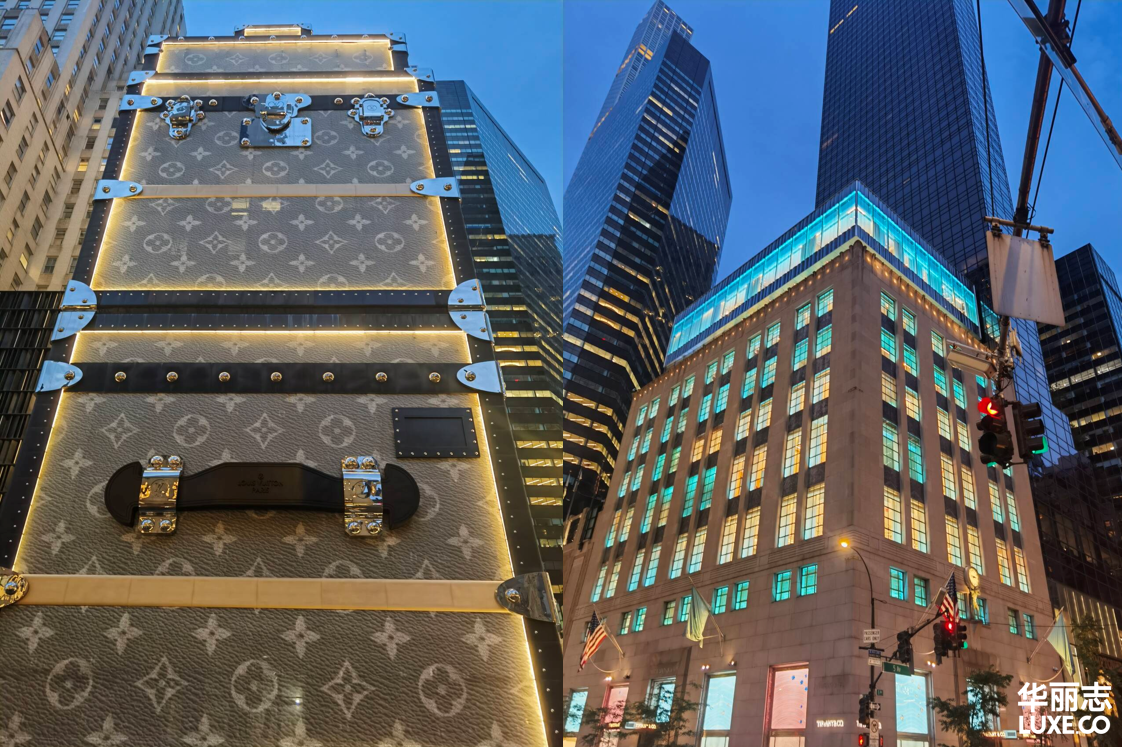
Above: At the corner of Fifth Avenue and 57th Street in New York, next to Tiffany's global flagship store, Louis Vuitton's 25-story building under construction is setting a "new altitude" for luxury brand stores. (Photo by LuxeCO)
New Bond Street in London ranks second with annual rents of $2,230 per square foot, followed closely by Via Montenapoleone in Milan at $2,160 per square foot. After sharp increases in previous years, rents on both streets were flat year on year over the past year.
The remaining retail streets in the TOP 10 held relatively stable positions, with no changes in rank this year. Rankings among the global TOP 50 retail streets also fluctuated relatively little, reflecting an overall moderation in the rent environment.
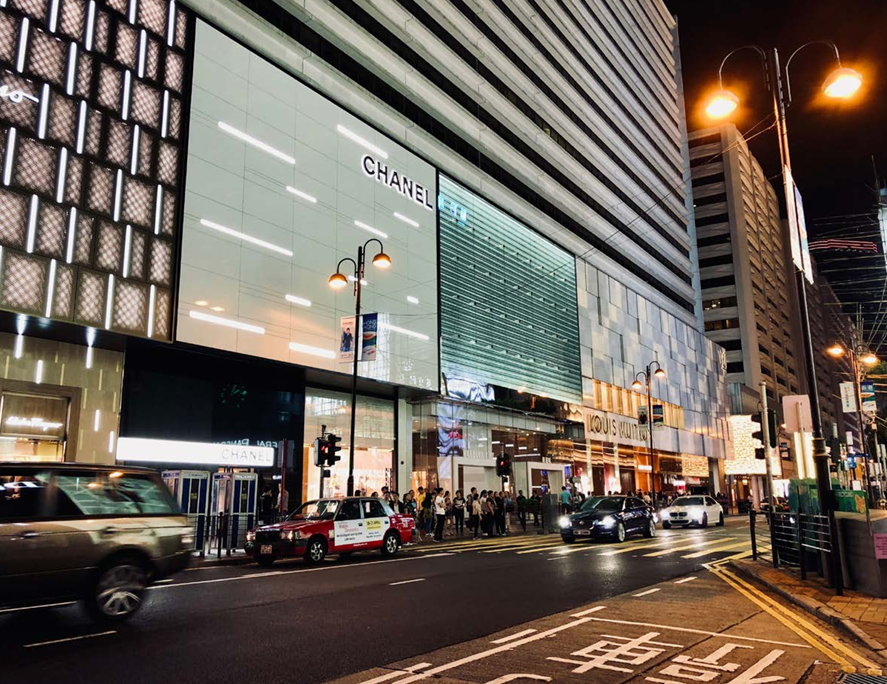
Among the global TOP 50, two retail streets in China made the list: Tsim Sha Tsui in Hong Kong, China (prime street-level shop space) ranked fourth, with annual rents of $1,406 per square foot last year, down 6% year on year; West Nanjing Road in Shanghai ranked twelfth, with annual rents of $545 per square foot last year, down 1% year on year.
By region, measured in local currencies, US retail streets posted the highest average rent growth in 2026, at 5.8%. Besides Upper 5th Avenue in New York, rents on the Brickell Boulevard Corridor in Miami and South Congress in Austin rose 43% and 20%, respectively.
The Americas market overall grew 3.1%. Canada faced multiple macroeconomic headwinds, with rents on Bloor Street in Toronto and 17th Avenue in Calgary both down 17% year on year. In Brazil, four of six retail streets saw rents decline, with Oscar Freire Jardins in São Paulo plunging 26% year on year, the largest drop in the region.
Asia showed marked internal divergence, with rent growth accelerating to 3.1% over the past 12 months, up from 2.3% in the same period of 2025. The shares of markets with rising and falling rents were roughly unchanged from last year, but the average decline in falling markets narrowed, while the average increase in rising markets widened further.
Several markets in Greater China saw rents pull back, as domestic consumption continued to come under pressure from domestic macroeconomic factors.
India posted the strongest growth, with rents on Linking Road in Mumbai surging more than 28% year on year, while multiple retail streets in New Delhi, Chennai, Pune, Gurugram and other cities also achieved double-digit increases. Core markets in Australia ended years of stability, with rents turning to positive growth. Southeast Asia saw more moderate increases. Tokyo, Japan, after strong growth last year, saw rents largely flat this year.
Europe recorded growth of 2.9%. Of the 57 retail streets surveyed, 42% recorded positive growth. In the UK, besides New Bond Street, rents on London's Oxford Street, Regent Street, Covent Garden and other retail streets all rose by more than 7%. Since 2023, rents on these streets have continued to climb, and all now rank among Europe's top 20 commercial streets.
The report noted that vacancy rates on the world's top retail streets remain extremely low, with the vast majority in the low single digits and some streets having no available space at all. Among the global TOP 30 retail streets, there were 153 new lease signings and new store openings, totaling more than 815,000 square feet of leased space, of which more than 80% were first-time entrants. Based on average market rents, these leases represent a total annual rent of more than $647 million.
Among tenants, international retailers were the most active, accounting for about 90% of total leased space. Large-store leases of 2,000–5,000 square feet made up the largest share, at 32% of all transactions.
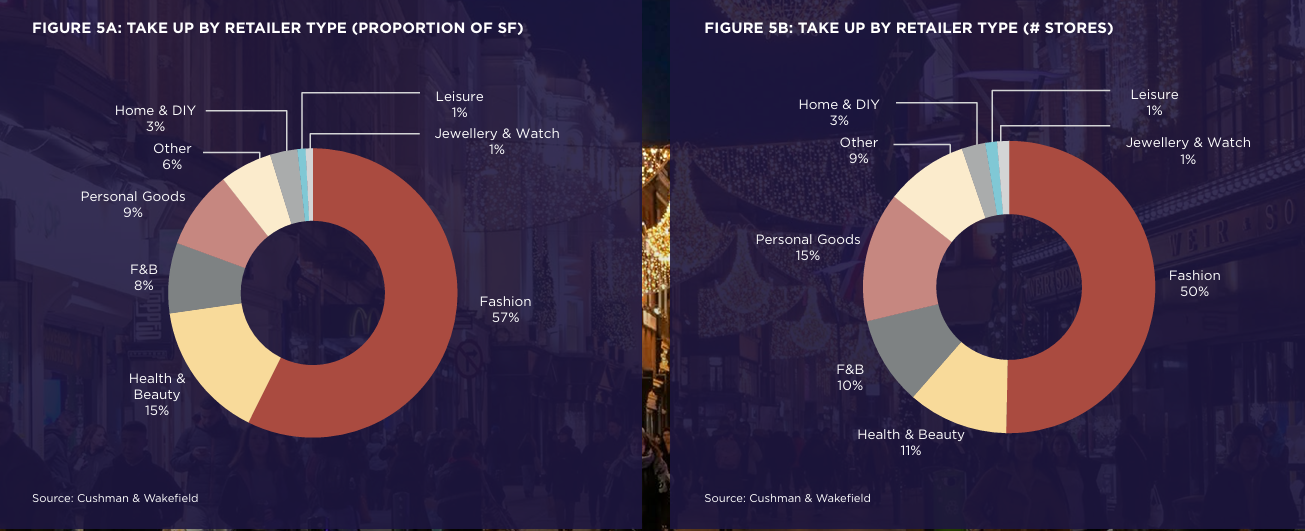
Although the retail formats entering top commercial streets are increasingly diverse, fashion brands still dominate, accounting for 50% of transactions and 57% of leased space.
Beauty and wellness brands ranked second by transaction count, standing out especially in Asia-Pacific, driven by the rise of K-beauty and J-beauty. Beauty brand stores average more than 7,000 square feet, the largest format by store size.
Food and beverage and personal care brands were also active, but their stores generally range from 3,000 to 4,000 square feet. Home and experiential craft formats gained greater visibility in core commercial districts, with average store sizes reaching 6,000 square feet.
Below: (Left) Share of leased space by retailer type; (Right) Share of store count by retailer type
The report also outlined the retail characteristics of a number of gateway cities. For example, New York remains the world's leading retail gateway city and the primary entry point for luxury, fashion and lifestyle brands entering North America. Shanghai and Tokyo are shifting from a "brand premium" model to scenario-based, emotion-driven retail. Seoul shows a divergence driven by tourism, while London, Milan and Paris are Europe's benchmark gateway cities, with scarce supply and brands expanding across multiple countries simultaneously.
Beyond gateway cities, a number of emerging markets are also worth watching. Cities such as Singapore, Mumbai, Madrid and Prague are seeing demand rise due to tight supply. Singapore is expected to add only 400,000 square feet of prime retail space per year through 2031; Mumbai had no new Grade A mall space supply in the first half of 2026; and demand in Madrid, Prague and other cities continues to outpace supply.
Looking ahead to 2027, the report concluded that this year's major trends—including tight supply on top commercial streets, scarce prime space and continued diversification of retail formats—will continue to dominate leasing transactions on retail streets.
|Source: Original report
|Image: Photo by LuxeCO, original Cushman & Wakefield report
|Editor: LuxeCO


