When winter arrives, damp cold air ravages the vast lands south of China's Qinling Mountains-Huaihe River line, in stark contrast to the colder but relatively drier north.
Is the "bone-piercing" damp cold colder, or is the "knife-like" north wind colder? This has become almost a "soul-searching question" that southerners and northerners pose every winter.
In fact, the degree of cold stems from the human body's overall perception, formed by the interplay of temperature, wind force, and relative humidity. According to the perceived temperature formula of the Central Meteorological Observatory, at the same 5°C, when relative humidity reaches 70% or a level-7 gale blows, a person's perceived temperature drops to 2.6°C; when relative humidity is as high as 100% or wind force is level 10, the perceived temperature approaches zero. If moisture penetrates the skin and is then hit by a strong wind, body temperature can be rapidly carried away, plunging one into "icehouse" mode.
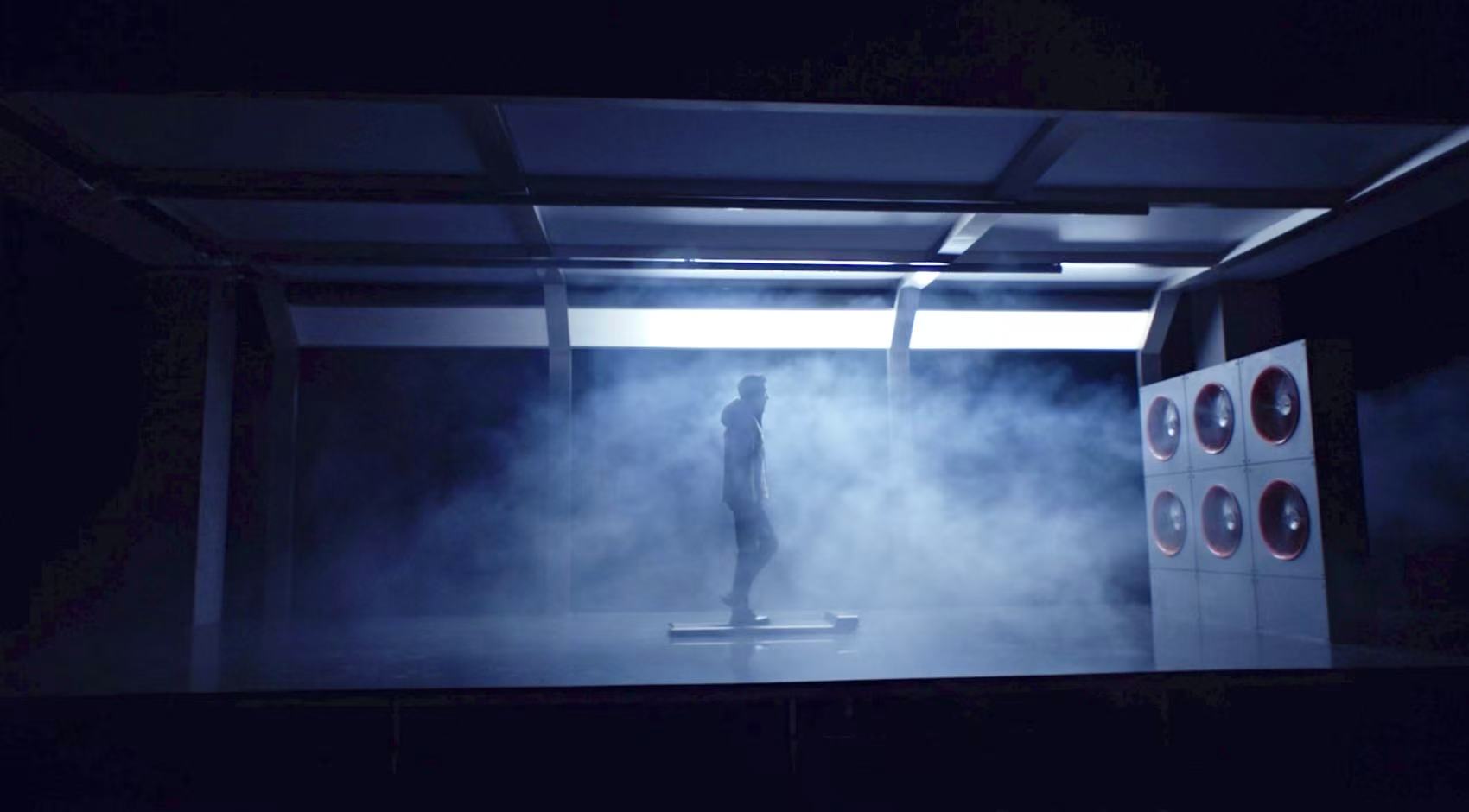
In the current boom of functional apparel, windproof performance has become standard for many brands, but moisture-proof performance has received little attention. As early as 2022, Chinese menswear brand LILANZ, headquartered in Quanzhou, Fujian, was the first to target the specific pain point of "damp cold" by launching its "Water-Repellent Down" winter collection. When all down jackets can be windproof and warm, LILANZ Water-Repellent Down aims to maintain long-lasting dryness and comfort, resisting pervasive damp cold.
After three years of continuous deep cultivation in the field of anti-damp-cold down jackets, in the winter of 2025, LILANZ, combining the "Damp Cold Index" published by authoritative meteorological institutions, pioneered the "China Weather Damp Cold Classification System" and supporting water-repellent down products, integrating key environmental factors such as temperature, humidity, and wind speed to digitize and standardize the vague perception of damp cold, precisely dividing complex damp-cold environments into multiple levels, providing consumers with a clear, scientific guide for winter dressing in different regions and life scenarios.
Based on the practical experience of product R&D iteration and the scientific foundation of damp-cold weather classification, LILANZ further joined hands with the China National Garment Association and several industry-leading enterprises to jointly draft and recently release two group standards, elevating "water-repellent down" from a single brand's innovation to a widely executable product standard for the down garment industry.
What Exactly Do the New "Water-Repellent Down" Standards Specify?
So, what exactly is true "water-repellent down"? Through what methods is water repellency and damp-cold resistance achieved? How is the damp-cold resistance of down jackets classified?
To understand the performance of a down jacket, consumers face a series of technical terms. The two group standards led by LILANZ, "Water-Repellent Down Garments" and "Testing and Evaluation of Damp-Cold Resistance of Down Garments" (hereinafter referred to as the "new standards"), not only clearly explain concepts such as "water-repellent down" and "damp-cold resistance," but also innovatively establish a unified testing and evaluation method for "damp-cold resistance," providing a scientific basis for the "water repellency" of down jackets.
First, unlike the waterproof performance of outer fabrics commonly known to consumers, the new standards focus on the "down material" itself.
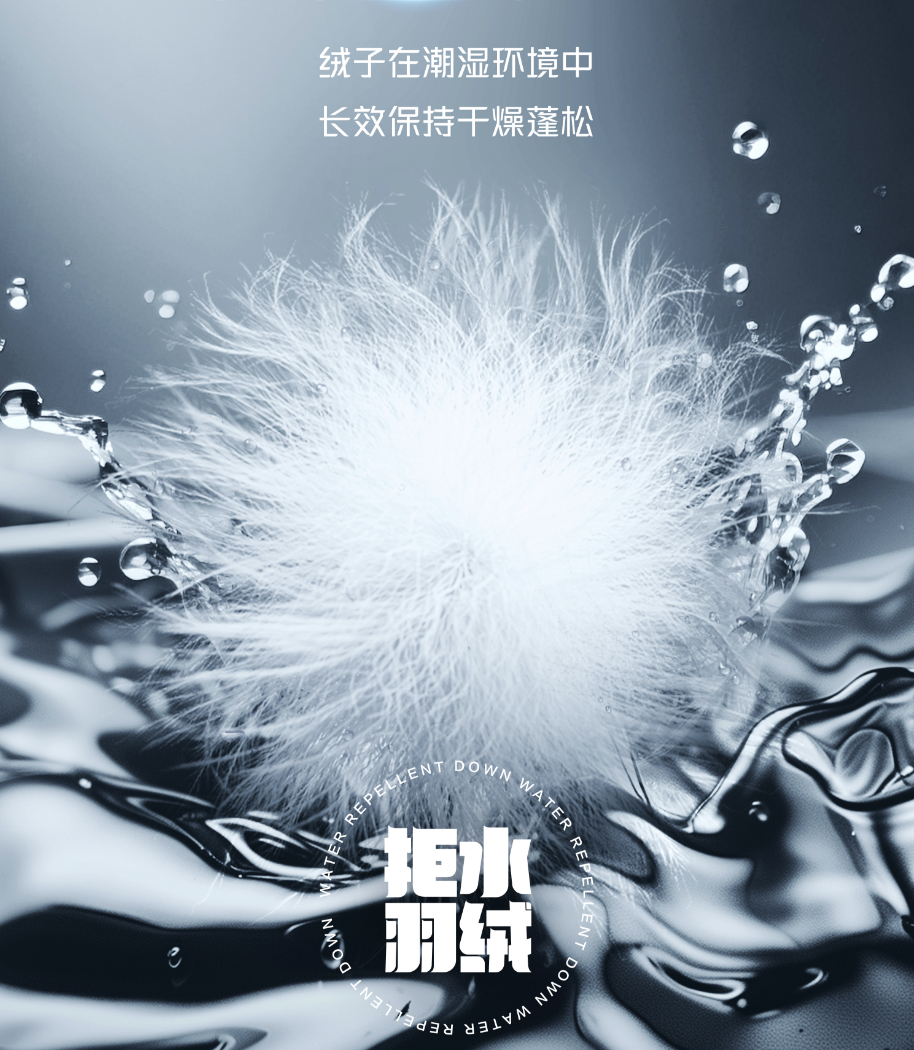
*Standard definition of "water-repellent down": "Down that, after water-repellent finishing, has the ability to resist wetting by water." The T/CNGA 86-2025 group standard "Water-Repellent Down Garments" clarifies the definition, technical requirements, test methods, inspection rules, etc., of water-repellent down garments, providing a unified basis for product production and quality evaluation.
Simply put, natural down has a layer of hydrophobic oil on its surface. Traditional down processing removes this oil to eliminate odors, but also causes the down to lose its water-repellent ability. Only through a new round of "water-repellent finishing"—post-treatment and deep processing of the down—can the down be prevented from being wetted by water and its water-repellent performance restored.
If water repellency is insufficient, in damp-cold environments the down material will face problems such as clumping upon contact with water and a sharp drop in warmth retention. The International Down and Feather Laboratory (IDFL) has a standard water repellency shake test that determines performance based on how long the down maintains level 5 water repellency. The new standards adopt this test to classify water repellency into three stars (≥240 minutes), four stars (≥1000 minutes), and five stars (≥10000 minutes).
In real life, how should consumers choose down jackets to resist varying degrees of damp-cold weather?
For the damp-cold resistance of down jackets, the new standards, based on the "China Weather Damp Cold Classification System," divide the degree of weather damp-cold that a down jacket can resist into three levels—Ⅰ, Ⅱ, and Ⅲ—from low to high, along two dimensions: temperature and relative humidity (RH) (the figure below is excerpted from T/CNGA 87-2025 "Testing and Evaluation of Damp-Cold Resistance of Down Garments"), establishing a scientific and operable testing and evaluation system for damp-cold resistance.
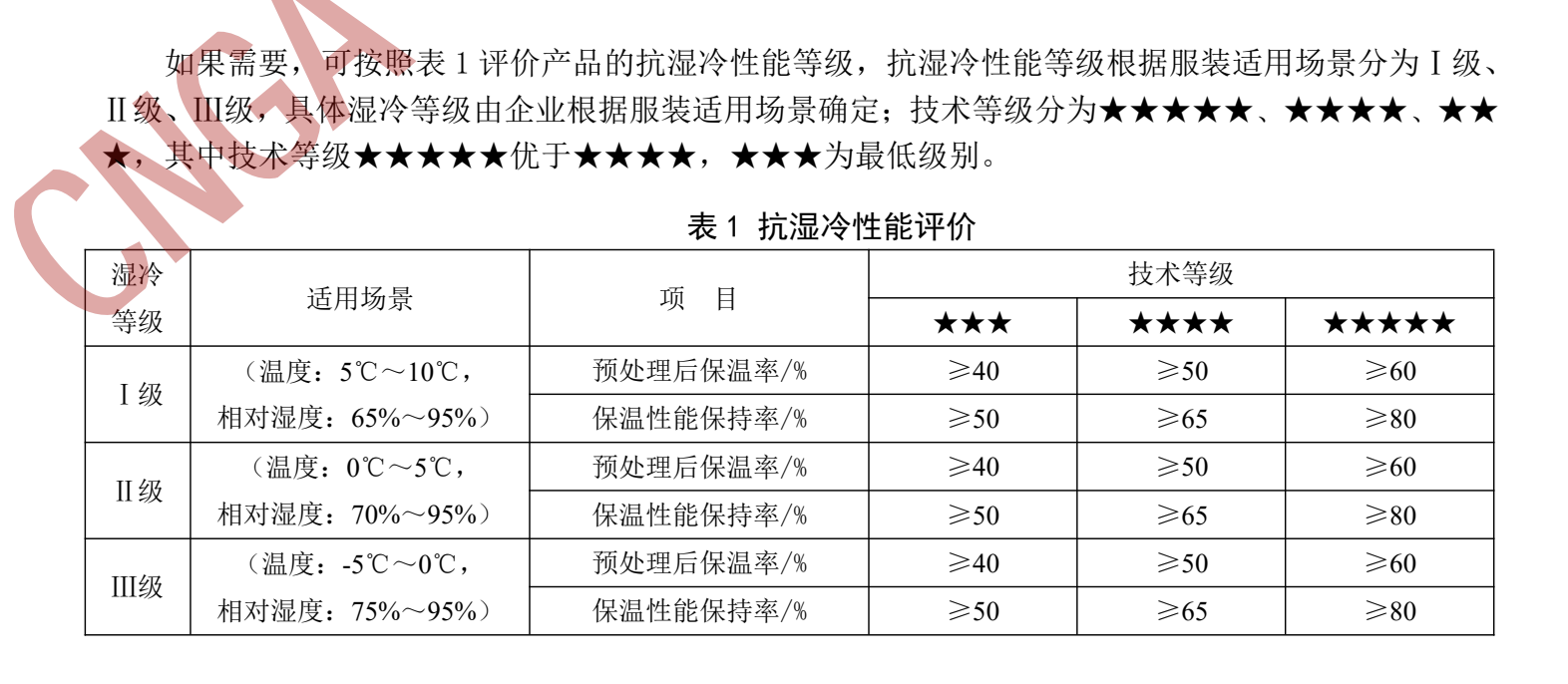
—— Level Ⅰ: temperature 5-10°C, relative humidity 65%-95%, corresponding to overcast and cold weather
—— Level Ⅱ: temperature 0-5°C, relative humidity 70%-95%, corresponding to damp-cold weather
—— Level Ⅲ: temperature -5-0°C, relative humidity 70%-95%, corresponding to very damp-cold weather
Of particular note, the new standards include "down water repellency grade" and "damp-cold resistance" among the attributes that must be labeled for down filling, alongside common indicators such as down type, fill weight, and down content, allowing consumers to see the performance of a down jacket at a glance when purchasing.
The two standards were officially released and implemented on November 19, 2025. This means that henceforth, down garments marketed as "water-repellent" or "damp-cold resistant" will have a basis and standard to follow, driving the industry's transformation from price competition to value competition.
"Water-Repellent Down" Iteration: From Creating a Track to Group Standards
As the first drafting unit of these two standards, LILANZ has for years adhered to a R&D philosophy oriented toward consumers' real needs. From initial warmth to lightness and fashion, and now to focusing on the specific pain point of "damp-cold environments," LILANZ's product evolution path has kept pace with changes in Chinese consumers' lifestyles, because damp-cold resistance is not just a technological breakthrough but an upgrade in product philosophy—down jackets should provide reliable protection for more diverse cold environments.
In the autumn/winter of 2022, LILANZ launched "Water-Repellent Down," carving out a unique niche track in the menswear market, and has since continued to invest in R&D with multiple iterations:
In version 2.0, LILANZ upgraded "Water-Repellent Down" across multiple dimensions including materials, fit, design, and communication, deepening product professionalism and performance;
In the 3.0 era, LILANZ collaborated with local designers to strengthen original design, injecting more spiritual connotation into the product and conveying the brand proposition of "minimalist menswear";
This year, LILANZ "Water-Repellent Down" launches the all-new 4.0 version, suitable for different winter damp-cold levels:
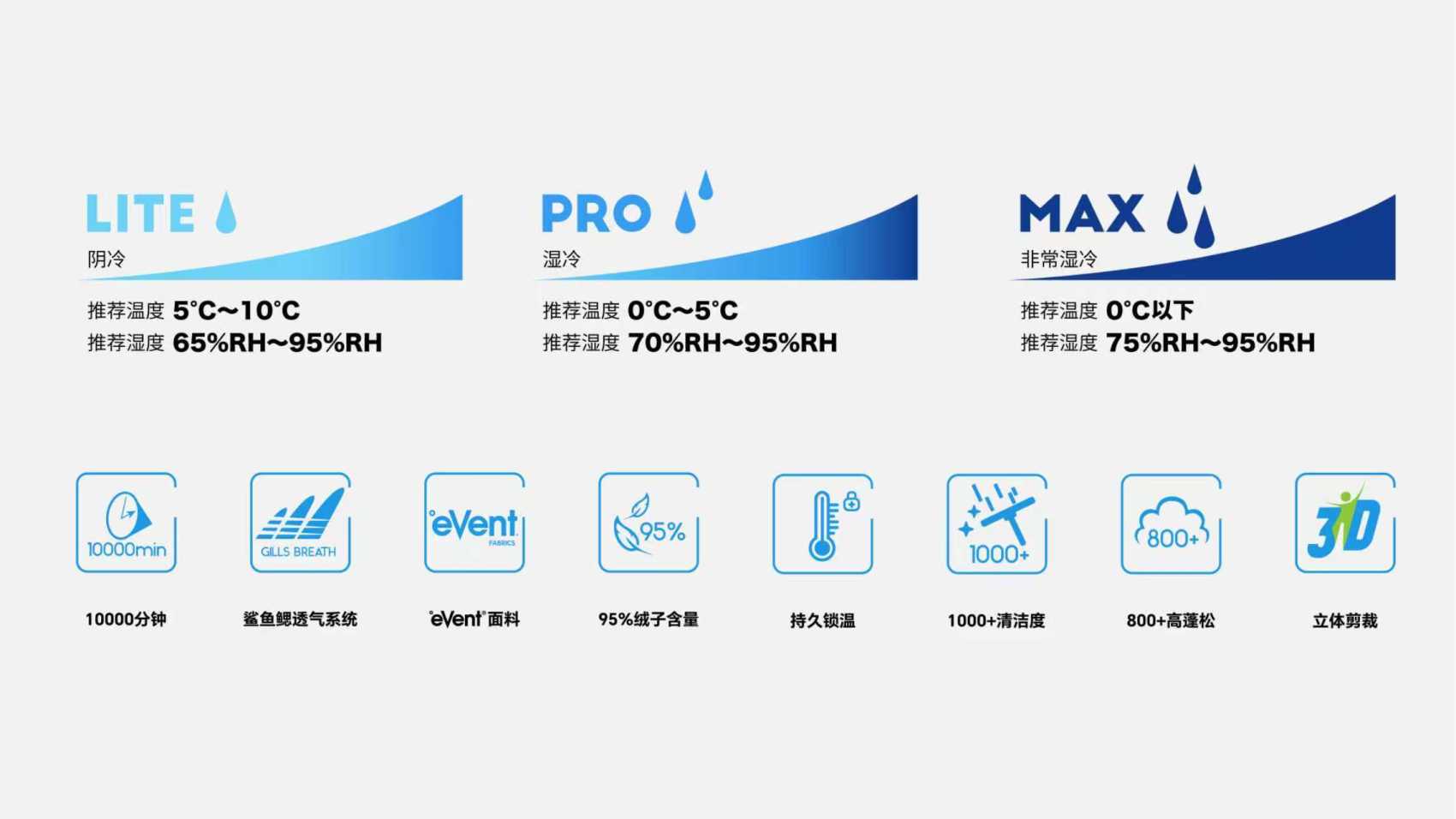
—— Level Ⅰ LITE lightweight water-repellent down, 800+ high fill power, 95% down content, with a shark-gill-inspired ventilation system, resistant to overcast cold weather;
—— Level Ⅱ PRO mid-to-deep winter water-repellent down, 800+ high fill power, 95% down content, paired with eVent® high-performance windproof, waterproof, high-stretch fabric, for damp-cold weather;
—— Level Ⅲ MAX mid-to-deep winter water-repellent down, 320g+ fill weight, 800+ high fill power, 95% down content, with heat-reflective lining, fully coping with very damp-cold weather.
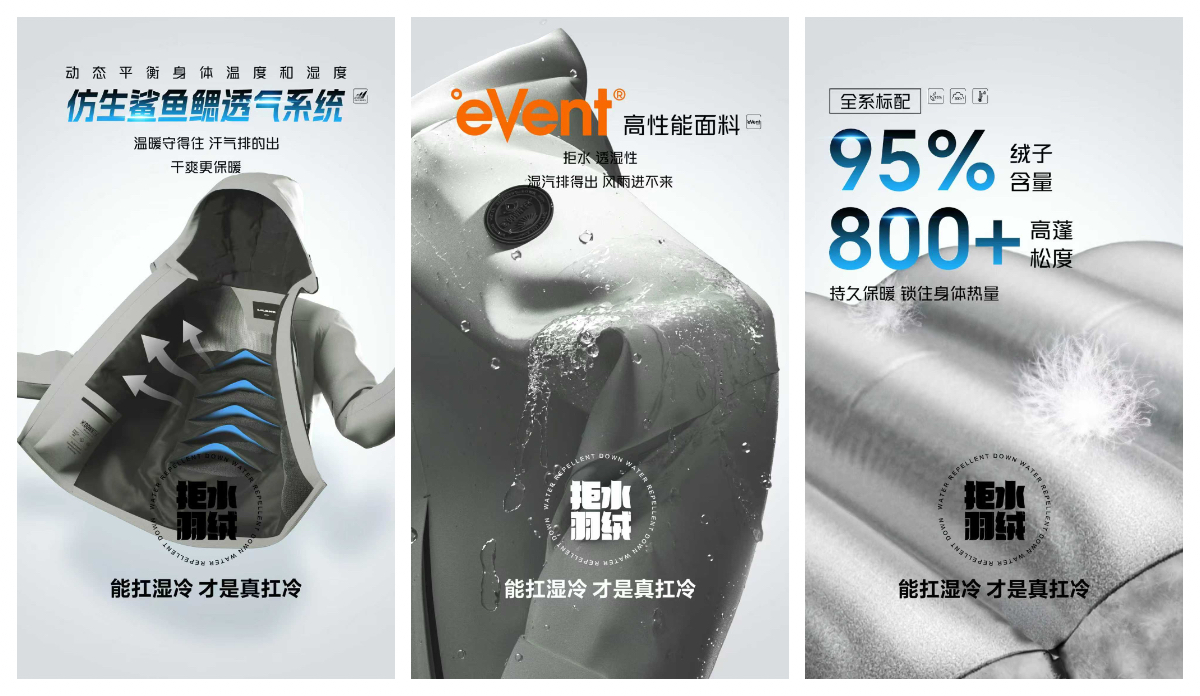
The Downtek water-repellent down used in water-repellent down products undergoes DWR water-repellent treatment on the down surface, achieving over 10,000 minutes of long-lasting water repellency in IDFL shake tests, and has been awarded dual World Records (WRCA) official certification for down jackets. In the new standards, this water repellency reaches the highest level, five stars.
Based on this technological breakthrough, LILANZ is the first to propose the new product positioning of "damp-cold resistant down," systematically building a comprehensive damp-cold resistance solution from fabric and down to craftsmanship for low-temperature humid environments. This not only redefines product functionality but also aims to open a new track in the down jacket market segment, meeting wearing needs in multiple scenarios such as damp-cold southern regions, outdoor sports, and rainy/snowy weather.
"One Meter Wide, Ten Thousand Meters Deep"
China's down jacket market has grown rapidly, from less than 100 billion yuan in 2017 to nearly 200 billion yuan in 2023, and is expected to reach 250 billion yuan in 2025.
Down jackets have quickly become the hottest category in winter apparel, with brands from different sectors vying to invest and double down. On November 26, 2025, Luxe.Co held a special seminar in Shanghai on "Latest Trends in Sports/Outdoor and Down Jacket Brand Development and Investment," and debuted the latest edition of the "2025 Down Jacket Brand Development Trends" by LuxeCO Intelligence, providing the latest observations and assessments of the competitive landscape and innovation directions in the down jacket sector.
From down jacket brands to professional sports/outdoor brands and even all-season apparel brands, innovations in down jacket products emerge endlessly, but how to pick the right "tech tree"? How to closely link innovation with consumers' real needs? This tests brands' market insight and rapid response capabilities, and also places higher demands on their determination and endurance for continuous deep cultivation of product strength.
As Wang Junhong, Executive Director and Vice President of LILANZ China, said, "We want to work one meter wide and dig ten thousand meters deep."
Such determination is being realized bit by bit in "Water-Repellent Down."
The two group standards led by LILANZ mark a key step in the functionalization and professionalization of China's down jacket market, and provide consumers with clear product standards and purchasing references for wearing experience in damp-cold environments.
Innovations based on consumers' real pain points being codified into group standards will help regulate market claims, protect consumer rights, and provide clear innovation directions for outstanding enterprises; consumers with standards to rely on will also be more discerning in discovering and embracing truly quality innovative products.
When a pioneering product is deeply bound to a brand image, what is conveyed to consumers is not only professional product strength but also the brand spirit of relentless pursuit and deep exploration.
|Image source: LILANZ
|Responsible editor: Maier