China's womenswear market is massive, fiercely competitive, and extremely fragmented.
In this "red ocean," only by first diving in, understanding the complex styles and mindsets of female customers, and identifying a differentiated niche positioning can one seize fleeting opportunities, strike at pain points, and stand out.
"I believe that in the next two to three years, the domestic contemporary mid-luxury womenswear market will rapidly form a mature and complete landscape, and we aspire to be one of its most core representative brands."
This judgment comes from HPLY brand founder Huang Youlai. He entered the Chinese womenswear market in the 1990s, initially as an agent for over 70 domestic and international womenswear brands, and in 2009 founded the group and the HPLY brand, completing his transformation from agent to brand owner.
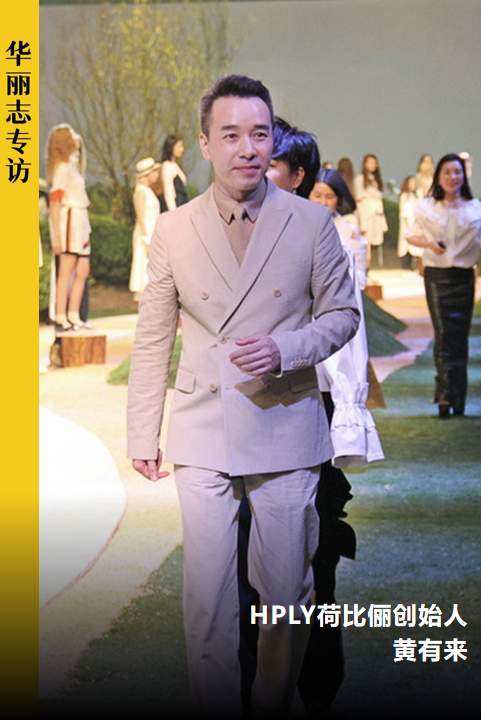
Recently, HPLY made its first appearance at Shanghai Fashion Week and headlined the opening show. In an exchange with Luxe.Co, Huang Youlai stated that this show also marks the brand's official transition from "major luxury" to "mid-luxury."
"Major luxury," "mid-luxury," and "young luxury" are abbreviations used in the early days of the local womenswear industry to differentiate brand positioning, primarily based on the age range of female consumer groups. Huang Youlai observed that the domestic womenswear segment for ages 25 to 45 is currently in high demand, but the market landscape has not yet solidified.
So, where does HPLY's confidence come from as it positions itself in the high-end mid-luxury segment? What are its differentiated competitive advantages?
Building an "Integrated R&D, Production, Supply, and Sales" Business Model
In the conversation, Huang Youlai described himself as a "pragmatic Wenzhou native." He built an "integrated R&D, production, supply, and sales" business model for HPLY, namely a fully closed-loop industrial chain encompassing research and development, production, supply, and sales. The starting point of this chain is the brand's own production base in Chaohu, Anhui.
"This model is precisely the key to building differentiated competitiveness in the high-end mid-luxury segment," Huang Youlai stated.
In the early stages of building the base, Huang Youlai had almost no experience in garment processing. To this end, he spent five years finding professionals, ultimately bringing the creative lab, woven fabric workshop, knitwear workshop, and logistics center to fruition one by one.
"This approach of heavy asset investment and long cycles may seem clumsy, but I have always felt that only by firmly grasping quality, fabrics, and product delivery in our own hands can we ensure the brand's philosophy is not distorted, products remain stable, and the brand can go further and more steadily."
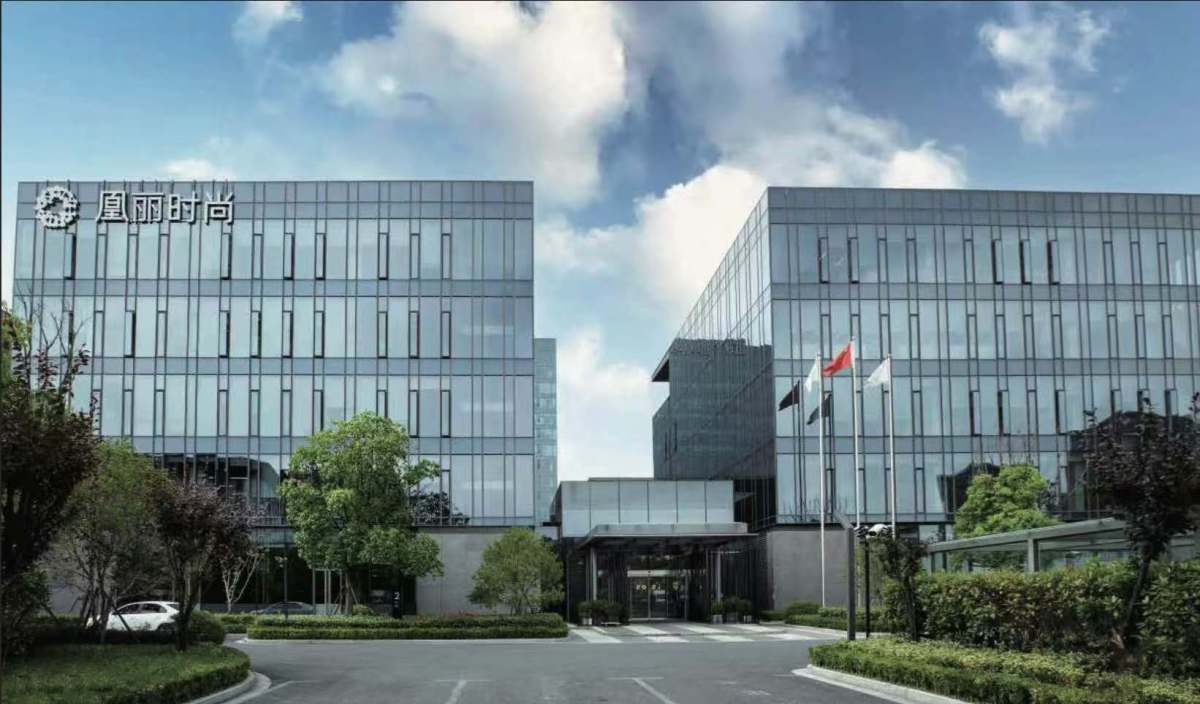
Above: Huangli Fashion Group headquarters building
At a time when womenswear products are launched quickly and styles iterate rapidly, this own factory provides strong support for HPLY and Huangli Fashion Group to respond to market speed: the group launches approximately 800-1000 new styles each year, and the factory can handle over 80% of production capacity.
HPLY's heavy asset layout lays a solid foundation for quality control, product development, and fabric and craftsmanship innovation—exactly the core factors that quality womenswear consumers care about.
Additionally, the brand hopes to convey the vision of driving the womenswear industry back to the essence of product. As Huang Youlai remarked: "Only by building long-term barriers through underlying capabilities can China's fashion industry move toward healthier and more sustainable development."
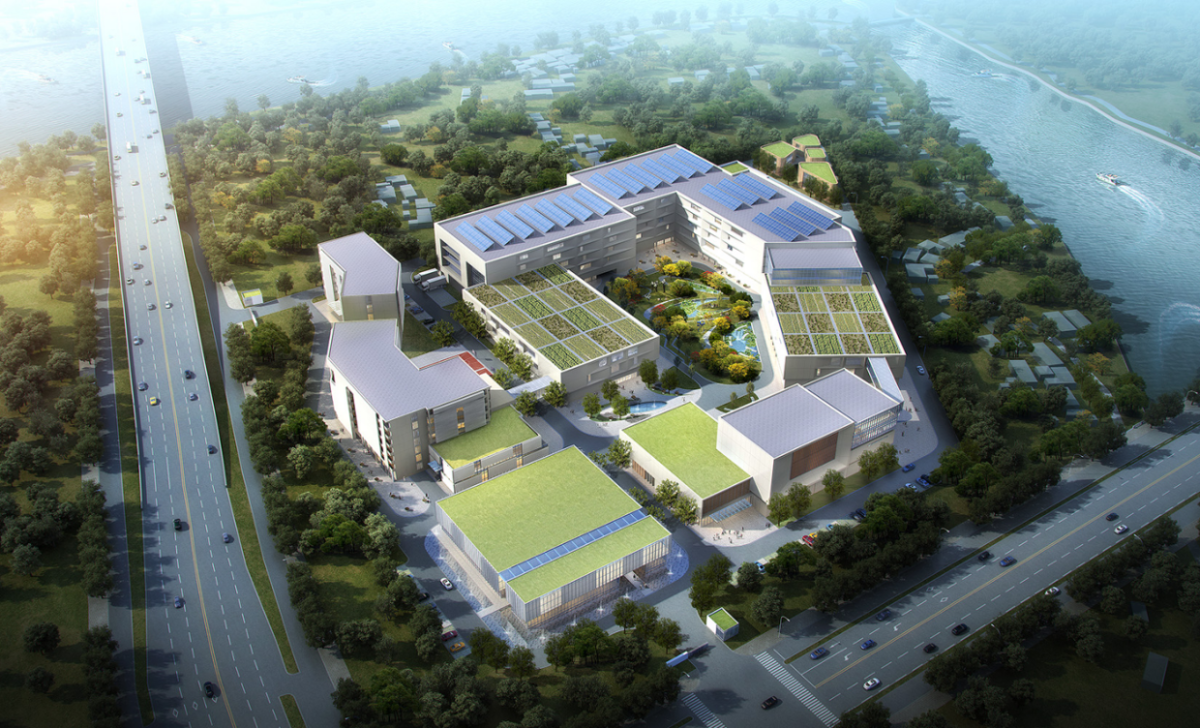
Above: HPLY and Huangli Fashion Group's production base in Chaohu, Anhui
Establishing Lace as Brand DNA
In a womenswear market where designs are highly homogenized, fabric differentiation and craftsmanship innovation may be the key to breaking through.
As HPLY's brand DNA, lace occupies an important position in the new 2026 summer/autumn collection.
For the brand, deeply cultivating lace fabric has its profound strategic considerations:
On one hand, in the highly fragmented womenswear industry, opportunities often lie in continuous deep cultivation of niche categories, thereby establishing distinct brand associations and capturing consumer mindshare.
On the other hand, lace is naturally associated with feminine "softness" and "delicacy," easily carrying emotional value; HPLY, through a contrasting pairing logic, combines lace with crisp silhouettes to form a "tough and tender interwoven" design language, giving lace power and sophistication—perfectly aligning with the contemporary mid-luxury woman's psychological demand for "a balance of strength and gentleness."
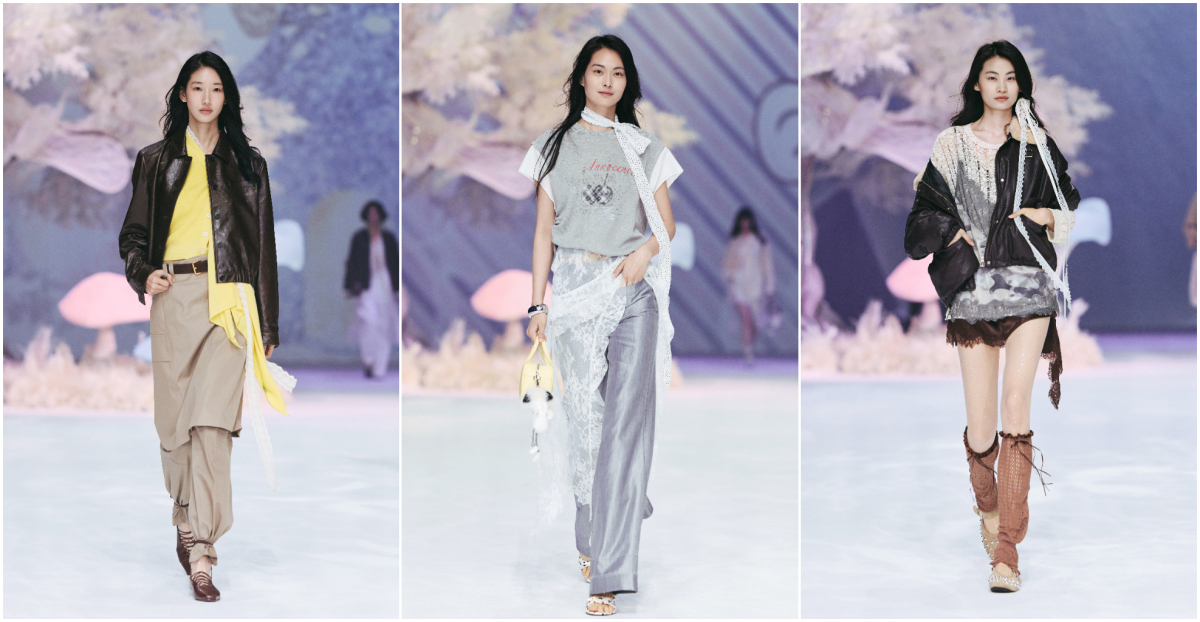
Above: HPLY 2026 summer/autumn collection
When asked why lace was established as the brand's core element, Huang Youlai said it was a market-validated choice: "Initially, we didn't commit to a particular fabric, but data feedback showed that lace products performed very well almost every year."
After selecting lace as the core element, HPLY first built barriers at the craftsmanship level.
The brand independently developed a series of patented lace patterns and integrated cutting-edge techniques to present lace's aesthetics and texture. Some styles specially adopt the century-old Leavers Lace craft, known for its clear weave, three-dimensional relief patterns, soft yet structured hand feel, and hailed as the "Queen of Lace," also used by leading luxury brands.
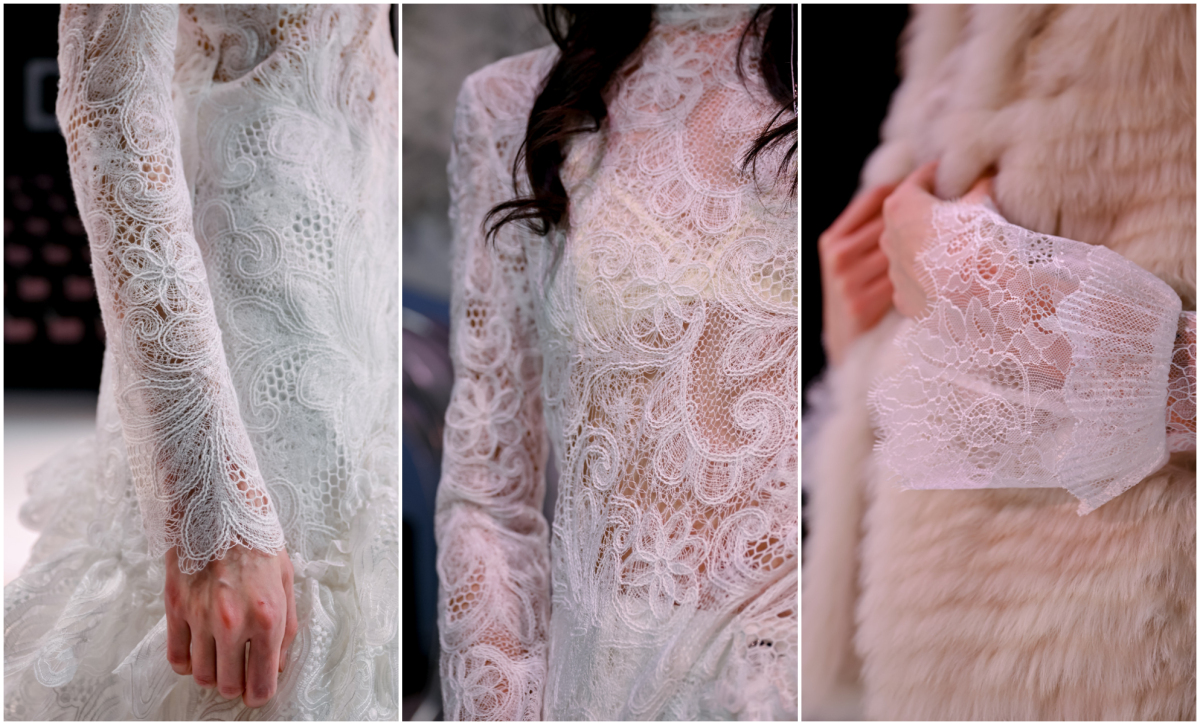
In product design, the brand continuously explores pairing lace with other materials to inject more expressive possibilities into lace. "Our lace pairing logic is completely different from other brands, focusing more on contrasting outfits," Huang Youlai summarized.
For example, in the 2026 summer/autumn collection, lace collides and merges with two-tone vintage waxed lambskin, ultra-thin matte lambskin, stiff linen, high-count cotton-feel fabrics, and more.
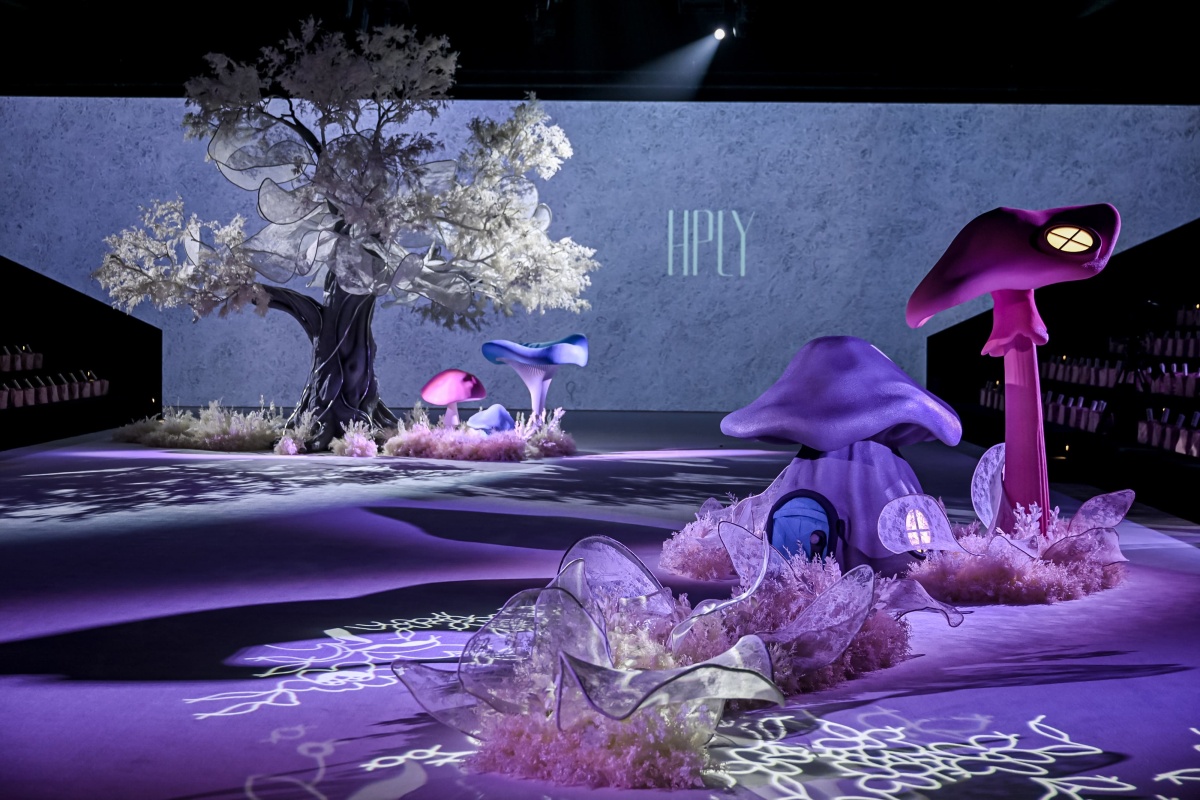
Above: HPLY Shanghai Fashion Week 2026 summer/autumn collection "Journey to the Unseen" runway
Becoming a Womenswear Brand with Emotional Value
Amid the trend of consumption upgrading, increasingly mature Chinese womenswear consumers are beginning to explore more inwardly.
"From the 1990s to now, China's womenswear market has undergone several rounds of changes. Contemporary women's demands for clothing are no longer just about covering the body and keeping warm; they point more to the spiritual level—they expect brands to have value propositions, taste, and fun, and to provide emotional value." Huang Youlai shared.
In terms of narrative and expression of emotional value, HPLY is exploring more deeply:
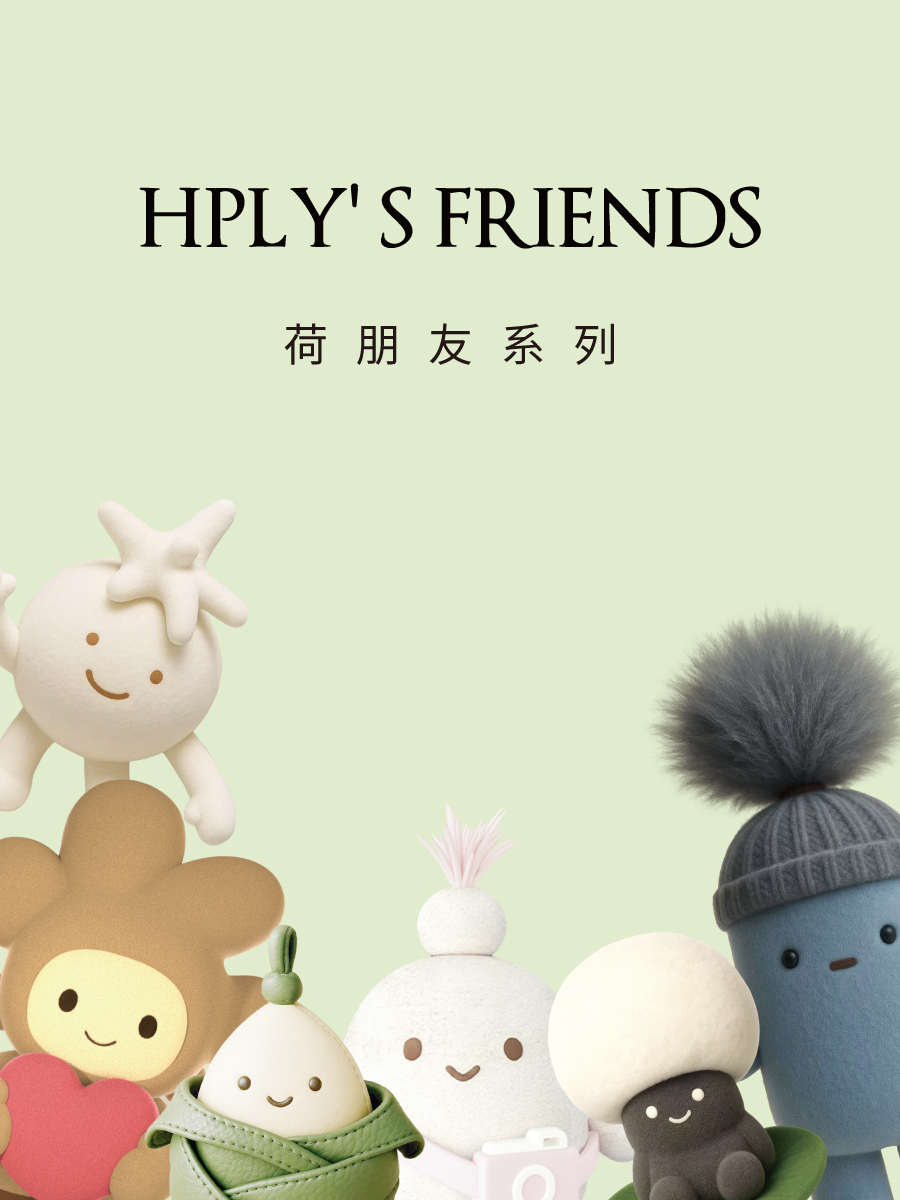
In 2025, the brand launched the "He Family" IP plush toys. The first was "He Xiaomeng," inspired by the lotus, followed by characters like "He Xiaoshi" and "He Jiangjiang," each given personality traits based on brand customers. According to Huang Youlai, the "He Family" IP is not for profit but serves as a carrier for the brand to output emotional value, hoping to bring joy to consumers.
This year, the brand planned the Shanghai Fashion Week opening show with the theme "Journey to the Unseen," using "adult fairy tale" as the narrative thread, and built the venue into an immersive fairy-tale world where reality and illusion intertwine.
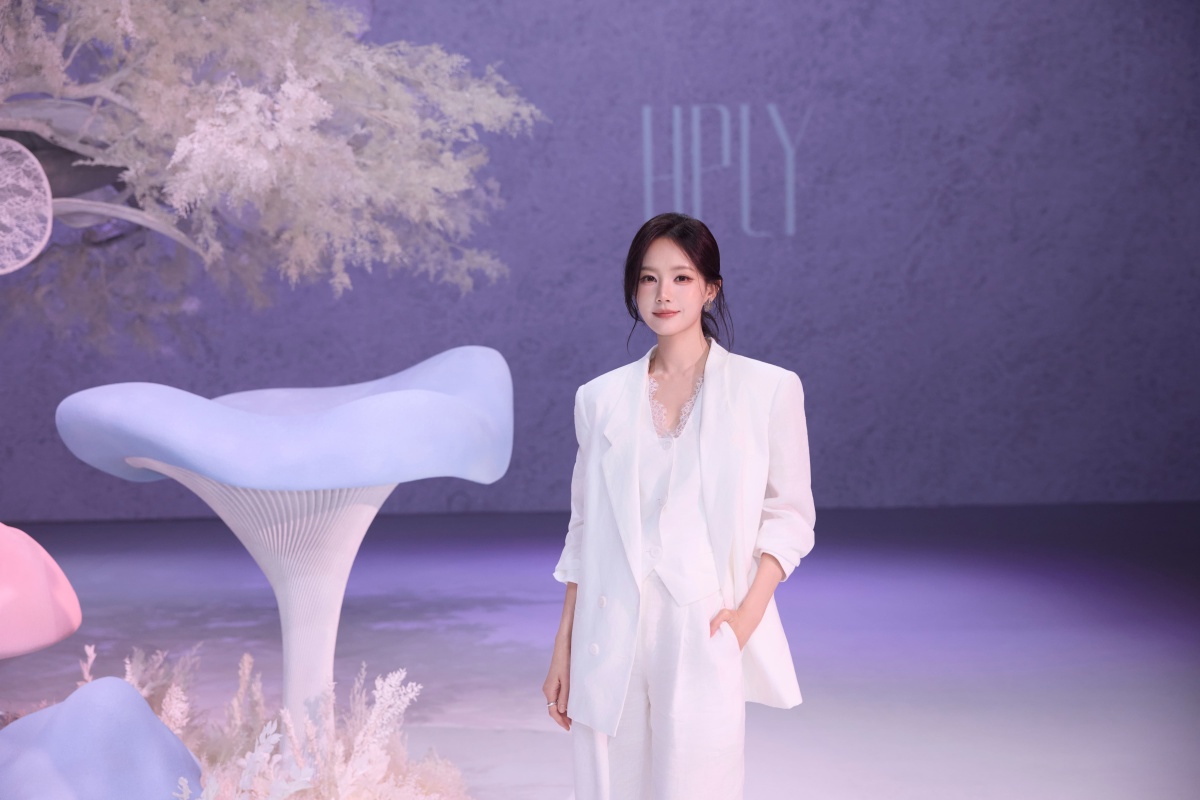
Above: Actress Li Yitong attends HPLY's "Journey to the Unseen" 2026 summer/autumn collection show. On March 8, 2026, she officially became the brand ambassador.
Offline, HPLY is gradually opening eighth-generation image stores, upgrading stores into core touchpoints for conveying emotional value. The new store space is designed with the concept of "creating a bestie's living room for He-style girls," enhancing customer experience through distinctive soft furnishings and services. "We hope customers feel like they're at a friend's home when they visit the store, enjoying the brand's products while chatting," Huang Youlai said.
While advancing the rollout of eighth-generation image stores, HPLY's channel network is also continuously being strengthened.
Currently, the brand has over 300 stores nationwide, more than 70% of which are directly operated, and has entered core commercial complexes such as Nanjing Deji Plaza, Shanghai Grand Gateway 66, Suzhou Center, Changzhou MixC, and Fuzhou MixC. According to Huang Youlai, the brand's sales performance in these high-end malls is very impressive.
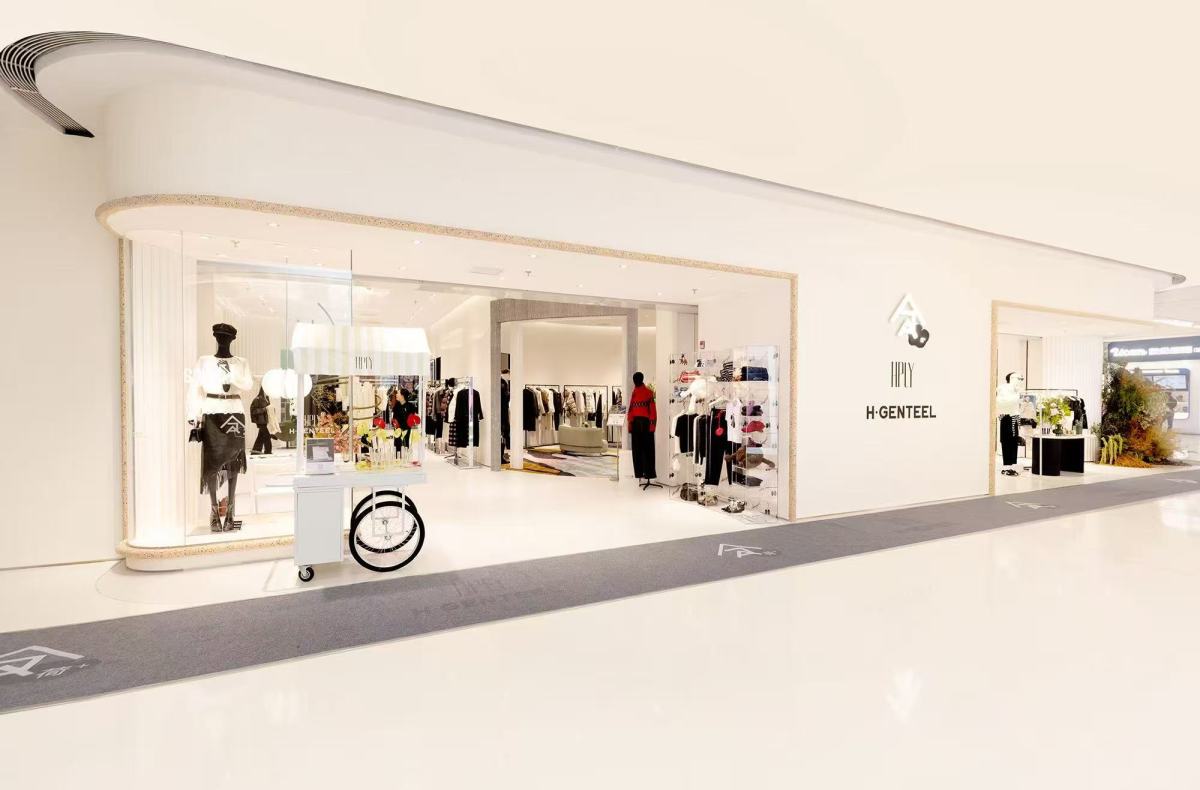
Above: HPLY store at Wuhan Wushang Dream Plaza
Conclusion
Since its founding, HPLY has consistently built its brand values and culture around the lotus. This stems from Huang Youlai's sentiments as a Jiangnan native and also draws on the lotus's trait of "blooming and bearing fruit together"—to construct a logic where brand creativity and commerce run in parallel, and to express the brand's determination to accompany and converse with contemporary women. These outwardly soft but inwardly strong, resilient "He-style girls" are precisely the core user profile of the brand today.
For the future, Huang Youlai has a clear plan: to increase the number of stores to 500 within 2-3 years, with Shanghai as the origin, while exploring Southwest China, as well as North China and Northeast China led by Beijing, to deploy in more high-end and mid-range commercial complexes. In terms of store opening methods, he stated they will still primarily be direct-operated, while exploring franchising and other cooperation methods.
| Image source: Provided by HPLY
| Editor: Elisa