As the athleisure and outdoor trend sweeps the market, the fashion women's footwear category, which once occupied entire floors in department stores, is undergoing a deep "reshuffle." According to data from the China Leather Industry Association, China's leather shoe output has plummeted from 4.62 billion pairs in 2015 to 3.54 billion pairs in 2020, and may further shrink to 1.7 billion pairs by 2026, with output shrinking by more than 60% over a decade.
As "comfort" replaces "good looks" as women's top priority when choosing shoes, traditional women's footwear brands have generally fallen into a growth dilemma. Many fashion women's footwear brands that once positioned themselves in the domestic mid-to-high-end segment have resorted to "trading price for volume," choosing a strategy of brand downgrading. However, KISSCAT, a women's footwear brand under Tianchuang Fashion with nearly 30 years of history KISSCAT, has completed a comprehensive brand transformation and upgrade amid this industry upheaval, with both average selling price and profitability growing against the headwinds.

Three years ago, KISSCAT launched a top-down systematic reform, upgrading and restructuring consumer insights, R&D systems and supply chain, brand marketing, and omnichannel retail. On one hand, the brand opened up a new "casual sneaker" category that combines fashion aesthetics with comfort; on the other, it drove the improvement and iteration of traditional fashion shoes, delivering impressive results:
- In 2025, the average retail price of new products increased by 10%, the gross margin of new products grew by 7pp, and brand operating profit grew by 102%, with profitability improving significantly. This momentum continued into 2026;
- The "casual sneaker" category successfully broke through, with its sales share jumping from 5% two years ago to nearly 50%, becoming a new growth pillar for the brand;
- Improved store efficiency accelerated the renewal of retail stores. New-generation stores saw new customer growth of over 50%, the average user age dropped by nearly 10 years, and store efficiency increased by 40% compared with traditional stores.

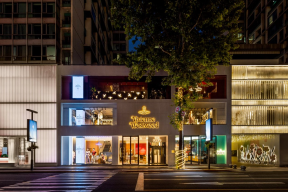
Above: KISSCAT's new-generation "Oasis" store at Wuhan MixC
What deeper needs do changes in user demand reflect? How did KISSCAT identify innovation opportunities amid the "headwinds" and stay in sync with its users? What deep R&D and supply chain foundations are underpinning its ability to rise to the challenge?
With these questions in mind, LuxeCO exclusively interviewed Wu Jing, COO of Tianchuang Fashion and General Manager of the KISSCAT brand, to unpack the business logic behind this brand transformation.
Step One of Reform: Understanding Chinese Women's Real "Shoe" Needs
Wu Jing joined Tianchuang Fashion Group in 2008 and has witnessed the industry's ups and downs for nearly 20 years. Speaking about the industry changes of the past decade, she was especially direct: "It felt stuck—unable to go up, unable to come down, no growth in sight, and everyone was lost." She noted that reform was imperative, but the direction was not simply pursuing scale and speed; the company therefore established the fundamental principle of "high-quality development," improving product and operational quality so that users could enjoy a better brand experience.
For the brand to "move up," the core is nothing other than product upgrading. And the first step of KISSCAT's reform landed on the starting point of merchandise planning—consumer insight.
Founded in 1998, KISSCAT has witnessed the footsteps of many Chinese women from campus to the workplace and then to starting families and careers. Nearly 30 years of development have allowed the brand to accumulate real feedback and valuable data from two generations of Chinese female consumers. Since 2010, KISSCAT has cooperated with the China Leather and Footwear Industry Research Institute to establish the "KISSCAT China Women's Foot Shape Comfort Research and Technology Development Center," further expanding its data sample and solidifying the foundation of the brand's proprietary "last library," continuously exploring the balance between beauty and comfort in women's shoes.
However, understanding Chinese women's real "shoe" needs is only partly about data; insight into their life scenarios, consumption mindsets, and aesthetic preferences is especially critical. Wu Jing said: "User insight is a process that requires long-term accumulation; it cannot be achieved overnight. This is also the wisdom barrier KISSCAT has built over nearly 30 years. Brand upgrading must build on the past and open up the future—the needs of existing users must first be met."
With this approach, KISSCAT conducted an in-depth and detailed round of research targeting the brand's "Blue Whale users" (SVIPs).
Most of them are between 30 and 40 years old, in the life stage of "supporting elderly parents above and raising children below." Their consumption habits are pragmatic and rational, following long-termism; although they aspire to beauty and fashion, they are almost immune to impulse buying and particularly value "quality-price ratio."
In terms of life scenarios, the team found that the brand's "Blue Whale users," like tens of millions of Chinese women, commute an average of 1,800 kilometers per year—equivalent to the distance from Beijing to Chengdu—and standing and walking for long periods is their common daily reality. Most KISSCAT users play multiple roles—mother, daughter, wife—and also have their own work and social lives, leaving little time and energy for dressing themselves up. Therefore, comfortable shoes that let them "look good effortlessly" and can be worn across outfits and scenarios are inevitably their first choice.

In addition to deepening its understanding of existing "Blue Whale users," KISSCAT also collaborated with corporate communities across regions, partnering with the Health Communication Working Committee of the Chinese Medical Doctor Association, Beijing Ruiya Women Lawyers Community, Shanghai Jingyi Women Lawyers Community, and Bank of Beijing to carry out activities and conduct in-depth research on the needs of women in and around the public sector across diverse scenarios such as the workplace, daily life, commuting, and outdoor activities, obtaining first-hand, fresh user insights.
The team found in its research that when the target group chooses footwear, "comfort" ranks first, followed closely by "fashionable coordination." But the two are not a trade-off; women's expectations for a good pair of shoes are upgrading across the board: they must be comfortable enough to withstand long hours of wear in daily scenarios such as commuting, socializing, childcare, and light outdoor activities; and they must look good enough to match one's outfit style, identity role, and occasion atmosphere. Yet at the time, there were almost no product options on the market that could satisfy these needs simultaneously.
Based on this insight, KISSCAT proposed the product philosophy of "Comfortable Fashion Basics," built on the foundation of "three senses of comfort" (i.e., visible comfort, slip-on convenience, and ease of walking 5 kilometers), and clarified the direction of category innovation: creating a brand-new athleisure footwear category that, beyond comfort, also offers fashion aesthetics and adaptability to multiple scenarios. The R&D system and supply chain capabilities accumulated by parent group Tianchuang Fashion over the years became the key support for turning this "have-it-both-ways" women's shoe from concept into reality.

R&D and Supply Chain Join Forces to Deliver on Users' "Have-It-Both-Ways" Expectations
- The Athleisure Shoe "Second R&D Department": Reaching in Two Years the Level of 30 Years in Fashion Shoes
Wu Jing admitted that many years ago, the company had tried to make casual sneakers, but the results were unsatisfactory; the problem lay in the underlying architecture: "Fashion shoes and casual sneakers are two different logics, like building an aircraft carrier versus building a spaceship—the underlying structures are completely different. You can't have the same group of people and the same production line do both things well at the same time."
It was precisely this organizational-level cognitive shift that led KISSCAT, when launching this round of major brand reform, to decisively abandon the option of "doing it on the side" and establish a "Second R&D Department" dedicated to athleisure shoes. The team was thus able to focus on refining products around user needs, no longer constrained by the inertia of existing product lines, ensuring R&D efficiency and quality. This top-down investment also confirms KISSCAT and Tianchuang Group's determination to build a moat for brand transformation with stable technological output.
The "Second R&D Department" had a clear goal: in two years, bring the R&D and supply chain capabilities for athleisure shoes up to the level of 30 years in fashion shoes.
To this end, the team did an important piece of "dumb work" in the early stage—exhausting almost all reference brands on the market, taking them apart one pair at a time to study them, analyzing which were excellent practices worth learning from and which were unsuitable for the target customers and needed to be avoided. For example, the team found that some overseas brands had excellent texture and craftsmanship but did not fit Chinese women's foot shapes; some domestic women's shoe designs were creative but lacked support and technical stability.

- From Craftsmanship Innovation to Scale Efficiency, Tianchuang Group Builds a Moat
At the specific design and craftsmanship level, KISSCAT's athleisure shoes must not only meet users' high comfort requirements for this category but also satisfy the need to pair with casual, sporty, formal, and fashion outfits; product design needs to cleverly combine casual sportiness with fashion. Through numerous detailed craftsmanship designs, the brand achieves "rebound, fit, and resistance to deformation," ensuring the wearing experience.
The brand pioneered a flex-point rebound process, using patch and open-glue techniques to achieve rapid rebound at flex points, avoiding permanent creases and adapting to the repeated bending demands of sports scenarios; the heel and tongue areas use a seamless joint process to reduce friction and protrusions, improving comfort during athletic wear. For sporty outsoles, the team not only completes the appearance design but even formulates the sole material compound itself.
To smoothly launch the new athleisure shoe category, Tianchuang Group's production base carried out extensive targeted modifications to existing production lines and simultaneously introduced AI technology and industrial robots to ensure consistency in quality across multiple categories and batches. No harmful solvents are used throughout the process, and finished products undergo UV sterilization, adding another layer of protection for foot health.
Wu Jing shared a detail with LuxeCO: KISSCAT positions its women's shoes in the RMB 500-800 range, and the materials used are almost no different from those of thousand-yuan women's shoes—this is precisely the industrial efficiency advantage brought by Tianchuang Group's scale effect. This brand upgrade, which started from consumer demand insight, ultimately connected the entire chain from R&D and craftsmanship to manufacturing, and benefited users with a higher quality-price ratio, forming a closed loop.

- Hit Products Start from "Big Category, Small Niche"
In 2024, KISSCAT's all-new products entered the market and quickly received positive feedback; one of the most representative "hit products" was the "Toffee" athleisure shoe. Wu Jing vividly recounted the birth of this hit product to LuxeCO:
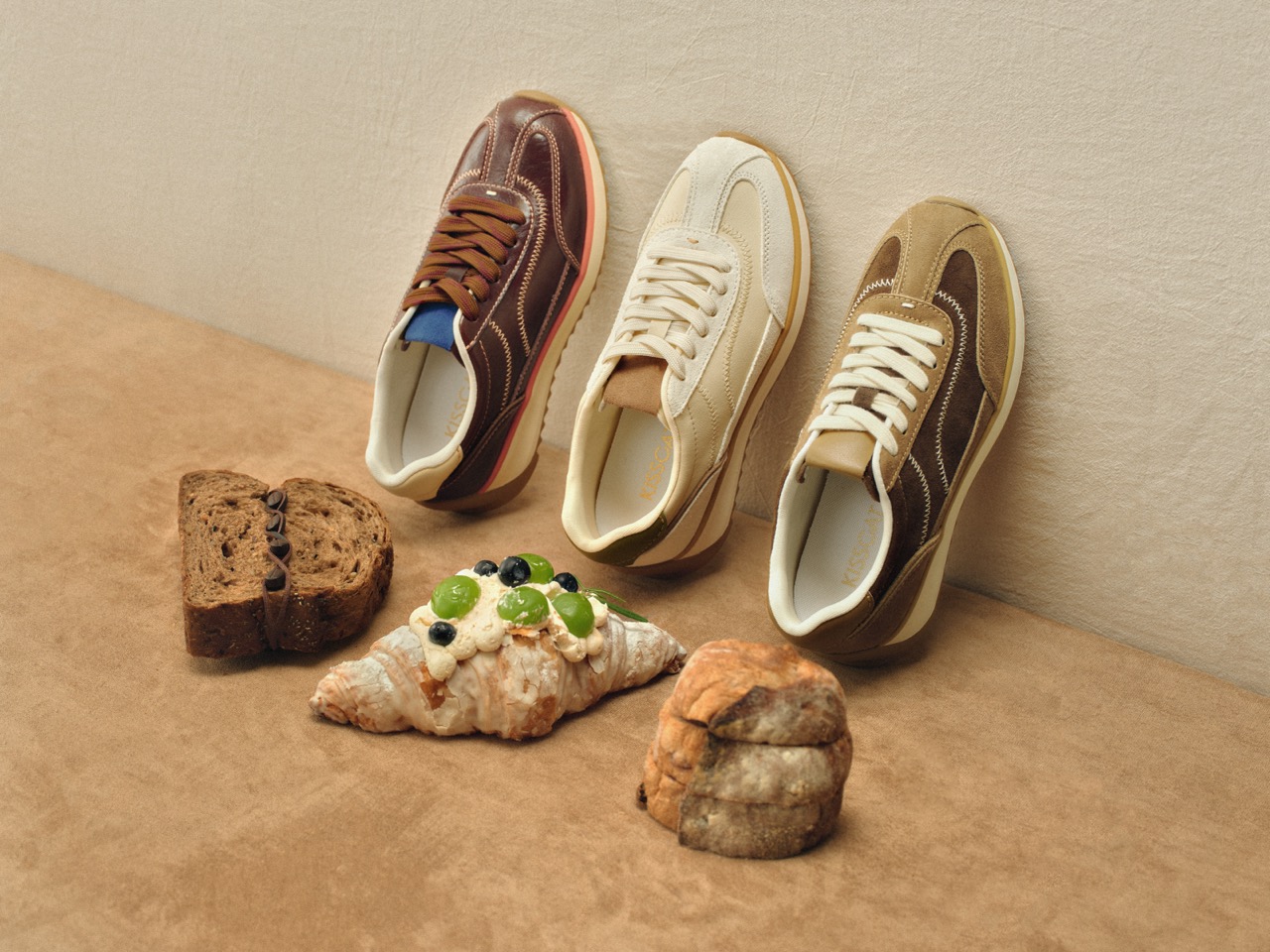
Women actually always have a demand for heeled shoes—flat shoes make many people feel "a head shorter," with presence diminished, and prone to a "leaning backward" sensation. At the same time, "German Army Trainer" (GAT) shoes have been one of the fastest-growing footwear categories in recent years. The KISSCAT team combined the two insights and, within the big GAT category, carved out a small niche of "invisible height increase": 5 cm external height increase and 3 cm internal, with no forward-pitching sensation when worn—as if walking on flat ground.

Precise insight plus solid product strength quickly propelled "Toffee" into the top ten in Tmall's GAT shoe category sales upon launch, and it was the only thick-soled GAT shoe on the list. The KISSCAT team used this to validate its merchandise planning approach and continued to apply it to more shoe styles, building the brand's "long-leg shoes" family and gradually forming a unique "hit product methodology."
Brand Momentum Continues to Rise, Store Renewal Comes at the Right Time
KISSCAT's athleisure shoes entered the market in 2024 and by 2026 accounted for nearly 50% of sales, with a growth rate of nearly 70%, becoming the "spearhead category" driving brand growth. At the same time, the improved and upgraded fashion formal shoes also received positive market feedback—many consumers exclaimed: "Fashion shoes can actually be this comfortable!"
With product strength established, upgrading brand communication became imperative. Wu Jing believes: "The next stage of competition will certainly be aesthetic competition."
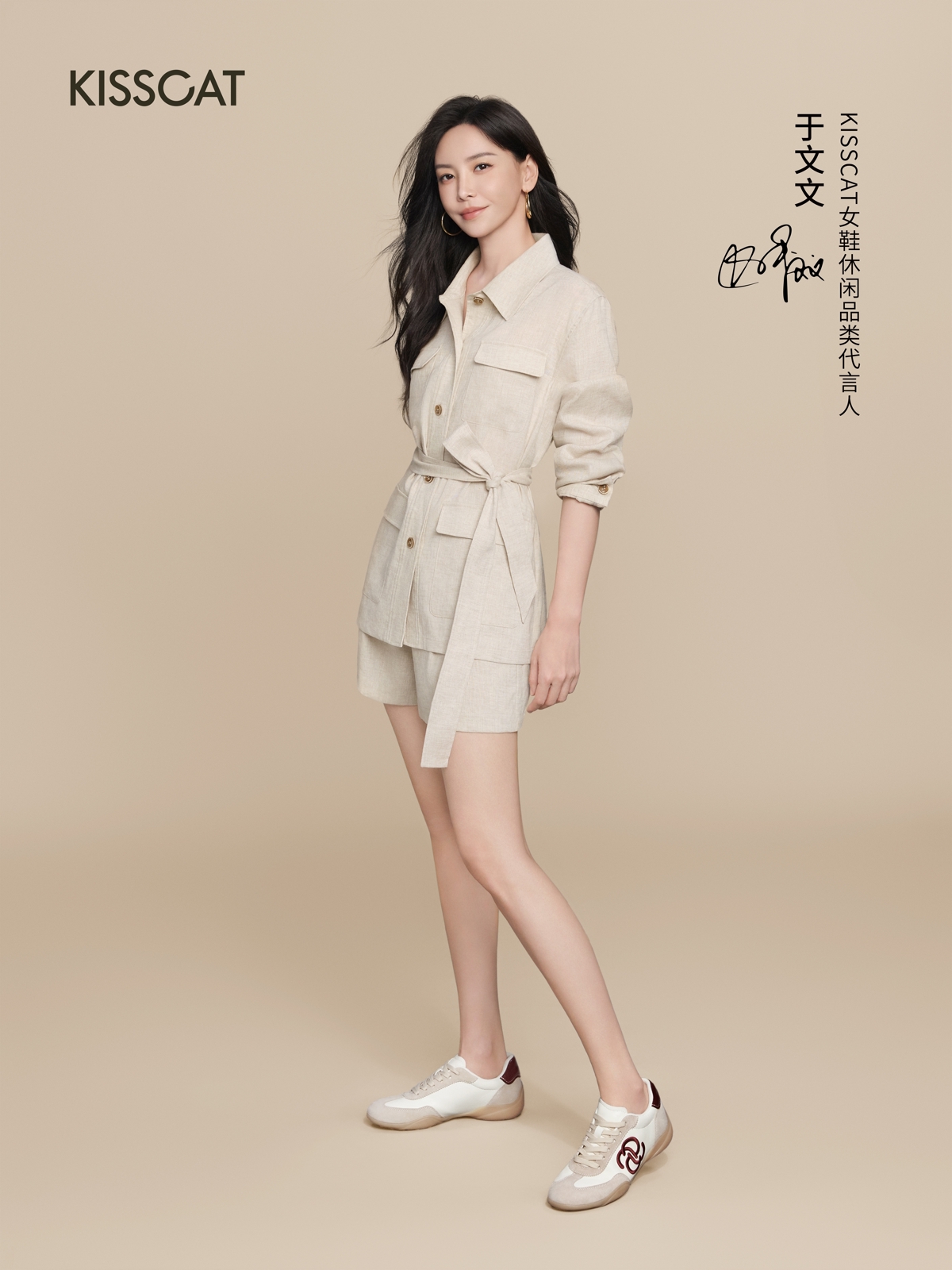
Since last year, KISSCAT has launched a multi-dimensional market communication upgrade: product content quality is aligned with a more high-end brand tone; the brand launched the "100 Glowing Plan," carrying out multiple co-branded collaborations with designers and well-known IPs, using "cats" as a medium to expand brand boundaries through various artistic approaches; in August 2026, KISSCAT announced that musician Yu Wenwen became the brand ambassador for its women's casual footwear category... This series of innovative practices has made many consumers truly feel that KISSCAT's brand momentum is gradually rising.
KISSCAT's upgrading reforms on the product and communication fronts directly boosted channel sales and operational efficiency. Speaking about the composition of terminal channels, Wu Jing shared that KISSCAT's e-commerce accounts for 40% and physical stores 60%—offline stores have always been KISSCAT's foundation.
Currently, KISSCAT has more than 200 directly operated stores and more than 100 franchise stores nationwide. In the reforms of the past two years, stores have also been optimized in tandem: on one hand, the brand proactively closed some stores with high foot traffic but whose locations did not match the brand positioning; on the other hand, improved store efficiency made the team more confident that store upgrading comes at the right time.
In 2025, KISSCAT's new-generation "Urban Oasis" concept store officially debuted. The store integrates plant communities and art sculptures into the offline experience, creating a serene and relaxed atmosphere. This concept echoes the soft, relaxed imagery of the "cat" represented in the brand name, allowing customers to feel a breath of nature in the city.

Above: KISSCAT's new-generation "Oasis" store at Zhengzhou Zhengdong MixC
Currently, multiple KISSCAT stores in Zhengzhou, Changsha, Shenzhen, and Shanghai have been upgraded to "Urban Oasis" concept stores. The results after store upgrades were immediate: new-generation stores saw new customer growth of over 50%, store efficiency increased by 40% compared with traditional stores,the average user age is nearly 10 years younger than at traditional stores, the proportion of people under 40 increased by 7 percentage points, and the 30-40 age group has become the absolute main user base of the new-generation stores.

Today, many traditional women's footwear brands have gradually withdrawn from offline commercial complexes, while KISSCAT, after its brand reform, continues to increase offline investment and has established good cooperative relationships with many leading commercial complexes. Why can KISSCAT rise against the headwinds? Wu Jing analyzed the question this way:
"Apparel is a core category in shopping malls, and women's shoes, as a complementary category to apparel, are a popular option for tenant recruitment. In recent years, the appeal of women's footwear brands to commercial complexes has declined, and the root cause is severe brand homogenization and a lack of distinctive features.
The competitive environment for offline physical retail is also fierce, and tenant recruitment standards continue to rise. If one is looking for a women's footwear brand with a solid 'foundation' and systematic brand operation capabilities, independent design, stable high-quality output, high quality-price ratio, and a balance of comfort and fashion, KISSCAT is almost the only choice. In the future, we also hope to join hands with more like-minded partners to continue promoting the transformation and upgrading of offline stores."

Above: KISSCAT's new-generation "Oasis" store at Wuhan MixC
"The Great Wall Still Needs to Be Built"
Looking to the future, Wu Jing admitted that "the Great Wall still needs to be built." The brand's performance over the past two years has given the team more confidence to move forward according to the established policy:
At the product level, the "invisible height increase" athleisure shoe has become the brand's breakout "spearhead category," validating the team's judgment and execution in product innovation. The next step will be to continue enhancing product fashionability and quality taste, and integrating with more styles.
At the communication level, KISSCAT will continue to provide users with higher-quality aesthetic perception and emotional connection, enabling the brand to output more content with warmth, beauty, and creativity.
At the retail innovation level, physical stores, as the core battleground for directly facing consumers and comprehensively conveying brand philosophy, will continue to bring refreshing experiences. In the second half of 2026, KISSCAT's all-new generation spatial image will debut. By the end of 2027, KISSCAT will continue to add stores with the new image, continuously consolidating its advantage in core business districts of first-tier cities, strengthening its layout in second-tier cities, and selectively penetrating third-tier cities with strong consumption power.
At present, KISSCAT's brand upgrade has begun to show results, and what truly underpins this reform is undoubtedly Tianchuang Group's nearly 30 years of supply chain foundation and the team's consistent craftsmanship spirit.
Wu Jing said: "Many people are used to understanding women's footwear brands through the 'smile curve'—products at one end, brand at the other, with the supply chain placed at the very bottom of the curve. But for us, what supports KISSCAT is a 'rainbow skylight,' with the middle firmly held up by an intelligent manufacturing supply chain. Even if a certain category falls out of fashion in the future, or AI becomes more deeply involved, the team's cognitive foundation and the company's manufacturing capabilities will still be able to continuously absorb new technologies and new trends—this is the most valuable underlying support that time has given the company, and it is a true corporate asset."
| Image source: provided by the brand
| Editor: LuxeCO