
In 2026, when observing the Asian beauty market, the focus is no longer just on which ingredients or brands are becoming the new trend, but on how China, South Korea and Japan are participating in global competition through different paths.
Data from the China Flavor, Fragrance and Cosmetics Industry Association shows that in 2025, China's cosmetics omnichannel transaction value reached RMB 1,104.245 billion, up 2.83% year on year; the transaction share of Chinese local brands rose to 57.37%, increasing for the fifth consecutive year. The "K-Beauty Goes Global" report released by NIQ in 2026 shows that global K-Beauty value sales grew 53% year on year, with cumulative growth of 131% over two years. By comparison, Euromonitor data shows that in 2025, Japan's premium beauty sales grew only slightly by 0.4%.
These figures reflect the different development stages of the beauty industries in China, Japan and South Korea: Chinese brands are exploring the next stage of globalization, South Korea has formed a relatively mature export and channel system, and Japan needs to find new growth drivers for a mature market. As competition extends to R&D, supply chains, brand building and global retail networks, the contest in Asian beauty is shifting from single products and trends to comprehensive industrial capabilities.
The 2026 Cosmoprof Asia, to be held in Hong Kong, China in November, covers multiple stages from raw materials, R&D and manufacturing to brands and end products, providing a panoramic perspective for observing and understanding these important industry trends.

China: C-Beauty Is Moving from Domestic Strength to Global Validation
The competitive focus of China's beauty market is shifting from rapid response to trends toward a comprehensive contest of product efficacy, R&D capabilities, brand value and channel efficiency. "Affordable, fast and trend-driven" is no longer enough to sum up the current state of C-Beauty.
The observations of the Chinese market by Lan Vu, founder and CEO of BEAUTYSTREAMS, the globally renowned beauty trend forecasting agency, focus mainly on three aspects.
The first is premiumization. The value proposition of local brands is no longer limited to cost-effectiveness, but also includes product efficacy, cultural expression, and the ability to quickly translate consumer insights into products. Premiumization is not entirely equivalent to raising prices; whether product innovation can deliver a perceptible experience and whether cultural expression can resonate with consumers also affect a brand's pricing premium.
The second is social commerce. Content dissemination, consumer education, community operations and sales conversion are increasingly tightly integrated, shortening the chain from awareness to purchase for new products. Platform feedback also helps brands capture demand and adjust products faster. However, whether digital efficiency can translate into long-term brand value still depends on product quality, continuous innovation and consumer trust.
The third is the modern application of traditional Chinese medicine (TCM)-related concepts and ingredients. Pearl powder, local botanical ingredients and others are being combined with biotechnology, formula development and contemporary design. Their commercial value lies not in simply replicating tradition, but in using modern product design and scientific evidence to turn traditional resources into value that consumers can understand and recognize.
These capabilities also provide a foundation for brands going global. Euromonitor data shows that from 2019 to 2024, Chinese color cosmetics brands in Southeast Asia posted a compound annual growth rate of about 70%, and skincare about 115%, making Southeast Asia an important starting point for many Chinese brands expanding overseas.
But moving from regional markets to mature Western markets requires brands to address challenges including local consumer needs, offline channels, regulatory requirements and long-term trust. In August 2026, Proya announced plans to enter about 400 physical stores of U.S. specialty beauty retailer Ulta Beauty in November of the same year, and is expected to become the first Chinese beauty brand to enter Ulta's U.S. physical stores.
For C-Beauty, the next step after winning in China is not only to replicate its digital operations and product innovation capabilities from the domestic market, but also to validate whether these capabilities can adapt to different markets and translate into long-term brand recognition.
South Korea: K-Beauty's Strength Is No Longer Just Trends
K-Beauty has formed a relatively mature overseas commercialization path, with competitiveness extending from single hit products to product development, market communication, channel partnerships and industry collaboration.
For a long time, Korean brands have been adept at translating beauty results into intuitive, easily spread consumer language, with "glass skin" being a typical example. Today, this emphasis on visible results is being further combined with efficacy research, ingredient innovation and clearer product positioning.
In his latest research article, "Four Key Asia-Pacific Beauty Growth Engines Global Brands Must Seize," Lan Vu identifies three trends in the Korean market.
First, product development places greater emphasis on clinical research and efficacy evidence. Ingredients such as exosomes, PDRN and tranexamic acid are attracting attention, reflecting market interest in skin science and efficacy skincare.
Second, the anti-aging concept is extending toward "slow aging," focusing on long-term skin health, barrier maintenance and skin condition management, rather than only pursuing short-term, dramatic improvements.
Third, skincare concepts are extending into other beauty categories. Color cosmetics products increasingly emphasize skincare ingredients and skin-nourishing experiences, while cushions and base makeup are expanding beyond traditional complexion-correcting functions; in hair care, ingredients such as peptides are being introduced into scalp care, gradually combining efficacy with daily care.
Industry data also reflects K-Beauty's international expansion momentum. Data from South Korea's Ministry of Food and Drug Safety shows that in 2025, South Korea's cosmetics exports reached USD 11.4 billion, and exports in the first quarter of 2026 grew 21.5% year on year.
Channel collaboration is another feature of its overseas path. In August 2026, Sephora and Korean beauty retailer Olive Young launched a global retail partnership in the United States. According to progress announced by Olive Young, the first batch of 19 Korean beauty brands selected by the retailer has entered more than 580 Sephora stores in the United States.
This partnership combines the product selection capabilities of a Korean local retailer with an international retail network, providing a new path for Korean beauty brands to expand overseas physical channels. As international coverage expands, the challenge for K-Beauty is shifting from continuously launching popular products to cultivating brands that can operate for the long term and iterate continuously.
Japan: How Can Mature J-Beauty Find a New Global Growth Mechanism?
Compared with the expansion momentum of the Chinese and Korean markets, Japan's beauty market is characterized by deep accumulated strength in research, quality and craftsmanship, but its mature consumer base has not automatically translated into new growth drivers.
J-Beauty has long valued product reliability, technical rigor and user experience. Lan Vu notes that Japanese consumers focus on product quality and detail. The soft, plump skin condition emphasized by "mochi skin" also reflects the importance Japanese beauty culture places on long-term care and skin barrier maintenance. Such concepts are becoming linked to fields including longevity science and skin research, and are expressed through quality, daily rituals and meticulous user experience.
Fragrance and genderless self-expression offer new directions for J-Beauty to explore. AI-assisted fragrance discovery tools and the application of technologies such as AR and VR provide new ways for consumers to learn about scents, ingredients and craftsmanship, and create space for brands to explore experiential consumption.

Mintel data shows that Japan's per capita retail spending on facial skincare is USD 91.3, higher than China's USD 38.6 and the United States' USD 27.3. However, Euromonitor data shows that in 2025, Japan's premium beauty sales grew only 0.4% year on year. The coexistence of relatively high per capita spending and limited incremental growth highlights the growth pressure in a mature market.
Japan has also begun to address this issue at the industrial policy level. In 2025, Japan's Liberal Democratic Party established the "J-Beauty Industry Study Group"; in 2026, the group proposed recommendations for an industry growth strategy, calling for stronger cross-industry collaboration, improved public-private cooperation mechanisms and support for overseas market expansion.
For J-Beauty, R&D and quality remain important foundations; the next step is to translate scientific research, craftsmanship and long-term care concepts into brand value that overseas consumers can understand, are willing to try and continue to recognize.
Premiumization Is Being Redefined: Differences and Consensus Across China, Japan and South Korea
The Chinese, Japanese and Korean markets show that Asia is not a single market with uniform demand, and premiumization also follows different value logic.
According to observations in "Four Key Asia-Pacific Beauty Growth Engines Global Brands Must Seize," in Japan, premium value is more reflected in precision, quality and meticulous experience; in South Korea, clinical research and efficacy innovation need to be translated into intuitive user experiences and easily communicated product expressions; in China, science and technology, local culture and product innovation form an important foundation for brands to build differentiation and pricing power.
Despite different paths, efficacy, ingredients, identity and experience are becoming common consumer concerns. Digitalization is no longer just a communication channel, but is gradually intervening in the entire process of consumers discovering products, comparing choices and completing purchases.
Therefore, competition among Asian beauty brands is extending from single products or channels to the overall coordination of content communication, R&D, supply chains, retail networks and consumer relationships. Whether these links can be connected and sustained competitive advantages can be built in different markets will become an important test.
Why Is Cosmoprof Asia a Suitable Window for Observing Asia's Beauty Industry?
China's digital operations and local innovation, South Korea's efficacy communication and export system, and Japan's scientific research accumulation and quality management present different facets of Asia's beauty industry.
Hong Kong's location connecting mainland China, Southeast Asia and international markets makes it an important node for observing regional industry exchanges. The annual Cosmoprof Asia not only showcases brands and products, but also covers multiple stages from raw materials, formulas, packaging and manufacturing to end products, providing a concrete setting for understanding how industrial capabilities translate into market competitiveness.
The event consists of Cosmopack Asia and Cosmoprof Asia. The former focuses on supply chain segments such as raw materials, packaging and manufacturing, helping the industry understand changes in product development and production; the latter covers end brands and finished products, presenting product design, market positioning and consumer trends. Together, the two allow the event to observe the development of the beauty industry from different stages of the value chain.
The 2026 event is centered on the global campaign theme "WANTED," organized around three themes: Rule-Breakers, Innovators and Fragrance Addicts, focusing respectively on industry innovation, technological progress and the development of the fragrance market.
Italy has been selected as the Country of Honor for this edition. The Italian Trade Agency (ITA), together with the Italian Ministry of Foreign Affairs and International Cooperation and the Italian cosmetics association Cosmetica Italia, will set up an Italian pavilion on site to showcase the strength of Italy's beauty industry in professional manufacturing, creative design and technological innovation, presenting the accumulated advantages of the European beauty industry from production and manufacturing to product innovation.
Fragrance is one of the key focuses of this edition. The SCENT Museum, in collaboration with the Xulei Fragrance Museum, will present fragrance culture through immersive experiences; CosmoLab will showcase the perfume development process from concept formulas to premium packaging; and FRAGRANCE CREATIVE WORKSHOP will explore fragrance art and related craftsmanship around international brands and perfume creation.
In color cosmetics, Cosmo Onstage will invite Chinese makeup artist MAOGEPING, Japanese makeup artist Megumi Sekine and international content creator Nikkie de Jager for live demonstrations, presenting makeup styles and techniques from different markets.
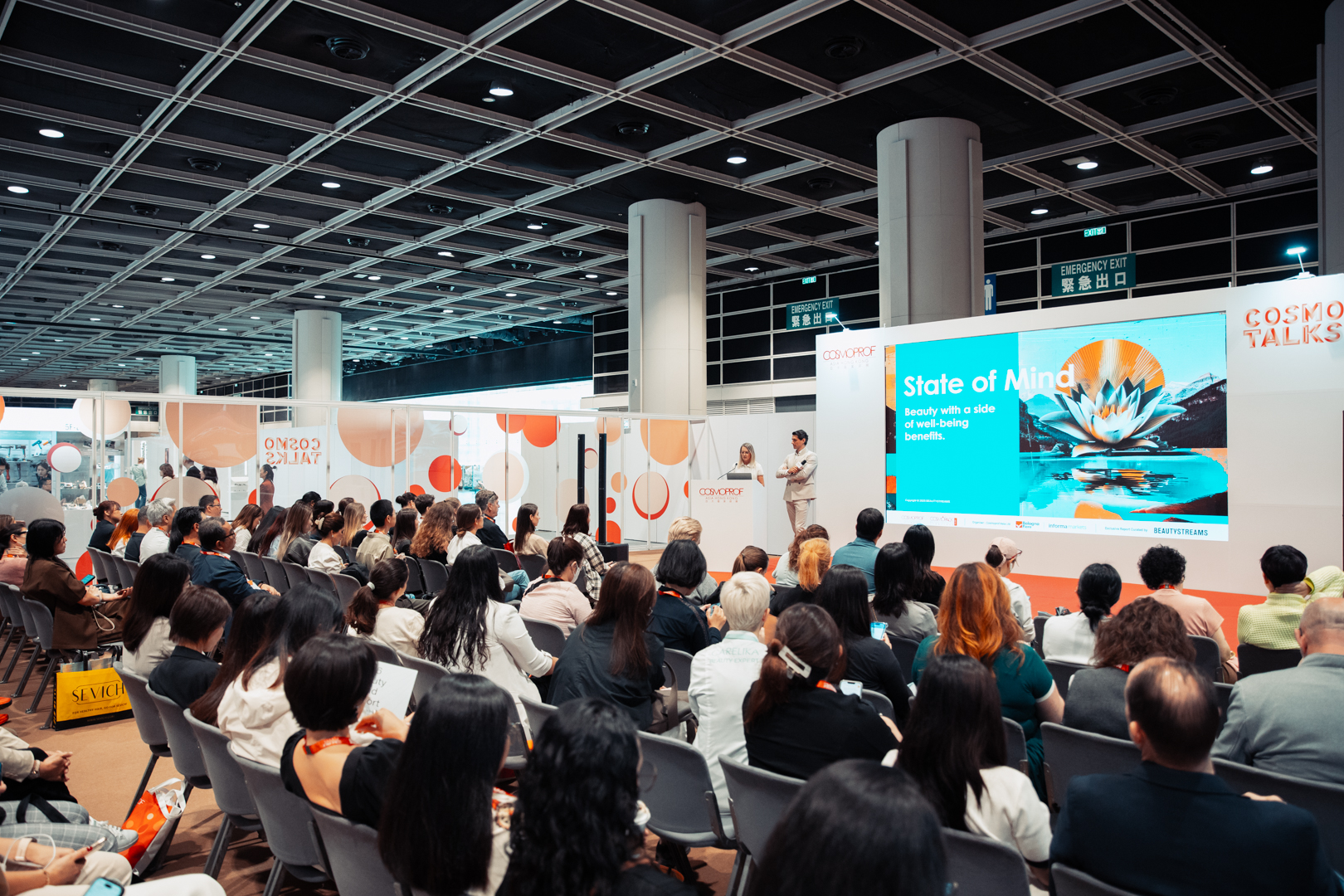
CosmoTalks and the Beauty Ingredients & Formulation Asia (BIFA) forum will invite more than 80 international experts to discuss supply chain strategy, consumer trends and cross-disciplinary topics such as emotional wellness and regenerative aesthetics.
These programs cover different levels including ingredient technology, product development, consumer experience and market trends. For brands and professionals hoping to understand changes in Asia's beauty industry, the value of the event lies not only in discovering new products, but also in observing how different technologies, supply chain capabilities and market demands connect.
Conclusion: What Will Determine the Next Round of Competition in Asian Beauty?
As the competitive paths of the Chinese, Japanese and Korean markets gradually diverge, what is more worth watching is whether brands can continue to innovate products, translate supply chain and R&D capabilities into product advantages, enter mainstream global retail systems, and build long-term consumer trust in different markets.
C-Beauty is moving from domestic market strength to global validation; K-Beauty is expanding into international markets through a relatively mature export and channel system; J-Beauty needs to further activate its existing scientific research, quality and craftsmanship to find new growth drivers.
Therefore, the next stage of Asian beauty is unlikely to be defined by any single "-Beauty" model. What is really changing is the way Asia's beauty industry participates in global competition: from exporting single products or trends, it is gradually extending to comprehensive capabilities in R&D, supply chains, brand building and business models.
This is also the significance of observing Cosmoprof Asia. What the event presents is not only what is trending in the Asian market, but also how these products and trends move from raw materials, technology and manufacturing to brands and consumers, and how Asia's beauty industry repositions its global competitiveness in this process.
丨Image source: Cosmoprof Asia
丨Editor: LUXECO


