On November 5, the 9th China International Import Expo (CIIE 2026) opened as scheduled. In Hall 6.2, home to sports and outdoor brands as well as luxury brands, a grand booth built of raw timber at the entrance drew considerable attention. This was the CIIE debut of American premium lifestyle brand WOOLRICH.
Luxe.Co was invited to experience this "cabin in the woods": extensive raw timber sets a warm, substantial tone, the walls vividly recreate lush forest, and the platform is covered with verdant vegetation, perfectly capturing the tranquility and depth of a woodland area.

Above: The WOOLRICH CIIE booth
At the end of 2024, Chinese menswear group Baoxiniao acquired the intellectual property rights to WOOLRICH in all regions outside Europe. At the CIIE, in conversation with the head of the WOOLRICH brand, we felt their respect for and passion about the brand, and also gained insight into their keen grasp of market trends:
On one hand, China's luxury market is undergoing structural adjustment, with consumer attitudes shifting from "premium worship" to "value reassessment"; on the other, after extreme functional competition, the outdoor sector is evolving toward lifestyle.For WOOLRICH and the Baoxiniao group alike, this is undoubtedly a strategic window in which structural opportunities outweigh phased challenges.
So how will this American heritage brand, founded in 1830, face the test of China's vast market with its brand positioning and image? And how will it win the recognition of today's Chinese consumers?

CIIE: A Key Window for Setting the Strategic Tone of Multinational Brands
In an increasingly competitive Chinese market, newly entering brands especially need to establish a clear strategic tone and communicate effectively with the industry, the market and consumers.
"We approach this brand with nearly 200 years of history first and foremost with a mindset of great reverence," said the head of WOOLRICH.
To that end, after taking over the brand, the Baoxiniao group conducted detailed multinational research:
The team first traveled to the WOOLRICH brand museum in Bologna, Italy, to trace the historical threads of the European market. They then embarked on a journey to the brand's birthplace—the "WOOLRICH Town" in Pennsylvania, USA.
That place was once "a utopian industrial town," officially renamed "WOOLRICH Town" as early as 1888. For over a hundred years, all the town's residents worked for WOOLRICH, and facilities including a post office, a nursing home, a baseball field and a park were all in place.
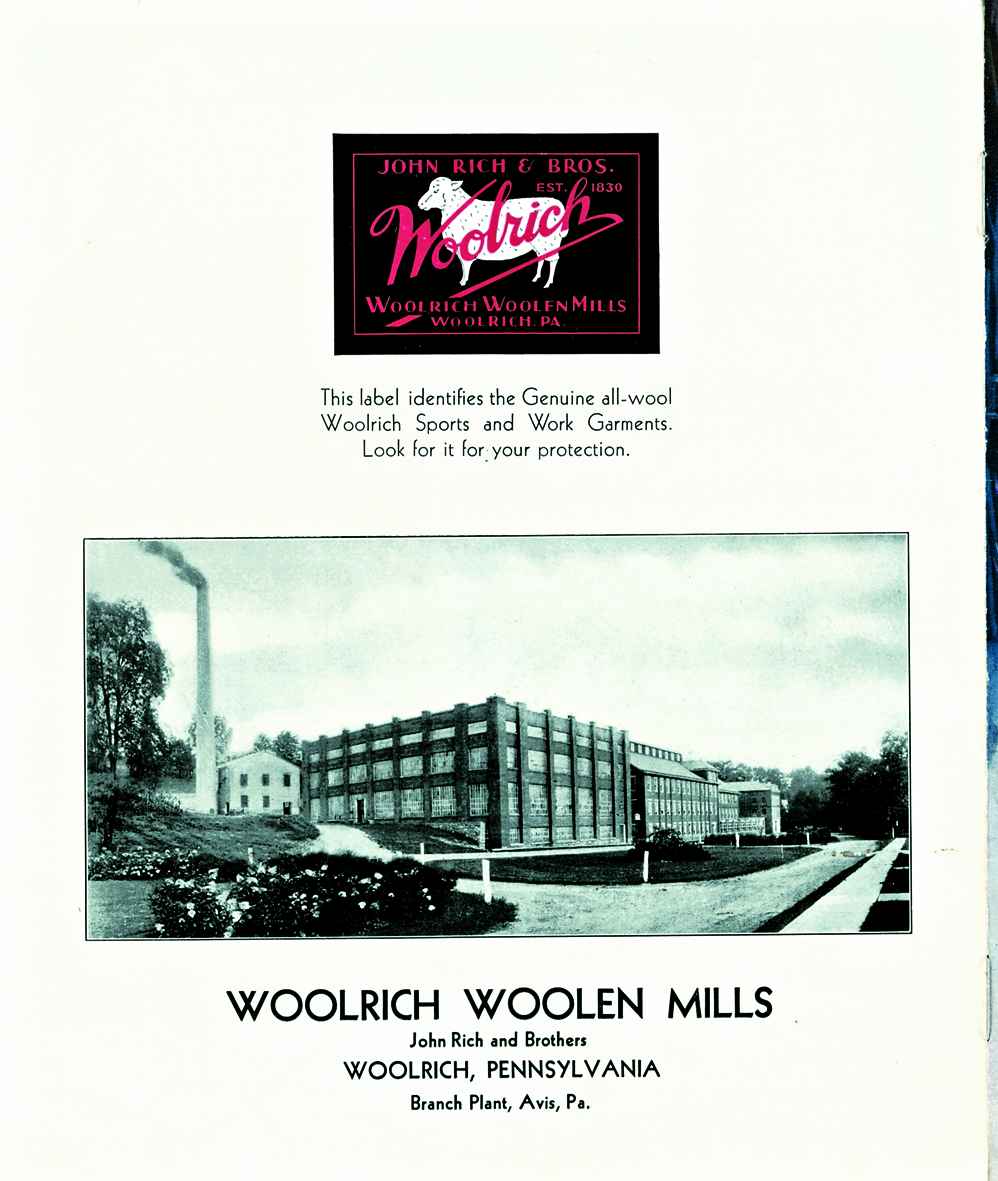
Above: The WOOLRICH woolen mill
Confronted with the past prosperity and present state of the brand's birthplace, the team felt a profound sense of responsibility to rebuild the brand. "We must truly express WOOLRICH's 200-year history, its American wilderness culture and outdoor lifestyle, in a modern language that the Chinese market can understand."
The team therefore systematically reviewed the brand's nearly two-century history, delving into its story and DNA, and distilled representative products and motifs: from the red-and-black Buffalo Check flannel shirt to the Arctic Parka, from the century-long evolution of the Pennsylvania woolen mill to the solemn, enduring imagery of birch forests...

Above: The classic WOOLRICH red-and-black Buffalo Check flannel shirt
At the CIIE, WOOLRICH wove these motifs and elements into its brand narrative and presented them in a deeply warm way: on the vegetation-covered platform, mannequins display signature products and the latest collection; on the other side, soft, comfortable sofas surround a fireplace, where sitting down feels as if you could look up and see the Pennsylvania countryside.

Above: The WOOLRICH CIIE booth
CIIE is the most important window for international brands targeting the Chinese market. Standing on the stage of a national-level exhibition for the first time as a "global brand under Baoxiniao," WOOLRICH made a "formal announcement and commitment" to the entire Chinese market—presenting its reshaped brand image here in the most direct and concentrated way to the government, industry peers, channel partners, commercial real estate developers and the broadest base of Chinese consumers.
Tracing the past is about moving better into the future. Behind a series of moves—organizing brand archives, reshaping the brand image and building an operating model—is WOOLRICH's firm determination to invest in the Chinese market for the long term.
CIIE sends a clear signal to international brands of China's openness to cooperation and shared opportunity. The partnership between WOOLRICH and the Baoxiniao group aligns with this philosophy, and its long-term commitment to deepening its presence in China is also a vote of confidence by an international brand in the Chinese market.

How Does the "Wild Luxury" Lifestyle Respond to Chinese Consumers?
In 1830, John Rich crossed the ocean with the woolen textile skills his father had mastered in England and built a woolen mill in Pennsylvania, USA. "Wool" (WOOL) combined with "Rich" became the origin of the brand name.
Given its long history and cross-cultural differences, how does WOOLRICH resonate with today's Chinese consumers?
The brand head acknowledged, "Within a year or two, our core task is to build the WOOLRICH global team so that internally people truly understand WOOLRICH's 'wild luxury lifestyle' positioning."
What is "wild luxury"? WOOLRICH's answer is: the spirit of outdoor exploration, long-termism, and the combination of utility and aesthetics.
The head specifically emphasized that WOOLRICH's "wild" is not the hardcore outdoor or conquering-nature ethos in today's Chinese market discourse, but a "wilderness gene" truly rooted in the brand's core—one born of real work needs in the face of harsh environments:
Founder John Rich's first factory stood on the banks of a stream called Little Plum River, selling wool fabric to nearby loggers and outdoor workers to make clothing that helped them withstand the severe weather of north-central Pennsylvania; in 1850, the brand's classic red-and-black Buffalo Check shirt was born and immediately welcomed by workers and outdoor enthusiasts;
Later, when railway workers arrived, WOOLRICH designed for them a "railway vest" convenient for holding a pocket watch and tickets; in 1939, WOOLRICH supplied 1,296 all-wool garments for Admiral Byrd's Antarctic expedition; in 1972, WOOLRICH launched the Arctic Parka, designed to protect Alaska oil pipeline workers against extreme cold...


Above: WOOLRICH supplied clothing for the Antarctic expedition
Today, however, China's market environment and consumers no longer need extreme survival gear; what they yearn for is a sense of ease—the ability to "step away at any time"—amid high-frequency urban life.
This feeling is neither the superficial taste of a short trip nor as out of reach as polar exploration or climbing Mount Everest; rather, it is about finding a place like a hidden paradise—beyond the city, a place of vitality at the foot of the mountains—putting on a comfortable wool sweater, starting a sincere dialogue with oneself, and quietly enjoying this "quiet luxury," gaining inner peace and composure.
Against such demands, WOOLRICH has also timely translated its "wilderness gene" into a psychological anchor for consumers: in its products, it blends classic brand elements with contemporary design language, translating them into a "wild luxury" aesthetic suited to the texture of Chinese cities. For example, the brand head showed us that some products are deliberately given a rugged feel—rustic yet authentic.
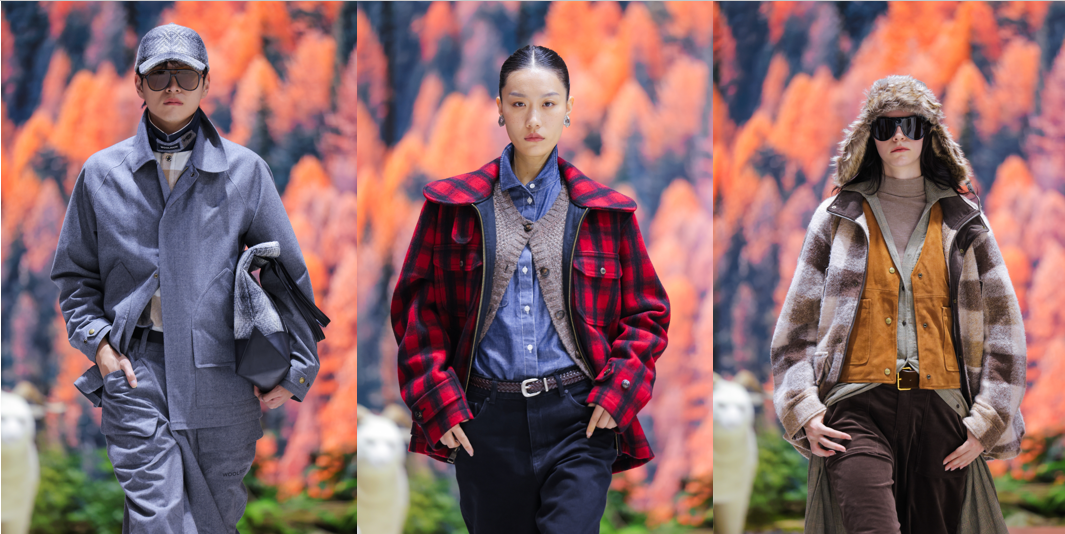
Above: WOOLRICH unveils its latest collection at the CIIE (swipe effect on WeChat)
Luxe.Co has learned that WOOLRICH has built three clear product lines:
The MAIN LABEL incorporates bright colors and diverse materials;
The OUTDOOR LABEL, founded in 2018, balances function and aesthetic expression;
The luxury-positioned BLACK LABEL, born in 2023, with American designer Todd Snyder as creative director, further elevating fabric quality, craftsmanship and design expression, and has successively appeared at Pitti Uomo in Florence and Milan Men's Fashion Week.
On the scenario side, WOOLRICH has partnered with Songtsam hotels to bring its products to travel scenarios such as plateaus and snow mountains, precisely reaching customers who pursue high-quality experiences. The brand head revealed that WOOLRICH's main audience in China is not price-sensitive and does not use clothing to flaunt status, but has higher fashion aspirations and strong aesthetic sensibilities.
From "buying clothes" to "joining a circle," WOOLRICH is trying to build an immersive "wild luxury" community: creating immersive stores in a cabin style with wilderness aesthetics, partnering externally with high-end hotels, camping sites and other outdoor scenarios to build a private brand community, and gradually strengthening brand loyalty in the process of shaping "cultural identity."

Above: The WOOLRICH CIIE booth
A New 200-Year Journey: WOOLRICH's Global Synergy and China Strategy
The brand head acknowledged that in the Chinese market, WOOLRICH is "just getting started."
Although consumers' shift toward "value reassessment" has brought it the opportunity to capture spillover demand, the real challenge lies in the two-way calibration between the brand and the Chinese market—how to balance brand heritage with localization? How to make Chinese consumers understand WOOLRICH's "contemporary quiet luxury language"?
This requires the brand to have strong localized storytelling and agile adjustment capabilities. However, WOOLRICH's unique "wild luxury lifestyle" positioning lacks direct reference models in the current Chinese market, and details such as product structure and spatial experience still need to be deepened.
But the brand head emphasized: "Whether in terms of strategy, supply chain resources or marketing investment, WOOLRICH is a very important strategic project for the group."
From the Beijing Sanlitun pop-up space to the Shanghai concept store and now to its CIIE debut, WOOLRICH, under the leadership of the Baoxiniao group, is steadily sending signals of its commitment to the Chinese market. Behind this, WOOLRICH leverages Baoxiniao's full-spectrum resources: keen localized insight, agile supply chain response, strong high-end mall resources, refined store operation models, and omnichannel retail integration, among others.
It is reported that China's first WOOLRICH flagship store is expected to officially open in 2027.

Above: The WOOLRICH CIIE booth
In terms of the global governance structure, the brand rights to WOOLRICH in Europe belong to Italian fashion group BasicNet, while all regions outside Europe are managed by the Baoxiniao group. The two companies operate in parallel while collaborating deeply. On the basis of ensuring the continuity of the brand DNA, market strategies differ slightly: Europe operates maturely with Italy at its center; Japan experiments with a younger, mountain-style outdoor approach... In terms of product design and marketing communications, the brand's global tone and product style are highly consistent.
Currently, WOOLRICH products cover 36 countries and more than 3,000 points of sale worldwide, and have successfully entered top global retail destinations such as La Rinascente in Milan, Harrods in London and Galeries Lafayette in Paris. In the US market, the team has set a goal of opening a flagship store in New York by 2030, the brand's 200th anniversary.

Above: WOOLRICH unveils its latest collection at the CIIE
Conclusion
|Image source: Provided by WOOLRICH
|Editor: Elisa