Before the National Day holiday, a storefront along the street at HKRI Taikoo Hui on Nanjing West Road was wrapped in white hoarding for some time, right next to the Rolex flagship store that opened in June this year. Passersby kept guessing: who would it be?
On September 30, the hoarding came down, and a line of letters lit up above the entrance: WOOLRICH. The entire facade is a birch forest, with white birch trunks growing from the ground all the way to the cornice. Through the display windows, the store inside is also a birch forest, and beside the trees glows a lightbox in a red-and-black plaid.
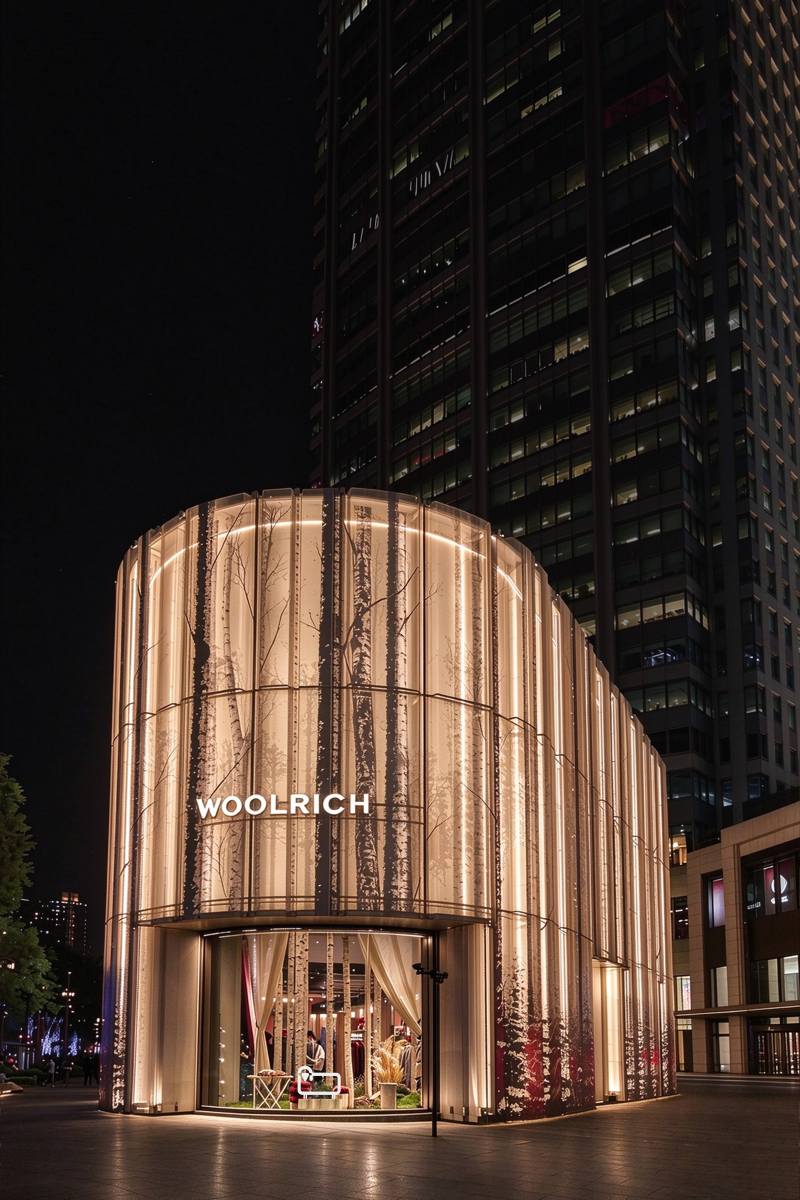
This is the first concept store in China of the American premium lifestyle brand WOOLRICH — THE ARCHIVE — which held its grand opening on October 13. Founded in 1830 in Pennsylvania, the brand officially debuted in China late last year with the pop-up space "THE WOOLBOX" at Taikoo Li Sanlitun in Beijing; less than a year later, it has chosen Shanghai's Nanjing West Road for its next stop.
The stores on this street have long competed on more than just location and square footage — Louis Vuitton "docked" a giant ship at the corner. What WOOLRICH has brought out is an archive — the entire second floor is devoted to telling the brand's history. On priceless Nanjing West Road, why has it made its first concept store in China this way?
1. Opening on Nanjing West Road Means First Giving People a Reason to Make a Special Trip
Half the answer lies on this street.
HKRI Taikoo Hui is one of the premium consumption landmarks in the eastern section of Nanjing West Road. Swire Properties' interim results this year show that sales at HKRI Taikoo Hui grew 82% in the first half; the landlord attributed the growth to the introduction of new retail concepts and brand stores, believing this consolidated the mall's market position.
LuxeCO notes that behind this attribution is the street's expectation of a store: not just to sell things, but to give people a reason to make a special trip.
WOOLRICH starts giving that reason right at the entrance. The birch forest on the facade draws on the mountain forests of Pennsylvania, where the brand was born: the facade has two layers, with birch patterns printed on the outer perforated panels and another layer of tree shadows overlaid inside, so that at night the light shines through from within. Inside on the first floor, firewood, tree stumps and moss are scattered on the ground of the birch forest in the display window; raw wood columns serve directly as shelving, the wall is a full panoramic scroll of mountains and fields, blankets are stacked on the central island, sofas sit in the lounge area, and plaid curtains hang in the fitting rooms.
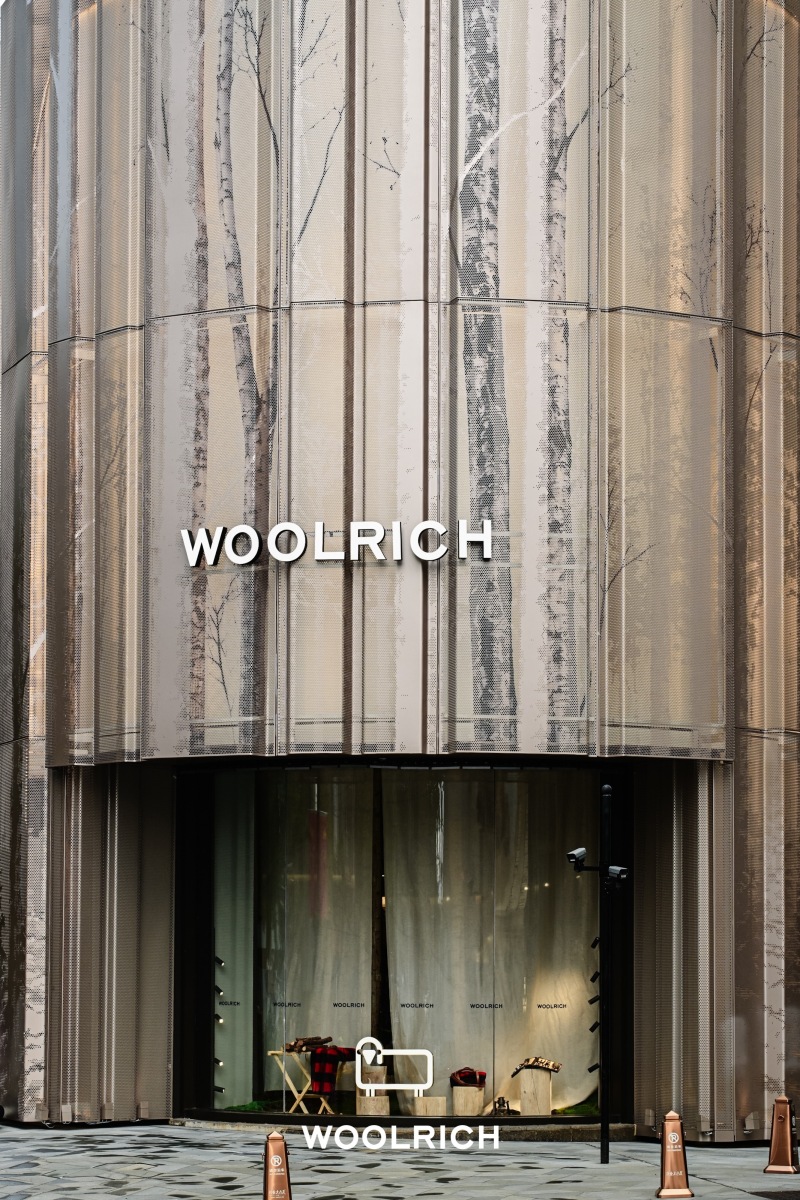
Through the display window, the store inside is also a birch forest.
For a brand that started in the outdoors, the entire first floor shows no climbing setup. Firewood, tree stumps, sofas and blankets all speak to the state of stopping and staying at the foot of the mountain — which is exactly the positioning the brand gives itself: beyond the city, a place of life at the foot of the mountain.
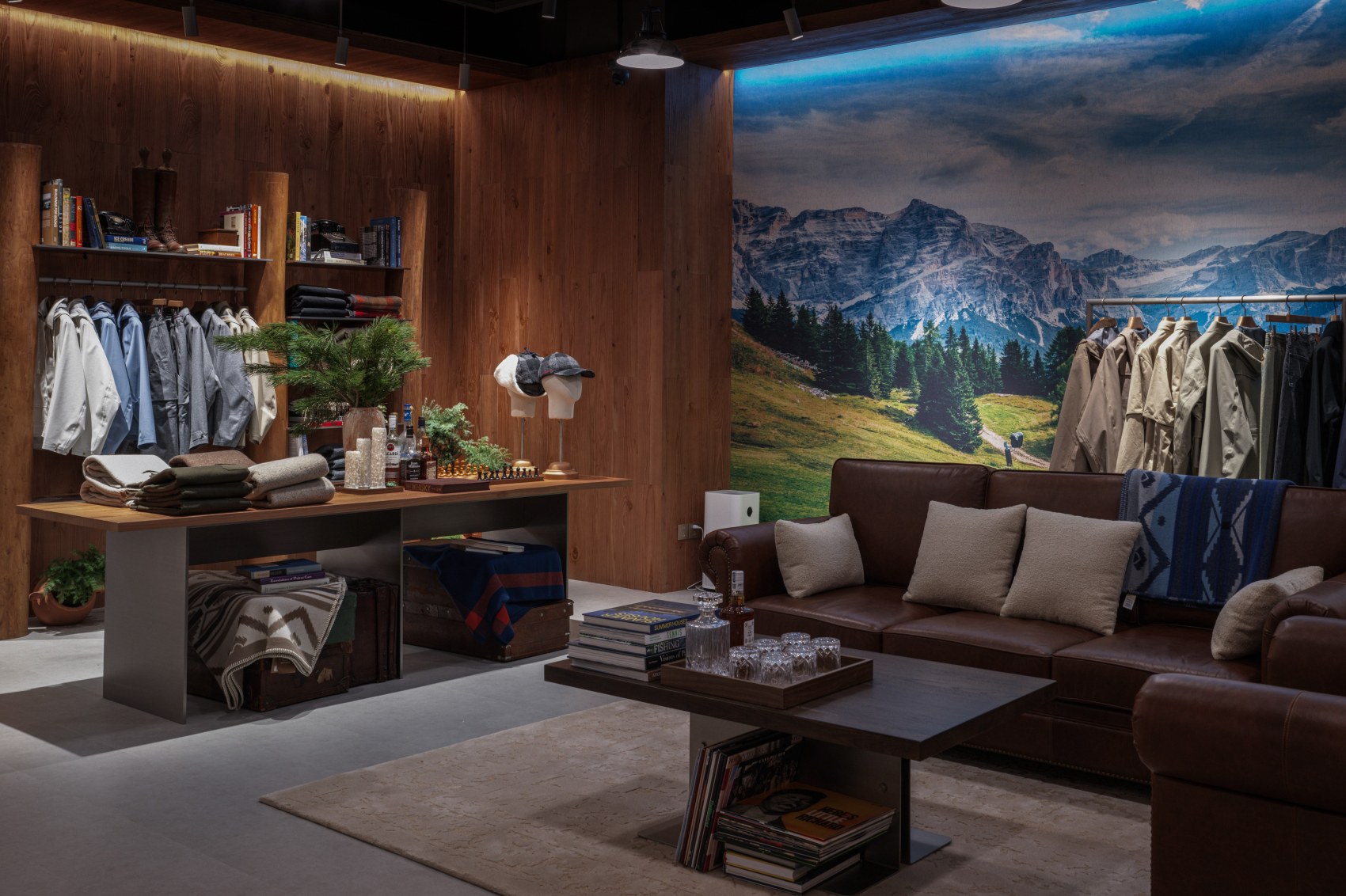
Compared with last year's Sanlitun pop-up, this concept store will stay longer in Shanghai and gives more weight to storytelling — the first floor handles selling, the second floor handles history.
2. An Entire Second Floor, Used by WOOLRICH to Tell the Story of a Plaid
On Nanjing West Road, where accounts are reckoned by the square meter, this floor does not directly sell goods; what it buys in return is a reason for people to make a special trip.
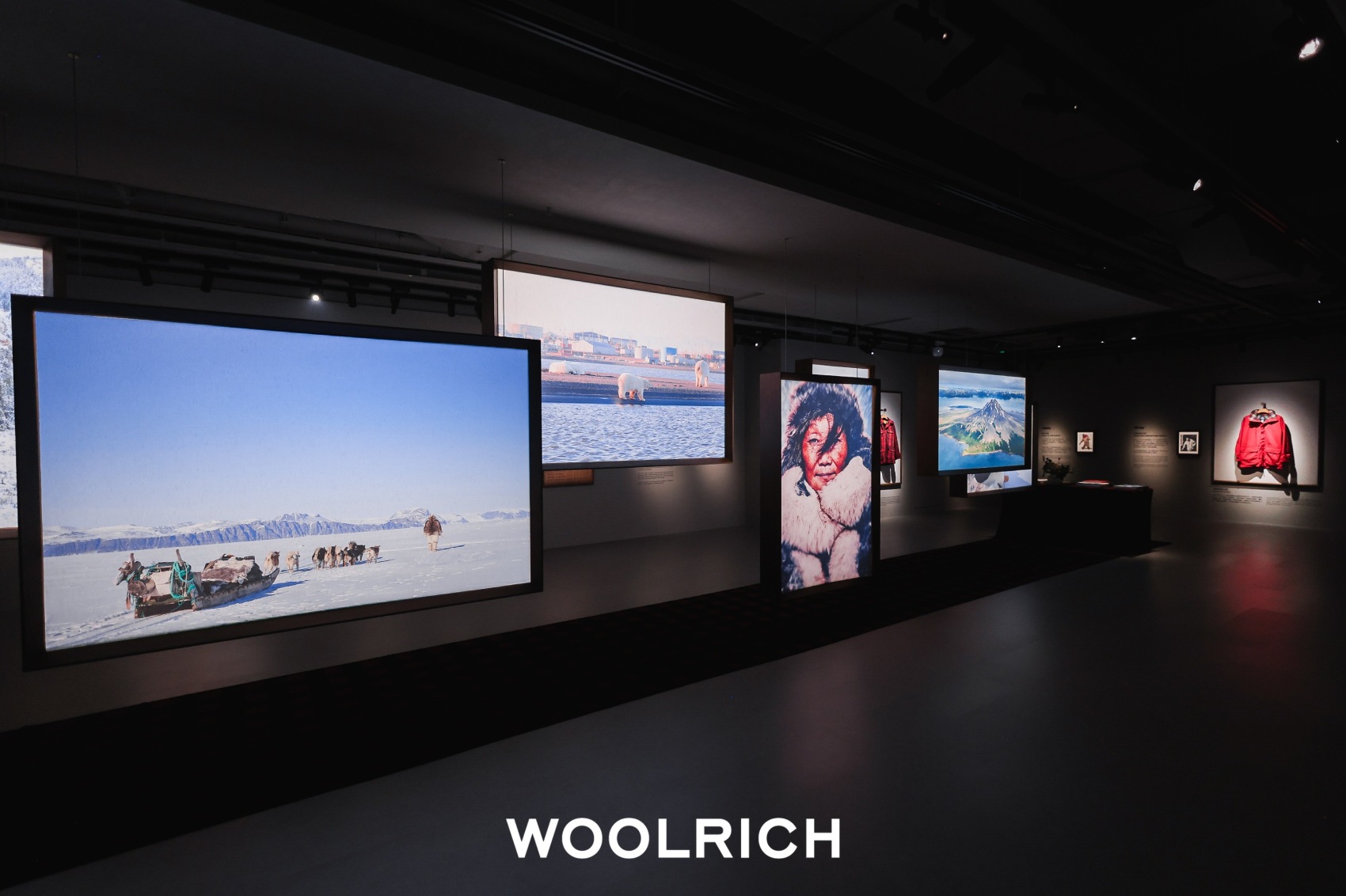
Upstairs, a red-and-black buffalo plaid descends from the ceiling and runs all the way into a carpet across the exhibition hall; on both sides are a timeline of the brand's history, "tracing wool to its source" and archive displays, and several stools shaped like sheep are placed in the exhibition area.
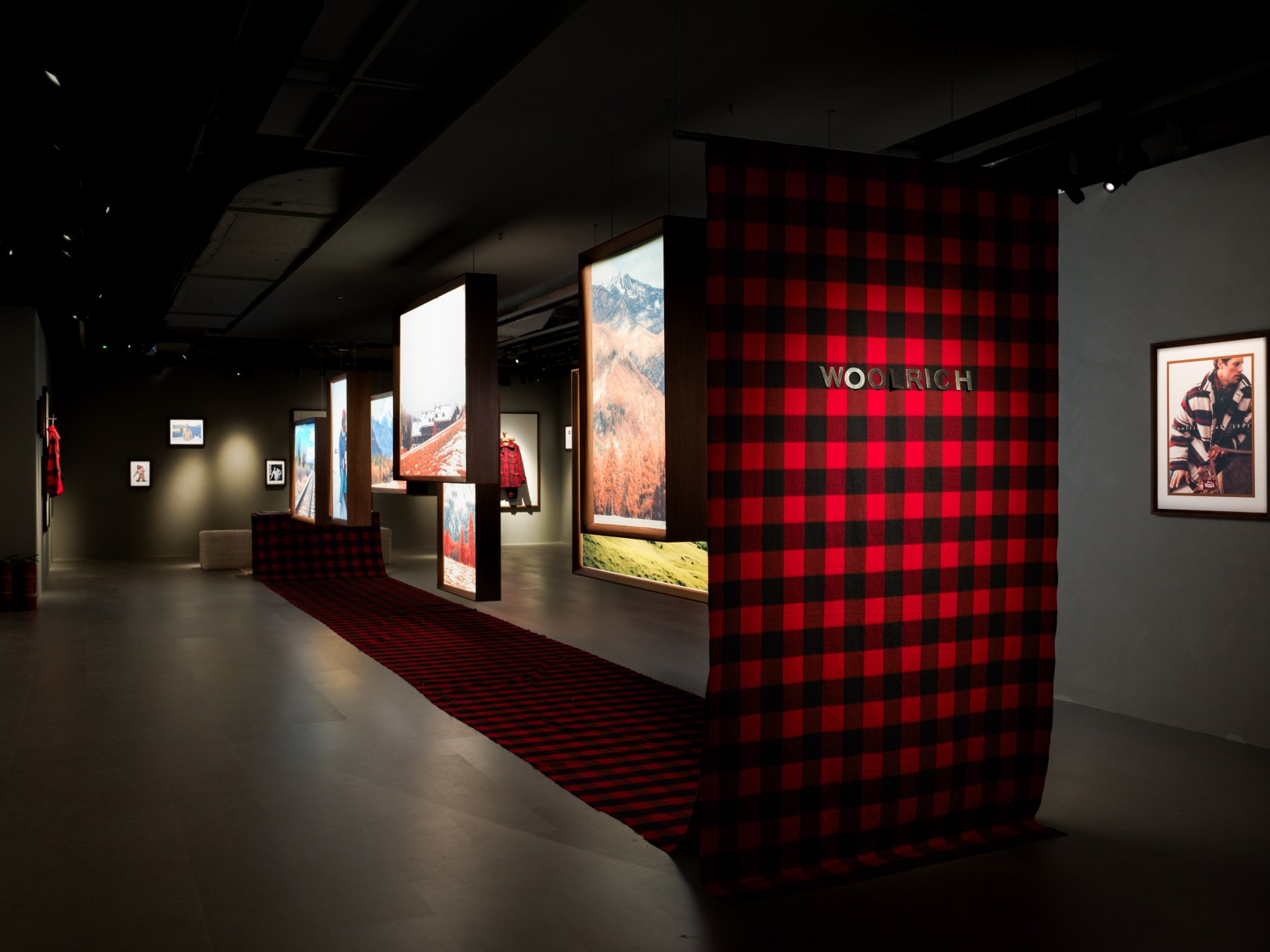
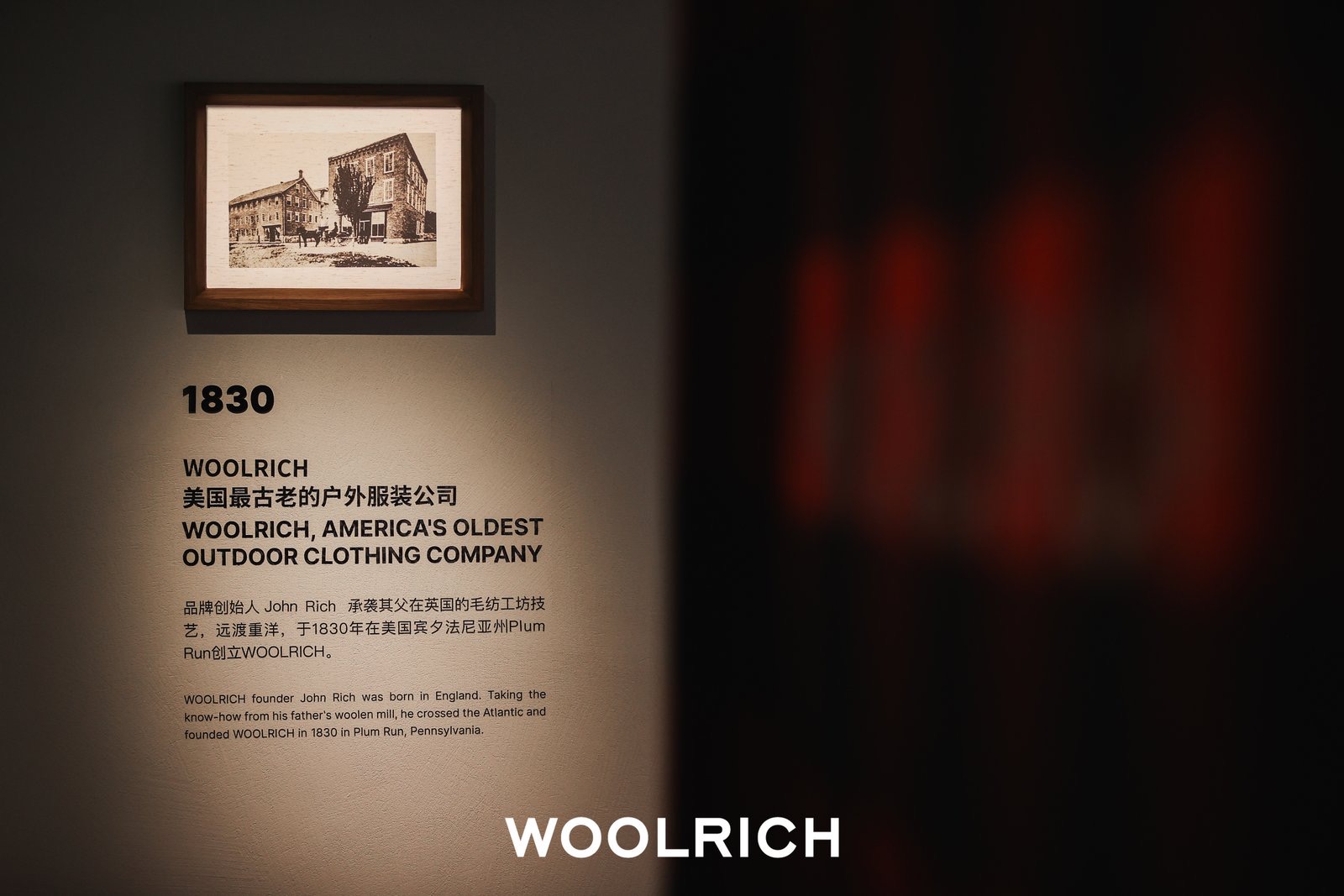
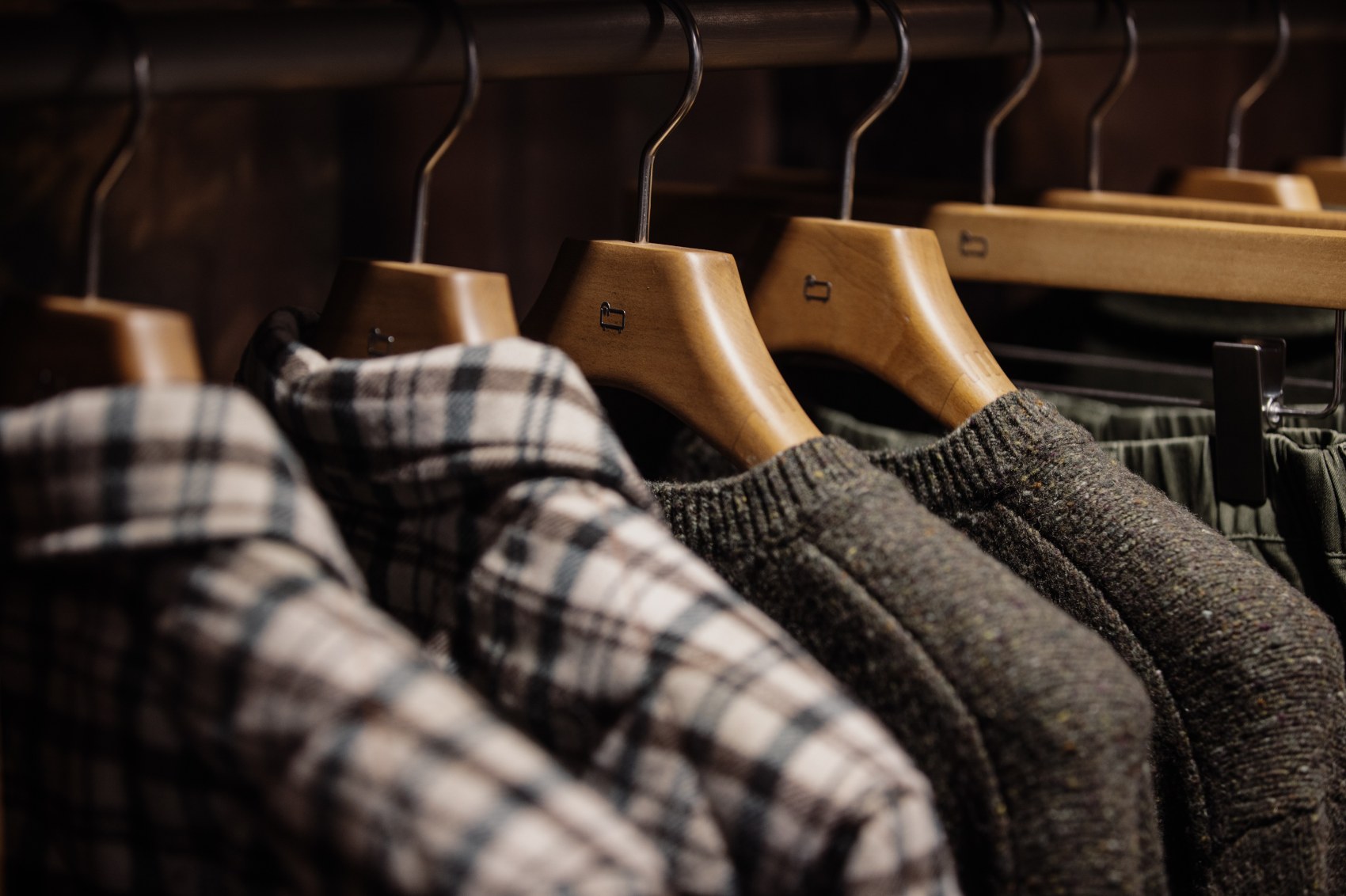
This plaid dates back to 1850 — WOOLRICH's first wool flannel shirt, whose name comes from a herd of buffalo kept by its designer. The brand itself is 20 years older still: in 1830, John Rich built a woolen mill in Pennsylvania, and "WOOL" plus "RICH" is where the brand name comes from.
Over the nearly two centuries since, most of WOOLRICH's classics were "forced" into being by concrete needs: railway workers needed to carry pocket watches, hence the four-front-pocket "Railroad Vest"; when Admiral Byrd led an expedition to the Antarctic in 1939, his team wore the all-wool garments the brand supplied; in 1972, workers on the Alaska oil pipeline had to withstand minus 40 degrees Celsius, hence the Arctic Parka. In posters from that era, the brand described itself this way: "the people who know winter — and wool — best."
Behind this is a product logic: first there is something that must be solved, then there is a style. Once the purpose is set, the cut has a reason not to change with trends — more than fifty years after the Arctic Parka was introduced, its silhouette and pockets have been retained, with only fabrics and details changing. So for WOOLRICH, the archive is where the products come from; the proportions and details within it are reinterpreted and brought back into today's collections.
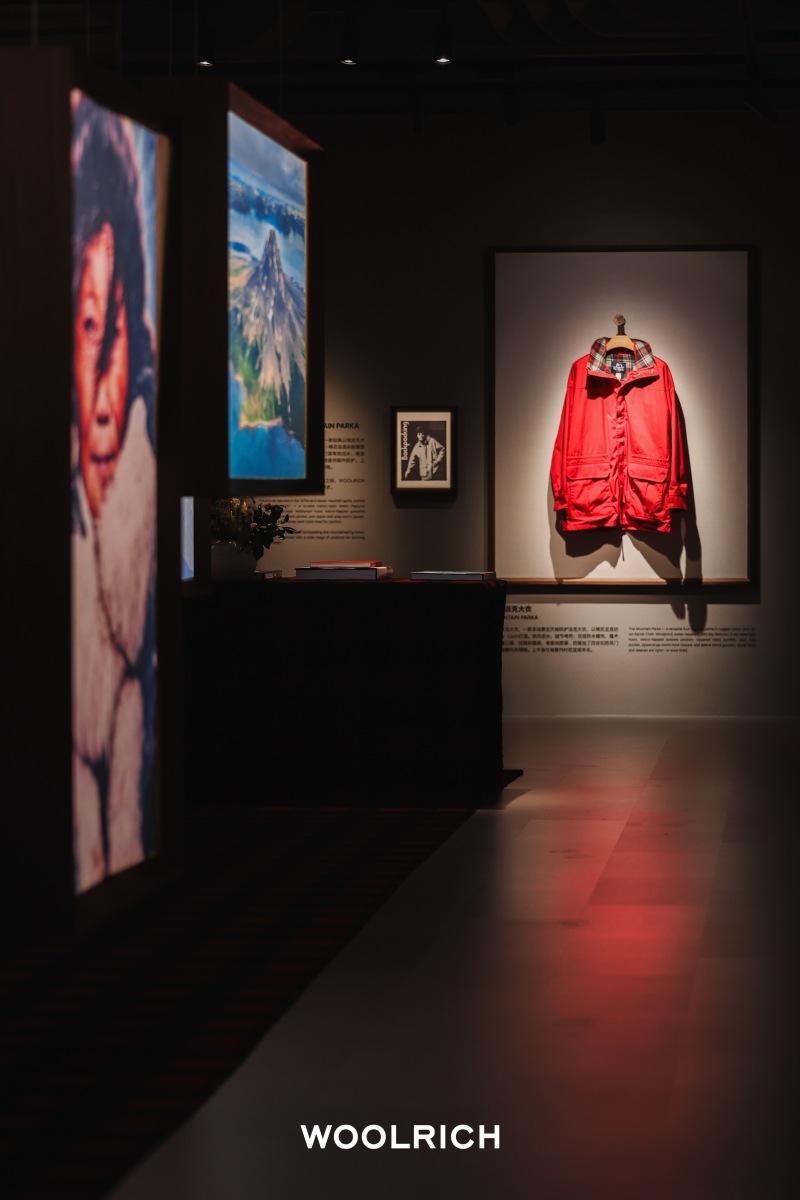
That red-and-black plaid long ago left its own shelves: it entered generations of youth culture, entered collaborations with brands such as Aimé Leon Dore and Supreme, and since 2017 has appeared repeatedly at Paris and Milan fashion weeks.
In business terms, WOOLRICH now has three product lines: the main line MAIN LABEL, the outdoor line OUTDOOR LABEL and the more premium BLACK LABEL; outerwear is mostly priced between 4,000 and 6,000 yuan, with the Arctic Parka at nearly 10,000 yuan; the brand covers 36 countries and more than 3,000 points of sale worldwide, and is carried in premium retail venues such as La Rinascente in Milan, Harrods in London and Galeries Lafayette in Paris. Fabrics, pricing and channels place it in the premium outerwear and lifestyle segment.
These archives answer "who it is." But in China, why does it need to tell all this first?
3. From Nanjing West Road to Songtsam, WOOLRICH's"At the Foot of the Mountain" Playbook
The other half of the answer lies with Chinese premium consumers.
In the past two years, Chinese premium consumers have become more cautious with their spending: they value quality and practicality, and also want a bit of distinctiveness. The numbers bear this out — a report by Bain & Company this year shows that in the Chinese market, premium ready-to-wear is growing at twice the rate of leather goods and bags, and consumers' focus is shifting from products that display status to self-expressive products that emphasize belonging and personal character. Ready-to-wear outperforming leather goods is a tailwind for a brand known for outerwear.
LuxeCO observes that as consumers shift from "being recognized by others" to "identifying with it themselves," a brand's provenance becomes a kind of hard currency — it gives a garment's value something verifiable to rest on, and makes people willing to identify with the kind of life that comes with wearing it. This also explains why WOOLRICH made its first concept store in China an archive: first let people see clearly where it comes from. Quality, practicality and distinctiveness — its archives hold ready evidence for all three: why a vest has four pockets, why a parka has kept its silhouette unchanged for more than fifty years.
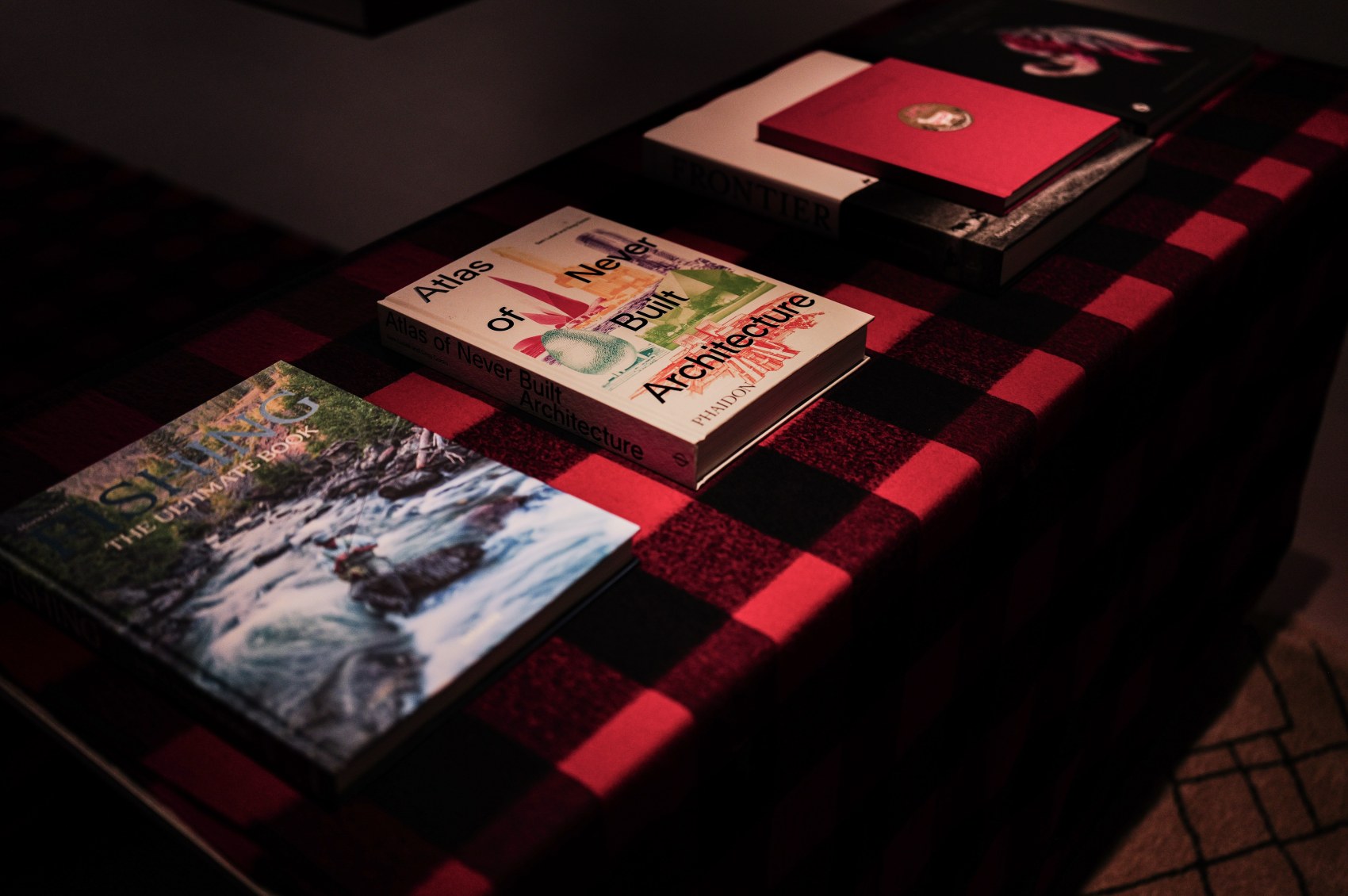
Seen within outdoor-related consumption, its approach to selling is also different. Premium outdoor in China usually starts from the professional angle: fabric specifications, altitude, temperature. WOOLRICH starts from the other end — the year of a plaid, who a parka was made for, a pile of firewood at the foot of the mountain. In the store, that means the firewood and tree stumps in the first-floor display window, and the years and purposes in the second-floor exhibition hall. For consumers already familiar with outdoor gear, it offers another way to wear, and another place to go.
That place already has a concrete address: WOOLRICH has opened in four renowned Songtsam luxury wilderness hotels.
"Beyond the city, a place of life at the foot of the mountain" — on Nanjing West Road this positioning is a birch forest; at Songtsam, it is a real place at the foot of the mountain. The brand thus steps out of the mall and into the journeys of premium consumers. Premium consumption spending is also moving into travel: globally, bookings for immersive dining, leisure and entertainment experiences are up 30% from last year, driven mainly by customized slow-travel products rooted in local culture — exactly the kind of business Songtsam does.
On one side is Nanjing West Road, making clear who WOOLRICH is; on the other is Songtsam, letting people encounter it in real mountains and fields. In the city and in the wild, WOOLRICH now has a place at both ends.
Conclusion
The next steps are already laid out: after the opening, the brand will launch wilderness luxury experiences for premium members; next year, China's first WOOLRICH flagship store is expected to officially open; 2027 is the Year of the Sheep, and the sheep printed on the brand's logo will also appear in the brand's activities for next year's Spring Festival.
From last year's pop-up and this year's concept store to next year's flagship store, WOOLRICH's sequence in China is to establish awareness first, then roll out stores. For Nanjing West Road and more premium malls, it also offers a sample: how an international brand with nearly 200 years of history can first explain itself clearly through a single store — devoting an entire floor to telling its origins, turning the store into a destination, and then extending the "at the foot of the mountain" lifestyle beyond the city.
On October 13, THE ARCHIVE officially welcomed visitors. Walking in from the birch forest at the corner, the first floor is mountains and fields, the second floor is a wool plaid from 1850; outside the city, Songtsam's mountains also have a place for it. The story that began nearly 200 years ago in a woolen mill in Pennsylvania has now opened its China chapter on Nanjing West Road, and LuxeCO will continue to follow its every step in China.
| Image source: provided by the brand
| Editor: LuxeCO