
In 2026, CIBJO, The World Jewellery Confederation, marks its centenary. In early September, it held its Centenary Congress alongside the VICENZAORO jewelry trade show in Vicenza.
CIBJO is the only jewelry industry association with global reach that spans the entire supply chain. Its series of Blue Books sets rigorous standards and definitions for the global jewelry industry. The international business community represented by CIBJO had a total turnover estimated conservatively at USD 250 billion in 2026, with an optimistic valuation as high as USD 409 billion.
Ahead of the congress, CIBJO released 10 special reports in succession, covering jewelry sustainability, marketing and education, technology, gemology, ethics, and specific jewelry categories including precious metals, diamonds, colored gemstones, pearls and coral.
Notably, CIBJO will create a clear and complete comparison table for "feicui" (jadeite), which is highly popular in the Chinese market, matching traditional Chinese terminology one-to-one with common Western terminology; CIBJO reiterated that "laboratory-grown diamonds" should be clearly and uniformly labeled as "synthetic diamonds," and called for an end to grading synthetic diamonds using the 4C standard.

All reports were written independently by CIBJO's 10 sector committees, addressing the core issues facing the jewelry industry today and in the future, and were discussed and studied in depth at the VICENZAORO show.
——Sustainability Special Report
The report notes that the jewelry supply chain is complex and fragmented, making transparency efforts difficult. In addition, various regulations are institutionalizing sustainability-related requirements, and reporting, due diligence and traceability rules are becoming increasingly detailed and deeply tied to companies' actual operations.
Even so, the report reiterates that sustainability's central role continues to grow.
John Mulligan, Chair of the Sustainability Committee, said: "New evidence shows that if sustainability is pursued strategically, it can not only address various risks but also drive value creation, technological innovation, and build reliable and adaptable value chains that promote long-term growth."

——Marketing and Education Special Report
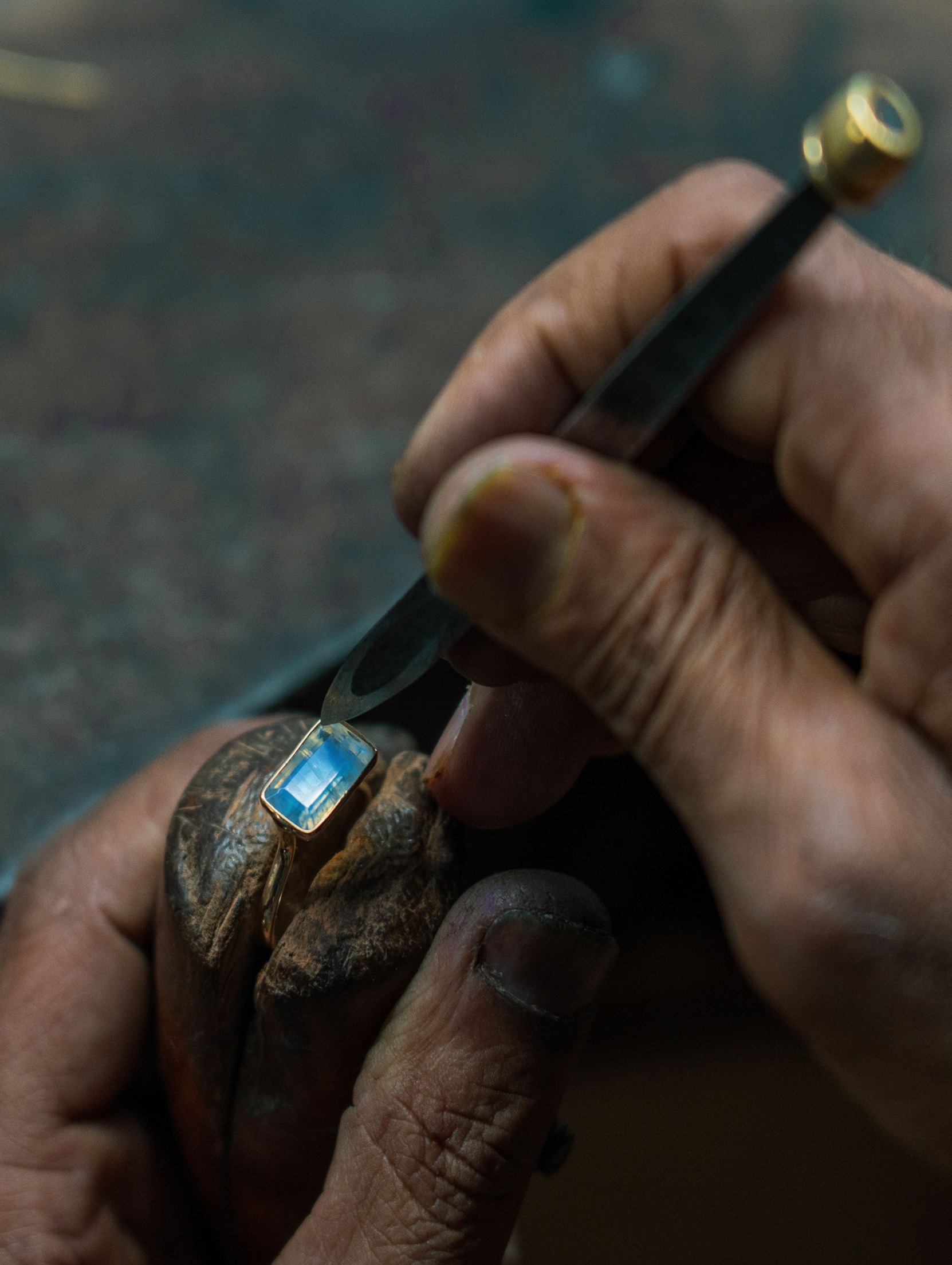
The report introduced the founding of the International Fine Jewellery Academy (IFJA).
Located in Milan, IFJA was jointly established by CIBJO, the Fondazione Mani Intelligenti in Valenza, the Confcommercio Milano chamber of commerce, and the Fondazione ITS Cosmo (Milan's Business and Tourism Institute Foundation). It is a hands-on jewelry-making academy dedicated to cultivating a new generation of industry professionals.
The report also previewed the release of two new gemstone guides, focusing on opal and feicui (jadeite), respectively. Especially for feicui, which is popular in China, CIBJO will create a clear and complete comparison table matching traditional Chinese terminology one-to-one with common Western terminology.
——Technology Special Report
The report outlined several technologies expected to fundamentally change jewelry production and sales models, including artificial intelligence, blockchain, the Internet of Things (IoT) and advanced data analytics.
Stéphane Fischler, who chaired the drafting of the report, said these technologies "are reshaping every link in the supply chain from mine to end market, promising to improve efficiency, strengthen traceability and enable personalization, but they also bring new risks involving data governance, cultural heritage, workforce transition and the protection of craftsmanship."
For example, the report notes that virtual try-on tools using augmented reality collect biometric data such as facial contours and hand proportions, and that jewelers storing large amounts of sensitive data on high-net-worth clients also poses major security risks. As for AI-assisted design, relying entirely on it would lead to design homogenization, narrowing rather than broadening creative space.
——Ethics Special Report
The report focused on intellectual property and the impact of generative artificial intelligence (GenAI) on intellectual property.
According to the report, while GenAI tools can expand human creativity and increase output, they may also appropriate, imitate or obscure original human creations. The use of GenAI must not harm the intellectual property of designers, artisans, photographers, brands and other human creators. This cannot be achieved through the law alone; companies must consistently prioritize transparency and copyright interests and establish clear oversight and accountability mechanisms.

——Gemology and Jewelry Category Special Reports
Six special reports on gemology and precious metals, diamonds, colored gemstones, pearls and coral focused on terminology naming conventions and identification standards in their respective segments.
For example, the diamond special report once again reiterated that "laboratory-grown diamonds" should be clearly and uniformly labeled as "synthetic diamonds," and called for an end to grading synthetic diamonds using the 4C standard.
In the colored gemstone sector, the report pointed out the non-standard use of "fancy names" currently on the market, such as "pigeon's blood" for ruby and "royal blue" and "cornflower blue" for sapphire, which lack unified international standards. CIBJO is exploring ways to address this issue.
The precious metals special report discussed the supply chain performance, investment trends and market demand of gold, platinum, silver and other precious metals over the past year.
In 2025, the spot gold price hit record highs 56 times, driving new mine production and project expansion. Among major gold-producing countries, China's gold output rose 1% to 12.3 million ounces (384.3 tonnes), and Russia's rose 5% to 11 million ounces (342 tonnes). Global gold supply in 2026 is expected to rise 2.4% year on year to 125.6 million ounces (3,907 tonnes), setting another all-time high.
Net gold demand fell 9% in 2025 to 137.4 million ounces (4,275 tonnes). Net physical gold investment demand grew 16%, hitting a record high of 45.1 million ounces (1,404 tonnes). Demand contracted in all other segments; high gold prices suppressed jewelry consumption, with jewelry fabrication demand falling 19% to 52.9 million ounces (1,646 tonnes).

|Source: Original report
|Image source: Original report
|Editor: LuxeCO


