
For a long time, when the beauty industry talked about "anti-aging," the discussion was about how to make skin look younger: reducing wrinkles, improving laxity, fading dark spots, or delaying the appearance of these changes.
But over the past two years, a new expression has begun to emerge around "anti-aging"—"Longevity." From Lancôme launching its Absolue Longevity MD line, to L'Oréal Group establishing a longevity science research collaboration with the National University of Singapore's Yong Loo Lin School of Medicine (NUS Medicine), to Estée Lauder, Shiseido, Clarins and others continuing to expand related research, more and more leading brands are incorporating "longevity" into their product innovation and R&D narratives.
In the Chinese market, Proya, Pechoin, Chando, Betteni and others have also begun exploring different directions such as mitochondria, anti-aging, skin health, novel ingredients and biotechnology.
This does not mean the beauty industry has found a miracle ingredient that can "delay aging." More accurately, "longevity" is becoming a new framework: brands are attempting to discuss skin condition, health and lifestyle from a longer-term perspective.
In its latest 2026–2027 beauty and personal care trends, Euromonitor International directly lists "longevity" as one of its five core trends, defining it as a "science-driven, lifestyle-integrated" proactive health concept that shifts the focus from extending lifespan to extending "healthspan," and judges that the industry will move from "anti-aging repair" to "preventive care."
Mintel data shows that among new facial and neck skincare products globally, the share of products featuring "longevity"-related claims rose from 1.0% in 2022 to 1.7% in 2024. Industry data suggests this trend is still in its early stages but is accelerating.
LuxeCO this article attempts to interpret: when beauty brands talk about "longevity," what signals are they actually sending?
From "Looking Young" to "Maintaining a Good State"
The most direct change brought by "longevity" is that it redefines the relationship between the beauty industry and age.
Traditional "anti-aging" emphasizes correction: how to improve wrinkles after they appear, how to firm skin after laxity, how to repair damage after it occurs. "Longevity" emphasizes prevention, maintenance and long-term performance—how to keep skin stable, healthy and resilient for as long as possible.
Behind this is a shift in consumer demand.
Mintel points out that Asia-Pacific consumers are increasingly proactive in managing their health and appearance; they not only care about what ingredients a product contains, but are also increasingly concerned with what long-term problems a product can solve. The report recommends that brands translate "skin longevity" into consumer-perceivable benefits, such as barrier resilience, self-repair, firmness and damage repair.
Euromonitor International's observations extend in a similar direction: healthy living and outward appearance are being increasingly closely linked by consumers, and the boundaries of beauty are therefore expanding into nutrition, body care, and hair and scalp care. Notably, Euromonitor believes hair and scalp is currently a lower-penetration but higher-potential area within longevity beauty.
From this perspective, "longevity beauty" is not another new anti-aging category, but rather a redefinition of what problems beauty products should solve.
In the past, the focus was on "what has already happened"; in the future, the discussion will be more about "how to make a good state last longer."
What Leading Groups Are Really Investing In Is New Research into "the Effects of Age"
This change first appeared in the R&D systems of major beauty groups.
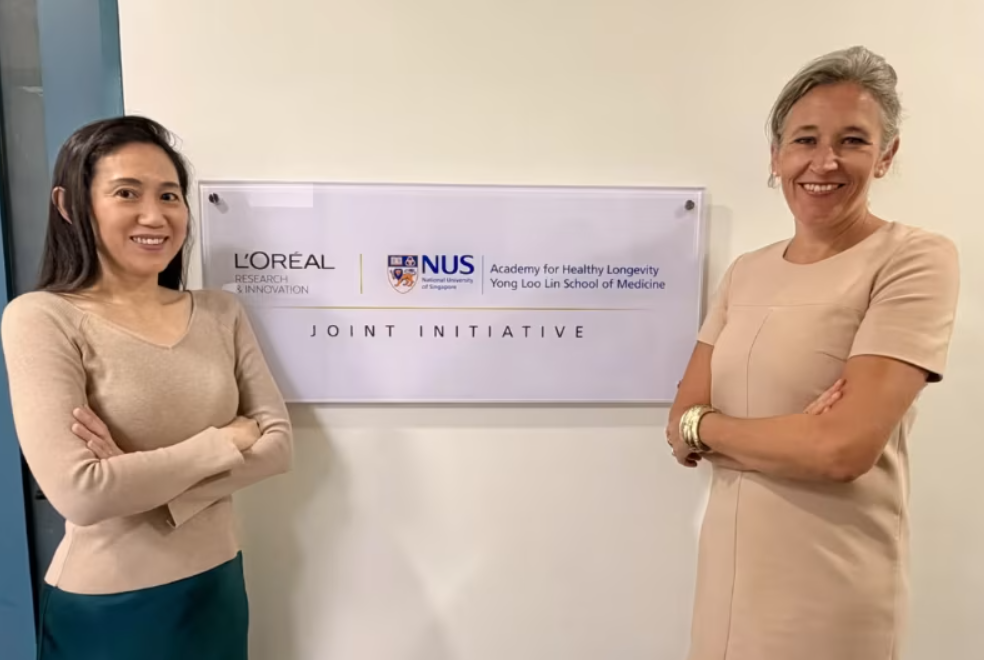
In August, L'Oréal Group announced a multi-year strategic research collaboration with the National University of Singapore's Yong Loo Lin School of Medicine. The two parties will combine L'Oréal's long-accumulated research on skin, scalp and hair with NUS's capabilities in geroscience and healthspan medicine to study the role of skin, scalp and hair in healthy aging.
The significance of this collaboration lies not in a particular new ingredient, but in the fact that the object of study has changed: it is no longer just "how to improve a wrinkle," but why skin changes with age and lifestyle, and how to incorporate these changes into longer-term health management.
Estée Lauder Companies has taken a similar path. In February this year, the company presented skin longevity research centered on sirtuin and mitochondrial health at the IMCAS World Congress, emphasizing that the related research has continued for nearly 20 years since 2008. In April, the company further announced clinical results for its Re-Nutriv line, while also launching a methodology for assessing "visible age" across different populations—a model built on data from more than 2,800 women across multiple ethnicities, skin tones and age groups, with the related paper published in the Journal of Clinical and Aesthetic Dermatology (JCAD).
Here is a change worth noting for the industry: longevity is no longer just a product concept; it is also becoming a brand's research asset.
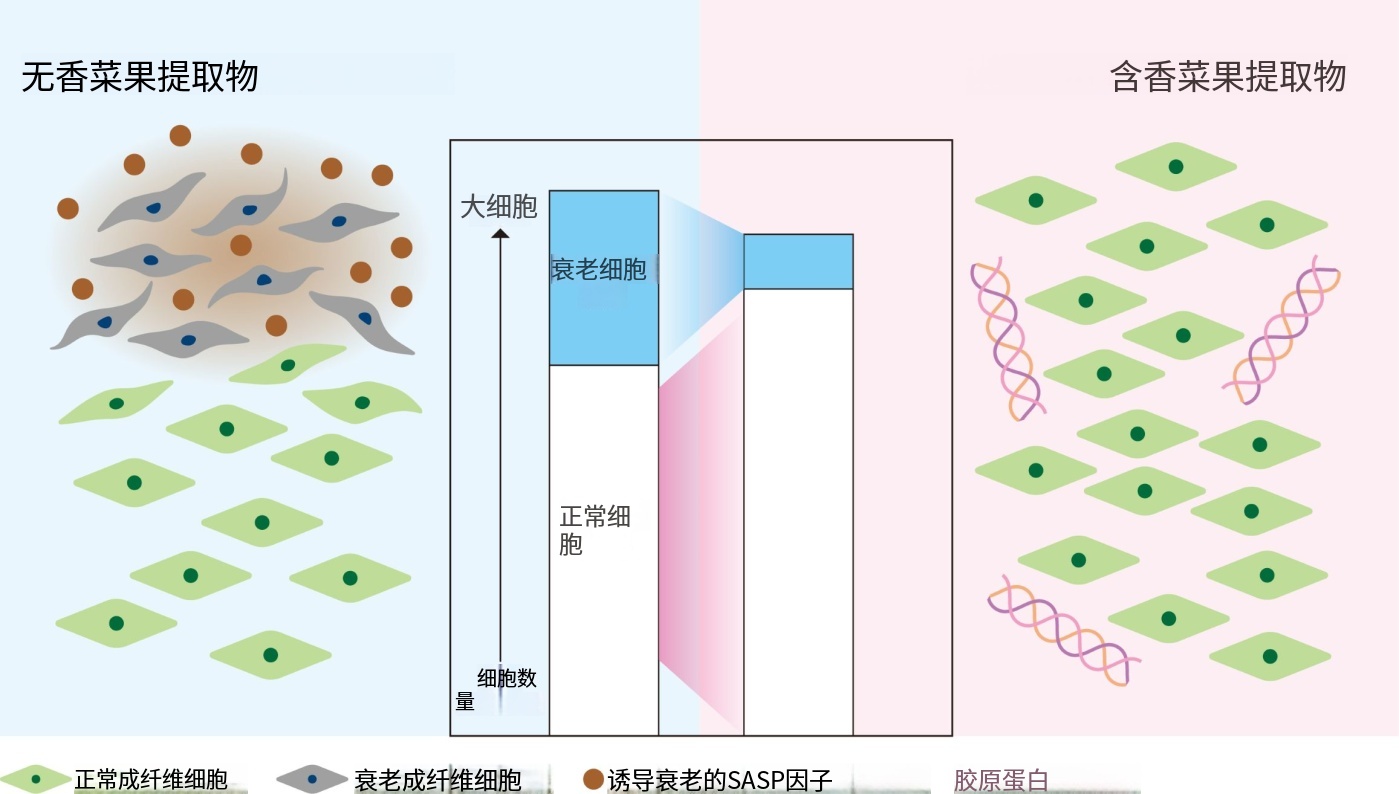
Research published by Shiseido Group in July this year also demonstrates this trend. Based on its long-term regenerative medicine research, the company announced the discovery of a coriander (cilantro) fruit extract that can selectively clear senescent cells, increase the number of normal cells, and further promote collagen production.
For ordinary consumers, understanding the complex mechanisms behind this research is quite difficult. Put simply, beauty companies are trying to turn "age" from an external visual problem into a problem that can be studied, observed and managed over the long term.
Commercialization Case: Turning Scientific Concepts into Consumer Experiences
Absolue Longevity MD is the first skincare line from Lancôme to be directly named after "Longevity," with three directions—Anticipate, Intercept and Reset—set for different age stages, and incorporating the exclusive ingredient Mitopure from longevity startup Timeline, namely high-purity, micronized urolithin A. The brand combines it with long-term research, dermatologist validation and clinical testing.
Notably, the brand did not simply put a new active ingredient into a classic anti-aging product, but rather rebuilt its product language and consumer education around longevity.
As the R&D foundation for the launch of this new product line, Lancôme announced earlier this year the official launch of its new Longevity Integrative Science™.
Worth noting is the core foundation of this system, the Longevity AI Cloud. It integrates more than two decades of longevity research from the brand's parent company, L'Oréal Group, and uses artificial intelligence and advanced biological technologies to build a world-leading skin aging database. The database has successfully mapped 267 skin biomarkers and further distilled nine biological hallmarks that affect skin aging.
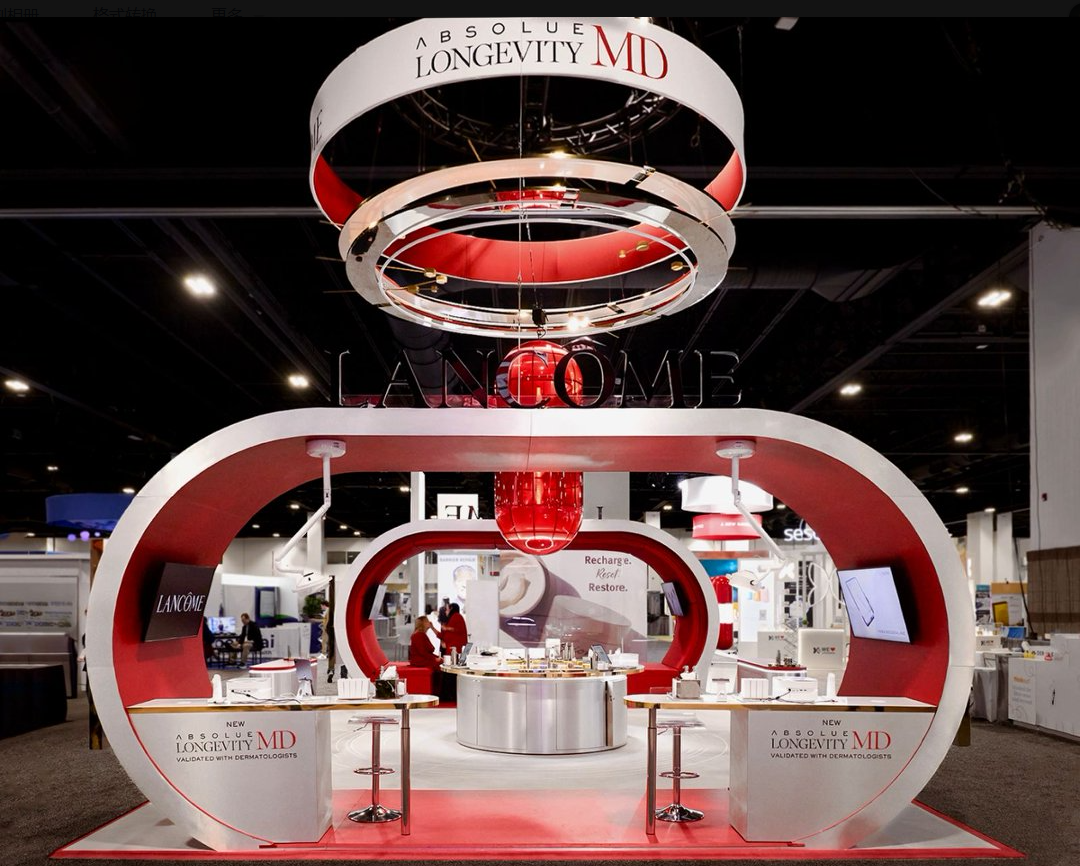
At the same time, this system also extends to professionals. Lancôme has established an advisory board with dermatologist participation to review relevant testing methods and results. In its communications, the brand also emphasizes product testing, ingredient screening and clinical results.
This actually reflects a direction worth noting in high-end beauty: the value of technology is increasingly reflected in the professional system behind the product.
A higher-priced face cream can hardly convince consumers on the strength of a "new ingredient" alone. For high-end brands, research institutions, doctors, clinical testing, data and long-term scientific investment are themselves becoming part of product value and brand equity.
Startups Are Turning "Longevity" Directly into a Brand
If leading groups are adding "longevity" to their existing anti-aging businesses, some startups have defined themselves in this direction from the very beginning.
U.S. anti-aging tech skincare brand OneSkin is a typical case. Founded in 2016 by four Brazilian women with PhDs, the brand's core products are built around "skin longevity," with its self-developed OS-01 peptide as the brand's core. The company's founders have said at public events that more than 900 molecules were tested in screening for the core peptide, with more than $7 million invested in research.

In the product testing shown above, 96% reported improved skin evenness, radiance, pores and firmness after use, 87% reported a reduction in fine lines and wrinkles after use, and 100% reported an overall smoother skin appearance after use.
In 2024, the company announced the completion of a $20 million Series A funding round. It was led by private equity fund Selva Ventures, with participation from PLUS Capital, Unilever Ventures, Able Partners and existing investors SOSV and Meta Planet. Other investors include Brazilian-American model and designer Camila Alves McConaughey (wife of famous actor Matthew McConaughey) and tech entrepreneur Kevin Rose.
The emergence of such companies reveals a trend: skincare product development is no longer centered first on traditional tracks like "anti-wrinkle serum" or "firming cream," but rather starts from a larger scientific proposition and then seeks product applications.
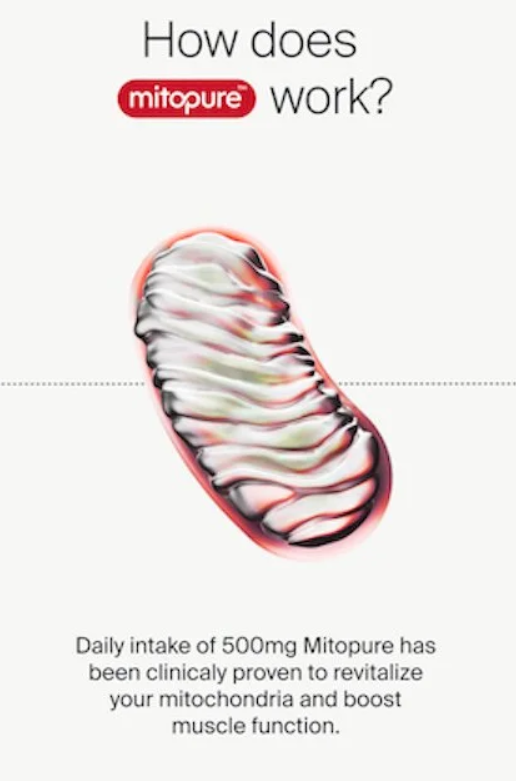
Timeline officially claims that daily intake of 500 mg of Mitopure has been clinically proven to activate mitochondria in the body and enhance muscle function.
Swiss longevity biotechnology company Timeline has taken a more direct path. Founded in 2007 and originating from biotechnology research at the Swiss Federal Institute of Technology Lausanne (EPFL), it initially focused on nutritional supplements and later extended its research into skincare.
In 2024, Timeline had a minority stake acquired by BOLD, the strategic venture capital fund under L'Oréal Group. In 2025, the company expanded its skincare line again, applying its proprietary molecule Mitopure across a full routine including cleanser, scrub, serum and cream. Mitopure later entered Lancôme, providing another industry-chain relationship worth observing: startups are responsible for turning scientific concepts into technology and ingredients, while leading brands have the ability to turn them into global consumer products.
This may become a common model for beauty innovation in the coming years.
Chinese Brands Take a Different Path
The concept of "longevity" did not appear late in the Chinese market, and the response speed has been equally rapid.
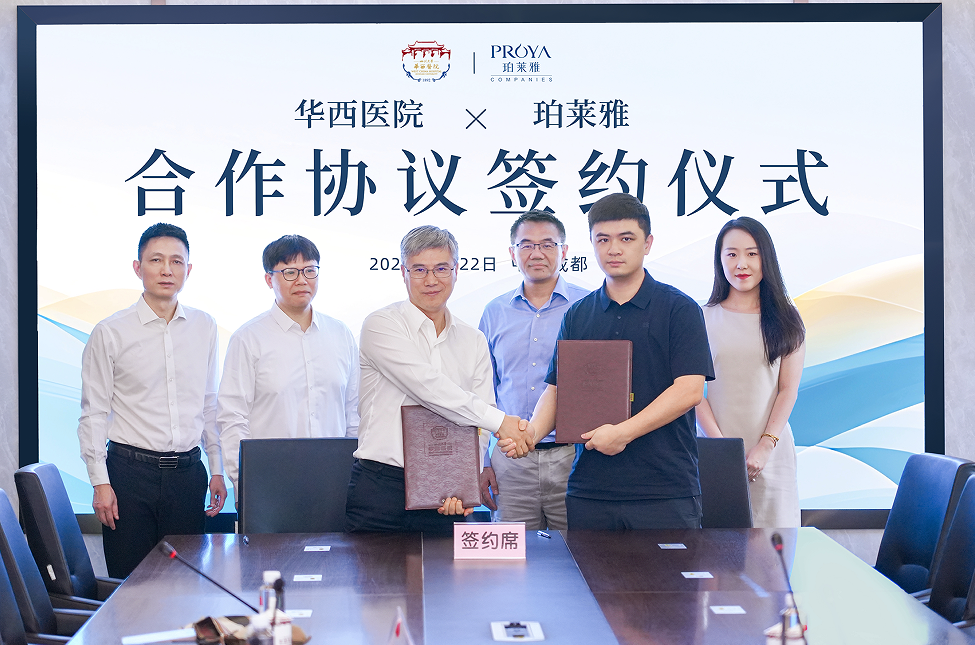
At the 2026 China Beauty Expo, longevity had already moved from concept to brand competition. Chinese brands such as Proya and Chando have all laid out "longevity"-related technology to varying degrees. Among them, Proya, together with West China Hospital of Sichuan University, focuses on mitochondria and cellular-level research, while Chando builds its product narrative around "fatigue-induced aging" and mitochondrial energy.
Pechoin also released the "White Paper on Holistic Anti-Aging for Oriental Women" in July this year, attempting to extend traditional "single-point anti-aging" toward a more systematic management approach based on the age changes and skin conditions of Oriental women. In addition, the group's Shanghai Pechoin Biopharmaceutical announced this year that it is advancing synthetic biology biomimetic protein preparation technology and supramolecular delivery technology; what is noteworthy here is that what it emphasizes is no longer just "anti-aging ingredients," but raw materials, biomanufacturing and delivery technology themselves.

Betteni offers another path, starting more from its existing efficacy skincare and skin health research and gradually extending toward longer-term skin condition management. Its high-end brand AOXMED has in recent years continued to build presence in areas such as anti-aging and post-procedure skin repair; in 2026, the company will also list proprietary PDRN, novel plant active ingredients, and R&D directions such as AI and organ-on-a-chip as key priorities, attempting to further strengthen its R&D capabilities from ingredient screening to efficacy validation.
This also shows a characteristic of Chinese brands in this round of competition: compared with international brands, the Chinese market spreads ingredient information faster, and consumers are more receptive to new technology concepts. But whether longevity can ultimately become a stable high-end value depends not on answering "is the concept new enough," but on "can the efficacy be proven."
Will "Longevity" Become a New Premium for High-End Beauty?
In the past, technology competition in the beauty industry often revolved around a new ingredient: who launched it first, who owns the patent, who can tell a more complex technology story. Today, consumer attention has begun to shift from "what ingredients are used" to "how to make ingredients work more effectively." Evidence-based efficacy, clinical validation and delivery technology are becoming important conditions for brands to build credibility.
For consumers, these changes will ultimately be simplified into a very direct question: does this thing actually work?
Therefore, what can truly support high-end pricing in the future may no longer be just "how advanced an ingredient sounds," but whether a brand can build a complete evidence system from research and testing to product efficacy.
From this point of view, "longevity" is becoming a new value language for high-end beauty.
On the one hand, consumers are increasingly willing to connect beauty with health, nutrition, medical aesthetics and lifestyle. On the other hand, what high-end beauty brands are investing in is increasingly focused on a long-term capability: research collaborations, scientific research centers, expert networks, clinical testing and continuous investment in new technologies.
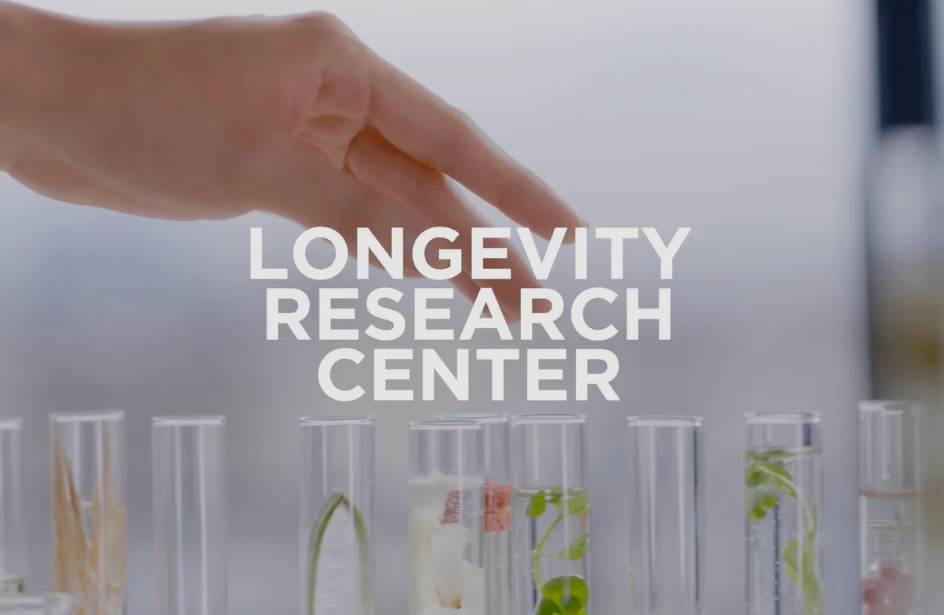
French brand Clarins' establishment of the Dr Olivier Courtin Clarins Longevity Research Center in June this year is a typical example. The company says it has conducted research around longevity for the past 30 years, accumulating 10 patents, 13 peer-reviewed papers and 12 international scientific research collaborations; the new research center further incorporates geroscience, dermatology, epidemiology, behavioral science, biomedical engineering and data science into its research system.
In summary, when beauty brands talk about "longevity" today, they are talking about at least three things:
Redefining the consumer's relationship with age — from "fighting aging" to "maintaining a good state over the long term";
Redefining the boundaries of beauty technology — from a single ingredient to a larger system comprising research, data, clinical testing, delivery and personalization;
Seeking a new source of premium for high-end beauty — when luxury brands no longer rely solely on brand history, rare ingredients and sensory experience, scientific research capability itself is becoming a new brand asset.
丨Image source: Official websites of the respective groups or brands
丨Responsible editor: LuxeCO


