
On March 20, 2026, following the landmark 26 Place Vendôme in Paris and Ginza in Tokyo, Japan, the French high jewelry maison Boucheron officially opened its first flagship store in China and third globally at Shanghai Xintiandi. Luxe.CO was invited to attend the brand's series of events.
Boucheron Global CEO Hélène Poulit-Duquesne, Global Brand Ambassador Zhou Dongyu, Kering Group President of Greater China Cai Jinqing, and representatives of the Xintiandi flagship store jointly attended the opening ceremony.
This flagship store is an important milestone in the maison's development strategy in Asia, marking a new stage in Boucheron's global market expansion. The opening of this new store is also part of the strategy that has been led by Boucheron Global CEO Hélène Poulit-Duquesne since 2015.
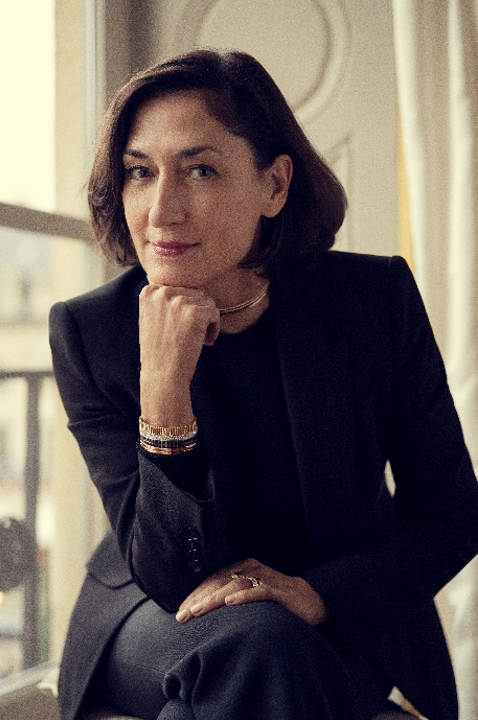
Hélène Poulit‑Duquesne, Global CEO of Boucheron, stated:
“The opening of Boucheron's first flagship store in China is undoubtedly an important milestone in the maison's history. I am delighted to open this new chapter when Boucheron has been in the Chinese market for less than a decade.
When I first joined Boucheron, I identified Asia, especially China, as a strategic priority market. At that time, we had no foundation in this market and had to start from scratch. With humility and determination, we gradually conveyed the maison's spirit, unique vision, and distinctive charm to the outside world.
In recent years, we have achieved significant growth and now have 17 boutiques in mainland China. Each new store ingeniously blends the maison's long heritage from France with local cultural elements, further deepening our emotional connection with Chinese clients. Previously, we did not have a street-front flagship store in China; now, this large flagship store located in a core area of Shanghai fills that gap. The new flagship store is in the same vein as 26 Place Vendôme—using a historic building as a carrier, paying tribute to a long heritage while injecting vitality into it.
The opening of this flagship store is not the end, but a key step toward our longer-term goals. This clearly conveys our firm commitment to the Chinese market. In the future, we will continue to increase investment in this market, actively build bridges for cultural exchange, and create unforgettable experiences for our clients. At the same time, we will always aim to uphold the pioneering spirit of Frédéric Boucheron (Frédéric Boucheron) and are committed to long-term cultivation and development in the Chinese market.”
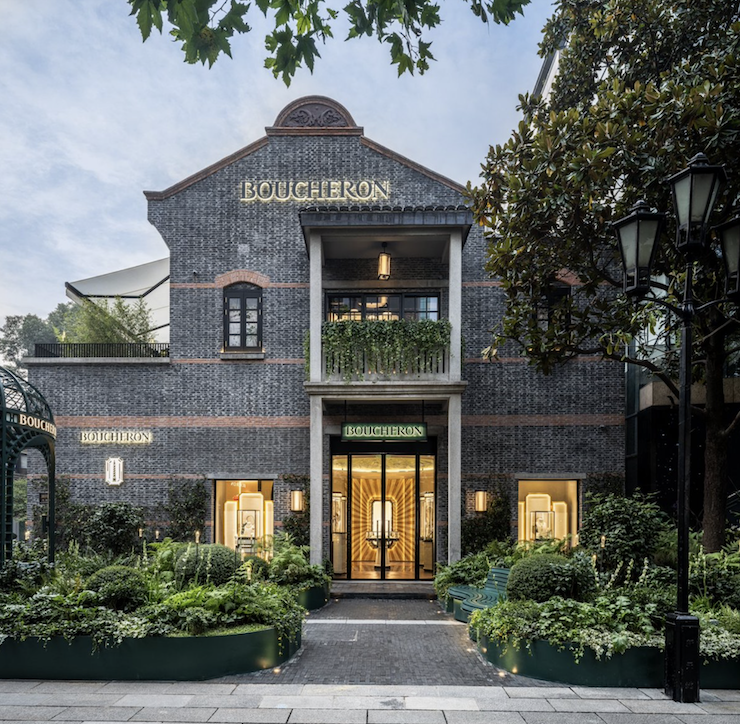
The flagship store is located in the core area of the historic Xintiandi, housed in a distinctive shikumen building, an architectural style that originated in the 19th century. The newly completed flagship store covers an area of 278 square meters and aims to serve as a bridge between China and France.
Adhering to Boucheron's DNA, the flagship store ingeniously blends historical heritage with an innovative spirit, carefully creating a space for Chinese guests that touches the heart. In line with the flagship stores in Ginza, Tokyo, and Place Vendôme, Paris, natural elements are ubiquitous in the new flagship store, accompanying guests on every visit. Here, nature, as a common language integrating the essence of Chinese and French cultures, facilitates a dialogue between the two cultures.
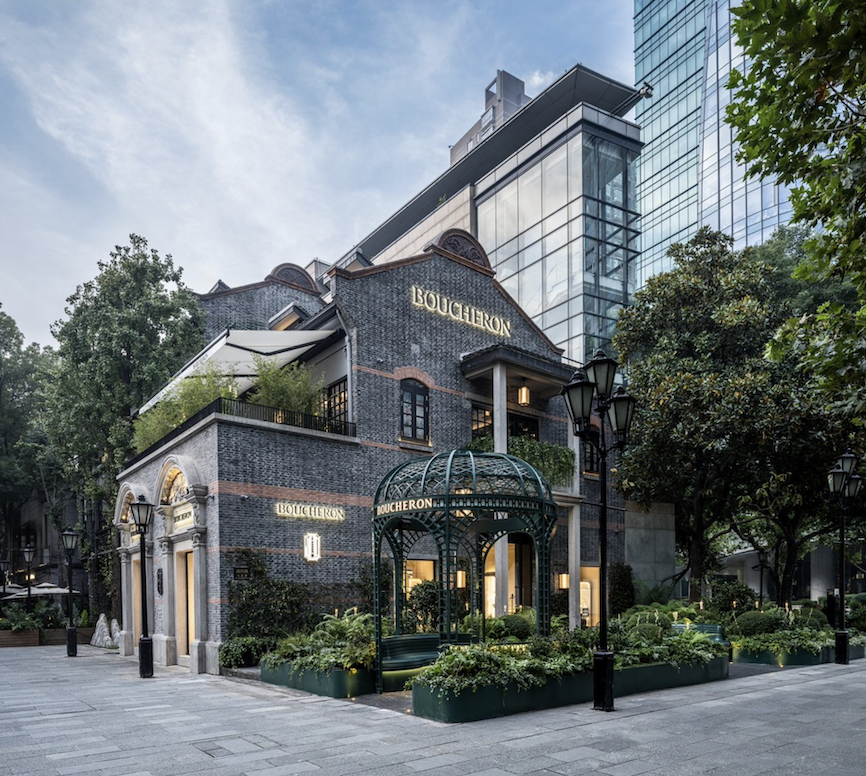
A Natural Sanctuary in the Heart of Shanghai
Boucheron aims to create a lush oasis in the heart of the bustling city of Shanghai. To this end, the maison collaborated with Mingzhu Nerval studio to design two courtyards with distinct styles, respectively reflecting French and Chinese aesthetic tones, yet both leading guests into a state of contemplation.
The first thing that catches the eye is a lush, vibrant, and untamed beauty, a recreation of the pristine nature beloved by the maison's founder, Frédéric Boucheron, and a renewed interpretation of the winter garden "Jardin d’hiver" in the flagship store at 26 Place Vendôme, Paris.
(Note: The winter garden "Jardin d’hiver" is closely related to the 19th-century European greenhouse architecture made of glass and cast iron. Such structures were often used as extensions of residences, including covered promenades, orangeries, or greenhouses; through the metal structure of the glass dome, they created transparent and bright spaces, allowing plants to flourish throughout the seasons. The pavilion at the entrance of the Xintiandi flagship store is inspired by this.)
The second entrance of the flagship store also echoes the theme of nature, paying tribute to the poetic beauty of classical Chinese gardens. Here, the moon gate, a highly representative element in traditional architecture, symbolizes a natural transition from one space to another.
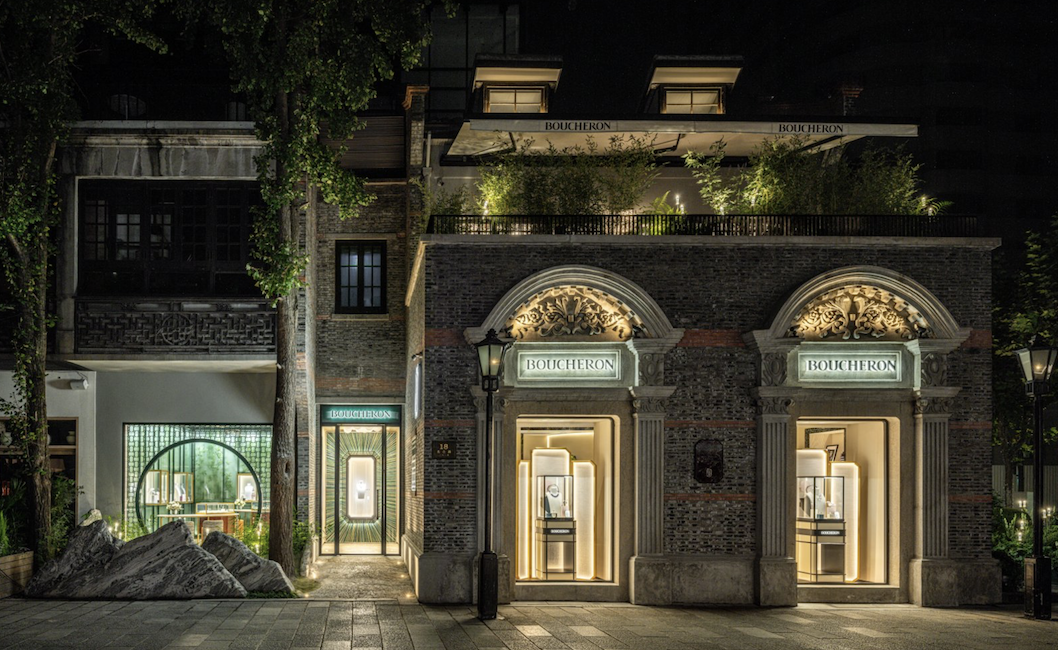
Shanghai Xintiandi: A Perfect Blend of History and Modernity
The Shanghai Xintiandi flagship store continues the design blueprint of the Place Vendôme flagship store: using a building that carries the city's memory and historical significance as a carrier to interpret its spiritual core. This architectural form is a historical imprint of Shanghai as an international metropolis, ingeniously blending Chinese tradition with Western style, and vividly reflecting the city's diverse charm through brick walls, arches, and neoclassical elements.
To pay tribute to the Chinese and French cultures embodied in this building, Boucheron, while preserving the integrity of the building's original structure, ingeniously incorporates Art Deco elements such as symmetrical aesthetics, metal ornaments, and emerald-cut shapes. These stylistic imprints complement materials that showcase Chinese cultural heritage, supplemented by more fluid curves, jointly creating a harmonious realm that feels entirely natural.
East Meets West: Harmonious Coexistence of Natural Art
Passing through the outdoors, guests can enter the interior of the flagship store.
The design of the first space follows feng shui principles, aiming to create a realm of harmonious energy flow. Natural elements are also present in the interior. The artist's Chinese forest landscape is displayed in the central window, with lingzhi mushrooms thriving, symbolizing longevity, health, and vitality.
At the same time, like the vegetation silently growing on the forest floor, lingzhi carries the subtle and rustic meaning of nature, which coincides with the philosophy upheld by Boucheron. Boucheron's iconic Serpent Bohème collection and Quatre collection are ingeniously integrated into this natural landscape.
In addition, the dome painting by artist Claire Nicolet continues this natural narrative. She incorporates her contemplation of nature into her creation, depicting a magnificent sky scene with precise brushstrokes—where an unbound imaginary world unfolds vividly, with fantastical plants flourishing among natural elements and flocks of animals.
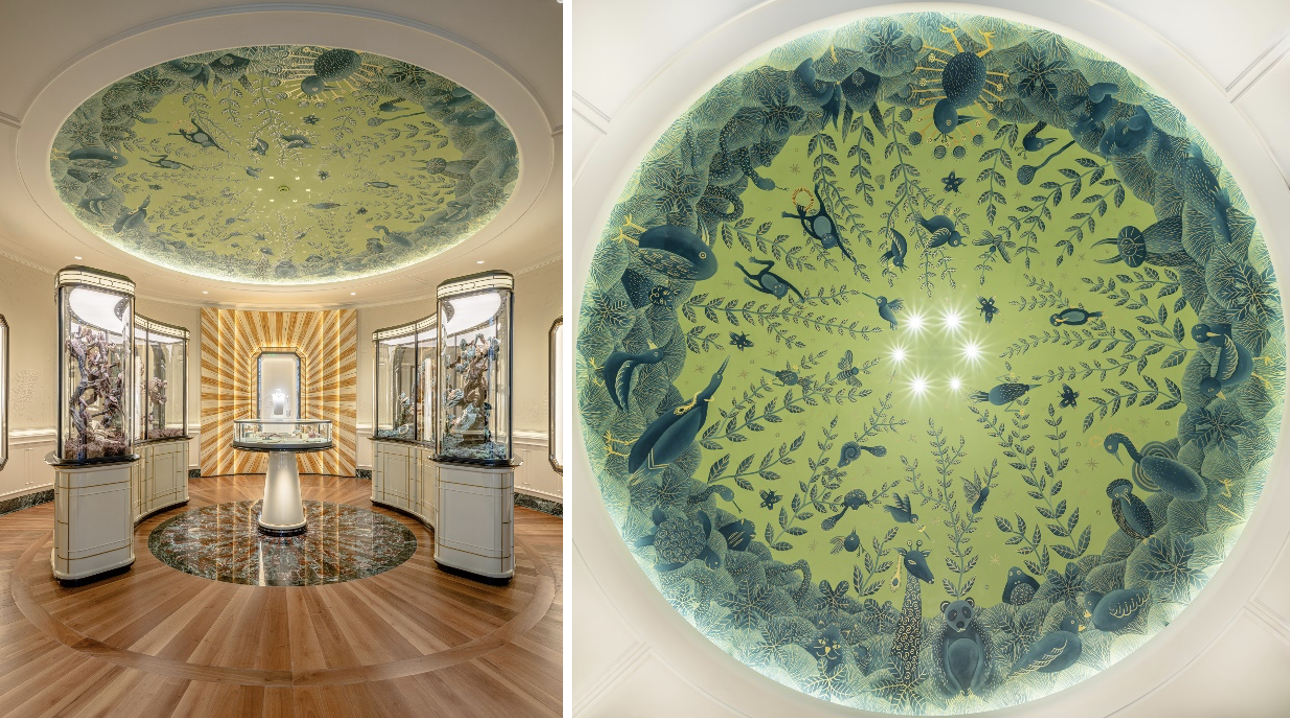
The essence of French and Chinese aesthetics is ingeniously blended through the colors green and red. These two symbolic colors are not only incorporated into the mosaic pattern of the marble floor but also extended to the central display case made with straw marquetry. To present this design, Boucheron invited artist Olga Thune-Larsen to participate; her straw marquetry works give the display case a dazzling visual effect (top left image). The red glass accents pay tribute to the profound meaning of this color in Asian culture, while green is Boucheron's signature color.
A Tranquil Realm Infused with Eastern Aesthetics
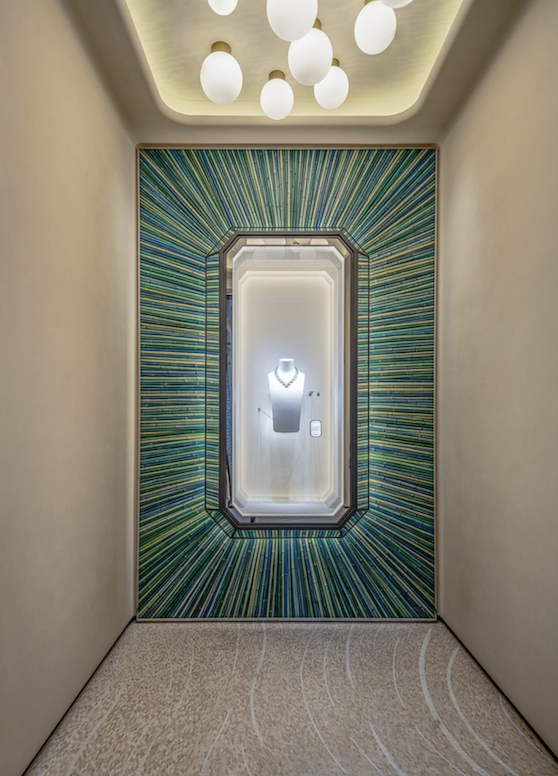
Guests stroll into the next space, which can also be reached via the second entrance of the flagship store.
Artist Lin Jiayu's work continues the imagery of the Chinese garden; she created a sculptural display case made entirely of emerald bamboo, with a striking gradient of vibrant green. This innovative design also echoes the straw marquetry at the main entrance.
The mosaic pattern on the floor gradually transitions from landforms to misty waterscapes, creating a poetic garden scene. In this setting, Boucheron displays several archival pieces that embody the maison's deep connection with China. These treasures are placed in four display cases and, with advanced technology, appear to float lightly in the air, exuding a lively poetic charm.
Guests can admire a vanity case created in 1923, made of gold and platinum, set with colored enamel and diamonds, delicately depicting a Chinese landscape painting, with a "shou" (longevity) motif in the center, expressing wishes for longevity and enduring happiness. This piece is a model of multicultural fusion during the Art Deco period, reflecting the historical imprint of European jewelers being inspired by exotic cultures. Beside it is a gold powder compact from 1925, with colored enamel outlining blooming peonies—in Chinese culture, peonies symbolize wealth and honor.
On the other side, two other pieces fully demonstrate Boucheron's creative vision. One is a pearl and diamond tiara from 1890, which follows the maison's tradition of multi-wear design, able to be worn as a crown or converted into a bracelet, vividly interpreting the maison's innovative spirit. Finally, two rose-shaped brooches from the 1960s, crafted in platinum, with blue enamel and diamonds, exquisitely interpret Boucheron's understanding of nature. These flowers seem to have just been picked from the woods and fields, then transformed into lifelike, stunning jewelry pieces.
A Poetic Wedding Salon
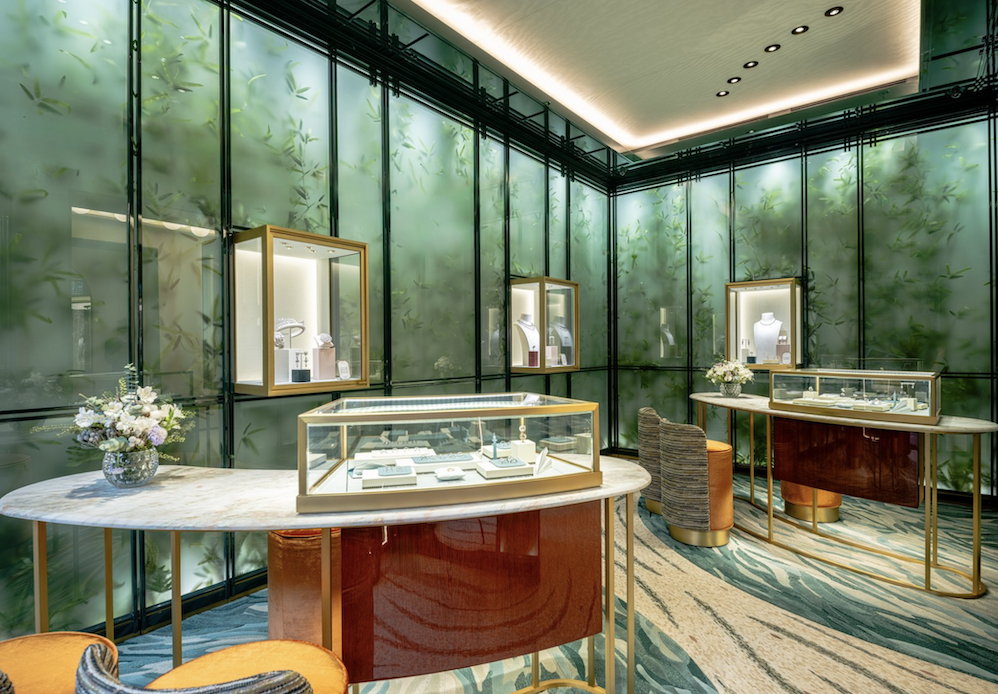
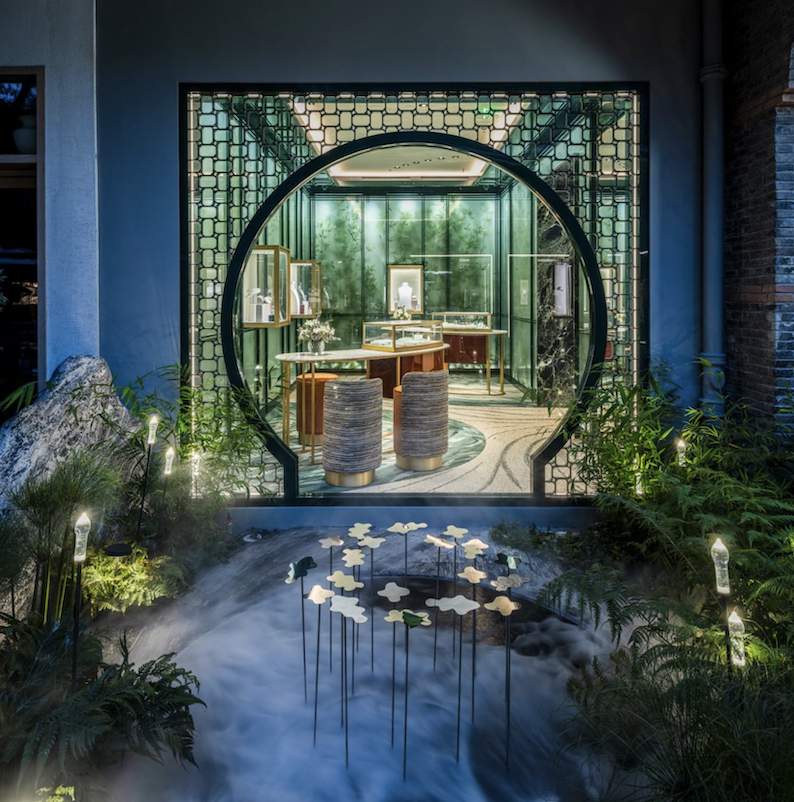
The wedding salon immerses guests entirely in an oriental atmosphere, inspired by the famous Yu Garden in Shanghai, which is surrounded by waterways. The mosaic floor tiles, carefully created by artist Pierre Mesguich, lead guests into an underwater realm. The fine sand of the riverbank and the clear ripples of the pond complement each other, while dynamic water flows and trailing aquatic plants jointly create a vibrant scene. Tai Ping carpets continue this imagery, vividly capturing the shimmering light rippling as the algae sway. Within this setting, guests feel as if surrounded by water, and looking up, they can gaze through the moon gate at the poetic scenery of a Chinese garden. This place is tranquil like Zen, where time seems to stand still, a place for rest, contemplation, and meditation.
A Pavilion Symbolizing the Blend of Chinese and French Cultures
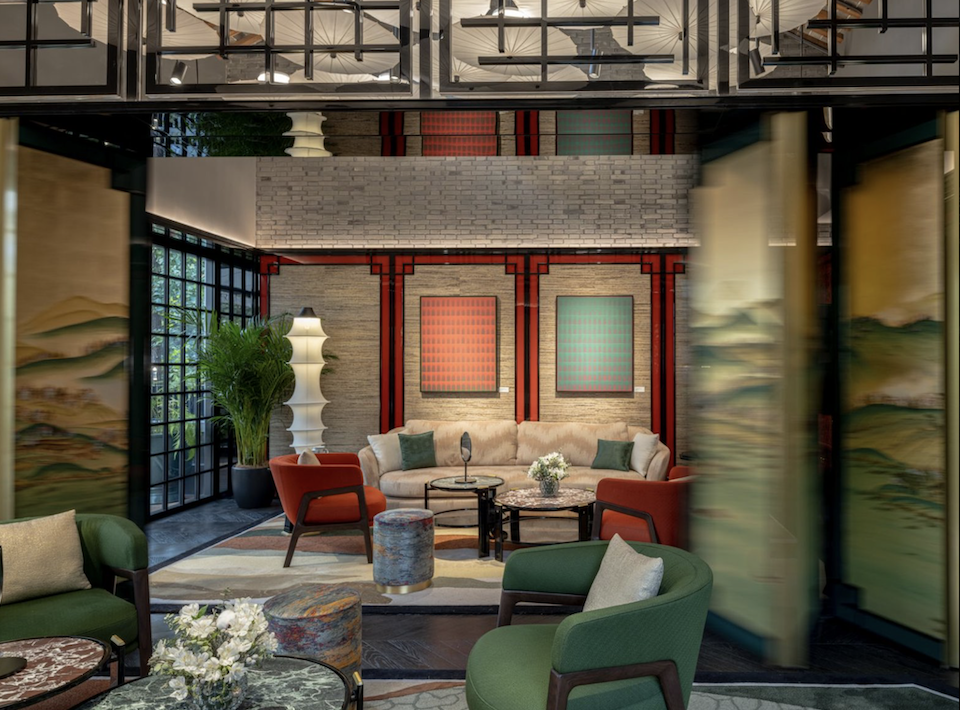
The pavilion leading to the VIP salon fully expresses the fusion of Boucheron and Chinese culture. The multi-faceted metal prism design on the walls contains ingenious details—one side reflects the maison's signature emerald green, while the other refracts red, a color of great symbolic significance in China.
Two warm VIP salons resemble the reception rooms of a real residence, welcoming guests with a comfortable family atmosphere. Exposed beams, original brick walls, and other features that preserve the building's authentic charm all highlight the essence of shikumen architecture. With a design concept of making guests feel at home, every detail is carefully considered, conveying Boucheron's family spirit. Raffia sofas adorned with Asian-style patterns complement the mountain motifs of the carpets; the colors of wood paneling, Chinese cabinets, armchairs, and marble tabletops alternate between red and green, achieving an exquisite fusion of Chinese and French cultural aesthetics.
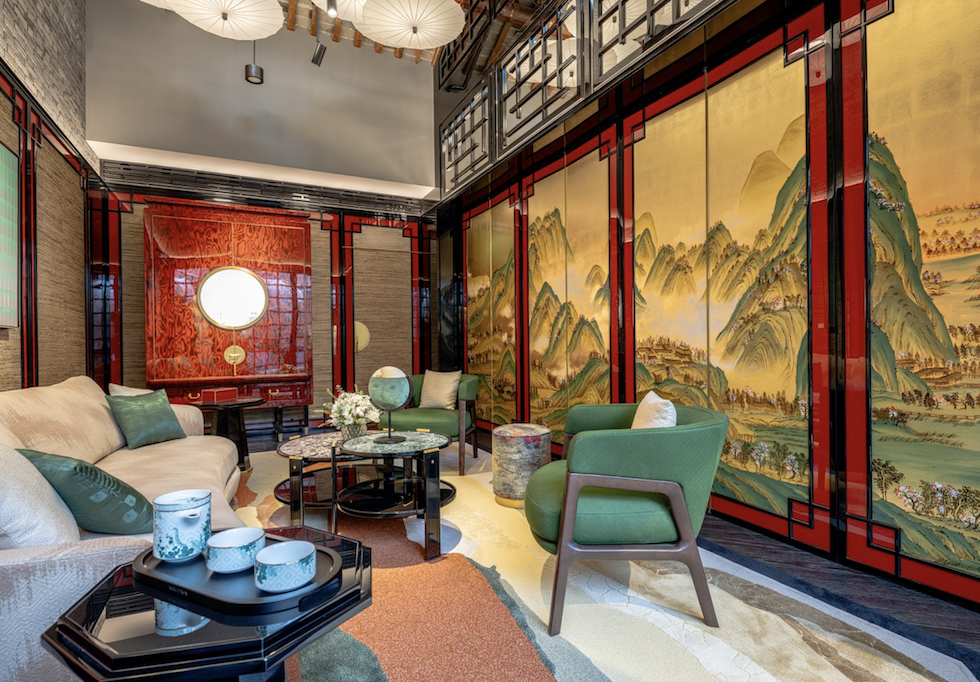
The walls are decorated with De Gournay wallpaper, depicting a dreamlike Asian landscape on a gold leaf background, inspired by Wang Ximeng's masterpiece A Thousand Li of Rivers and Mountains, now in the collection of the Palace Museum in Beijing. This 12th-century Chinese painter created the painting for Emperor Huizong of Song, who was himself an outstanding painter and art patron. In one of the salons, works by contemporary artist Peng Yong are also displayed. This artist uses repetitive brushstrokes to depict aerial views of large Chinese cities, capturing the orderly, endlessly extending street grids. The maison displays here a painting from his Three Thousand Thoughts in One Moment series.
About Boucheron
Boucheron was founded in 1858 by Frédéric Boucheron and has been passed down and innovated through four generations. In 1893, Frédéric Boucheron became the first contemporary outstanding jeweler to open a boutique on Place Vendôme, and his highly creative designs established the brand's exceptional position as a leader in high jewelry and watchmaking. Boucheron is part of the Kering Group and currently has 17 boutiques in mainland China, covering Shanghai, Beijing, Chengdu, Shenzhen, Nanjing, Xi'an, Wuhan, Guangzhou, Hangzhou, Chongqing, Sanya, and Haikou.
|Source: Official Press Release
|Image Credit: Provided by the Brand
|Editor: Elisa


