For a long time, the underlying logic of China's gold products consumption has been relatively simple and extensive—gold price, gram weight, and value preservation are unavoidable keywords. Gold is first an asset, and then a consumer product.
Today, the reasons consumers buy gold jewelry are becoming more multi-dimensional. "Aesthetic value," especially "wearability value," is accounting for an increasingly high proportion of consumer decisions.
When gold jewelry customers no longer only ask "is it worth it," but also ask "does it look good," "does it suit me," "can I wear it daily," "can it express my aesthetics and identity"; when the demand for gold jewelry is no longer driven solely by wedding gifts, gifts from elders, or family asset allocation, but increasingly moves toward self-reward, daily wear, and personal expression, the competitive logic of the industry also changes accordingly.
In this round of tremendous change,thosebrands thathave made forward-looking investments arerevealing newpotentialand momentum.
CHJ Jewellery is one of them.
Before original design and intangible cultural heritage gained market attention, CHJ Jewellery began systematic布局: in 1999, it launched the first China Jewelry Design Competition; during the millennium, it began systematically collecting traditional Chinese gold and silver artifacts and jewelry; in 2013, it built the Zhenbao Museum, and has continued to operate the Intangible Cultural Heritage Filigree Workshop and the Global Filigree Creation Residency Program.
Thirty years of accumulated cultural assets, craftsmanship, and design capabilities have now led to a clearer brand direction:
Interpreting Eastern aesthetics through fashion design, creating contemporary Eastern jewelry that is more suitable for wearing.
Now, CHJ Jewellery's spotlight is growing brighter. Recently, the brand has entered high-end luxury commercial complexes such as Shanghai IFC and Changsha IFS, officially announced actress Zhu Zhu as its first global brand ambassador, and accelerated its global expansion. CHJ Jewellery's 2025 annual report shows revenue approaching ten billion, with net profit attributable to shareholders up 156.6%, and profit quality rapidly improving.

CHJ Jewellery Shanghai IFC Store
CHJ Jewellery is declaring an answer to a question: How can Chinese jewelry turn Eastern aesthetics into jewelry that today's women are willing to wear, suitable to wear, and able to appropriately express themselves?
1. Eastern culture is not a material library, but an aesthetic root system
What does a contemporary gold jewelry piece that truly belongs to an Eastern perspective and can truly be worn look like?
It must have cultural roots different from the West, while not being bound by traditional aesthetic paradigms. It needs to re-understand changes in wearing scenarios, rethink how patterns convey auspicious meanings, find the right balance between decoration and blank space, and strike a balance between ritual sense and wearing comfort...
All of this requiresdeep cultural understanding.AndCHJ Jewellery's investment in Eastern culture did not start with marketing communications, but with collection, protection, and research.
Founder Liao Chuangbin observed during his career that old jewelry carrying folk aesthetics, life memories, and handicraft skills was often ultimately sent to the furnace to be recast.
This cultural loss pained him, so starting in 2007, Liao Chuangbin began systematically collecting traditional Chinese folk ornaments, hoping to use corporate strength for rescue and protection.

Collection of CHJ Jewellery Zhenbao Museum
This process is far more than buying and selling. Many collectors have deep feelings for the objects, and each handover is a matter of trust.
For example, one hundred silver dragon bracelets from an ethnic minority in Qiandongnan were the life's work of Guizhou collector Mr. Fang Tianran over more than half a century. Liao Chuangbin visited him multiple times over three years and finally moved Mr. Fang, who transferred the hundred dragon bracelets along with the "Hundred Dragons Residence" inscription given to him by Tianjin calligrapher Sun Jiatan to CHJ Jewellery for preservation.
In 2013, CHJ Jewellery built the Zhenbao Museum in its hometown of Chaoshan. The museum houses more than three thousand traditional gold and silver artifacts and jewelry from the Tang Dynasty to the Republic of China.
These objects preserve the long-term experience of the Chinese people regarding the body, etiquette, identity, emotion, and aesthetics, and also provide CHJ Jewellery with an underlying logic of Eastern aesthetics.


CHJ Jewellery Zhenbao Museum
How to view patterns, how to understand proportions, how to find the right balance between subtlety and flamboyance, how to make a piece of jewelry both ritualistic and close to the body and life—these questions can all find their origins in traditional artifacts.
This is also where CHJ Jewellery differs from many "elemental guochao" brands.
2. Translating traditional culture to establish a contemporary design language
One of CHJ Jewellery's most important tasks over the past thirty years has been trying to transform Eastern culture and contemporary design language from "respectful distance" to "inseparable intimacy."
If culture remains in museums, it is difficult to truly entertoday'slife.
At its founding, CHJ Jewellery wrote "design" into its brand DNA. At that time, China's jewelry industry still focused on "material weight over craftsmanship," with gold jewelry competing mainly on gram weight, purity, and value preservation. CHJ Jewellery went against the grain, making design one of its core capabilities and focusing on original jewelry with more fashion attributes and aesthetic expression.
CHJ Jewellery, as the first domestic A-share listed fashion jewelry company, was listed on the Shenzhen Stock Exchange. This identity itself reflects the brand's early judgment that "jewelry is more than gold."
In 2008, filigree inlay was inscribed on the national intangible cultural heritage list. The following year, CHJ Jewellery established the Filigree Handicraft Workshop, systematically investing in the protection, inheritance, and innovation of this traditional craft.

CHJ Jewellery Filigree Handicraft Workshop
On the one hand, the brand preserves the roots of traditional techniques through the Filigree Handicraft Workshop, inviting master craftsmen from the former Beijing Filigree Inlay Factory who are well-versed in court techniques to teach and cultivate young artisans, so that filigree craftsmanship can regain a stable soil for inheritance.
On the other hand, CHJ Jewellery, through the "Global Filigree Creation Residency Program," invites global designers, artists, and traditional artisans to create together, bringing intangible cultural heritage craftsmanship into the contemporary design context.
Designers who have collaborated with brands such as LV and Issey Miyake, including Oki Sato, Dutch artist Aldo Bakken, avant-garde independent designer brand JACQUES WEI, jewelry designer Xue Zhangni from a jade carving family, and designer brand CUNZU featuring Miao silver craftsmanship, have all participated in this program.
The collaboration between designers and master craftsmen is not always smooth.
For example, traditional filigree inlay includes eight major techniques: clamping, filling, assembling, welding, stacking, building, weaving, and braiding. Oki Sato tried using only three simple steps of filigree craftsmanship to create the minimalist and lightweight "Filigree Candy" series. This design initially confused the master craftsmen—can such a minimalist design still be called filigree?
But it is precisely through such collisions that traditional craftsmanship begins to be re-understood. Filigree no longer clings only to the complete stacking of techniques, but begins to extend into a simpler design language suitable for daily wear.

Works from CHJ Jewellery's "Global Filigree Creation Residency Program"
Since then, iconic product series such as "Intangible Cultural Heritage Filigree · Wind and Rain Bridge," "Ruyi," "Crescent Moon," "Full Moon," and "Rising Clouds" have been born one after another. These works prove that Eastern craftsmanship does not only belong to the past; it can also become a way of wearing that expresses today's women's aesthetics, temperament, and identity.
Looking back today, CHJ Jewellery's long-term direction echoes the changes happening in the industry. The design capabilities, cultural assets, and craftsmanship resources accumulated over the past thirty years are beginning to enter a release cycle.
3. From display to expression, understanding the emotional needs behind wearing
Serving the ultimate purpose of "wearing," CHJ Jewellery tries to stand closer to contemporary female consumers to understand what kind of jewelry they really need.
The new generation of women's expectations for gold jewelry are different from the previous generation.
Since 2013, CHJ Jewellery has established the Color Gold Jewelry Trend Research Office, and for many consecutive years has partnered with experts in media, fashion, design, and art to release annual color gold jewelry trend forecasts. This project is not just about judging trends in design and styles; more importantly, it continuously observes changes in Chinese women's consumer psychology, lifestyle, and aesthetic expression.
As stated in the latest trend report: "In times when uncertainty has become the norm, a counterforce is growing—the desire for real materials, the reliance on tangible value, the trust in things that can transcend time... The relationship between gold and women is becoming more intimate and equal than ever before."
This insight also responds to another question: Why does CHJ Jewellery place the intangible cultural heritage filigree series in an increasingly important position?
In a restless era, wearing a piece of jewelry with intricate craftsmanship and enduring texture is itself a gesture of certainty. Filigree once represented court luxury and identity order, and is highly compatible with contemporary women's focus on themselves. Chinese women's aesthetic awareness no longer follows a unified standard but is establishing its own discourse power. Which jewelry to match with which outfit, what aura to show on what occasion—these choices are the externalization of women's growing self-awareness.

CHJ Jewellery's parent company's 2025 annual report shows that among the brand's main consumer groups, post-80s, post-90s, and post-00s account for 85%, and the core users are "youthful, beautiful, fashion-chasing" urban women.
Behind these data reflects changes in the consumer base and consumption scenarios of gold jewelry. The consumption scenarios of gold jewelry are no longer just wedding necessities, gifts from elders, or family asset allocation, but increasingly part of women's self-pleasing consumption, daily matching, social expression, and cultural identity.
On the communication side, CHJ Jewellery has also begun to more clearly establish its female image expression.
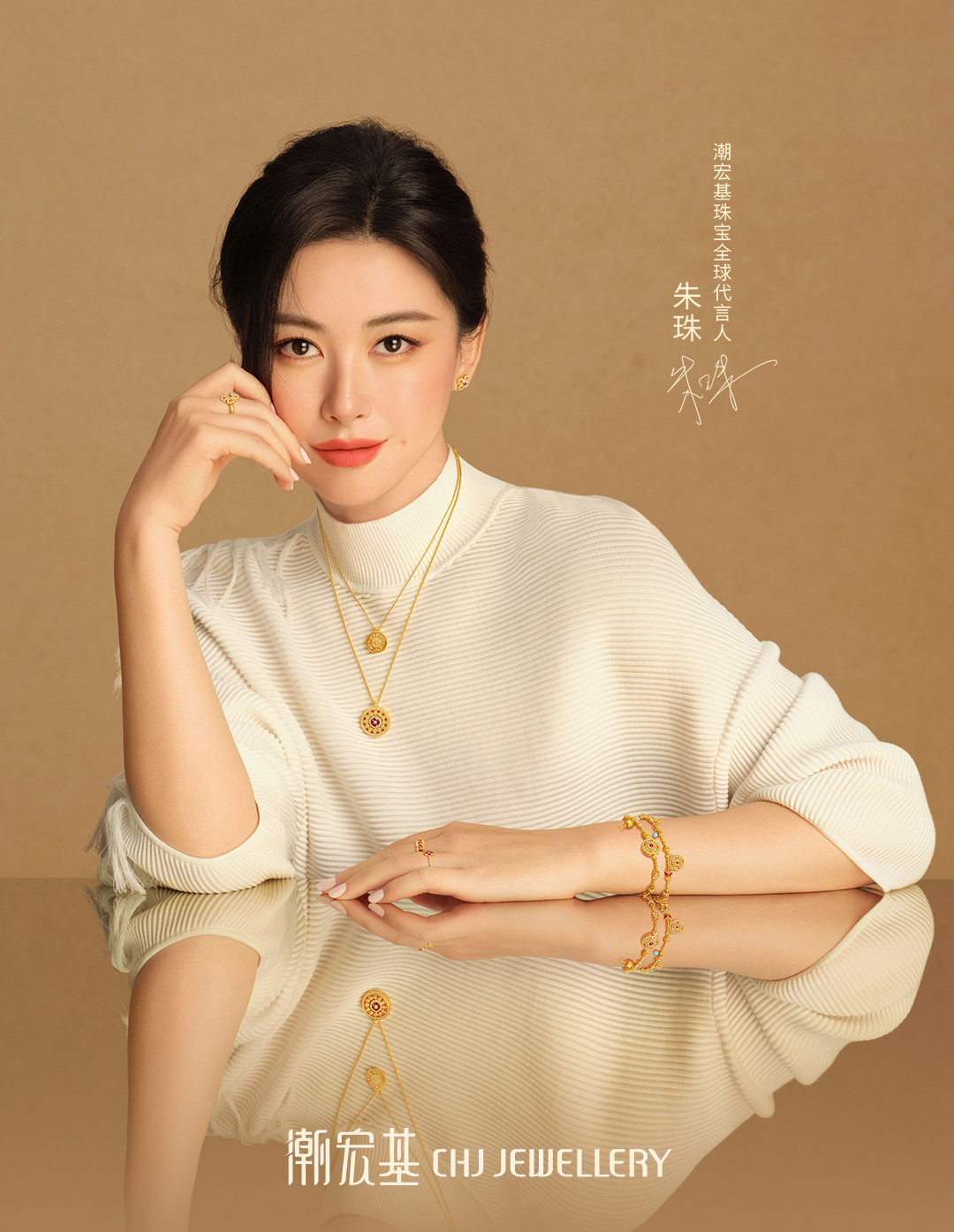
In 2026, the brand officially announced actress Zhu Zhu as its global brand ambassador. Her independence, composure, elegance, and Eastern beauty are highly compatible with the contemporary Eastern jewelry image that CHJ Jewellery is building.
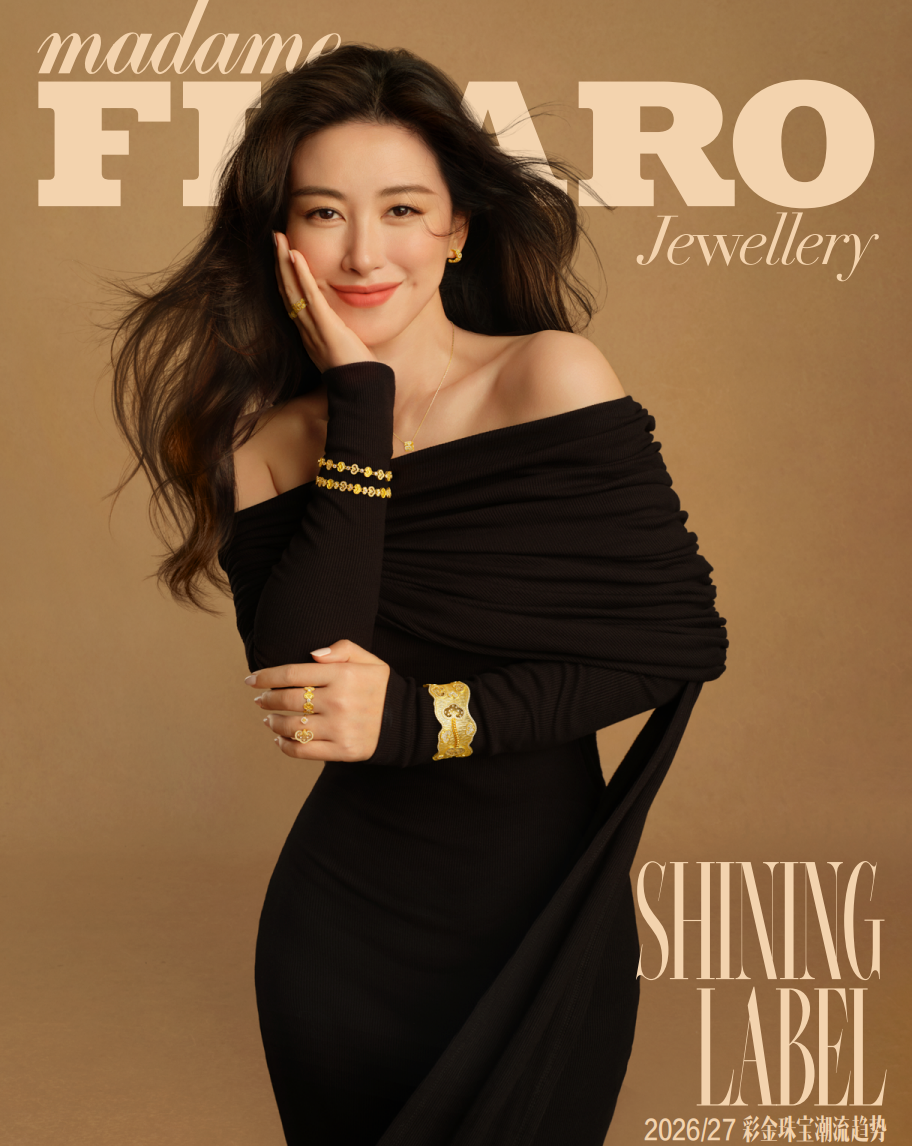
The latest color gold jewelry trend report by CHJ Jewellery in collaboration with Madame Figaro magazine, featuring CHJ Jewellery global brand ambassador Zhu Zhu on the cover
She is not "displaying jewelry" in the traditional sense; she is more like the contemporary female image CHJ Jewellery wants to communicate with: aesthetically aware, experienced, self-possessed, and with a natural identification with Eastern culture.
What consumers ultimately remember is not just a craft, a museum, or a cultural symbol, but how a brand understands them: understanding why they need a piece of jewelry, understanding in what scenarios they want to wear it, and understanding what kind of self they hope to express through jewelry.
4. Innovating cultural content to bring brand aesthetics into local scenes and lifestyles
In recent years, CHJ Jewellery has continued to create the "One City, One Intangible Cultural Heritage" campaign. The brand has visited ten cultural cities including Chengdu, Hangzhou, Wuhan, Beijing, and Nanjing, combining intangible cultural heritage filigree with local intangible cultural heritage elements. The integrated art forms include bamboo weaving, Han embroidery, velvet flowers, feather fans, shadow puppetry, colored glaze, and more.
In each city, CHJ Jewellery co-creates with local cultural elements and brand filigree craftsmanship, and also integrates local intangible cultural heritage elements into store design and content communication. Through cultural experiences, consumers feel cultural expressions related to their city, life experience, and aesthetic memory.
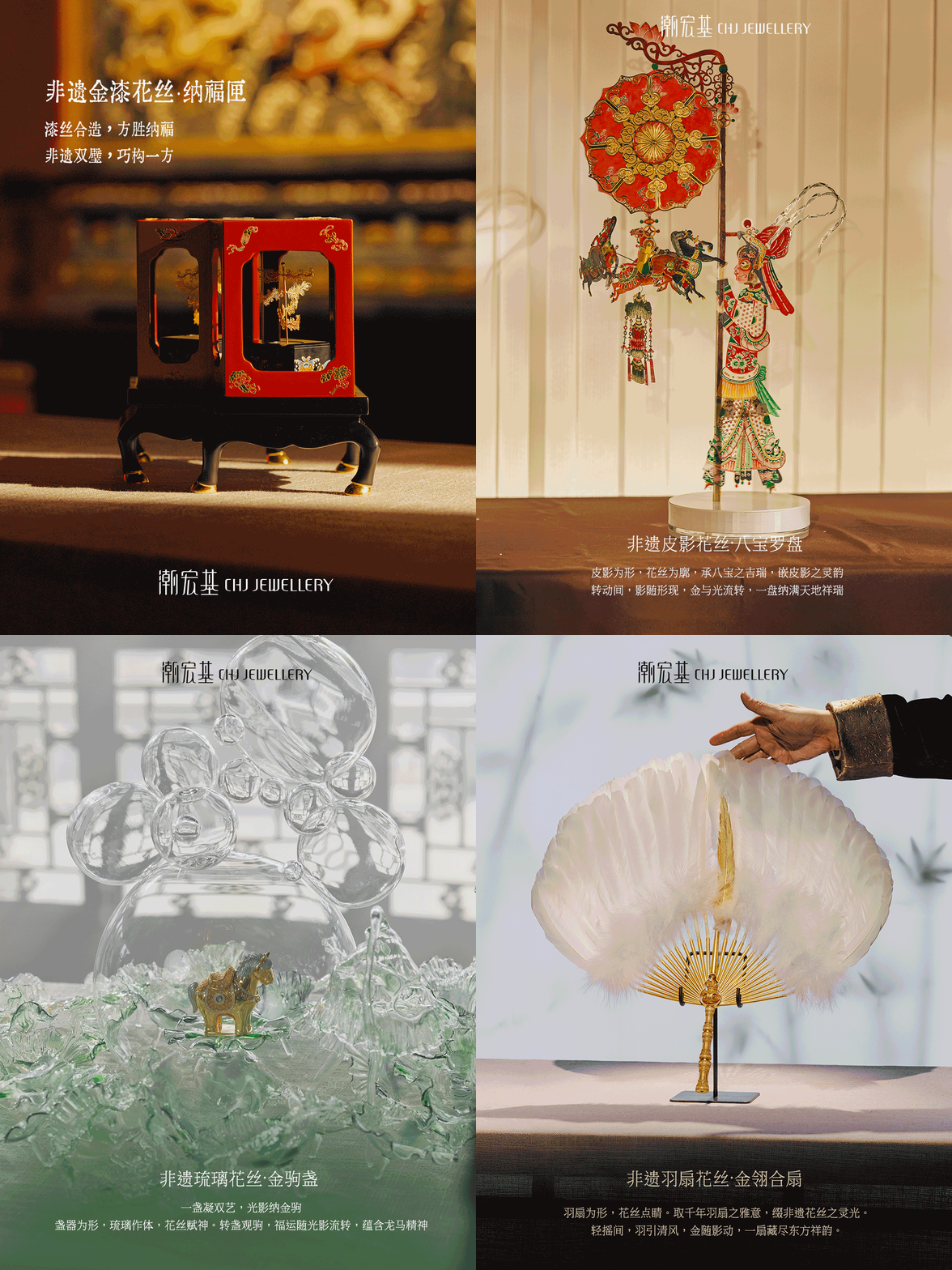
Co-created works from CHJ Jewellery's "One City, One Intangible Cultural Heritage"
To truly let consumers perceive Eastern aesthetics, beyond products, space, content, and experience are also needed.
This approach allows CHJ Jewellery's Eastern aesthetics to exist not only in brand narratives but also in store spaces, city events, content communication, and consumer experiences.
At the same time, CHJ Jewellery continues to polish deeper content expressions. For example, during Cultural and Natural Heritage Day, it launched content such as "Hands with Measure, Gold Takes Form," telling the inheritance stories of three generations of craftsmen—old, middle-aged, and young—in the intangible cultural heritage filigree workshop.

These communications do not pursue short-term hot topics but continuously build a stable cultural temperament for the brand: it has both the depth of tradition and contemporary expression; it respects craftsmanship and understands today's aesthetics; it can tell Eastern culture and bring Eastern culture into contemporary women's wearing life.
5. CHJ Jewellery Intangible Cultural Heritage Craft Pavilion, a concentrated expression of high-end value
In 2026, at the milestone of the brand's 30th anniversary, CHJ Jewellery shows a leap in higher momentum on the channel side.
In May this year, CHJ Jewellery opened its first Intangible Cultural Heritage Craft Pavilion in East China at Shanghai IFC, bringing the brand's years of intangible cultural heritage collection, filigree craftsmanship, and creative works into core cities' high-end luxury commercial complexes in the form of a boutique store.
The Intangible Cultural Heritage Craft Pavilion is not an upgraded version of an ordinary store but a spatial expression of CHJ Jewellery's new brand positioning. This year, it has also successively entered core business districts and commercial complexes such as Changsha IFS and Kunming Plaza 66.

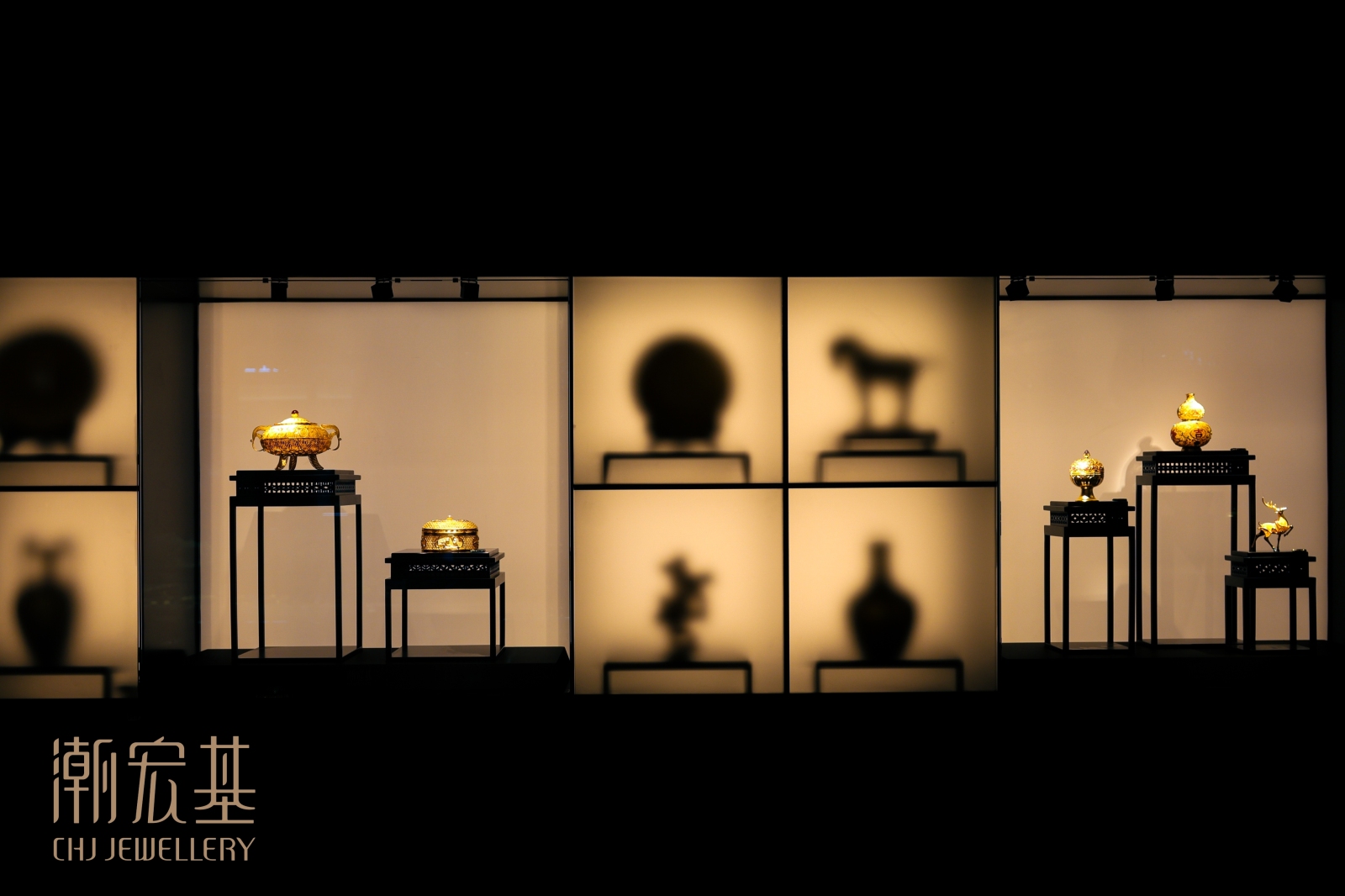
In the Intangible Cultural Heritage Craft Pavilion, the Zhenbao Museum's collection provides cultural roots, the Intangible Cultural Heritage Filigree Workshop provides craftsmanship support, the Global Creation Residency Program provides contemporary design translation, and product display, spatial narrative, and private services together constitute a more complete brand experience.
It provides consumers with a place to understand Eastern aesthetics, perceive intangible cultural heritage craftsmanship, and try on contemporary Eastern jewelry; it also enriches high-end commercial complexes with Eastern aesthetic content that has Chinese cultural recognition, design expression capability, and high-end experience value.
In 2025, CHJ Jewellery's parent company achieved operating revenue of 9.318 billion yuan, a year-on-year increase of 42.96%; net profit attributable to shareholders of 497 million yuan, a year-on-year increase of 156.66%; and the jewelry business reached a historic high.
Behind these data is the combined result of channel upgrades, product structure optimization, brand momentum enhancement, and long-term cultural asset accumulation.
As CHJ Jewellery enters higher-momentum commercial arenas, the investments it has made over the past thirty years around Eastern culture, intangible cultural heritage craftsmanship, and contemporary design are also beginning to gain more complete commercial expression space.
Conclusion
CHJ Jewellery's thirty years have coincided with the complete cycle of China's rising consumer power, the return of cultural confidence, and the awakening of aesthetic awareness.
In this process, the brand has not only understood gold jewelry as an asset, nor treated Eastern culture merely as marketing material, but has consistently done three things:
Seek the roots of Eastern aesthetics from more than three thousand traditional gold and silver artifacts;
Protect the lineage of intangible cultural heritage craftsmanship through the Filigree Handicraft Workshop;
And, with the help of contemporary design, trend forecasting, city co-creation, and high-end spaces, transform these cultures and crafts into jewelry that today's women are willing to wear.
This has given CHJ Jewellery a unique position in the gold jewelry industry.
It is neither a purely traditional gold brand nor a fashion jewelry brand that only chases trends, but has established its own contemporary Eastern jewelry expression between asset value, design value, and cultural identity.
When gold is truly designed to be suitable for contemporary women to wear, it can build stronger product value and brand value on top of gold's asset value.
CHJ Jewellery's thirty years perhaps illustrate this point:
The path for Chinese gold jewelry brands to move upward is not just about making products more expensive, but about making them more content-rich, more aesthetically attuned, more suitable for wearing, and more representative of today's Chinese women's self-expression.
| Image source: Provided by CHJ Jewellery; CHJ Jewellery official Weibo
| Editor: Zhu Ruoyu