1914 was an important year tied to "tennis" for both Shanghai and Wilson.
That year, in preparation for the Far Eastern Championship Games, Shanghai's sports community, together with St. John's University, the University of Shanghai and other institutions, held a tennis qualifying tournament for East China, bringing Chinese tennis players into a more systematic competitive framework for the first time. In the same year, Wilson launched its first all-wood tennis racket in Chicago, laying the core foundation for its later global renown in professional tennis.
More than a century later, the tennis threads of Shanghai and Wilson have crossed paths once again, striking an extraordinary spark.
The 2026 Rolex Shanghai Masters officially opened on October 8, and Wilson has opened a new city concept store — Qingdi — at 338 Zizhong Road, Shanghai Xintiandi. The significance of this store goes beyond an upgrade of its product retail space: it is Wilson's attempt in China to translate a century-old tennis brand asset into a comprehensive experience of contemporary tennis lifestyle.
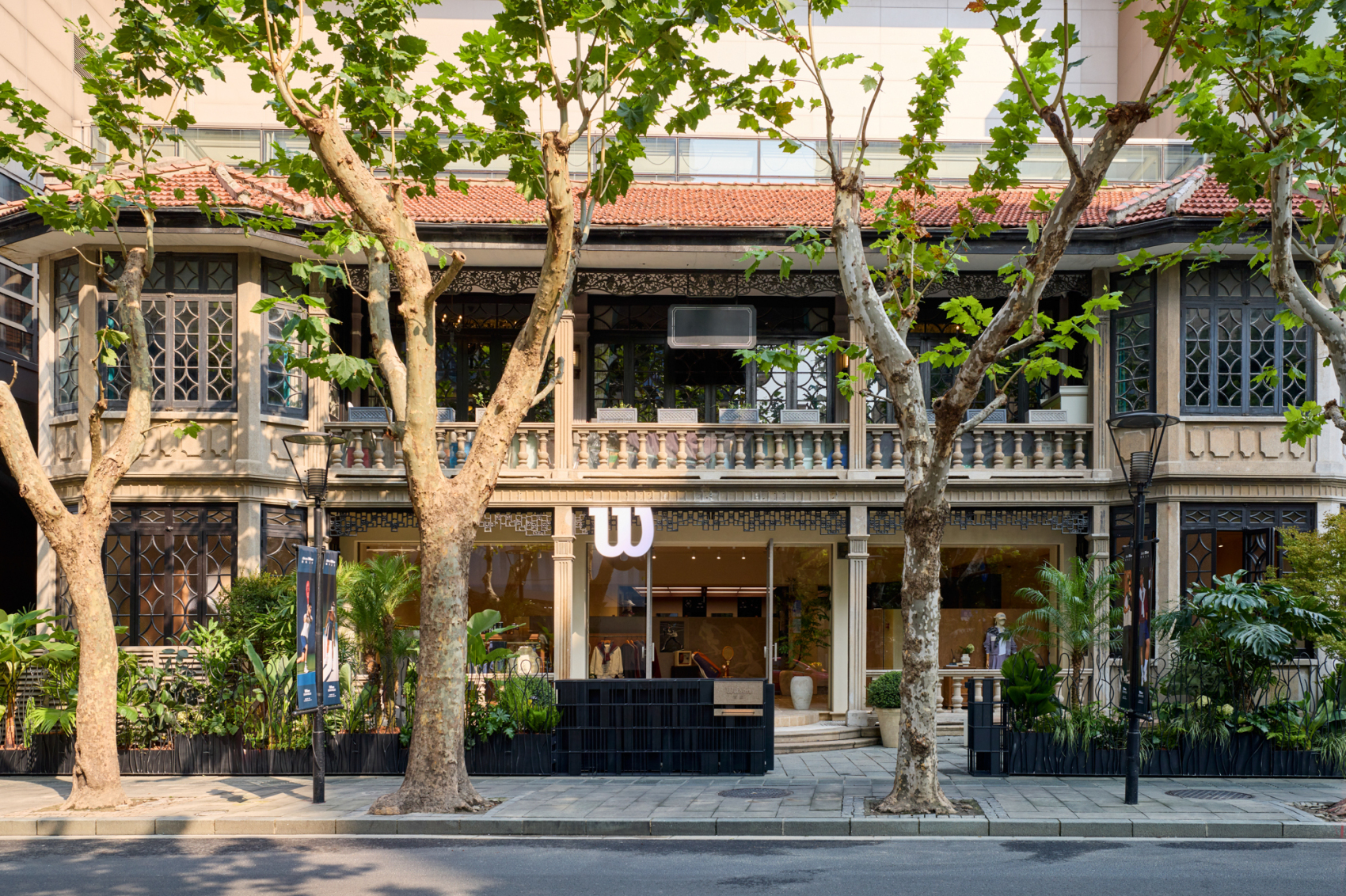
For a long time, consumers' perception of Wilson has mainly come from the rackets swung in athletes' hands, the tennis balls bouncing on court, and the stacks of gear of all sizes on the shelves of tennis specialty stores. As one of the most recognizable and professional classic brands in global tennis, Wilson has long erected monuments in the hearts of professional players and tennis enthusiasts. But how to translate this deep professional capability into brand content that mass consumers can perceive and resonate with, and let it settle into more substantial long-term brand value, has been one of Wilson's most central strategic questions in recent years.
In recent years, participation in and attention to tennis in China have been on an accelerating upward trajectory. Data from the General Administration of Sport of China shows that the 2025 China tennis season attracted nearly one million spectators on site, with box office revenue of RMB 250 million, driving related consumption of more than RMB 16 billion. The 2026 China tennis season (including the China Open, the Shanghai Masters, the Wuhan Open and other events) is in full swing. Take the China Open, which started first: as of October 4, cumulative attendance was up 37% year on year.
The beauty of competition and the vibrant energy radiating from tennis are spreading beyond professional courts, inspiring more and more sports enthusiasts and sports-fashion consumers. Sports brands — especially those built around "tennis" — must respond to this wave, upgrading their retail concepts and brand communication to unleash their deeper potential with a stronger stance, seize current market opportunities and lead future trends.
At Qingdi in Shanghai, Wilson has delivered a brand-new answer.
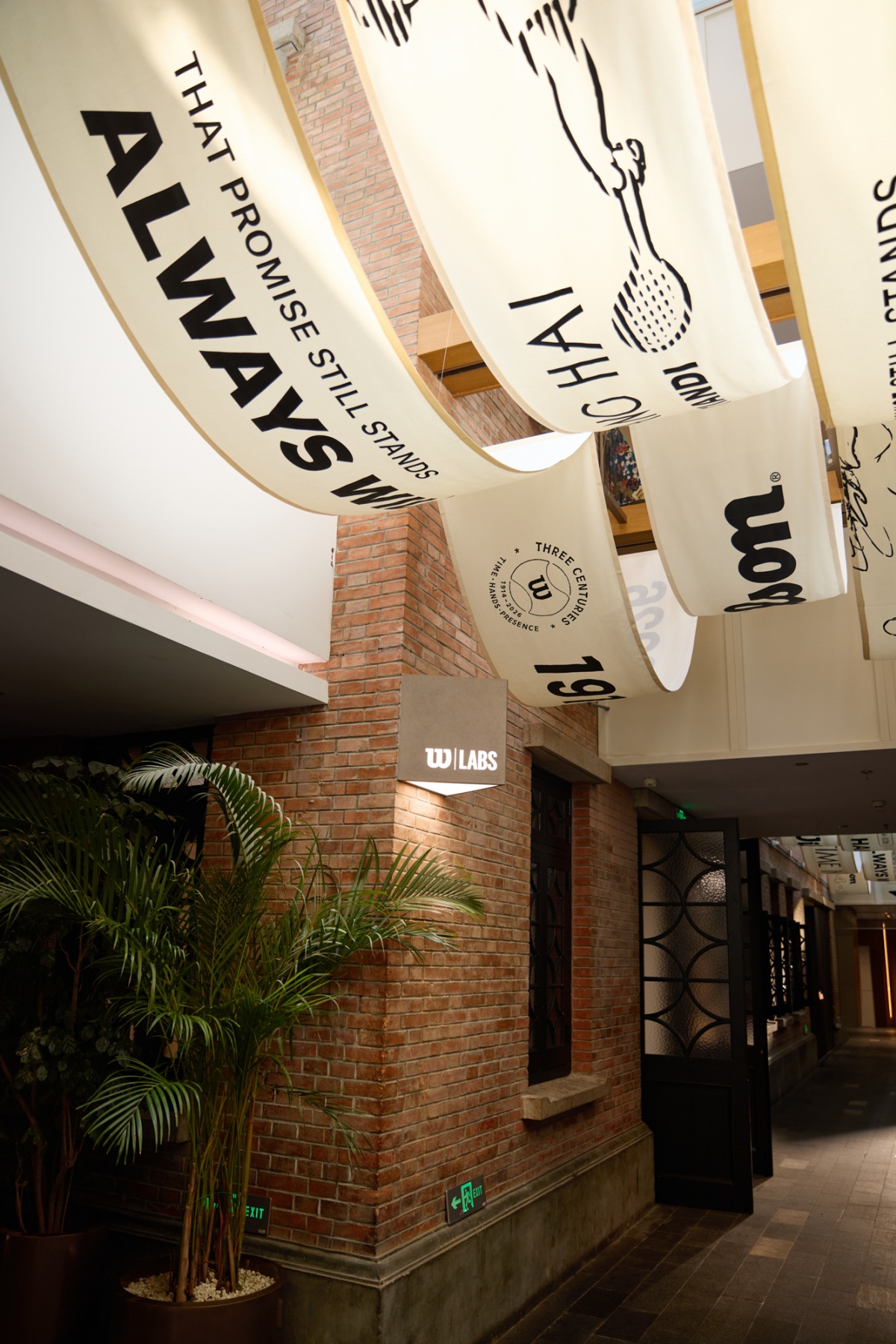
How Can a Century of History Become Perceivable Brand Equity?
To fully present its more than century-old tennis brand assets, Wilson has created a space that combines exhibition and social functions. Notably, this presentation is not a simple reproduction of static historical archives, but a carefully designed set of rich content and vivid experiences that consumers can immerse themselves in.
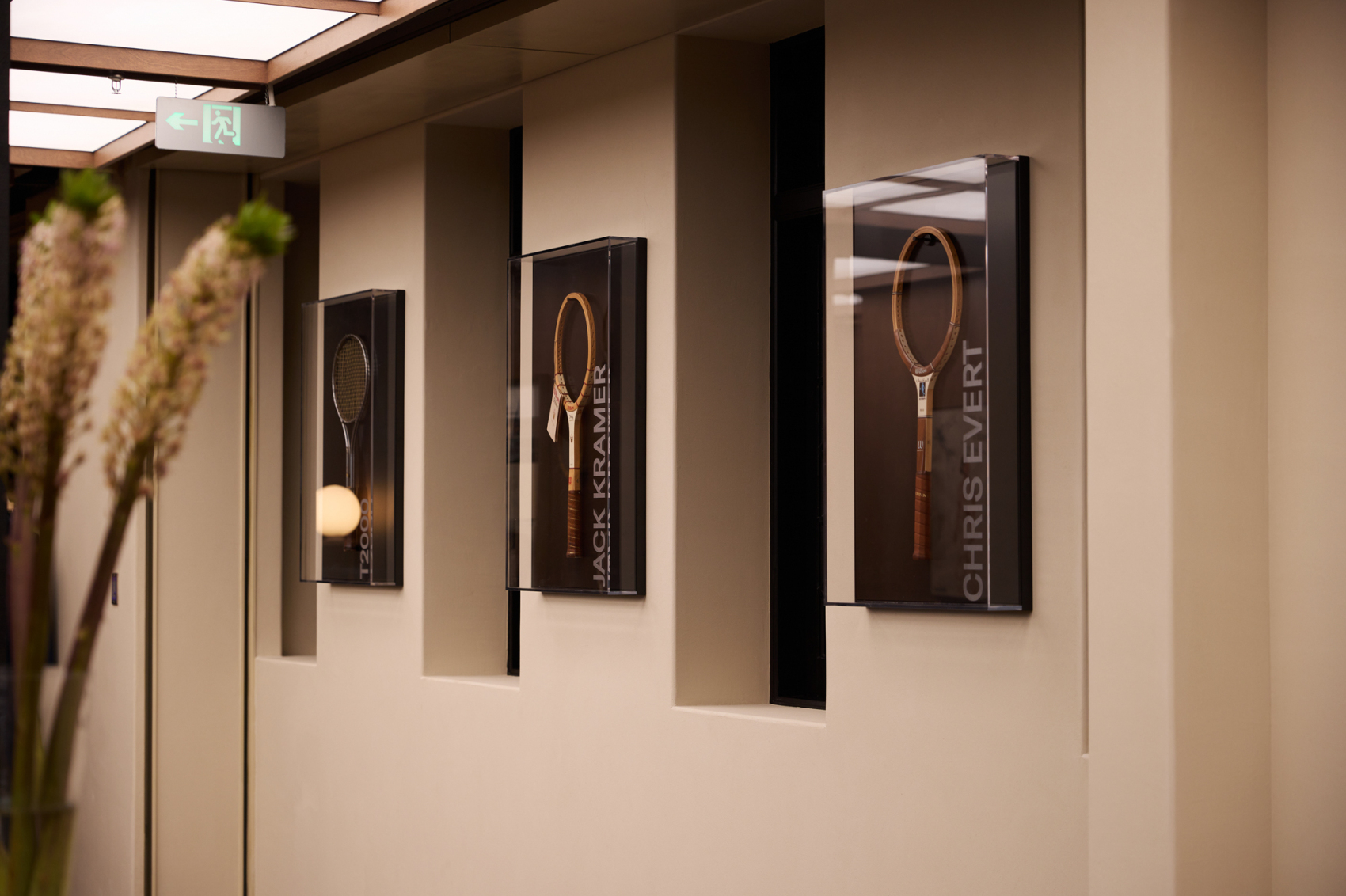
From the first wooden racket in 1914, to the introduction of leather grips in the 1930s, the classic Jack Kramer model in 1949, the first steel racket in 1967, and the Pro Staff series that became a hallmark of the professional tour in the 1980s, Wilson's product trajectory has to some extent mirrored the evolution of modern tennis equipment.
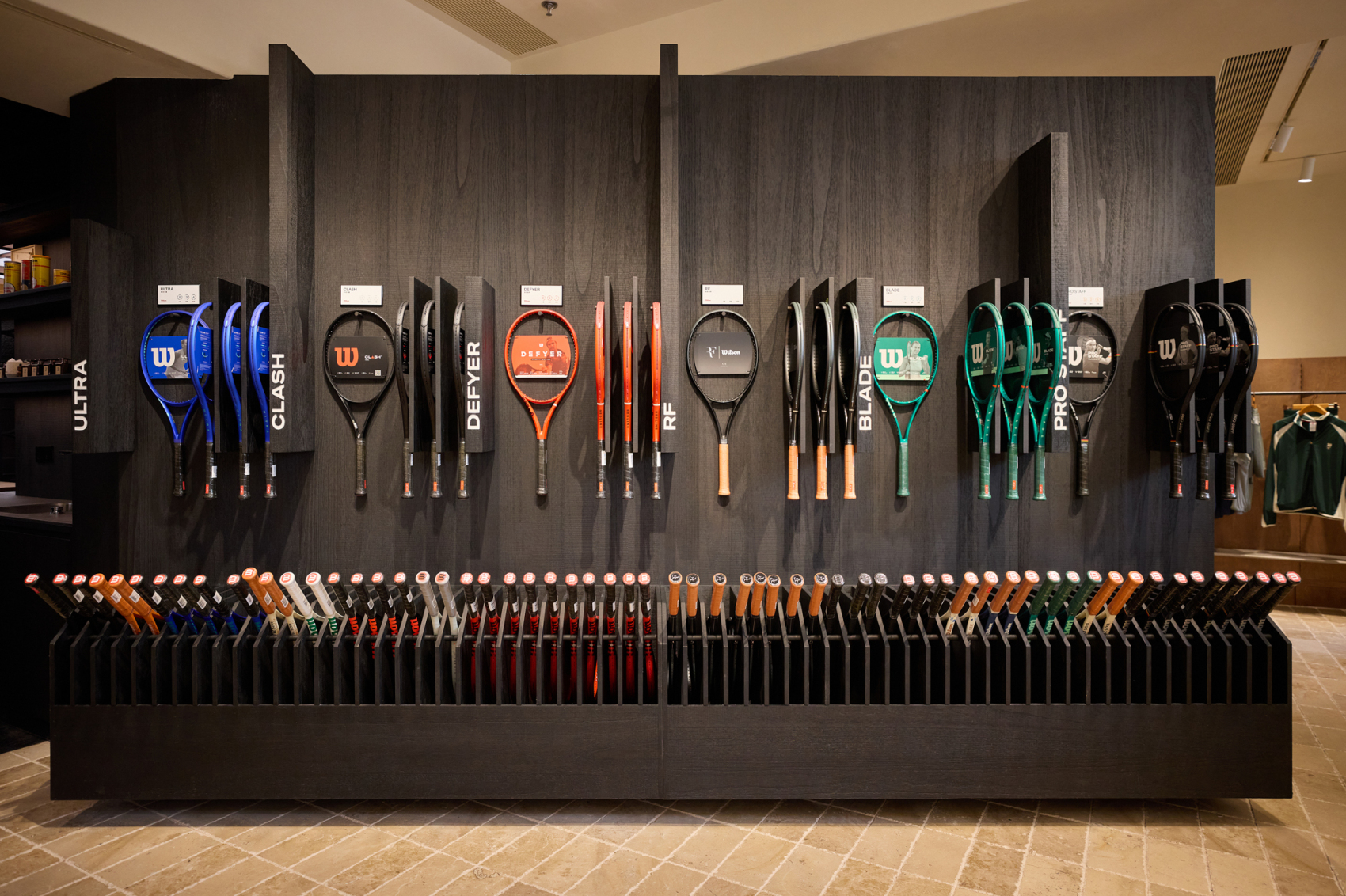
Beyond product iterations, Wilson's standing in professional tennis also constitutes core brand equity. On the professional tours, Wilson is one of the racket brands most used by top-100 ATP and WTA players. Wilson has been the official ball of the US Open since 1978, and has been the official ball of the French Open since 2020, as well as its official stringing partner. Legendary players such as Federer, Sampras and Serena Williams won the vast majority of their Grand Slam titles with Wilson rackets.
In the past, these stories lived mostly in brand archives and professional circles.
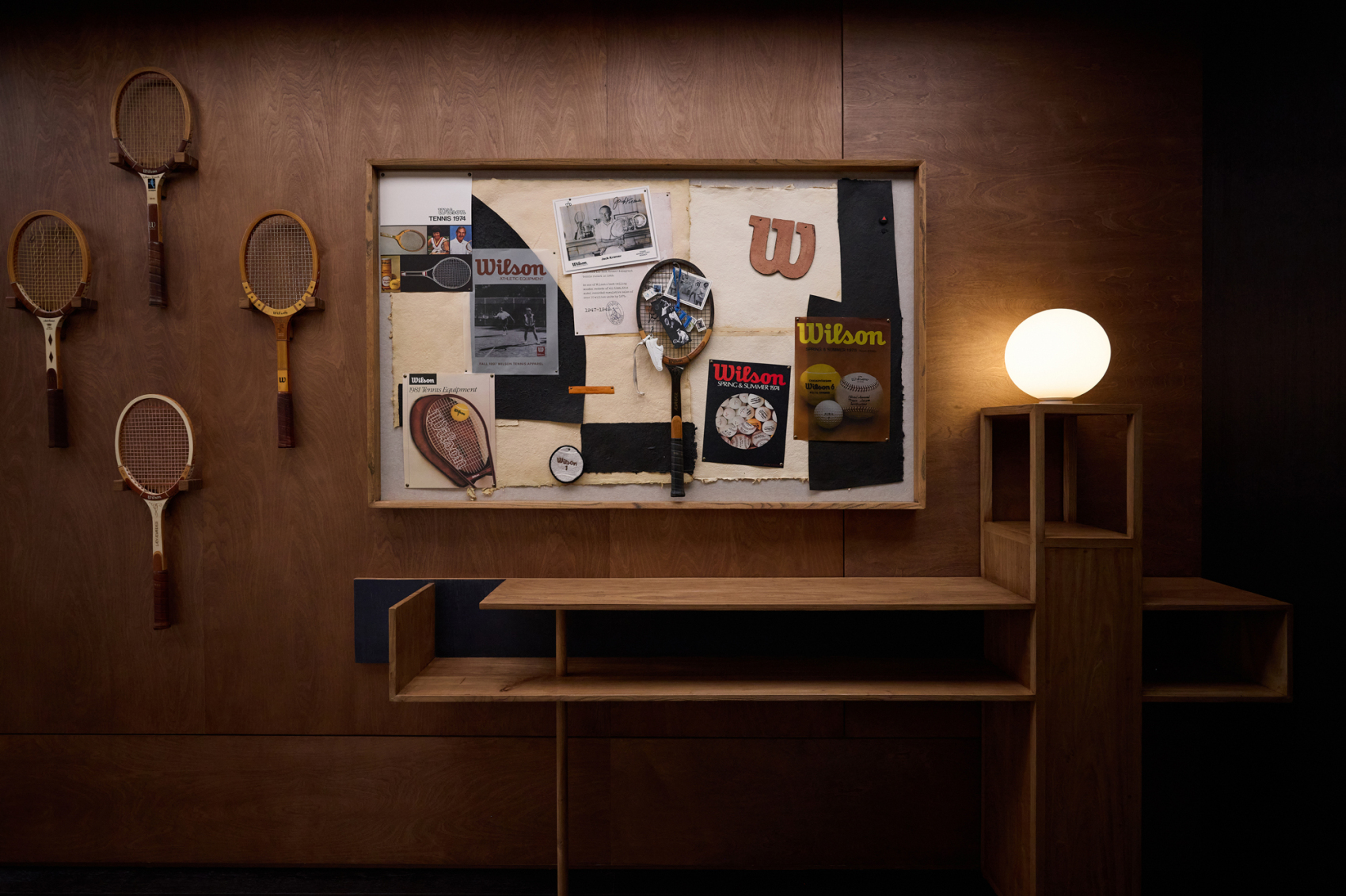
At Qingdi, Wilson turns these milestones into hands-on experiences. The store features a brand history zone with physical displays of representative racket products, allowing consumers to observe up close the changes in materials, structure and design of rackets across different eras.
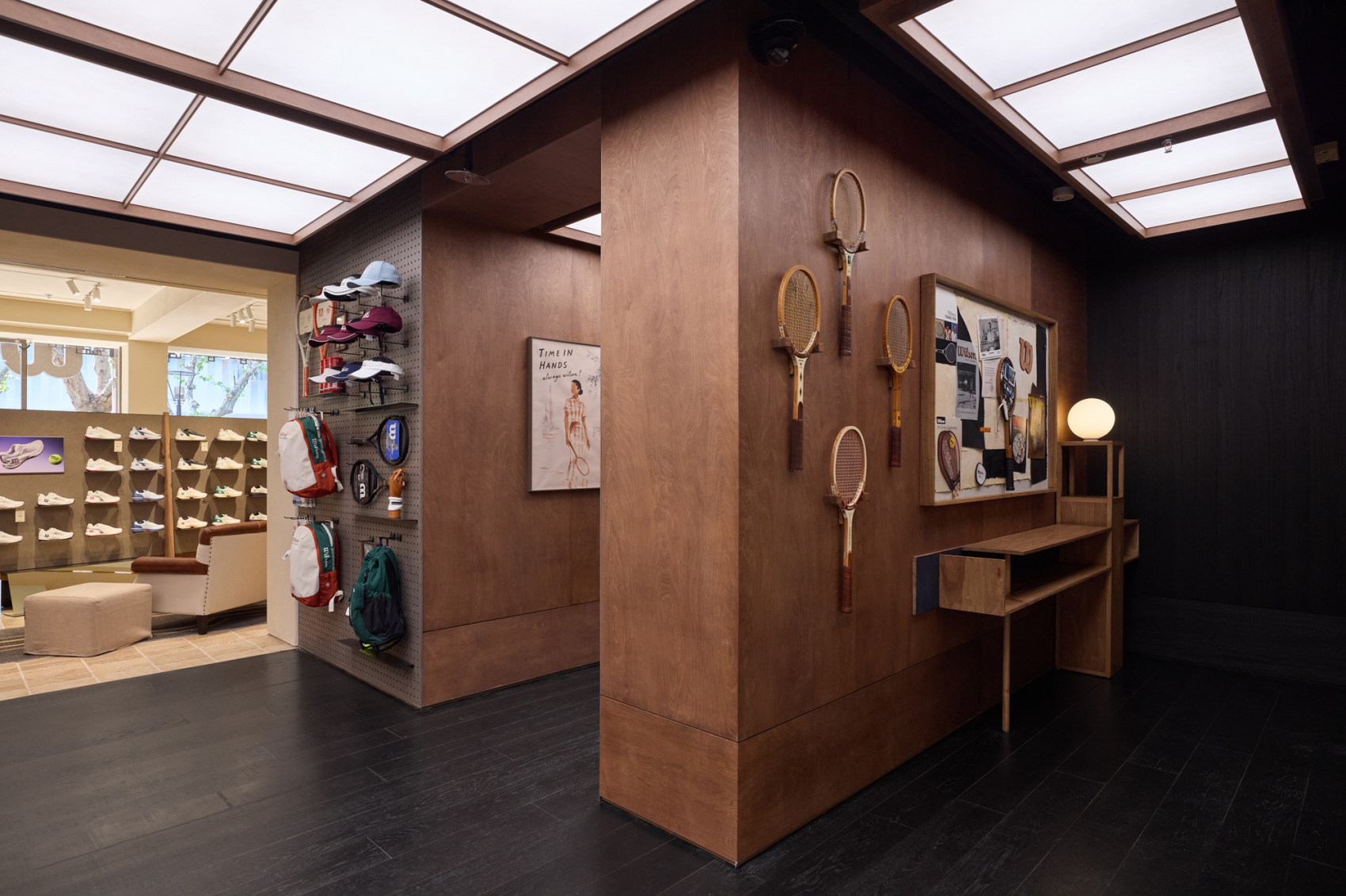
Here, the "racket" is no longer merely a product for sale on a shelf, but a vivid teaching tool that explains the technological evolution of tennis equipment, the development of tennis culture and Wilson's brand heritage.
Beyond the historical exhibition, the Qingdi store further reinforces Wilson's professional credentials through comprehensive on-site customer services.
The store has a stringing workshop offering 45-minute one-on-one stringing services. Consumers can learn on site how stringers adjust a racket to its optimal state according to playing style, habits and needs.
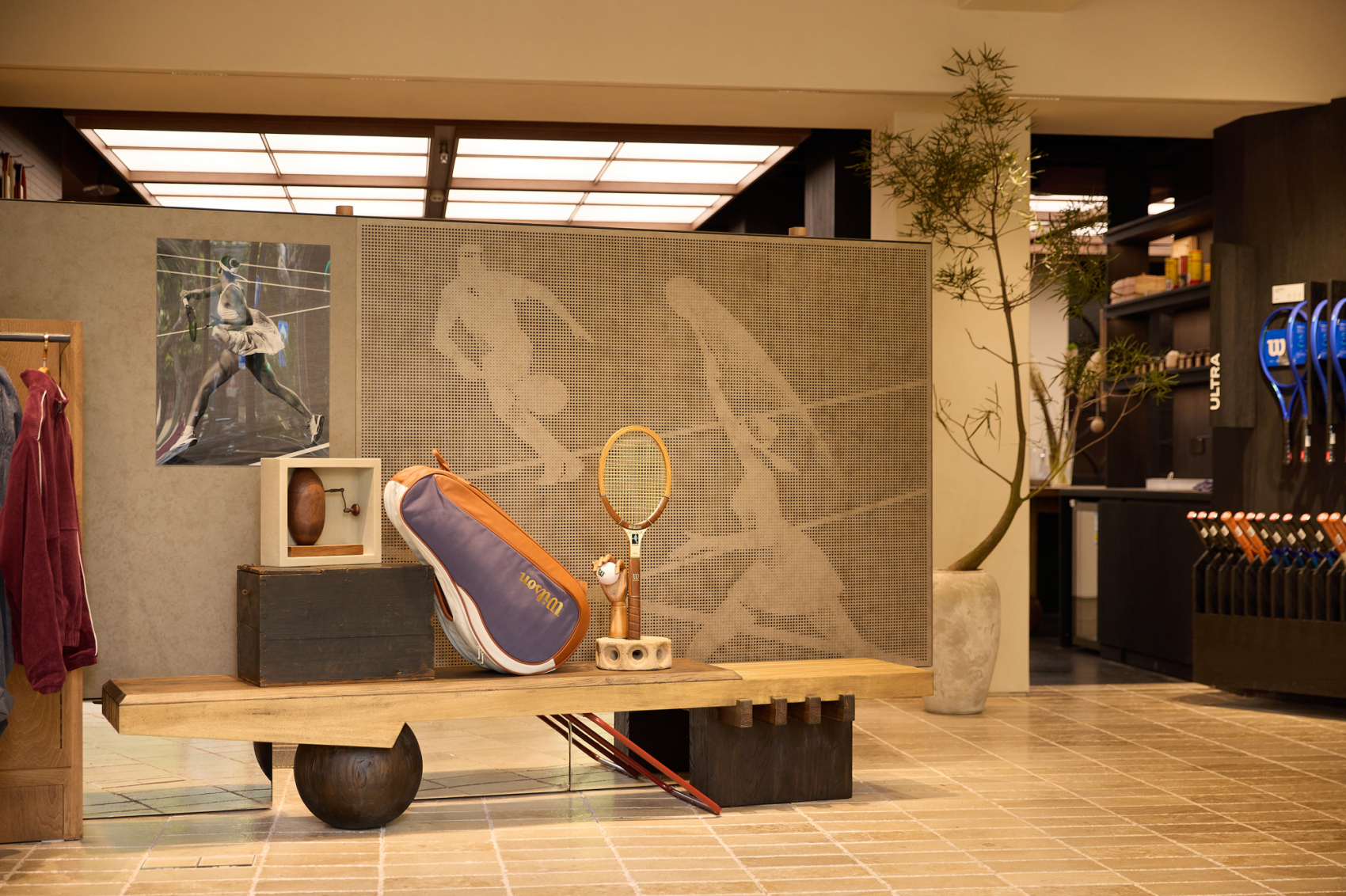
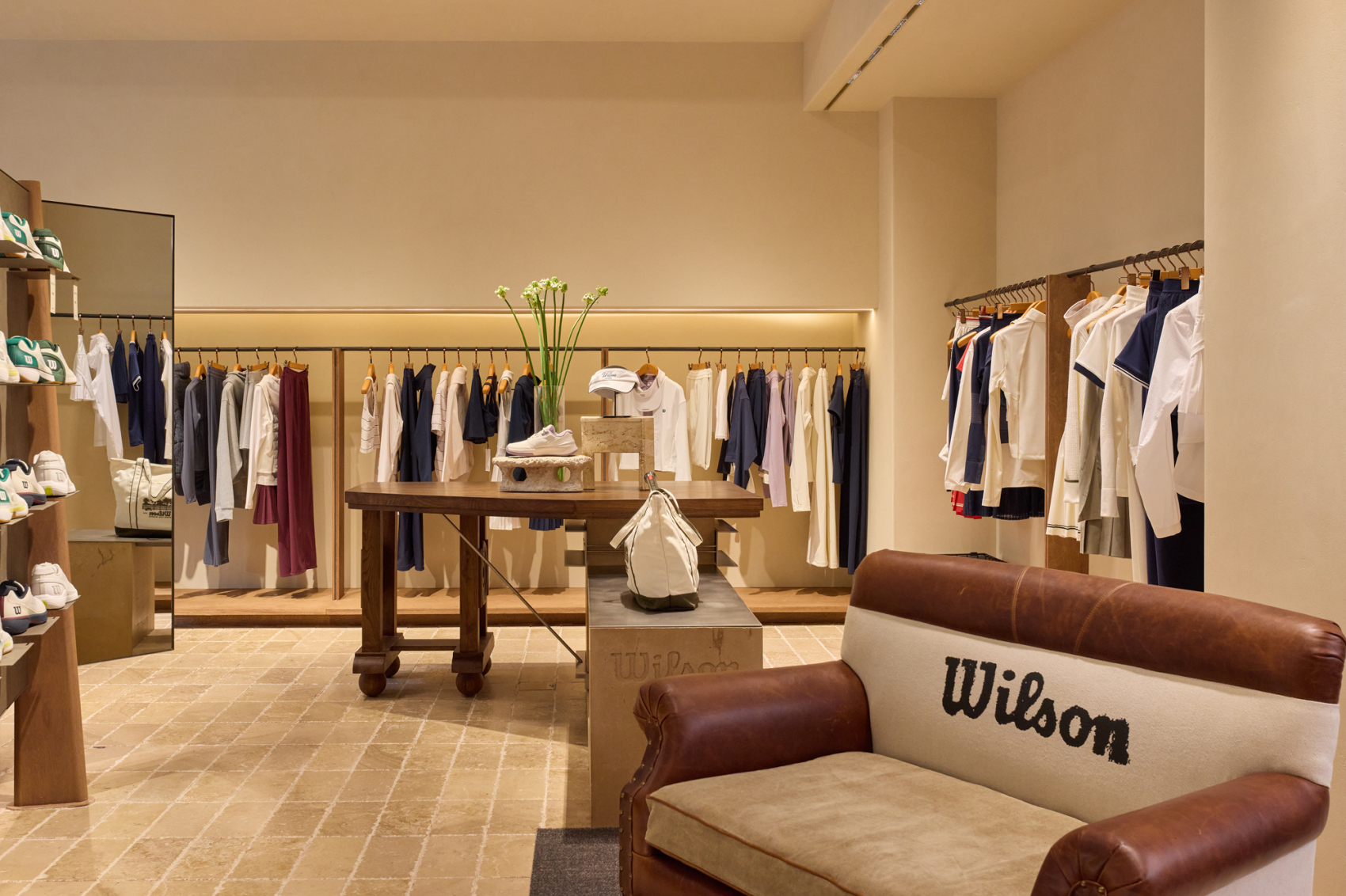
The tennis table at the main entrance is a clever touch: its base structure draws on the mechanics of racket stringing, naturally weaving tennis elements into the furniture design. Together with the artwork made of pegboard panels on the background wall and the handmade furniture, it forms the store's natural, relaxed first visual focal point.
What the Qingdi store attempts is precisely to bring Wilson's deep tennis expertise from the competitive arena into an urban consumer space, interpreting tennis culture in a more vivid and three-dimensional way.
Why Shanghai Xintiandi?
Wilson's choice of Shanghai as the base for its latest retail exploration is closely tied to the city's long-accumulated tennis culture.
As early as before 1874, Shanghai saw the birth of China's earliest organized tennis group — the Shanghai Lawn Tennis Club — which laid two grass courts in the Racecourse area, with grass seed shipped from overseas. In 1911, the Shanghai Lawn Tennis Club (commonly known as the West League) was established; relying on courts along the Racecourse central avenue (today's People's Square area), it regularly held the Shanghai Lawn Tennis Championships, attracting overseas players from Tokyo, Manila and elsewhere.
Entering the modern professional tennis era, Shanghai has further become a key node in the commercialization of tennis in China. Today, the city has a tennis population of over one million and more than 2,400 high-standard tennis courts.
In 2009, the Shanghai Masters was upgraded to an ATP Masters 1000 event, making Shanghai the only city in Asia to host an ATP 1000 tournament.
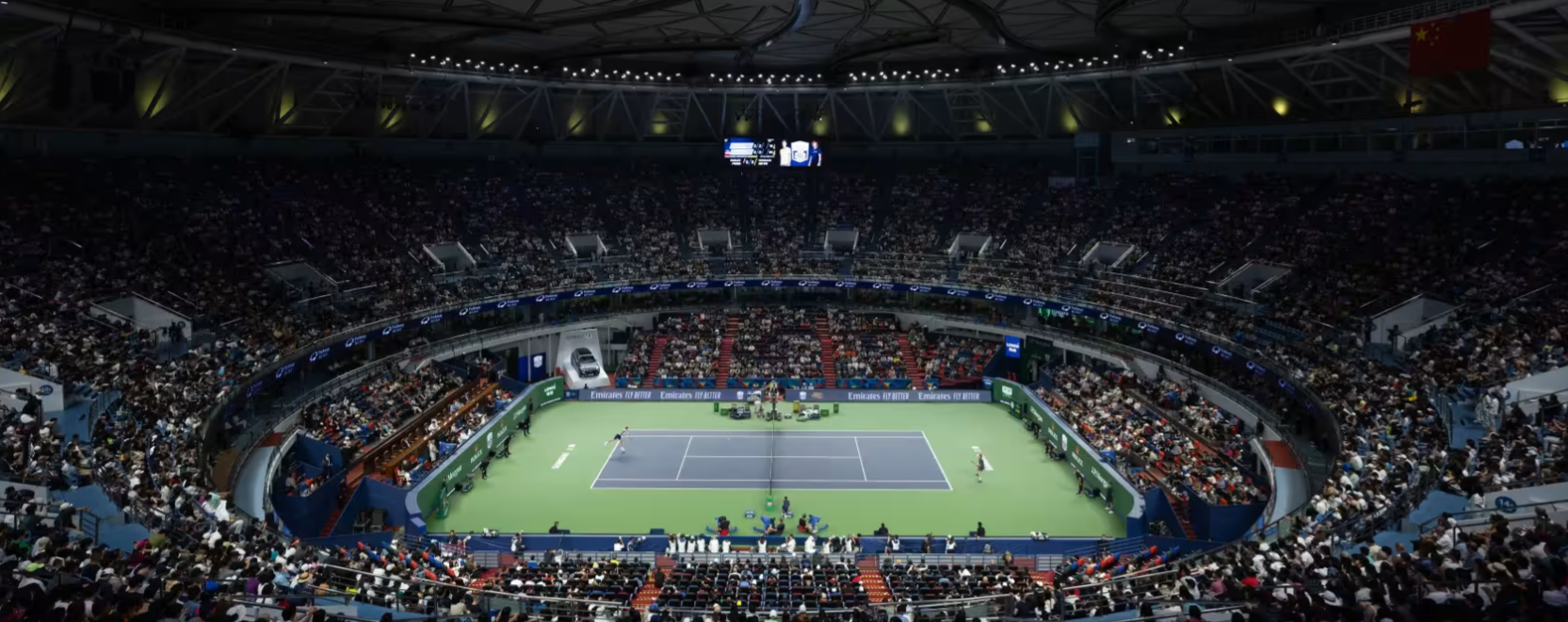
Qizhong Forest Sports City Tennis Center, Shanghai (Image source: Rolex official website)
The growth of the Rolex Shanghai Masters also reflects tennis's extension from a competitive event into a commercial ecosystem. Today, the tournament is not only a sporting event but also an important platform connecting sports, business and urban life.
Official data shows that the 2025 Rolex Shanghai Masters attracted more than 250,000 on-site spectators, with box office revenue exceeding RMB 100 million; about 60% of spectators came from outside Shanghai and about 10% from overseas. Official tournament merchandise sales exceeded RMB 20 million.
For Wilson, Shanghai is not only a tournament city but also a key market capable of supporting the brand's next phase of retail exploration.

Xintiandi, meanwhile, offers another layer of connection.
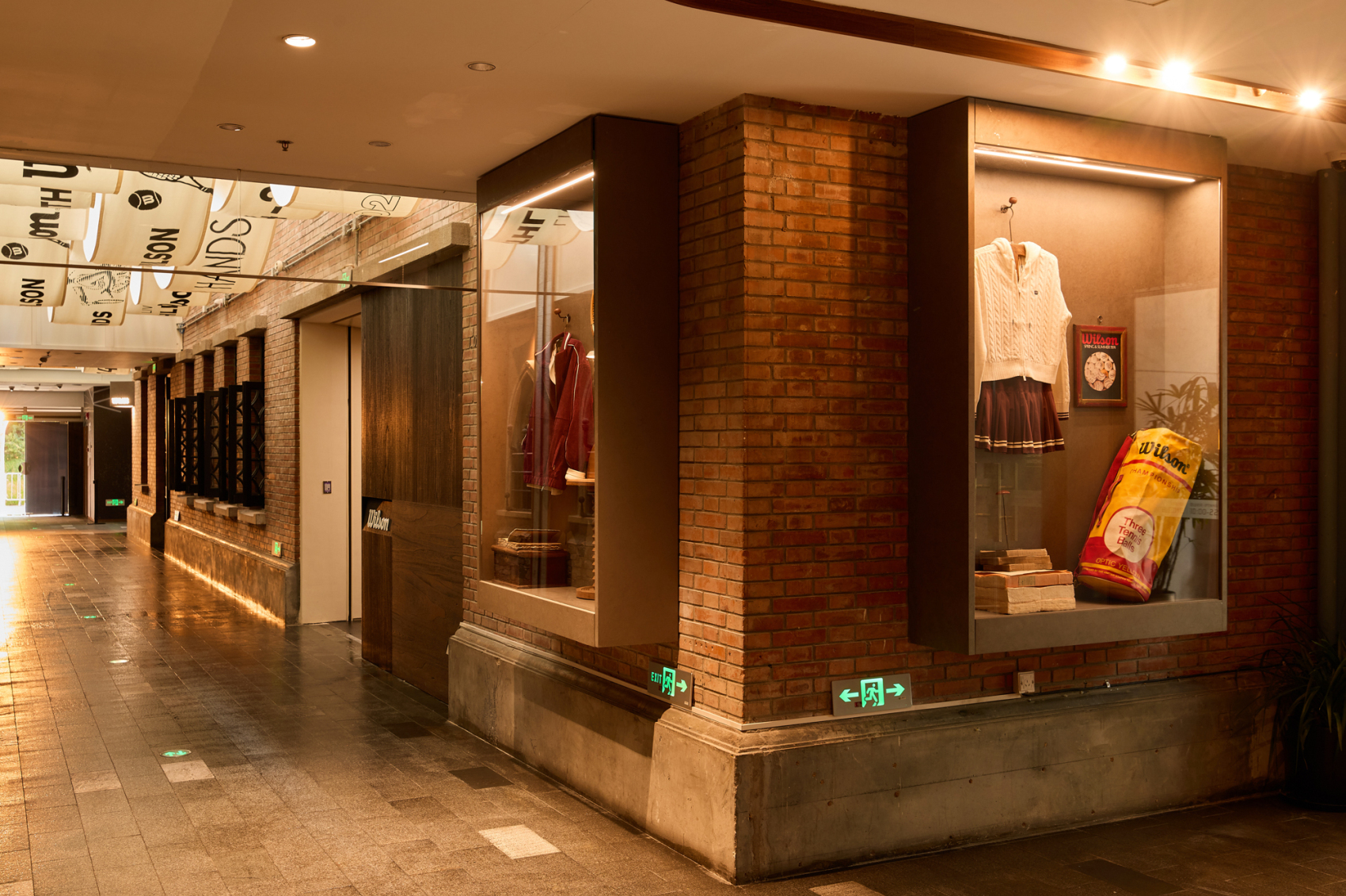
The Xintiandi shikumen historic district where Qingdi is located traces its origins to Shanghai's old Fuxing Union Market, a representative space where the city's urban culture and commercial consumption converge.
The store preserves historic elements such as grey bricks, steps and railings, and reorganizes the space through a modern design language, connecting Wilson's century-old brand history with Shanghai's urban memory.
This is not a sports goods store in the traditional sense, but something closer to a tennis culture space within the city.
From Selling Rackets to Running a Tennis Lifestyle
Behind Qingdi lies a deeper change: the continuous evolution of Wilson's China market strategy. Looking back at the brand's development in China, its retail path has roughly gone through three stages.
The first stage was Retail 1.0, centered on professional equipment sales, reaching tennis players and enthusiasts mainly through dealer channels such as tennis specialty stores and sports venue outlets. The brand's connection with users revolved mainly around the "functionality" of professional equipment such as rackets and tennis balls.
The second stage was Retail 2.0, featuring multi-category directly operated stores. In 2021, Wilson began to strengthen its DTC (Direct-to-Consumer) footprint in the China market, with a richer and more elevated range of footwear and apparel beyond tennis equipment. Through medium-sized directly operated stores in high-end shopping malls, Wilson's overall image was presented more comprehensively and at a higher level, and more people "outside the tennis circle" began to understand the tennis culture it represents.
With the opening of Qingdi, Wilson's retail exploration has entered a third stage: Retail 3.0, building brand power and managing consumer relationships around "tennis culture." It seeks to answer not just how to "sell more products," but how to build longer-term, deeper consumer relationships around tennis and forge stronger brand awareness and loyalty.
This shift is closely related to the Tennis 360 strategy Wilson has advanced in recent years.
At the investor day held by its parent company Amer Sports in September this year, Wilson Tennis 360 was listed as one of the group's three core growth engines. Data shows that the business's revenue has grown at a compound rate of about 20% over the past four years, and is expected to exceed USD 600 million in 2026.
Notably, growth comes not only from the traditional racket and ball business, but also from broader categories such as footwear, apparel and accessories.
Behind this is Wilson's effort to build a more complete product system and brand philosophy around "tennis," covering training, competition and more lifestyle scenarios "beyond the court," so that the brand can reach a broader consumer base and create multi-dimensional conversion touchpoints.
The China market is a key validation market for this strategy. In 2025, Gordon Devin, President of Wilson Sportswear, said in an exclusive interview with LuxeCO: "China has the best retail experience in the world, and I'd be happy to bring it to the rest of the world."
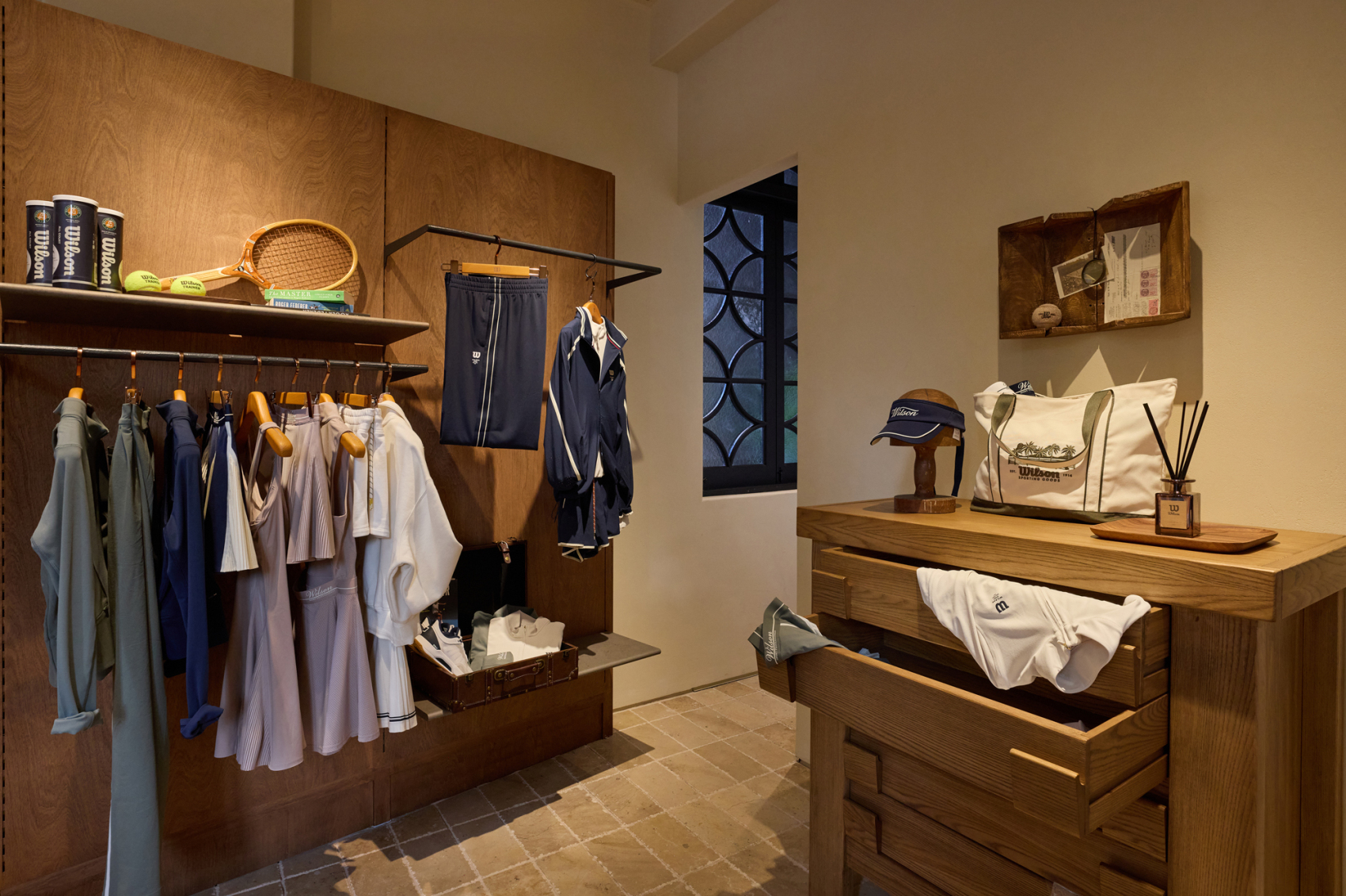
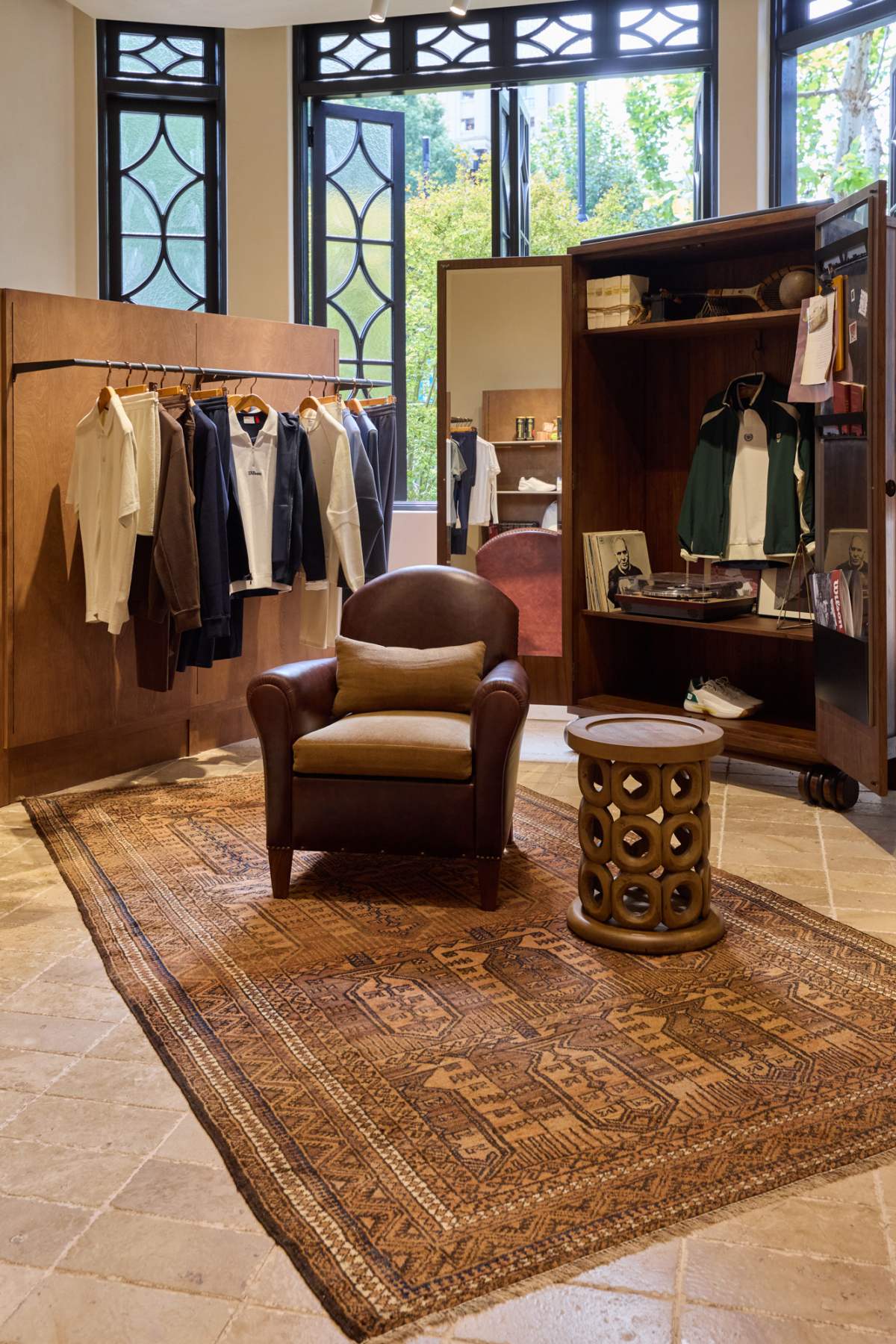
The interior planning of Qingdi is a spatial mapping of this business strategy. The store not only houses professional equipment but also integrates extensive new product displays and apparel and footwear presentations. In terms of spatial design, an open garden is set up at the entrance, and a water bar, courtyard and event space are planned inside, to meet consumers' social and relaxation needs in their "off-court life." At the store opening event, the brand invited public figures including actors Tan Zhuo and Hu Yitian to take part in the experience, showcasing a lifestyle that blends sport and socializing.
Building the "Infrastructure" of Tennis Culture
The 2026 Sports & Outdoor Brand Vitality Ranking recently released by LuxeCO points out that, as competition intensifies, physical stores are shifting from traditional sales channels to important battlegrounds for brands to shape consumer minds, convey professional value and accumulate long-term assets.
When an ordinary consumer first encounters a professional sport through a store visit, a purchase of branded apparel or an offline brand event, what the brand store carries is no longer just commodity transactions, but offline infrastructure connecting the brand, the sport and consumers — a bridgehead for promoting the sport, and a stage and runway for shaping a fashionable sports lifestyle.
As a leading brand in global tennis, Wilson is accelerating its directly operated store footprint in the China market. Amer Sports official financial data shows that, as of the second quarter of 2026, Wilson had added a net 12 brand stores, most of them in Greater China and Asia-Pacific; for the full year 2026, the brand plans to add a net 40 Wilson Tennis 360 stores in the China market.
Behind this store expansion and upgrading is Wilson's boldness and ambition to lead growth in China's tennis and lifestyle market.
From the first wooden racket in 1914 to today's tennis lifestyle space in a Shanghai shikumen, Wilson is trying to translate a century of professional accumulation into new consumer value. For sports brands, future competition will take place not only in the arena but also in offline spaces: retail operations determine how broadly a brand can reach its audience, while sustained investment in sports culture determines how deeply and how long a brand can take root in consumers' minds.
丨Image source: Wilson
丨Editor: LuxeCO