
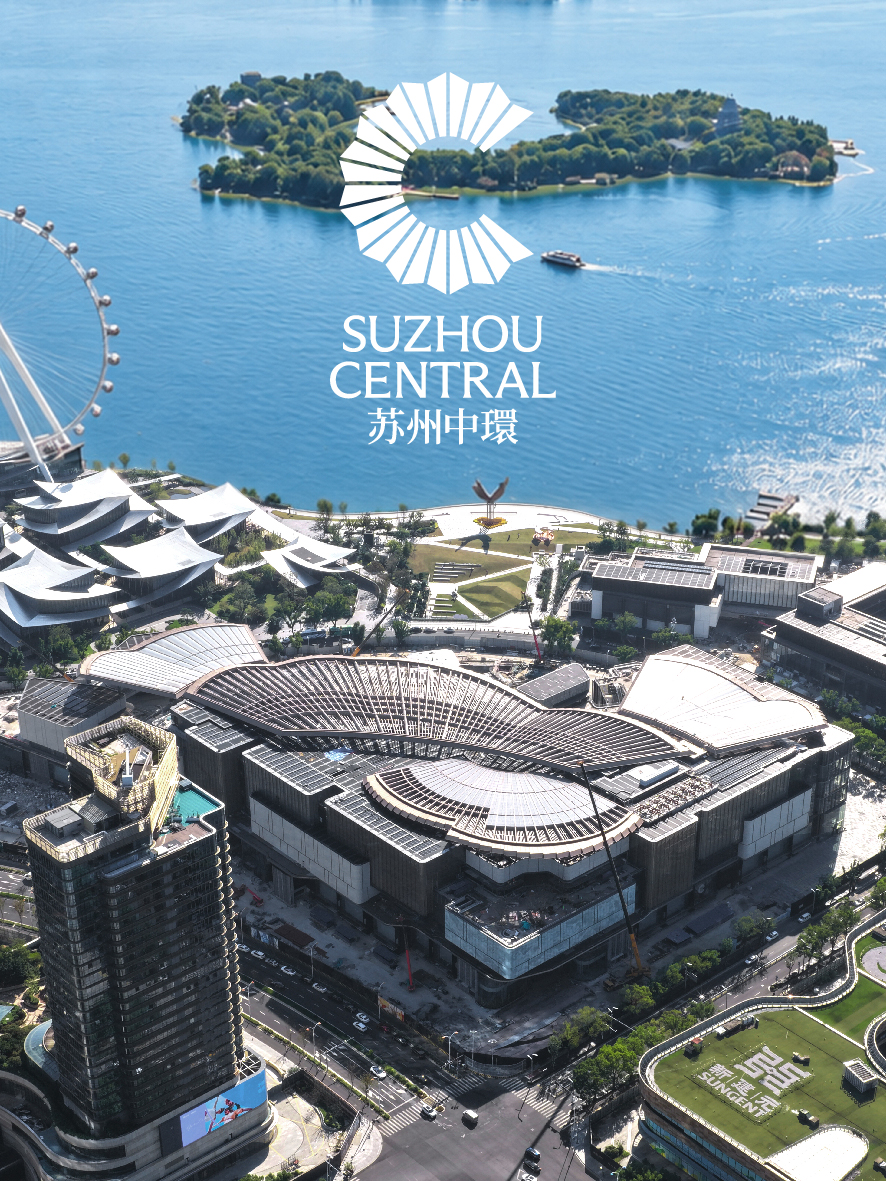
Since the second half of 2026, the face of Suzhou Central has been gradually taking shape on the right bank of Jinji Lake: the main structure has topped out, a new brand identity and visual system have been unveiled, and a series of brand hoardings have been revealed in quick succession.
Since confirming the core plot in August 2022 and breaking ground the following year, Hongkong Land's heavyweight commercial real estate project in Suzhou has now fully entered its visible phase. According to the project team, Suzhou Central will hold its overall opening at the end of April 2027.

Market attention and speculation are focused here: what brand lineup and tenant mix will this "Central" series shopping mall, positioned as ultra-luxury, ultimately deliver? Is it possible that it will reshape the high-end retail landscape of Suzhou and even the Yangtze River Delta region?
Through on-site research, LuxeCO found that the significance of Suzhou Central goes far beyond being just another new high-end shopping mall. Using this project in progress as a window, we can observe and verify the many evolutions taking place on both the brand supply side and the consumer demand side. At the same time, we hope to further explore: at a stage when the broader market environment is undergoing deep adjustment, why is a century-old Hong Kong company daring to make a heavy bet on Suzhou and devote itself to building a new "Central"?
1. What signals do the dense brand hoardings send?
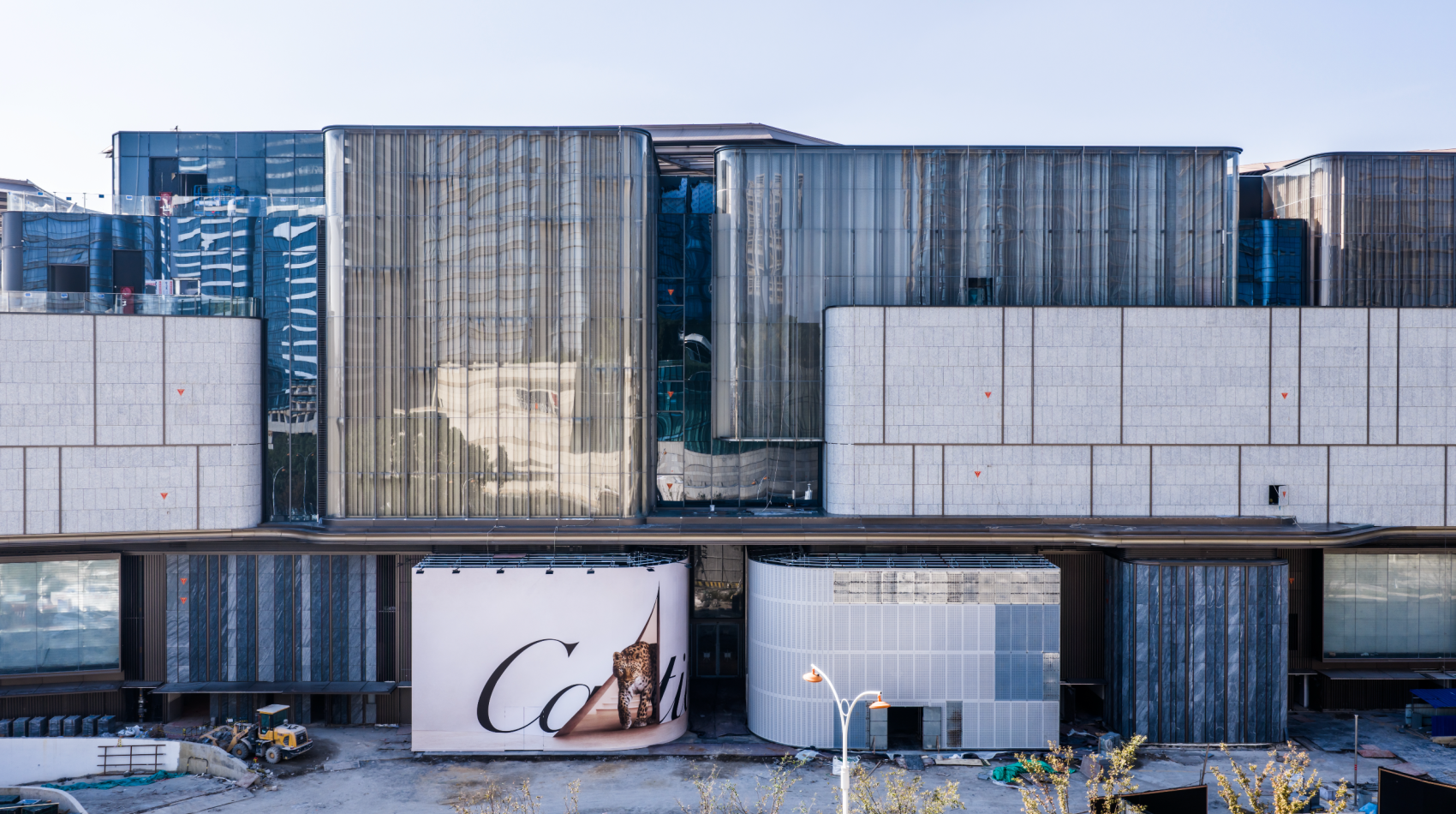
Over the past month, luxury brands including Louis Vuitton, Hermès, Cartier, Van Cleef & Arpels and GUCCI have successively put up hoardings at Suzhou Central, revealing the outlines of their stores — a phenomenon that has particularly drawn market attention: against the current generally cautious backdrop, is Suzhou Central rising against the tide?

Following the LuxeCO Luxury Industry Stock Index, it is clear that after a decade of rapid ascent, the index has seen a sharp correction over the past two years and remains in a phase of deep adjustment.
During this phase, clear divergence has emerged within the industry. Global luxury companies, especially multi-brand conglomerates, are "trimming" their operations, and store expansion in the China market has visibly contracted — through "rationalized adjustment," they are concentrating attention on core cities and commercial districts. According to the "Luxury Brand China Vitality Ranking 2026H1" exclusively launched by LuxeCO, the overall activity of luxury brands in the China market in the first half of 2026 was the lowest in four years. Among all types of activity, new store openings saw the largest decline.
At the same time, the weakening momentum of store openings does not necessarily mean that luxury brands are reducing their investment in the China market; rather, it may be a sign that brand decisions are more prudent and store operations more refined. As major brands have largely completed their layouts in first-tier cities, the next core priority is no longer accelerated expansion but, with a long-term view, seeking "better locations, more spacious environments, and more flagship-level positioning"; even in cities where they are already present, brands may add stores to supplement functions not achieved by existing stores, or to divert traffic to important areas in line with the trajectory of urban development.

Therefore, when luxury brands choose to place their scarce, high-quality stores — at what timing and in what location of which Chinese city — it is an increasingly cautious and major decision over a long time horizon. Such decisions are sending signals to the market: which cities have growth potential for high-end consumption, which commercial spaces meet the conditions for brands to open stores, and which developers' brand stature and overall strength are worthy of trust?
In this sense, the "phenomenal" hoardings by Jinji Lake can be seen as a signal that brands are willing to establish a presence at Suzhou Central — this is both recognition of Suzhou's urban consumption potential and the value of the right-bank plot at Jinji Lake, and also trust in Hongkong Land. But whether this constitutes "flagship-level investment" cannot yet be proven by brand hoardings alone; it awaits verification through actual opening information.
Another reason for cautious optimism and continued observation is that a brand's willingness to move in does not equal its ability to stay for the long term. The opening occupancy rate is the first core indicator for measuring a commercial complex upon completion; whether it can, over the next three to five years and beyond, complement and support brands so that they stay and continue to create value, is the long-term indicator that validates a commercial complex's positioning and vitality.
2. Experience Is Central: How Does Suzhou Central Respond to the Needs of Contemporary Consumers?
Through the brand hoardings at Suzhou Central, we see the visible "tip of the iceberg," which represents the caliber of quality brands Suzhou Central can attract, but is not yet the full meaning of a new "Central."
In Hongkong Land's brand philosophy, "Experience is Central" is placed at the very top. In mainland China, the brand's spiritual core is further embodied in a mission: "Reshape urban lifestyle experiences and create mainland China's leading lifestyle destination."
This mission is not built on thin air, but stems from deep insight into changing consumer trends. In its 2025 financial report, Hongkong Land explicitly stated that "due to evolving lifestyle trends, technological advances and economic development, customer preferences may shift, requiring the Group to continuously make adjustments... Changes in consumption patterns in mainland China may affect demand for high-end properties."
So what exactly has changed on the demand side?
LuxeCO's long-term consumer research points to a clear trend: as generations change, the attitude of China's new generation of consumers toward international brands is shifting from "looking up to" to "looking eye to eye." They still love exquisite and precious goods, but they need these long-familiar brands to offer more compelling reasons — high-end consumption is moving from "being admired" to "being chosen," from material possession and status symbols to a reassessment of quality of life.

At the same time, lifestyles are undergoing significant changes worldwide, with people placing greater value on experience and wellness. Data jointly released by BCG and Altagamma shows that the consumption focus of the world's high-net-worth individuals is shifting toward the "experience economy" — travel, hotels, fine dining and wellness. A Bain & Company report also holds that although China's luxury market is under overall pressure, high-end experiential consumption shows stronger resilience, with consumers' money flowing from "buying things" to "buying time" and "buying experiences."
To some extent, the emphasis on quality and experience is turning luxury from a "destination" into part of a "scenario." The new generation of consumers will still buy luxury goods, but they want the purchase to take place in a more relaxed and complete setting — perhaps after a delicious dinner, perhaps in the interval between art museum exhibitions, perhaps during a weekend "micro-vacation."
This is the key insight that distinguishes Suzhou Central's positioning from traditional heavy-luxury commercial complexes. The latter takes "brand density" as its core logic — gathering as many top luxury brands as possible so that consumers can complete efficient, purpose-driven purchases inside a closed "box." By contrast, Suzhou Central's planning logic is to transform luxury from the "sole attraction" into a marker of stature and a foundation of quality, and then use a comprehensive tenant mix to fill in "reasons for people to stay."

More importantly, in this uniquely endowed waterfront area on the right bank of Jinji Lake, Suzhou Central is by no means a standalone presence: it is adjacent to the Suzhou Museum of Contemporary Art, accompanied by the internationally renowned luxury hotel brand Mandarin Oriental, and connected to the "Suzhou Eye" Ferris wheel, the right-bank pier and the lakeside park. Terraced design and waterfront corridors allow people to enjoy a garden-style touring experience characteristic of Suzhou, where they can visit brand stores, dine in restaurants with lake views, and naturally transition to art exhibitions or water activities — the height of quality and the joy of life reinforce each other within the same setting.

3. "Long-Term Placemaking" at the Urban Core: Where Does Hongkong Land's "Confidence" Come From?
If "Experience is Central" is Hongkong Land's brand philosophy, then the accumulation of "city-building capability" is the result of this philosophy being practiced over the long term in physical space. The confidence placed in Hongkong Land comes first and foremost from its core ability to transcend cycles and embed "experience" into the urban fabric.
Hongkong Land was founded in 1889, and its mission was precisely to develop and renew Hong Kong's Central district together with the government — starting from a "reclamation" plan, it single-handedly created today's "Central core" urban area. As the largest single landlord in Central, it has participated in and witnessed the history of the city's renewal across a century.
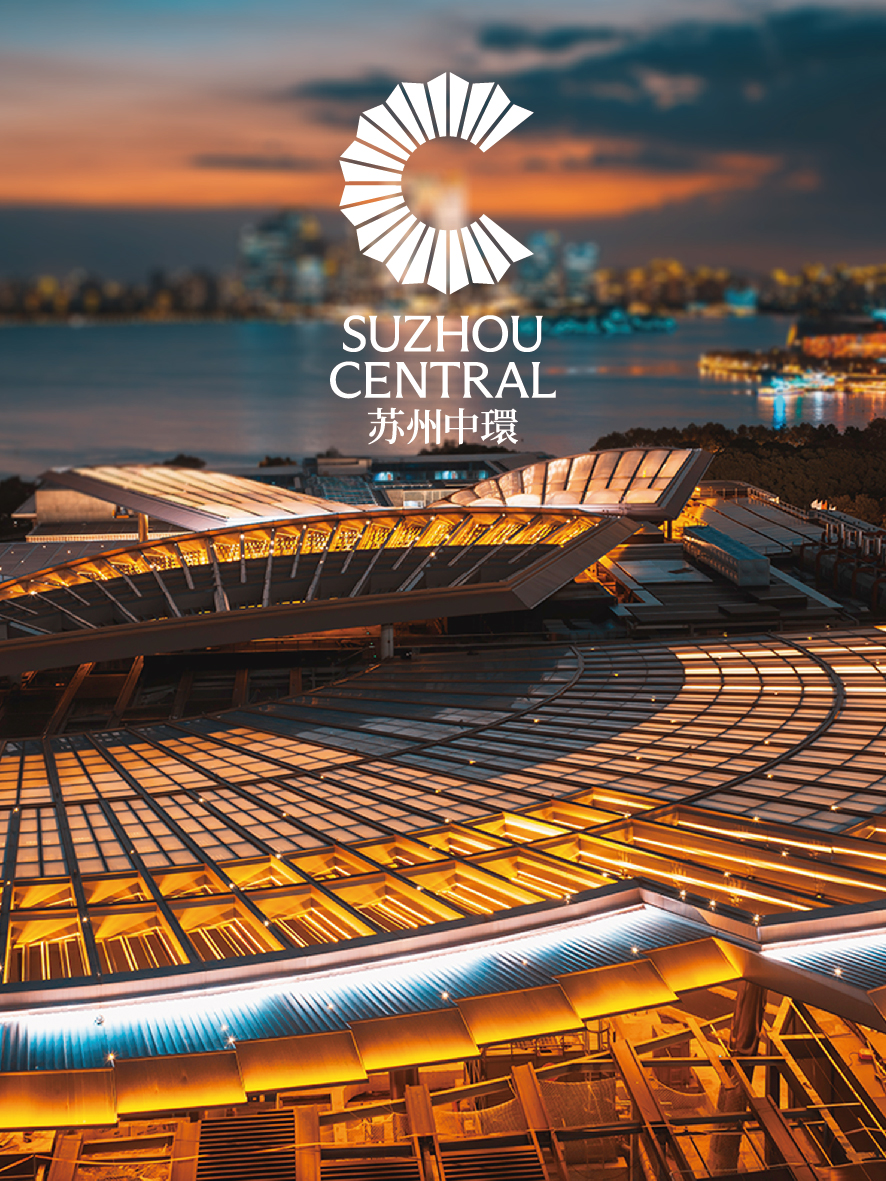
In the composition of commercial complex brand power proposed by LuxeCO, the most important part is the ability to turn the land where it stands into an urban core — that is, "city-building capability." It is not simply building a mall and attracting quality brands, but rooting itself in the city's cultural core and carrying out systematic, long-term placemaking across urban fabric, public space, culture and art, and lifestyle. Today, this logic has been introduced to Suzhou: from architectural language inspired by the Suzhou fan and contemporary reinterpretations of garden touring, to synergy with the Museum of Contemporary Art and Mandarin Oriental, Hongkong Land seeks to grow a quality lifestyle destination belonging to this city from Suzhou's own cultural soil.
And the financial and operational resilience proven by the market in recent years has given Hongkong Land another source of confidence for investing in and building Suzhou Central. According to financial reports, in 2025, the Group's profit attributable to shareholders reached US$1.263 billion; net debt fell from US$5.088 billion to US$3.577 billion, a decline of about 30%. During the large-scale renovation of The Landmark, Hongkong Land's Central retail portfolio was essentially fully leased after excluding the impact of renovation works, with average retail rent per square foot rising 12% year on year; spending by top-tier customers grew 8% year on year. These figures show that Hongkong Land's ability to operate high-end commercial assets in core cities has been validated by the market, and that it has the capital capacity to provide financial support for the long-term cultivation of Suzhou Central.
It can be said that Hongkong Land's "confidence" comes from its city-building capability and financial resilience. They constitute the starting point of Suzhou Central, while the future will depend on the project's own execution.

4. Back to Suzhou: How Can a City's High-End Consumption Potential Be Unleashed?
If Hongkong Land has the ability and confidence to embed "experience" into the urban fabric, then the core question one step further is: why choose Suzhou? Does this city have the consumer foundation to support a new "Central"?
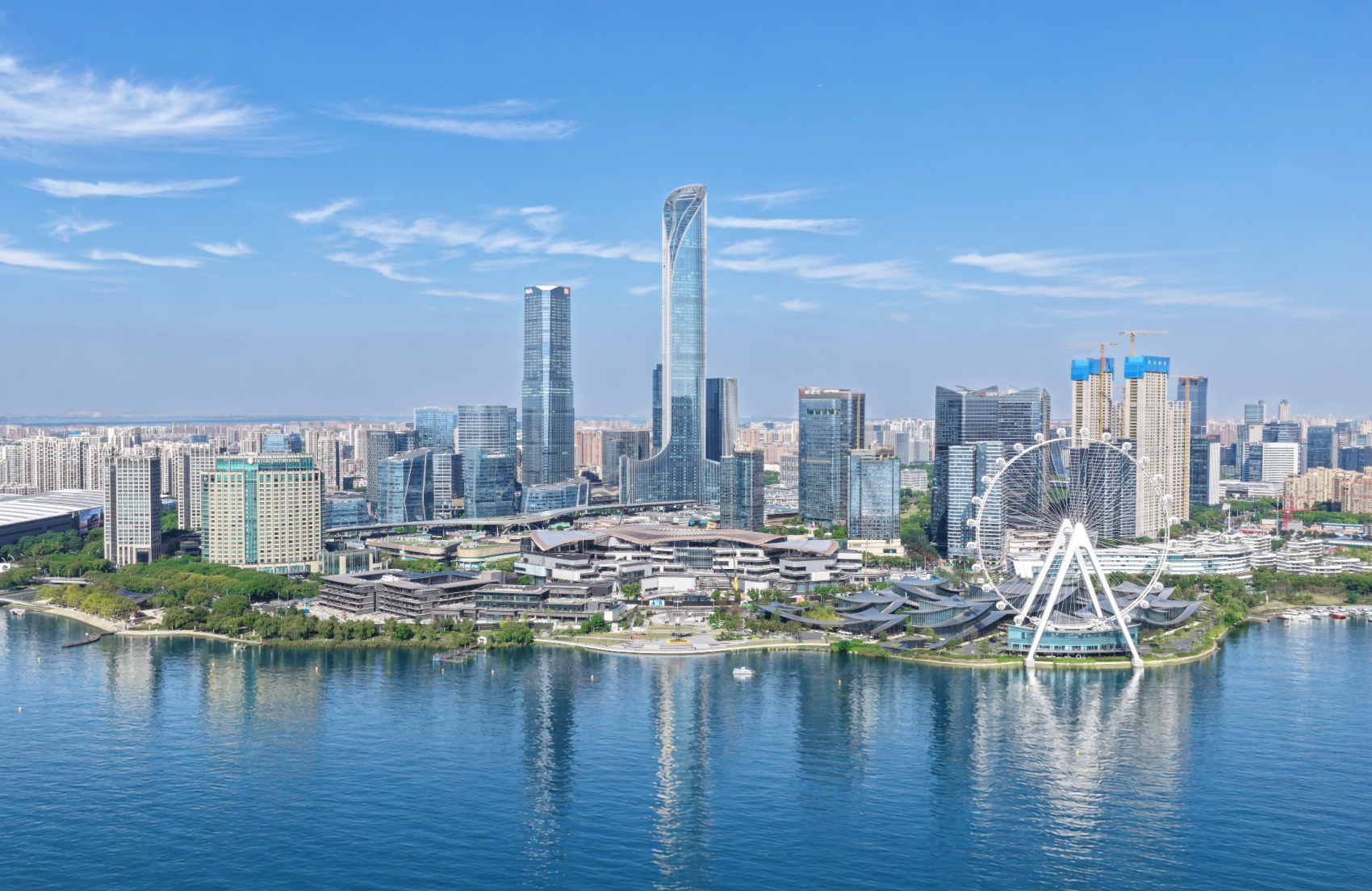
2500 years of Suzhou's cultural heritage have nurtured an old town rich in humanistic depth, while the new city along the shores of Jinji Lake is the core stage for Suzhou's development as an international modern metropolis. As the Suzhou Industrial Park deepens its 30 years of industry-city integration, the left bank of the lake, as the earliest-developed central business district, has laid the foundation for finance and commerce, while the right bank is being upgraded into an urban living room integrating high-end residences, art and cultural venues, and an ecological waterfront. Behind this evolution of the urban pattern lies a solid industrial foundation and accumulated wealth — in 2025, Suzhou's GDP reached RMB 2.77 trillion, ranking sixth nationwide; the Suzhou Industrial Park, with less than 3% of the city's land, contributed about 15% of its GDP and attracted nearly 200 projects from 108 Fortune Global 500 companies. Within a 5-kilometer radius of the Suzhou Central project, more than 60% of Suzhou's top luxury residential communities and nearly 500,000 highly educated, high-net-worth individuals are concentrated.
But economic strength does not automatically equate to a matching supply of high-end retail. To understand the high-end retail landscape in which Suzhou Central operates, another set of data is needed: the scale and brand tier of Suzhou's existing high-end retail, and where its spending power flows.
In terms of individual mall scale, Suzhou does not yet have a mall with sales of RMB 10 billion. Among Suzhou's currently leading commercial properties, Suzhou Center's 2025 sales are estimated at RMB 4.3 billion, and Meiluo Department Store's 2024 sales exceeded RMB 4.1 billion. By comparison, Nanjing Deji Plaza's 2025 sales were RMB 26.24 billion, Shanghai IFC RMB 21.8 billion, Hangzhou Tower RMB 12 billion, and Hangzhou MixC RMB 13.5 billion. Suzhou's highest single-mall volume differs by several times from neighboring core cities, and Suzhou's high-end spending power has not formed a sufficiently large "single-point concentration" locally.
In terms of brand tier, Suzhou lacks a complete matrix of leading luxury brands. Meiluo Department Store brings together a range of luxury brands, but constrained by the old-town preservation restrictions of the Guanqian Street commercial district, its property format is a traditional department store, making it difficult to accommodate luxury brands' spatial requirements for multi-level large stores. Yanlord Cangjie opened in 2023, entering with a street-block format and focusing its tenant mix on affordable luxury and designer brands. Suzhou MixC World opened at the end of 2025, with first stores accounting for over 68%; its brand matrix brings together numerous sports and outdoor brands and trendy affordable luxury brands, forging a differentiated path.
In terms of where spending flows, Suzhou is adjacent to Shanghai, reachable directly by high-speed rail in about 30 minutes — a geographical convenience that has objectively contributed to the outflow of local high-end consumption. Suzhou's total retail sales of consumer goods grew 2% in 2025, failing to outperform the national average. The understated consumption tendency of a population dominated by manufacturing workers has also constrained high-end consumption growth to some extent.
These "gaps" constitute the opportunity for Suzhou Central, and also pose a challenge that is by no means easy. Suzhou has demand for high-end retail, but still lacks a matching setting. What Suzhou Central needs to do is precisely to connect this gap with the potential. Whether it can persuade local high-net-worth individuals to change their consumption radius and stay on the right bank of Jinji Lake depends on whether it can offer more compelling reasons — this requires the completeness of the brand matrix, the spatial experience, and long-term, sustained operational delivery.
At the same time, we also see the other side of consumption flows: the radiating influence that Suzhou as a city is unleashing. With the accelerated construction of the high-speed rail network and the development of tourism, Suzhou is advancing from a "sightseeing destination" to a "high-quality lifestyle destination." In particular, the right bank of Jinji Lake — an area blending natural lake scenery with Eastern heritage — is becoming a host for high-profile brand events, cultural and art exhibitions, sports and outdoor activities, and high-end social gatherings. Thanks to convenient transportation, this waterfront opens its arms to visitors drawn from across the country, showcasing its uniqueness: the heritage of Suzhou's 2,500-year cultural lineage, the modern urban interface of the Industrial Park's 30 years of industry-city integration, and the relaxed feel of waterfront living — the combination of these three elements is rare in the Yangtze River Delta and even nationwide.

Conclusion
At a stage of deep industry adjustment, the concentrated hoardings of brands at Suzhou Central have sparked a strong market response, with countless eyes focused on the right bank of Jinji Lake. At the end of April 2027, Suzhou Central will hold its overall opening.
For the industry, Suzhou Central is a sample worth tracking and observing. When the market goes through cycles of change, what truly determines the vitality of a commercial complex is no longer scale and speed, but whether, over the long term, it can become part of the urban fabric and continue to create irreplaceable value for its area. Whether Hongkong Land's attempt to carry out systematic placemaking on the shores of Jinji Lake in Suzhou with a century of "city-building capability" can be delivered depends on the final confirmation of brand tier, the sustained output of operational quality, and the real response of Suzhou's high-end consumer market.
Hongkong Land's "confidence" in devoting itself to building Suzhou Central stems from its judgment of a city's high-end consumption potential, from the long-term trust it has built with brands over a century of accumulation, and from the long-term resolve brought by its overall strength. Ultimately, this is the determination of a century-old Hong Kong company to make a heavy bet on and cultivate the China market. What kind of answer Suzhou Central will deliver, we wait and see.
| Image source: Suzhou Central
| Editor: LuxeCO


