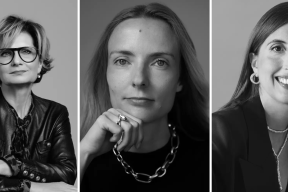
Recently, Luca de Meo, CEO of French luxury group Kering, presided over the opening ceremony of the first academic year of the Accademia per le Eccellenze (KApE) in Milan.
In his remarks at the event, he noted: "Italy has a large number of very small, fragmented, independent yet exceptionally skilled players. I believe the challenge today is to reach the necessary scale and build an ecosystem that can become a global benchmark... because when you have to compete with powerful American or Chinese systems, you must have sufficient strength."
"We want to enhance the professional value of artisans. Luxury is Europe's last stronghold where it still holds a clear lead... At present, no one can surpass us in this field, and we must ensure that no one will in the future either."
Luca de Meo also shared key insights on the outlook for Made in Italy and the luxury industry, saying: "I am very optimistic about the prospects of the (luxury) industry, but the industry will experience cyclical fluctuations."
Made in Italy remains one of Kering's "strategic cornerstones," and supply chain control needs further strengthening
Luca de Meo emphasized that Italy occupies a central place in Kering's plans and that the group has no intention of moving production out of Italy.
When asked about the fact that some sneakers in the latest collection of flagship brand Gucci are produced in China, Luca de Meo said the decision was driven by specific technical requirements. "We have absolutely no intention of relocating production lines or taking similar measures... We have made it clear that, based on our development goals, Italy's central role in our manufacturing system remains one of the cornerstones of the group's strategy."
Luca de Meo cited a set of figures to underscore Italy's importance to the group: "84% to 85% of our products are made in Italy, of which 95% is for export. Of the exported products, 80% goes outside Europe, so we receive a range of strong currencies such as renminbi and US dollars... We are perhaps the luxury group with the highest share of Made in Italy. Kering has invested heavily in Italy."
Sabina Belli said that Kering is the number one player in Italy's domestic fashion and luxury industry, holding an 8% market share and contributing 0.3% of Italy's national GDP. Specifically, Kering generates €5.9 billion in economic value added in Italy, of which €2.4 billion is in Tuscany (1.9% of the region's GDP), €1.9 billion in Lombardy (0.4% of the region's GDP) and €900 million in Veneto (0.5% of the region's GDP).
Luca de Meo further emphasized that the group's internal reorganization plan is currently underway. He believes that although 25% of suppliers account for 98% of total procurement, the group has too many organizational layers and its business segments are too fragmented.
Kering plans to strengthen control across the entire supply chain in order to safeguard quality, control costs, and achieve product traceability and sustainability. Luca de Meo made clear that this is not a restructuring in the traditional sense: "We need to reshape the model and build a solid supplier ecosystem. Today the industrial chain is too long, perhaps too long, with too many layers and prominent fragmentation."
He pointed out that this is a challenge shared by the entire luxury industry. "The luxury industry has about 600,000 employees and 60,000 companies. That means fewer than ten employees per company on average. Such small businesses are suited to small-scale local operations but struggle to compete with strong, standardized, systematized rivals."
Store network optimization and a "fair pricing" strategy
On the channel side, the restructuring plan Kering announced this spring, which includes closing about 100 stores, is in its late stages. Luca de Meo said: "By July, we had already closed 84 stores."
Alongside the store contraction, the group is adjusting its business model in tandem. After years of rapid growth, the luxury industry is entering a phase of normalization.
Several analysts have noted that in the short term, pricing is the core strategic issue the entire luxury industry must address. Kering is evaluating its product pricing system, but Luca de Meo clarified that this does not mean across-the-board price cuts: "I have always said that we are pursuing an approach I call 'fair pricing.'"
Luca de Meo also mentioned external criticism that the luxury industry suffers from a disconnect between perceived value and selling price, adding: "We are correcting this in a smarter way, because we realize that some 50 million or even 70 million consumers have dropped out of the luxury consumer base, and we want to win them back. But that does not necessarily mean cutting prices. There are other ways, such as enhancing product value and creating creative works that make consumers recognize the value of the price."
Luca de Meo also acknowledged that luxury brands themselves bear some responsibility: "The industry has developed a certain 'tunnel vision,' focusing solely on high-end luxury clientele while forgetting entry-level aspirational consumers and those in between the high-end luxury and entry-level segments."
The challenge, therefore, is not necessarily to adjust prices directly, but to rebuild the connection among price, product and perceived value. "At Kering, we are focusing on creativity, product and quality. When you create enough appeal, consumers will come naturally," Luca de Meo concluded.

The luxury industry has long cycles; patience and resilience are essential
On the overall industry landscape, Luca de Meo takes a longer-term view and calls for not being swayed by the impatience of capital markets.
"I must look at things from a medium- to long-term perspective and maintain a holistic view, even though (capital) markets and the media are clearly impatient. The luxury industry has long cycles, and we must maintain patience and resilience rather than drift with the tide. Looking at historical data, this industry actually grows faster than global wealth. All institutional indicators and research show that long-term global economic growth remains at 2% to 3%; if the global economy grows 3%, the luxury industry will grow even faster," Luca de Meo said.
Luca de Meo believes that future market growth must take into account changes in the structure of the world's wealthy population. "Our target clientele is high-net-worth individuals, in plain terms, those with at least US$1 million available to spend on luxury products and services. There are currently about 80 million such people worldwide, and if the data is correct, this base could double in the future."
However, the geographic pattern of growth may differ from today's. Luca de Meo observed that new high-income consumers may be concentrated in the United States, Latin America or India. This shift will also affect the structure of demand: "For example, Indian consumers buy fewer handbags but more jewelry." The group therefore needs to rethink its regional strategy and category mix to adapt to the evolution of different markets.
Luca de Meo's conclusion remains confident while not shying away from the industry's cyclicality. "I am very optimistic about the industry. Of course we must navigate the waves; cycles will certainly occur, but we must hold our course. Especially since I came to Kering from the automotive industry to lead the group's restructuring. My mission is to build an integrated group so that Kering's business model ten years from now will fit the shape of the luxury industry in 10 to 15 years."
About the Accademia per le Eccellenze
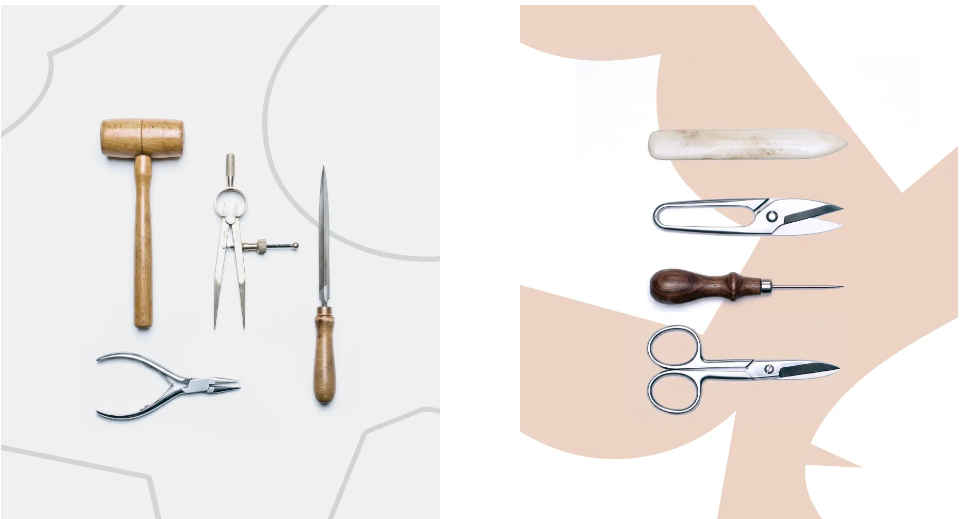
The Accademia per le Eccellenze educational program was announced last spring, with the aim of integrating the internal academies and external schools that Kering's brands have established over the years into a collaborative network.
The program is now officially operational, with more than 1,500 students enrolled, 40 programs offered by the group's brands, and 7 partner institutions across 6 Italian regions, aimed at training a new generation of artisans and safeguarding the transmission of Italian luxury craftsmanship.
One of the purposes of establishing a main campus in Milan while keeping institutions in other regions operating is to "avoid forcing students to concentrate in Milan and prevent the loss of talent and resources from other regions."
Sabina Belli, President of Kering Italia and head of the Accademia per le Eccellenze, said: "Italy is an open workshop for the world. This academy is part of a higher-level commitment that begins with revitalizing 'Made in Italy.' The second goal is to supply highly skilled talent to Italian craftsmanship and its manufacturing companies, thereby strengthening the strength of Italian artisanal excellence—and the academy was established precisely for this."

Related reading from LuxeCO:
|Sources: official press release, Reuters, ilsole24ore, Corriere della Sera
|Image source: group official website
|Editor: LuxeCO