The IP economy is becoming an important variable shaping the growth logic of the fashion industry. IP collaborations are no longer a one-off marketing tactic; more and more brands are incorporating them into the long-term management of consumer relationships.
The reasons young consumers of the new generation make purchases have changed. Beyond product function and design, they care more about whether a brand or a character can offer sufficiently genuine emotional resonance, identity expression and a sense of participation.
Frost & Sullivan predicts that China's IP consumer goods market will reach RMB 174.1 billion in 2026 and further grow to RMB 250.3 billion by 2029. Among these, apparel has become the third-largest IP consumer goods category, after food and toys.
Teenie Weenie recently keenly captured the momentum of young users jointly created by "celebrity + IP" and chose to collaborate with the emerging IP Apple Gal. This collaboration completed a perfect closed loop from emotional identification to commercial conversion: on the first day the Apple Gal × Teenie Weenie collaboration collection launched on Teenie Weenie's official Douyin flagship store, paid GMV exceeded RMB 18 million, topping the Douyin women's apparel brand self-broadcast ranking and the Douyin flagship sales ranking.

It is worth noting that Apple Gal only entered Chinese social media earlier this year and does not have the accumulated nostalgia that a mature IP builds over time. This means the market performance of this collaboration cannot simply be attributed to existing fame.
What is truly worth discussing is how the brand, the IP owner and the spokesperson worked together around the same group of young users to connect emotional insight, co-created content and consumption scenarios.
Now that consumers have seen countless IP collaborations, the real question is no longer "who to collaborate with," but how to capture a collective emotion that is taking shape and turn "being liked" into real relationships and commercial results.

1. Why Does Everyone Like Apple Gal?
"I like her cute and furious image." "I like her rebellious, quirky personality." "No matter how good-tempered a girl is, she can't avoid being furious over certain things." These genuine comments on social media capture why Apple Gal is liked.

An apple headpiece and two thick braids form Apple Gal's most direct visual recognition, but what truly makes this character work is not a standardized "cute girl" image, but her distinct, even slightly conflicted personality.
She gets angry, blows up and plays pranks; cuteness and rebellion, a well-behaved exterior and a real temper coexist. Compared with character settings that are always gentle and healing, Apple Gal has a kind of unpolished personality charm.
Apple Gal's core creative team told *Luxe.Co* that one of the original intentions in designing this character was to make her look "very angry": "Many people in life are 'embarrassed' to express 'anger.' Apple Gal dares to express it, and being cute with a bit of a temper makes her even cuter."
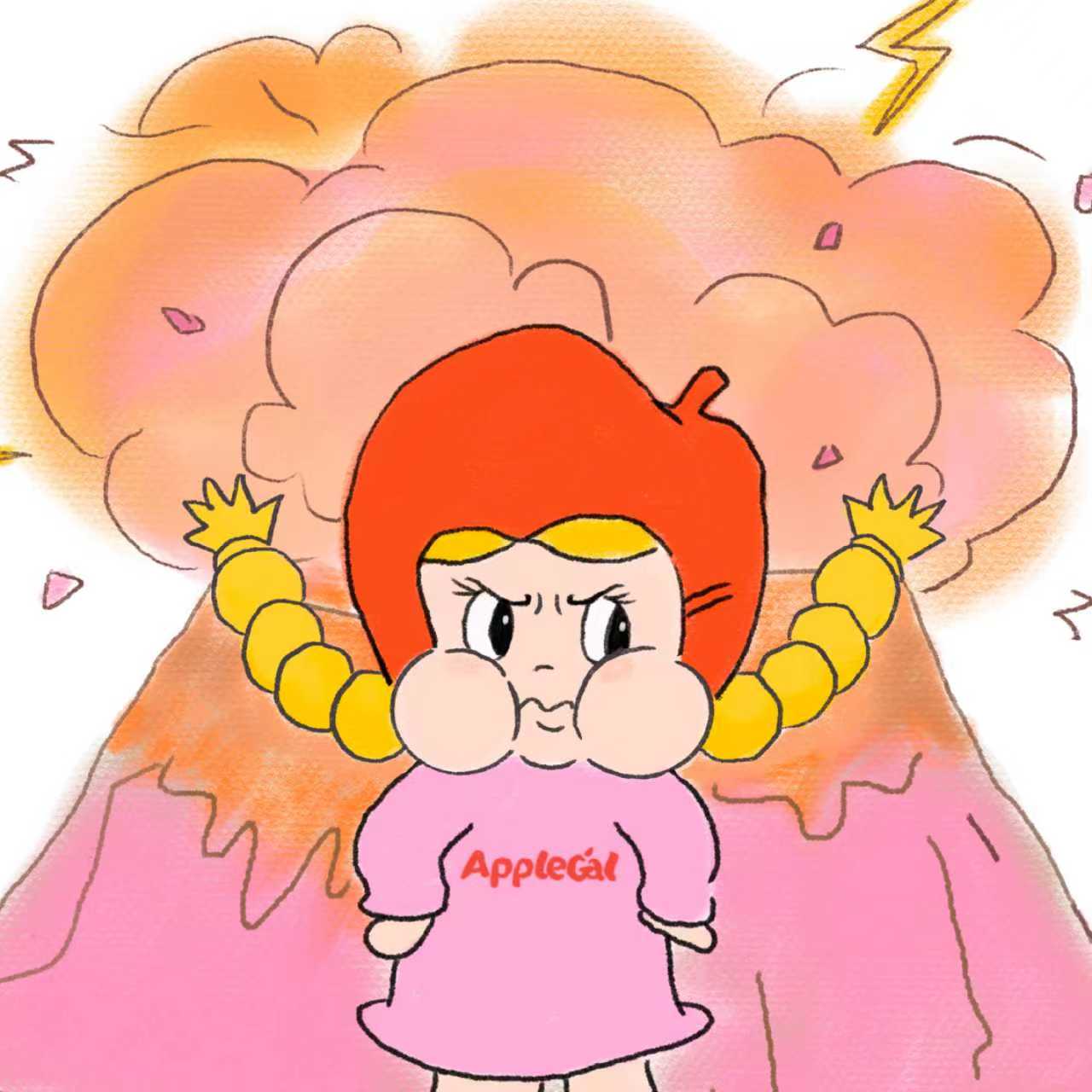
This is also the most penetrating part of Apple Gal. The true starting point of an IP's value is not merely having a memorable visual symbol, but whether it can activate some emotion that genuinely exists yet has not been fully expressed.
Apple Gal's "daring to express" hits the emotional gap of young people under high-pressure lives. She does not dissolve emotions for consumers; rather, she gives those emotions that usually need to be hidden, controlled or even ignored an outlet where they can be seen. As a result, she has become a "mouthpiece" for many young people.
At this point, what she carries is no longer just aesthetic preference but begins to enter identity recognition. "Apple Gal looks very honest, but inside she is a rebellious little girl." This description of Apple Gal by Zhao Lusi is also the shared perception of many fans toward this character.
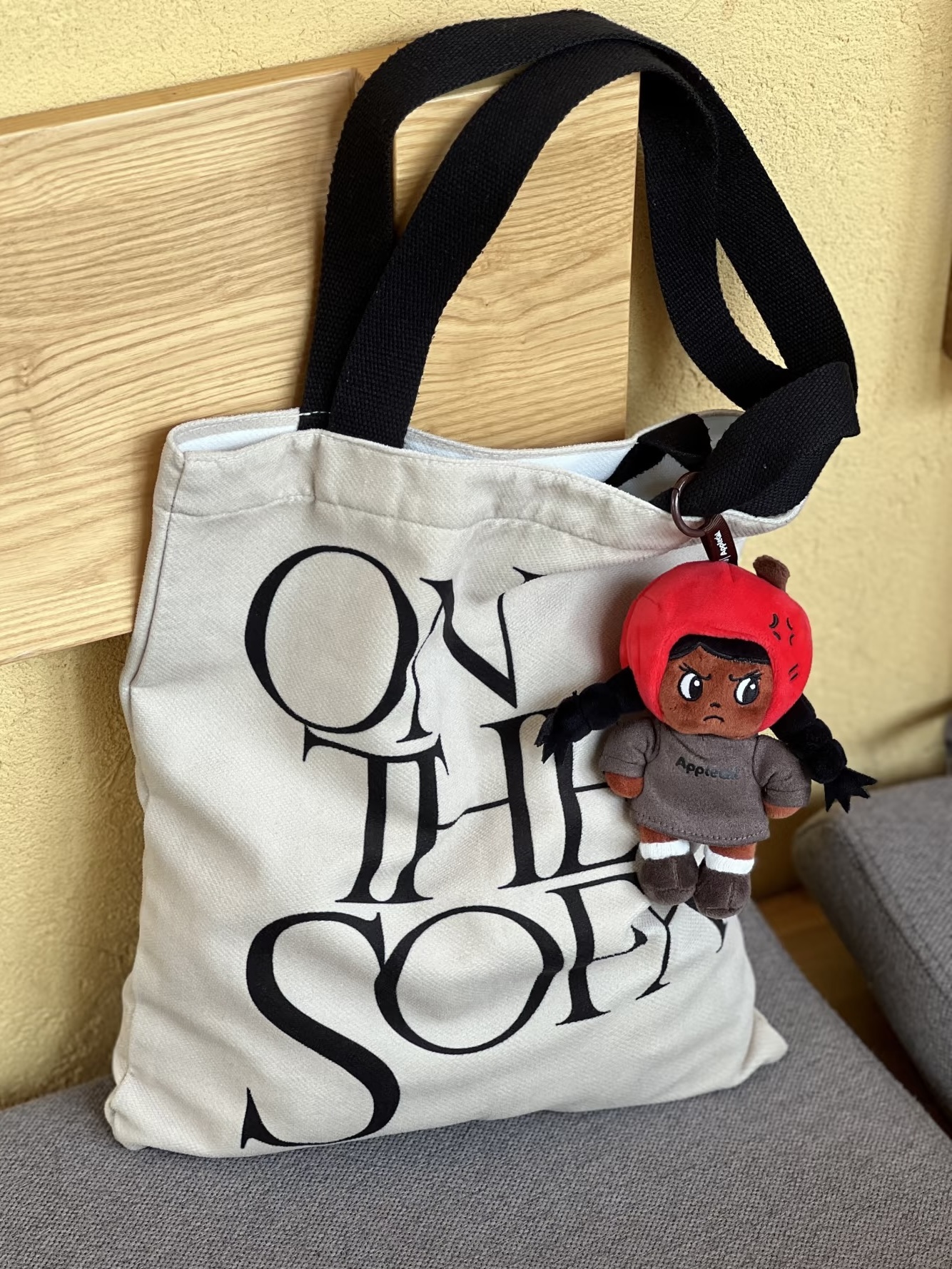
As this perception is shared and confirmed by more and more people and forms its own language and community, Apple Gal gradually becomes an interface for emotional expression and a coordinate for group identification.
What consumers truly identify with is not a perfect character, but the self within the character that can be projected onto and confirmed.

Teenie Weenie, which has long cultivated the women's consumer market, has sensed the profound shift in the consumer psychology of the younger generation. Joining hands with Apple Gal is precisely an opportunity for the brand to update its communication approach in line with the trend.
Positioned in the new retro preppy style, Teenie Weenie's classic preppy bear image has accompanied a generation of young women as they grew up. The brand's current core audience has evolved into workplace women aged 25 to 35, who are capable and polished at work while always retaining their insistence on themselves. The spiritual core of Apple Gal—"candid and free, accepting imperfection"—resonates with the spiritual aspirations of this group.
In this collaboration, Teenie Weenie not only injected a fresher, more attitude-driven trend vibe into the brand at the style level, but also calibrated its tone of communication at the value level, conveying to female users a power of self-acceptance and gentle encouragement.

2. From "Collaboration" to "Co-creation": The Same Narrative of Brand, IP and Spokesperson
According to the *2026 IP Collaboration Marketing White Paper* led and released by Alifish, Alibaba Group's IP operation platform, more than 60% of young consumers believe that purely print-based collaborations have lost novelty.
As "label-slapping" collaborations gradually lose effectiveness, what brands truly need is no longer just an image license that can be printed on products, but a co-creation partner that can enter content, space and consumer relationships.
The Apple Gal × Teenie Weenie collaboration precisely reflects this change.
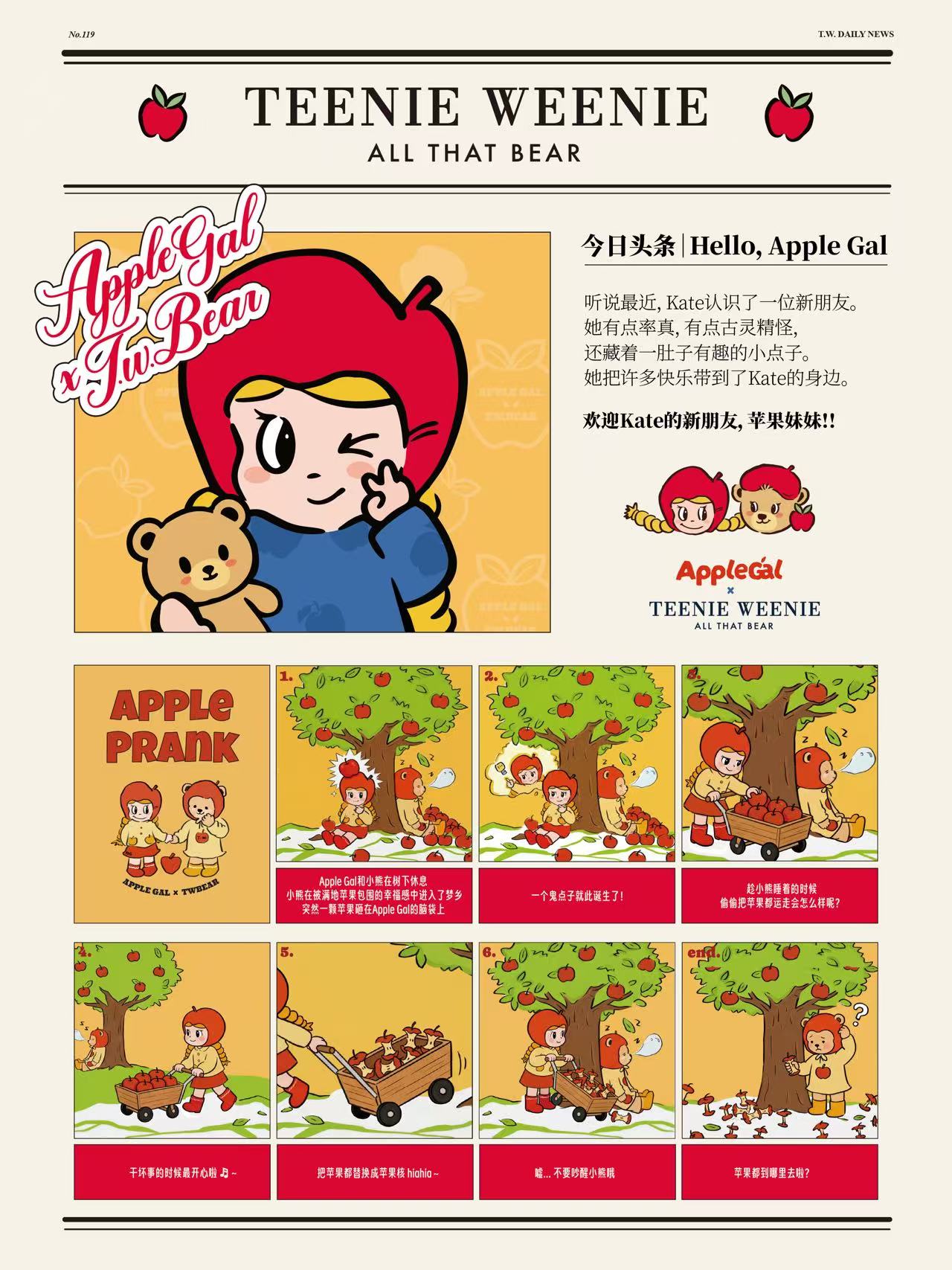
At the content level, Apple Gal engages in character co-creation with Kate from Teenie Weenie's own IP, the Bear Family, building new relationships and stories for two originally independent characters through collaboration stickers, wallpapers and animated content.
This means the collaboration is no longer merely a juxtaposition of two logos or two sets of visual elements, but an attempt to build a content context that consumers can understand, participate in and even continue to expand.
In the offline space, Teenie Weenie's Wukang Road brand concept store was further transformed into an Apple Gal-themed experience space, immersing visitors in an "apple wonderland" that can be browsed, photographed and played in. Through themed visuals, photo-op installations, fitting spaces and carefully curated interactive experiences, the store extends the IP that originally existed on social media and products into real-world scenarios, enabling consumers to enter, participate and generate content. A retail space in the traditional sense thus becomes a shared social touchpoint for IP fans, celebrity fans and brand users.
During the initial reopening period, the store adopted online reservation for entry, and the volume of reservations and inquiries on social media continued to rise. The brand's official Douyin flagship store simultaneously carried the attention with livestreamed new arrivals. The IP's emotional appeal and content capabilities, through the brand's mature supply chain, channel building and livestream operations, were jointly converted into tangible sales results.

In this collaboration, Zhao Lusi's role is not merely traditional celebrity exposure. Teenie Weenie's long-term partnership with Zhao Lusi provided a unique foundation of trust for the collaboration. As early as 2020, Teenie Weenie signed Zhao Lusi as its first brand spokesperson, making it one of the earlier partners to join hands with her and accompany and witness her growth in the film and television field. Over the following six years, Teenie Weenie's brand style and Zhao Lusi's fashion temperament have continued to align, deeply consolidating the fan community. The rapport accumulated over the long term enables Teenie Weenie to accurately perceive the depth of its core users' identification with Zhao Lusi and to know what kind of collaboration they would want to see.
Zhao Lusi is very fond of Apple Gal and participated in the early co-creation of the character. Teenie Weenie's collaboration with Apple Gal is itself a response to the eager expectations of the brand's core users, strengthening the emotional link with them.

Zhao Lusi is not a "traffic entry point" added at the end of the collaboration's communication, but an important connecting node running through the IP character, the brand relationship and fan identification. What the celebrity truly provides here is not just exposure, but relationship endorsement. She shortens the cognitive distance between consumers and a new IP and accelerates the formation of trust.
This collaboration did not simply stack "celebrity," "IP" and "brand" as three independent traffic resources, but brought all three into the same narrative system. From character content to offline space to consumer relationships, a path gradually formed from identification to participation to consumption. This is also an important prerequisite for the collaboration's ultimate commercial conversion.
3. New IP Competition Is Moving from "Building Symbols" to "Building Relationships"
An IP industry analysis released by CICC points out that China's IP industry has entered a new development cycle. The key to future competition in the industry chain will no longer be simply "who owns hot IP content," but "who can turn IP into a replicable commercial system." The value creation and distribution of the IP industry are also migrating toward a full ecosystem chain of "content—merchandise—experience."
This means the criteria by which brands judge an IP's value are also changing.
In the past, fame, recognition and licensing scale often constituted the most direct evaluation indicators; but as leading IPs are used at high frequency and repeatedly collaborated with, what is truly scarce in the market has become another capability: whether an IP can continuously produce new content, enter new relationships and continue to grow in different scenarios.
PUPIKO Creative, the company behind Apple Gal, offers a cross-section for observing this new type of IP operation.
Apple Gal was designed and incubated by PUPIKO Creative, an IP creative company from Los Angeles. Around PUPIKO World, the company has built an independent alternate-dimension worldview composed of nearly 50 characters.
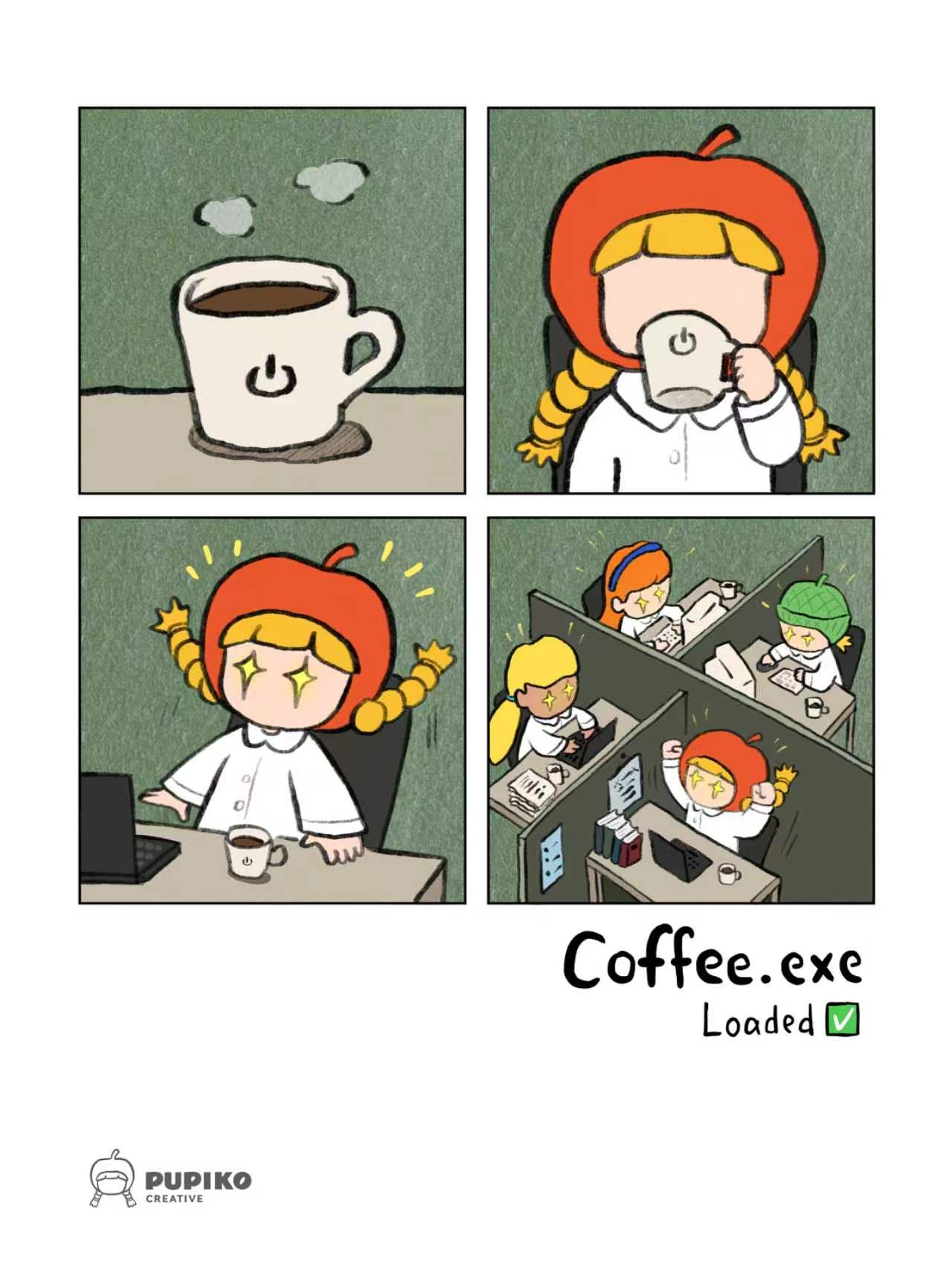
In January this year, Apple Gal began entering Chinese social media; in April, it launched Thailand-exclusive tea drinks and merchandise with Chagee; in August, PUPIKO Creative held its first national exhibition, *The Disappeared PUPIKO: The Ultimate Code*, at COSMO in Chengdu.
In this exhibition, seven IP characters are placed in a world where "the program has malfunctioned": they gradually begin to lose their faces, emotions, consciousness and thinking, until they lose the ability to "be themselves," thereby extending the character stories further into discussions about discipline, self-awareness and individual awakening.

During the same period as the exhibition, 3D printing company Bambu Lab officially announced that seven licensed PUPIKO Creative IP character models had joined its model community MakerWorld, making PUPIKO the first commercial IP to officially open-source models in a 3D printing model community.
From social content and consumer collaborations to art exhibitions and technology communities, PUPIKO is trying to bring the same IP world into different media and real-life scenarios.
The "Playful" and "Driven by Art & Tech" it emphasizes: the former determines the playfulness and vitality in characters, products and content, while the latter attempts to give the IP the ability to extend beyond a single consumer category through artistic expression and technological media.
Therefore, what an IP company centered on content creativity truly provides is not a character image that can be licensed repeatedly, but a worldview system that can continuously generate stories, accommodate the participation of different brands and constantly enter new media and new consumption scenarios.
This also explains why a young IP, even without long-term accumulated fame, may still have commercial value that brands can identify in advance.
Conclusion
The greatest potential of a young IP is that it has room to continue being defined, participated in and expanded. This openness enables the character to continuously form new meanings through ongoing interaction with fans, creators and brands, and thereby enter broader public expression and consumption scenarios.
For brands, this growth potential means that IP is no longer merely borrowing a set of mature cultural symbols, but has the opportunity to participate in the formation of a new cultural asset.
The Apple Gal × Teenie Weenie collaboration offers a new way of thinking for brands evaluating IP partners:
The commercial influence of a new IP does not necessarily have to wait until it becomes a "national IP" before it begins to happen.
When genuine emotional identification, continuous relationship building, a content system and a brand's mature commercial infrastructure are effectively connected, "being liked" can be further amplified and converted into verifiable commercial results.
As the market gradually grows tired of repeated collaborations with the same batch of leading IPs, the criteria for measuring IP value are being redefined: from simply providing visual pleasure to carrying emotions, identity and relationships.
What may be worth brands choosing in the next stage is perhaps not only those symbols that already enjoy huge fame, but also those characters that can continuously create new stories, build new relationships and grow together with the current social mood.
| Image source: Provided by Apple Gal and Teenie Weenie
| Editor: Elisa