
Fashion.VC's "Global Fashion Brand Investment Weekly Report," launched in 2024, promptly summarizes brand investment and M&A and IPO events in the luxury, fashion and lifestyle sectors at home and abroad, covering luxury goods, apparel, footwear, bags, jewelry, watches, beauty, personal care, fragrance, sports, outdoor, hotels, travel, electronics, health, mother and baby, home, sustainable fashion and other sub-sectors.
The 38th-41st issue of the "Global Fashion Brand Investment Weekly Report" in 2026 includes a total of 22 brand investment and M&A news items from September 15 to October 12, 2026, including 3 from China and 19 from overseas.
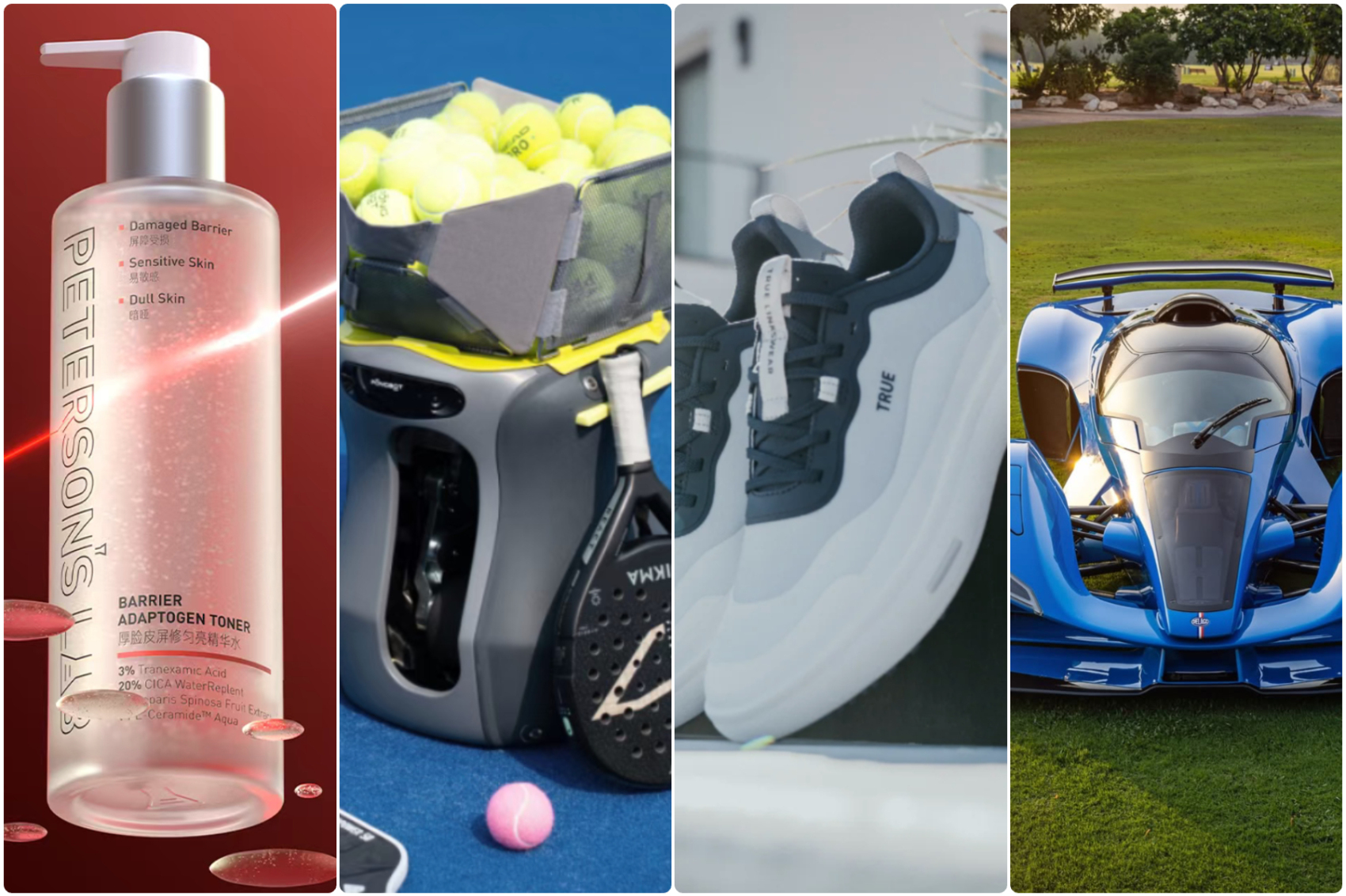
——China (3)——
Smart Fashion (2)
1) Smart glasses brand NIMO's parent company completes angel round of several hundred million yuan
Smart glasses brand NIMO's parent company Bit Fantasy (比特幻境) recently completed an angel round of several hundred million yuan, at a valuation of 1.5 billion yuan. Investors in this round include Bohua Capital, Gobi Partners, Yuanhe Puhua and Shangshi Capital, among others.
Bit Fantasy was founded in 2025, and the first smart glasses product under the NIMO brand was launched in April 2026. Considering the need for lightweight wear, the frame of these smart glasses is made of polymer composite carbon fiber and weighs about 29 grams. According to co-founder He Dilong, this is the first time in the industry that display-type AI glasses have been made under 30 grams.
In terms of functions, the glasses focus on stocks, news, messages, maps, teleprompter, translation, and automatic brightness, among a series of features directly related to users' daily lives.
Currently, the NIMO brand is sold on Douyin, JD.com and the offline optical chain LOHO, with monthly sales reaching several thousand units.
The NIMO brand has also established a deep partnership with Arts Optical (01120.HK), a Hong Kong-listed international eyewear manufacturer with more than 50 years of industry experience.
2) AI sports hardware company PongBot completes Series B round of several hundred million yuan
Shanghai-based AI sports hardware company PongBot (庞伯特) has announced the completion of a Series B round of several hundred million yuan. The round was led by Shanghai Guotou Xiandao Fund, with participation from Yuanhe Puhua, Pudong Venture Capital and other institutions, while existing shareholder BlueRun Ventures continued to follow on.
The proceeds will be used to continue increasing R&D in core technologies such as AI sports large models, sports vision and training decision-making, accelerate global market and brand building, and advance the R&D and launch of more sports categories and new products.
Previously, the company completed three consecutive Series A rounds, with leading institutions including Shenqi Capital, Mingshi Venture Capital, BlueRun Ventures, Jinqiu Fund, China Growth Capital and Chengwei Capital all participating.
PongBot was founded in 2019 and is part of Shanghai Chuangyi Technology Co., Ltd. Founder and CEO Zhang Haibo holds a master's degree in computer vision and previously worked at SIASUN, where he held positions including engineer, project manager and department head, with more than ten years of experience in sports training robot R&D. He also led the development of a national-team-level table tennis hitting robot.
The company initially entered the market through table tennis and later expanded into tennis. In 2024, PongBot officially launched the PACE series of smart tennis ball machines. In May this year, PongBot launched Aura, the world's first multi-sport AI coaching robot, which surpassed US$1 million in crowdfunding on Kickstarter within just 5 hours of going live, and has accumulated more than US$4 million.
Currently, PongBot has more than 300,000 users worldwide, with cumulative ball deliveries exceeding 2 billion and more than 1 million sets of ball trajectory data accumulated.
At the end of September, PongBot officially announced that it had become the official partner and official ball machine partner of the Australian Open, as well as the official ball machine supplier of Tennis Australia's National Tennis Academy.
Beauty (1)
1) Efficacy skincare brand Peterson's Lab receives equity investment from Proya
According to business registration change information, Proya (Hainan) Investment Co., Ltd. (referred to as "Proya") has become the second-largest shareholder of Shanghai Kedai Biotechnology Co., Ltd., the parent company of 「Peterson's Lab」 (毕生之研), with a current stake of 19%.
Shanghai Kedai Biotechnology Co., Ltd. was founded in 2016, and its brand 「Peterson's Lab」 focuses on "dermatology laboratory-developed efficacy care solutions," emphasizing scientific formulas and ingredient combinations. Currently, Peterson's Lab's core product lines mainly revolve around oily and acne-prone skin and barrier repair, covering categories such as serums, eye creams, cleansers and creams, with individual product prices generally ranging from 50 to 150 yuan.
The brand is currently sold on e-commerce platforms such as WeChat Mini Program, Tmall and Xiaohongshu. It is reported that the brand's star product, the "Thick-Skin Barrier Repair Brightening Essence Water," sells more than 300,000 units per month on Tmall and ranks second on the toner repurchase list.
Not long ago, Proya had just increased its stake in Chinese teen trend color cosmetics brand 「Flower Knows」 to 51% for approximately 351 million yuan.
——Overseas (19)——
Automotive (1)
1) LVMH Group's eldest son invests in French century-old luxury car brand Delage
Antoine Arnault, eldest son of Bernard Arnault, Chairman and CEO of French luxury giant LVMH, has invested in the supercar sector for the first time and become a shareholder of French luxury car brand Delage.
Delage was founded by Louis Delage in 1905 in Levallois-Perret, Seine, and was one of the most prestigious luxury sports car manufacturers in the 1930s. Racing cars built by Delage won the European Grand Prix multiple times.
In 1935, Delage was acquired by another French vintage sports car manufacturer, Delahaye. However, under the sustained pressure of post-war taxes on large-displacement cars, Delage ceased production entirely in 1953.
It was not until 2019 that French entrepreneur Laurent Tapie reached an agreement with Les Amis de Delage, the collectors' association holding the Delage trademark rights, obtained authorization to use the brand name and officially announced the relaunch of the Delage brand. After the relaunch, Delage positioned itself as a collector-grade supercar produced in very small batches, benchmarked against brands such as Pagani and Bugatti.
It is worth noting that Delage's current investors include several French "grand families," including François Pinault, founder of another luxury giant Kering, and his son François-Henri Pinault, the group's chairman, as well as Xavier Niel, founder of French telecom giant Iliad and a ByteDance board member, who is also the partner of Antoine Arnault's sister Delphine Arnault.
Outdoor (5)
1) A Hangzhou company acquires all intellectual property of US outdoor equipment manufacturer Lowe Alpine
Equip Outdoor Technologies Ltd., parent company of British outdoor brand Rab, has announced the sale of the intellectual property of US outdoor equipment manufacturer Lowe Alpine to Chinese company ATG Brands & Data Limited (Hangzhou Pintong Internet Technology Co., Ltd., referred to as "ATG").
Lowe Alpine was co-founded in 1972 in Utah, USA, by three brothers Greg, Mike and Jeff Lowe. The three spent their childhoods climbing, skiing, hunting and hiking, and by their twenties were among the top mountaineers of their generation. The brothers started by developing mountaineering backpacks, as external-frame packs on the market at the time were too heavy and unstable to support their challenges on more difficult mountains.
In 1967, Greg Lowe designed, tested and launched the Expedition backpack from Lowe Alpine Systems. This revolutionary product featured an innovative internal frame structure, compression straps and a number of designs never seen before. In 1972, the Lowe Alpine Systems manufacturing company was officially registered.
At the end of 2010, Lowe Alpine Systems fell into operational crisis and began seeking a buyer. Equip Outdoor Technologies Ltd. acquired Lowe Alpine in 2011 for £20 million. In 2014, Equip Group discontinued Lowe Alpine's apparel production business and focused entirely on the backpack and accessories product lines.
ATG is headquartered in Hangzhou, China, and has more than 30 years of experience in the apparel industry, with about 1,200 employees across Hangzhou, Changzhou and Changshu. The company builds and operates a series of international brands in the Chinese market, including Lee Kids, Gant, Jockey, Speedo and U.S. POLO ASSN, and also owns proprietary brands.
2) Spanish outdoor lifestyle brand Blue Banana receives latest investment
Spanish outdoor lifestyle brand Blue Banana has announced that entrepreneur and investor Julio Bueso Hidalgo-Santa Cruz and music industry entrepreneur and international film composer Alfonso González Aguilar have become the company's newest shareholders.
This is another introduction of external investors by Blue Banana, following Juan Ricardo Hidalgo, owner of Spanish beauty and fragrance retailer Primor, becoming a shareholder in April.
After the completion of this transaction, Blue Banana's two co-founders and co-CEOs, Juan Fernández-Estrada and Nacho Rivera, still hold a majority stake in the company and continue to lead brand operations.
Blue Banana was founded in 2016 by two friends, Nacho Rivera and Juan Fernandez-Estrada, and is positioned as "a brand for a new generation of adventurers, explorers, curious people and travelers."
The brand's products mostly feature the signature "X" logo and cover categories including hoodies, sweatshirts, T-shirts, sweatpants, jackets, backpacks and accessories for men, women and children. Taking the men's clothing currently sold on the brand's official website as an example, spring/summer T-shirts are generally priced at 45 euros, while autumn/winter jackets are priced at up to 300 euros.
Blue Banana started as an online e-commerce business and later developed into an omnichannel brand with its own offline stores, franchise stores and department store shop-in-shops. The brand's business currently covers 15 countries, with more than 50 offline sales points in its home market of Spain. The brand previously expected sales of more than 28 million euros in 2025 and plans to increase annual revenue to 100 million euros within the next five years.
It is worth noting that in the ten years before bringing in external shareholders this year, the brand had never introduced any investors.
3) US golf footwear brand TRUE linkswear receives investment from golf headwear and apparel manufacturer Paramount Brands
US golf footwear brand TRUE linkswear (referred to as "TRUE") has announced that it has received a strategic equity investment from leading golf headwear and apparel manufacturer Paramount Brands. Specific financial terms were not disclosed.
TRUE was founded in 2009 by professional golfer Ryan Moore, a five-time PGA Tour winner, and his brother Jason Moore, and is headquartered in Tacoma, Washington. The core design of the brand's shoes is: zero drop (heel and forefoot at the same height), wide toe box, lightweight and flexible, with "barefoot-like" comfort, and products can transition seamlessly from the course to everyday wear.
Since 2022, TRUE has gradually launched a full range of products including pants, POLO shirts and golf hats, with designs that also follow the concept of "wearable on the course and in daily life." The brand's golf shoes are priced at US$179-325 (about 1,200-2,100 yuan), while apparel products are priced at US$99-125 (about 660-830 yuan).
Golf headwear and apparel manufacturer Paramount Brands was founded in 1916, and its brands include Imperial, which focuses on premium golf headwear, apparel and accessories; golf lifestyle brand Back 9; Winston Collection, a premium headcover, towel and leather accessories brand mainly serving golf courses; custom golf headwear brand Pukka; and golf belt and accessories manufacturer J.T. Spencer, among others.
4) US outdoor apparel and accessories brand Topo Designs receives additional equity investment from Gart Capital Partners
Colorado-based outdoor apparel and accessories brand Topo Designs has announced an additional equity investment from Denver private equity firm Gart Capital Partners. The funds will mainly be used to strengthen customer acquisition in the brand's US direct-to-consumer channels, raise awareness among target audiences, accelerate product innovation and time-to-market, and expand product lines and collaborations.
Topo Designs was founded in 2008 and is dedicated to providing versatile, durable outdoor apparel products for activities such as cycling, hiking, climbing and travel. The brand has now grown into a team of about 40 people, with products sold in more than 30 countries across six continents.
In addition to online direct sales, the brand also sells through about 1,200 wholesale doors, including outdoor specialty stores, independent lifestyle stores, and mainstream retailers such as REI, Backcountry and Nordstrom.
5) Swedish live bait and ice fishing gear brand Fibe acquired by Norwegian outdoor group
Norwegian outdoor group Nordic Outdoor Group (NOG) has announced the acquisition of 100% of the shares of Swedish live bait and ice fishing gear brand Fibe AB.
Fibe AB was founded in 1999 and is headquartered on the outskirts of Stockholm. It is a leading live bait supplier in the Nordic region, producing its own earthworms and maggots. In addition to the bait business, Fibe AB also offers a full range of ice fishing equipment, including rods, reels, lines, hooks, floats, sinkers, lures and ice augers, as well as a small amount of summer fishing supplies. Fibe AB's revenue in its latest fiscal year was SEK 22 million.
After the acquisition, NOG Group's portfolio has increased to seven companies, with combined annual sales of approximately NOK 250 million. The group's existing portfolio includes Norwegian tackle company Nordic Outdoor, Finnish fly fishing group Vision Group OY, Swedish fly fishing wholesaler Fly Dressing AB, Belgian fly fishing tackle wholesaler VDS Fly Fishing Tackle, Norwegian map business Nordic Maps AS, and Swedish sport fishing and outdoor company BIOS Aktiebolag, which was acquired in 2026.
Sports (3)
1) US fashion e-commerce company Revolve acquires minority stake in Canadian activewear brand 437 for CAD 15 million
US fashion e-commerce company Revolve Group has invested CAD 15 million (approximately RMB 70.58 million) to acquire a minority stake in Toronto-based activewear brand 437.
437 was founded in 2016 by two best friends, Adrien Bettio and Hyla Nayeri, who currently serve as co-CEOs, and started as a swimwear brand. In the three years after launch, the brand's revenue grew continuously, with an increase of 500%.
During the COVID-19 pandemic, 437 prioritized its ready-to-wear business and eventually launched a loungewear collection ahead of schedule. In 2023, 437 fully pivoted to activewear, known for soft neutral tones and feminine classic silhouettes, while eschewing exaggerated logos and elaborate prints.
The brand's products are suitable for Pilates, yoga, hot sculpt training, strength training and everyday wear, with individual retail prices of up to CAD 160 (approximately RMB 753) or more.
2) UK's Frasers Group acquires significant stake in Under Armour
A regulatory filing received by the US Securities and Exchange Commission (SEC) on October 1 shows that UK fashion retail group Frasers has acquired 16.6 million Class A shares of US sports brand Under Armour, representing an 8.78% stake. Under Armour founder Kevin Plank still holds about 65% of the company's total voting power, so a full takeover bid by Frasers Group is unlikely.
In the sports sector, Frasers Group has this year successively acquired a controlling stake in Italian sports retailer Maxi Sport and nearly 6% of German sports brand Puma, becoming its second-largest shareholder. Last year, the group also completed several overseas acquisitions, including South African sports, outdoor and leisure goods company Holdsport and Norwegian sporting goods retailer XXL Sport & Villmark AS.
In addition, Frasers Group has recently stepped up expansion in the luxury sector:
On October 5, it announced the official launch of a new luxury business division, Frasers Group Luxury, which not only brings together the retail operations of Frasers Group's three iconic luxury department stores FLANNELS, The Webster and Harvey Nichols, but also encompasses Frasers Group's strategic investments in luxury brands such as Burberry, HUGO BOSS and Mulberry.
The latest filing submitted to regulators on October 5 shows that Frasers Group's potential voting rights in Burberry have increased from 4.2% in July to 6.3%, equivalent to voting rights over 23 million shares, all held indirectly through put options.
3) London AI fitness mirror company MAGIC AI completes £8 million Series B round
London-based smart fitness company MAGIC AI has announced the completion of an £8 million Series B round. The round was co-led by transatlantic venture capital firm Beringea and existing investor IW Capital, with participation from PXN Group, Accelerate Ventures, Ventures Together and Active Partners.
Following the completion of this round, MAGIC AI's cumulative funding has reached US$20 million.
MAGIC AI was founded in 2021, and its core product is an AI fitness mirror, the MAGIC AI Mirror. Based on generative AI and computer vision technology, the fitness mirror can project star athletes into the room as "holograms," providing users with real-time movement feedback and personalized training at home. Its proprietary ReflectAI® technology can track movements, correct posture, count repetitions and support more than 1,000 training movements. Celebrity coaches currently involved include former Manchester United and England national team player Jesse Lingard and former England cricket captain Alastair Cook, among others.
To date, the AI fitness mirror product has recorded more than 500,000 AI-coached training sessions, with cumulative training time of 150,000 hours.
Apparel (3)
1) Ownership of US first-generation internet women's wear brand Nasty Gal changes hands again for US$16 million
US internet women's wear brand Nasty Gal has been sold by its parent company, UK department store group Debenhams Group, to New York-based brand management platform White Space Group New York, LLC (WSG Brands) for total cash consideration of US$16 million.
Nasty Gal was founded in 2006 by Sophia Amoruso, nicknamed the "Nasty Gal," and initially was just an eBay account selling second-hand fashion items. As a first-generation internet fashion brand, Nasty Gal was among the first to target younger-generation consumers and even used social media for promotion earlier than many advertisers, making it arguably the earliest "influencer" fashion brand.
In 2015, Nasty Gal raised US$16 million in a Series C round led by former Apple retail executive Ron Johnson, bringing cumulative funding to US$65 million, and annual sales once reached US$130 million (2014). However, due to poor subsequent operational capabilities, product updates that could not keep pace with the brand's rapid growth, and the cost pressure of expanding offline stores, its net loss in fiscal 2016 reached US$21 million, and it ultimately filed for bankruptcy in November 2016.
At the end of January 2017, Boohoo.com, the predecessor of Debenhams Group, acquired Nasty Gal's intellectual property and customer resources for US$20 million.
However, in the post-pandemic era, after acquiring brands such as Debenhams and Karen Millen, boohoo's business focus has shifted. The group now focuses on an e-commerce platform model, and Nasty Gal has therefore gradually been marginalized.
Nasty Gal's gross merchandise value (GMV) in fiscal 2026 was £12 million, with adjusted EBITDA of only £400,000.
2) Italian luxury outerwear brand Hettabretz receives first external investment
Italian luxury outerwear brand Hettabretz has received the first external investment in its history: Earlcrown Limited, an investment platform under the Imerman family office Vasari Global, has acquired a "substantial minority stake" in Hettabretz.
After the completion of the acquisition, Hettabretz remains controlled and managed by the founding family.
Hettabretz was founded in 1960 in Bologna by designer Enrichetta Bertuzzi, whose father was a well-known Italian leather merchant. Initially, she made women's wear pieces only for personal use and according to her own preferences. Soon after its founding, the brand's acclaimed leather apparel collections entered well-known department stores around the world, including Bergdorf Goodman, Beltrami and Neiman Marcus.
Today, Hettabretz is run by the third generation of the family and is particularly known for luxury leather outerwear made from exotic leathers and precious fabrics such as crocodile, cashmere and vicuña, with all products designed and handmade by senior artisans in Italian workshops.
Currently, Hettabretz is sold through 18 multi-brand boutiques in cities such as Paris, Monte Carlo, Hong Kong and Geneva.
3) American classic women's wear brand The Limited taken over by New York brand management group CP Brands
New York brand management group CP Brands, together with a private investment group led by Harry Adjmi, CEO of One Step Up, has acquired all brand rights to American classic women's wear brand The Limited from private equity firm Sycamore Partners.
The core operating entity in this acquisition is CP Brands, founded by Eli Yedid in 2000. It owns or licenses brands such as Wrangler, Vince, Snug, Chickpea, RBX and Avalanche Outdoor Supply Co., covering sectors including athleisure, outdoor and premium menswear.
Neither party disclosed the specific consideration, but Eli Yedid said in an interview that the two parties acquired The Limited together at a "very good price."
The Limited was founded in 1963 by Leslie Wexner (who later became the owner of the famous lingerie brand Victoria's Secret) and was once an iconic brand in the US modern women's wear retail industry. The brand focused on refined women's wear and career wear. The Limited went public in 1989 and entered a golden age of expansion throughout the 1980s and 1990s, with stores across major shopping malls in the United States.
After entering the 21st century, with changing consumer aesthetics, the rise of fast-fashion brands and the impact of e-commerce channels, The Limited gradually lost its traditional positioning and offline channel advantages, and its performance continued to decline. It eventually closed all physical stores and entered bankruptcy proceedings in 2017.
A year before the bankruptcy, private equity firm Sycamore Partners first acquired the then-troubled The Limited for US$26.8 million; a year later, Sycamore Partners obtained The Limited's trademark ownership through a bankruptcy auction.
After that, Sycamore did not independently relaunch the brand, but instead converted it into a private-label brand for its department store chain Belk and sold it through that channel.
Footwear (2)
1) US men's functional footwear startup Stoke Shoes receives investment from former Deckers Brands president
On October 6, US footwear startup Stoke Shoes announced that former Deckers Brands President and CEO Dave Powers has come out of retirement to join the company as an advisor and investor. The specific financial terms of the investment were not disclosed.
Stoke Shoes is a footwear startup founded in 2025, positioned as a functional footwear brand for men with wide feet, targeting the long-neglected fit pain point in the footwear industry. The brand's product logic is built around redesigning for real foot shapes, focusing on everyday shoes with wider lasts and stronger cushioning.
Just one year after its founding, the brand has completed initial channel rollout and entered more than 450 retailers across the United States, with partners including Scheels, Murdoch's, Academy Sports + Outdoors, Rack Room Shoes and Shoe Dept., among others.
Dave Powers is a well-known executive in the US outdoor industry and was named to Barron's 2023 list of the Best CEOs in the US. He was the only apparel company CEO among the 25 honorees, alongside Berkshire Hathaway's Warren Buffett and Apple's Tim Cook.
Under the agreement between the two parties, Dave Powers will serve in the dual role of advisor and investor, working closely with Stoke's management team and deeply participating in core business areas such as brand strategy, product development, retail expansion, channel distribution and long-term growth planning.
2) Italian footwear company Asso acquires comfort women's footwear brand Cinzia Valle
Italian Marche-based footwear manufacturer Asso has announced the acquisition of women's footwear brand Cinzia Valle, which has a history of more than 40 years.
Cinzia Valle is headquartered in Fermo, Italy, and is now in its second generation. The brand has long focused on stylish yet comfortable women's footwear, and some of its styles are designed with space and last structures specifically reserved for personal custom orthotic insoles.
Asso was founded in 1987 and has continued to expand through acquisitions in recent years: it acquired children's footwear company Balducci in 2016, entered the women's footwear market by acquiring Keys in 2019, added women's footwear brand Janet&Janet in 2023, and obtained the footwear license for Italian fashion brand Gianfranco Ferré in 2024.
Watches (1)
1) Chanel participates in acquisition of controlling stake in Swiss century-old luxury watch brand EBEL
On October 8, Swiss watch manufacturer Movado Group, Inc. announced that it had signed a binding agreement to sell 95% of the rights to its Swiss luxury watch brand EBEL to a strategic acquisition consortium for US$66.5 million.
The consortium is led by Geneva-based fine watchmaker Montres Journe SA, parent company of F.P. Journe, with participation from French luxury giant Chanel and well-known Swiss watch industry figure Pierre Jacques.
After the transaction is completed, Pierre Jacques will become CEO of EBEL. Pierre Jacques previously served as CEO of independent watch brand De Béthune.
EBEL was born in 1911 in La Chaux-de-Fonds, Switzerland, and is a Swiss luxury watch brand created by Eugène Blum and his wife Alice Lévy. In 1929, their son Charles took over the company and vigorously expanded overseas markets. After the third generation of the family, marketing expert Pierre-Alain Blum, took over, the company's business took off from the early 1970s, and it also produced watches for Cartier on a contract basis.
From the late 1980s to the 1990s, with iconic collections such as 1911 and Sport Classic, EBEL's popularity reached its peak. In the 1980s, the brand's revenue was once as high as nine figures (hundreds of millions).
In 1994, a series of unsuccessful diversification efforts forced Pierre-Alain Blum to sell the EBEL brand to Bahraini private equity firm Investcorp. In 1999, French luxury giant LVMH acquired EBEL. In 2003, it sold the brand to Movado Group for US$62.2 million.
Bags (1)
1) Nakagawa Masashichi Shoten's first acquisition since its founding: Hyogo bag manufacturer Bagworks
Nara-based traditional crafts and lifestyle goods company Nakagawa Masashichi Shoten has announced the acquisition of all shares of Bagworks, a bag manufacturer in Toyooka, Hyogo Prefecture.
This is the first M&A transaction by Nakagawa Masashichi Shoten since its founding in 1716. The acquisition amount was not disclosed.
Bagworks was founded in 1954 and is located in Toyooka, a well-known bag-producing region in Japan. It mainly produces business bags and its own brand "BAGWORKS" series of bags.
Nakagawa Masashichi Shoten and Bagworks have a 15-year history of cooperation. After the completion of the acquisition, Nakagawa Masashichi Shoten will dispatch several employees to Toyooka, focusing on advancing management, production optimization, new product development and channel expansion.
Beauty (1)
1) Spain's Puig Group acquires 50% stake in skincare brand ISDIN for EUR 1.2 billion
Spanish beauty and fragrance group Puig has announced that it has signed an agreement with Spanish pharmaceutical group Corporación Químico-Farmacéutica Esteve (CQFE) to acquire the latter's 50% stake in skincare brand ISDIN.
After the transaction is completed, Puig will hold 100% of ISDIN.
The cooperation between Puig and the Spanish pharmaceutical group dates back half a century, when the Esteve family behind the Spanish pharmaceutical group and the Puig family combined their respective expertise in science and beauty to co-found ISDIN, focusing on the dermo-cosmetics segment, with particularly strong capabilities in sun protection.
The acquisition is intended to reduce Puig Group's reliance on its fragrance business, which currently contributes more than 70% of the group's revenue. Puig Group's growth strategy released earlier shows that it will focus on four core directions in the future, one of which is to cultivate the dermo-cosmetics skincare business into a new performance growth pillar.
In fiscal 2025, Puig's dermo-cosmetics segment generated revenue of EUR 551 million, accounting for 11% of the group's total sales of EUR 5.042 billion. ISDIN's revenue in 2025 was EUR 648 million. On this basis, after the acquisition is completed, Puig's dermo-cosmetics sales will increase by 117%, and its share of the group's revenue structure is expected to double.
Fragrance (2)
1) Controlling stake in British fragrance brand Vyrao acquired by German pharmaceutical billionaire
British fragrance brand Vyrao has been acquired by Tresalis, a beauty operating platform under German pharmaceutical billionaires the Strüngmann brothers. Specific transaction details were not disclosed.
Vyrao was founded by former fashion industry executive Yasmin Sewell, with R&D starting in 2019 and the brand officially launching in 2021. Just two to three years after its founding, it received early strategic investment from Estée Lauder Group's New Incubation Ventures and investment from LVMH-backed investment firm L Catterton.
Vyrao is positioned at the intersection of premium fragrance and mood healing, using ingredients that balance olfactory performance and therapeutic properties, and working with master perfumers to create genderless eau de parfum. Its product line has now expanded from eau de parfum to incense sticks and scented candles, covering both premium fragrance and home fragrance segments.
According to people familiar with the matter, Vyrao's annual revenue is about US$5 million, and its wholesale business has achieved double-digit growth over the past year. It is not yet profitable.
2) US home fragrance and care brand LeNose, aimed at Gen Z, completes US$3 million financing
US home fragrance and care brand LeNose, aimed at Gen Z, has announced the completion of US$3 million in financing, with investors including Era, Fifth Growth Fund and OpenSky Ventures. The brand had originally set a financing target of US$2 million and ultimately exceeded it in about seven months.
LeNose was founded in 2026 by three former executives of skincare brand Bubble Skincare. It debuted with the Soap de Parfum collection, comprising five hand washes priced at US$10, with scents including citrus rosemary, sandalwood, tropical fruit, vanilla gourmand, and a limited-edition scent inspired by the "smell of money."
The brand says it uses premium ingredients and works with top perfumers to create home fragrance products more refined than major-brand hand washes priced above US$50. The brand does not expect to enter offline retail before 2027 and anticipates being placed in the home category rather than on traditional beauty shelves.
Note: The above financing amounts are sourced from company announcements or online news and are subject to further verification.
|Editor: Maier


