
B2B trading platform Highstock , which helps brands/companies manage slow-moving inventory, has completed a $30 million Series A funding round led by renowned Silicon Valley venture capital firm a16z (Andreessen Horowitz).
As part of this investment, a16z's AI partner Olivia Moore will join Highstock's board of directors. a16z investor Jeff Jordan will join as an advisor.
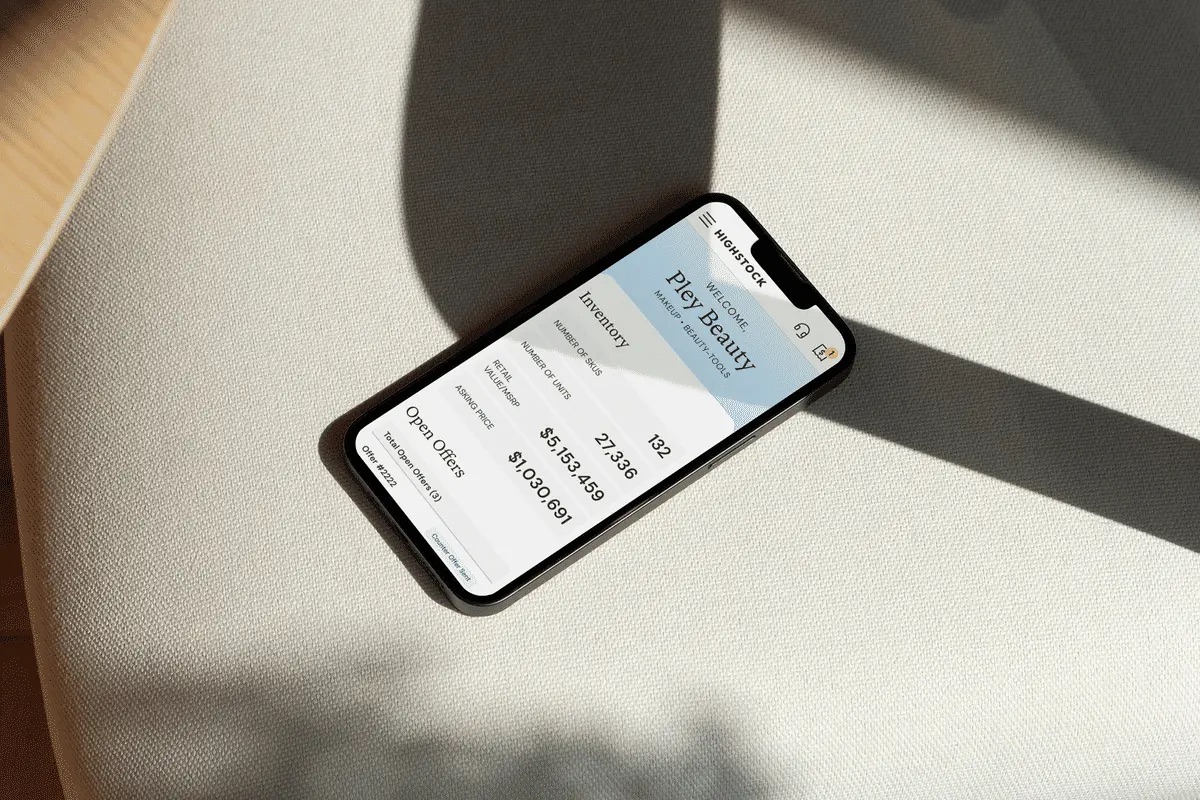
Co-founded by Camille van Horne and Ashish Sinha in 2024, Highstock uses artificial intelligence technology to help brands sell excess inventory to vetted business buyers. Specifically, Highstock's business model connects brands with a global network of buyers and livestream e-commerce practitioners on channels such as Whatnot and TikTok Live, helping brands clear inventory without publicly affecting their primary markets.
In just over a year since its founding, inventory listed on the Highstock platform has exceeded $1 billion in value, with more than 100 mainstream brand partners. About 60% of transaction volume comes from brands and large corporate groups with annual revenue of more than $500 million, including beauty brands such as Laura Geller, Bliss and Versed. Currently, international buyers account for 40% of Highstock's platform business volume, including livestream sellers and offline retailers.
Offering a New Solution for "Excess Inventory"
Inventory management is becoming a major challenge for brands. Sudden fluctuations in consumer demand, changes in supply chain conditions, adjustments to brand positioning and shifts in the market environment often leave companies holding large amounts of products they urgently need to offload. The difficulty lies in quickly and efficiently finding the right buyers.
Existing solutions, including discount retailers, middlemen and manual inventory clearance processes, often erode brand value, lack information transparency and are riddled with various inefficiencies. The vast majority of excess inventory flows to a handful of large discount retailers, which hold strong bargaining power and impose harsh terms on brands. But in fact, this market is far more fragmented than it appears; there is still substantial unmet demand overseas, and overseas buyers, constrained by complex customs and regulatory barriers, find it difficult to obtain high-quality goods at good value.
Highstock was created to solve this pain point, and its process works as follows:
- Brands list slow-moving inventory on the Highstock platform
- A vetted network of wholesale buyers submits bids for the goods
- Brands choose the offer they prefer, and Highstock handles supporting logistics services, including freight, compliance procedures and payment settlement
Just months after launch, Highstock helped more than 50 beauty and personal care brands offer buyers inventory worth a total of $100 million. The platform also helps reduce resource waste, directing more than 450,000 kilograms of goods to new markets.
In addition, Highstock specifically connects with international buyers. Although buyers receive discounts, the goods are sold to overseas markets, so there is no channel conflict that brands worry about.
Subsequently, in February 2025, after nearly half a year since its founding, Highstock completed a $5.5 million seed round led by venture capital firm Greylock, with participation from Instacart co-founder Max Mullen.
Founded by Industry Veterans

Above: Camille van Horne, Ashish Sinha
Before founding Highstock, Camille van Horne was a product director at Instacart, the U.S. retail media and delivery company, working directly with thousands of brands and retailers. Through customer visits, she developed deep insights into issues related to excess inventory. Earlier, she also worked at Sears, Kmart and other companies.
Speaking about her motivation for starting the company, Camille van Horne said: "During my time at Instacart, we often visited the warehouses of large consumer packaged goods (CPG) companies, and that was when I first encountered the excess inventory problem. As I was about to leave Instacart, I visited a large snack manufacturer's warehouse and saw large quantities of snacks that were still perfectly sellable about to be shipped to what they called the 'tank'—a nice way of saying they were going to be destroyed. At that moment I realized that many brands lack suitable channels for handling near-expiry and outdated goods, resulting in enormous waste."
Ashish Sinha was a colleague of Camille van Horne at Instacart. At the same time, his family has run a footwear business in India for 30 years, and disposing of slow-moving inventory is part of daily operations. As a result, Ashish Sinha knows the industry well and has seen how information opacity creates an imbalance in bargaining positions. During India's six-month pandemic lockdown, buyers who had previously purchased and distributed his family's products at wholesale prices gained the upper hand in negotiations, acquiring millions of dollars' worth of inventory at almost zero cost. This experience prompted Ashish Sinha to use technology to create a fairer global trading environment.
Starting with the personal care category was because it involves shelf-life management, which aligns with the two founders' experience handling food inventory at Instacart.
After the latest funding round, Highstock plans to expand into the apparel and fashion category.
Highstock founder Camille van Horne said: "We have already achieved good results in beauty and personal care. The market for disposing of excess apparel inventory is five times the size of the excess beauty inventory market. The apparel industry inherently has a waste problem, rooted in seasonal new arrivals. The triggers for excess inventory in the beauty industry are different, mainly shelf-life issues; many partner brands' products have less than 18 months of remaining shelf life, and traditional retailers will not accept such goods."
|Source: Official press release, Fortune, Beauty Independent
|Image source: Brand official website
|Editor: LuxeCO


