Italian luxury brand Prada has just completed the renovation and expansion of the site where the brand was born, which will officially open to the public on September 23. The eight-story mixed-use space in central Milan has been renamed Prada Galleria, with "Galleria" derived from the famous shopping arcade in which it is located.
Milan's Galleria Vittorio Emanuele II is regarded as the forefather of the modern shopping mall. This classic building, first built in the 19th century, possesses a unique retro atmosphere and historical heritage, and is also the birthplace of the Prada brand. Construction on the arcade began in 1865 and was completed in 1877; in 1913, Mario Prada opened the first boutique here under the original name Fratelli Prada, laying the foundation for Prada's century-long development.

A Mixed-Use Space "Bringing Together Shopping, Art and Experience"
Prior to this renovation and expansion, Prada already had two stores in the arcade: the original century-old store focused on womenswear, and a new store opened in 2013 focused on menswear. This time, the brand centered the project on the upgrade and expansion of the original old store site, building on the foundation of the womenswear boutique to create the eight-story integrated Prada Galleria space, covering five core areas—womenswear, menswear, dining, art exhibitions and private reception—while also launching the brand's first permanent dedicated exhibition, achieving a deep integration of commerce, art and high-end experiences.
The Galleria Vittorio Emanuele II was originally conceived to connect two core cultural landmarks of Milan: Milan Cathedral (Duomo), symbolizing faith, and Teatro alla Scala, representing culture, using an indoor arcade to host the emerging urban consumption and social life of the 19th century. After more than 100 years of evolution, it remains a core high-end commercial landmark in Milan.
The refreshed Prada Donna womenswear store has more than doubled its display area and is conveniently connected to the Prada Uomo menswear store via an underground passage called "Passaggio Segreto" (Secret Passage). The underground retail area has received multiple upgrades: it debuts the brand's first in-store dedicated beauty display area, showcasing eyewear produced under license by partner EssilorLuxottica with a new visual identity; the home products line is displayed with great ingenuity, including crystalware arranged in an artful scatter and custom Japanese kitchen knives stored with precision.
The Studio space on the second floor features multiple salon-style private rooms offering appointment-based high-end made-to-measure shopping services, complemented by a central hall that can host various private events. In addition, the "Appartamento" space is open only to invited guests, designed under the direction of Miuccia Prada with an immersive domestic scene as its core concept, and features a dedicated solo exhibition created in collaboration with German photographic artist Andreas Gursky.
Prada Galleria also connects to the historic pastry shop Marchesi 1824, located next to the menswear store and also owned by the Prada Group. The pastry brand was acquired by the Prada Group in 2014 and opened its third Milan location in the arcade in 2016.
The Prada Galleria upgrade comes as major luxury groups increasingly focus on high-net-worth clients: although overall industry growth has slowed, spending by this customer group remains resilient, with demand shifting more toward immersive experiences and exclusive services.
Prada Group Chief Executive Officer Andrea Guerra said: "The experiential aspect of stores—the part that receives clients—has become increasingly important. ... We have already opened 'Appartamento' spaces in many cities around the world, and we will certainly bring them to 25 core global metropolises in the future." He said these experiences are not limited to various private spaces but also include dining spaces such as Prada Caffè.
At the same time, while deepening its focus on top-tier affluent clients, the Prada brand will continue to appeal to entry-level consumers, continuing to launch entry-price products and stabilizing the pricing structure of its entry-level product lines.
Andrea Guerra expects Prada Galleria to generate annual revenue of €100 million.
Presenting the Brand's Complete Worldview Through Rare Collections
The core highlight of this Prada Galleria upgrade is not only the expanded space and interconnected offerings, but also the multi-dimensional art exhibition spaces that trace the brand's century-long development and fully articulate its core DNA.
Osservatorio Fondazione Prada, which opened in December 2016 and focuses on art curation, is located at the top of the piano nobile. Here, the brand's first permanent brand exhibition, "Pradasphere," will be installed, presenting the brand's complete history from 1913 to the present.

Above: Pradasphere
"Pradasphere" begins with the luxury travel goods that Fratelli Prada originally specialized in: custom storage boxes, metal-covered makeup brushes, luggage tags, bag clasps, brand wrapping paper, and the 1922 royal warrant authorizing the brand to incorporate the House of Savoy coat of arms into its logo. It then transitions to the period after Miuccia Prada and Patrizio Bertelli took over the brand, when modernism and minimalism broke with its original middle-class positioning; representative exhibits include nylon handbags, totes and backpacks, and the first ready-to-wear collections.
The Pradasphere exhibition previously toured as a traveling show, appearing in London and Hong Kong in 2014 and in Shanghai in 2023.
The underground Passaggio Segreto space will display little-known historical materials and pieces from the brand's archives: early experimental works and obscure "brand firsts," restoring the lesser-known development trajectory of the Prada brand. Currently on display in this space are works including several silver-plated Prada handbags recreated by British artist Damien Hirst, the "Chandelier" party dress worn by actress Carey Mulligan in Baz Luhrmann's film adaptation of The Great Gatsby, and the 2008 LG Prada co-branded touchscreen phone, which predated the iPhone.
Andrea Guerra said: "This is a way of showing our brand DNA, our roots, our way of thinking and our perspective on values."
Miuccia Prada, the brand's third-generation heir, said: "When I began to conceive the Galleria project, I was looking at the very site where Prada was born in 1913, and at the story that has continued from then to now. I looked back at the many cross-disciplinary exchanges that have shaped our work over the years, and I wanted to present this complexity and diversity more clearly and directly. Art, architecture, film, culture and sport are not separate fields the brand gradually entered later on; on the contrary, they are all part of our ongoing dialogue with the outside world, driven by our desire to better understand it."
Lorenzo Bertelli, Chief Marketing Officer and Head of Corporate Social Responsibility of the Prada Group and a fourth-generation heir, said: "When many people talk about Prada, they start with my parents and focus on everything they created in the '70s, '80s and '90s. People often forget that Prada's true origin lies with my great-grandfather Mario and his brother Martino, who opened the store here. So this project is an opportunity to tell the story of the family's origins. That is probably the biggest difference between this new store and the Prada stores people have seen before."
Lorenzo Bertelli believes that finding a balance between the brand's heritage and its forward momentum was one of the biggest challenges of the Galleria project. "A brand that is truly alive must continuously understand contemporary society in depth, and keep experimenting and innovating. Brand history and heritage should be a tool for engaging with the present and opening meaningful dialogue, not a commemorative performance staged purely for nostalgia. I believe that, for all brands, achieving a healthy balance between heritage and forward-looking vision is the most important task."
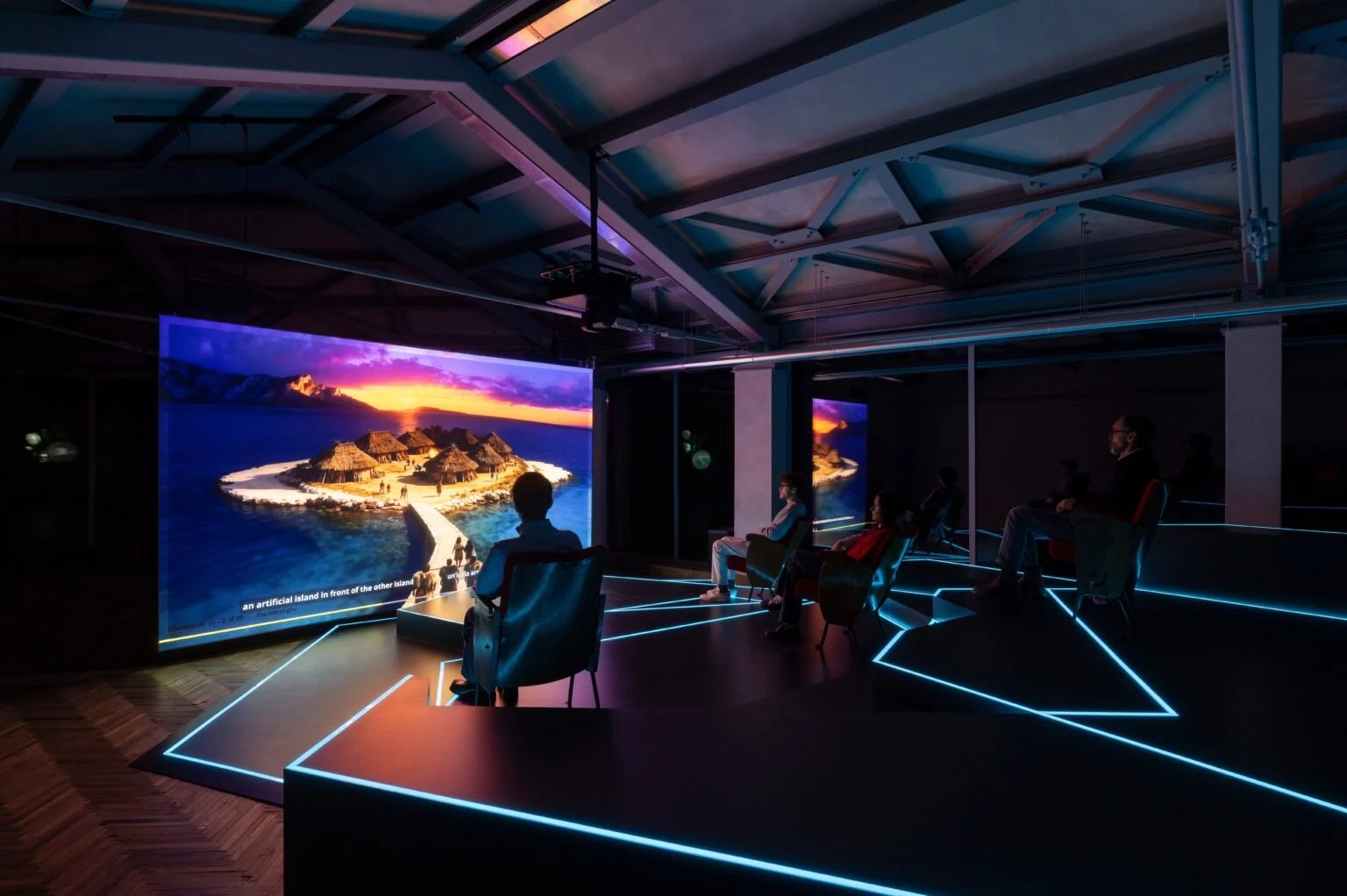
Above: Osservatorio
|Source: official press release, Reuters, Galerie, la Repubblica, Milano Today, corriere
|Image credit: brand official social media, Artribune
|Editor: LuxeCO