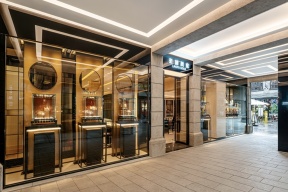
Chinese brands are accelerating their iteration and upgrading. Yet, for a combination of historical and practical reasons, a huge "ceiling" has long stood in the way of Chinese brands moving "upward" — a point felt especially strongly when we walk into high-end shopping malls across the country, particularly the so-called "heavy luxury malls": the first and second floors are almost entirely occupied by overseas brands, especially in those coveted prime retail spaces.
In 2025, a Chinese luxury brand that has burst onto the scene is throwing that ceiling wide open — Laopu Gold!
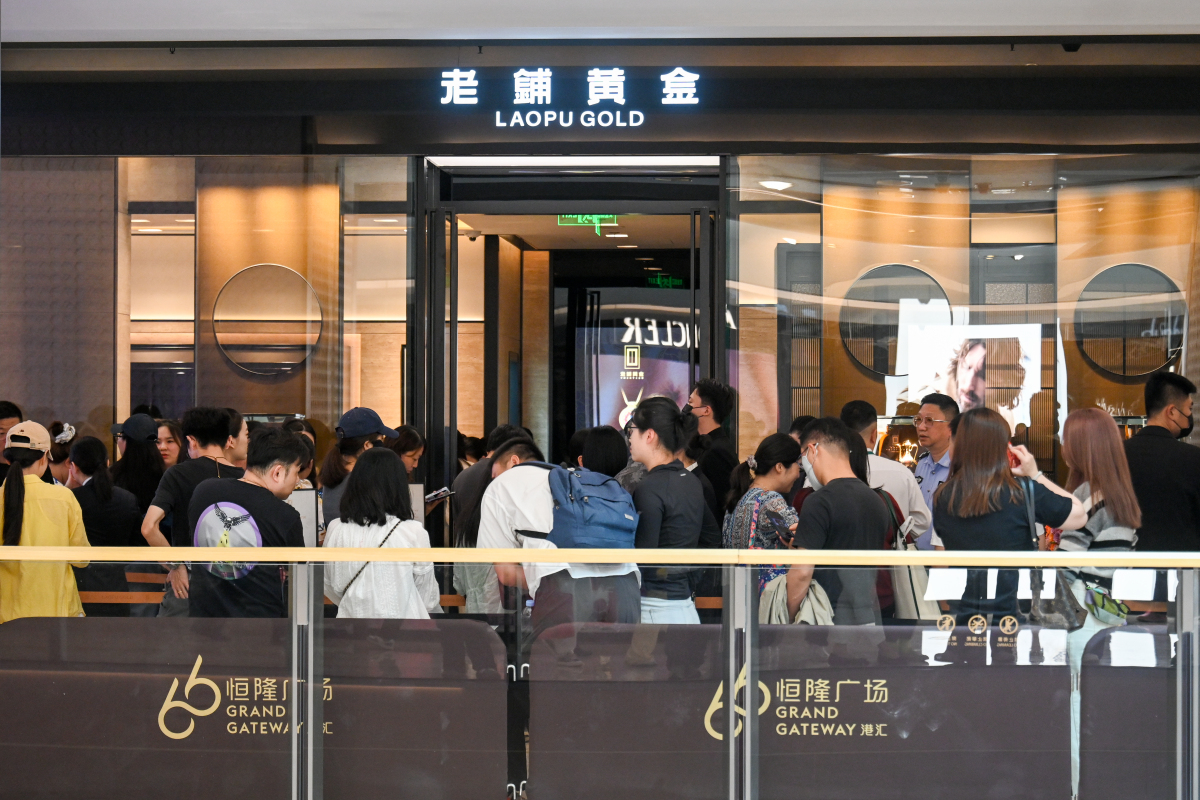
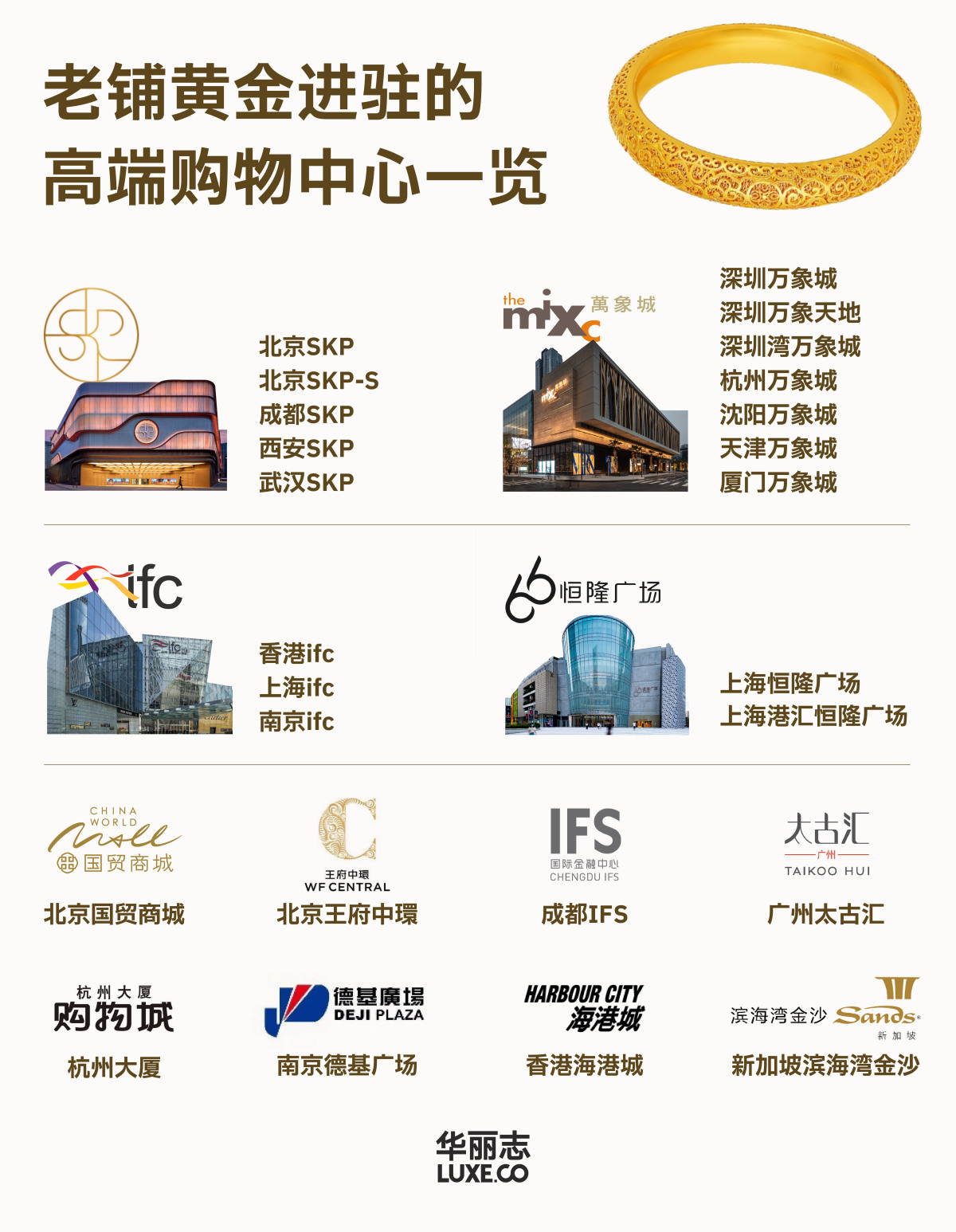
In October, Laopu Gold officially opened at Shanghai Plaza 66, completing its full coverage of China's top ten high-end shopping malls. (According to Frost & Sullivan, China's top ten high-end shopping malls are: Beijing SKP, Nanjing Deji Plaza, Beijing China World Mall, Shanghai IFC, Shanghai Plaza 66, Hangzhou Tower, Hangzhou MixC, Xi'an SKP, Guangzhou Taikoo Hui and Chengdu IFS.)
International financial institution Rothschild recently released a report stating that it expects Laopu Gold's net revenue in 2025 to surpass that of Swiss group Richemont's jewelry business (including brands such as Cartier, Van Cleef & Arpels and Buccellati) in the Chinese market.
According to Luxe.Co statistics, in the first half of 2025, the revenue of leading international luxury jewelry brands grew only about 10% compared with the same period in 2024 (calculated at actual exchange rates), with some even declining; over the same period, Laopu Gold's revenue surged 251% year on year, far outpacing its international peers.
According to Laopu Gold's 2025 interim report, in the first half of 2025 the brand's average sales per mall reached RMB 459 million. A research report published by HSBC in November this year estimates that at the Beijing SKP store alone, Laopu Gold's annual sales will reach RMB 3 billion. (Beijing SKP's full-year sales in 2024 were approximately RMB 22 billion).
Undoubtedly, Laopu Gold has entered the central battlefield of head-on competition with the world's leading luxury brands, has seized the strategic high ground and has formed a strong competitive advantage — for a Chinese local brand, this is nothing short of an epoch-making breakthrough.
Many professional institutions at home and abroad have offered their own interpretations of this phenomenal success, but in the view of Luxe.Co, the reason Laopu Gold has been able to rise so rapidly and become a "new benchmark" in the luxury world across dimensions such as brand, product, service and store environment is in fact written in the slogan displayed in its stores: Classic, Ultimate, Heirloom.
"Classic, Ultimate, Heirloom" — these three keywords happen to echo the "golden triangle" on which global luxury brands base their existence — past, present, future:
Where do your cultural roots come from (the past)? How do you win over today's high-net-worth individuals (the present)? How can you transcend cycles and build a lasting enterprise (the future)? The second half of this article will offer an exclusive interpretation of these questions.
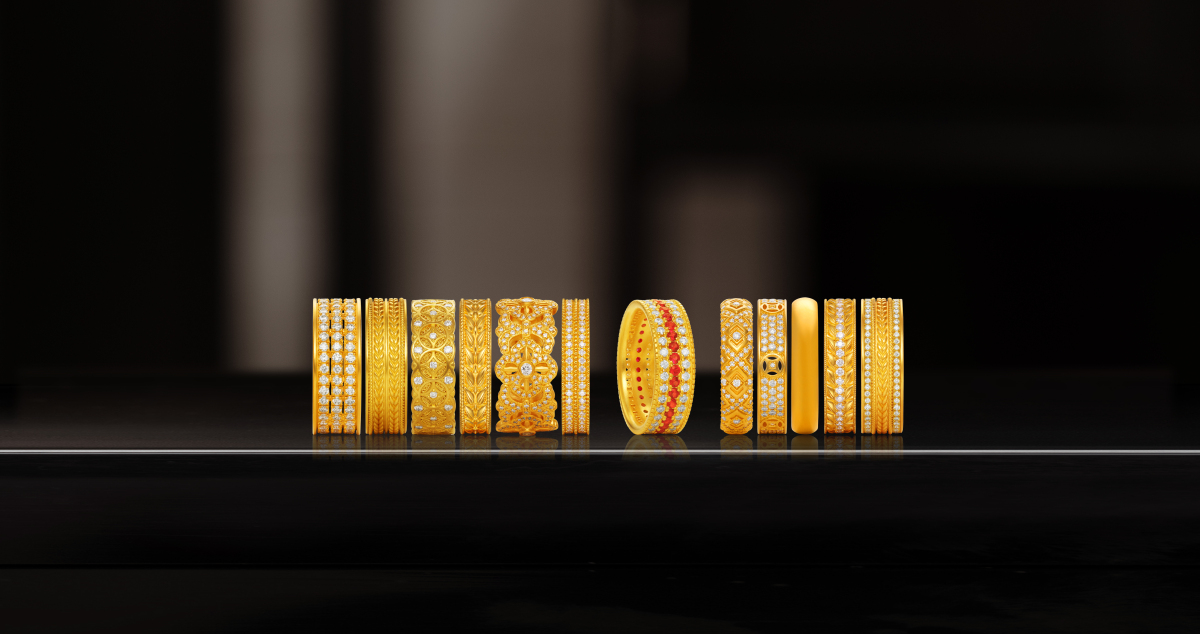
Over the past two years, the global luxury market has sunk into a historic trough, with overall growth slowing and even cliff-edge declines. After more than two decades of rapid development, China's luxury market has also entered a more challenging cycle, with brand competition growing ever fiercer. At the same time, leading international luxury brands' investment and positioning strength in the Chinese market has only increased.
It is precisely in this high-intensity "stress test" that Laopu Gold has broken through decisively.
Over the past three years, Laopu Gold has achieved "exponential growth": year-on-year revenue growth jumped from 2.4% in 2022 (during the pandemic) to 146.5% in 2023, then reached 167.61% in 2024, and is expected to exceed 200% in 2025.
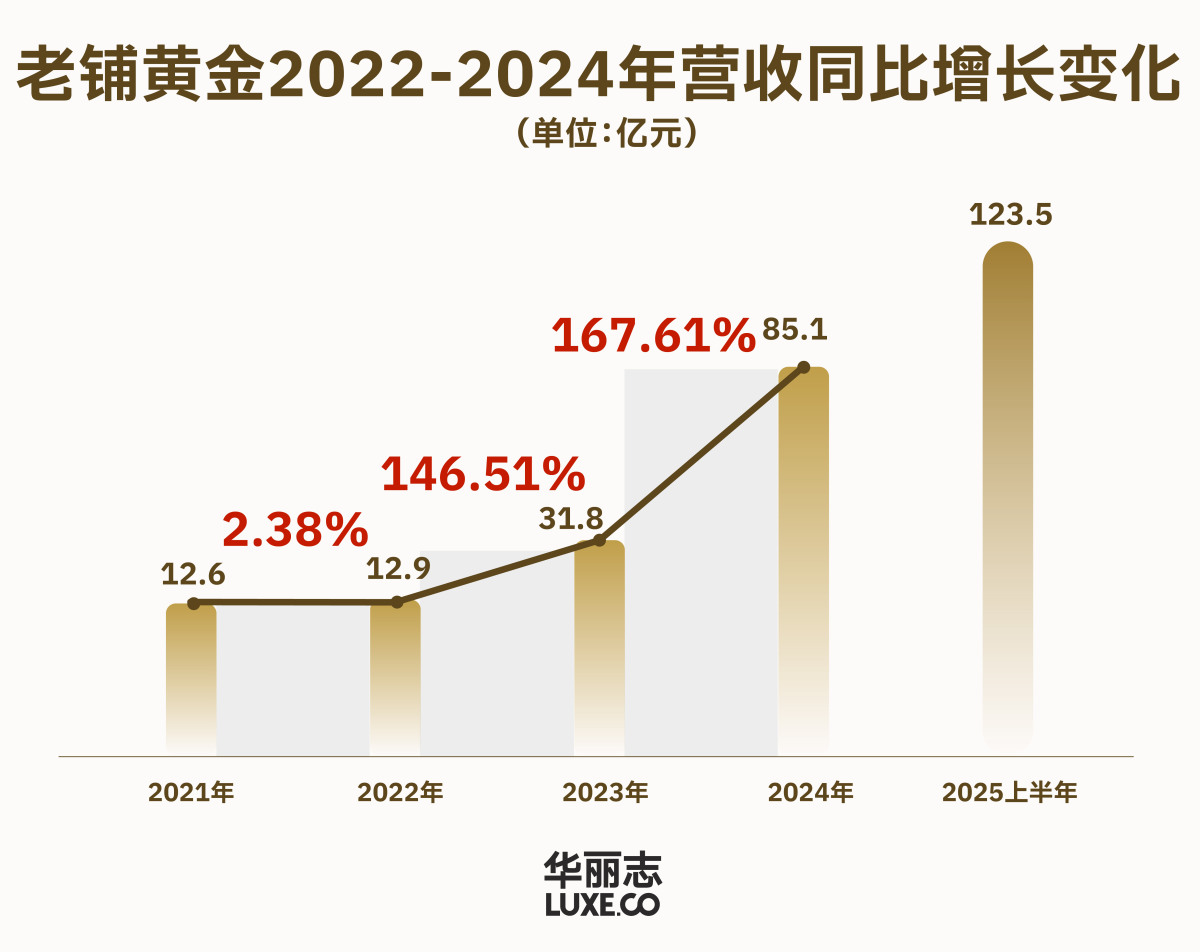
Laopu Gold's growth is reflected not only in revenue figures but also in the scale and quality of its channels and customer base:
Laopu Gold started in Beijing in 2009 and gradually entered key cities such as Shenzhen, Wuhan and Hangzhou. After 2021 it expanded to Macau, Shanghai, Guangzhou and Hong Kong, and in 2025 it entered Singapore, taking its first step toward "going global."
As of the end of November 2025, Laopu Gold's more than 40 self-operated stores covered 16 cities, all located in high-end shopping malls in first-tier and new first-tier cities. Its presence in the two major high-end retail systems, SKP and MixC, is particularly deep, with 6 and 12 stores respectively.
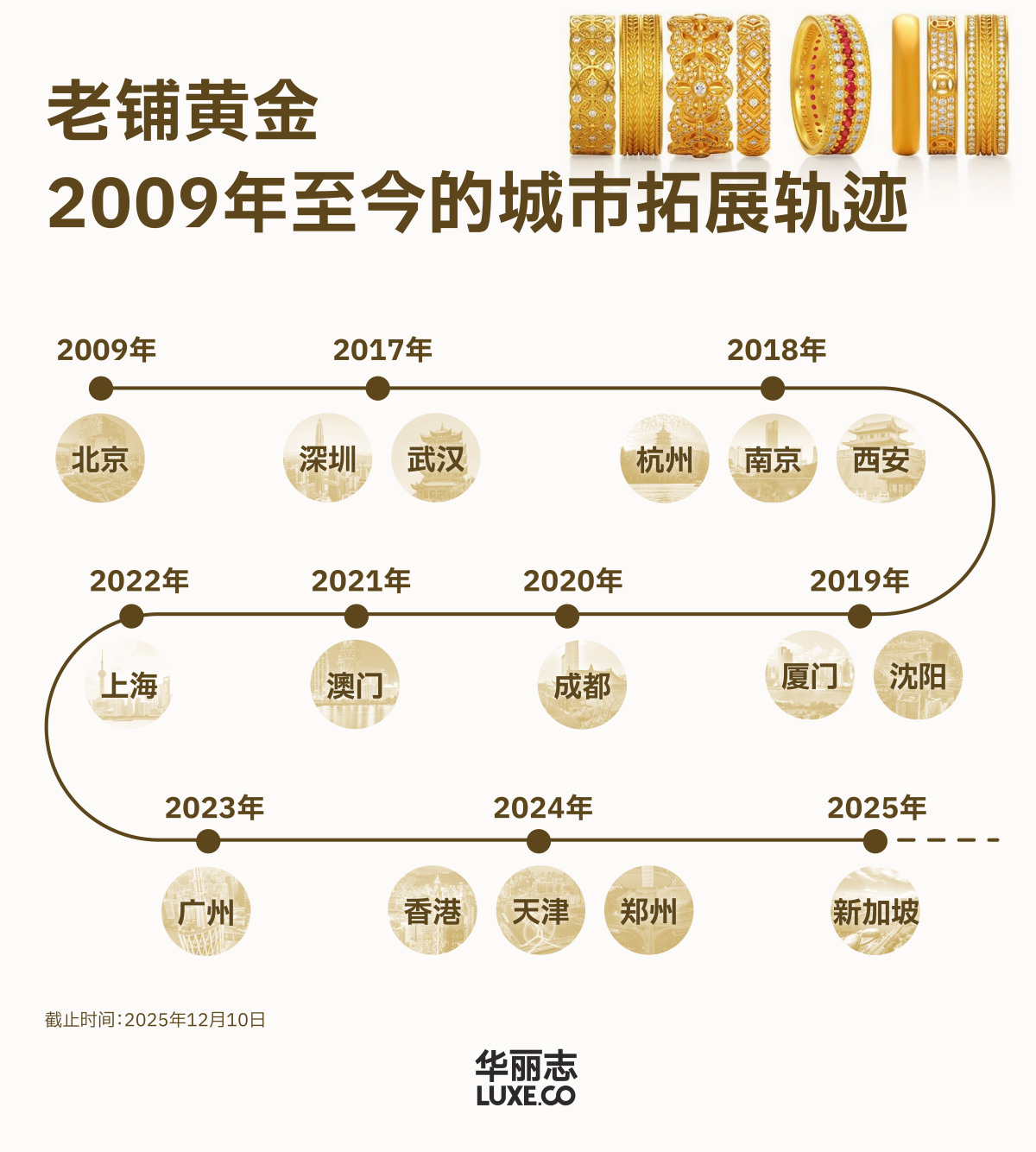
From early experimentation to full coverage of China's top ten core heavy-luxury malls, and then to Hong Kong IFC and Singapore's Marina Bay Sands, Laopu Gold has focused intensely on China's and the world's high-end commercial landmarks, advancing with a firm and orderly pace.
According to Frost & Sullivan research, in the first half of 2025 Laopu Gold continued to rank first among all jewelry brands (including international brands) in average revenue per mall and sales per square meter in mainland China, fully confirming its brand appeal and operational strength in high-end retail settings.
Brand founder Xu Gaoming said at the 2024 annual results briefing: "In the future, Laopu Gold's average store efficiency must exceed RMB 1 billion. Any store that does not reach RMB 500 million in store efficiency will be closed, to ensure the quality of every store." It is estimated that in 2025 Laopu Gold's average store efficiency will exceed RMB 1 billion.
Frost & Sullivan research also shows that Laopu Gold's customers overlap with those of international luxury brands such as Louis Vuitton, Hermès, Cartier and Bvlgari at an average rate of 77.3%. Morgan Stanley research also points out that in malls where both brands' stores coexist, 30%-60% of Cartier customers are also Laopu Gold customers. This means Laopu Gold has been fully embraced by China's high-end consumers, aligning closely with their consumption habits, aesthetic preferences and lifestyles.
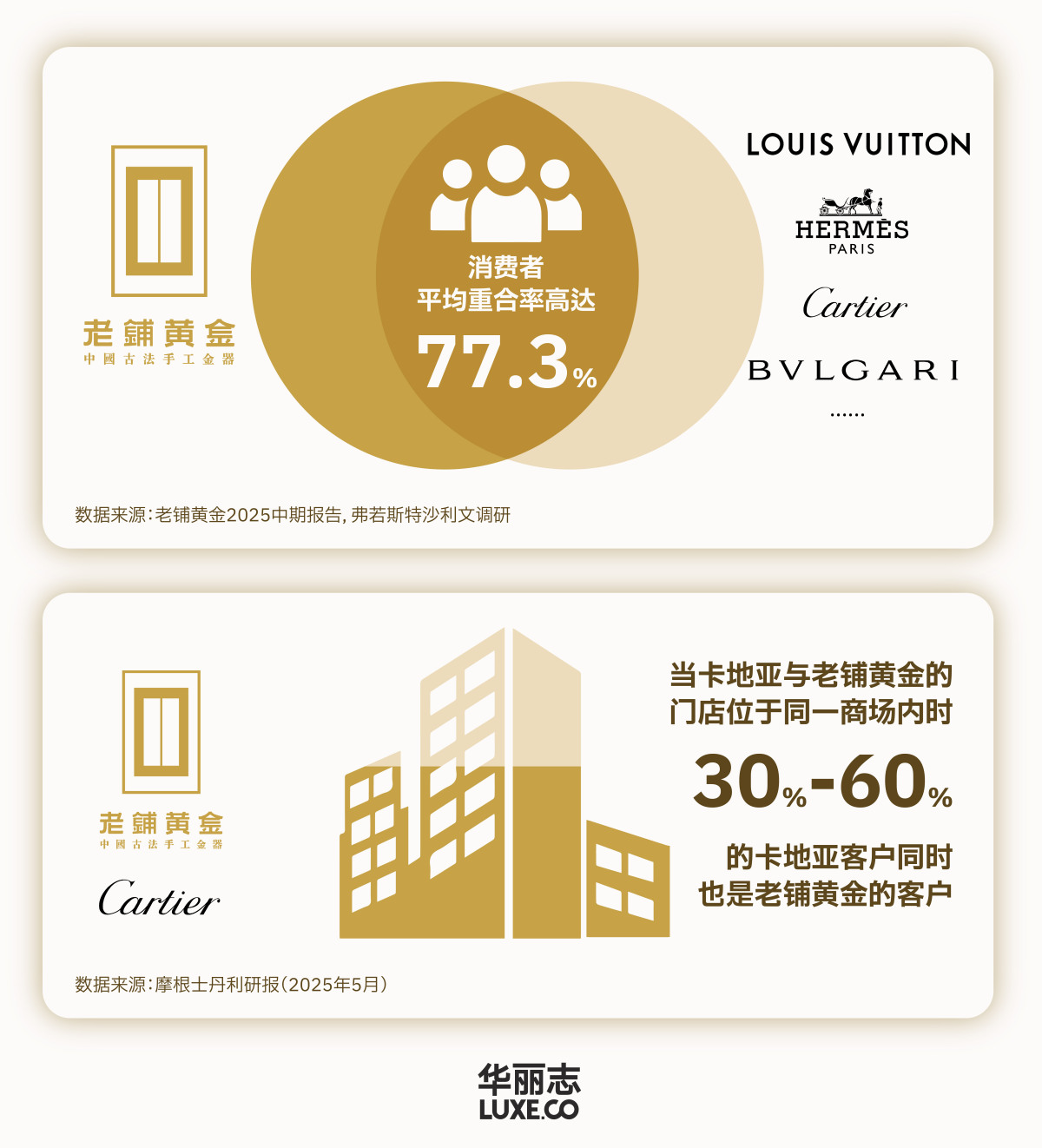
Laopu Gold's rise answers a key question at a deeper level:
How can China produce a truly world-class luxury brand?
Looking back at history, from Chinese furniture and jade to kesi silk tapestry, China's five-thousand-year civilization has given birth to countless "luxury goods," but most of them exist in people's minds as "categories." A world-class "luxury brand" with a distinct cultural identity, significant product value, economies of scale and a clear focus on high-net-worth individuals is still absent.
Laopu Gold has achieved a historic "breakthrough" for a Chinese local luxury brand in the following three aspects.
1. Spiritual and cultural "closeness"
Luxury brands are rooted in culture. Technology, materials and even design may be imitated, but narratives, symbols and philosophical thinking rooted in a particular cultural soil cannot be easily replicated.
Unlike the "exclusivity" generally emphasized by Western luxury brands, Laopu Gold's foundation derives from classic Chinese culture and the Chinese way of dealing with people and the world, giving it a natural cultural "closeness" for Chinese consumers.
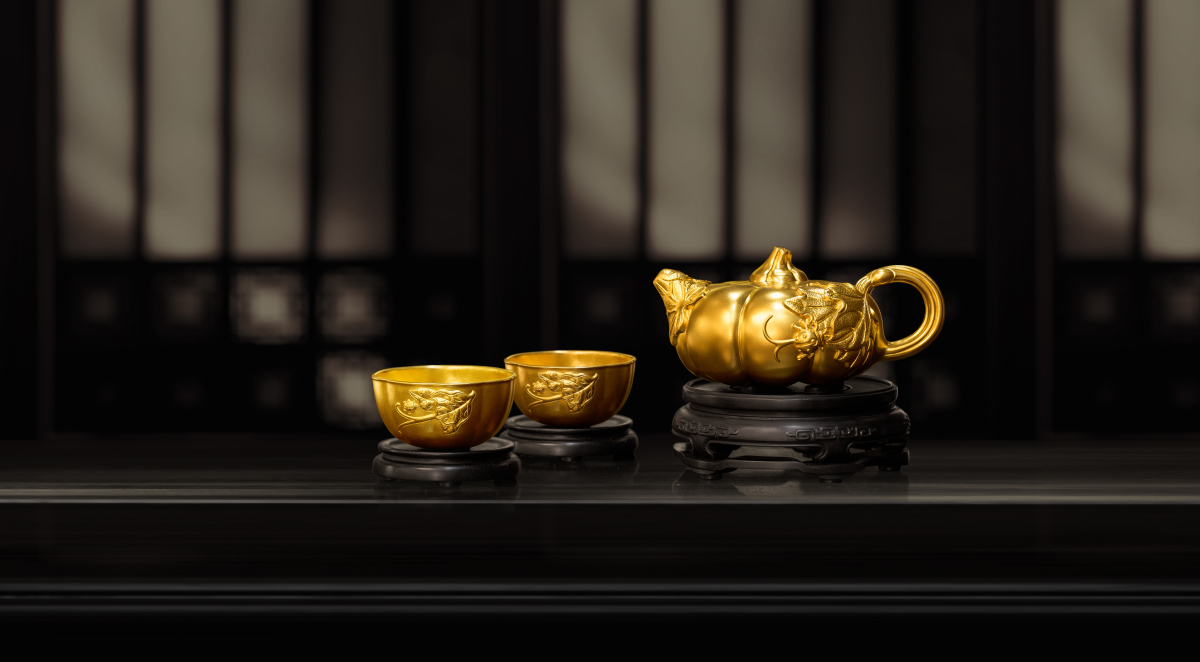
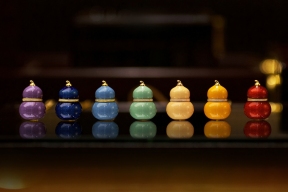
From the vast treasure trove of traditional Chinese culture, Laopu Gold has carefully distilled classic elements and aesthetics that carry good wishes and cultural wisdom — such as the ruyi, the gourd and the vajra — and given them a modern translation, creating deep emotional resonance with Chinese consumers and gaining broad recognition at the cultural level.
And this perfect fusion of cultural identity and spiritual resonance is precisely the deepest moat of a "luxury brand."
2. A genuine, tangible "sense of value"
Unlike Western luxury brands, which rely more on brand storytelling, Laopu Gold is deeply rooted in classic culture and has chosen gold — a material of universal significance in the history of human civilization — as its core carrier, deeply combining it with China's ancient gold-making intangible cultural heritage techniques.
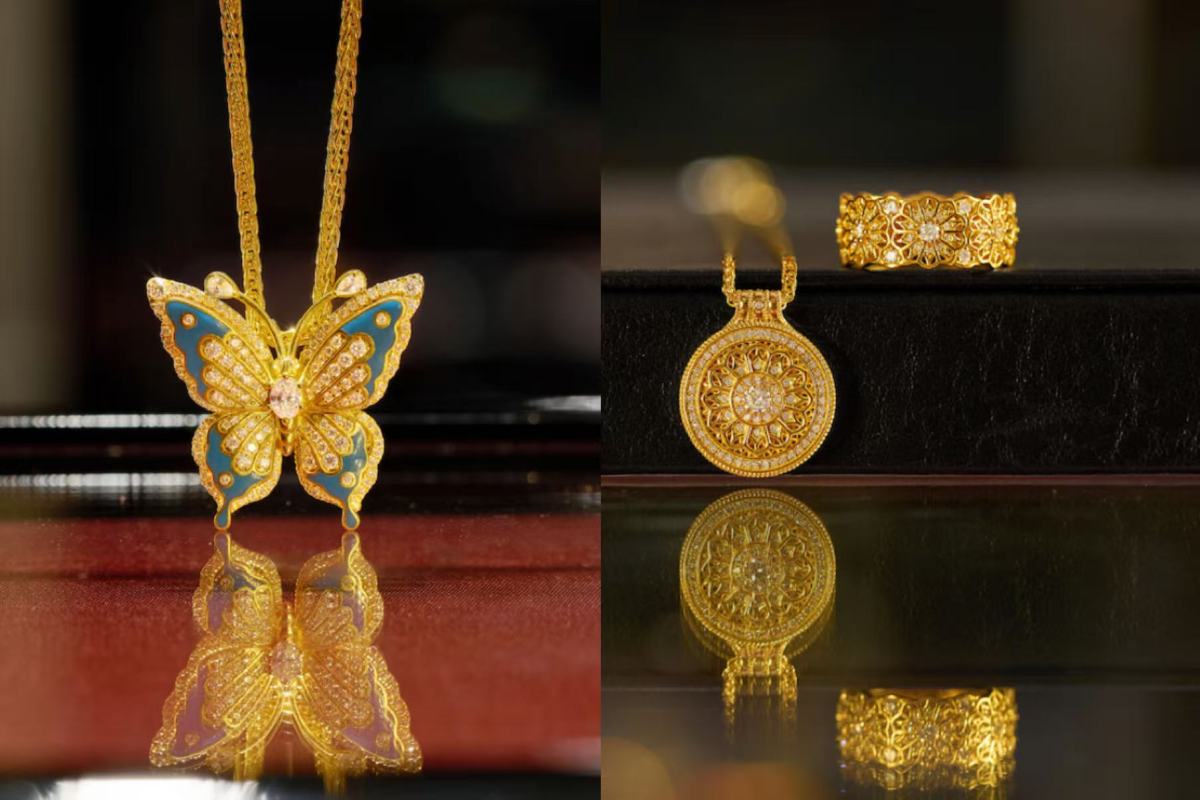
It is worth noting that Laopu Gold's gross margin is stable at around 40%, higher than that of traditional local gold and jewelry brands, demonstrating stronger brand "pricing power"; yet it remains significantly lower than the 60%-70% gross margin of Western luxury brands, giving consumers a more genuine "sense of value."
3. "Aesthetic appeal" through innovation within tradition
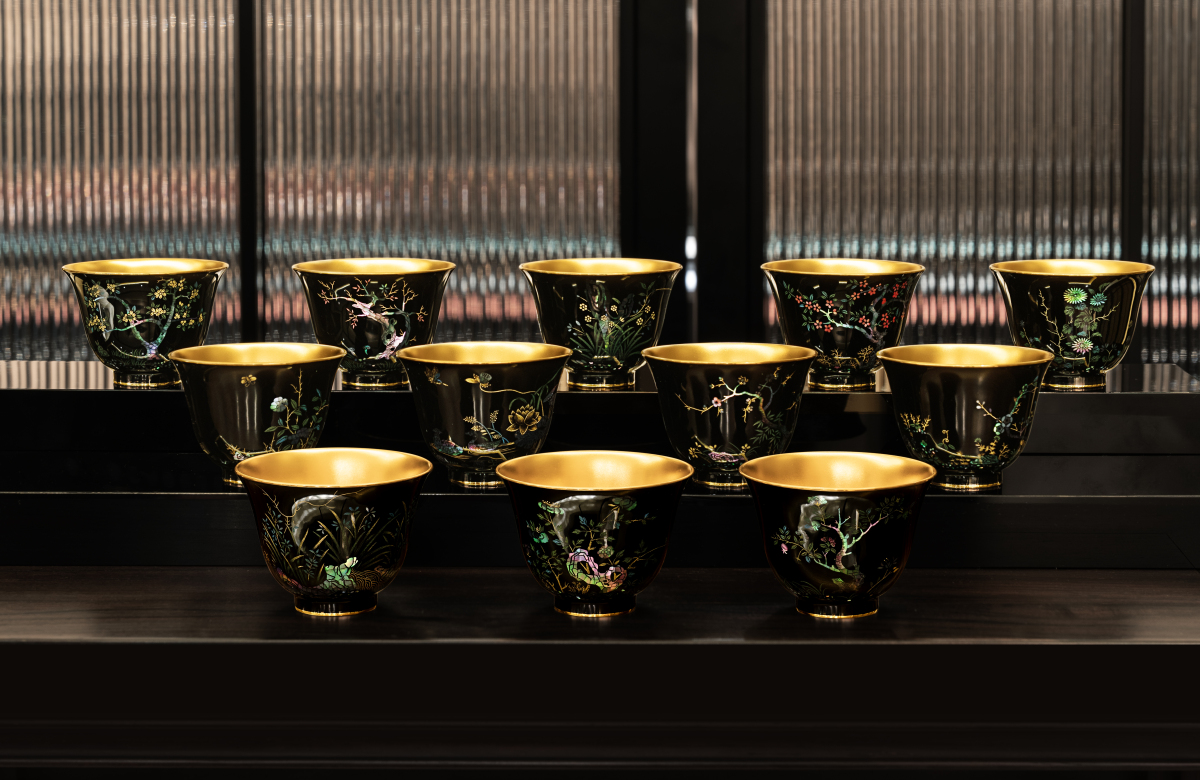
In design, Laopu Gold does not chase novelty for its own sake. It consistently draws nourishment from the "roots" of classic Chinese cultural elements and aesthetics, maintains a high aesthetic standard, and creatively transforms and elevates forms, patterns and colors.
Original designs that follow the "first principles" and the deep cultural thinking behind them form a deep gulf between Laopu Gold and its imitators, giving it appeal and absolute competitiveness that transcend generations and geographies.
Take its first overseas store in Singapore as an example. Founder Xu Gaoming once noted that "the people who come to the store are not all Chinese; there are also Malays, Europeans and Americans, and Japanese." He is fully confident that Laopu Gold will win the affection of global consumers from a wider range of cultural backgrounds.
The "Golden Triangle" behind Laopu
As we mentioned at the beginning of this article, the reason Laopu Gold can compete on the same stage as leading international luxury brands and demonstrate strong, continuously rising competitiveness is not because of a single "killer move," but because of a "golden triangle" formed by three key elements — "Classic, Ultimate, Heirloom" — which puts into practice the core business philosophy and values that a luxury brand must connect: "past, present and future."
— Connecting the past: deep cultivation of classic culture
Brand founder Xu Gaoming believes that "Chinese classics are world classics." Laopu Gold does not stop at the surface of "Chinoiserie"; instead, it delves into Chinese culture and Eastern aesthetics, distilling classic symbols and imagery that combine historical depth with universal emotion, and creatively builds a classic aesthetic system and cultural narrative that is both "familiar" and "stunning," achieving resonance with today's high-net-worth individuals.
— Shaping the present: creating ultimate products and experiences
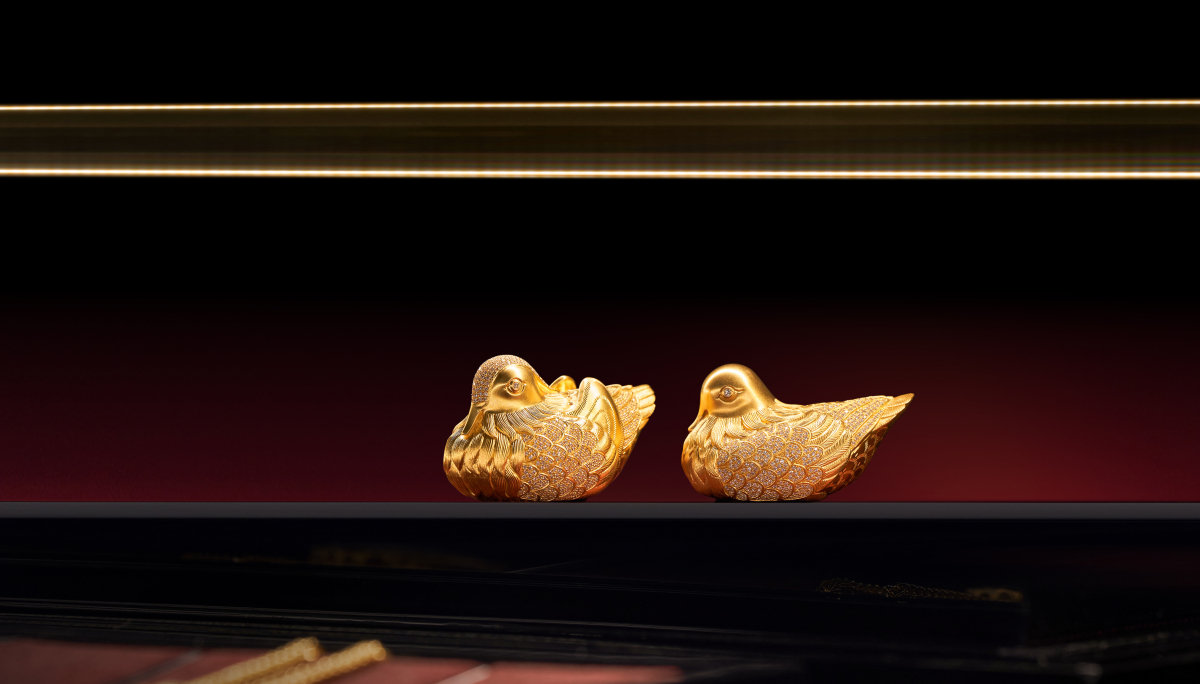
Laopu Gold has changed the traditional consumption logic of the gold industry. It was the first to bring the concept of "ancient-method gold" to the market, shifting consumers' focus from "gold weight" to "culture, craftsmanship and design."
At the product level, Laopu Gold's high attention to and rigorous control of details, its continuous exploration and bold innovation of traditional craftsmanship, and its far-sighted merchandise planning all live up to the word "ultimate."
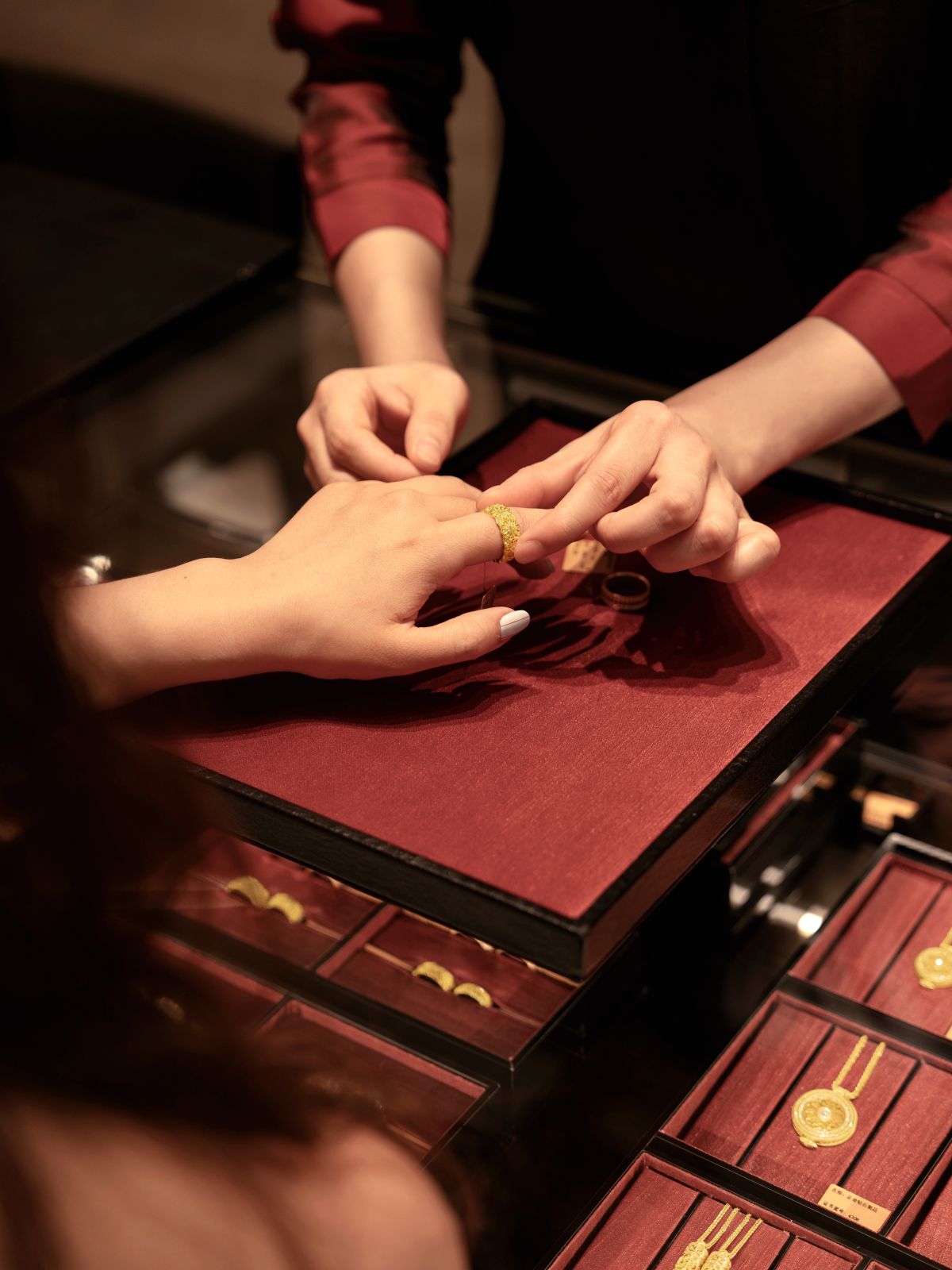
At the experience level, from store location, space design, scene setting and atmosphere to the gentle, meticulous and composed service attitude of its elegant staff, every detail forms a unique sense of ritual and an ultimate experience, upgrading traditional "buying gold" into an immersive experience of "appreciating culture."
— Facing the future: heirloom and eternity
The word "heirloom" emphasized by Laopu Gold refers not only to the inheritance of traditional culture but also to the timelessness of its products and the sustainability unique to luxury brands — that is, by building a complete and highly interlocking internal system to provide solid support for the "golden triangle" and create an outstanding, enduring enterprise oriented toward the future. This is also the confidence behind Laopu Gold's explosive growth in just a few short years.
Conclusion
In the 16 years since its founding, Laopu Gold has not only single-handedly broken through the "ceiling" holding back Chinese brands but has also offered important inspiration for the future development of the global luxury industry, making leading brands feel the urgency of innovation and reinvention.
Jean-Christophe Babin, global CEO of LVMH-owned Italian luxury jewelry brand BVLGARI, noted in a keynote sharing at the China International Import Expo in November this year: Chinese cultural confidence has given rise to local jewelry brands like Laopu Gold, which share a similar creative philosophy with Bvlgari. Bvlgari draws inspiration from Rome's millennia-old traditions, craftsmanship and cultural symbols, while Laopu Gold draws inspiration from the long history, exquisite craftsmanship and aesthetic imagery of Chinese civilization to create breathtakingly beautiful jewelry. "In my view, this cultural closeness unique to the luxury sector is driving the vigorous development of China's jewelry market — whether these creations come from Italy or China."
Swiss group Richemont's CEO Nicolas Bos pointed out at an analyst call in May this year: "Jewelry is more deeply rooted in cultural traditions than other categories... Laopu Gold is a perfect example — this emerging local brand deeply rooted in Chinese culture has both integrated into and understood the operating rules of international luxury, and created a highly unique and differentiated product system. Therefore, I think this genuinely enhances the appeal and market vitality of the jewelry category. Of course, this also means we must continue to innovate and explore ways to make our brands more appealing."
丨Responsible Editor: LeZhi