Bloomberg, citing people familiar with the matter, reported that Swiss luxury giant Richemont and US jewelry retailer Signet Jewelers Ltd. may join the bidding for De Beers Group, the diamond producer owned by Anglo American.
The people said Richemont and Signet are in talks to join the consortium formed for the acquisition — Global Diamond Consortium, or GDC. The consortium is led by former De Beers Group CEO Gareth Penny and comprises Namibia, Angola and several of the world's leading diamond traders, and is the preferred bidder for the acquisition of De Beers Group.
Some sources said that although talks have progressed to a fairly advanced stage, there is no guarantee the two groups will ultimately join the consortium.

Other investors are also joining in succession. Belgian Antwerp-based diamond processing company Pluczenik confirmed to Reuters that it is also participating in the bidding for a De Beers stake, but did not disclose the percentage it plans to subscribe for.
Previous Luxe.CO reports showed that GDC emerged in July as the preferred bidder for the acquisition of De Beers Group. The consortium is currently in negotiations with the government of Botswana, which already holds 15% of De Beers Group and now hopes to raise its stake to about 25%.
It is not yet clear how large a stake Richemont and Signet Jewelers plan to negotiate to subscribe for. However, Botswana, Namibia and Angola will hold substantial stakes in De Beers, and a number of private investors have already confirmed contributions. Even if the deal is ultimately completed, the stakes held by Richemont and Signet Jewelers will most likely be relatively limited.
If they successfully join, both Richemont and Signet Jewelers will gain more control over key links in the diamond supply chain, which the industry will see as a major positive for the natural diamond sector. The natural diamond market is currently gradually recovering from a deep downturn.
Over the past few years, a flood of lab-grown diamonds has continued to weigh on natural diamond prices. Data from RBC Capital Markets shows that lab-grown diamonds now account for 50% of total diamond supply by carat volume and 15% by value.
In the first half of 2026, the De Beers rough diamond price index fell 16% year on year, and the average actual selling price of rough diamonds fell 32% to US$105 per carat.
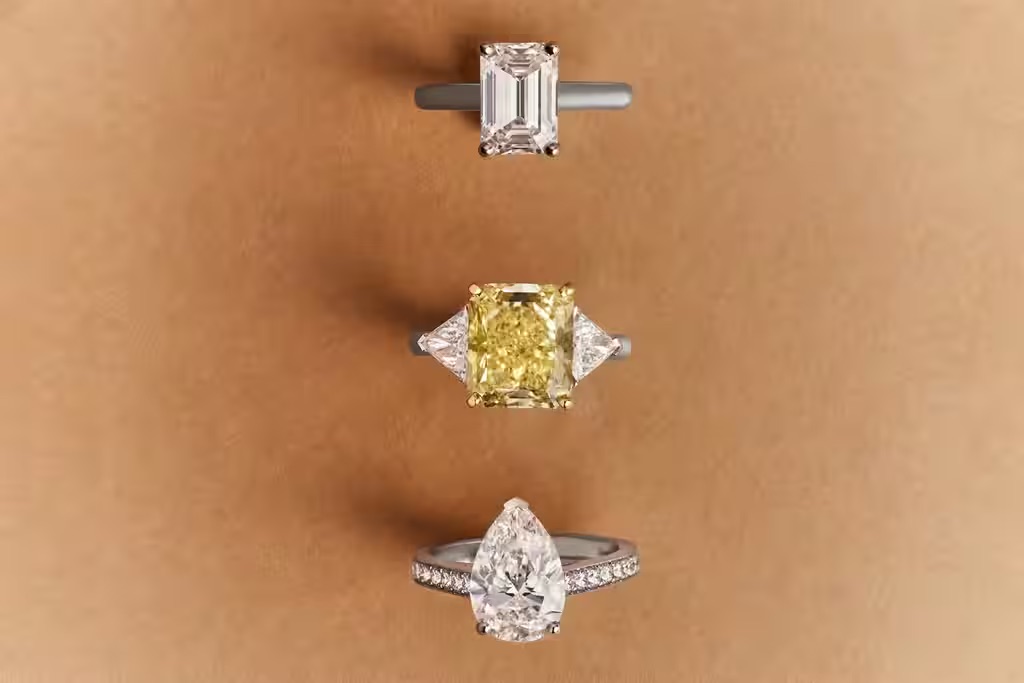
For years, the diamond industry has sought more support from luxury retailers in order to strengthen the marketing of natural diamonds.
During the COVID-19 pandemic, diamond sales surged for a time but then began to weaken. Multiple factors, including a sharp drop in luxury consumption in China, the rising popularity of lab-grown diamonds, trade frictions and sudden geopolitical shifts, have further worsened the industry's difficulties.
RBC Capital Markets analyst Piral Dadhania said that Richemont's potential stake purchase is "strategically meaningful, but more about image considerations and a long-term positioning in the natural diamond category rather than a purely financial investment event."
Dadhania also noted that given the large number of existing and potential shareholders, Richemont's stake in De Beers will most likely be "relatively small." At the same time, Richemont holds a high net cash position of €8.5 billion, and "the investment is not expected to have a material impact on the group's overall financial position."
Piral Dadhania also said that the jewelry business accounts for about 55% of Richemont's total revenue, and "taking action to support the natural diamond ecosystem is a reasonable means of hedging against competition from lab-grown diamonds. In recent years, lab-grown diamonds have pushed down polished diamond prices."
The RBC report also mentioned that Richemont is likely one of De Beers' largest customers, "which gives it an important say in the future direction of the natural diamond industry." If major global jewelers join the Global Diamond Consortium, "it would help stabilize and ultimately improve consumer perception of natural diamonds."
Jefferies analyst James Grzinic said Richemont's investment is "strategically viable." He believes that at a time when high-end jewelry is selling well and competition among peers for top-quality large-carat gemstones is intensifying, taking a stake could help Richemont obtain extremely large, high-quality diamonds — gemstones worth millions of dollars that are contested by only a handful of jewelers.
Independent diamond industry analyst Paul Zimnisky said qualified investors would view De Beers as a long-term deep-value investment. "De Beers is currently a deep-value investment target. It has a resilient and long history, and as long as it receives sufficient funding and is executed properly, it has every opportunity to thrive again. In recent years, a large number of independent diamond miners have exited the market, and combined with various sanctions against Russia, De Beers is already in a very favorable position on the diamond supply side."
Some industry insiders said that investing in De Beers Group carries the risk of a "money pit," and whether the deal succeeds depends largely on whether natural diamond demand can recover.
Dan Mano, CEO of Rapaport, a natural diamond pricing and market consulting firm, said that the participation of multiple parties in the bidding shows that none of the companies is willing to bear the enormous risk of the De Beers project alone.
Tobias Kormind, managing director and co-founder of jewelry brand 77 Diamonds, believes that if the market is currently at a bottom, acquiring De Beers would be a "historic" opportunity. But "if this is not a cyclical downturn but a structural decline, and demand cannot recover, companies will spend huge sums of money upfront and get nothing in return."
In 2011, Anglo American acquired the 40% stake in De Beers Group held by the Oppenheimer family for US$5.1 billion in cash, raising its stake to 85%, while the remaining 15% has been held by the Botswana government to this day.
De Beers Group has been loss-making since 2023. In 2025, the company's revenue was nearly US$3.5 billion, with an EBITDA loss of US$787 million.
In early 2024, after fending off an almost US$50 billion takeover offer from BHP Group, Anglo American launched an overall business restructuring in May of the same year and put its stake in De Beers Group up for sale.
However, the diamond market crisis has repeatedly hindered the sale process of De Beers Group. In just three years, Anglo American has recorded three asset impairments on it. In February 2026, the carrying value of De Beers Group was written down to US$2.3 billion.
According to the latest reports, Anglo American plans to sell its 85% stake for US$1 billion, which would value De Beers Group as a whole at about US$1.18 billion.
Related Luxe.CO reading:
- De Beers Group and the Botswana Government: The Natural Diamond Market Is "Recovering"
- Rumored: Diamond Giant De Beers Group's 85% Stake May Be Sold for US$1 Billion, Valuation Shrinks 91% in 15 Years
- De Beers Group's Rough Diamond Production Rose 88% Year on Year Last Quarter, High-Value Diamond Prices Strengthened
- Diamond Giant De Beers Group Has Finalized Its Preferred Acquirer
- Latest Progress on the Sale of Diamond Giant De Beers: Consortium Led by Former CEO Temporarily in the Lead
|Sources: Bloomberg, Reuters, Mining, previous Luxe.CO reports
|Image Credit: Brand official websites
|Editor: LuxeCO