On November 2, the American prestige beauty giant Estée Lauder Companies Inc announced its financial results for the first quarter of fiscal year 2027, ended September 30, 2026: net sales rose 7% year-on-year to $3.7 billion (organic growth of 6%). Net sales in Mainland China grew 15% to $614 million (organic growth of 9%).
Despite uncertainty in the overall economic environment, Gen Z consumers remain willing to spend on prestige beauty products, driving demand for luxury fragrance brands such as Le Labo, TOM FORD and Jo Malone London, as well as prestige skincare products.
Mainland China is a major bright spot in Estée Lauder Companies' transformation process. With increased consumer-facing investment, the company expects strong organic sales growth across both new and existing products.
In the quarter, Estée Lauder Companies' share in Mainland China rose for the seventh consecutive quarter, with strong performance across all categories: fragrance delivered double-digit growth, while skincare and makeup both achieved high-single-digit growth. TOM FORD, The Ordinary, Le Labo and La Mer were the main growth drivers.
During the reporting period, 11 of the group's brands achieved growth in the Chinese market, with 6 brands delivering double-digit growth.

President and Chief Executive Officer Stéphane de La Faverie said on the earnings call: "We are increasing investment at the top of the conversion funnel to shape brand appeal and raise brand awareness." He also added that the company had already planned to reduce discounts and promotional activities in China. "While we will still offer some promotions to consumers, our core focus is on building product appeal... and reducing our overall reliance on promotional tactics globally."
Following growth in fragrance and hair care, Estée Lauder Companies is looking to brands such as M·A·C and TOM FORD to capture more market share in Mainland China and drive the makeup category back to growth next quarter. "We are converting volume advantage into value share. But in makeup and skincare, we still have more work to do," said Stéphane de La Faverie.
On November 4, Estée Lauder Companies held a capital markets investor live stream in Shanghai, China. The meeting will outline the long-term strategy driving sustainable growth and enhancing profitability. Group executives and local China management will share how the "Beauty Reimagined" strategy is being implemented in China, and explain how the China model can serve as a template for exporting capabilities globally.
As of the close on November 2, Estée Lauder Companies' share price fell 4.08% from the previous trading day to $104.77, with a latest market capitalization of approximately $37.96 billion. The stock has risen 8.36% over the past year.
Stéphane de La Faverie said: "Estée Lauder Companies delivered another strong step forward in the first quarter of fiscal year 2027. Growth is accelerating, profitability is significantly strengthening, and the results of the 'Beauty Reimagined' strategy are increasingly evident across our businesses. We continue to bring more breakthrough innovations to consumers, build brand appeal through highly impactful marketing campaigns, and build a more responsive and efficient organization to convert growth momentum into more robust financial results. We have moved beyond the recovery phase and are building multiple drivers of sustainable profitable growth. The team's drive and determination, combined with brand strength and transformation progress, give us confidence in future opportunities. We are raising our fiscal year 2027 outlook, reflecting both the strong start to the fiscal year and our confidence in the future prospects."
In the first fiscal quarter, the group's prestige beauty gained share in several core markets:
- Mainland China: Makeup, skincare and fragrance drove value share growth; key brands: TOM FORD, The Ordinary, Le Labo, La Mer;
- Japan: Makeup and fragrance drove value share gains; Le Labo, M·A·C and TOM FORD retail sales achieved double-digit growth;
- Korea: Retail sales grew double digits; M·A·C and TOM FORD drove makeup share gains;
- United States: The Ordinary and M·A·C drove volume share gains; fragrance and hair care achieved value share growth;
- Western Europe: Skincare and fragrance achieved value share gains.
Estée Lauder Companies noted that stronger execution is translating into better financial performance. While increasing consumer-facing investment by 8%, the group achieved significant profitability improvement. The group places consumers at the center of brand building, innovation and resource allocation. This investment is used for product development, marketing campaigns and upgraded consumer experiences, continuously enhancing brand appeal and deepening consumer connections.
In the quarter, the group expanded its sales channels, launching on Amazon's U.S. prestige beauty section, as well as platforms such as Shopee, TikTok Shop, Tmall and Douyin, driving online organic sales growth.
On the analyst call, Stéphane de La Faverie noted that online channels can maintain customer relationships, while physical stores can provide consumer experiences and attract consumers to purchase core products and innovative new products. He said the global travel retail business is "stabilizing and improving slightly."
In addition, the group continues to bring more breakthrough innovations to consumers across categories and price points. These innovations include La Mer's Concentrated Repair Serum, M·A·C's Squirt Plumping Gloss Stick, PDRN-related innovations from Clinique and The Ordinary, the KILIAN PARIS cocktail fragrance collection, and Estée Lauder's Glimmer fragrance.
Gross margin rose 230 basis points to 75.7%; adjusted gross margin rose 240 basis points to 75.7%, driven by net cost and operating efficiency benefits from the company's Profit Recovery and Growth Plan (PRGP), sales leverage, and net benefits from strategic pricing, which together offset inflationary pressures. Benefits from the Profit Recovery and Growth Plan include procurement cost savings, expense optimization and manufacturing efficiency improvements.
Operating margin expanded 610 basis points to 11.0%; adjusted operating margin expanded 480 basis points to 12.1%. Growth came from operating leverage and gross margin improvement, with incremental funds used to increase consumer-facing investment. Operating profit also reflected a $45 million year-on-year reduction in restructuring and other charges.
Diluted net earnings per common share rose to $0.64; adjusted diluted net earnings per common share were $0.72.
For the three months ended September 30, 2026, the group's cash and cash equivalents increased to $3.2 billion.
—— By Geographic Market ——
*The following net sales are all calculated on an organic net sales basis, excluding the impact of foreign currency translation
Net sales rose 6% overall, with growth in all regions:
- Asia-Pacific (excluding Mainland China) led growth, with net sales up 10% to $923 million. This was mainly driven by Asia travel retail: replenishment orders at Beijing and Shanghai airports increased (duty-free retailers and online businesses gradually stabilized after completing adjustments starting in the second quarter of fiscal year 2026); Hainan travel retail online sales improved significantly. In Mainland China, growth was driven by both innovative and existing products, supported by consumer marketing investment around major promotional periods, with online and offline channels jointly achieving growth through precise customer acquisition.
- Mainland China net sales grew 9% year-on-year organically to $614 million.
- The Americas continued to grow, with net sales up 4% to $1.227 billion, mainly driven by customer expansion, product innovation and consumer-facing marketing investment.
- Key emerging markets in the Europe-Middle East-Africa region (EUKEM) grew overall, with net sales up 4% to $1.227 billion, with Turkey, Mexico and India performing notably, driven by new products and precise customer acquisition.
Operating profit rose 76%, with improvement in all regions:
- Asia-Pacific: Operating profit rose 73%: higher sales and lower costs jointly lifted gross profit.
- Mainland China: Operating profit increased by more than 100%, with operating margin rising from 2.3% to 5.2%: sales growth was the main driver; increased consumer-facing marketing investment (new products, marketing campaigns) partially offset this.
- The Americas: Operating profit rose 31%: higher sales and lower cost of sales lifted gross profit; partially offset by a net increase in consumer-facing marketing investment (for new products and channel expansion).
- Europe-Middle East-Africa region (EUKEM): Operating profit increased by more than 100%, with operating margin rising from 0.7% to 4.8%: sales growth and lower non-consumer-facing expenses; after a strategic reduction in selling expenses, consumer-facing investment increased net, for channel expansion and new product launches, partially offsetting profit.
—— By Product Category ——
*The following net sales are all calculated on an organic net sales basis, excluding the impact of foreign currency translation
—— Skin Care
Net sales grew 4% year-on-year, mainly driven by La Mer and The Ordinary. La Mer sales rose, benefiting from the new Concentrated Repair Serum and continued strong sales of the classic Treatment Lotion series. The Ordinary sales increased, driven by precise customer expansion, activation of existing channels, strong performance of its hero product 7% Glycolic Acid Exfoliating Toner, and the launch of the new Lacto-PDRN 4% + B9 Eye Serum.
Operating profit in skin care rose 40%, mainly from sales growth and reduced non-consumer-facing expenses; partially offset by a net increase in consumer-facing investment (for new product launches, marketing campaigns and channel expansion).
—— Makeup
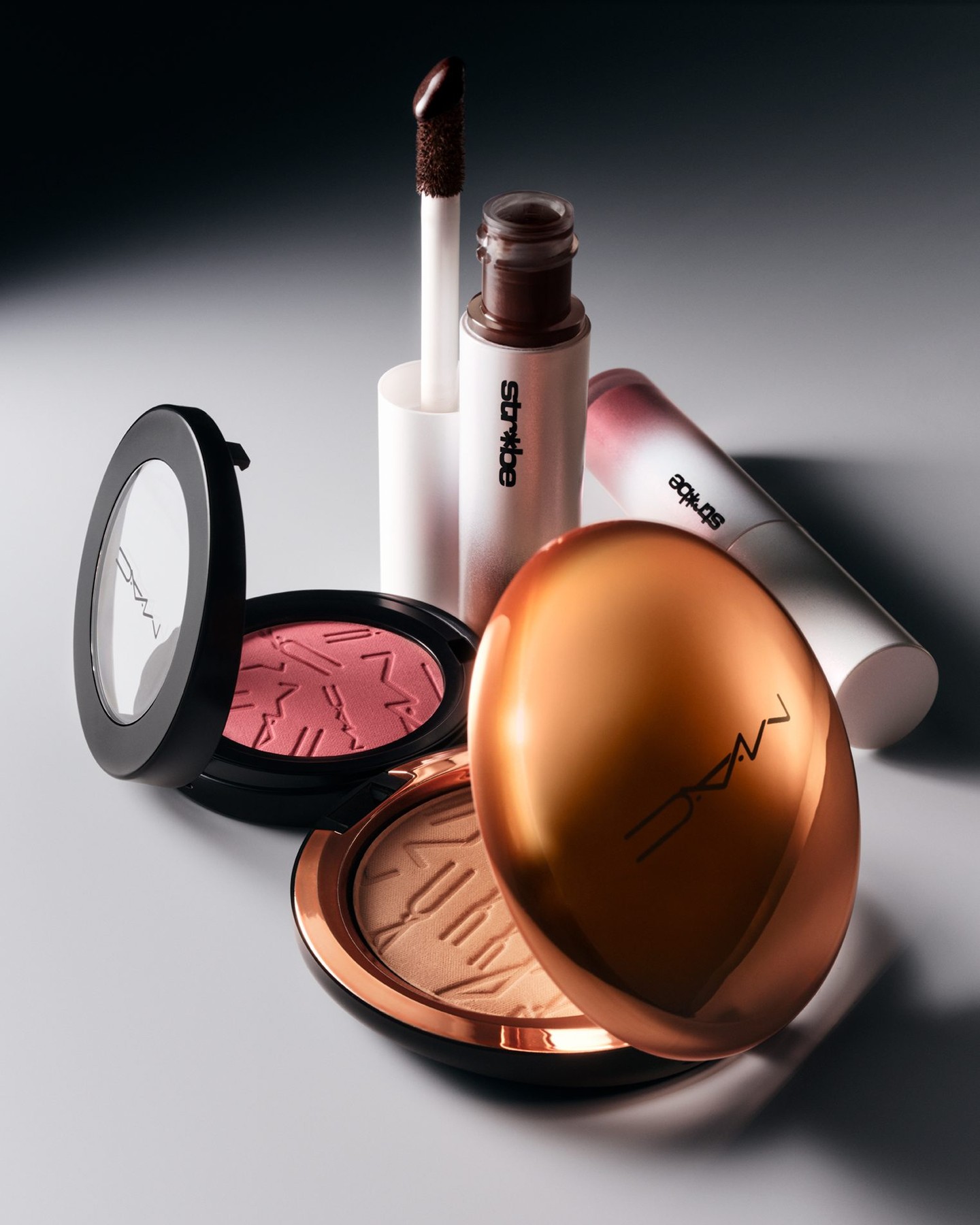
Net sales grew 1%, with M·A·C contributing growth, partially offset by declines in the Estée Lauder brand. M·A·C achieved sales growth through precise customer expansion, entering select Sephora stores in the U.S. and the Middle East, Kohl's Sephora counters and online channels in the second half of fiscal year 2026; combined with new products Lustreglass Sheer Shimmer Lip Balm and Lustreglass Lip Glaze, driving lip category growth.
Estée Lauder brand sales declined, due to weaker performance in facial makeup, affected by the timing of new product launches in fiscal year 2027; partially offset by incremental sales from the next-generation Stay-in-Place Matte Foundation launched in the second half of fiscal year 2026.
The makeup business turned profitable, benefiting from higher sales and lower non-consumer-facing expenses; a net increase in consumer-facing investment (after a strategic reduction in selling expenses) for channel expansion, marketing campaigns and new product launches partially offset profit.
—— Fragrance
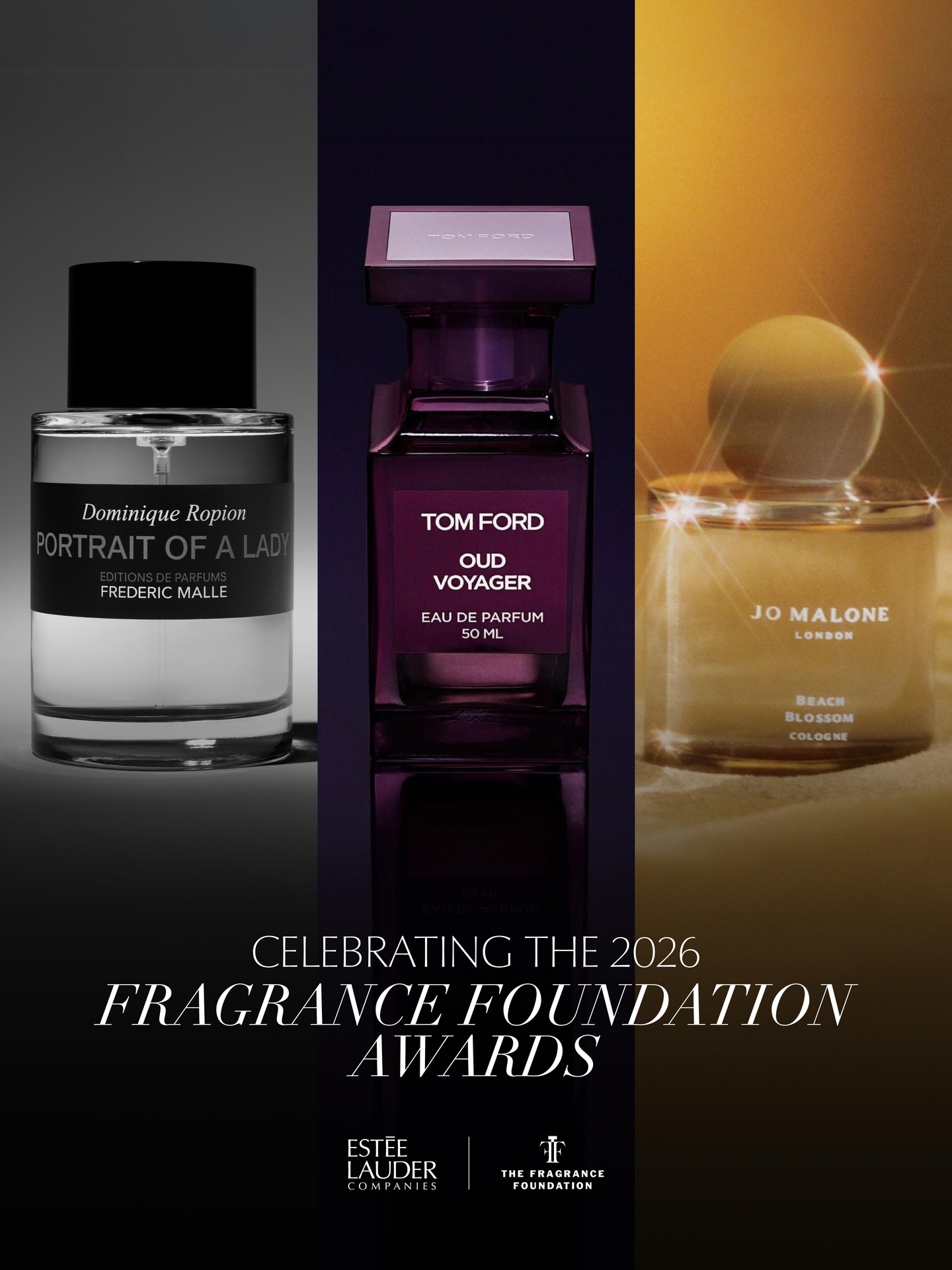
Net sales grew 20% year-on-year, with the group's luxury fragrance brands achieving double-digit growth, led by Le Labo, TOM FORD, Jo Malone London and KILIAN PARIS, while the Estée Lauder brand's fragrance line also grew.
Le Labo sales rose, with classic lines Another 13 and Santal 33 continuing to sell well, the city-exclusive collection Gaiac 10 and the Beijing-exclusive Shiu 25 performing notably, and growth across both new and existing channels. TOM FORD's new Private Blend launches and updates to its iconic lines (Tobacco Chocolat, Ombré Leather Reserve) created a halo effect, driving sales of existing products. Jo Malone London grew on new products such as Sea Salt & Bergamot and its hero collections, supported by customer expansion. Estée Lauder was driven by the brand's first gourmand fragrance, Glimmer. KILIAN PARIS, the group's fastest-growing luxury fragrance brand: the new cocktail collection was a great success, classic products remained strong, and the consumer base expanded, driving higher sales.
Operating profit in fragrance surged 93%, mainly from higher sales scale; increased consumer-facing investment (for new product launches, marketing campaigns and channel expansion) partially offset profit.
—— Hair Care
Net sales were flat year-on-year. The Ordinary grew, offsetting a decline at Aveda. The Ordinary was driven by continued strong sales of its Multi-Peptide Serum for Hair Density and customer expansion. Aveda's sales decline was mainly due to reduced shipments caused by supply chain and logistics issues at the brand level.
The hair care business turned profitable, benefiting from lower non-consumer-facing expenses and lower cost of sales.
Estée Lauder Companies announced an upward revision to its full-year fiscal year 2027 outlook. While first-quarter performance was strong, the company remains cautious about ongoing geopolitical and macroeconomic risks:
- Organic net sales growth of 4.0%-5.5%; previously 3%-5%, now raised to above the midpoint to the high end of the original range.
- Adjusted operating margin of 12.9%-13.7%; previously 12.7%-13.5%.
- Adjusted diluted net earnings per share of $3.2-$3.45; previously $3.1-$3.35.
|Source: official financial report, official press release, analyst earnings call
|Image source: brand official social media
|Editor: LuxeCO