On November 4, Danish affordable luxury jewellery company Pandora released its third-quarter fiscal 2026 results for the period ended September 30: revenue came in at DKK 6.69 billion (approximately RMB 6.723 billion), up 6% year-on-year on an organic basis, of which comparable sales (LFL) contributed 4% growth and store network expansion and other businesses contributed 2%.
In the first nine months of the year, company revenue rose 1% year-on-year to DKK 21.02 billion, with organic growth of 3%.
In the third quarter, like-for-like sales growth in North America recovered to 3%, and the Europe, Middle East and Africa region improved to 1% growth; like-for-like sales in Asia-Pacific maintained strong growth, up 20%, while Latin America recorded 6% growth.
As of the close on November 5, buoyed by like-for-like sales beating the highest analyst expectations, Pandora shares surged 10.9% from the previous trading day to DKK 919.8, with a latest market capitalisation of DKK 68.8 billion and cumulative share price gains of 11.3% over the past year.
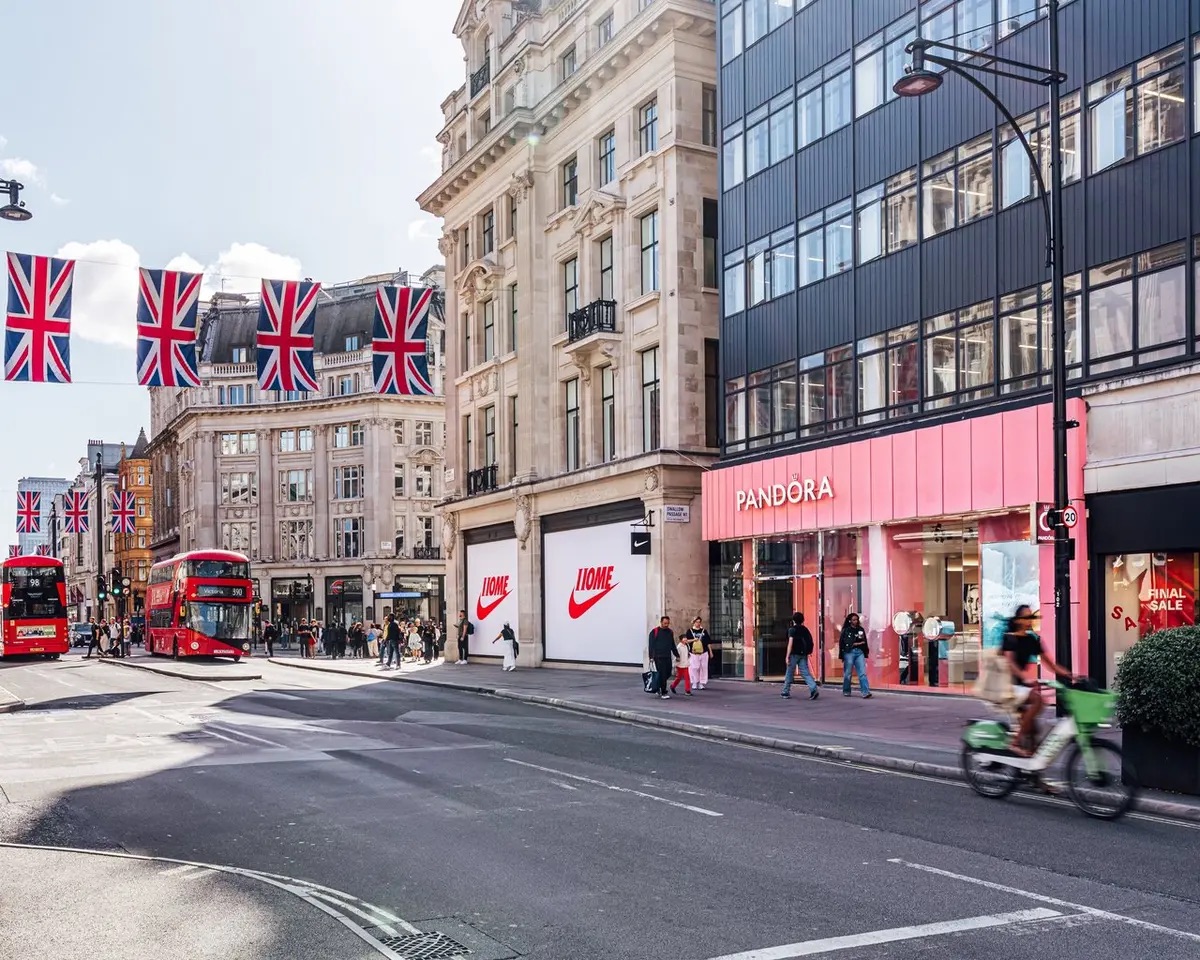
Pandora President and CEO Berta de Pablos-Barbier said: "Pandora's growth momentum is being reignited. We delivered 4% like-for-like growth in the third quarter, with positive like-for-like sales growth in all regional markets — an encouraging development in the current consumer environment. More distinctive designs and locally relevant marketing are boosting brand heat. We have raised our fiscal 2026 guidance to the upper end of the range and remain confident in executing our strategy going forward."
In the third quarter, the company achieved a gross margin of 83.7%. Pandora received a partial refund on its US International Emergency Economic Powers Act (IEEPA) tariff claim, and this one-off gain contributed 340 basis points to the gross margin. Excluding this effect, the gross margin remained above 80%, up 100 basis points year-on-year, supported by operational efficiency improvements and promotional discipline.
In the third quarter, the company's EBIT margin rose 190 basis points year-on-year to 15.9%, with the one-off tariff benefit contributing 370 basis points; excluding this item, the underlying EBIT margin was broadly flat year-on-year.
By regional market:
- North America comparable sales grew 3% year-on-year. The return to growth was mainly driven by a sequential recovery in the US market. Growth came from improved store operations and solid online performance; however, foot traffic remained weak amid subdued consumer confidence and macroeconomic uncertainty.
- Europe, Middle East and Africa (EMEA) comparable sales grew 1% year-on-year. Spain and Poland remained the core growth drivers, with Portugal also contributing incremental growth, and many smaller markets generally posting growth. Among major markets, the UK, Italy and Germany all improved sequentially.
- Asia-Pacific comparable sales grew 20% year-on-year. Japan was the most important engine, with like-for-like sales reaching triple-digit growth; Pandora's approach of localising global brand equity continued to resonate with younger consumers and enhance brand appeal. Japan alone contributed nearly half of the group's like-for-like increment this quarter. In other Asian markets, Pandora is replicating the lessons from the Japan model, with markets such as Singapore already delivering positive initial results and returning to positive like-for-like growth this year. Australia, weighed down by a weakening macroeconomic environment, saw slightly negative like-for-like growth.
- Latin America comparable sales grew 6% year-on-year. The revamped launch strategy continued to support performance, including broad-based price repositioning that reduced the region's reliance on promotional activity. Colombia, one year after completing its price adjustment, continued to grow strongly, further confirming that combining appeal with accessible pricing can drive sustained growth.

In under-penetrated markets, Pandora continues to expand reach, raise brand awareness and attract new customers. Asia-Pacific remains one of the brand's strongest-performing regions, with considerable long-term growth potential. In the third quarter, Pandora officially established a regional headquarters in Singapore, bringing the brand closer to local consumers and markets while strengthening regional capabilities in branding, marketing, operations and market development.
In the third quarter, Pandora continued to expand and optimise its store network, with a net increase of 11 brand concept stores and a net increase of 10 Pandora-owned shop-in-shops. The pace of store adjustments was in line with plan and consistent with the phasing of full-year openings and closures.
Over the past 12 months, despite a net closure of 68 stores in the China market, Pandora's global concept stores still achieved a net increase of 23; owned shop-in-shops saw a net decrease of 15, with Brazil and China together accounting for a net closure of 47. New concept stores were broadly distributed, mainly in North America and EMEA.
In the quarter, store network expansion contributed 4 percentage points to organic growth. Forward-integrated store acquisitions contributed no growth; over the past 12 months, Pandora did not acquire any stores from partners.
Pandora continues to view store expansion as a low-risk, profitable growth engine that enhances margins and returns on investment. The brand maintained its fiscal 2026 targets: a net 50–75 new concept stores (including an expected net closure of about 25 in China); owned shop-in-shops expected to see a net closure of 25–50, including a combined net closure of about 50 in Brazil and China.
By segment:
- Core charms comparable sales grew 1% year-on-year, accounting for 74% of total revenue;
- Fuel with More comparable sales grew 9% year-on-year in the second quarter, accounting for 26% of total revenue.
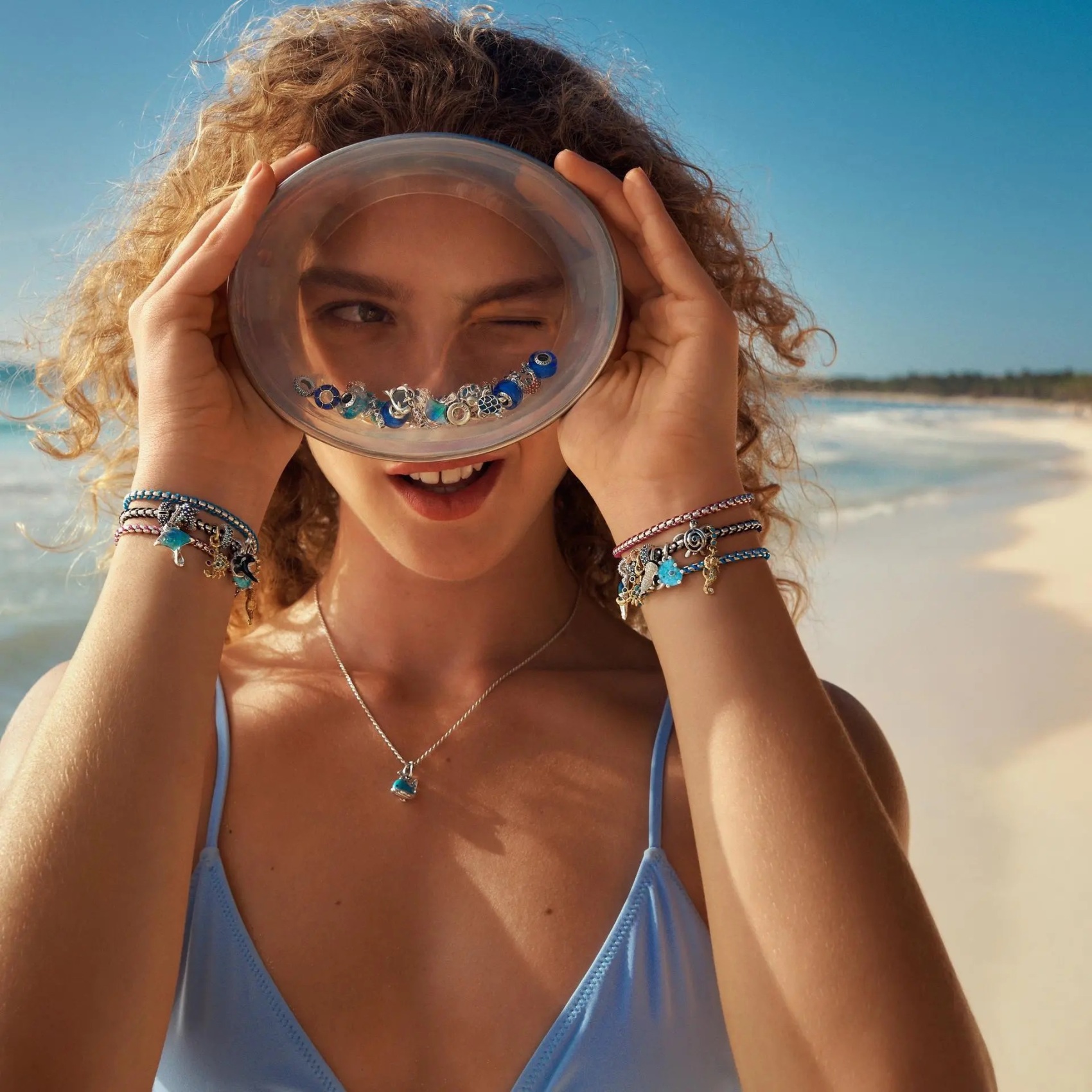
Pandora said the brand is refining its next phase of growth strategy. The new strategic direction will place greater focus on design to drive brand appeal; evolve its marketing model, strengthen localisation, and significantly upgrade the consumer experience.
Pandora plans to fully implement this new design strategy in 2027, creating a more appealing and distinctive product portfolio and enriching consumers' perception of Pandora's design and style. Initial results were already visible in the third quarter: the upgraded Talisman collection continued to gain market favour.
Leveraging its new marketing model, Pandora is reshaping how it sustainably builds brand appeal, cultural resonance and local influence. The brand launched two new creative platforms: Pandora Wonders and Pandora Voices, and validated that culturally resonant marketing campaigns can attract new customers, while also establishing a framework for future marketing programmes.
Pandora will continue to upgrade the consumer experience, with store designs that are more expressive, warm and immersive, using product storytelling to inspire customer exploration.
The brand's platinum-plated jewellery pilot launched in the Netherlands in July this year has delivered positive results. The pilot has now been extended to more markets, including the US, UK and Australia, and the brand remains on track for a full rollout in 2027.
Pandora also noted that like-for-like sales grew 1% in October, mainly dragged down by reduced promotional activity; excluding this factor, underlying trends were solid, with like-for-like growth of about 3%.
On October 1, Pandora's new production facility in Ho Chi Minh City, Vietnam officially began production. The factory is an important milestone in the expansion of Pandora's manufacturing network and supports the brand's long-term growth ambitions. The facility has an annual capacity of up to 60 million pieces of jewellery, increasing Pandora's overall manufacturing capacity by approximately 50% and strengthening the scalability of its vertically integrated model.
The Vietnam factory is Pandora's first manufacturing base outside Thailand and a key move to enhance supply chain resilience and flexibility. It works in tandem with the existing production base in Thailand to serve future growth across markets and categories, while also supporting the brand's shift toward multi-material jewellery, including the scaled rollout of its platinum-plated product line. As previously disclosed, Pandora continues to invest in new materials and processes to drive product innovation, enhance product appeal and reduce exposure to long-term commodity price volatility.
From 2026 to 2027, Pandora will invest a total of DKK 600 million in capital expenditure to add platinum-plated capacity in Thailand and Vietnam; once the expansion is complete, the brand's overall annual capacity will reach 170 million pieces. This capacity is highly flexible, allowing for the production of platinum-plated, gold-plated, sterling silver, solid gold and other material products.
Pandora expects for fiscal 2026:
- Organic sales growth of 2%–3% (previously 0%–3%)
- EBIT margin of 22.5%–23% (previously 22%–23%)
|Source: Official financial report
|Image: Brand official website
|Editor: LuxeCO