From August 8 to 14, luxury travel booking site Virtuoso held the 2026 Virtuoso Travel Week in Las Vegas, USA. Dubbed the "fashion week of the luxury travel industry," the event saw Virtuoso release its 2026 travel industry trends report, "2026 Virtuoso Travel Week," based on its own database and consumer research. The report clearly lays out the latest trends and drivers in the luxury travel industry today and interprets market direction for the second half of 2026 and beyond.

Overall, in the first half of 2026 (data through June 30), sales across the Virtuoso partner network grew nearly 21% year on year, rising again on top of 2025's high base.
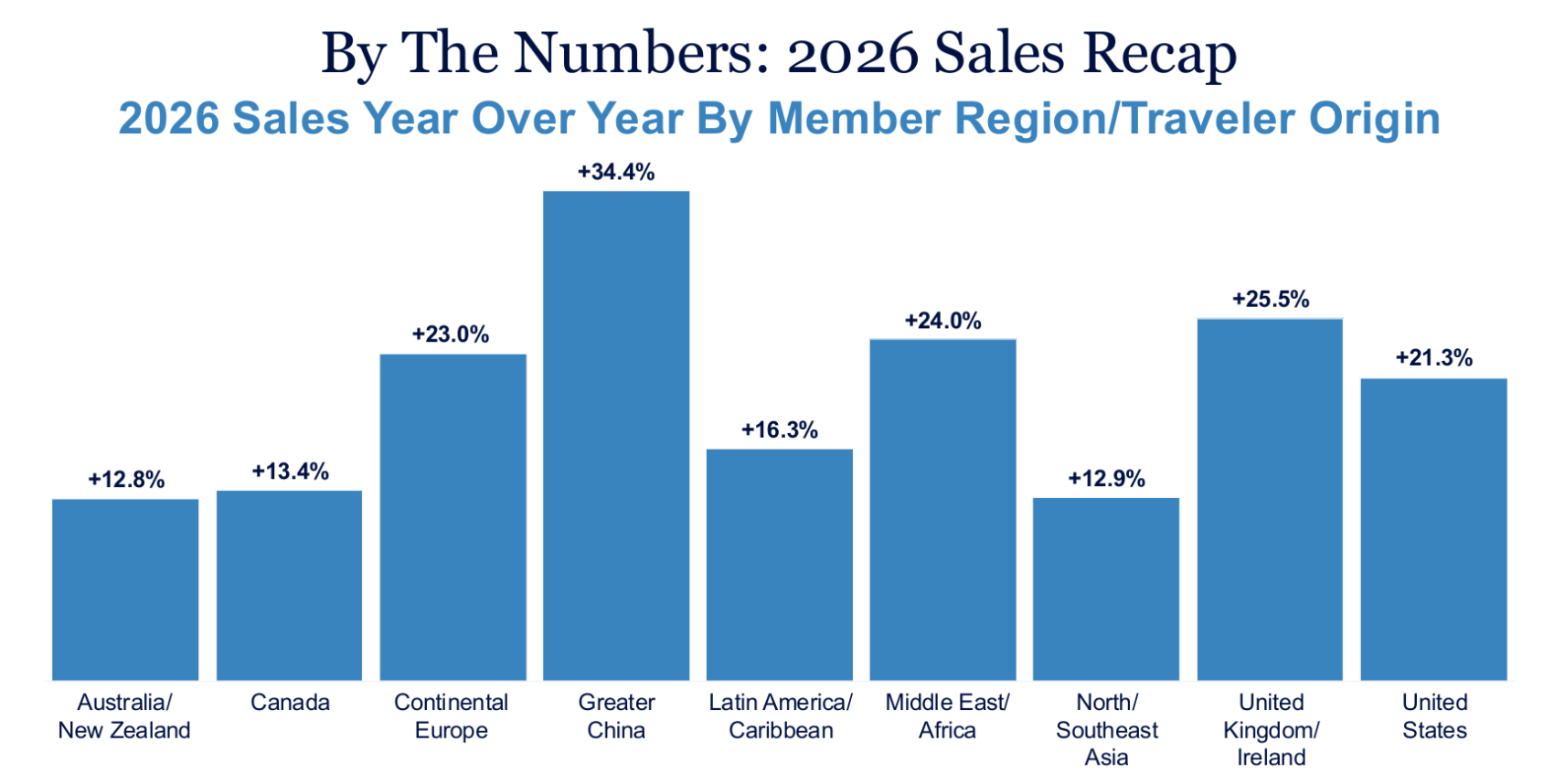
Growth was broad-based across regions, with Greater China leading at 34.4%. Sales in the UK and Ireland grew 25.5% year on year, the Middle East and Africa 24%, continental Europe 23% and the US 21.3%.
By type of partner, hotel sales grew fastest at 24.5%, cruise sales rose 22.4% year on year, destination management companies grew 17.5% and tour operators grew 11%.
The report notes that growth is concentrated in the high end: bookings for hotels priced at $1,500 per night and above rose 37%, more than twice the growth rate of lower-priced hotels.
As transaction volumes rose, room rates climbed in tandem. The average daily rate at international luxury hotels has now reached $1,653 per night, while the average at US luxury hotels is $1,445 per night. By comparison, in 2019 the average was just $985 at international luxury hotels and $790 at US luxury hotels.

The report identifies five major trends in global luxury travel for 2026:
1. Autumn shifts from low season to high season
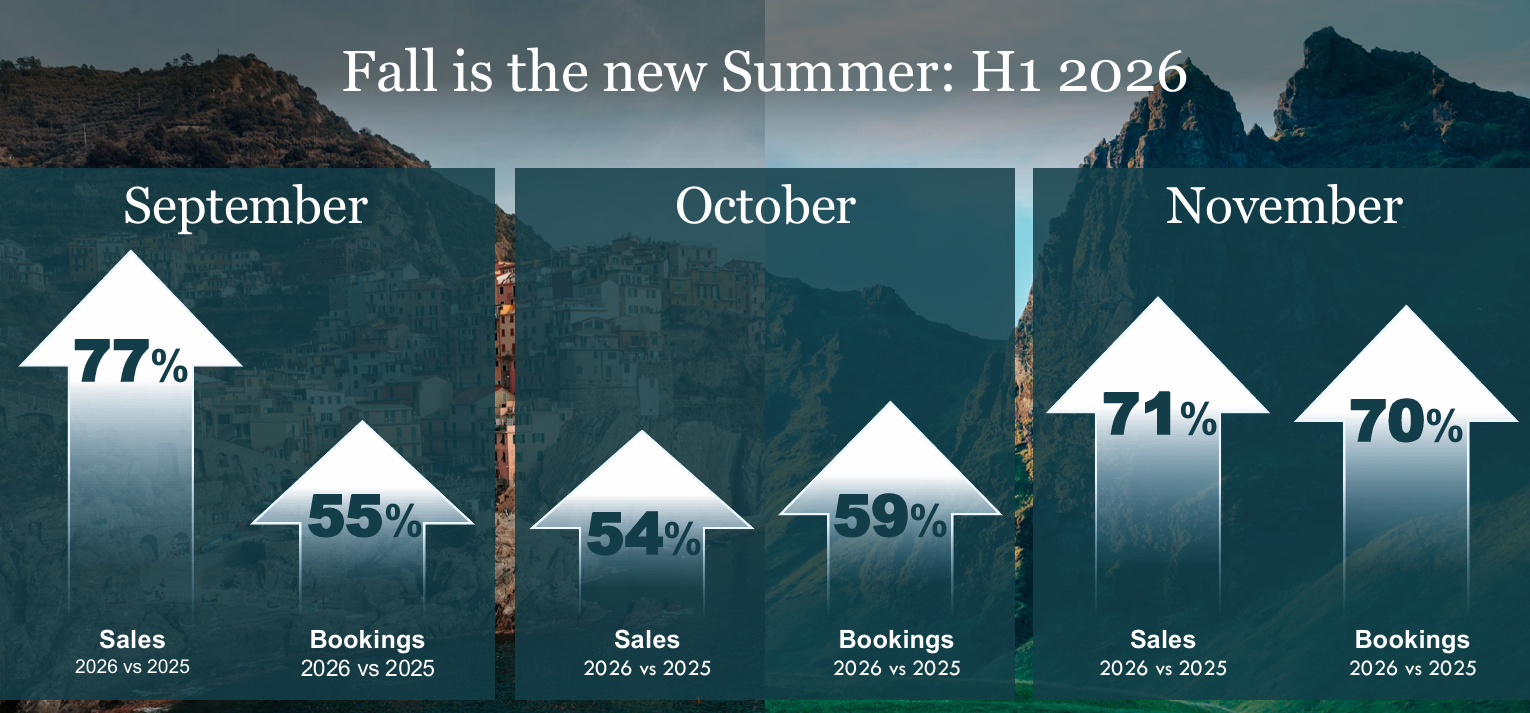
Bookings for autumn 2026 are up 59% year on year, with sales up 69%. September is the strongest performer, with sales surging 77% and bookings up 55%. October bookings rose 59%, while both bookings and sales for November grew by more than 70%.
Europe shows this trend most prominently. As of the end of June, sales at Virtuoso partner hotels in Europe were up 39% year on year.
Moreover, travelers choosing autumn trips value the seasonal experience rather than simply seeking lower prices. Bookings for Europe this autumn rose 49%, while hotel rates rose more than 7% and overall sales climbed 64%. Destinations with the biggest rate increases include the French Riviera (+179%), the Greek Islands (+130%) and Puglia, Italy (+78%).
2. The rise of "City-Maxxing"
Visiting just one city no longer satisfies luxury travelers, who are stringing multiple destinations together into longer, multi-city itineraries. Virtuoso calls this trend "City-Maxxing." About half of these itineraries cross national borders.
"France + Italy" is the most popular cross-border pairing, followed by "France + UK" and "Italy + Switzerland." Two of every five cross-border routes include Italy.
At the same time, the average length of stay on luxury trips continues to grow, driving branded residences and private villas into favor. These itineraries also rely heavily on private aviation, and demand is skewing younger. Millennials account for a share of private jet inquiries 6% higher than the global average.
3. Far-forward bookings surge
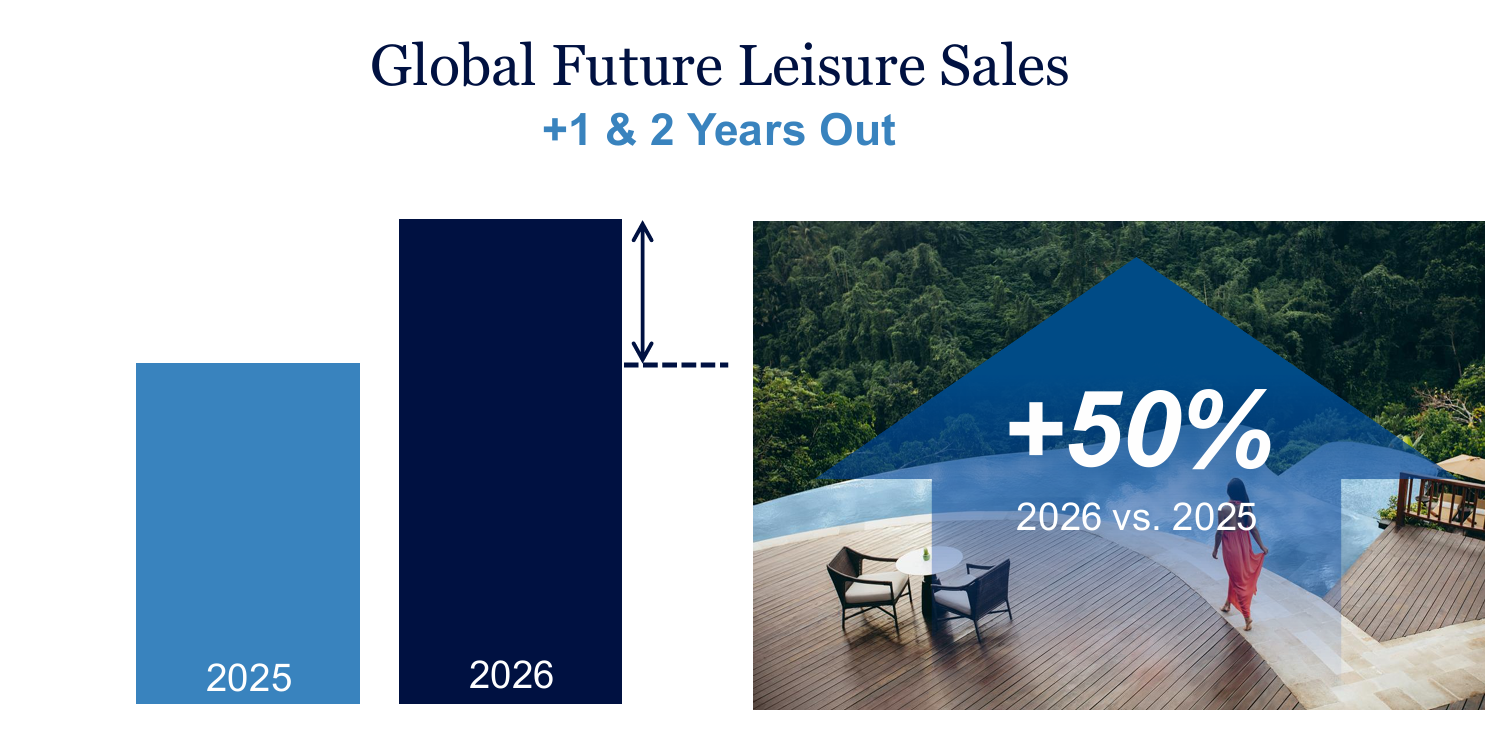
Global leisure travel sales for the next 1-2 years are up 50%. The higher the spend, the more pronounced the trend: bookings for orders of $50,000 and above rose 47%, cruise bookings at that price point rose 49%, and bookings for orders of $100,000 and above rose 49%.
4. Longevity and wellness become a new luxury theme
Wellness has evolved from a hotel amenity into a complete travel itinerary. Wellness-focused hotels significantly outperform the broader hotel market, with bookings up 28%, sales up 44% and average daily rates up 23%.
Among these, longevity tourism has emerged as a breakthrough segment, combining medical diagnostics with five-star hotel service.
The report also identifies three distinct types of wellness travelers:
- Performance optimizer: seeks data and quantifiable physical improvement;
- Restoration seeker: yearns for quiet nature and digital disconnection;
- Meaning seeker: leans toward mindfulness meditation and retreats built around major life milestones.
5. AI highlights the value of human advisors
Virtuoso travel advisors are rapidly adopting artificial intelligence. 74% of advisors already use AI in their business, and 70% of partner suppliers do too, well above the 59% adoption rate across the industry reported by Phocuswright.
Yet practitioners also see clear limitations in AI. Because AI-generated travel plans draw on similar sources of information, they produce a large number of near-identical, poorly targeted itineraries and worsen overcrowding at certain destinations.
The value of human expert advisors thus stands out. Three-quarters of clients see an advisor's expert knowledge of accommodations and destinations as a core advantage, and three-fifths value an advisor's ability to tailor bespoke experiences.
79% of luxury travelers say they would consider hiring a travel advisor in the future. Half of advisors report that clients are proactively avoiding overly popular destinations. "Algorithmic recommendations" are giving way to "analog escapes," and time, privacy and digital disconnection have become the ultimate luxuries.
| Source: original report, official press release
| Image source: original report
| Editor: LuxeCO